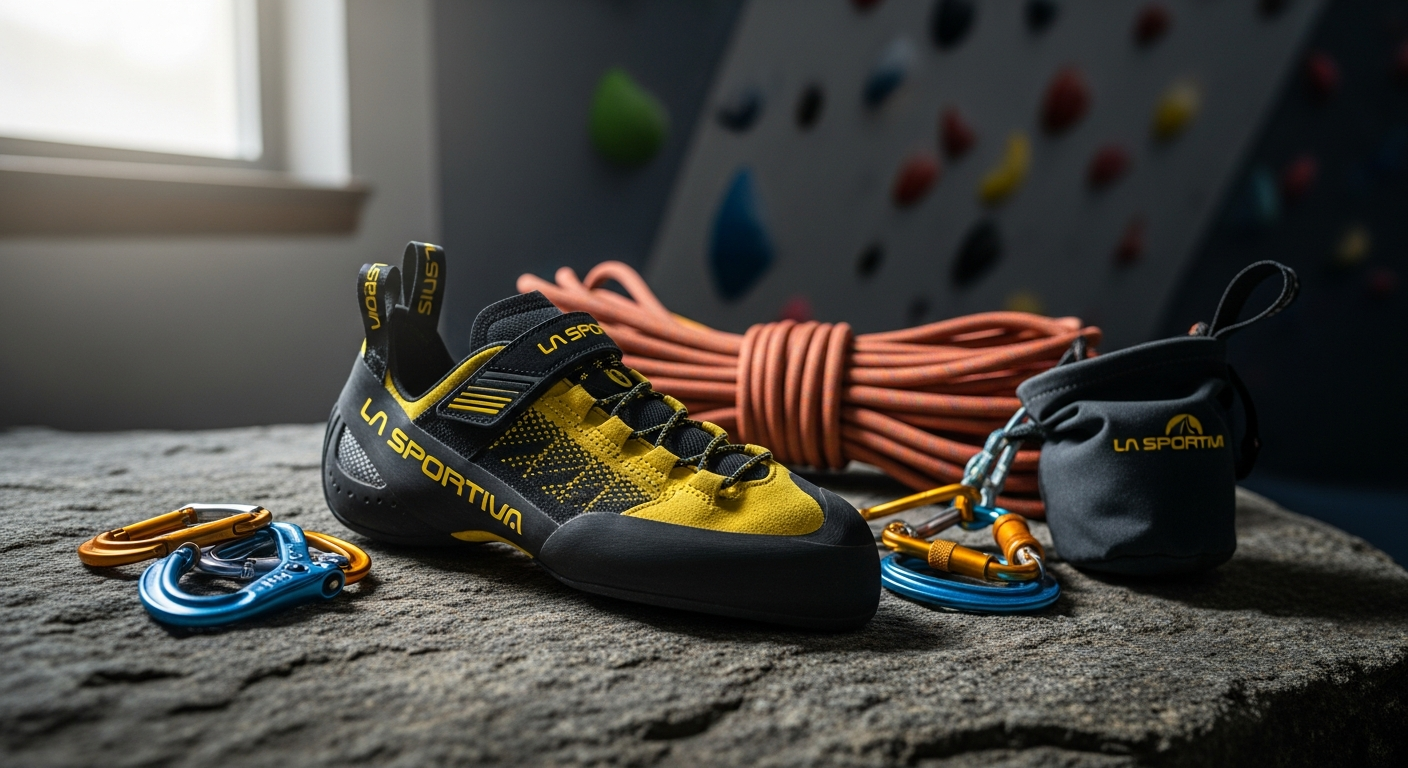
Ninety percent of experienced climbers own at least one aggressive, downturned shoe in their quiver—and the La Sportiva Skwama consistently ranks as their go-to choice. I've watched this particular model transform from a niche favorite into the shoe that climbers actually reach for when they're tackling their project routes, whether they're bolting at the crag or sending problems at their local gym.
The Skwama has earned its reputation as a powerhouse in the climbing world. Released by one of the industry's most respected manufacturers, this shoe combines cutting-edge technology with proven durability, making it a staple for anyone serious about advancing their climbing game. For climbers ready to invest in premium gear, understanding what makes the Skwama special matters tremendously.
In this review, I'll break down the engineering that sets this shoe apart—from its aggressive geometry to its proprietary heel technology—and help you determine whether the Skwama deserves a spot in your climbing collection. You'll learn exactly how its features perform in real climbing situations, what trade-offs come with its aggressive design, and whether the premium price delivers genuine value. Discover the La Sportiva Skwama at Verticalextreme.de
The Engineering Behind Aggressive Performance
Downturned Geometry
The aggressive downturn of the Skwama is engineered with precision. This curve isn't arbitrary—it's designed specifically to lock your foot into steep terrain and position your weight directly over micro-edges where neutral shoes would struggle. The geometry funnels force into the toe box, amplifying pressure on tiny footholds and overhanging sequences. Climbers working extreme angles find this curve transformative because it eliminates the energy waste that comes from fighting a shoe's natural shape.
S-Heel™ Construction
La Sportiva's proprietary S-Heel™ technology sets this shoe apart from competitors relying on standard heel construction. The heel doesn't deform under pressure the way conventional heels do. This matters enormously for heel hooks—a technique that demands stability and precision. When you're hooking your heel over an edge on steep terrain, the last thing you need is a heel compressing and rolling under load. The S-Heel™ maintains its shape through extended use, giving you consistent feedback and reliable performance session after session.
P3® Permanent Power Platform
Many aggressive shoes lose their edge after months of use. The rubber compresses, the downturn flattens, and suddenly you're climbing in a shoe that feels fundamentally different from when you bought it. The P3® system prevents this degradation by maintaining the shoe's aggressive profile even with heavy climbing. This engineered permanence directly impacts long-term value—you're not watching your investment flatten out over time.
Split Sole Design
The split sole gives the Skwama remarkable adaptability. Rather than a single rigid platform, this design allows the shoe to flex differently across its length. Your heel can remain locked while your forefoot flexes to match varied rock features. This flexibility becomes critical when transitioning between overhanging sections and more vertical climbing, where a single rigid sole would either force uncomfortable compromises or exhaust your foot prematurely.
Material Composition
The upper combines suede leather with microfiber in a deliberate balance between durability and sensitivity. The suede provides abrasion resistance where your foot contacts rock, while the microfiber adds structural reinforcement without adding bulk. This combination keeps weight minimal—crucial in a shoe designed for demanding climbing—while ensuring the upper survives the friction and pressure of sustained use.
Vibram® XS Grip2 Rubber: Friction and Sensitivity Explained
Rubber Compound Technology
Vibram® XS Grip2 isn't standard climbing shoe rubber. The compound incorporates a higher ratio of sticky polymers compared to entry-level rubbers, creating superior grip across different rock types. The rubber achieves this stickiness without sacrificing durability—a technical challenge that justifies premium rubber's higher cost. When your foot placement determines whether you send or fall, the friction difference between standard and premium rubber becomes tangible.
Friction Performance
On steep overhanging terrain where marginal grip determines success, XS Grip2 delivers noticeably higher friction than alternative compounds. Sandstone, granite, limestone, and plastic gym holds all receive superior grip. The rubber performs particularly well on small edges where maximum friction per square millimeter prevents your foot from slipping. Climbers pushing hard on technical projects consistently report that upgrading to shoes with premium rubber generates immediate improvement in their ability to trust marginal footholds.
Sensitivity and Feedback
Thinner rubber provides better ground feel—you can sense micro-textures in the rock that tell you whether your foot is positioned optimally. The Skwama's rubber thickness strikes a balance between sensitivity and durability. You're not climbing on paper-thin rubber that wears through in weeks, yet you're not insulated from the rock like you'd be in a thick-soled gym shoe. This sensitivity becomes invaluable when working complex sequences where precise foot placement determines success.
Durability Metrics
XS Grip2 maintains its stickiness longer than standard rubbers before wearing smooth. Climbers typically report that their Skwama retains excellent grip for 150-200 climbing days before noticeable degradation occurs. This extended rubber life, combined with the P3® system maintaining the shoe's shape, means the Skwama remains performant across multiple seasons rather than diminishing in capability month after month.
Comparison to Alternatives
Other premium climbing shoe manufacturers offer competing rubber compounds. Scarpa uses proprietary blends, Five Ten develops specialized formulations, and Evolv creates their own specifications. Vibram® XS Grip2 consistently ranks among the stickiest options available, with independent climber feedback suggesting it slightly outperforms most competitors in friction testing. The performance advantage isn't revolutionary—you're not getting double the grip—but in climbing, marginal improvements in equipment often translate into sending routes that previously felt impossible. Experience the grip advantage of the Skwama today
Real-World Performance Across Climbing Disciplines
Bouldering
Boulderers gravitate toward the Skwama because its aggressive downturned shape excels on overhanging problems and dynamic movements. The toe box positioning amplifies power on small holds, and the heel hooks with authority. Boulder problems demand compression and intense footwork over short sequences—exactly what the Skwama was engineered to provide. Indoor boulderers especially appreciate how the shoe performs on the varied angles built into gym walls.
Sport Climbing
Sport climbing demands sustained performance across varied angles. Some climbers question whether such an aggressive shoe can handle longer pitches on more moderate terrain. The answer is nuanced. The Skwama handles varied angles competently, but it's optimized for steep sections. Climbers tackling sustained 5.10s and 5.11s in relatively vertical terrain find the Skwama appropriate. Those spending extended time on 5.8s and 5.9s might find the aggressive geometry unnecessarily taxing on their feet over multiple pitches.
Technical Multi-Pitch
The Skwama's versatility extends to technical multi-pitch climbing where precise footwork on small edges and steep sections becomes essential. The shoe excels on pitches demanding precision, though its aggressive profile makes it less ideal for long pitches on moderate angle terrain. Experienced climbers often bring the Skwama specifically for pitches known to be technical, while keeping a less aggressive shoe for more straightforward sections.
Indoor Gym Climbing
Gym holds present their own challenge signature. Modern gym walls often feature steep terrain and small handholds mimicking outdoor climbing. The Skwama performs outstandingly on this terrain. Gym climbers working progression on overhanging walls or targeting specific hard problems find the Skwama's geometry matches gym-specific angles exceptionally well.
Outdoor Crag Performance
Natural rock presents more varied texture and angle than any gym can replicate. The Skwama performs admirably across natural rock types, with the Vibram® XS Grip2 rubber particularly effective on outdoor stone. Weather-worn granite, pocketed sandstone, and sharp limestone all receive excellent grip. The shoe's versatility means climbers can use it across varied crag conditions without constantly swapping equipment.
Heel Hooking Power and Advanced Technique Support
S-Heel™ Technology in Action
The S-Heel™ technology demonstrates its value most clearly during heel hooks. When your heel catches an edge and bears significant load, the heel's resistance to deformation becomes critical. The Skwama's heel maintains its shape, allowing you to lock in and trust the hold without your heel rolling or compressing beneath load. This stability transforms heel hooking from a tentative technique into a confident movement.
Heel Durability
The heel receives concentrated wear during heel hooking—the repetitive friction and pressure that flattens lesser heels. The Skwama's heel resists this deformation through design and material specification. Climbers report that even after seasons of regular heel hooking, the heel remains structured rather than developing the mushy, compressed feel that compromises performance.
Technique Progression
Climbers developing heel hooking skills benefit enormously from equipment that supports the technique rather than fighting it. The Skwama's S-Heel™ allows beginners to learn heel hooking with reliable feedback and security. As technique improves, the shoe continues supporting progressively more demanding applications. This progression-friendly design means the shoe grows with the climber.
Comparison to Neutral Shoes
Neutral shoes sacrifice specialized heel construction for versatility. A neutral shoe's heel is designed to work acceptably across many applications rather than optimally for any specific technique. When heel hooking becomes part of your climbing vocabulary, the specialized design of the Skwama's heel becomes impossible to ignore—it simply performs better than neutral alternatives for this specific movement.
Practical Applications
Heel hooks appear frequently on steep terrain—overhanging walls where your hands are pulling and your heels are hooking to maintain contact. They're essential on specific boulder problems and sport climbing sequences where the angle demands this technique. Trad climbing sometimes requires heel hooks when protecting yourself on complex terrain. Any climber regularly encountering these scenarios benefits from the Skwama's heel technology.
The Comfort Paradox: Premium Performance vs. Break-In Reality
Initial Fit Experience
The first time you put on a Skwama, the aggressive downturned shape is immediately apparent. Your foot curves downward in a way that feels unnatural if you're accustomed to neutral shoes. The heel sits lower, your toes point downward, and the overall geometry feels aggressive rather than comfortable. This sensation causes many climbers to second-guess their purchase in the first session. This is normal.
Break-In Timeline
The Skwama requires a genuine break-in period—typically 10-15 climbing sessions of moderate use before the shoe feels genuinely comfortable. The suede and microfiber upper gradually conform to your foot's unique shape, and your foot acclimates to the aggressive geometry. By session 20, most climbers report that the shoe feels markedly better. By session 30-40, the shoe achieves its comfortable potential.
Sizing Considerations
La Sportiva's sizing recommendations generally hold true for the Skwama. Climbers who typically wear European size 42 in street shoes usually find European 41 or 41.5 appropriate for the Skwama. Some climbers prefer sizing down slightly for extra precision, while others size up for extended climbing sessions. The single Velcro strap provides adjustment flexibility that helps accommodate individual preferences.
Pressure Points
New Skwama users often experience pressure on the top of the foot where the aggressive downturned shape creates concentrated contact. The heel area sometimes feels tight initially, and some climbers report pressure on the outside edge of the foot. These pressure points typically diminish as the materials conform, though some climbers always experience minor discomfort in specific areas. This varies significantly by individual foot shape.
Long-Term Comfort
After the break-in period, climbers consistently report that the Skwama feels surprisingly comfortable for such an aggressive shoe. The materials have conformed, your foot has adapted to the geometry, and the shoe becomes an extension of your climbing rather than a distraction. Many experienced climbers consider the Skwama comfortable enough to wear for full climbing sessions without discomfort—a significant achievement for an aggressive downturn shoe.
Tips for Faster Adaptation
Starting with shorter climbing sessions helps your foot adapt gradually rather than experiencing shock. Wearing the shoe around your home before climbing, stretching your foot actively in the shoe, and climbing on moderate terrain while breaking in reduces the discomfort associated with adaptation. Some climbers apply heat to soften the materials slightly, accelerating the conforming process. Patience remains the most effective strategy—rushing the break-in often leads to unnecessary discomfort.
Durability and Long-Term Value Assessment
Construction Quality
The Skwama exhibits construction quality consistent with La Sportiva's premium positioning. Stitching is precise, material bonding is thorough, and edge finishing prevents premature fraying. The overall build standard is professional-grade rather than budget-conscious. Seams don't separate prematurely, and the bond between rubber sole and upper withstands sustained climbing stress.
Lifespan Expectations
Climbers regularly get 2-3 years of regular use from a pair of Skwamas before the shoe reaches the end of its useful life. This assumes moderate climbing frequency—roughly 50-100 climbing days per year. Boulderers who climb intensively might see the rubber wear through in 1.5 years. Climbers using the Skwama occasionally as a specialty shoe for specific terrain might stretch a pair across 3-4 years.
Sole Wear Patterns
The forefoot receives the most concentrated wear, as climbers repeatedly place their toes on edges and edges place pressure directly into this area. The heel wears more gradually unless heel hooking is your primary technique, in which case heel wear accelerates. The toe edge typically rounds first, followed by forefoot flattening. The overall wear pattern remains predictable across different climbing styles.
Maintenance Best Practices
Storing the shoe in a cool, dry location preserves rubber and material integrity. Cleaning the shoe after particularly sandy sessions prevents abrasive particles from wearing through the upper. Occasional brushing of the rubber sole removes built-up material and extends rubber life. Drying thoroughly after wet conditions prevents material degradation. These simple practices add months to your shoe's useful life.
Cost-Per-Use Analysis
A €160 pair of Skwamas used across 200 climbing days works out to €0.80 per climbing day. Compare this to entry-level shoes at €60 that last 80-100 days (€0.60-0.75 per day), and the actual economic difference is minimal. Add the performance advantage gained from superior shoes, and the per-use cost becomes negligible. Serious climbers who climb 100+ days annually find premium shoes economically justified.
Resale Value
Used Skwamas retain reasonable resale value in the climbing community. A pair that cost €160 new typically sells for €80-110 used after a season of moderate climbing. This €50-80 loss equates to roughly €0.25-0.40 per climbing day when factored into total cost. The strong demand for this popular shoe means you can sell used pairs relatively quickly if you decide to move on to different equipment.
Aggressive Design: Who This Shoe Is Actually For
Intermediate to Advanced Climbers
The Skwama demands climbing experience to appreciate. Beginners working on vertical terrain and moderate terrain don't need—and often don't want—such an aggressive shoe. Intermediate climbers (typically V4-V6 boulderers or 5.10-5.11 sport climbers) begin reaching the performance level where the Skwama's specialization becomes valuable. Advanced climbers tackling V7+ or 5.12+ recognize the shoe's precision and power as essential for their progression.
Project-Focused Athletes
Climbers working specific projects—that one boulder problem or sport climb you've been trying for months—benefit from the Skwama's precision on small edges and steep terrain. The shoe excels when you're targeting specific hard terrain rather than climbing a variety of routes at different angles. Project climbers often bring the Skwama specifically for sessions focused on their project rather than using it for general climbing.
Boulderers vs. Rope Climbers
Boulderers typically embrace the Skwama more readily than rope climbers. Bouldering favors the aggressive geometry, short intense sequences, and power that the Skwama provides. Rope climbers, especially those climbing varied pitches with sustained moderate terrain, sometimes find the aggressive shape less ideal. Sport climbers tackling steep single-pitch routes or technical multi-pitch sequences align better with the Skwama than those climbing more moderate mixed climbs.
Climbers with Specific Foot Shapes
Foot shape influences how well the Skwama fits. Climbers with naturally curved feet or high arches often find the aggressive downturned shape comfortable and supportive. Those with flatter, wider feet sometimes struggle with the concentrated pressure in certain areas. Narrow feet find the Skwama fits well, while climbers with particularly wide feet might find width limiting. Individual variation is significant—specific foot shape can make or break this shoe's suitability.
Climbing Goals
Climbers with explicit hard-climbing goals—sending V-grades, achieving grade targets, or solving specific technical sequences—align with the Skwama's performance optimization. Climbers focused on volume, fitness gains, or general enjoyment might find less specialized shoes more appropriate. The Skwama serves performance goals more effectively than recreational engagement.
Not Ideal For
Beginning climbers should develop climbing fundamentals in more neutral shoes. Climbers preferring variety and different climb angles benefit from more versatile shoes. Those with particularly wide feet or existing foot pain might find the Skwama's concentrated pressure challenging. Recreational climbers uninterested in progression don't need specialized equipment. Climbers who primarily climb moderate terrain gain minimal advantage from such an aggressive shoe.
Sizing, Fit, and Adjustment System
Velcro Strap Design
The single Velcro strap closure offers simplicity and security without the complexity of laced systems or multi-strap designs. You can adjust the strap quickly between problems or pitches, adapting the shoe's tightness to your current needs. The Velcro remains functional across multiple seasons without degrading significantly. This single-strap design is less adjustable than lacing but more practical than fixed-closure shoes.
Adjustment Range
The Velcro strap provides reasonable adjustment range across different foot widths and climbing positions. You can tighten it moderately for securing your foot during dynamic movements or loosen it slightly for prolonged climbing sessions. This flexibility helps accommodate individual preferences without requiring multiple shoe sizes.
Heel Fit
Heel fit is critical in any climbing shoe but especially important in aggressive downturned shoes where heel security determines confidence. The Skwama's heel should fit snugly without slipping but not so tightly that it restricts blood flow. Finding this balance requires trying the shoe and evaluating heel movement during climbing. Some climbers need to size down slightly to achieve ideal heel security, while others prefer sizing true-to-size.
Toe Box Dimensions
The Skwama's toe box is relatively compact—appropriate for an aggressive shoe designed to funnel force onto small edges. Climbers with wider forefeet sometimes experience pressure in the toe box. Those with narrower feet find the toe box dimensions precisely matched to their anatomy. This is one area where individual variation significantly impacts fit.
Width Considerations
La Sportiva's shoe designs, including the Skwama, tend toward narrower widths compared to some competitors. Climbers with particularly wide feet should try the shoe before committing rather than assuming it will work. Those with medium to narrow feet typically find the width appropriate. Width adjustability is limited—the Velcro strap helps somewhat, but the shoe's fundamental width remains fixed.
Sizing Chart Accuracy
La Sportiva's sizing recommendations generally hold true across their climbing shoe line, including the Skwama. European sizing tends to run true, with a climber wearing size 42 in street shoes typically comfortable in size 41 Skwamas. Online reviews and retail feedback mostly confirm sizing accuracy, though individual variation means trying the shoe when possible is always advisable.
Price Justification: Premium Investment or Overpriced Hype?
Market Positioning
At €140-170, the Skwama occupies the premium tier of climbing shoe pricing. It costs significantly more than entry-level shoes (€60-90) and slightly more than many mid-range options (€100-130). It costs less than ultra-premium specialty shoes (€180-220) targeting specific climbing styles. The Skwama's price positions it as a premium mainstream offering rather than the absolute luxury tier.
Feature-to-Cost Ratio
The proprietary technologies—S-Heel™, P3® system, split sole design—represent genuine engineering investments. Vibram® XS Grip2 rubber commands premium pricing from the rubber manufacturer. The materials and construction quality justify substantial cost. Whether these justify the specific €140-170 price point relative to competitor offerings becomes a matter of individual evaluation.
Alternatives at Lower Price Points
Scarpa Instinct ($99-120 USD equivalent) offers aggressive downturned geometry at significantly lower cost, though with less specialized heel technology and standard rubber. Five Ten Anasazi ($110-130) delivers proven aggressive performance at lower price. Budget alternatives exist that provide legitimate aggressive shoe functionality without premium pricing. These force the question of whether the Skwama's specialized features justify the additional cost for your specific climbing.
Alternatives at Higher Price Points
La Sportiva Miura ($150-180) occupies a similar price range with different geometry optimized for different climbing styles. Certain specialty shoes exceed €200, targeting elite athletes pursuing specific disciplines. The Skwama sits comfortably in the mainstream premium tier rather than the ultra-luxury category, suggesting the price reflects market positioning rather than scarcity or exclusive materials.
Promotional Pricing
The Skwama, being a popular best-seller, sometimes appears at promotional pricing during sales events. Retailers occasionally discount moderately to clear inventory. Off-season purchasing occasionally yields 10-15% savings. Waiting for sales can reduce effective cost, though availability in your size during sales isn't guaranteed. Comparing prices across retailers before purchasing often reveals €10-20 differences.
Investment Perspective
For intermediate to advanced climbers who will use the Skwama 100+ days annually across 2-3 seasons, the investment ROI is positive. The shoe's durability and resale value moderate total cost of ownership. For climbers using the shoe casually, the premium pricing represents less justified investment. For boulderers and sport climbers targeting specific hard terrain, the performance advantage justifies premium pricing.
Comparing the Skwama to Direct Competitors
La Sportiva Miura vs. Skwama
Both represent La Sportiva's aggressive tier, but with different specializations. The Miura features an even more extreme downturned shape optimized for tiny edges and maximum precision. The Skwama trades some extreme specialization for slightly more versatility. If your climbing emphasizes tiny micro-edges and extreme overhang, the Miura offers more specialized performance. If you want aggressive geometry that still handles varied terrain reasonably well, the Skwama's balance appeals more.
Scarpa Instinct vs. Skwama
The Scarpa Instinct offers aggressive downturned performance at lower cost. The Instinct's geometry is similarly aggressive, and rubber quality is respectable. The key differences involve the Skwama's specialized S-Heel™ technology and slightly more polished feel. Climbers prioritizing aggressive geometry and cost efficiency find the Instinct attractive. Those wanting the most specialized heel technology and consistent feel prefer the Skwama.
Five Ten Anasazi vs. Skwama
The Anasazi remains a classic aggressive shoe with devoted following. It costs slightly less than the Skwama and offers proven performance across generations of climbers. The Anasazi features a stiffer, more precision-focused design, while the Skwama balances precision with slightly more comfort. Climbers wanting the most precision and responsive feel often prefer the Anasazi. Those seeking slightly more comfort alongside aggressive performance prefer the Skwama.
Evolv Shaman vs. Skwama
The Evolv Shaman offers aggressive downturned performance with emphasis on climbing wall-specific design. It performs particularly well on gym terrain but translates to outdoor climbing effectively. The Shaman typically costs slightly less than the Skwama. The choice between them often comes down to personal foot shape fit and climbing environment preferences rather than significant performance differences.
Butora Acro vs. Skwama
Butora's Acro positions itself as a high-performance aggressive option at competitive pricing. It offers legitimate aggressive geometry and quality construction at lower cost than the Skwama. The Acro performs well across varied climbing disciplines. Climbers evaluating the Acro versus Skwama should prioritize fit testing both shoes, as the choice often hinges on which shoe fits your specific foot better rather than obvious performance difference.
When to Choose the Skwama Over Alternatives
Choose the Skwama if you've tested multiple aggressive shoes and the fit is superior to alternatives. Choose it if you value specialized heel technology and the most polished overall experience. Choose it if the fit and feel resonate with your climbing style. Don't choose the Skwama simply because it's popular—popular shoes aren't ideal for everyone. Prioritize personal fit and feel over brand reputation or reviewer opinions.
What Climbers Actually Say: Real-World Feedback
Positive User Experiences
Climbers consistently praise the Skwama's grip, describing the Vibram® XS Grip2 rubber as noticeably stickier than standard alternatives. The heel hooking experience receives frequent positive mentions—climbers appreciate the security and confidence the S-Heel™ provides. Performance on steep terrain and small edges generates genuine enthusiasm. Many climbers report that the shoe genuinely helps them send routes they previously found impossible. The durability and long-lasting performance appeal to experienced climbers who appreciate quality construction.
Recurring Complaints
The break-in period frustrates many climbers, who feel initial discomfort is excessive. Price concerns appear frequently—climbers acknowledge the performance but question whether the cost justifies the improvement over budget alternatives. Specific climbers report persistent pressure points that never completely resolve. Width limitations generate complaints from climbers with wide feet. A subset of climbers questions whether the aggressive shape suits their climbing style after purchasing.
Surprising Discoveries
Some climbers report that comfort improves more dramatically than expected after the break-in period—the shoe becomes genuinely enjoyable to wear after 30-40 sessions. Others discover that the split sole design provides unexpected flexibility and adaptability they didn't initially anticipate. A surprising number of climbers find the shoe appropriate for longer climbing sessions than they expected from such an aggressive design.
Long-Term Owner Perspectives
Climbers who own the Skwama for multiple years generally develop strong loyalty. Many report it remains their go-to shoe for projects and hard climbing despite owning numerous alternatives. Long-term owners praise the durability and consistent performance across seasons. Most report that the investment feels justified when calculated across 200+ climbing days. Some eventually move to alternatives, typically citing changing climbing style or specific limitations becoming apparent over years of use.
Beginner vs. Advanced Opinions
Beginner climbers who purchase the Skwama sometimes regret the choice, finding the aggressive geometry unnecessary for their level and the break-in period discouraging. Intermediate climbers often find the timing perfect—the shoe matches their advancing abilities. Advanced climbers rarely express regret, typically viewing the Skwama as a valuable specialized tool for their climbing. Experience level significantly influences satisfaction with this aggressive shoe.
Gym vs. Crag Feedback
Gym climbers often embrace the Skwama enthusiastically, as gym terrain frequently features steep angles and aggressive angles that match the shoe's specialization. Crag climbers report more mixed experiences—those working steep crags love the shoe, while those climbing varied terrain sometimes find it too specialized. Climbers using the Skwama exclusively on gym terrain seem more consistently satisfied than those expecting it to handle all climbing environments equally.
Should You Buy the La Sportiva Skwama?
The Ideal Buyer Profile
You're an excellent Skwama candidate if you're intermediate to advanced, regularly climb 60+ days annually, focus on projects and specific hard terrain, primarily climb steep angles and small edges, are willing to endure a break-in period, and have €140-170 available for premium equipment. You climb primarily in bouldering or short-pitch sport climbing. You appreciate specialized equipment optimized for specific applications. You've tried aggressive shoes before and generally prefer this style. You're committed to progression and willing to invest in performance-enhancing equipment.
Red Flags for Avoiding This Shoe
Avoid the Skwama if you're a beginning climber still developing fundamentals. Avoid it if you climb primarily on moderate terrain and varied angles. Avoid it if you have particularly wide feet and have struggled with width limitations in climbing shoes. Avoid it if you cannot accept a genuine break-in period without frustration. Avoid it if budget constraints make €160+ per pair challenging. Avoid it if you prefer more versatile shoes handling all climbing equally well.
Budget Considerations
If climbing represents a primary recreational investment and you climb regularly, the Skwama's cost becomes reasonable across its lifespan. If climbing is occasional hobby activity with limited frequency, budget alternatives provide similar enough performance for recreational purposes. Calculate your annual climbing days and monthly climbing frequency to determine whether premium equipment investment makes financial sense for your climbing lifestyle.
Climbing Goals Alignment
If your climbing goals emphasize specific hard routes, hard boulder problems, or technical sequences, the Skwama aligns with performance-driven objectives. If your goals emphasize fitness, volume, variety, or recreational enjoyment, more versatile shoes serve your purposes better. If you're explicitly working toward grade targets or specific project routes, the Skwama's precision becomes more valuable.
Try-Before-You-Buy Options
Most climbing gyms have Skwama pairs available for trying during regular climbing sessions. Visiting a specialty retailer and spending an hour climbing in the shoe before purchasing reduces purchase risk. Some online retailers offer return policies allowing you to try the shoe with option to return if it doesn't work. Taking advantage of these options transforms the decision from research-based to experience-based.
Upgrade Timing
If you currently wear neutral or moderate shoes and climbing skills have progressed to intermediate-advanced levels, upgrading to the Skwama makes sense. If your current aggressive shoe is performing adequately, the cost of upgrading needs stronger justification. If you're adding the Skwama as a second shoe to complement neutral shoes you already own, the timing is opportune. If your budget only allows one new shoe, choose based on what climbing you do most frequently.
The Verdict: Performance-Driven Climbing Demands Performance-Driven Shoes
The La Sportiva Skwama isn't a shoe for everyone—and that's precisely why it's so respected. Its aggressive downturned shape, S-Heel™ technology, and Vibram® XS Grip2 rubber combine to create a tool specifically engineered for climbers who refuse to compromise on performance. I've watched this shoe deliver on demanding routes where precision matters and hesitation costs you the send. The break-in period is real, the price tag is steep, and the aggressive geometry will feel uncomfortable if you're accustomed to neutral shoes.
But for climbers ready to push their limits on overhanging terrain, small edges, and technical sequences, the Skwama transforms from luxury purchase into essential equipment. The durability of the P3® system means your investment continues paying dividends across multiple seasons, making the cost-per-use surprisingly reasonable for serious athletes. The rubber maintains its stickiness, the heel retains its shape, and the overall construction quality justifies the premium positioning.
Your climbing style, experience level, and budget ultimately determine whether the Skwama belongs in your gear collection. If you're an intermediate to advanced climber tackling project routes both indoors and outdoors, and you're willing to invest in premium equipment that performs, this shoe deserves serious consideration. Test one at your local climbing gym or retail partner before committing, but don't be surprised if you find yourself reaching for the Skwama repeatedly once you've broken it in.
Ready to experience aggressive precision climbing? Check current pricing and availability at Verticalextreme.de, where you'll find the Skwama alongside expert guidance from fellow climbing enthusiasts
Leave a Reply