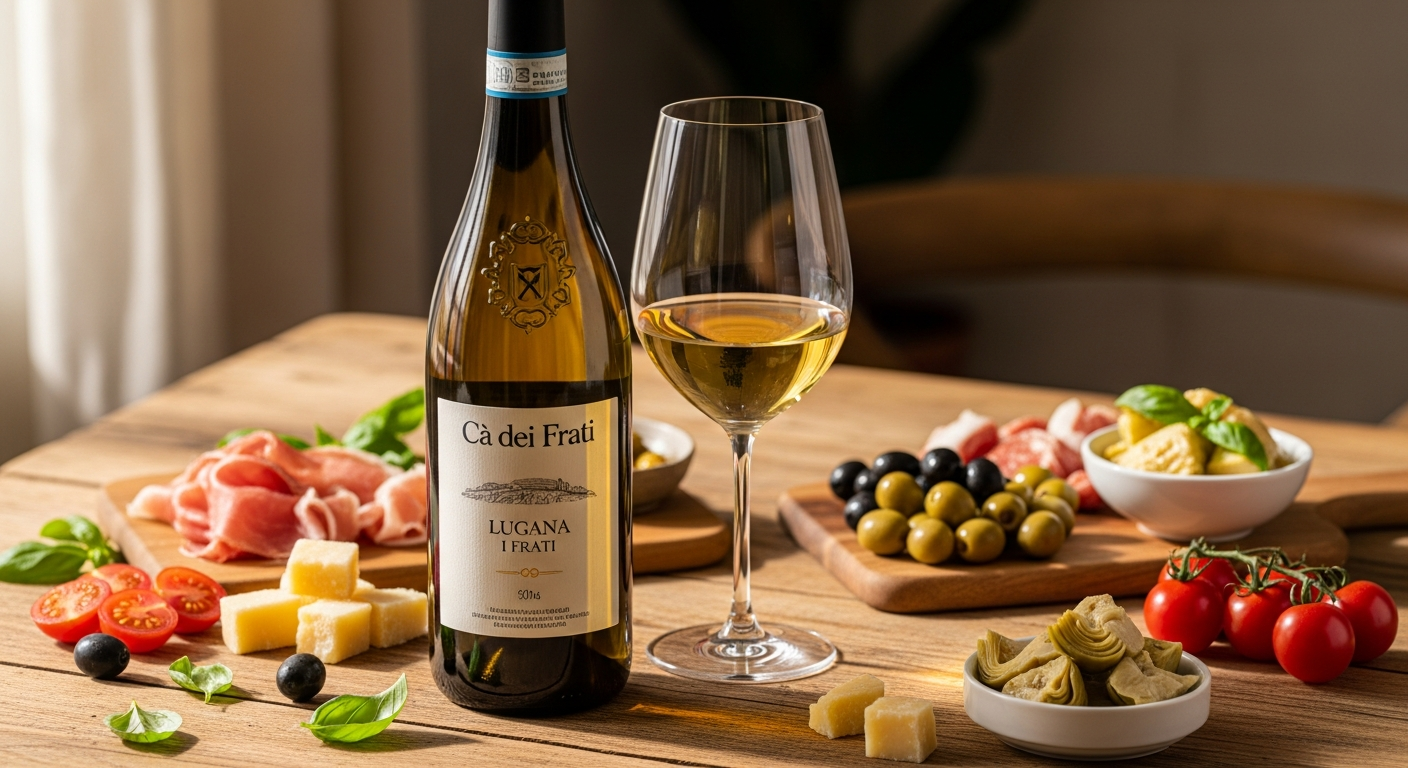
A single white wine from the shores of Lake Garda has quietly become the benchmark for an entire Italian wine region, commanding shelf space in restaurants and wine shops across the globe. The Cà dei Frati Lugana I Frati isn’t just another bottle—it’s a masterclass in how a single varietal, when treated with precision and respect, can express terroir in ways that rival far more celebrated regions.
Produced by a winery with roots stretching back to 1782, this flagship white wine represents something increasingly rare in today’s market: consistency without compromise. Made exclusively from Turbiana grapes—a native varietal that seems almost custom-designed for Lake Garda’s unique climate and soils—this wine delivers complexity, freshness, and minerality in a way that challenges the notion that great white wines must come from Burgundy or the Loire Valley.
Discover this acclaimed Lugana wine and explore the full collection at your favorite retailer.
The Terroir Story Behind Cà dei Frati’s Flagship Expression
Lake Garda’s Unique Microclimate
The proximity of Lake Garda to the vineyard creates ideal conditions for white wine production. The massive body of water moderates temperature extremes, preventing the sharp fluctuations that stress vines in continental climates. During cooler nights, the lake releases stored warmth, protecting grapes from frost damage. During hot days, the water’s cooling influence prevents overripeness, allowing the grapes to develop complexity while maintaining crisp acidity. This natural thermostat has made the region famous for whites with both power and refinement.
Calcareous-Clayey Soils
The mineral-rich earth surrounding Lake Garda imparts distinctive chalky and saline notes to the final wine. These soils are neither too heavy nor too light—they retain moisture during dry spells while draining excess water during heavy rains. The limestone content adds a layer of complexity that transforms simple fruit flavors into something more contemplative and food-friendly. This mineral signature is what sommeliers point to when describing why Lugana wines taste different from Trebbiano expressions elsewhere in Italy.
Turbiana Grape Heritage
Turbiana, also known as Trebbiano di Lugana, is virtually synonymous with Lugana DOC. Unlike its Trebbiano cousins in Tuscany or Umbria, this clone thrives specifically in Lake Garda’s conditions. The grape produces naturally higher acidity and more pronounced mineral character than other Trebbiano variants. It ripens slowly, developing complex aromatics while maintaining freshness—a balance that requires both skill and patience to achieve.
Elevation and Sun Exposure
The southern shores positioning of these vineyards influences both ripeness and acidity balance. The slope toward the lake captures maximum sunlight while the water’s reflective properties amplify UV exposure. This combination ripens the grapes thoroughly without stripping acidity, creating wines with natural structure and aging potential.
Winery History and Philosophy
Cà dei Frati’s 240-plus-year commitment to quality and regional expression sets the foundation for everything in the bottle. The winery hasn’t chased trends toward fruit-forward styling or over-extraction. Instead, it has remained devoted to expressing what the Lugana terroir naturally provides: elegance, minerality, and freshness.
Decoding the Sensory Profile—What You’ll Actually Taste and Smell
Visual Appearance
The wine presents a bright straw yellow color with subtle greenish reflections. This appearance tells you something important: the wine’s youth and freshness. Those greenish hues indicate the presence of chlorophyll compounds that fade as the wine ages, typically disappearing after 2-3 years in bottle. Young Lugana I Frati shows this characteristic green tint, confirming it’s been made to drink fresh rather than age into deeper golden tones immediately.
Aromatic Complexity
On the nose, the wine reveals an elegant and complex bouquet. Primary aromas include white flowers, apricot, and fresh almond—these come directly from the Turbiana grape itself. Secondary citrus and green apple characteristics emerge as the wine opens in the glass, developed during fermentation and maturation. Some bottles also show mineral undertones reflecting the unique terroir of the Lake Garda area.
Mineral Signature
The distinctive saline and chalky undertones form the wine’s backbone. These aren’t flavors you taste on the tip of your tongue—they’re more subtle, creating a sense of cleanness and a slight drying effect on the finish. Wine professionals describe this quality as “minerality,” and it’s what separates Lugana from cheaper, fruit-driven white wines.
Palate Structure
The palate is fresh, vibrant, and well-balanced. A pleasant acidity carries the wine across your mouth, leading to a long and refreshing finish. The structure is medium-bodied without being heavy, food-friendly without being thin. This balance makes the wine equally suitable as an aperitif or paired with dishes.
Vintage Variation
Some vintages reveal additional notes of yellow plum, hawthorn, peach, and rose petals. Warmer growing seasons produce more stone fruit character, while cooler years emphasize citrus and floral notes. These variations aren’t flaws—they’re proof that the wine genuinely reflects its vintage rather than being standardized through heavy intervention.
Temperature’s Impact on Perception
Serving temperature matters significantly. At 10-12°C, the wine’s aromatics are balanced—neither muted nor overly volatile. Too cold, and you’ll miss the complexity. Too warm, and the alcohol becomes prominent while acidity feels sharp rather than refreshing. This narrow window of ideal temperature is why the winery specifies this range so precisely.
Find your ideal vintage and order with confidence from trusted wine merchants.
Food Pairing Mastery—Beyond the Obvious Matches
Seafood Synergy
This wine elevates oysters, clams, grilled fish, and Mediterranean seafood preparations. The acidity cuts through the richness of butter-based sauces, while minerality complements briny, oceanic flavors. Raw preparations—oysters, ceviche, crudo—reveal the wine’s ability to enhance natural sweetness in seafood without overpowering delicate flesh.
Lighter Protein Pairings
Success extends beyond seafood. Poultry, veal, and white fish dishes without heavy sauces pair beautifully. The wine’s freshness doesn’t compete with subtle preparation methods—it amplifies them. Roasted chicken with herbs, veal piccata, or pan-seared halibut with lemon all show the wine’s versatility.
Cheese and Charcuterie
Fresh cheeses like mozzarella, ricotta, and goat cheese complement the wine’s mineral and fruity notes. Aged options like Parmigiano-Reggiano work equally well. The wine’s acidity cuts through richness while its fruit notes echo cheese flavors, creating natural harmony.
Aperitif Excellence
The wine’s structure and freshness make it ideal for pre-dinner sipping. Unlike some whites that become tiresome after a glass or two, Lugana I Frati maintains interest. Its complexity rewards attention without demanding it—you can simply enjoy the experience without analysis.
Unexpected Pairings
Vegetable-forward dishes, light pasta with cream sauces, and fresh herb-based preparations reveal the wine’s hidden dimensions. Risotto with asparagus, pasta with pesto, or summer vegetable tarts all work surprisingly well. The acidity cuts through richness while minerality echoes earthy vegetable flavors.
Temperature-Based Pairing Strategy
Adjust food choices based on how you’re chilling the wine. At the cooler end of the recommended range (10°C), pair with delicate dishes. As it warms slightly (12°C), it handles richer preparations. This flexibility makes it genuinely adaptable across multiple courses.
Restaurant Ordering Tactics
When this specific bottle isn’t available, identify similar wines: other Lugana DOC expressions, Vermentino from Sardinia, or Greco di Tufo from Campania. All share the mineral-driven, fresh profile that makes Lugana I Frati special. Ask your sommelier for recommendations within the same price range and style category.
Stainless Steel Versus Oak—Why This Wine Skips the Wood
The Stainless Steel Advantage
Fermentation in stainless steel preserves the wine’s natural freshness and varietal character. Steel doesn’t impart oak’s vanilla, spice, or toasted notes—it remains neutral, allowing Turbiana’s authentic flavors to dominate. This approach requires confidence in the grape itself, something Cà dei Frati clearly possesses.
Fine Lees Maturation
Sur lie aging contributes complexity without oak influence. The wine remains in contact with yeast sediment for several months after fermentation, developing richer texture and subtle nutty notes. This technique creates apparent weight and sophistication without requiring wood aging or extended bottle time.
Mineral Expression
Avoiding oak allows the terroir-driven mineral notes to shine through clearly. Oak-aged whites often display vanilla and spice that obscure subtle minerality. By skipping wood entirely, Lugana I Frati lets Lake Garda’s unique soil character take center stage.
Acidity Preservation
Steel fermentation maintains the wine’s vibrant, food-friendly acidity profile. Oak contact, even brief exposure, can soften acidity slightly. Cà dei Frati preserves this sharpness intentionally, knowing it’s fundamental to both aging potential and food compatibility.
Cost-Benefit Reality
This production method delivers premium quality at mid-range pricing. Stainless steel equipment is less expensive than oak barrels, and the shorter production timeline reduces costs. These savings are passed to consumers without sacrificing quality—a rarity in today’s market.
Comparison to Oak-Aged Alternatives
Some producers make oaked Lugana expressions. These wines develop broader, softer profiles with obvious wood influences. They’re excellent for different occasions—perhaps roasted chicken or richer fish preparations. Lugana I Frati’s steel-aged expression excels at seafood, aperitifs, and situations where mineral freshness matters most.
Investment Potential—Should You Buy Multiples for Your Cellar?
Aging Trajectory
This wine develops more profound mineral notes and complexity over 3-7 years. Young bottles show fruit-forward characteristics that gradually fade, revealing deeper saline and chalky undertones. The wine doesn’t become a different expression—it simply becomes more contemplative.
Peak Drinking Windows
Recent releases (current vintage and one year prior) showcase youthful freshness and bright fruit. At 3-5 years of age, the wine enters what many consider its sweet spot—ripe enough for subtlety, young enough for vibrancy. Beyond 7 years, bottles begin declining unless stored in ideal conditions. Most bottles are best drunk within their first decade.
Vintage Consistency
Cà dei Frati maintains quality across varying growing conditions. While warmer and cooler years show stylistic differences, all recent vintages deliver the core character wine enthusiasts expect. This consistency justifies buying multiple bottles without fear of vintage roulette.
Storage Considerations
Proper conditions for cellaring mean cool temperatures (45-65°F), minimal light exposure, and consistent humidity. Horizontal storage keeps corks moist, preventing oxidation. If you lack ideal storage conditions at home, consider purchasing only bottles you’ll drink within 1-2 years.
Value Retention
This wine holds value reasonably well compared to other Italian whites, though it’s not a true investment vehicle like top Barolo or Brunello. If you purchase at €16-€18 retail, expecting to recoup that investment through future appreciation is unrealistic. However, bottles don’t depreciate significantly if stored properly.
Collector Appeal
Wine enthusiasts and sommeliers consistently recommend this bottle for cellaring. Its aging potential and consistency create confidence that bottles purchased today will improve over time, not decline. This makes it ideal for wine lovers building modest cellars rather than investors seeking rapid returns.
Risk Factors
Vintage availability is the primary concern. Older releases may be difficult to locate in some markets, and prices escalate accordingly. Market fluctuations affect all wines, but Lugana I Frati’s solid reputation provides some protection against dramatic price swings.
The Practical Guide—Selection, Pricing, and Availability Realities
Price Point Breakdown
A 750ml bottle typically ranges from €16 to €25, or $17 to $25 USD, depending on vintage and retailer. Recent releases sit at the lower end of this range, while older vintages command premium prices. Currency fluctuations and local taxes influence pricing across different markets.
Where to Find It
Online retailers, specialized wine shops, and upscale restaurants stock this wine regularly. European retailers typically offer better pricing than North American sources due to shipping distances. Restaurant markups range from 100-150%, so purchasing retail for home consumption provides better value.
Vintage Navigation
Recent releases represent the safest choice—they’re abundant, fairly priced, and showcase the wine’s youthful character. If seeking older bottles for cellaring, expect higher prices and verify storage history before purchasing. Ask retailers how long their stock has been stored and under what conditions.
Counterfeit Awareness
Red flags when buying premium Italian wines online include suspiciously low pricing, vague seller information, and lack of shipping insurance options. Reputable retailers provide authentication details and protect against counterfeits. When in doubt, purchase from established wine merchants rather than unknown sellers.
Retailer Comparison
Price variations between regions reflect import duties, taxes, and distribution networks. European buyers typically find better pricing than American or Australian consumers. International shipping adds costs that sometimes make purchasing locally more economical.
Storage and Shipping
Request insulated shipping for warm-season purchases. Professional wine retailers use temperature-controlled containers that protect bottles during transit. Upon arrival, store immediately in cool conditions rather than leaving cases at room temperature.
Return Policies
Legitimate retailers accept returns for bottles that arrive compromised or damaged. Leaking bottles, cork issues, or obvious mishandling justify refunds or replacements. Understand each retailer’s specific policy before purchasing.
Why Wine Critics and Sommeliers Keep Coming Back to This Bottle
Award History
Lugana I Frati has received consistent recognition from major wine competitions and critical publications. These accolades aren’t based on rarity or price point—they reflect genuine quality and consistency. Awards from Decanter and other prestigious sources confirm what wine professionals already knew.
Sommelier Perspective
Restaurant professionals recommend this wine to diverse clientele because it bridges gaps. Experienced drinkers appreciate its complexity and aging potential. Newer enthusiasts enjoy its approachability and lack of pretension. Few wines manage this balancing act so effectively.
Benchmark Status
This wine set the standard for modern Lugana expressions. Other producers use it as a reference point when developing their own styles. This influence extends beyond just the winery—it shaped how the entire region is perceived by international markets.
Accessibility Paradox
Why remains a wine this acclaimed so approachable rather than pretentious? The answer lies in the winery’s philosophy. Cà dei Frati makes wine for drinking, not for impressing. This unpretentious approach has paradoxically elevated the wine’s reputation among those who recognize authenticity.
Consistency Factor
Cà dei Frati maintains quality that justifies repeated purchases. Wine drinkers develop trust through consistency—knowing that a bottle purchased today will match bottles purchased five years ago. This reliability creates loyalty that transcends price considerations.
Educational Value
Wine educators use this bottle to teach about Italian terroir and varietal expression. Its clear mineral character, bright acidity, and distinctive style make it an excellent reference point for understanding how environment shapes wine. Many sommeliers recommend tasting this wine as part of learning about Italian whites.
Reputation Across Markets
Global recognition translates to local availability in most wine-conscious markets. Whether you’re shopping in London, New York, or Melbourne, Lugana I Frati typically appears on wine shop shelves. This widespread distribution reflects genuine demand rather than marketing hype.
The Honest Assessment—When This Wine Might Not Be Your Best Choice
Budget Constraints
If you’re looking to spend under €15, alternatives exist. Pinot Grigio from various regions, Vermentino, or house white selections offer decent quality at lower price points. Lugana I Frati’s quality step-up is worth the premium only if your budget accommodates it comfortably.
Vintage Hunting Challenges
Limited availability of specific older releases frustrates collectors in some markets. If you’re hunting for a particular vintage from a special occasion, you might face difficulty or inflated pricing. Stick with recent releases if this is a concern.
Flavor Profile Mismatch
Mineral-driven wines don’t appeal to everyone. If you prefer heavily oaked or fruit-forward styles, Lugana I Frati’s mineral emphasis might seem austere. Taste a glass before committing to a full bottle to ensure the style suits your preferences.
Regional Preferences
Markets where Lugana remains underappreciated compared to other Italian regions (parts of North America, for instance) may show limited selection or higher pricing. In these areas, substitutes like Gavi or Greco di Tufo might offer better local availability.
Storage Limitations
Cellaring potential matters less if you prefer drinking wines immediately. The wine’s aging ability is valuable only if you have proper storage conditions. For immediate consumption, focus on recently released vintages rather than older bottles.
Tasting Fatigue
Mineral-driven wines might not suit every palate or occasion. If you’re hosting a group with diverse preferences, consider offering both mineral-driven and fruit-forward options. Some guests will gravitate toward this style; others will prefer something different.
Occasion Specificity
When bolder or more dramatic wines better suit your gathering—perhaps a celebration requiring something more expressive or fruit-forward—Lugana I Frati might feel too restrained. Save this bottle for occasions where elegance and food compatibility matter most.
Your Next Bottle Awaits
The Cà dei Frati Lugana I Frati stands apart—not because it’s rare or impossibly expensive, but because it delivers on a promise that too many wines break: genuine quality that improves your experience without requiring a wine degree to appreciate. Whether you’re planning a seaside dinner, stocking your cellar with wines that age gracefully, or simply searching for a reliable bottle that won’t disappoint, this Turbiana-based expression deserves consideration.
Your next step is straightforward: grab a bottle at your preferred price point, chill it to 10-12°C, and taste for yourself why this wine has earned its reputation. Start with a recent vintage to experience its youthful freshness, then revisit an older release later to discover how it evolves.
Explore the complete selection of Lugana wines and place your order today.
Leave a Reply