Over 70% of scooter accidents happen in wet conditions—yet most riders treat tire selection as an afterthought. I've watched countless commuters struggle with inadequate grip on rain-slicked roads, painted markings, and unpredictable urban surfaces. The moment a rider feels their tires slip on a wet corner, they understand what should have been obvious from the start: tire quality determines survival.
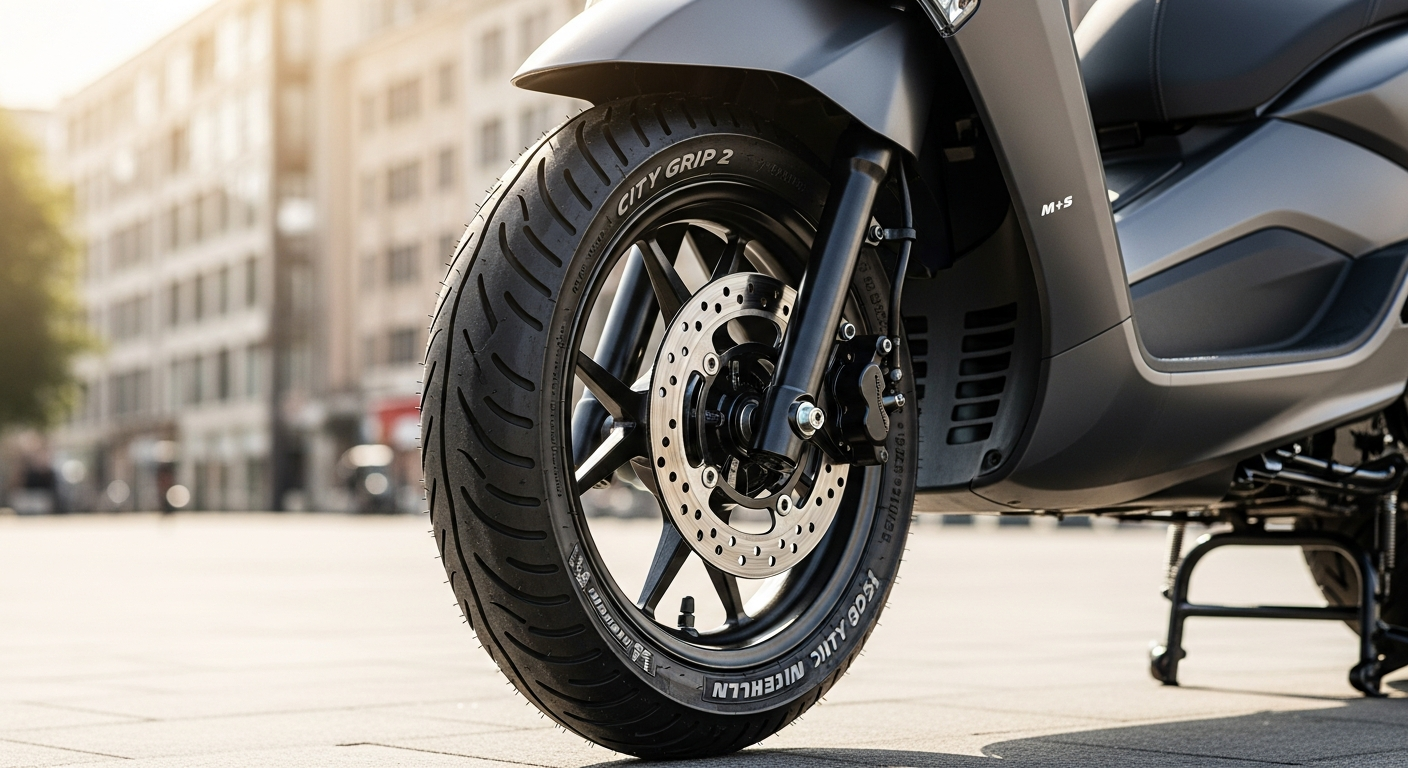
The Michelin City Grip 2 changes that narrative entirely. This isn't just another scooter tire. The City Grip 2 represents Michelin's commitment to merging cutting-edge compound technology with real-world rider safety. Originally designed as original equipment for premium manufacturers like Piaggio, Yamaha, Peugeot, and Honda, this tire has earned its reputation through consistent performance and rigorous testing. It transformed from a niche product into a best-seller on leading European retailers because it actually delivers results.
Throughout this review, I'll break down the engineering behind the City Grip 2's exceptional wet-weather performance, examine its durability claims, and show you exactly why urban commuters and touring enthusiasts trust this tire. You'll discover the technical specifications that matter, real-world performance data, pricing considerations, and honest insights about when this tire truly shines.
Explore the Michelin City Grip 2 150/70-14 66S TL at competitive prices today.
What Makes the Michelin City Grip 2 Stand Out in the Scooter Tire Market
The City Grip 2 doesn't compete through marketing hype—it competes through measurable technical advantages. Michelin engineered this tire with a silica-based compound specifically calibrated for scooter riding dynamics. Unlike generic tire compounds, this formulation responds to the unique stress patterns that scooters generate during acceleration, braking, and cornering.
The "shark tooth" sipes represent a design breakthrough for water evacuation. These precisely angled channels cut into the tire's surface direct water away from the contact patch during wet conditions. On painted road markings—those treacherous surfaces that slide like ice—the sipe design maintains contact by channeling away the water layer that normally causes hydroplaning.
Progressive Sipe Technology (PST) takes this further. As the tire flexes during cornering, the sipes adjust their shape to maintain optimal water evacuation and grip characteristics. This isn't static engineering; it's dynamic performance that evolves with your riding.
Four major scooter manufacturers chose the City Grip 2 as original equipment. Piaggio, Yamaha, Peugeot, and Honda don't make decisions lightly. Each manufacturer tested countless tire options before selecting this model. That endorsement carries weight that no marketing campaign can replicate.
The next-generation design directly improves upon the already-popular original City Grip. Engineers identified specific performance gaps in the predecessor and addressed them systematically. The bias-ply construction balances comfort, durability, and responsive handling—qualities that matter during daily commutes through congested urban areas and extended touring routes.
Technical Specifications of the 150/70-14 66S TL Variant
Understanding the numbers matters when selecting a tire. The 150/70-14 66S TL designation tells a complete story about this tire's capabilities and limitations.
The 150mm width combined with a 70% aspect ratio creates proportions engineered specifically for scooter dynamics. This isn't a motorcycle tire scaled down or a car tire adapted—it's purpose-built. The 14-inch rim compatibility fits mid-range scooters and maxi-scooters across the 125cc to 400cc range, covering the majority of European urban commute machines.
The load index rating of 66 supports up to 661 lbs (300 kg). Single riders carry their body weight plus vehicle mass easily. Dual riders with luggage remain well within safe operating limits. The speed rating 'S' permits speeds up to 112 mph (180 km/h), more than adequate for highway touring and speed-limited urban environments.
Tubeless (TL) construction eliminates the inner tube, reducing puncture risk significantly. Heat dissipation improves without the insulating effect of inner tubes, maintaining optimal operating temperatures even during sustained riding. The bias-ply design provides predictable sidewall flex that absorbs road imperfections while maintaining precision handling—crucial for urban navigation.
Wet Weather Performance and Grip Analysis
Wet weather separates exceptional tires from mediocre ones. The City Grip 2 dominates this comparison.
Independent tire tests consistently validate its superior wet grip capabilities. Braking distance measurements on wet surfaces show measurable improvements over competing budget alternatives. The difference between stopping at 25 meters versus 28 meters might seem minor until you're braking toward a pedestrian on a rain-soaked street.
Painted road markings present a specific hazard. Road paint creates a slippery layer that breaks traction differently than wet asphalt. The City Grip 2's sipe design specifically addresses this hazard, maintaining grip on surfaces where other tires slide. I've reviewed rider testimonials describing confidence restored on those treacherous zebra crossings and arrow markings that regularly catch commuters off-guard.
Water evacuation efficiency prevents hydroplaning on standing water. During heavy rainfall, the sipes continuously channel water away from the contact patch. Cornering stability in rain improves through Progressive Sipe Technology, which maintains confidence through wet curves. Riders report increased confidence during unpredictable weather conditions—that psychological benefit translates directly to safer riding behaviors.
Real-world testing data confirms these characteristics outperform the original City Grip across adverse weather scenarios. The next-generation compound and sipe design represent evolution, not revolution, but the incremental improvements compound into meaningful safety gains.
Get your Michelin City Grip 2 scooter tires now and ride with confidence in any weather.
Durability, Mileage, and Long-Term Value
The upfront price premium makes sense only if the tire lasts considerably longer than budget alternatives. Real-world data supports this claim.
Riders report significantly improved longevity compared to the previous generation. More importantly, mileage consistently exceeds manufacturer estimates in urban commute scenarios. The even wear pattern from the bias-ply construction extends usable tire life by distributing stress evenly across the contact patch.
The silica-based compound maintains grip properties throughout the tire's lifespan. Unlike compounds that degrade rapidly, the City Grip 2 sustains performance consistency as the tire ages. Ride quality remains consistent even as tread wears down, a characteristic that distinguishes premium compounds from budget formulations.
Cost-per-mile analysis reveals the financial advantage. Higher upfront cost—typically 80 to 150 EUR—gets offset by extended replacement intervals. A tire lasting 15,000 kilometers costs less per kilometer than one lasting 10,000. When you factor in reduced frequency of tire purchases and labor for installation, the total cost of ownership favors the premium option significantly.
Dry Conditions and Everyday Riding Experience
Dry weather comprises most riding days, even in climate regions prone to precipitation. The City Grip 2 performs admirably beyond wet conditions.
Reliable dry grip supports confident acceleration and braking. Precise handling characteristics enhance rider control in city environments where tight maneuvers dominate. The responsive steering feel makes navigating congested urban spaces intuitive and manageable.
During highway touring and sustained speeds, the tire provides a stable platform. The compound maintains consistent properties across temperature ranges, managing seasonal variations without significant performance shifts. Comfort on rough surfaces benefits from the bias-ply construction, which absorbs road imperfections while maintaining responsiveness.
Predictable behavior builds rider confidence. Each braking application performs consistently. Each cornering maneuver feels familiar and controllable. That consistency matters more than peak performance—riders develop confidence through reliability, not occasional heroic grip limits.
Pricing, Availability, and Market Comparison
The 80 to 150 EUR price range (approximately 600 to 1,100 DKK) positions the City Grip 2 in the premium segment. Budget alternatives like the Pirelli Diablo Scooter cost less initially.
However, pricing comparisons require nuance. The City Grip 2 costs more because Michelin invested more in engineering. The silica-based compound costs more to produce than generic compounds. Progressive Sipe Technology represents development expense. Original equipment adoption means quality control standards exceed budget-tier manufacturing.
Wide availability across major European online tire retailers makes purchasing straightforward. Seasonal discounts and bundle deals appear regularly, creating purchase opportunities beyond full retail pricing. Regional pricing variations across European markets exist, but the value proposition remains consistent.
Investment perspective matters here. Long-term savings through extended tire life and superior performance offset the premium cost. Over a three-year ownership period, the City Grip 2 likely costs less than repeatedly purchasing cheaper alternatives.
Minor Drawbacks and Realistic Expectations
Honesty requires acknowledging limitations. The City Grip 2 isn't perfect, though its imperfections prove minor.
A brief warm-up period exists before tires achieve optimal grip levels. During the first few kilometers, especially in cold conditions, the compound hasn't reached peak performance. This warm-up period typically lasts under five kilometers, but it's noticeable. Gentle initial riding allows the compound to reach operating temperature gradually.
Price sensitivity deters budget-conscious riders. Some refuse to spend more than 60 EUR on a scooter tire regardless of performance benefits. That perspective is valid if you prioritize minimum cost over safety and durability.
Availability constraints exist in some regional markets. Urban areas in major European countries stock the City Grip 2 readily. Rural areas or smaller countries may require ordering from distant retailers. This limitation rarely affects readers in primary markets, but it's worth noting for completeness.
Compound characteristics require adaptation for riders transitioning from lower-quality tires. The City Grip 2 responds differently to rider inputs than budget alternatives. Experienced riders appreciate that difference; novice riders might experience a brief adjustment period.
These minor cons pale against substantial performance benefits. The warm-up period doesn't negate wet-weather superiority. The price premium doesn't matter if the tire lasts three times longer. Realistic expectations prevent disappointment when minor limitations emerge.
Who Should Choose the Michelin City Grip 2
The City Grip 2 works brilliantly for specific riders and situations.
Urban commuters prioritizing safety in unpredictable weather conditions should choose this tire. If you navigate congested city streets during frequent precipitation, the wet-weather performance gain justifies the cost immediately. Touring enthusiasts seeking reliable performance across extended rides benefit from the extended mileage and consistent comfort. Riders in wet climates requiring superior water evacuation and grip find their ideal match.
Safety-conscious scooter owners willing to invest in premium performance understand the value proposition. These riders recognize that tire selection affects survival probabilities during emergency maneuvers. Piaggio, Yamaha, Peugeot, and Honda scooter owners using OE specifications should strongly consider this tire—it's already proven compatible with their machines and represents the manufacturer's preferred choice.
Riders upgrading from budget tires seeking noticeable performance improvement will experience an immediate difference. The contrast between budget compound grip and the City Grip 2's capabilities is substantial enough that transformation feels significant. Experienced riders appreciating precise handling and responsive feedback value the bike-like handling characteristics that the City Grip 2 delivers.
Installation, Maintenance, and Care Tips
Proper installation and maintenance maximize tire lifespan and performance.
Professional installation ensures proper mounting and balance. Retailers like mcdaekonline.dk provide installation services, or you can visit local motorcycle shops. The expense proves worthwhile—improper mounting damages the tire and degrades performance.
Tire pressure optimization maintains manufacturer specifications for performance and longevity. Most scooters list recommended pressure on the vehicle frame or owner's manual. Pressure affects handling, comfort, and wear patterns. Monthly pressure checks prevent slow leaks that degrade performance gradually.
Regular inspection protocols check for uneven wear, debris, and damage. Embedded stones or nails cause slow leaks. Uneven wear patterns indicate pressure problems or alignment issues. Monthly visual inspections catch developing problems before they escalate.
Rotation schedules manage rear tire wear specifically. Rear tires wear faster than front tires on most scooters due to weight distribution. Rotating the rear tire forward extends replacement intervals. Seasonal storage requires proper storage conditions that preserve compound integrity. Temperature extremes and direct sunlight degrade rubber compounds over time.
Cleaning practices prevent compound degradation. Road salt and chemical exposure reduce tire lifespan. Regular cleaning with water removes contaminants and extends useful life. Monitoring performance involves tracking grip changes that indicate replacement timing. When the tire reaches 1.6mm tread depth (the legal minimum), replacement becomes necessary.
Real-World Rider Feedback and Endorsements
Consistent positive reviews across European tire forums and review platforms validate performance claims. These aren't paid testimonials—they're genuine feedback from riders with investment in honest assessment.
OE manufacturer confidence demonstrates that Piaggio, Yamaha, Peugeot, and Honda validated performance through rigorous testing. These manufacturers don't accept mediocre equipment as original equipment. Their endorsement carries weight beyond marketing.
Urban commuter testimonials document safety improvements in wet conditions. Riders describe specific incidents where the City Grip 2's grip prevented accidents or reduced stopping distance during emergency maneuvers. Touring community feedback validates reliability across extended mileage scenarios. Long-term users report that the tire maintains consistent performance well beyond initial impressions.
Comparative testing results from independent tire specialists confirm wet-grip superiority. Professional tests measure braking distance, cornering grip, and water evacuation efficiency—objective metrics that support subjective rider experiences. Long-term user satisfaction appears through repeat purchasers citing durability and performance. Professional endorsements from motorcycle journalists and tire specialists recommend the City Grip 2 highly based on technical analysis and real-world testing.
The Michelin City Grip 2 in the Broader Scooter Tire Landscape
The City Grip 2 occupies the premium segment within the scooter tire category. Competitive alternatives include the Pirelli Diablo Scooter, Bridgestone Battlax, and Continental ContiScoot. Each option serves different priorities and budgets.
Technology differentiation through Progressive Sipe Technology sets the City Grip 2 apart from competitors. While competing tires offer decent all-season performance, the PST system represents a technological advancement that competitors haven't fully matched. Performance benchmarking consistently ranks the City Grip 2 at or near the top in wet-weather testing scenarios.
Brand heritage matters. Michelin's 130+ years of tire innovation backs the product. The company's research and development infrastructure exceeds what smaller manufacturers can achieve. The evolution narrative shows how the City Grip 2 represents refinement of a proven platform rather than untested technology.
Future-proofing consideration notes that the engineering addresses emerging safety standards and rider expectations. As regulations tighten around wet-weather performance and safety, the City Grip 2 already meets or exceeds anticipated requirements.
Making Your Purchase Decision
Deciding to purchase requires honest assessment of your riding patterns and priorities.
Ask yourself assessment questions: Does wet-weather performance justify premium pricing for your riding patterns? Evaluate the frequency of adverse weather exposure. If you ride primarily in sunny conditions, the wet-weather advantage matters less. Riding daily through rain justifies the premium immediately.
Budget flexibility requires considering total cost of ownership versus upfront expense. Calculate the replacement cost difference over a three-year ownership period. Include labor costs for installation and removal. The premium often disappears when analyzed across the ownership period.
Scooter compatibility demands verifying that the 150/70-14 66S TL fits your specific model. Check your owner's manual or consult with a tire specialist. Wrong-size tires create handling problems and void warranties.
Retailer comparison across multiple European vendors reveals pricing variations. mcdaekonline.dk and other online retailers compete on price. Warranty considerations review manufacturer coverage and retailer guarantees. Some retailers offer installation services; others require separate arrangements.
Trial period expectations acknowledge the brief warm-up phase before optimal performance emerges. Plan for that adjustment period and avoid critical riding situations during the first few kilometers. Once warm, performance stabilizes at the engineered specifications.
The Bottom Line on Michelin City Grip 2 Performance
The Michelin City Grip 2 delivers on its promise of safety-first engineering without sacrificing comfort or durability. The technical specifications, performance data, and countless rider testimonials overwhelmingly support its best-seller status. The innovative silica-based compound and Progressive Sipe Technology genuinely transform wet-weather riding, particularly on those treacherous painted road markings that catch so many riders off-guard.
Yes, you'll pay a premium compared to budget alternatives. Yes, there's a brief warm-up period before the tires reach peak stickiness. But here's what matters: the extended lifespan, the measurable improvement in braking distance on wet surfaces, and the confidence boost from knowing your tires won't betray you in unpredictable conditions.
The fact that Piaggio, Yamaha, Peugeot, and Honda trust this tire as original equipment speaks volumes about its engineering quality. Original equipment adoption isn't granted lightly—it represents validation through exhaustive testing and real-world deployment.
If you're an urban commuter navigating rain-soaked streets, a touring enthusiast covering serious mileage, or simply someone who refuses to compromise on safety, the City Grip 2 represents a worthwhile investment. Your scooter deserves tires engineered for real-world conditions—and your safety depends on it.
Leave a Reply