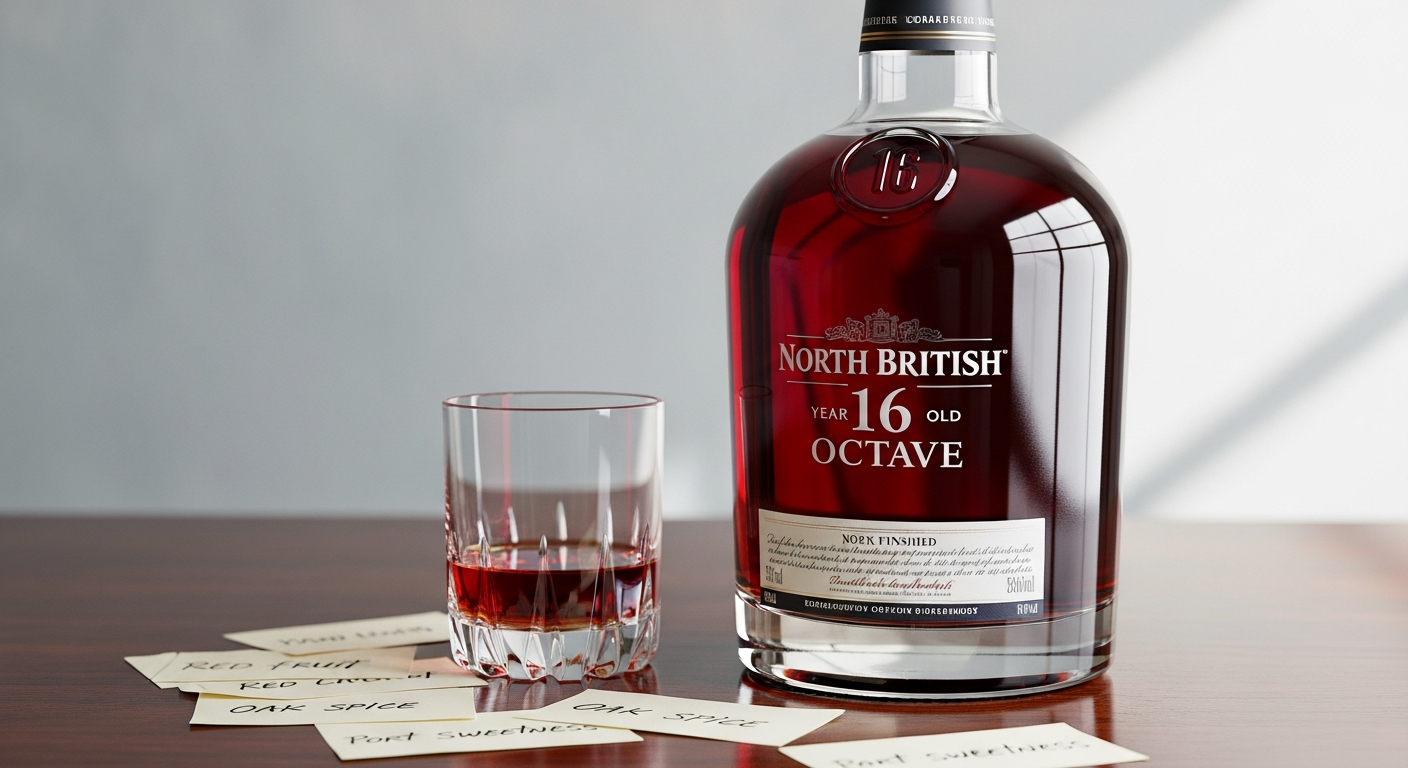
Grain Whisky Mastery: The North British 16 Year Old Octave Story
Introduction
Only 92 bottles exist of this particular expression, yet it has become one of the most sought-after single grain whiskies on the secondary market. North British Distillery has quietly produced some of Scotland's finest grain spirit since 1885, though most drinkers encounter it blended into famous names rather than bottled solo. This Duncan Taylor independent release changes that narrative entirely by finishing 16-year-old grain whisky in Ruby Port octave casks, creating a dessert-leaning expression that bridges the gap between traditional Scotch drinkers and bourbon enthusiasts.
The whisky world has long underestimated grain spirits, viewing them primarily as blending components rather than worthy standalone expressions. North British grain, in particular, has fueled some of Scotland's most celebrated blends without receiving individual recognition. That oversight ends here. When a small independent bottler like Duncan Taylor selects premium grain spirit and subjects it to intelligent cask finishing in octave vessels, the results speak for themselves—complex, layered, and unmistakably premium.
Discover the North British 16 Year Old Octave on The Whisky World today.
What Makes Octave Cask Finishing Different From Standard Barrel Aging
Understanding octave casks requires stepping back from conventional barrel-aging logic. Standard Scotch whisky matures in 225-liter hogsheads or butts, the industry norm for decades. Octave casks, by contrast, hold approximately 50 liters—roughly one-quarter the volume of a traditional barrel.
This size difference fundamentally alters the maturation equation. The increased surface area-to-volume ratio means the spirit makes contact with far more wood surface per unit volume. Wood interaction accelerates dramatically. Tannin extraction, color development, and flavor concentration all happen faster. A whisky aged 16 years in an octave cask develops complexity that might take 20+ years in a standard barrel.
Ruby Port octave casks introduce their own dimensional layer. Port wine casks have been seasoned in Ruby Port for years, impregnating the wood with fruity sweetness, wine tannins, and vanilla character. When young grain spirit enters these vessels, it absorbs these characteristics intensely. The result is a whisky with pronounced red berry notes, port wine sweetness, and enhanced vanilla that feels luxurious rather than forced.
The smaller cask size also prevents one common pitfall of cask-finished spirits—over-extraction. Standard barrels allow distillers to push maturation boundaries without the spirit becoming overwhelmingly tannic or woody. Here, the 54.3% ABV keeps everything in proportion, amplifying flavor intensity without harshness.
North British Distillery's Legacy in Single Grain Scotch
North British Distillery sits in Edinburgh's Leith district, established in 1885 as a Lowland grain producer. The timing was crucial—the distillery emerged during Scotland's industrial whisky boom, positioned perfectly to supply the blending houses hungry for consistent, high-quality grain spirit.
Over 135+ years, North British became the backbone for some of whisky's most celebrated blends. Johnnie Walker, Chivas Regal, Ballantine's—these global powerhouses rely on North British grain as foundational spirit. Blenders prize it for its versatility, clean character, and excellent aging potential. That reputation matters because it reveals something essential: North British produces genuinely excellent grain spirit, not a commodity filler.
Yet most whisky drinkers never taste North British on its own terms. They encounter it anonymously within blends, its individual character subsumed into broader flavor profiles. This invisibility persists because grain whisky traditionally hasn't occupied the single-spirit marketplace. Independent bottlers have begun changing that calculation, recognizing that grain spirit from quality distilleries deserves standalone recognition.
North British's emergence as a celebrated single grain whisky marks a genuine philosophical shift. The distillery's reputation for producing clean, versatile spirit with excellent aging potential translates directly into expressions like this Duncan Taylor release. When you taste this 16-year-old, you're experiencing what 135+ years of institutional knowledge and consistent quality looks like in bottled form.
Tasting Profile: A Complete Sensory Breakdown
The nose presents immediately with red berries and cherry compote, followed by sweet port wine notes that feel natural rather than artificial. Vanilla emerges underneath, balanced by polished oak that grounds the sweetness. The aromatic profile feels complete, inviting deeper exploration.
On the palate, the experience becomes richer. Raspberry and dark chocolate dominate initial impressions, with warming spices rising from the midpalate. The mouthfeel stays rounded and substantial without becoming heavy. The texture suggests quality maturation—the spirit coats the mouth with presence but never overwhelms.
The finish rewards patience. Port sweetness lingers, accompanied by an oak grip that feels assertive but not harsh. Gentle warmth follows, creating a satisfying conclusion that encourages another sip. The finish length indicates serious cask interaction and maturation—this isn't a whisky that fades quickly.
The 54.3% ABV amplifies all these characteristics without introducing burn or chemical harshness. The proof feels purposeful, allowing flavors to express themselves fully while maintaining balance and elegance.
Pricing Reality: What You'll Actually Pay for This Bottle
Pricing on this specific bottling creates immediate complexity. The Whisky World lists it at £57.90 (£48.25 ex. VAT), positioning it as an accessible entry point into premium independent bottlings.
This price seems almost suspiciously generous when secondary market comparisons emerge. Similar Duncan Taylor North British 16 Year Old Octave bottlings from other retailers command approximately £99.95—a 72% premium. Signatory Vintage offerings of North British 2009 (slightly younger at 15 years) range from $99.00 to $129.00 USD, further illustrating how rare these expressions have become.
The scarcity of only 92 bottles produced directly influences market pricing and availability. With fewer than 100 bottles in existence globally, every bottle that reaches the market matters. Collectors and enthusiasts pursuing these releases create demand that far exceeds supply, naturally driving secondary market prices skyward.
The Whisky World's pricing might represent a recent acquisition at favorable wholesale rates, or a strategic pricing decision to move inventory quickly. Either way, at £57.90, this represents exceptional value that won't persist indefinitely.
Check current availability and pricing on The Whisky World.
Who Should Actually Buy This Whisky
Experienced Scotch drinkers seeking something beyond standard blended expressions find obvious appeal here. The complexity justifies the premium, and the grain whisky foundation offers a different sensory experience than malt-focused alternatives.
Bourbon drinkers transitioning to Scotch discover particular value in this release. The fruit-forward, dessert-leaning profile feels approachable while introducing genuine complexity. Unlike some Scotches that overwhelm transitioning drinkers with smoke or earthiness, this expression meets them halfway—familiar sweetness combined with sophisticated cask interaction.
Collectors hunting limited independent bottlings and rare grain whiskies cannot overlook 92-bottle releases from respected independent bottlers. The scarcity alone justifies acquisition, particularly at a price point that won't require remortgaging.
Dessert whisky enthusiasts gravitate naturally toward port-finished spirits with pronounced fruit character. This bottling checks every box for those seeking the sweet end of the whisky spectrum.
Conversely, budget-conscious drinkers and those preferring lighter grain spirits will find limited appeal. This expression demands appreciation for intense flavors, dessert-style profiles, and premium cask finishing—it's not an entry-level purchase.
Alternatives If You Can't Secure This Bottle
If this particular Duncan Taylor release proves unavailable, the independent bottler's catalog contains other North British expressions worth pursuing. Different ages and cask finishes offer varied flavor profiles while maintaining the distillery's characteristic quality.
Signatory Vintage represents another respected independent bottler with strong North British inventory. Their releases offer similar quality and complexity at comparable price points, though each bottling brings its own character based on specific cask selection.
Beyond North British specifically, other grain whiskies with octave or port cask finishing options deliver similar sensory experiences. Girvan, Invergordon, and Cameronbridge represent alternative grain distilleries with independent bottlings that approach comparable flavor profiles.
Lowland single grains more broadly offer dessert-leaning profiles and accessible complexity. While they may lack the specific North British character, they provide entry points into quality grain whisky appreciation.
Your Next Move in the Grain Whisky Journey
The North British 16 Year Old Octave isn't merely another premium whisky—it represents a masterclass in what occurs when quality grain spirit encounters intelligent cask finishing. The combination of octave cask intensity, Ruby Port sweetness, and 16 years of methodical maturation creates something genuinely special.
At £57.90, this particular bottling represents exceptional value compared to secondary market pricing of nearly double that amount. However, availability remains the real challenge. With only 92 bottles produced, scarcity dictates reality. If you discover one, the decision becomes straightforward—secure it. The secondary market trajectory suggests prices will only climb from here.
If this specific release proves elusive, the alternatives outlined above will keep your collection advancing. Other Duncan Taylor releases, Signatory Vintage bottlings, and quality grain expressions from competing distilleries all merit consideration.
Most importantly, North British's emergence as a celebrated single grain whisky marks a significant shift in how the whisky world appreciates Scotland's grain distilleries. For too long, these exceptional producers remained invisible behind blended labels. Independent bottlers and discerning drinkers are reclaiming that narrative, recognizing grain spirit for what it truly is: a sophisticated, complex foundation worthy of standalone celebration.
Leave a Reply