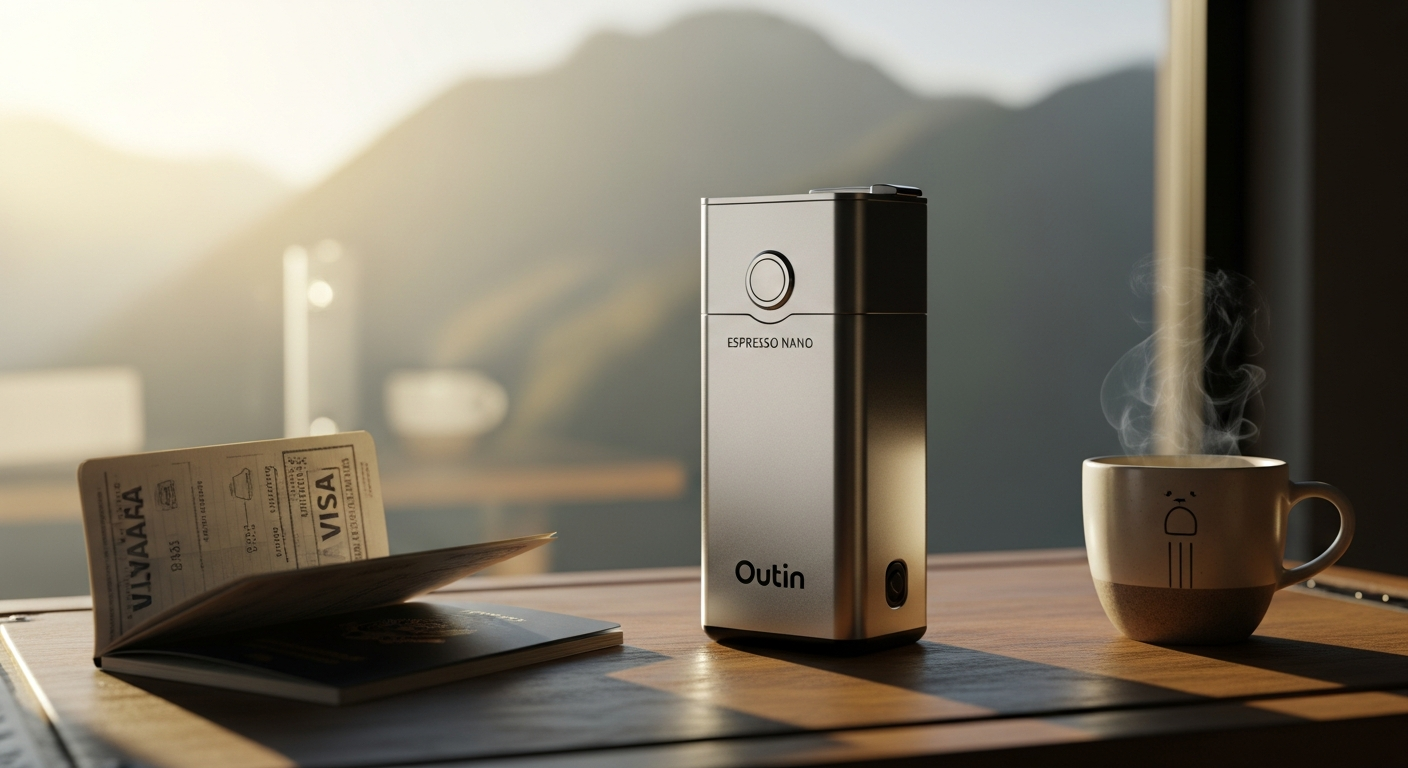
Why the 20-Bar Pressure System Matters for Authentic Espresso Extraction
True espresso requires pressure—specifically, a minimum of 9-10 bars to force hot water through finely ground coffee and extract the oils and solids that create that signature rich flavor and golden crema. Professional café machines operate at 9-15 bars, with many reaching 15 bars or higher. The OutIn Nano delivers an impressive 20 bars of pressure, placing it squarely in premium territory and setting it apart from most portable competitors.
Pressure Requirements and Professional Standards
The difference between 8 bars and 20 bars is substantial. Manual portable espresso makers typically max out at 8-9 bars of pressure—functional, but falling short of the threshold where extraction truly excels. At 20 bars, the OutIn Nano achieves extraction rates that match full-sized countertop machines, forcing water through the coffee grounds with enough force to unlock complex flavors and aromatics that lesser-powered devices simply cannot access.
Crema Development and Extraction Quality
Crema—that thin, golden-brown layer of emulsified oils and microfoam atop your espresso—serves as a visual indicator of extraction quality. It only forms under adequate pressure when water temperature and extraction time align perfectly. The OutIn Nano's 20-bar system consistently produces that desirable crema, signaling that extraction is happening at professional standards. This isn't cosmetic; crema carries flavor compounds that define authentic espresso.
Comparison with Entry-Level Countertop Machines
Entry-level countertop espresso machines cost $300-$600 and require counter space and electrical outlets. The OutIn Nano achieves comparable extraction quality at a fraction of the size and price. You're not sacrificing performance for portability—you're gaining genuine café-level capability in a device small enough to fit a backpack.
Battery Performance Decoded: Understanding the 7500 mAh Advantage
The 7500 mAh rechargeable battery represents the heart of the OutIn Nano's versatility. Understanding its capacity and real-world performance shapes your expectations and usage patterns.
Baseline Specifications and Practical Meaning
A 7500 mAh battery stores substantial energy—roughly equivalent to a mid-sized portable power bank. This capacity fuels not just espresso extraction but also the self-heating function, which demands considerable power. The 7500 mAh figure matters because it determines how many shots you can pull before requiring a recharge and influences the trade-offs between using pre-heated water versus the self-heating function.
Shot Capacity with Pre-Heated Water
When you begin with hot water, you unlock the OutIn Nano's full potential: 200+ shots per full charge. This scenario applies when you have access to a kettle, thermal carafe, or hot water dispenser. For office environments, hotels, or camping trips where you can heat water separately, this capacity is game-changing. You can brew espresso throughout an entire workday without depleting the battery.
Shot Capacity with Cold Water and Self-Heating
The self-heating function fundamentally changes the equation. Using the built-in heater to warm cold water from ambient temperature to 92°C (198°F) consumes roughly 90% of your battery's capacity per shot. This explains why cold-water self-heating yields approximately 5 shots per charge. The trade-off is clear: thermal independence comes at the cost of reduced shot count. However, this trade-off becomes irrelevant when you're in situations without access to hot water.
Self-Heating Technology: Freedom from External Water Sources
The self-heating function represents the OutIn Nano's most distinctive advantage. Most portable electric espresso makers require you to carry hot water or rely on external sources. The OutIn Nano eliminates this dependency.
How Self-Heating Operates
The OutIn Nano's heating system warms cold water to the optimal brewing temperature of 92°C (198°F) in approximately 3-4 minutes. This process happens automatically when you power on the device without a separate heating step. The system is engineered to reach precise temperature because espresso extraction is temperature-sensitive—too cool and extraction becomes sluggish; too hot and bitterness emerges.
Energy Efficiency Trade-Offs
Heating water from cold consumes massive amounts of battery power. The physics is unavoidable: raising cold water temperature requires energy proportional to the temperature difference. This is why 5 shots with self-heating versus 200+ with pre-heated water represents such a dramatic difference. Understanding this trade-off prevents frustration and allows realistic planning.
Invaluable Scenarios for Self-Heating
Self-heating becomes invaluable at high elevations where boiling points drop, in remote camping locations without fire or utilities, during multi-day hiking trips where carrying thermal containers becomes impractical, and in vehicle-based travel where heating water requires stopping and finding resources. These situations represent exactly where the OutIn Nano delivers genuine freedom.
Discover the full potential of the OutIn Nano's self-heating technology and premium features today.
Dual Compatibility: Ground Coffee and Nespresso Capsules Explained
The OutIn Nano accommodates both ground coffee and Nespresso Original capsules, a flexibility that separates it from single-method competitors. Understanding the strengths of each approach helps you maximize the device's versatility.
Nespresso Capsule System Advantages
Nespresso Original capsules offer pre-measured, sealed coffee that requires zero grinding, weighing, or tamping. Each capsule delivers consistent flavor from shot to shot, and cleanup involves simply ejecting and discarding the capsule. For travel where equipment weight and complexity matter, capsules provide elegant simplicity. Capsule systems also prevent accidental grounds in your cup and eliminate the mess of carrying loose ground coffee.
Ground Coffee Flavor Variety
Using freshly ground coffee opens access to specialty roasters, single-origin beans, and flavor profiles unavailable in capsule form. If you're willing to carry a portable grinder or pre-grind coffee, this option provides superior flavor potential and significantly lower per-shot costs. Many coffee enthusiasts argue that whole-bean grinding, even moments before brewing, produces superior extraction compared to pre-ground alternatives.
Switching Between Methods
Moving between capsules and ground coffee requires basic cleaning but involves no complex adjustments. The OutIn Nano's basket accepts either format without modification. Switching your workflow during a trip—perhaps using capsules for convenience during busy workdays and ground coffee when you have time during evenings—gives you maximum flexibility without sacrificing either efficiency or quality.
Cost Comparison: Capsules Versus Whole Beans
Nespresso Original capsules cost approximately $0.80-$1.20 per shot, depending on where you purchase and volume discounts. Quality ground coffee, when purchased in bulk, costs roughly $0.20-$0.40 per shot. For frequent travelers on extended trips, ground coffee economics eventually win. For short business trips where simplicity outweighs cost, capsules make perfect sense.
Portability and Build Quality: Lightweight Design Meets Durability
At 670 grams (approximately 1.5 pounds), the OutIn Nano ranks as genuinely portable while maintaining the durability required for travel abuse.
Weight Specifications and Comparative Context
Manual portable espresso makers typically weigh 400-600 grams, appearing lighter but often requiring additional equipment like hand pumps and pressure gauges. Larger battery-powered alternatives can exceed 1.2 kilograms. The OutIn Nano sits at the sweet spot: light enough to travel without burden, yet substantial enough to house genuine technology. Most travelers report the weight becomes invisible once packed in a backpack or carry-on.
Construction Materials and Durability
Food-grade stainless steel forms the brew group and pressure chamber, providing corrosion resistance during extended travel through varying climates and humidity levels. The exterior combines durable plastic with metal accents, balancing weight against impact protection. This construction withstands the occasional drop, temperature extremes, and the minor dings inevitable with travel.
Packing Efficiency
The OutIn Nano's cylindrical design packs efficiently into backpacks, luggage side pockets, and vehicle storage. Its footprint is smaller than a water bottle, meaning it doesn't compete for valuable travel real estate. This compactness transforms espresso capability from novelty to practical daily tool for digital nomads and adventure travelers.
Protective Cases and Accessories
Optional carrying cases provide additional protection during transport, while accessory options include portable grinders, travel tampers, and carrying sleeves. These additions remain light and compact, preserving the OutIn Nano's fundamental advantage of genuine portability.
One-Button Operation: Simplicity Meets Consistency
The entire brewing process activates with a single button press. This simplicity masks sophisticated engineering that manages pressure, temperature, and timing automatically.
Intuitive Interface Design
First-time users require minimal instruction. Press the button, the device extracts espresso, and within 25-30 seconds you have a finished shot. There are no dial adjustments, pressure gauges to monitor, or complex sequences to remember. This accessibility means anyone can produce quality espresso, not just experienced enthusiasts.
Automatic Pressure and Timing Management
Behind that single button lies intelligent automation. The OutIn Nano manages pressure ramp-up, maintains consistent extraction pressure throughout the shot, and times extraction completion based on resistance profiles. These variables—all critical to espresso quality—operate without your intervention. The device removes the learning curve that plagues manual portable makers.
Consistency and Variable Reduction
Espresso quality depends on dozens of variables: grind size, tamp pressure, water temperature, extraction time, and atmospheric pressure. The one-button system locks down the variables it controls, meaning you focus solely on grinding (if using whole beans) and distribution. This concentration on fewer variables actually improves consistency compared to manual methods where user technique creates dramatic quality fluctuations.
Safety Features and Error Prevention
Built-in safety mechanisms prevent operation without water, automatic shut-off after extraction, and thermal cutoffs that protect the heating element. These features prevent damage and accidents that could arise from improper use.
Charging Flexibility: USB-C and Vehicle Power Solutions
The OutIn Nano charges via two distinct pathways: USB-C for stationary locations and 12V/24V car chargers for vehicle-based travel.
USB-C Charging Compatibility
USB-C connectivity means the OutIn Nano charges from laptops, desktop power supplies, portable power banks, wall adapters, and solar panels—any USB-C source. This universality eliminates the single-cable problem of older proprietary connectors. For digital nomads rotating through hotels, co-working spaces, and airbnbs, USB-C simplicity proves invaluable.
12V/24V Car Charger Options
The automotive charging solution enables full recharges during road trips, RV adventures, and vehicle-based travel. A full charge takes approximately 2-3 hours via car charger, meaning an overnight stop or full driving day restores complete battery capacity. This integration transforms the OutIn Nano from day-trip device to multi-week traveling companion.
Charging Speed Comparisons
USB-C charging via standard wall adapters takes roughly 3-4 hours for a full charge. Car chargers operate at similar speeds despite the 12V/24V source. The choice between methods depends on available time rather than significantly different speeds.
Portable Power Bank Integration
High-capacity power banks (20,000 mAh or larger) can recharge the OutIn Nano multiple times, useful during backcountry adventures or multi-day trips without vehicle access. A single large power bank provides several complete recharges, extending your espresso capability far beyond the device's native battery.
Real-World Use Cases: Where the OutIn Nano Excels
The OutIn Nano transforms different travel and work scenarios by delivering café quality in situations where alternatives disappoint.
Office Environments
The device quietly produces café-quality espresso at your desk without leaving the office. Digital workers and remote employees can maintain their morning ritual and afternoon pick-me-up without coffee shop visits. The one-button operation integrates seamlessly into work routines, and minimal cleanup preserves productivity.
Camping and Outdoor Adventures
Camping coffee transforms from instant packets to genuine espresso at remote campsites. The OutIn Nano's self-heating function proves invaluable here—you're not dependent on campfire timing or carrying hot water containers. Early morning espresso at elevation tastes as rich and complex as it would in any city café.
Road Trips and RV Travel
Multi-day road trips benefit from consistent espresso quality without dependence on motel room amenities or questionable truck stop coffee. The 12V/24V car charger keeps the battery topped during driving days, while the compact size doesn't consume valuable RV storage space.
Business Travel
Professionals packing for conferences, client meetings, or business trips appreciate the carry-on compatibility and professional presentation. The OutIn Nano signals quality standards and offers a brief moment of ritual comfort during hectic travel schedules. It also demonstrates preparation and attention to detail.
Practical Limitations and Honest Trade-Offs
Understanding the OutIn Nano's constraints prevents unrealistic expectations and enables smart usage planning.
Reduced Battery Life with Self-Heating
The 5-shot limitation when using self-heating with cold water is not a defect but an inevitable physics consequence. If you anticipate needing 10+ shots daily, prioritize pre-heating water separately or choose a device designed differently. For single or double shot daily routines—common for most travelers—the limitation becomes irrelevant.
Weight Compared to Ultra-Lightweight Alternatives
Dedicated lightweight advocates might argue that certain manual portable makers weigh less. They're correct. However, manual alternatives typically require hand-pump pressure (physically demanding), don't produce true crema reliably, and exclude users with limited hand strength. The 670-gram weight represents a fair trade for genuine functionality.
No Operation While Charging
The OutIn Nano cannot brew while simultaneously charging. This prevents continuous operation during travel days without intermediate breaks. Planning involves charging during meals, overnight stops, or vehicle downtime rather than simultaneous charging-and-brewing. This limitation matters less than it initially appears because actual shooting frequency (roughly 2-4 shots per user per day) falls well within battery capacity between charges.
Water Capacity Constraints
The internal water tank requires refilling between brewing sessions. Extended camping trips or all-day events necessitate water source access or carrying additional containers. This constraint is modest compared to the device's genuine advantages but worth acknowledging for remote backcountry planning.
Price-to-Performance Analysis: Is the OutIn Nano Worth $149.99–$189.99?
The OutIn Nano occupies a premium price tier within portable espresso devices, justified by specific capabilities its competitors lack.
Market Positioning
At $149.99–$189.99, the OutIn Nano costs more than basic manual portable makers ($80-$120) but significantly less than full-sized countertop machines ($300+). The positioning reflects premium engineering: genuine 20-bar pressure, intelligent self-heating, reliable battery capacity, and refined manufacturing quality.
Comparative Analysis
Manual portable brewers cost less but demand physical effort and produce inconsistent results. Battery-powered alternatives at similar price points often lack self-heating, true pressure capability, or reliable extraction. Entry-level countertop machines cost double but require electricity and counter space. The OutIn Nano's price reflects genuine differentiation, not premium branding.
Return on Investment for Frequent Travelers
Digital nomads, business travelers, and adventure enthusiasts who purchase two or more coffee shop espressos daily recoup the OutIn Nano's cost within 2-3 months. Over a year, the savings compound significantly while quality actually improves. Frequent travelers achieve remarkable return on investment, making the device economically rational rather than purely aspirational.
Durability and Total Cost of Ownership
The food-grade stainless steel construction and intelligent engineering suggest longevity beyond typical portable devices. Users report multi-year reliability with proper care. Spreading the $149.99-$189.99 cost across 2-3 years of daily use dramatically reduces the per-shot investment, improving long-term economics.
Your Next Step Toward Portable Espresso Excellence
The OutIn Nano Portable Electric Espresso Maker represents a genuine breakthrough for anyone who refuses to compromise on coffee quality while traveling, working remotely, or exploring the world. Its 20-bar pressure system delivers authentic espresso extraction that rivals café machines, while the 7500 mAh battery offers remarkable flexibility with 200+ shots using pre-heated water or the independence of self-heating from cold water. The dual compatibility with ground coffee and Nespresso capsules means you're never locked into a single brewing style. Yes, the self-heating function reduces battery capacity to 5 shots per charge when starting with cold water, and yes, you'll need to plan around the no-charging-while-brewing limitation. But these trade-offs fade into insignificance when you're holding a perfectly extracted espresso with rich crema at 8,000 feet elevation or during your third consecutive day on the road. At $149.99–$189.99, the OutIn Nano earns its premium positioning through thoughtful engineering and genuine performance. Whether you're a digital nomad seeking consistency across continents, an adventure enthusiast who won't abandon café standards, or a professional who demands quality during business travel, this device transforms how you experience coffee away from home.
Leave a Reply