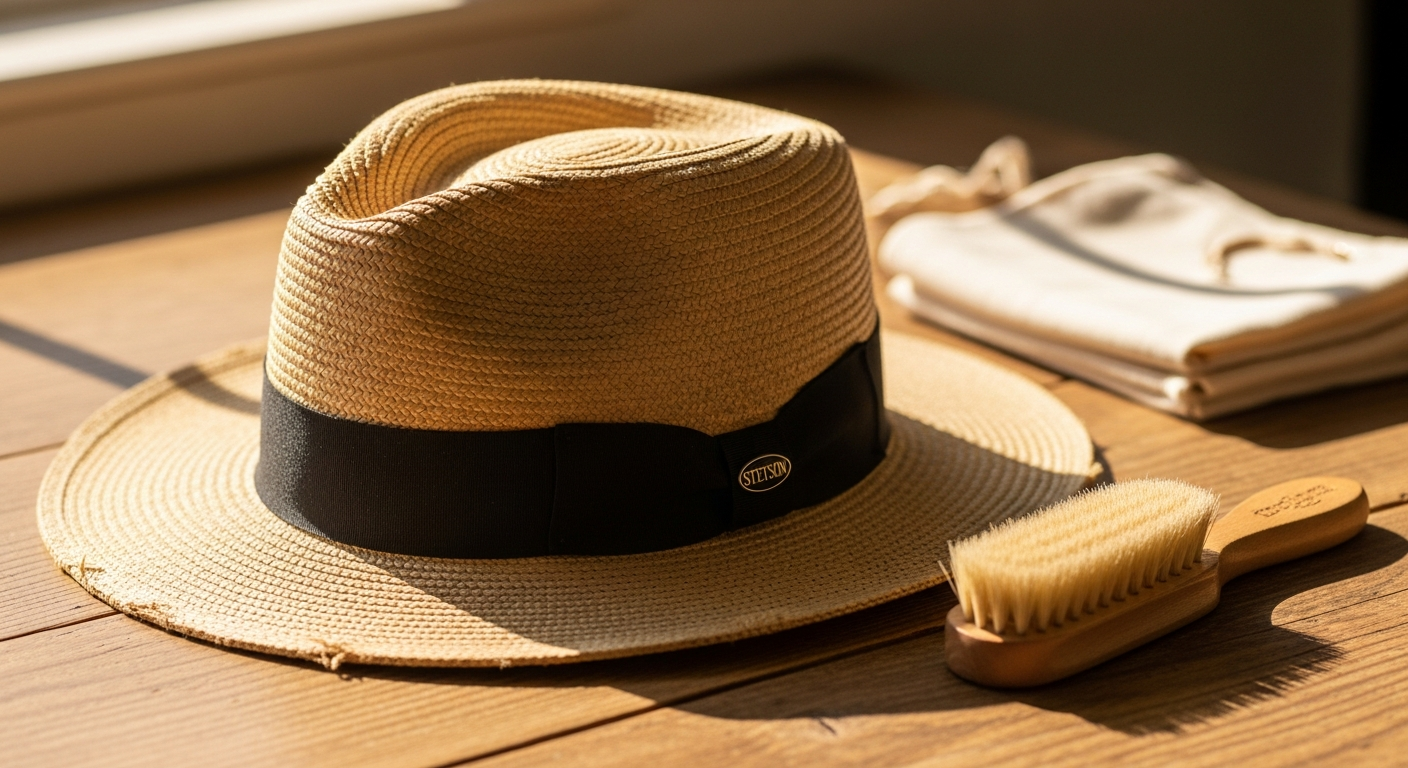
When you invest €100–€250 in a premium Stetson Classic Panama Straw Hat, you’re not just buying a hat—you’re acquiring a timeless accessory that demands respect and proper maintenance. The delicate Toquilla straw weave, hand-crafted in Ecuador, represents generations of artisanal expertise. Yet many owners watch their prized possession deteriorate within a few seasons simply because they don’t know the right care protocols.
That’s where most hat enthusiasts stumble. Panama straw hats are notoriously susceptible to crushing, moisture damage, and shape distortion when handled carelessly. The premium craftsmanship that makes Stetson hats legendary also means they require specific attention—nothing complicated, but definitely intentional. Your hat’s longevity hinges on understanding these nuances before problems arise.
Explore the full selection of premium Stetson hats on HUT.de today
This guide walks you through everything you need to protect your Stetson investment. You’ll discover proven cleaning methods, optimal storage solutions, seasonal care strategies, and professional restoration options. Whether you’re a first-time panama hat owner or a seasoned collector, these actionable techniques will ensure your classic hat remains showroom-ready for years to come.
Understanding Your Panama Hat’s Material Composition
Genuine Toquilla straw origins and why Ecuadorian sourcing matters
The Toquilla straw used in authentic Stetson Panama hats comes exclusively from Ecuador’s coastal regions, where climate conditions create ideal growing environments for the palm plants that produce this material. This geographic specificity isn’t arbitrary—Ecuadorian Toquilla straw possesses superior flexibility and durability compared to alternatives grown elsewhere. The traditional hand-weaving process in Ecuador has been refined over centuries, and this expertise directly influences the quality of your hat’s foundation.
The delicate weave structure and why it requires gentle handling
Authentic Panama straw hats feature a tightly interlocked weave pattern that creates both strength and vulnerability. The individual straw strands are remarkably thin, and their interconnection relies on precise tension maintained during the weaving process. This means that crushing, bending, or forcing your hat into shapes it wasn’t designed for immediately compromises the weave’s integrity. Once weakened, the straw becomes progressively more susceptible to further damage.
How natural straw differs from synthetic alternatives in durability and care needs
Natural Toquilla straw breathes, flexes, and ages with character—but it also demands respect for its organic nature. Synthetic alternatives offer lower maintenance but lack the aesthetic refinement and authentic feel that distinguish Stetson’s Panama hats. Natural straw responds to humidity fluctuations, temperature changes, and moisture exposure in ways synthetics don’t, which is why your care approach must account for these environmental factors.
The role of leather sweatbands and grosgrain hatbands in overall maintenance
Your hat’s sweatband and hatband are integral components that require their own attention. Leather sweatbands absorb perspiration, and over time they need gentle cleaning to prevent odor buildup and deterioration. The grosgrain or decorative hatband adds visual appeal but also collects dust and can be damaged by harsh scrubbing. Both elements deserve the same careful handling as the straw itself.
Why humidity and temperature fluctuations affect straw integrity
Natural straw expands slightly in humid conditions and contracts in dry environments. Rapid or extreme fluctuations stress the weave’s delicate structure, potentially causing the straw to crack or the weave to separate. Stable environmental conditions—neither too wet nor too dry—preserve your hat’s form and prevent the micro-damage that accumulates into visible deterioration.
Daily Handling Best Practices to Prevent Damage
Proper grip techniques when picking up or adjusting your hat
Always grip your Panama hat by the brim’s outer edge or the interior sweatband, never by the crown. The crown’s creased structure is vulnerable to compression, and casual handling from the top quickly flattens the hat’s signature shape. When adjusting the hat on your head, use both hands and settle it gently rather than tugging or twisting.
Why crushing should be your primary concern and how to avoid it
Crushing ranks as the single most damaging threat to Panama hats. A single careless compression—dropping your hat, sitting on it, or stuffing it into a tight space—can create permanent creasing in the straw. Once the weave compresses, restoring it to original form becomes difficult or impossible without professional intervention. Treat your hat as you would a delicate piece of jewelry.
Storage positioning between wears (crown-down vs. crown-up considerations)
Store your Panama hat crown-up on a hat stand or form, never crown-down on a shelf. Resting the crown on a flat surface puts sustained pressure on the creased structure, gradually flattening it. A dedicated hat stand distributes weight evenly and allows the interior to remain ventilated, preventing moisture accumulation.
Recognizing early warning signs of damage before they become irreversible
Watch for slight color changes in the straw, small cracks appearing along the weave, or areas where the straw feels softer than usual. These early indicators signal emerging problems that can be arrested with prompt attention. Waiting until damage becomes obvious often means permanent changes to your hat’s structure.
Protecting your hat during travel and transport scenarios
Never pack your Panama hat into a regular suitcase. Instead, use a dedicated hat box with cushioning, keeping the hat in its original shape with internal support. If traveling by car, place your hat on a level interior surface away from hot windows. Heat combined with pressure accelerates deterioration and can warp the hat’s form permanently.
The importance of designated hat storage spaces in your home
Establish a specific, climate-controlled location for your Panama hat—ideally a closet shelf or dedicated hat stand. Random storage invites accidental damage and inconsistent environmental exposure. A designated space signals to household members that this item requires special handling, reducing the risk of casual mishaps.
Browse hat care accessories and storage solutions at HUT.de
Cleaning Your Stetson Panama Hat Without Causing Harm
Dry brushing techniques using appropriate soft-bristled tools
Use only soft natural-bristle brushes—never stiff synthetic bristles that can catch and damage the delicate straw. Brush gently in the direction of the weave, stroking from crown toward the brim to remove surface dust. This method safely addresses everyday dirt without introducing moisture that could compromise the straw’s integrity.
Spot-cleaning surface stains with minimal water exposure
For minor stains, dampen a soft cloth with distilled water only—no soaps or chemicals. Gently dab the affected area, allowing the moisture to loosen the stain rather than rubbing vigorously. Immediately follow with a dry cloth to absorb residual moisture. This conservative approach prevents water from penetrating the straw’s core.
Safe methods for removing dust and debris from the weave
A soft brush removes surface dust effectively, but stubborn debris trapped in the weave sometimes requires patient, gentle coaxing. Use a fine-tooth comb held at a shallow angle, working carefully to dislodge particles without snagging straw strands. Never force debris out—if it resists, leave it for professional cleaning.
Why harsh chemicals and machine washing are absolute no-nos
Chemical cleaners, bleach, and detergents dissolve the natural oils that give Toquilla straw its characteristic appearance and flexibility. Machine washing at any temperature would destroy the hat’s structure entirely. Even gentle household soaps can leave residue that attracts dirt and accelerates deterioration.
How to address sweat stains on the inner sweatband
Light perspiration stains on the leather or fabric sweatband respond to gentle spot-cleaning with a barely damp cloth and neutral soap. Work on small sections, immediately drying with a clean cloth. For stubborn odors, place your hat in a well-ventilated area away from direct sunlight for several hours—fresh air often eliminates mild sweat smells naturally.
Gentle approaches to cleaning the decorative hatband
The grosgrain or ribbon hatband collects dust but shouldn’t be submerged or vigorously scrubbed. A soft brush removes surface dirt, and spot-cleaning with a damp cloth addresses stains. The hatband’s dye can fade if exposed to excessive moisture or harsh chemicals, so restrain from aggressive cleaning.
Moisture Management and Humidity Control
Why excessive moisture is a panama hat’s worst enemy
Moisture causes straw to swell unevenly, stressing the weave and promoting mold growth in humid climates. When straw dries after moisture exposure, it sometimes shrinks unevenly, creating permanent deformations. This pattern of swelling and shrinking gradually weakens fibers until they become brittle and prone to cracking.
Proper drying techniques after accidental water exposure
If your Panama hat gets caught in rain or accidental splashing, don’t panic—Toquilla straw handles brief moisture better than many realize. Remove the hat immediately and place it crown-up on a clean cloth in a well-ventilated, shaded area. Allow it to air-dry naturally at room temperature, resisting the urge to speed the process with heat or direct sunlight. This typically requires 24–48 hours depending on humidity levels.
Creating optimal humidity levels in your storage environment (40–55% range)
Ideal storage maintains relative humidity between 40 and 55 percent. Use a basic humidity monitor to track your storage space, adjusting as needed with a dehumidifier in humid climates or a humidifier in arid regions. This narrow band preserves the straw’s natural moisture content without promoting mold or excessive drying.
Seasonal adjustments for different climates and weather patterns
Summer’s natural humidity often exceeds ideal ranges, requiring active dehumidification or ensuring adequate air circulation in storage spaces. Winter’s dry indoor heating can drop humidity below 40 percent, necessitating humidification. Seasonal monitoring and adjustment prevents the cumulative stress of environmental extremes.
Preventing mold and mildew growth in humid conditions
Mold thrives in moisture-rich environments where your hat sits undisturbed. In naturally humid regions, store your Panama hat in a breathable cotton garment bag rather than sealed plastic. Periodically open the storage space to allow air circulation, and consider placing a small container of baking soda or activated charcoal nearby to absorb excess moisture.
Recovery strategies if your hat gets caught in unexpected rain
Brief rain exposure isn’t catastrophic if you respond promptly. Gently pat the exterior dry with a clean cloth—don’t wring or squeeze the straw. Remove any water from the sweatband, as leather can shrink if allowed to dry while wet. Follow the air-drying protocol outlined above, and your hat should recover fully with no permanent damage.
Reshaping and Blocking Techniques for Long-Term Form Retention
Understanding hat blocking and when professional services become necessary
Hat blocking is the process of restoring a hat’s original shape using specialized forms and steam. Professional blockers possess years of expertise in handling delicate straw and understanding how individual hat styles respond to reshaping. You can perform minor adjustments yourself, but significant reshaping or structural restoration benefits from professional intervention.
DIY reshaping methods using steam and proper blocking tools
Minor creases or slight shape loss can sometimes be addressed at home using steam and careful hand-manipulation. Hold your Panama hat 15–20 centimeters above boiling water’s steam for just a few seconds, allowing the straw to slightly soften. Immediately reshape the affected area by hand or with a hat block, holding it in position until the straw cools and sets. This technique works only for minor corrections—overdoing steam risks damaging the weave.
How to restore a creased crown or bent brim to original form
A creased crown that’s become flattened sometimes responds to gentle steaming and careful reshaping. Place a hat block inside the crown during cooling to restore the crease’s definition. Bent brims require more delicate handling—steam the affected section lightly, then gently bend it back to the proper curve while maintaining even pressure across the entire brim. This process demands patience and restraint.
The role of hat blocks, forms, and stretchers in maintenance
Hat blocks are wooden or plastic forms that support your Panama hat’s shape during storage and after reshaping. A properly fitted block prevents the crown from flattening and the brim from warping. Investing in a quality hat block designed for your specific hat style provides ongoing protection with zero maintenance cost.
Frequency of reshaping based on wear patterns and storage conditions
Regular wearers might need minor reshaping every few months, while hats in proper storage rarely need intervention. Unusual wear patterns—wearing the hat tilted in one direction consistently, for example—can gradually distort the shape, requiring periodic reshaping to maintain symmetry.
When to seek professional hat restoration services
Professional restoration becomes necessary when straw develops visible cracks, the weave separates in areas, or creasing becomes permanently flattened despite your efforts. Structural damage, significant water damage, or mold growth also warrant professional attention. A certified hat specialist can assess whether restoration is viable or if replacement is more practical.
Seasonal Storage Strategies for Year-Round Protection
Preparing your panama hat for off-season storage
Before seasonal storage, ensure your hat is completely dry and clean. Gently brush away dust, allow any damp areas to air-dry fully, and inspect for any damage requiring attention before lengthy storage. A well-prepared hat enters storage in optimal condition, minimizing deterioration during months of non-use.
Choosing breathable storage containers over plastic alternatives
Plastic containers trap moisture, promoting mold growth and straw deterioration. Instead, use breathable cotton garment bags, cardboard hat boxes, or clean fabric covers that allow air circulation while protecting against dust. Adequate airflow prevents moisture accumulation while maintaining darkness that prevents UV damage to straw’s natural color.
Acid-free tissue paper and cedar options for long-term preservation
Stuff your Panama hat with acid-free tissue paper to help maintain its shape during storage. Avoid regular newspaper or colored tissue, which can transfer dyes to the straw. Cedar blocks or chips placed near (not touching) your hat naturally deter insects without the chemical harshness of mothballs, which can damage straw and leather components.
Temperature-controlled environments and why they matter
Extreme temperature swings stress the straw’s structure just as humidity fluctuations do. A climate-controlled closet or interior shelf maintains stable conditions superior to unheated attics, damp basements, or sun-exposed rooms. Aim for consistent temperatures between 15 and 21 degrees Celsius without drastic seasonal variations.
Protecting against insects and pests during extended storage
Moths and carpet beetles are attracted to natural fibers, including Toquilla straw. Cedar blocks, sealed storage containers, and regular inspection during storage months prevent insect damage. Some enthusiasts use fabric-safe insect repellent strips, though proper ventilation and cleanliness often suffice without chemical additives.
Spring refresh routines before wearing your hat again
Before bringing your Panama hat out of storage, inspect it thoroughly for any damage or pest activity. Gently brush away dust accumulated during storage, then allow it to air in sunlight for an hour or two—the UV exposure refreshes the straw’s appearance and eliminates any staleness from prolonged storage. Finally, adjust the hatband and sweatband to ensure proper fit after months of non-use.
Professional Restoration and When to Seek Expert Help
Identifying damage that exceeds DIY repair capabilities
Cracked or broken straw strands, separated weaving, significant color changes, or structural instability all signal damage beyond home remedies. Additionally, if your DIY attempts to repair an issue have failed or made it worse, professional intervention prevents further deterioration.
Finding certified hat restoration specialists and services
Major German cities typically have traditional hat makers or restoration specialists experienced with premium straw hats. Research local hatters who work with classic brands like Stetson and request references or examples of previous restoration work. Online forums and local fashion communities often provide reliable recommendations for reputable specialists.
Cost-benefit analysis of professional cleaning versus home maintenance
Professional cleaning costs €30–€60, while blocking or reshaping runs €50–€120 depending on complexity. These expenses are justified for hats showing significant damage or requiring specialized techniques beyond home capability. For routine maintenance, DIY methods prove cost-effective and sufficient.
Addressing broken straw strands and structural damage
Broken strands weaken the entire weave’s integrity, and professional hat makers possess techniques for careful strand replacement or reinforcement that maintain your hat’s appearance. This work requires specialized knowledge and materials—attempting amateur repairs often worsens the situation irreversibly.
Professional blocking and reshaping services available in Germany
Germany’s hat-making heritage means quality restoration services exist in most regions. Traditional hatmakers in Munich, Berlin, and other major cities offer professional blocking using wooden forms and expert techniques refined over decades. These services guarantee restoration that respects your hat’s artisanal construction.
Warranty considerations and manufacturer support options
Stetson occasionally offers warranty support for manufacturing defects, though this typically doesn’t cover damage from improper care. Contact Stetson directly or the retailer where you purchased your hat to inquire about warranty coverage. Even if no formal warranty applies, Stetson specialists sometimes provide guidance or refer you to certified restoration partners.
Common Mistakes That Damage Stetson Panama Hats
Exposing your hat to direct sunlight for extended periods
Prolonged UV exposure gradually bleaches the straw’s natural golden hue and weakens fiber integrity. While brief sun exposure during wear is unavoidable, never store your Panama hat in direct sunlight or leave it on sunny windowsills. When wearing your hat, the crown shades the straw, but stored hats need protection from UV damage.
Improper storage methods that lead to permanent creasing
Placing your hat crown-down, stacking objects on top, or storing it in tight spaces creates permanent creasing that often becomes irreversible. Many owners unknowingly damage their hats through thoughtless storage, only realizing the damage when preparing to wear it again.
Using household cleaners and water-based solutions
Detergents, all-purpose cleaners, and even plain tap water (which contains minerals and chemicals) can damage straw and leave residue attracting dirt. Stick exclusively to distilled water for any cleaning, using it sparingly and never applying chemicals of any kind.
Stacking hats or placing objects on top of stored hats
Weight compresses the crown’s structure, and stacking multiple hats creates pressure points that distort all hats involved. Even books or decorative items placed on a stored Panama hat gradually flatten it. Ensure your hat’s storage space remains clear and dedicated.
Ignoring early warning signs of deterioration
Small cracks, discoloration patches, or areas where the weave feels loose often signal problems that worsen without intervention. Addressing these early issues prevents cascading damage. Monthly inspections of stored hats catch problems before they become serious.
Neglecting the sweatband and interior maintenance
The interior deserves the same attention as the exterior. Perspiration accumulation accelerates leather deterioration and promotes odor. Regular gentle cleaning of the sweatband and airing of the hat’s interior prevents these problems and extends overall hat lifespan.
Extending the Lifespan of Your Premium Investment
Expected longevity with proper care (10+ years realistic)
Well-maintained Stetson Panama hats routinely last a decade or longer, with many collectors owning hats that have served 20+ years. The investment premium pays dividends through decades of reliable use, making the per-wear cost economical compared to disposable alternatives replaced annually.
Building a maintenance routine that becomes second nature
Consistency matters more than intensity. A simple routine—monthly inspections, immediate attention to small issues, proper storage, and seasonal adjustments—requires minimal effort but yields maximum protection. When maintenance becomes habitual, you protect your investment without feeling burdened.
Rotating wear patterns across multiple hats if you own several
Collectors who own multiple Panama hats can rotate wear, allowing each hat adequate rest between wearings. This distribution of wear extends each hat’s lifespan and prevents any single hat from developing stress-related damage from constant use.
Documenting your hat’s condition over time with photos
Photograph your hat monthly from multiple angles under consistent lighting. This documentation allows you to track subtle changes and verify whether aging patterns are normal or indicate emerging problems. Photos also prove valuable for insurance purposes if you own high-value hats.
Understanding the cost-per-wear value of premium panama hats
A €150 Panama hat worn 50 times per year for 10 years costs approximately 3 cents per wear—remarkably economical for an accessory providing daily elegance. This calculation justifies investing in proper maintenance, as spending €100 on restoration is negligible compared to the hat’s cumulative value.
Creating a care schedule aligned with seasonal changes
Establish routines tied to seasonal transitions: spring refreshing after winter storage, summer inspection mid-season (checking for sun damage and moisture issues), autumn preparation for storage, and winter ventilation checks. These seasonal anchors ensure you address care needs consistently without forgetting critical maintenance windows.
Legacy of Timeless Style
Your Stetson Classic Panama Straw Hat represents more than just sun protection—it’s a heritage piece that deserves intentional stewardship. By mastering these care fundamentals, you’re not simply preserving a hat; you’re honoring the Ecuadorian artisans who hand-wove your straw and the Stetson craftspeople who assembled it with precision.
The reality is straightforward: proper maintenance transforms a €150 seasonal accessory into a multi-decade investment that only improves with age. Gentle handling, strategic storage, and preventative care cost nothing but attention. When damage does occur, addressing it promptly prevents cascading deterioration that becomes irreversible.
Start implementing these practices today—choose a proper storage location, invest in basic maintenance tools, and establish a seasonal care routine. Your Panama hat will reward your diligence by remaining a reliable, elegant companion through countless warm-weather adventures. That’s the Stetson promise, and that’s what your commitment to proper care delivers.
Leave a Reply