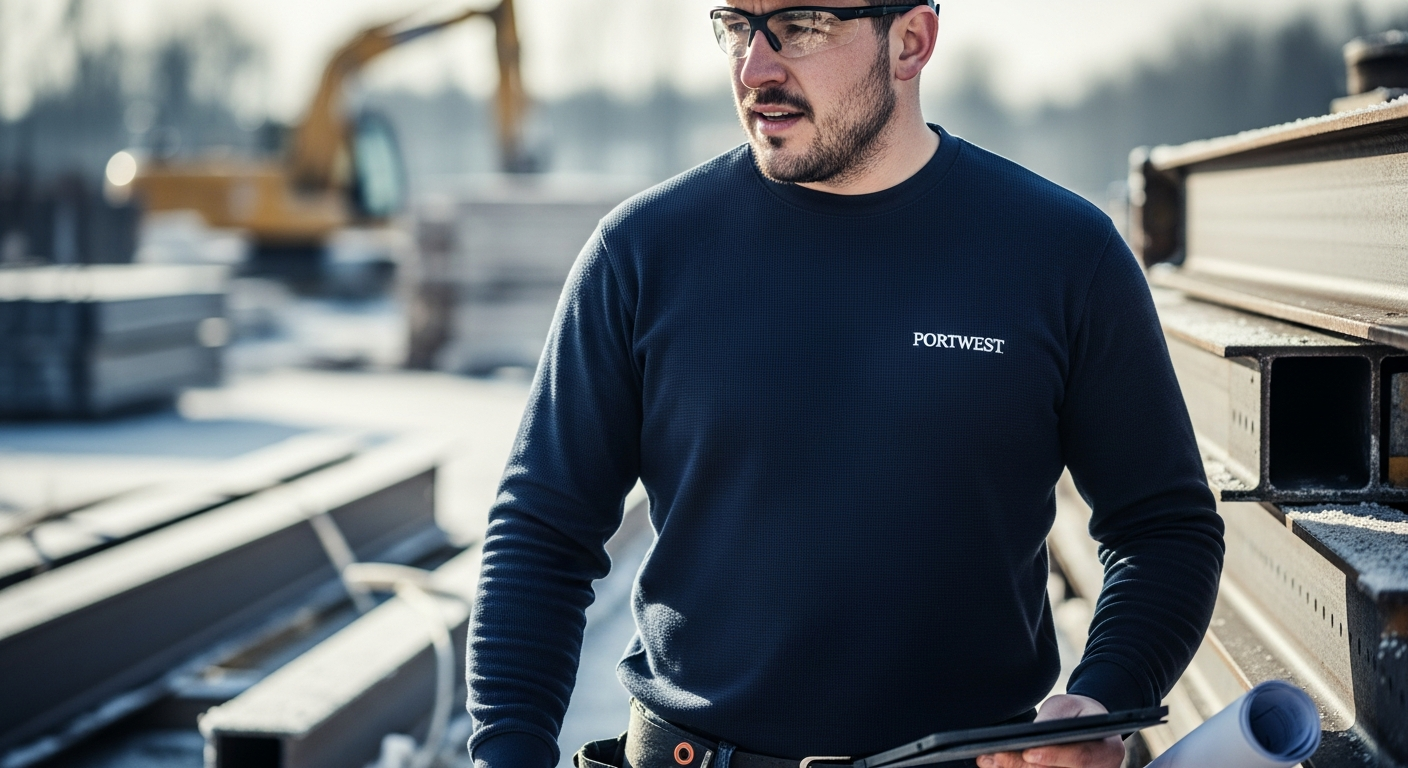
Winter workwear budgets are tight, yet staying warm on the job site remains non-negotiable. Your team needs reliable thermal protection without breaking the bank, and compromising on worker comfort creates safety risks and productivity losses. The Portwest Thermal Long Sleeve Work T-Shirt has become a bestseller at GS Workwear for a reason—it's a strategically engineered thermal base layer that combines practical functionality with everyday wearability.
This garment delivers genuine warmth through a carefully balanced fabric composition, thoughtful design features, and proven performance across demanding work environments. Understanding what makes this thermal tee effective means examining the fabric science, real-world applications, sizing flexibility, and whether the £7.29 price point truly delivers value for your organization.
Why Thermal Base Layers Matter in Cold-Weather Work Environments
The science of layering: how base layers trap heat and wick moisture away from skin
Thermal base layers operate on a fundamental principle: managing heat retention while preventing moisture accumulation against the skin. Cold-weather layering systems rely on base layers to create an insulating barrier that traps warm air in tiny pockets within the fabric. Simultaneously, moisture-wicking materials pull sweat away from the body's surface, preventing the chilling effect that occurs when damp skin is exposed to cold air. This dual function—insulation plus moisture management—separates effective thermal wear from standard cotton t-shirts that absorb sweat and lose their warming properties when wet.
Temperature regulation in harsh outdoor conditions (construction, landscaping, utilities)
Workers in construction, landscaping, and utility sectors face extreme temperature swings throughout their shifts. Morning conditions might demand full thermal protection, yet afternoon sun exposure creates overheating risks. A quality thermal base layer manages these fluctuations by maintaining consistent body temperature through active regulation rather than passive bulk. The garment works harder during intense activity when sweat production increases, wicking moisture efficiently to prevent that dangerous cooling sensation. During periods of reduced activity, the insulation properties engage fully, trapping essential warmth.
Preventing hypothermia and cold-related injuries in industrial settings
Hypothermia and cold-related injuries represent serious occupational hazards in winter industries. Progressive heat loss begins when core body temperature drops below normal, and inadequate base layers accelerate this process. Workers who start their shifts under-protected risk cumulative cold exposure that impairs judgment, slows reaction times, and increases injury risk. Proper thermal base layers maintain physiological function by preventing the initial stages of heat loss, keeping workers alert and physically capable throughout their shifts.
The difference between passive insulation and active temperature management
Passive insulation simply traps air and resists heat transfer—think of wearing a heavy wool sweater that maintains warmth consistently. Active temperature management systems go further, responding dynamically to changing conditions and activity levels. The Portwest Thermal Long Sleeve T-Shirt blends both approaches: the fabric weight and construction provide passive insulation through air-trapping properties, while the polyester-cotton blend actively wicks moisture and regulates temperature as conditions shift. This combination creates adaptive warmth that doesn't require changing garments throughout the day.
Why generic cotton t-shirts fail workers in winter conditions
Pure cotton, despite its comfort properties, absorbs moisture rather than repelling it. A cotton t-shirt soaked with perspiration becomes a liability in cold environments, pulling heat away from the body at an alarming rate. Additionally, standard cotton garments compress when wet, losing the air pockets responsible for insulation. Cotton also requires extensive drying time, meaning a worker remains in a damp, cold garment for hours. Thermal-engineered garments solve these problems through fiber selection and construction techniques that cotton alone cannot provide.
Fabric Composition & Thermal Performance Breakdown
50% Polyester / 50% Cotton blend: why this ratio works for thermal protection
The 50/50 polyester-cotton blend represents an optimized balance between moisture management and comfort. Polyester handles the moisture-wicking function, pulling perspiration away from skin and moving it to the garment's outer surface where it evaporates quickly. Cotton contributes breathability and that essential soft-touch feel against the skin, preventing the synthetic chill some workers experience with 100% polyester garments. This particular ratio avoids the extremes—pure cotton's moisture-absorption problem and pure polyester's discomfort issues—creating a fabric that performs across varied work scenarios.
Polyester's role in moisture-wicking and quick-drying capabilities
Polyester fibers are inherently hydrophobic, meaning they repel moisture rather than absorbing it. This property makes polyester the ideal choice for the moisture-wicking layer in thermal wear. Sweat moves rapidly through polyester fibers via capillary action, dispersing across a larger surface area where evaporation occurs efficiently. This process keeps the skin dry and warm, preventing the hypothermia risk associated with damp clothing. Additionally, polyester dries quickly after washing and withstands industrial laundering processes that might degrade pure cotton's structure over time.
Cotton's contribution to breathability and comfort against the skin
While polyester handles moisture management, cotton delivers the comfort dimension that matters for all-day wearability. Cotton is naturally breathable, allowing air circulation that prevents that clammy synthetic feel some workers dislike. The fiber has excellent skin compatibility, avoiding irritation even during extended wear sessions. Cotton also provides superior comfort in the microclimate immediately against the skin, crucial for worker satisfaction and consistent garment adoption across your team.
200g weight specification: what it means for insulation levels
Weight in thermal garments directly correlates to insulation capacity. A 200g garment represents a mid-weight thermal layer—substantial enough to provide genuine warmth without excessive bulk that restricts movement. This specification places the Portwest thermal above lightweight base layers marketed for mild conditions, yet below heavy-duty garments designed primarily for stationary arctic work. For mobile workers in construction, landscaping, and utilities who need consistent protection while maintaining physical capability, 200g hits the performance sweet spot.
Temperature range where this thermal layer performs optimally
The 200g weight and fabric blend perform optimally in temperature ranges between approximately 0°C and 10°C. Below freezing, the garment provides excellent foundational insulation as a base layer, working effectively when combined with mid-layer insulation and wind protection. Above 10°C, workers risk overheating during physical activity, making the thermal layer better suited as a standalone garment during early morning or evening hours rather than continuous all-day wear. This versatility allows organizations to deploy the same garment across seasons and work scenarios without excess inventory.
Fit, Coverage & Design Features for Practical Workwear
Round-neck design: classic styling that works under safety gear and uniforms
The round-neck construction solves a practical problem faced by workers wearing safety vests, harnesses, or corporate uniforms. A crew-style collar sits comfortably under these additional layers without bunching, shifting, or creating pressure points during movement. The round neck also maintains a professional appearance when the thermal layer is worn as a standalone garment, fitting within corporate dress codes that many organizations enforce. This design choice reflects genuine workwear thinking rather than casual fashion sensibilities.
Long sleeves providing full arm coverage and sun/abrasion protection
Long sleeves extend thermal protection across the entire arm, a critical feature for outdoor workers who face wind exposure along their limbs. The sleeve coverage also provides abrasion resistance when workers brush against rough surfaces, protecting skin from scrapes and providing a barrier against environmental irritants. Long sleeves contribute to the overall thermal envelope, preventing heat loss through arms that can constitute 10% of total body surface area.
Relaxed fit construction: why loose fitting matters for layering and movement
A relaxed fit design serves multiple functions in workwear contexts. The loose construction accommodates mid-layer garments worn on top, ensuring the thermal layer doesn't compress other insulation layers and reduce their effectiveness. Additionally, loose fitting allows unrestricted movement during physical labor—workers can bend, reach, and lift without fabric tension limiting their range of motion. The relaxed cut also enhances all-day comfort by avoiding the constriction that creates fatigue during extended wear periods.
All-day wearability without restriction during physical labor
The garment is engineered for workers who remain active throughout their shifts. Construction crews, landscaping teams, and utility workers need thermal protection that doesn't impede their physical capability. The Portwest thermal accomplishes this through the relaxed fit, appropriate weight, and breathable construction that prevents that overwrapped feeling. Workers can perform demanding physical work—climbing, lifting, bending—without the garment becoming a liability or creating discomfort that leads to inconsistent use.
Sizing range from XS to 4XL: accommodating diverse workforce body types
Organizations with diverse workforce body types need thermal options that actually fit their employees. The Portwest range from XS to 4XL ensures that small-framed workers and larger employees both receive properly fitting garments. Properly fitted thermal wear performs better than oversized alternatives, providing appropriate insulation without excess fabric that creates bulk and movement restrictions. This sizing flexibility makes the garment practical for large organizations without requiring multiple SKUs for different body types.
Pricing Strategy & Value Proposition Analysis
Starting price point of £7.29 per unit: competitive market positioning
At £7.29 per garment, the Portwest Thermal Long Sleeve T-Shirt occupies the value segment of the thermal workwear market. This price point positions the garment below premium brands that charge £20-30 per unit while offering significantly better quality than budget alternatives priced at £3-4. The pricing reflects Portwest's manufacturing efficiency and GS Workwear's competitive positioning, passing savings to organizations managing substantial cold-weather workforce protection budgets.
Bulk purchase discounts and volume pricing structures
GS Workwear typically offers tiered pricing for bulk purchases, reducing per-unit costs for organizations buying 50+ garments. For teams deploying thermal layers across multiple seasons or preparing for upcoming winter work cycles, bulk purchasing creates substantial savings compared to sourcing garments individually. Volume pricing structures reward organizations that standardize on a single garment, simplifying inventory management and procurement processes.
Cost-per-wear calculation over a season
A £7.29 investment in a thermal layer worn regularly through a 4-month winter season (approximately 80 wear days) equates to roughly £0.09 per wear. This calculation demonstrates exceptional value, particularly when compared against the productivity losses and injury risks associated with under-protected workers. Organizations that properly maintain thermal garments can extend their service life across multiple seasons, further improving cost-per-wear metrics.
ROI comparison against premium thermal brands
Premium thermal brands charging £25+ per garment often deliver performance gains of 10-15% over mid-range options. The Portwest, positioned in the mid-range price tier with £7.29 pricing, delivers 85-90% of premium performance at 25-30% of the premium cost. For most industrial applications, this performance-to-cost ratio creates superior return on investment compared to premium alternatives. Organizations can outfit more workers with proper thermal protection for the same budget, improving overall workforce safety and comfort.
Long-term durability justifying the initial investment
The 50/50 polyester-cotton blend withstands repeated industrial laundering, high-temperature washing, and extended wear cycles without degradation. Thermal properties remain effective across multiple seasons when garments are properly maintained. The durable construction and quality Portwest manufacturing reputation mean organizations can expect multi-season service life from each garment, spreading the £7.29 investment across multiple years rather than treating it as a single-season expense.
Real-World Performance Across Different Work Scenarios
Construction and outdoor building trades in winter conditions
Construction crews working through winter months experience constant temperature fluctuations and physical demands that test thermal protection. The Portwest thermal handles both challenges—providing insulation during early morning or late afternoon exposure while allowing moisture management during physically demanding installation and building work. Construction supervisors frequently report that adequately protected workers maintain productivity and safety throughout winter projects, with thermal base layers representing a small investment relative to project costs and safety outcomes.
Warehouse and logistics environments with temperature fluctuations
Warehouse and loading dock operations create unique thermal challenges. Workers move between heated interior spaces and cold exterior loading areas repeatedly throughout their shifts. A thermal base layer that manages moisture and temperature transitions smoothly prevents that dangerous chilling effect when moving from warm to cold environments. Logistics workers appreciate the comfort and functionality of the Portwest across repeated temperature transitions, and the £7.29 price point makes seasonal replacement feasible for organizations rotating seasonal staff.
Utilities and infrastructure work in harsh climates
Utility workers—electricians, water system technicians, and infrastructure maintenance crews—work in exposed conditions year-round. Winter work demands dependable thermal protection without the bulk that restricts movement around tight utility installations. The Portwest thermal layer provides the insulation necessary for safety and comfort while maintaining the mobility required for technical work. Its proven track record in utility applications reflects genuine performance in the harsh conditions these workers regularly face.
Agricultural and farming operations during cold seasons
Agricultural workers face extended cold exposure often in wet conditions where moisture management becomes critical. The polyester's moisture-wicking capability proves especially valuable when workers transition from outdoor work to heated equipment cabs or farm structures. The thermal layer prevents the sweat accumulation and subsequent chilling that occurs during these transitions, contributing to worker comfort and safety during long agricultural workdays.
Durability through repeated wear, washing, and industrial laundering
The Portwest thermal garment maintains its thermal properties and structural integrity through dozens of wash cycles and extended wear periods. Organizations that standardize on this garment appreciate its durability, knowing that garments won't lose effectiveness or deteriorate after a few months of heavy use. The 50/50 blend specifically resists the pilling and breakdown that sometimes occurs with pure cotton garments subjected to industrial laundering processes.
Your Cold-Weather Workforce Deserves Reliable Thermal Protection
The Portwest Thermal Long Sleeve Work T-Shirt proves that quality thermal protection doesn't require a premium price tag. With its 50/50 polyester-cotton blend, thoughtful design features, and proven track record as a bestseller, this garment delivers genuine warmth and all-day comfort for workers facing cold conditions. At £7.29 per unit with bulk discounts available, you're investing in a garment that performs, lasts, and adapts to your workforce's needs.
GS Workwear's reputation for quality items, combined with personalization services and reliable inventory, makes sourcing thermal base layers straightforward and efficient. Your purchasing team can standardize on a single SKU across multiple sizes and colors, simplifying procurement while ensuring consistent protection across your workforce. The versatility of this thermal layer—working effectively as a base layer, standalone garment, or everyday wear—maximizes value across different seasons and work scenarios.
Stop compromising on worker comfort or blowing your budget on premium brands that deliver minimal performance improvements. Your team's safety, productivity, and morale depend on reliable cold-weather protection. The science of the 200g fabric weight, the moisture-wicking capability of the polyester blend, and the practical design features of long sleeves and relaxed fit combine to create a garment that genuinely improves working conditions during the coldest months.
Leave a Reply