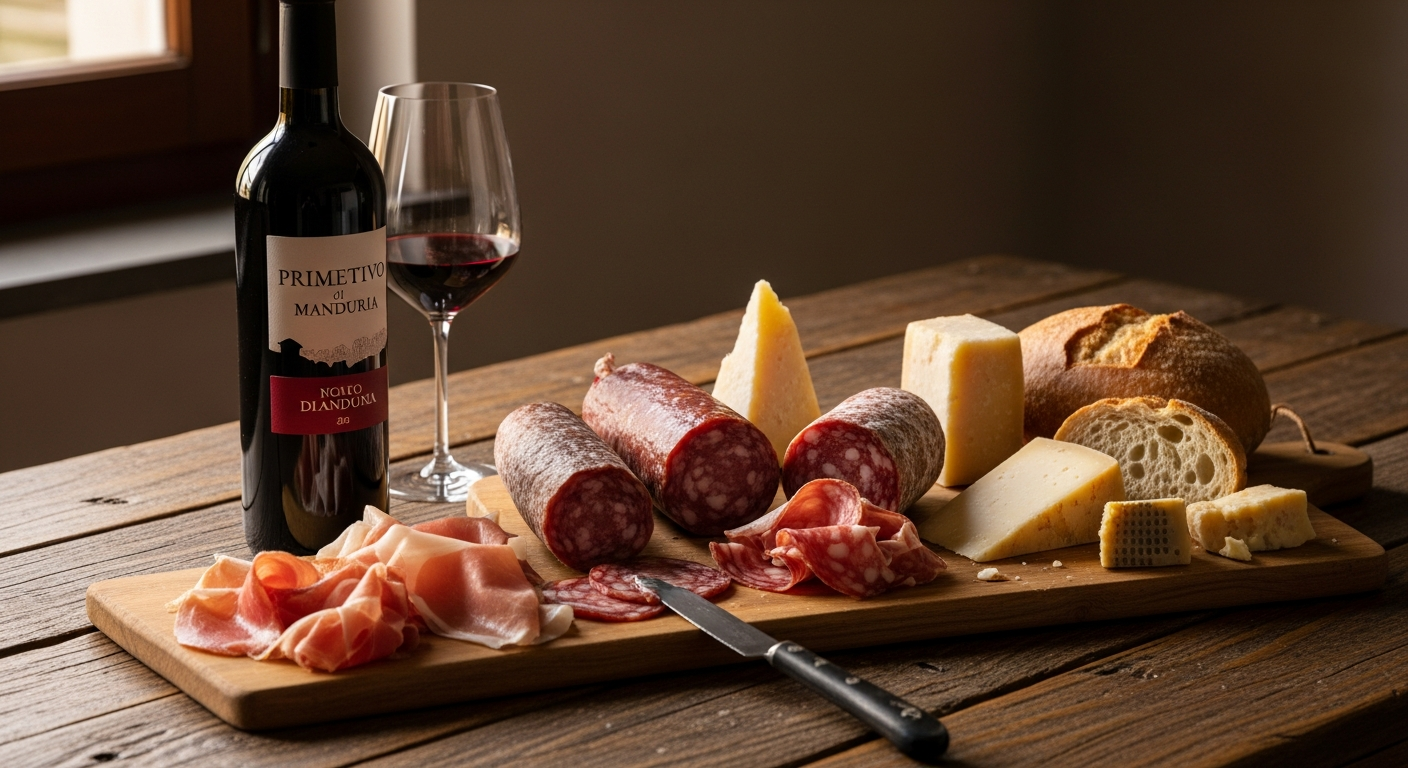
Did you know that Southern Italy produces some of Europe's most underrated red wines? Primitivo di Manduria sits at the heart of this wine revolution—a bold, fruit-forward red that delivers restaurant-quality flavor at everyday prices. Yet many wine enthusiasts still overlook it in favor of pricier Tuscan alternatives.
I've watched Primitivo di Manduria become one of Vinolisa's best-selling red wines for a reason. This robust wine from Puglia's sun-drenched Manduria region combines generations of Italian winemaking tradition with a modern, approachable style. The Primitivo grape thrives in warm climates, developing rich, ripe fruit characteristics and surprising complexity that punches well above its modest price point.
Discover Primitivo di Manduria wines at Vinolisa today and unlock authentic Italian flavor.
In this guide, I'll show you how to unlock the full potential of Primitivo di Manduria through strategic food pairing. You'll discover which dishes complement its velvety tannins and dark berry notes, explore tasting techniques that reveal hidden layers, and learn when to reach for this wine over more expensive alternatives. Whether you're hosting a dinner party or enjoying a quiet evening at home, this knowledge transforms how you experience this remarkable Puglia red.
Master the Tasting Profile—What Your Palate Will Experience
The first thing you'll notice when pouring a glass is the wine's visual presence. A deep ruby red color with violet reflections signals quality and ripeness, immediately preparing your palate for what's to come. These hues reflect the Primitivo grape's natural concentration of pigments—a direct result of Manduria's relentless Mediterranean sun.
Bring the glass to your nose and encounter an aromatic bouquet dominated by dark berries. Blackberries and plums form the foundation, while secondary notes of dried fruit emerge as the wine opens. The nose grows more complex with each passing minute, revealing spice-forward characteristics featuring black pepper, cloves, and hints of chocolate or coffee—especially pronounced in aged versions that have spent time in oak barrels.
On the palate, the wine reveals its true character. Full-bodied and velvety, Primitivo di Manduria wraps around your mouth with soft tannins that never feel harsh or astringent. This softness comes from the grape's natural ripeness and the warm vintage conditions that dominate Puglia. Pleasant acidity prevents the wine from tasting flat or one-dimensional, creating balance that keeps you reaching for another sip.
The finish is where Primitivo di Manduria truly impresses. Long and warm, it lingers on your palate and evolves as the wine continues to open. Notice how the dark fruit notes fade into spice and subtle oak impressions, leaving you with a sensory memory that extends well beyond the initial taste.
Alcohol content typically ranges from 13.5% to 15% ABV, providing body and warmth without that burning sensation that can overshadow subtler wines. For oak-aged Riserva versions, expect added complexity with vanilla and toast notes layered throughout the tasting experience.
Strategic Food Pairings That Elevate Every Course
Primitivo di Manduria's structure and flavor intensity demand substantial dishes that can stand up to its boldness. Hearty Italian classics represent the wine's most natural pairing territory. Think pasta dishes featuring robust meat sauces, wild boar ragù, or traditional lasagna—these preparations echo the wine's regional heritage and create harmonious flavor bridges.
Grilled and charred proteins align perfectly with Primitivo's spice notes. Grilled steaks, lamb chops, and wood-fired meats with caramelized crusts complement the wine's profile beautifully. The wine's warmth mirrors the intensity of the cooking technique, creating a pairing that feels both natural and elevated.
Strong cheeses deserve serious wine partners, and Primitivo di Manduria answers the call. Aged Pecorino Romano, Parmigiano-Reggiano, and blue-veined varieties work wonderfully alongside this red. The wine's tannins cut through the cheese's richness while the fruit provides contrast to the saltiness.
Game and rich meats find an excellent companion in Primitivo. Venison, duck confit, and slow-braised beef preparations all benefit from the wine's structure and complexity. These dishes require wines with sufficient body to handle their intensity, and Primitivo delivers exactly that.
Barbecue and smoky flavors create an unexpected but compelling partnership. The wine's spice notes mirror charred and smoked meat profiles perfectly, creating a synergy that transforms both the wine and the food. Mediterranean vegetables roasted until caramelized pair equally well, as do traditional antipasti platters featuring cured meats, aged cheeses, and brined olives.
One important caveat: avoid pairing Primitivo di Manduria with light seafood. The wine's weight and intensity overpower delicate fish preparations. Reserve this wine for heartier seafood dishes or skip seafood entirely when featuring this red.
Explore premium Primitivo di Manduria selections and find your perfect pairing match.
Price-to-Quality Ratio—Why Primitivo di Manduria Outperforms Competitors
The value proposition surrounding Primitivo di Manduria deserves serious attention. At €8-€25 per bottle, this wine competes favorably against similarly styled wines from Tuscany or Piedmont that often command significantly higher prices. Entry-level bottles priced between €9-€12 deliver complexity that rivals wines costing twice as much—a reality that challenges conventional wine-pricing wisdom.
Mid-range selections occupying the €12-€18 bracket offer premium aging and oak treatment without premium pricing. These bottles provide an excellent entry point for collectors seeking to explore what Riserva versions offer without the investment required for top-tier selections.
Special editions and Riserva versions commanding €18-€25 and beyond provide investment-grade quality for serious collectors. The Torrevento Ghenos Primitivo di Manduria DOC example at €9.95 demonstrates how accessible premium quality can be—a reality that explains why this wine has become a best-seller at Vinolisa.
Consistent quality across vintages reduces the risk of purchasing disappointment. Unlike some wine regions where vintage variation creates significant quality swings, Manduria's reliable climate produces dependable results year after year. This consistency means you can confidently purchase multiple bottles without extensive research on every release.
The excellent price-performance ratio attracts both budget-conscious drinkers seeking quality and value-seeking connoisseurs who recognize a bargain. Bulk purchasing for events or entertaining yields significant savings without sacrificing quality, making Primitivo di Manduria an intelligent choice for those hosting regularly.
Aging Potential and Vintage Selection for Optimal Drinking
Standard Primitivo di Manduria reaches peak drinkability within 3-5 years of release, making it ideal for those who prefer drinking wine in their youth. These bottles showcase the grape's fruit-forward character at its brightest, with primary flavors of dark berries and spice dominating the profile.
Premium Riserva versions benefit from 5-10 years of cellaring for enhanced complexity. Oak aging in barrels adds vanilla, toast, and spice notes that develop gracefully with bottle age, transforming the wine into something more structured and refined than its younger counterparts.
Understanding vintage selection improves your purchasing decisions significantly. Warm vintage years produce fuller-bodied wines with higher alcohol concentration, appealing to those seeking maximum impact and intensity. Cooler vintages maintain better acidity and elegance, attracting traditionalist palates that favor balance over power.
Recent vintages spanning 2022-2024 showcase the wine's fruit-forward character at its brightest, offering immediate gratification without cellaring requirements. Older bottles from 2015-2019 display tertiary flavors and softer tannin profiles, revealing how gracefully Primitivo ages when stored properly.
Storage conditions matter tremendously for aging potential. Keep bottles on their side in cool, dark spaces away from temperature fluctuations. Proper cellaring preserves the wine's aromatic complexity and tannin structure, ensuring that bottles develop as intended rather than deteriorating prematurely.
Entertaining with Confidence—Hosting Tips for Primitivo di Manduria
Serving temperature dramatically influences how Primitivo di Manduria presents itself to your guests. Serve at 16-18°C (60-64°F) to preserve fruit character while allowing tannins to soften appropriately. This temperature range represents the sweet spot between chilled and room temperature, maximizing the wine's sensory appeal.
Opening bottles 30-45 minutes before serving allows the wine to breathe and develop aromatics. This simple step accelerates the opening process, preparing the wine for optimal enjoyment without requiring decanting for older bottles.
Younger bottles benefit from decanting, which accelerates oxidation and softens aggressive tannin structure. Pour the wine into a decanter and allow it to rest for 30-60 minutes before serving, watching how the wine transforms as it interacts with oxygen.
Serve in large-bowled red wine glasses that concentrate aromatics toward the nose. These glasses provide ample surface area for the wine to develop while the bowl's shape guides aromas directly to your guests' olfactory senses.
Plan approximately 150ml per person for a three-course dinner with multiple wine pours. This calculation ensures you have sufficient wine without excessive surplus, allowing for repeat pours that showcase the wine's evolution throughout the meal.
Pairing multiple bottles with varied dishes across courses demonstrates Primitivo's versatility throughout the meal. Start with a lighter expression alongside antipasti, then progress to fuller-bodied Riserva versions paired with main courses, allowing guests to experience the wine's range.
Offering both chilled and room-temperature serving options accommodates guest preferences gracefully. Some prefer the wine slightly cooler, while traditionalists insist on warmer temperatures—providing both options ensures everyone finds their optimal serving style.
Store backup bottles at proper temperature to ensure consistent quality throughout the evening. Nothing undermines a dinner party faster than running out of wine and scrambling for substitutes. Planning for extras guarantees you maintain the experience you intended to create.
Comparing Primitivo di Manduria to Other Italian Red Wine Styles
Understanding how Primitivo di Manduria compares to other Italian reds clarifies its position in the broader wine landscape. Versus Barolo and Barbaresco, Primitivo offers immediate drinkability without the age requirements demanded by those Piedmont powerhouses. While Barolo and Barbaresco need years of cellaring to soften their formidable tannins, Primitivo drinks beautifully from release.
Chianti Classico presents a different stylistic contrast. Primitivo delivers bolder fruit and spice notes, while Chianti emphasizes elegance and restraint. If you prefer wines that announce themselves with confident flavor intensity, Primitivo wins. If you appreciate subtle complexity and finesse, Chianti merits your attention.
Valpolicella shares Primitivo's approachability, but Primitivo carries more alcohol and body overall. Both wines suit casual entertaining and pair wonderfully with everyday Italian food, making them friendly rivals rather than true competitors.
Nero d'Avola, another warm-climate Southern Italian red, offers similar regional origin but Primitivo generally demonstrates more complexity and superior aging potential. The comparison particularly favors Primitivo for collectors seeking wines that improve with bottle age.
Montepulciano d'Abruzzo represents the earthier, more mineral-driven approach to Italian reds. Primitivo leans fruit-forward, while Montepulciano emphasizes earthy, mineral characteristics. Your preference depends on whether you favor ripe fruit expression or terroir-driven austerity.
The genetic connection between Primitivo and California's Zinfandel helps American wine drinkers grasp the style instinctively. If you enjoy Zinfandel's ripe fruit and spice-forward character, Primitivo will feel intuitively familiar while offering the authentic Italian context that makes it special.
Puglia's intense sun creates riper fruit than cooler Italian regions achieve, explaining why Primitivo's flavor profile diverges from northern Italian counterparts. This regional terroir advantage translates directly into the wine's approachable, fruit-driven character.
The value proposition consistently favors Primitivo when comparing price-equivalent wines from prestigious regions. For €15-€20, you'll find competent Chianti or Valpolicella, but Primitivo at that price point often delivers superior complexity and impact.
Addressing Common Concerns—Is Primitivo di Manduria Right for You?
Higher alcohol content ranging from 13.5-15% ABV suits hearty meals beautifully but may feel warming for some palates. If you're sensitive to alcohol's heat or prefer lighter wines, start with entry-level bottles from cooler vintages, which tend toward the lower end of the alcohol spectrum.
The fruit-forward versus traditional debate divides wine drinkers naturally. Modern producers emphasize ripe fruit; traditionalists prefer subtler styles that showcase restraint and terroir expression over pure fruit intensity. Primitivo clearly belongs to the modern, fruit-expressive camp, so adjust your expectations accordingly.
This wine isn't food-neutral. It demands substantial dishes; it overwhelms delicate preparations. If your entertaining typically centers on light seafood or vegetable-forward menus, Primitivo may not suit your style. However, for meat-centric or robust cuisines, it becomes invaluable.
Storage longevity questions arise frequently. While Primitivo ages gracefully, most bottles reach peak drinking within 5-10 years rather than the 20+ year potential of Barolo or Amarone. Plan your cellaring accordingly, understanding that this wine rewards relatively prompt consumption.
The wine's natural fruit sugar may taste sweeter than expected to dry-wine drinkers accustomed to restrained fruit expression. This sweetness represents ripeness rather than residual sugar, but perception varies among tasters. Pairing with savory foods helps balance this perception beautifully.
Oak treatment variation differentiates Riserva versions significantly from unoaked releases. Standard bottlings emphasize fruit, while Riserva selections highlight oak influence through vanilla, toast, and spice notes. Understand which style you prefer before purchasing, as the difference proves substantial.
Vintage variability exists despite generally reliable growing conditions. Quality does fluctuate based on seasonal growing patterns, so researching producer reputation beforehand prevents disappointment. Stick with established producers until you develop confidence in identifying quality across different releases.
Primitivo di Manduria excels in casual entertaining rather than formal tastings. The approachable style creates accessibility that formal wine education sometimes suppresses. If you prefer relaxed, enjoyable experiences over analytical wine appreciation, this red matches your philosophy perfectly.
Your Next Primitivo di Manduria Experience Awaits
The beauty of Primitivo di Manduria lies in its honest simplicity. This isn't a wine that demands reverence or extensive education—it rewards genuine curiosity and bold food pairings. Whether you're drawn to the €9.95 entry point of Torrevento Ghenos or exploring premium Riserva selections, Primitivo di Manduria delivers that elusive combination of quality, value, and pure drinking satisfaction.
The wine embodies the "La Dolce Vita" spirit that defines Vinolisa's philosophy—accessible luxury rooted in generations of Italian winemaking tradition. Start with a bottle at your next gathering, pair it boldly, and notice how the velvety tannins soften with each sip. That's when you'll understand why this Puglia red has become a best-seller, and why serious wine lovers keep it stocked in their cellars year-round.
Leave a Reply