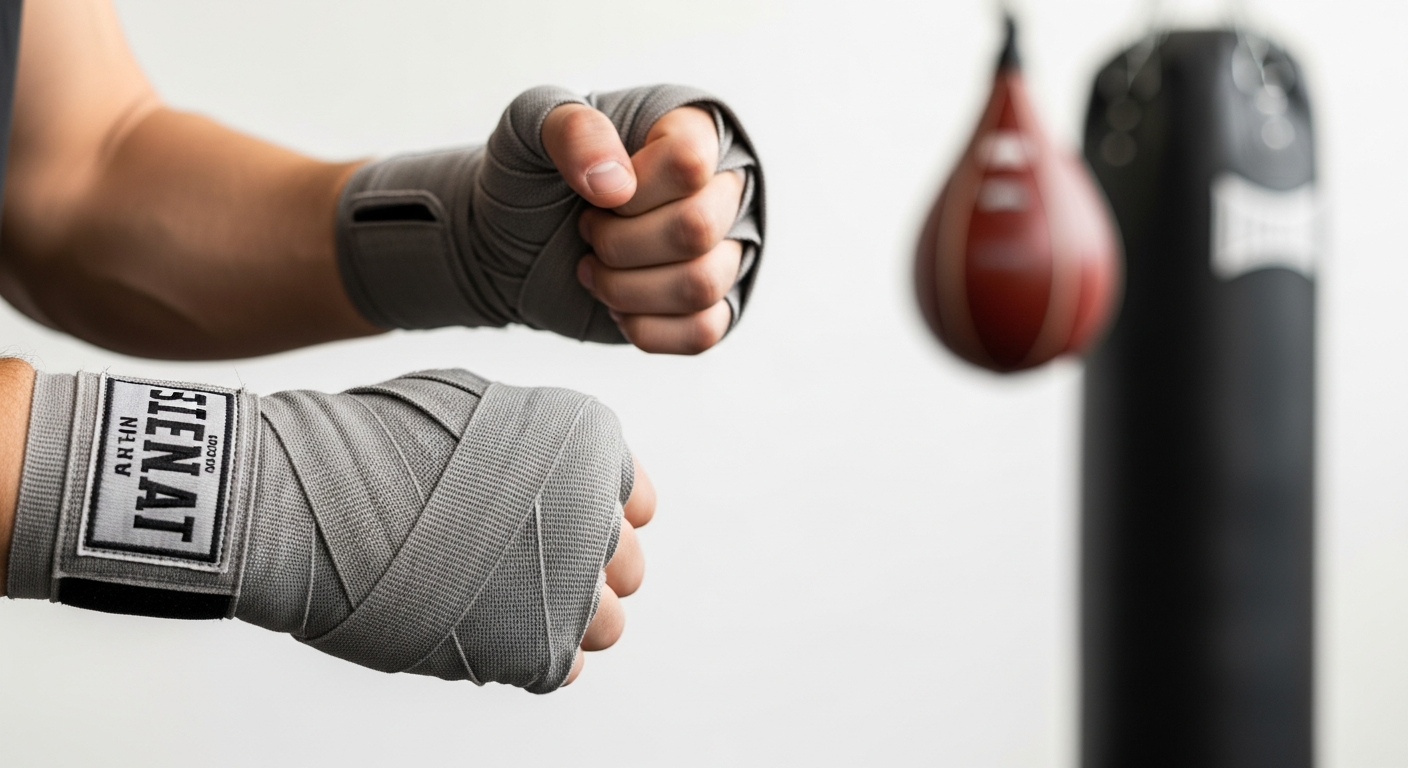
Nearly 40% of boxing-related injuries strike the hands and wrists. That's not a minor statistic—it's a wake-up call for anyone stepping into the ring or training at a bag. Your hands are your most valuable asset in combat sports, yet they're also the most vulnerable. Without proper protection, you're risking sprains, fractures, and cumulative damage that can end careers or sideline you for months.
Pro boxing handwraps form the critical first line of defense in combat training. They work beneath your gloves, providing stabilization, shock absorption, and structural support that gloves alone cannot achieve. Think of them as the unsung heroes of hand protection—essential infrastructure that separates safe, effective training from risky sessions where injury is waiting to happen.
This guide walks you through everything you need to know about pro boxing handwraps. You'll understand the science behind proper wrapping, discover what makes quality wraps worth the investment, master different techniques for various training scenarios, and learn how to keep your wraps performing at peak level. Explore premium pro boxing handwraps designed for serious athletes.
Why Hand and Wrist Protection Matters in Combat Sports
The anatomy of hand injuries in boxing, MMA, and Muay Thai training
Your hands contain 27 bones, numerous ligaments, and a complex network of tendons. During combat training, these structures absorb tremendous force—especially when striking heavy bags, pads, or opponents. The repeated impact, combined with the twisting and hyperextension that occurs during dynamic movement, creates conditions where injury becomes almost inevitable without proper support.
Boxing injuries aren't limited to acute trauma. Cumulative damage from inadequate protection develops quietly over months and years. Small fractures that go unnoticed, micro-tears in ligaments, and chronic inflammation can transform training from enjoyable to painful. Many athletes don't realize the damage until they've already suffered significant deterioration.
Common injuries prevented by proper handwrap support
Hyperextension stands as one of the most preventable hand injuries in combat sports. When you throw a punch, your wrist can bend backward excessively, straining ligaments and causing acute pain. Quality handwraps restrict this backward motion, keeping your wrist in a neutral, protected position throughout your strike.
Sprains occur when ligaments stretch beyond their normal range. A rolled wrist or sudden twist can sideline you for weeks. Handwraps stabilize the wrist joint, dramatically reducing the likelihood of these injuries. Fractures—breaks in the small bones of the hand—represent the most serious concern. While handwraps won't prevent every fracture, they distribute impact force more evenly, reducing the concentrated stress that causes bone breaks.
How handwraps distribute impact force across the hand structure
When your bare fist strikes an object, all the force concentrates on a few points of contact—your knuckles and the small bones behind them. This creates dangerously high pressure in localized areas. Handwraps add layers of cushioning that spread that impact across a much larger surface area. Instead of force slamming into one spot, it distributes across your entire hand and forearm.
The cotton-blend material compresses slightly upon impact, absorbing energy that would otherwise transfer directly to your bones and joints. Multiple wrapping layers over the knuckles provide padding while the wrist wrapping creates a rigid structure that prevents bending. Together, these elements transform a vulnerable hand into a shock-absorbing system capable of handling repeated impacts.
The role of wrist stabilization in preventing long-term damage
Your wrist's primary role during punching is to maintain alignment with your forearm and upper arm. Any deviation creates stress on the ligaments and can cause overuse injuries that worsen over time. Proper handwraps lock your wrist into correct alignment, preventing the micro-movements that accumulate into chronic pain.
This stabilization becomes even more critical during mitt work and sparring, where your partner's defensive movements and counter-strikes can twist your wrist unexpectedly. The rigid support of quality handwraps keeps your wrist stable despite these sudden directional changes, protecting you from the twisting injuries that often sideline athletes.
Understanding Pro Boxing Handwrap Materials and Construction
Cotton-blend composition and why it's the industry standard
The vast majority of professional boxing handwraps feature a cotton-blend construction, and this dominance exists for solid reasons. Cotton provides excellent breathability, allowing sweat to escape rather than pooling inside your gloves. It's durable, withstanding hundreds of training sessions and numerous washing cycles without significant degradation. Cotton also absorbs impact effectively, compressing slightly to cushion your hands while maintaining its structural integrity.
The "blend" aspect typically incorporates synthetic fibers like polyester or elastane. These additions enhance the material's stretch, allowing the wraps to conform to different hand sizes and wrapping styles while maintaining compression. This balanced combination has proven itself across decades of combat sports training.
Elasticity balance: flexibility without sacrificing support
Finding the right balance between stretch and rigidity defines quality handwraps. Too much elasticity and your wraps become loose during intense training, losing the stabilization and compression your hands need. Too little stretch and they become uncomfortable, restricting blood flow and creating hot spots that lead to blisters and irritation.
Premium handwraps achieve this balance through careful material selection and construction. The slight elasticity allows you to wrap your hands snugly without cutting off circulation, while the cotton base resists over-stretching. This means your wraps stay secure throughout your entire training session, maintaining consistent support from the first round through your cooldown.
Length variations (120-180 inches) and what they mean for different hand sizes
Handwraps come in various lengths to accommodate different hand and wrist sizes. A 120-inch wrap works well for athletes with smaller hands and lighter builds, providing adequate coverage without excessive material. Standard lengths run around 150 inches, making them versatile for most adult athletes. Longer wraps, reaching 180 inches, suit larger hands or athletes who prefer more extensive wrist coverage.
Selecting the correct length matters. Too short and you can't wrap adequately, leaving your wrists and knuckles vulnerable. Too long and you end up with excess material that becomes awkward to manage. The right length lets you wrap efficiently, using the entire length without significant leftover material.
Hook-and-loop (Velcro) closure systems versus traditional tie closures
Modern handwraps typically feature hook-and-loop (Velcro) closures at the end, allowing for quick, secure fastening with one hand. You can adjust the tension to your preference, and the closure stays put even during intense activity. This convenience factor has made Velcro closures the industry standard.
Traditional tie closures still exist on some wraps, offering a nostalgic appeal and potentially lower cost. However, they require two hands to secure properly and can come loose during aggressive training. The slight time investment in Velcro closures pays dividends through superior convenience and reliability.
The Science Behind Proper Hand Wrapping Techniques
Step-by-step breakdown of basic hand wrapping for beginners
Begin with your thumb through the thumb loop, holding the wrap's starting point against your palm. Start wrapping around your wrist 2-3 times, creating a foundation of stability. These initial wraps should be snug but not so tight that you lose circulation—you should be able to fit one finger comfortably between the wrap and your skin.
From your wrist, bring the wrap across the back of your hand from pinky to thumb, then between your thumb and index finger, continuing diagonally across your palm. This creates the foundational structure. Next, wrap around your knuckles in a figure-eight pattern, going between each finger and across your knuckles multiple times. This layering provides the padding and protection your striking surface needs.
Return to wrapping your wrist several more times, then secure with the Velcro closure. The entire process should take 2-3 minutes once you've practiced. Initial attempts might take longer, but muscle memory develops quickly with regular training.
Knuckle padding techniques and impact distribution methods
Your knuckles require special attention since they bear the brunt of impact when striking. After establishing your foundational wrist wraps, focus your material on creating multiple layers across your knuckle area. The figure-eight pattern—wrapping between each finger and across the knuckles—builds up protective padding while maintaining dexterity.
Some athletes prefer concentrating extra material on their two largest knuckles (index and middle fingers), which typically bear the most force. Others distribute padding evenly across all four knuckles. The key is ensuring adequate cushioning without creating bulk that affects your glove fit or hand movement. Proper knuckle padding dramatically reduces the sharp pain from striking and protects against the micro-fractures that develop from repeated impact.
Wrist wrapping patterns for maximum stabilization
After your knuckle work, dedicate significant material to wrist stabilization. Multiple overlapping wraps around your wrist create a rigid structure that prevents bending in any direction. Wrap firmly but carefully—you want stability, not restricted circulation. A proper wrist wrap should feel like a structured support system, not a tourniquet.
Some athletes use an X-pattern across the wrist joint, which adds additional stabilization by preventing lateral movement. Others prefer simple overlapping circles around the wrist. Both approaches work; choose based on what feels most secure and comfortable for your wrist structure.
Common wrapping mistakes that reduce protection effectiveness
The most frequent mistake involves wrapping too loosely. Many beginners, afraid of cutting off circulation, create wraps that shift and loosen during training. Your wraps should feel snug and stable but still allow normal circulation and sensation. They shouldn't feel painful or cause numbness.
Concentrating too much material on the wrist while neglecting knuckle padding is another common error. Your knuckles need protection just as much as your wrist needs stabilization. Skipping the thumb entirely is also problematic—your thumb absorbs significant force during most punches and deserves its own protective wrapping.
Over-wrapping creates unnecessary bulk that affects glove fit and reduces hand mobility. There's a sweet spot between adequate protection and excessive material. Quality handwraps from Sportdirect.ca guide you toward this balance through their optimal material thickness and length. Get professional-grade handwraps that optimize both protection and performance.
Choosing the Right Handwraps for Your Training Style
Assessing your training focus
Your primary training activity influences your handwrap needs. Heavy bag work creates repetitive, linear impact that demands excellent knuckle padding and wrist stabilization. The consistent, predictable force allows you to focus on building maximum protection in those specific areas.
Mitt work introduces varied angles and sudden directional changes, requiring wraps that provide excellent wrist stability in all directions. Sparring demands the most comprehensive protection since unpredictable strikes can catch you from unexpected angles. Conditioning drills with lighter gloves benefit from wraps that provide security without excessive bulk.
Most athletes engage in multiple training types, so selecting versatile handwraps that perform well across all scenarios makes practical sense. Pro boxing handwraps from Sportdirect.ca excel in all these contexts, making them ideal for training variety.
Hand size considerations and wrap length selection
Measure your hand from wrist to fingertip to determine your size category. Smaller hands (under 6.5 inches) typically pair well with 120-inch wraps. Standard adult hands (6.5-7.5 inches) work with 150-inch wraps. Larger hands (over 7.5 inches) benefit from 180-inch wraps. These aren't rigid rules—individual preference and wrapping style matter. Some athletes prefer more extensive wrist coverage and might go longer than their hand size would suggest.
Budget-friendly options in the $10-25 CAD range
Quality handwraps don't require a substantial financial investment. The $10-25 CAD price range provides excellent options for both beginners and seasoned athletes. At this price point, you get durable cotton-blend material, proper construction, and reliable Velcro closures. There's no need to spend significantly more—the handwraps in this range perform excellently.
Investing in multiple pairs makes practical sense. While one pair washes and dries, another is available for training. Rotating between pairs extends the lifespan of each, since having time to fully dry between uses prevents mildew and material degradation.
Comparing Sportdirect.ca's pro boxing handwraps to competitor options
Sportdirect.ca's pro boxing handwraps have earned their best-seller status through consistent quality and reliable performance. They deliver the cotton-blend durability, optimal length options, and secure Velcro closures that athletes need. The material quality ensures they withstand repeated washing and intensive training without premature wear.
These wraps don't try to be fancy or trendy—they're engineered for practical performance. Athletes and sports centers choose them repeatedly because they work reliably session after session. That track record of consistent performance justifies their popularity.
Maintenance, Care, and Longevity of Your Handwraps
Proper washing techniques to extend wrap lifespan
Hand wash your wraps in cool water with mild detergent after every training session. Hot water can damage the elastic fibers and fade colors, while machine washing creates stress points that lead to premature wear. Use gentle agitation—don't scrub aggressively. Soak briefly if needed to loosen stubborn sweat and dried material.
Rinse thoroughly until all detergent disappears. Residual soap breaks down fibers over time and can irritate your skin during the next training session. The rinse step matters as much as the wash itself.
Drying methods that prevent mildew and odor buildup
Air dry your wraps completely before storing them. Never use a dryer, which introduces heat that damages the material and elastic components. Hang your wraps loosely to allow air circulation, or lay them flat on a clean surface. In humid climates, ensure good ventilation to prevent mildew growth.
Moisture trapped in improperly dried wraps creates conditions for bacteria and mold, leading to odor and material breakdown. Proper drying eliminates these issues. Store your wraps loosely—don't compress them tightly, which traps moisture and creates permanent creasing.
Frequency of washing for optimal hygiene
Wash your handwraps after every training session, especially if you've sweated heavily. Sweat contains bacteria that multiply rapidly in the warm, moist environment inside your gloves. This leads to odor, skin irritation, and potential infections. Regular washing keeps your wraps fresh and hygienic while extending their usable lifespan.
If you train multiple times daily, consider having multiple pairs so one set can wash while you use another. This prevents the temptation to use unwashed wraps because your usual pair is still drying.
When to replace worn-out handwraps
Quality handwraps last many months with proper care, but they eventually wear out. Replace them when the material becomes thin, the Velcro no longer holds securely, or when they no longer provide adequate compression. Worn-out wraps lose their protective ability and should be retired rather than used.
Some athletes notice wraps losing effectiveness after 6-12 months of regular training. Others get 2+ years of use from a single pair. The lifespan depends on training frequency, proper care, and how harshly you train. When in doubt, invest in a new pair—the small cost is negligible compared to the medical expenses from hand injuries caused by worn-out protection.
Your Path to Safer, More Effective Training
Pro boxing handwraps aren't luxury equipment—they're fundamental protection that every combat athlete deserves. Investing in quality handwraps from Sportdirect.ca is investing in your long-term athletic health and training performance. Whether you're a beginner throwing your first punch or a seasoned fighter refining your craft, the right handwraps will transform how your hands feel during and after training.
Stop treating hand protection as an afterthought and make it a cornerstone of your training routine. Your hands enable your performance, absorb punishment, and carry you through years of athletic pursuits. They deserve the support and protection that quality handwraps provide.
The injury statistics don't lie—proper hand protection prevents the majority of hand and wrist injuries in combat sports. You control whether you become part of that 40% injury statistic or the 60% who train smart and stay healthy. The choice is straightforward, and the difference in your training experience is immediate and noticeable.
Leave a Reply