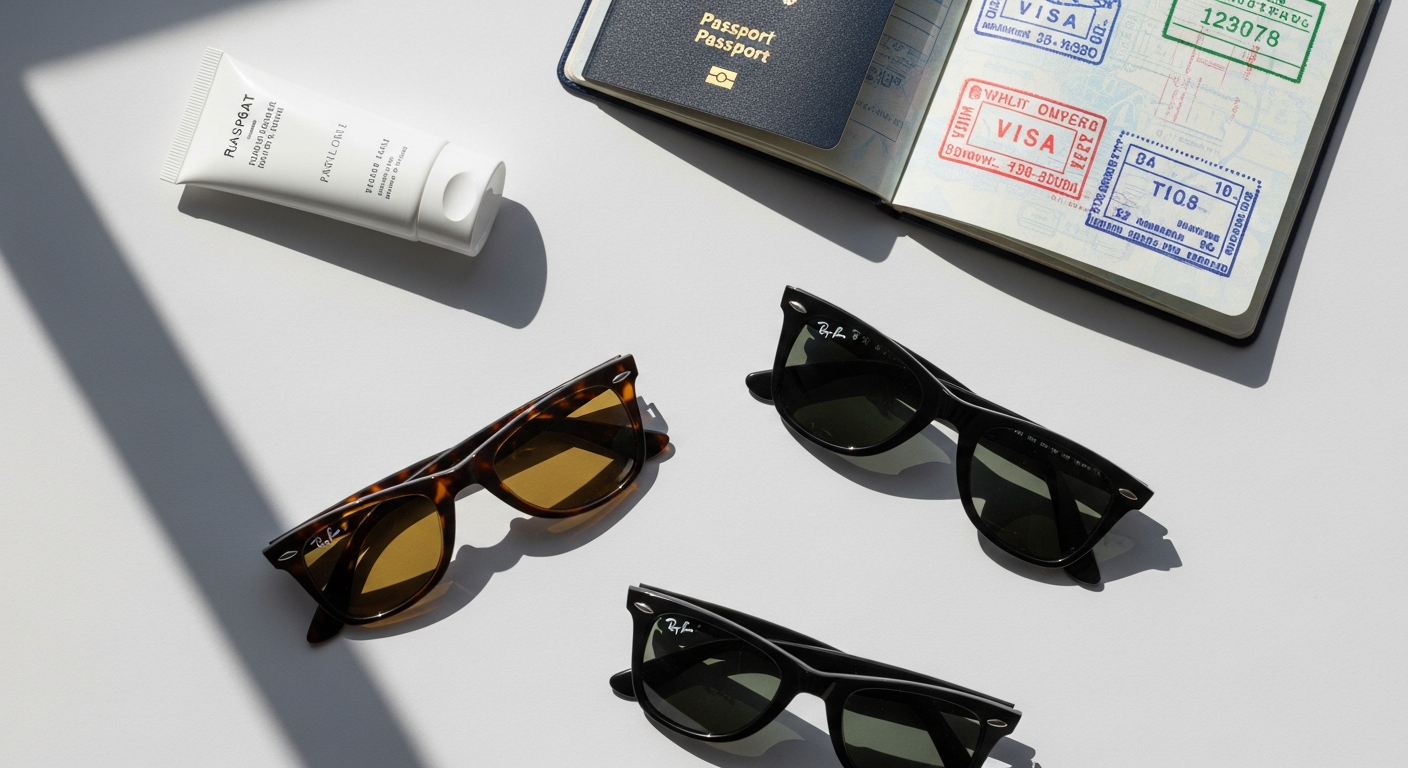
Ray-Ban RB2140 Original Wayfarer: The Iconic Frame That Doesn't Fit Everyone
Seventy-four years after its debut, the Ray-Ban RB2140 Original Wayfarer remains the most recognizable sunglasses silhouette on the planet. Yet here's the catch: this iconic frame doesn't flatter every face shape equally. I've watched countless buyers discover this truth the hard way—ordering a pair only to find the distinctive pantoscopic tilt and bold geometry clash with their facial proportions.
The Wayfarer's legendary status stems from its revolutionary 1952 design and decades of cultural credibility. From James Dean to modern-day influencers, this acetate-framed classic has transcended generations. However, understanding whether your face shape aligns with the RB2140's specific proportions—its 50mm or 54mm lens width, 22mm bridge, and forward-tilting frame geometry—separates smart purchases from expensive regrets.
Discover the Original Wayfarer and determine if this iconic frame matches your face shape today.
Face Shape Compatibility—Finding Your Perfect Wayfarer Fit
Oval faces: Why the RB2140's balanced proportions work exceptionally well for this versatile face shape
Oval faces represent the ideal canvas for the Original Wayfarer. The balanced proportions of an oval—where the face length slightly exceeds the width—complement the RB2140's square-to-trapezoidal geometry perfectly. The frame's width adds subtle definition without overwhelming delicate features, while the height provides enough vertical presence to avoid appearing diminished. If your face tapers gently at the chin and forehead while maintaining even proportions across the cheekbones, the Wayfarer will likely feel like it was designed specifically for you.
Heart-shaped faces: How the frame's width counterbalances a narrower jawline
Heart-shaped faces feature broader foreheads and cheekbones that narrow significantly toward the chin. The RB2140's width compensates beautifully for this proportional contrast. The frame's horizontal emphasis draws attention upward, balancing a narrower jawline while the bold lines add structure where heart-shaped faces naturally taper. The pantoscopic tilt, often problematic for other face shapes, actually works in your favor here by directing focus toward the eyes rather than emphasizing chin narrowness.
Round faces: The angular geometry that adds definition and structure
Round faces benefit dramatically from the Wayfarer's angular geometry. Where soft, curved features dominate, the RB2140's sharp lines and bold square shape create visual contrast that adds definition. The frame's width makes fuller cheeks appear more sculpted, while the geometric lines counteract the roundness that might otherwise make a face appear wider. The distinctive forward tilt of the frame adds another dimension that breaks up facial curves, creating a more angular overall appearance.
Square faces: The bold lines that complement rather than duplicate your natural angles
Square faces already feature pronounced angularity, which could theoretically create redundancy with the Wayfarer's bold lines. However, the RB2140's specific geometry—wider than it is tall, with the distinctive trapezoidal shape—complements rather than duplicates square jaw structure. The frame softens the severity of square features while maintaining visual strength. The key consideration for square faces involves the pantoscopic tilt, which can occasionally direct overhead sunlight into the eyes more noticeably than on other face shapes.
Why rectangular and diamond faces present challenges: Frame width considerations and pantoscopic tilt concerns
Rectangular faces, characterized by extended length and prominent jaw structure, sometimes struggle with the Wayfarer's proportions. The 50mm lens width may appear narrow on longer faces, creating an imbalance where the frame seems small relative to overall face length. Diamond-shaped faces, with prominent cheekbones and narrower forehead and jawline, face similar challenges. The RB2140's width, designed for balanced faces, may not provide sufficient cheekbone coverage for diamond shapes, potentially emphasizing the narrowness of forehead and chin simultaneously.
The bridge width factor: How the 22mm bridge affects different face widths and nose structures
The 22mm bridge—the distance between the two lenses—represents a critical measurement that many buyers overlook. For individuals with narrow bridges and closely-spaced eyes, a 22mm bridge provides proper spacing and proportional balance. However, those with wider faces or broader nose structures might find the bridge slightly narrow, creating pressure points on wider noses or a sensation that the frame sits too far back. The non-adjustable design means you cannot customize this measurement, making it essential to assess your bridge width before purchasing.
Temple length assessment: Why 150mm works for standard proportions and alternatives for different builds
The 150mm temple length accommodates standard adult head sizes and ear placements effectively. However, individuals with larger head circumferences or ears positioned further back on the skull may experience slippage or insufficient coverage. Those with smaller head proportions might encounter temples that extend beyond comfortable positioning. The temple length works directly with the bridge width to determine overall fit stability, so assessing both measurements together provides a clearer picture of whether the RB2140's standard dimensions align with your build.
Decoding the Frame Specifications That Impact Your Comfort
Acetate material breakdown: Hypoallergenic properties, flexibility, and durability advantages
The RB2140's full-rim frame construction uses hypoallergenic, lightweight acetate—a thermoplastic material that revolutionized eyewear design decades ago. Acetate offers genuine advantages: it's naturally hypoallergenic, meaning users with nickel sensitivities or other metal allergies can wear it without irritation. The material provides slight flexibility, allowing minor adjustments for improved fit without compromising structural integrity. Acetate frames absorb minimal moisture and resist corrosion, contributing to impressive longevity when properly maintained.
The flexibility of acetate also means the frame can adapt slightly to head shape variations, which some users appreciate as a break-in benefit. However, this same flexibility creates limitations—acetate cannot be adjusted as extensively as metal frames, and the non-adjustable nose pads represent a genuine constraint for certain users.
The pantoscopic tilt explained: What creates that signature forward angle and how it affects light entry
The pantoscopic tilt—where the top of the frame angles slightly forward—distinguishes the Original Wayfarer from nearly every modern sunglasses design. This forward angle creates the frame's iconic aesthetic and actually serves functional purposes: it positions lenses closer to the face at the top while maintaining distance at the bottom, potentially improving comfort for some wearers. However, the tilt creates a genuine tradeoff. On individuals with higher cheekbones or particular face shapes, this forward angle allows overhead sunlight to enter beneath the frame, reducing sun protection from above.
The tilt also affects how the frame sits on the nose and ears, distributing weight differently than conventional designs. For some users, this distribution feels natural and comfortable; for others, it creates pressure points or an unstable sensation.
Lens width options: Comparing 50mm versus 54mm dimensions and coverage implications
Ray-Ban offers the RB2140 in 50mm and 54mm lens width options, representing the distance across the front of each lens. The 50mm option suits individuals with smaller to average face widths, providing proportional coverage without appearing oversized. The 54mm lens provides broader coverage, suiting larger faces or those desiring more substantial sun protection and style presence.
Choosing between these dimensions significantly impacts the overall aesthetic and functional coverage. The 50mm creates a more refined, vintage appearance aligned with early Wayfarer designs, while the 54mm delivers more contemporary proportions with greater lens area coverage. For those with round or oval faces under 5'8", the 50mm often provides better proportional balance. Taller individuals or those with broader faces typically find the 54mm more comfortable and visually appropriate.
Bridge dimensions: Why the 22mm measurement matters for pressure distribution and stability
The 22mm bridge measurement determines where the frame sits on your nose and how weight distributes across the bridge of your nose. For individuals with average to narrow bridge widths, 22mm provides proper spacing that prevents excessive pressure while maintaining frame stability. However, broader noses or those with wider bridge structures may experience uncomfortable pressure concentration, particularly during extended wear.
The integrated nose pad design—molded directly into the frame rather than attached separately—means you cannot adjust bridge tension or pad height. This constraint makes bridge width assessment critical before purchase.
Temple length and ear positioning: How 150mm accommodates different head sizes and ear placements
The 150mm temple length extends from the lens hinge to where the temple arm curves around the ear. This measurement suits most adult head sizes, but variations in head circumference and ear placement relative to the skull significantly impact whether this standard length works for you. Individuals with smaller head circumferences may find temples extending slightly too far, creating a loose fit that allows frames to slip. Those with larger heads might experience temples that don't extend far enough, leaving insufficient material to curve properly around ears.
The temple length also works in concert with the pantoscopic tilt to determine overall frame stability on your face. Testing this measurement—either through trying on frames or researching specific head measurements—prevents comfort surprises after purchase.
Full-rim construction benefits: Frame strength and lens retention advantages
The RB2140's full-rim design, where the frame completely surrounds both lenses, provides superior strength and lens retention compared to semi-rimless or rimless alternatives. The complete frame material protects lens edges from damage, and the substantial plastic material resists breakage from accidental drops better than frames that expose lens edges.
This construction also provides aesthetic boldness—the frames' prominent presence creates the Wayfarer's signature visual impact. However, full-rim designs require more material and create slightly more weight compared to minimalist alternatives, which some users perceive as less comfortable during extended wear, though the lightweight acetate mitigates this concern significantly.
Integrated nose pad design: Why non-adjustable pads create fit challenges for some wearers
The integrated nose pads—molded directly into the frame rather than attached as separate components—represent a defining characteristic that creates both benefits and challenges. This design simplifies manufacturing, reduces assembly steps, and contributes to the frame's iconic aesthetic continuity. However, non-adjustable pads cannot be modified to accommodate individual nose bridge variations, pressure points, or personal comfort preferences.
For users with average nose structures and bridge widths, these pads provide perfectly adequate support. For those with broader bridges, high nose bridges, or sensitivity to pressure, the inability to adjust pads represents a genuine fit limitation.
Lens Technology and Optical Clarity Choices
Crystal glass versus plastic: Optical clarity advantages and fragility trade-offs
Ray-Ban's RB2140 uses crystal glass lenses, which deliver superior optical clarity compared to plastic alternatives. Glass provides true optical properties without the slight distortion that sometimes accompanies plastic, resulting in images that appear sharper and colors that seem more vibrant. For users prioritizing visual precision, glass lenses justify their inclusion.
However, crystal glass creates genuine fragility concerns. Glass lenses crack or shatter when dropped far more readily than polycarbonate or trivex plastic alternatives. Individuals with active lifestyles, those prone to dropping glasses, or parents managing children's eyewear should honestly evaluate whether glass lenses fit their actual usage patterns. The superior clarity advantage must balance against realistic breakage risk.
G-15 green lens heritage: Why this classic option remains the most popular choice
The G-15 green lens, Ray-Ban's signature tint introduced alongside the original Wayfarer, remains the most popular lens choice for the RB2140. This medium green tint provides natural color perception while filtering approximately 85% of visible light, making it ideal for varied lighting conditions. The G-15 creates excellent contrast, making it particularly effective for driving and outdoor activities where detail recognition matters.
The green tint also aligns with the Wayfarer's vintage aesthetic, creating a cohesive visual package that feels authentically retro. For users seeking the "classic Wayfarer experience," the G-15 lens delivers exactly that proposition without compromise.
Polarized lens benefits: Glare reduction for driving, water activities, and bright environments
Polarized lens options eliminate horizontal light reflection—the glare bouncing off water surfaces, wet pavement, and snow—creating dramatically clearer vision in reflective environments. For drivers, sailors, or beach enthusiasts, polarized Wayfarers provide functional benefits that justify the premium price. The glare reduction noticeably decreases eye strain during extended outdoor exposure in bright conditions.
However, polarized lenses occasionally create compatibility issues with LCD and LED screens, sometimes making phone displays difficult to read. For individuals who frequently check phones or GPS devices while wearing sunglasses, non-polarized G-15 lenses may prove more practical despite losing the glare reduction benefit.
100% UVA/UVB protection: What this specification means for long-term eye health
The RB2140's 100% UVA/UVB protection blocks the full spectrum of ultraviolet radiation, preventing cumulative eye damage that can lead to cataracts, macular degeneration, and other long-term conditions. This specification represents non-negotiable eye health protection that all quality sunglasses should provide.
Ray-Ban's crystal glass lenses inherently block UV radiation, but the manufacturer explicitly guarantees 100% protection across the full UV spectrum. This comprehensive protection matters for anyone spending substantial time in sunlight, particularly in high-altitude environments or locations with intense sun exposure.
Lens color variations available: How different tints affect contrast, color perception, and style versatility
Beyond the classic G-15 green, Ray-Ban offers the RB2140 in various lens tints including brown, gray, and light amber options. Brown lenses enhance contrast and warmth, particularly suiting users who wear Wayfarers during overcast conditions. Gray lenses provide neutral color perception, maintaining natural vision while reducing brightness. Light amber options, occasionally available, create warm tones that enhance detail perception in low-light conditions.
The lens color choice significantly impacts both functionality and aesthetic versatility. A user might discover that a brown lens Wayfarer complements their wardrobe better than the classic green, or that gray lenses align better with their lifestyle needs. Exploring tint options prevents committing to a single choice that might not suit your actual preferences.
Optical quality expectations: What superior clarity actually delivers in daily wear
Crystal glass lenses deliver measurably superior optical clarity compared to plastic alternatives, but the practical difference matters most in specific situations. For individuals who drive extensively or engage in activities requiring sharp distance vision, the clarity advantage becomes genuinely noticeable. For casual beach-day or around-town wear, the difference proves less pronounced.
The optical quality Ray-Ban delivers also depends on proper lens centering and manufacturing tolerances. Occasionally, reports emerge of loose lenses or slight misalignment, which can compromise optical performance regardless of the material quality. Purchasing from authorized retailers and using reputable opticians for any adjustments helps ensure you experience the full clarity benefit.
Lens durability concerns: Why glass lenses require more careful handling than modern alternatives
Crystal glass lenses deliver superior optical clarity at the cost of fragility. While acetate frames absorb minor impacts and flex slightly to protect contents, glass lenses shatter or crack from direct impacts. A fall from eye level to concrete typically shatters glass lenses, while the same fall might merely scratch polycarbonate alternatives.
This fragility creates genuine ongoing costs. Broken lenses require replacement—an expense that can reach €50-80 depending on your retailer and specific lens option. For individuals with clumsy habits, active lifestyles, or living in environments prone to accidental impacts, the true cost of ownership extends beyond the initial €128-191 purchase price.
Real-World Fit Challenges and Honest Solutions
The overhead light problem: When and why the pantoscopic tilt allows sunlight to enter from above
The forward pantoscopic tilt, while creating the Wayfarer's iconic silhouette, creates a genuine functional compromise. On individuals with higher cheekbones, fuller faces, or particular facial geometry, the tilt positions the top of the frame farther from the face than the bottom. This gap allows overhead sunlight—from the sun directly above or slightly behind—to enter beneath the frame, reducing protection from above.
This overhead light entry proves particularly problematic during midday hours when the sun reaches high angles. It's less concerning during morning and evening hours when the sun remains lower on the horizon. Individuals who spend substantial time in bright midday sun should honestly assess whether the Wayfarer's aesthetics justify accepting reduced overhead protection, or whether a conventional non-tilted frame better suits their actual needs.
Loose lens issues: How manufacturing tolerances occasionally create wobbling lenses
Despite Ray-Ban's quality reputation, occasional reports emerge of lenses that feel slightly loose or develop a subtle wobble after purchase. This issue typically stems from manufacturing tolerances in how lenses sit within the frame's holding grooves. A slightly loose lens doesn't represent a product defect per se—it falls within acceptable manufacturing variations—but it proves genuinely annoying during wear.
Fortunately, a competent optician can usually tighten lenses by adjusting the frame's holding grooves, typically for minimal cost. However, this adjustment step wasn't necessary with your purchase, and it represents an inconvenience that shouldn't occur with premium eyewear. Purchasing from retailers with accessible optician services helps resolve this issue quickly if it arises.
Pressure points on wider noses: Why non-adjustable nose pads disappoint some wearers
The 22mm bridge and integrated nose pads work beautifully for individuals with average to narrow nose structures. However, those with broader nose bridges or high nose bridges sometimes experience uncomfortable pressure concentration. The frame essentially rests entirely on the highest point of your nose bridge, creating pressure rather than distributing weight across a broader area.
This pressure typically becomes most noticeable during extended wear—after an hour or more of continuous use. Some users develop red marks where the pad contacts the nose, while others experience general discomfort that makes the frames feel unstable or irritating. Because the nose pad integrates directly into the frame, you cannot request pad adjustments or replacements.
Temple fit variations: How different ear positions affect comfort and stability
The 150mm temple length works excellently for standard ear positions, but ears vary significantly in their positioning relative to the skull. Some individuals have ears positioned closer to the head; others have ears that protrude more prominently. These variations directly impact whether the 150mm temple extends the proper distance around the ear, affecting frame stability.
If temples don't extend far enough, frames slip down during wear or fail to stay centered on your face. If temples extend too far, they wrap around ears uncomfortably or create tension. Testing frame fit by trying them on in-store—or purchasing from retailers with liberal return policies—helps identify these compatibility issues before permanent commitment.
Adjustment limitations: What an optician can realistically fix versus design constraints
An optician can perform specific adjustments to Ray-Ban frames: they can tighten nose pads slightly, make minor temple adjustments, and adjust pantoscopic tilt incrementally. However, structural design constraints prevent comprehensive customization. You cannot widen or narrow the 22mm bridge; you cannot extend the 150mm temples substantially; you cannot change the fundamental forward tilt that characterizes the design.
Understanding these limitations prevents disappointment after purchase. If your concerns involve bridge width or temple length, ordering the frame hoping an optician will resolve these issues leads to frustration. Conversely, if you simply need minor comfort adjustments, a skilled optician can likely help.
Break-in period expectations: How acetate frames adapt and whether discomfort improves with wear
Acetate frames require a genuine break-in period, typically lasting 1-2 weeks. The material gradually adapts to your face shape and body heat, becoming slightly more flexible and molding to your unique contours. Users who experience mild discomfort initially often discover the frames become noticeably more comfortable after consistent wear.
However, this break-in period has limits. Significant discomfort—substantial pressure points, slipping, or general instability—won't improve meaningfully with time. These issues typically indicate a fundamental fit problem rather than adjustment-period discomfort. Testing whether discomfort feels like adjustment-related tightness (which improves) or structural incompatibility (which doesn't) helps you distinguish between patience-required scenarios and situations where the frames simply don't match your face shape.
Sizing up or down: When the 50mm or 54mm option becomes the deciding factor
The choice between 50mm and 54mm dimensions sometimes represents the deciding factor between comfortable wear and persistent fit issues. An individual who tries the 50mm and experiences pressure or instability might discover the 54mm provides superior comfort despite appearing slightly larger. Conversely, someone uncomfortable with the 54mm's prominence might find the refined 50mm delivers better overall satisfaction.
If you're between sizes, ordering both options for comparison—then returning one—provides clarity that reading specifications alone cannot deliver. The small investment in return shipping often prevents purchasing the wrong size and experiencing months of regret.
Price Justification and Value Assessment for 2026
The €128–€191 price range breakdown: What factors drive variations across retailers
Ray-Ban RB2140 Original Wayfarer sunglasses typically retail between €128 and €191, with significant variation depending on lens options, retailer location, and temporal sales. Basic G-15 glass lens options generally occupy the lower price range, while polarized options, specialized tints, or limited editions command premium pricing. Retailer location matters substantially—European pricing differs from North American or Asian markets due to import duties, currency fluctuations, and localized manufacturing costs.
Authorized Ray-Ban retailers maintain relatively consistent pricing within narrow bands, though seasonal sales create temporary discounts. Online retailers occasionally offer legitimate promotional pricing, particularly during seasonal transitions or inventory clearance. The €128.10 pricing mentioned on platforms like Vistaexpert FR represents a discounted option from the standard €183 retail price, suggesting 30% savings availability during optimal timing.
Discounted pricing opportunities: Where to find legitimate sales without compromising authenticity
Legitimate Ray-Ban discounts come from authorized retailers clearing seasonal inventory, running promotional campaigns, or offering loyalty discounts to returning customers. Authorized retailers include major eyewear chains, optical professionals with Ray-Ban licenses, and select online platforms with verified seller status.
Extremely discounted pricing—more than 40% below standard retail—should raise authenticity questions. Counterfeiting affects the Wayfarer specifically because its iconic status drives demand for replicas. Purchasing from any source lacking clear authorization creates risk of receiving counterfeit frames that superficially resemble genuine RB2140s while lacking quality construction, optical properties, and UV protection specifications.
Cost per wear calculation: Why iconic status translates to long-term value
The RB2140's €128-191 purchase price appears more reasonable when amortized across actual years of wear. Assuming 5 years of regular use (approximately 1,825 days), the daily cost per wear ranges from €0.07 to €0.10 depending on initial purchase price. An accessory worn nearly daily, across multiple seasons and style contexts, delivering genuine sun protection while maintaining visual appeal throughout, often provides superior value compared to purchasing new trendy frames annually.
Iconic sunglasses function differently than fashion-driven accessories. While trendy frames become dated within 2-3 seasons, the Wayfarer's timeless aesthetic means you're unlikely to tire of the look based on fashion cycles. This durability of appeal translates to extended wear cycles and superior cost-per-wear economics compared to fashion-conscious alternatives.
Comparison to alternatives: How the Wayfarer's price stacks against comparable premium frames
Premium sunglasses generally retail in the €100-300 range depending on brand prestige, lens technology, and frame materials. Luxury alternatives from brands like Persol, Tom Ford, or Gucci often exceed €200-400, charging premium pricing primarily for brand heritage and design distinctiveness rather than superior optical technology.
The Wayfarer's pricing sits in the mid-premium range, offering genuine quality construction and legitimate cultural prestige at prices lower than ultra-luxury alternatives. The question isn't whether the Wayfarer offers the absolute best value—budget alternatives from brands like Warby Parker or Bonlook cost substantially less—but whether the cultural significance and timeless design justify the mid-premium pricing. For individuals who value iconic status and proven longevity, that justification typically holds.
Investment durability: Expected lifespan and maintenance costs for acetate frames
Well-maintained acetate frames typically last 5-7 years before requiring significant repairs or replacement. This lifespan assumes basic care: regular cleaning with microfiber cloths, protective storage in cases, and avoiding extreme heat or pressure. Frames that receive adequate care often exceed this timeline, with some users reporting 10+ years of successful wear.
Annual maintenance costs typically remain minimal—occasional professional cleaning or minor adjustments by an optician run €10-25. The primary ongoing expense involves lens replacement if they break, which costs €50-80 depending on whether you replace glass or upgrade to more durable polycarbonate. Factoring these maintenance costs into lifetime value calculation provides realistic assessment of true ownership costs.
Resale value considerations: Why Wayfarers hold market value better than trend-driven alternatives
The Wayfarer's iconic status creates genuine resale value. Used Wayfarer frames in good condition typically sell for 50-70% of original retail price through platforms like eBay or specialty resale sites. This resale value remains relatively stable across years, unlike trendy frames that lose appeal as fashion cycles rotate.
This resale value provides unexpected economic benefit. If you purchase a €150 pair of Wayfarers and wear them for 3 years, selling them for €75-100 effectively reduces your total ownership cost. Trend-driven alternatives typically resell for 20-30% of original value, making them genuinely more expensive over lifetime ownership despite lower initial purchase prices.
Seasonal sales patterns: When retailers typically offer the deepest discounts
Ray-Ban and authorized retailers typically offer deepest discounts during seasonal transitions—specifically late August/early September (back-to-school season transitioning to fall) and December/January (holiday shopping ending, new-year inventory management). Summer months (June-July) sometimes feature modest discounts as retailers clear spring inventory, though these prove less dramatic than seasonal transition sales.
Black Friday and Cyber Monday occasionally feature Wayfarer discounts, though Ray-Ban maintains stronger pricing control on iconic models compared to other products. Planning purchases around seasonal sale windows can realistically save €20-50, though authentic discounts never approach 50% off standard retail pricing.
The Cultural Legacy That Justifies the Hype
From 1952 rebellion to 2026 sophistication: How the Wayfarer evolved without losing identity
The Wayfarer's 1952 introduction represented a revolutionary departure from the delicate metal-frame designs dominating eyewear culture. The bold plastic frame, trapezoidal shape, and substantial presence created visual rebellion against conventional elegance. This revolutionary aesthetic quickly transcended fashion novelty, becoming a symbol of independence and individualism that resonated across decades and demographic groups.
Remarkably, the design evolved minimally across 74 years. The core silhouette, bridge dimensions, and temple construction remain essentially unchanged from the original 1952 design. This constancy—maintaining the original vision while the world transformed around it—distinguishes the Wayfarer from products that required continual redesign to maintain relevance. The frame remains genuinely iconic rather than nostalgic, worn not as retro affectation but as authentic fashion choice by individuals across ages, professions, and style contexts.
Celebrity endorsements across decades: Why consistent cultural visibility drives desirability
The Wayfarer benefited from early celebrity adoption by cultural icons: James Dean in the 1950s, Bob Dylan and other musicians in the 1960s, and continued visibility across subsequent decades. However, the Wayfarer's sustained desirability stems not from single historical moments but from consistent cultural visibility across generations.
Contemporary influencers, musicians, and actors continue wearing Wayfarers, maintaining cultural relevance without orchestrated marketing campaigns. This organic adoption across decades—rare for any fashion product—creates genuine desirability rooted in authentic usage rather than manufactured hype. The frame transcends the "that celebrity wore it" phenomenon, instead becoming a universally recognized symbol of timeless style.
The Risky Business effect: How film appearances created permanent fashion credibility
Tom Cruise's iconic Wayfarer-wearing scene in "Risky Business" (1983) created a genuine cultural moment that resurrected the frame from relative obscurity. That single film sequence transformed the Wayfarer from vintage relic into contemporary fashion essential, proving the frame's remarkable ability to adapt to contemporary contexts while maintaining historical prestige.
This "Risky Business effect" didn't create lasting desirability through artifice; instead, it revealed the frame's fundamental aesthetic strength. When Cruise wore the Wayfarers, audiences recognized them as authentically cool rather than forced product placement. The cultural moment amplified existing appeal rather than creating it from nothing, a distinction that explains why the Wayfarer remains relevant 40+ years later while countless other promoted products faded instantly.
Generational appeal mechanics: Why grandparents and Gen-Z both covet the same frame
Few fashion products achieve genuine cross-generational appeal. The Wayfarer accomplishes this through design that transcends temporal context while simultaneously fitting within each era's aesthetic vocabulary. A Boomer wearing Wayfarers in the 1960s experiences them as contemporary rebellion; a Gen-Z individual wearing identical frames experiences them as timeless authenticity.
This multi-generational appeal stems from the frame's fundamental simplicity. The bold geometry doesn't require explanation or cultural context to appear sophisticated. The proportions work across face shapes and style contexts without modification. The aesthetic doesn't reference specific decades heavily enough to feel dated, yet retains sufficient character to avoid appearing generic. This balance—sophisticated without pretension, distinctive without feeling dated—explains why grandparents and grandchildren can genuinely covet the identical frame.
Fashion versatility across styles: From casual streetwear to formal occasions
The Wayfarer's geometric boldness somehow complements nearly every aesthetic context. Worn casually with jeans and t-shirt, they elevate streetwear through iconic status. Paired with business attire, they add subtle rebellion and confidence to professional contexts. Combined with formal wear, they create sophisticated edge that expensive designer alternatives sometimes fail to achieve.
This versatility stems from the frame's self-assured design. The substantial plastic construction, bold geometry, and integrated design elements create strong visual presence regardless of what surrounds them. Rather than disappearing into background contexts, Wayfarers consistently command presence while remaining classically appropriate across situations. This consistent aesthetic strength allows single frames to function across multiple style contexts that would typically require different eyewear.
Instagram and influencer culture: Modern drivers of Wayfarer demand and brand relevance
Contemporary Wayfarer visibility amplifies through Instagram and influencer culture, where visual consistency and aesthetic coherence matter enormously. The Wayfarer's strong geometric presence translates exceptionally well to photo contexts—the bold frame creates visual interest while remaining instantly recognizable. Influencers across diverse niches (fashion, music, outdoor adventure, professional contexts) incorporate Wayfarers precisely because the frame fits genuinely into their aesthetics rather than appearing as forced product placement.
The digital visibility maintaining Wayfarer desirability differs fundamentally from manufactured celebrity endorsements. When micro-influencers and content creators organically incorporate Wayfarers into genuine style documentation, audiences recognize authenticity. The frame thrives in social contexts because it delivers on promises of timeless style, distinctive presence, and genuine aesthetic appeal that social media audiences intuitively recognize.
Counterfeiting awareness: Why authentic Ray-Ban sourcing matters for this coveted model
The Wayfarer's desirability creates substantial counterfeiting problems. Fake RB2140s circulate through unauthorized online retailers, discount sites, and street vendors, superficially resembling genuine frames while lacking quality construction and optical specifications. Counterfeit frames often feature:
- Inferior acetate that becomes brittle over time
- Loose lenses that wobble or fall out
- Non-prescription glass that doesn't meet UV protection claims
- Defective hinges that fail after minimal use
- Packaging and labeling inconsistencies with genuine Ray-Bans
Purchasing from authorized retailers eliminates counterfeiting risk while guaranteeing genuine optical quality and manufacturer warranties. The slight cost premium for authentic sourcing through legitimate channels proves genuinely worthwhile given the functional differences between genuine and counterfeit alternatives.
Making Your Final Decision—Wayfarer or Alternative?
The compatibility checklist: Essential questions before committing to purchase
Before purchasing, honestly answer these critical questions:
- Does your face shape fall primarily into oval, heart, or round categories? (Higher probability of success)
- Can you comfortably accommodate a 22mm bridge without significant nose pressure?
- Does your head size accommodate 150mm temples without excessive slippage or tension?
- Will the 50mm or 54mm lens width provide proportional balance with your face?
- Does the pantoscopic tilt concern you regarding overhead light entry?
- Can you accept non-adjustable nose pads without customization?
- Will glass lenses align with your lifestyle and handling habits?
- Does the €128-191 price point fit your sunglasses budget?
- Can you access retailers with reasonable return policies?
Answering "yes" to all questions suggests the Wayfarer represents an excellent choice. Hesitation on multiple questions indicates the frame may not align with your specific needs and preferences.
Face shape decision tree: A practical framework for determining fit probability
Begin by identifying your dominant face shape. Oval, round, and heart-shaped faces show high probability of successful Wayfarer fit and should proceed with confidence. Square faces typically experience good results but should specifically assess the pantoscopic tilt comfort. Rectangular, diamond, and oblong faces face greater challenges and should seriously consider trying on the frame before purchase or thoroughly research fit reports from individuals with similar face shapes.
After establishing face shape compatibility, evaluate specific measurements: Does the 22mm bridge feel appropriate for your nose structure? Do the 150mm temples accommodate your ear positioning? Does the pantoscopic tilt create overhead light concerns? Proceeding systematically through these assessments prevents committing to a frame based purely on iconic status while ignoring genuine fit incompatibilities.
Comfort tolerance assessment: Honest evaluation of whether design compromises work for you
The Wayfarer requires accepting specific design elements that compromise pure comfort optimization. The non-adjustable nose pads won't perfectly match every nose structure. The pantoscopic tilt creates overhead light entry for some face shapes. The glass lenses demand careful handling. The 22mm bridge may create pressure on broader noses.
Honestly evaluate your comfort tolerance. Are you willing to accept minor pressure points for the privilege of wearing an iconic frame? Can you adapt your sunglasses-wearing habits to avoid glass lens breakage? Will the overhead light entry prove genuinely problematic for your climate and activities? Your authentic comfort requirements sometimes matter more than style aspirations, and acknowledging this prevents purchasing frames that ultimately disappoint.
Lens preference alignment: Matching your lifestyle needs with available optical options
Evaluate whether the available lens options match your lifestyle. G-15 green glass lenses suit casual wear and everyday driving excellently but create fragility concerns if you engage in active sports. Polarized options benefit drivers and water enthusi
Leave a Reply