Every Australian household uses approximately 141 rolls of toilet paper per year—and most of it comes from virgin trees. That's a staggering environmental cost for something we use just once. What if your bathroom habits could actually reverse deforestation instead of accelerating it?
Who Gives A Crap has built its reputation on a radical idea: toilet paper doesn't have to come from forests. Their 100% recycled toilet paper diverts waste from landfills while funneling 50% of profits toward sanitation projects in developing countries. This Australian brand has transformed what many consider a mundane household necessity into a vehicle for genuine environmental and social change.
In this guide, I'll break down whether Who Gives A Crap's recycled option truly delivers on comfort and value. Explore Who Gives A Crap's 100% recycled toilet paper today. We'll examine the softness debate, calculate the real cost per sheet, explore the circular economy behind every roll, and uncover whether this bulk-buy model actually works for your home and budget.
The Recycled Paper Revolution—What Makes This Toilet Paper Different
How 100% Post-Consumer Recycled Paper Is Sourced from Schools and Office Buildings
The foundation of Who Gives A Crap's environmental promise lies in where the paper actually comes from. Rather than felling forests, the brand sources 100% post-consumer recycled paper—primarily from schools and office buildings. This approach accomplishes two things simultaneously: it diverts material that would otherwise end up in landfills, and it eliminates the demand for virgin tree pulp. Schools and office buildings generate enormous quantities of paper waste daily, making them ideal collection points for high-quality recycled fiber.
The sourcing process isn't random. Who Gives A Crap works with established recycling networks to ensure a consistent supply of clean, usable paper. This closed-loop approach means your bathroom roll represents a second (or third, or fourth) life for paper that already served its original purpose. The environmental arithmetic is straightforward: one less tree needs to be planted and harvested specifically for toilet production.
The Deforestation Prevention Angle and Virgin Tree Conservation
Conventional toilet paper production drives significant deforestation. Boreal forests in Canada, tropical forests in Indonesia, and old-growth ecosystems worldwide face pressure from pulp and paper industries. A single family using conventional toilet paper contributes to thousands of trees being felled annually across the global population.
Who Gives A Crap's recycled model severs that connection entirely. By using paper that's already been processed, the brand removes the economic incentive to harvest new trees for toilet paper. This distinction matters enormously. Forests provide carbon sequestration, wildlife habitat, and watershed protection—functions that recycled toilet paper production doesn't compromise. The conservation angle appeals to customers who understand that preventing deforestation is genuinely more impactful than planting replacement trees elsewhere.
3-Ply Construction Balancing Softness with Durability and Double-Length Roll Specifications
The physical construction of Who Gives A Crap's toilet paper reveals thoughtful engineering. The 3-ply design creates a balance between durability and a softer feel than thinner alternatives. Three layers provide structural integrity—preventing the embarrassing breakdown mid-use—while still maintaining reasonable tactile comfort.
Each roll contains between 385 and 400 sheets, with standard sheet dimensions of 10cm x 10cm. The "double-length" specification means these rolls contain roughly twice the sheets of typical commercial toilet paper. Practically speaking, this translates to fewer roll changes, less frequent purchasing, and reduced packaging waste per bathroom visit. For households tired of constantly replacing depleted rolls, this extended length proves genuinely convenient.
Absence of Inks, Dyes, and Chemical Scents with Septic-Safe and Fully Biodegradable Properties
Who Gives A Crap strips away the unnecessary additives found in many commercial alternatives. The toilet paper is completely free from inks, dyes, and artificial scents. This matters for two reasons: health and environmental impact. Chemicals don't belong on delicate skin, and they shouldn't enter septic systems or waterways.
The septic-safe formulation means the paper breaks down readily in bacterial environments without causing system blockages or damage. It's also fully biodegradable, decomposing naturally over time rather than persisting as microplastics in aquatic ecosystems. These specifications might sound like standard features, but they represent deliberate choices that prioritize environmental responsibility over profit margins.
The Softness Question—Real User Feedback vs. Expectations
Choice Magazine's Softness Rating at 70% and What This Means in Practical Daily Use
The primary criticism of Who Gives A Crap's recycled toilet paper centers on softness. Choice magazine's testing assigned it a softness rating of 70%, which sounds respectable in isolation but becomes significant when compared directly to virgin pulp alternatives scoring 90%+ and even some competing eco-friendly options.
What does a 70% softness rating mean practically? It means the toilet paper feels noticeably less plush than premium virgin brands. The texture is discernibly rougher. However, "rough" is subjective. Many users report that the softness is entirely acceptable for daily use, particularly when compared to commercial bulk toilet paper found in office bathrooms. The discrepancy between expectations and reality accounts for much of the negative feedback—consumers expecting luxury-tier softness encounter a more utilitarian product.
Common User Experiences with Texture Ranging from Rough to Acceptable Compared to Virgin Pulp Alternatives
Actual user feedback reveals a spectrum of experiences. Some users describe it as "a tad bit rough," while others find it perfectly comfortable. A subset report occasional "little tufts"—small fiber breakaway bits that occur more frequently with recycled tissue than virgin alternatives. These aren't deal-breakers; they're minor annoyances that some households tolerate without complaint while others find them objectionable.
The variability in perception stems partly from individual skin sensitivity and partly from expectations. Someone switching from luxury tissue experiences it differently than someone comparing it to budget supermarket alternatives. Importantly, most consistent users report adaptation over time. Initial perception of roughness often diminishes as household members acclimate to the texture.
Ply Count and Sheet Thickness Impact on Comfort and How Softness May Improve with Regular Use
The 3-ply construction directly influences both durability and perceived softness. More plies generally mean softer feel, but they also increase bulk and reduce the number of sheets per roll. Who Gives A Crap optimized for balance rather than maximum softness. The ply count affects sheet thickness—these rolls are slightly thinner and crisper than some alternatives, contributing to the texture experience.
Interestingly, regular users report subjective softness improvements with time. This might reflect actual fiber conditioning through use or simply psychological acclimation. Either way, the reality is that this toilet paper doesn't feel rough after the first week of use for most households. The initial impression often proves more negative than sustained experience.
Managing Expectations for Recycled Toilet Paper Users and Tips for Those Sensitive to Texture Variations
If you're considering making the switch, expectation management is crucial. Understand that you're not purchasing a luxury product—you're selecting an environmentally responsible alternative. The softness trade-off is real but modest. It's not sandpaper; it's simply less plush than virgin tissue.
For texture-sensitive users, consider these practical approaches: use it for non-intimate bathroom functions while maintaining a softer alternative for sensitive areas, or start with a single carton to assess household tolerance before committing to larger quantities. Some users blend their supply, alternating between recycled and softer options throughout the day. Trial and adaptation often resolve initial reservations.
Packaging That Practices What It Preaches—Plastic-Free Design
Individually Wrapped Rolls in Colorful Recyclable Paper with Moisture Protection and Hygiene Assurance
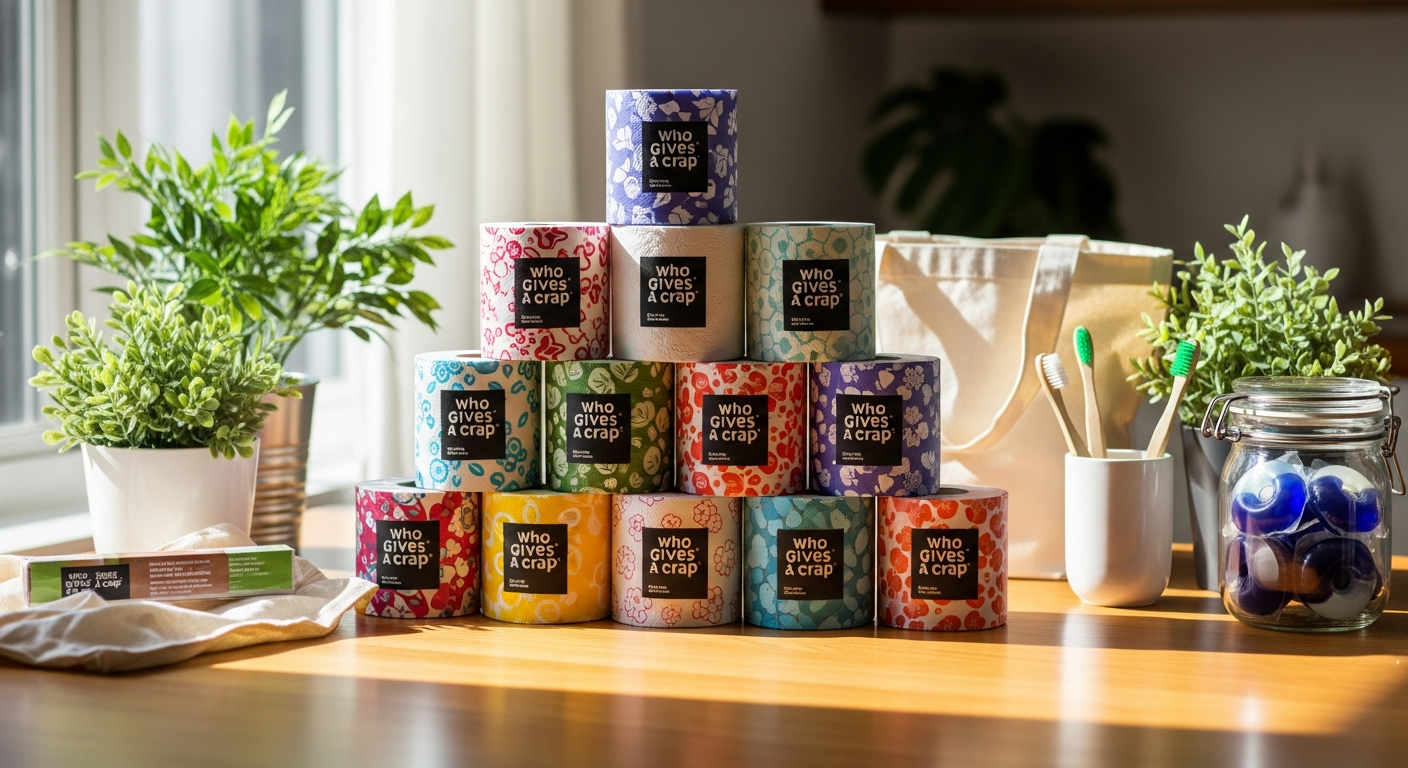
Who Gives A Crap's packaging embodies the same environmental philosophy as the product itself. Each roll is individually wrapped in colorful, recyclable paper rather than plastic. This design choice serves practical purposes—the wrapper protects against moisture and maintains hygiene during storage and transport—while eliminating unnecessary plastic waste.
The individual wrapping is a thoughtful detail often overlooked in sustainability discussions. It prevents mildew growth in humid bathrooms, maintains structural integrity of rolls during bulk storage, and creates an attractive display element that adds personality to bathroom aesthetics. The colorful designs make stockpile management visually distinctive and genuinely fun.
The Playful Aesthetic of Who Gives A Crap's Packaging Design with Zero Plastic in the Supply Chain
Beyond functionality, the packaging reflects the brand's irreverent personality. The colorful wrapping features playful graphics and messaging that transforms utilitarian products into statement pieces. Walking into a bathroom stocked with Who Gives A Crap toilet paper communicates clear values to visitors—this household prioritizes environmental responsibility with a side of humor.
The zero-plastic commitment extends throughout the entire supply chain. The 48-roll carton uses recycled cardboard. No plastic tape seals the boxes. No plastic air cushioning pads waste space. The brand literally practices what it preaches regarding circular economy principles.
Recyclable Cardboard Carton Construction Aligned with the Brand's Circular Economy Mission
The outer carton is 100% recyclable cardboard. When the order arrives, you can immediately place that cardboard into your existing recycling system. Unlike many bulk product deliveries that arrive in elaborate plastic-foam packaging, Who Gives A Crap's cartons become recycled material themselves. This alignment between packaging and core mission eliminates the ethical contradiction of purchasing sustainable toilet paper wrapped in plastic.
Storage Considerations for 48-Roll Bulk Purchases and Space-Saving Tips for Apartment Dwellers
The practical challenge of bulk purchasing is storage. A 48-roll carton occupies significant space—roughly 60cm x 30cm x 30cm depending on exact configuration. This works fine for homeowners with linen closets, under-sink storage, or spare bathrooms. Apartment dwellers face genuine constraints.
Vertical storage in closets maximizes efficiency. Stacking cartons horizontally under beds or in storage units works for some households. Sharing bulk purchases with friends or family reduces individual storage requirements while splitting shipping costs. Some customers opt for subscription delivery on longer intervals, receiving a carton every three months rather than annually, reducing the need for extensive stockpile space.
The Math Behind the Mission—Cost Per Sheet and Long-Term Value
Carton Pricing at AUD $55-$60 for 48 Rolls Equals Approximately $0.36 Per 100 Sheets
The initial sticker shock of a $55-$60 carton purchase can deter budget-conscious shoppers accustomed to picking up single rolls for under $1. Understanding the cost per sheet reveals why bulk purchasing makes sense economically. With approximately 385-400 sheets per roll and 48 rolls per carton, you're purchasing roughly 18,500-19,200 sheets for $55-$60. This calculates to approximately $0.30-$0.36 per 100 sheets.
For comparison, mainstream supermarket toilet paper typically costs $0.40-$0.60 per 100 sheets when purchased in bulk. Who Gives A Crap's pricing, despite its environmental and social credentials, actually competes favorably on a per-sheet basis with conventional alternatives. The upfront cost feels higher because you're purchasing in volume, not because the underlying unit economics are unfavorable.
Double-Length Rolls Reducing Replacement Frequency and Comparison to Mainstream Toilet Paper Cost-Per-Sheet
The double-length specification directly impacts household convenience and true cost comparison. Because each roll contains roughly twice the sheets of standard commercial toilet paper, replacement frequency drops substantially. A bathroom that typically requires roll changes every 2-3 days might only need changes every 4-6 days with double-length rolls. This reduced replacement frequency has secondary benefits: fewer cardboard tubes entering waste streams and less frequent bathroom maintenance.
When comparing costs, the math must account for this difference. A standard commercial roll containing 200 sheets costs roughly $0.30-$0.40, making per-sheet costs comparable to Who Gives A Crap. However, those shorter rolls deplete faster, creating a false perception of economy. The double-length factor makes Who Gives A Crap genuinely competitive on true cost-per-use rather than just per-sheet metrics.
Bulk Purchase Psychology, Upfront Investment Barriers, and Subscription Delivery Models Offsetting Storage Concerns
The psychological barrier of bulk purchasing represents one of the brand's actual challenges. Many consumers struggle with large upfront expenditures, even when long-term unit costs are favorable. Who Gives A Crap addresses this through subscription models. Automatic delivery on flexible schedules—monthly, every two months, quarterly—spreads the psychological and practical load of bulk purchasing.
Subscription flexibility matters enormously. A household can elect quarterly deliveries, receiving 48 rolls every three months, rather than committing to an enormous annual purchase. This model reduces storage pressure while maintaining cost advantages. For many users, subscription ordering removes a significant barrier to adoption.
Long-Term Savings Calculations Across Annual Usage and Value Proposition for Families Versus Single Households
Annual usage calculations demonstrate the financial logic. A family of four using approximately 141 rolls per person annually (564 total rolls) spends roughly $180-$220 per year with Who Gives A Crap compared to $220-$280 with mainstream alternatives. The savings compound across years—$50-$100 annually might seem modest, but across a decade, that represents $500-$1,000 in direct savings plus environmental benefits.
Single households benefit less from bulk economics but still achieve cost parity while supporting environmental and social missions. Families with children see the most dramatic savings because toilet paper consumption scales with household size, making bulk purchasing increasingly economical. The value proposition becomes progressively stronger for larger households making the switch.
Beyond the Bathroom—The 50% Profit Donation Model
Who Gives A Crap's Commitment to Sanitation Projects Globally with 50% Profit Donations to Developing Countries
The most distinctive aspect of Who Gives A Crap's business model is the 50% profit donation to sanitation projects. This isn't marketing language—the company publishes detailed impact reports documenting actual spending. Roughly half of all profits generated from toilet paper sales flows directly to organizations building toilets and improving sanitation infrastructure in developing countries.
The mathematics of this commitment are staggering. A customer purchasing $60 of toilet paper contributes potentially $30 in eventual profit donations toward sanitation improvements. Across the company's global customer base, this translates to millions of dollars annually funding tangible infrastructure improvements in communities where sanitation access fundamentally changes health outcomes and quality of life.
How Consumer Purchases Directly Fund Infrastructure Improvements and Align with UN Sustainable Development Goals
When you purchase Who Gives A Crap toilet paper, your money directly builds toilets in communities currently lacking basic sanitation. This isn't abstracted philanthropy—it's measurable impact. The company partners with organizations installing pit toilets, flush systems, and associated infrastructure in regions where such facilities are rare.
This mission aligns precisely with UN Sustainable Development Goal 6 (clean water and sanitation). The SDG targets specifically include universal sanitation access—something still unavailable to 2 billion people globally. Who Gives A Crap's model transforms purchasing decisions into direct contributions toward closing that gap. The alignment feels authentic because the company openly traces the connection between product sales and sanitation outcomes.
Transparency in Charity Partnerships and Project Tracking with Community Testimonials from Regions Receiving Improvements
Who Gives A Crap maintains transparency about where money actually goes. The company publishes impact reports specifying projects funded, amounts contributed, and documented outcomes. Rather than vague claims about charitable giving, customers can access specific information about which communities received improvements and what changes resulted.
Community testimonials from sanitation project recipients provide human dimension to the financial contributions. Stories from individuals and families describing the health and dignity improvements from having access to proper sanitation create emotional resonance beyond abstract statistics. This transparency builds trust—customers know their money genuinely improves lives rather than funding corporate philanthropy theater.
Why Social Mission Matters to Modern Consumers Making Purchasing Decisions Based on Brand Values
Contemporary consumers increasingly make purchasing decisions based on alignment with personal values. Price and quality matter, but so does knowing that purchases support causes customers care about. Who Gives A Crap recognizes this reality and builds the social mission directly into the product rather than treating it as separate corporate responsibility.
This integration proves powerful. Buying Who Gives A Crap toilet paper isn't a sacrifice for environmental values—it's a purchase that simultaneously addresses personal needs, environmental concerns, and social justice. The 50% profit donation model means that choosing this brand directly funds sanitation improvements in underprivileged communities. That alignment resonates deeply with purpose-driven consumers.
Septic System Safety and Biodegradability—What You Need to Know
Septic-Safe Certification and Biodegradable Breakdown Timeline in Various Wastewater Systems
Who Gives A Crap's toilet paper meets septic-safe standards because it breaks down readily in the bacterial environment of septic tanks. The recycled paper fibers lack the density and chemical coatings that cause conventional toilet paper to accumulate and cause blockages. The paper dissolves efficiently when exposed to septic bacteria and moisture.
Biodegradability occurs on realistic timelines—the paper decomposes within weeks to months depending on environmental conditions, wastewater temperature, and bacterial population. This breakdown prevents solids accumulation in septic tanks, reducing the frequency of pumping requirements. For septic-system households, this represents both environmental and economic advantage.
Compatibility with Different Septic Tank Systems and Testing Standards for Regulatory Compliance
Not all toilet paper performs equally in septic systems. Some eco-friendly alternatives dissolve too slowly, causing accumulation. Who Gives A Crap has tested its product against standard septic-safe guidelines and dissolves appropriately. The recycled paper composition—already processed and de-inked—naturally breaks down more readily than virgin pulp tissue.
The product meets regulatory testing standards for septic safety. Third-party testing confirms that it doesn't cause damage or blockage in properly functioning septic systems. However, users with older systems experiencing slow drainage should still be cautious with any toilet paper and may benefit from reducing volume consumption.
How Recycled Toilet Paper Behaves in Wastewater Systems Compared to Conventional and Eco-Friendly Alternatives
Recycled toilet paper's behavior in wastewater systems differs from both conventional and certain eco-friendly alternatives. Conventional tissue contains coatings and chemical brightness enhancers that delay breakdown—serving marketing purposes (whiteness and softness) while creating wastewater challenges. Some bamboo alternatives, despite being faster-growing plants, still use tissue processing methods that reduce septic compatibility.
Who Gives A Crap's recycled paper lacks these additives, making it genuinely more compatible with wastewater systems. It breaks down faster than conventional tissue and comparably to other genuinely eco-friendly alternatives. The absence of optical brighteners and chemical softeners means the paper behaves predictably in biological treatment environments.
Guidance for Users with Older or Sensitive Septic Systems and Long-Term Environmental Impact After Use
Users with septic systems installed before the 1990s or experiencing drainage issues should consult their septic service providers before switching products. While Who Gives A Crap is septic-safe, any significant behavioral changes in toilet paper use should be discussed with professionals. Some older systems function optimally with specific tissue properties, and introducing new products might require minor system adjustments.
The long-term environmental impact after use is positive. Unlike virgin tissue that may contain persistent chemical residues, recycled paper breaks down into harmless organic material. In septic tanks, it becomes part of the solids that eventually get pumped out and processed through municipal or private waste treatment. In municipal systems, it biodegrades readily in activated sludge environments. The environmental responsibility doesn't end at purchase—it extends through the product's complete lifecycle.
Storage Solutions and Bulk Buying Strategy
Space Requirements for 48-Roll Cartons with Vertical and Horizontal Storage Options for Different Home Layouts
A standard 48-roll carton occupies roughly 60cm x 30cm x 30cm—approximately the footprint of a small refrigerator. For homes with dedicated linen closets, space isn't problematic. The carton fits easily on shelves or can stack against walls. Apartment dwellers face genuine constraints requiring creative solutions.
Vertical storage maximizes space efficiency. Placing cartons upright in closets, hallway corners, or under staircases uses vertical real estate that would otherwise remain empty. Horizontal storage under beds or behind furniture works for some households but requires careful moisture management. The key is identifying underutilized storage areas—above bathroom cabinets, in pantry spaces, or even in decorative baskets that disguise bulk supplies.
Moisture Control in Storage Areas and Rotation Systems to Maintain Freshness Throughout the Year
Toilet paper stored in humid bathrooms or basements risks moisture absorption, which ruins the product by promoting mildew growth and creating dampness. Optimal storage locations are dry areas—closets in bedrooms or hallways, pantries with minimal humidity, or garage shelves with moisture control.
Individual roll wrapping protects against most moisture, but carton-level humidity still matters. In high-humidity climates, consider storage in closets with silica gel packets or in sealed plastic storage bins that create a moisture-controlled microenvironment. Rotation systems ensure consistent freshness—using older cartons before newer ones prevents any degradation from extended storage. Most households rotate naturally through regular use, but deliberate rotation systems help manage multi-year stockpiles.
Subscription Frequency Recommendations Based on Household Size and Sharing Bulk Purchases with Friends or Family
Subscription frequency should align with household toilet paper consumption. A family of four typically consumes roughly 4-5 rolls weekly, meaning a 48-roll carton lasts 10-12 weeks. Quarterly subscriptions (every three months) match this consumption pattern perfectly. Smaller households might prefer every four months, while larger families could choose every 8-10 weeks.
Sharing bulk purchases with friends or family members provides elegant solutions for storage constraints. Two households splitting a carton reduces individual storage requirements by 50% while maintaining cost advantages. Coordinating delivery timing ensures regular supply refreshes without either household maintaining enormous stockpiles. Some communities organize group purchases—apartment complexes or friend groups buying together to maximize savings and minimize individual storage needs.
Pantry Organization Hacks for Toilet Paper Stockpiles and When Bulk Buying Makes Sense Versus Smaller Purchases
Organizing bulk toilet paper supplies transforms storage from problem to functional design element. Clear storage bins with labels allow easy identification and inventory tracking. Stackable plastic shelving units dedicated to paper products maximize vertical space in closets or pantries. Decorative baskets disguise bulk supplies in living spaces while keeping cartons organized.
Bulk buying makes sense for households planning to remain in their residence long-term (at least 12+ months) and those with adequate storage. Renters or those expecting to relocate within the year might find smaller purchases less burdensome despite higher per-unit costs. Single individuals or couples with limited bathroom space can explore subscription models delivering smaller quantities on longer intervals. The key is matching purchasing strategy to actual household circumstances rather than defaulting to maximum-bulk economics.
Who Should and Shouldn't Make the Switch
Ideal Customers Include Environmentally Conscious Households and Families with Strong Values Alignment
Who Gives A Crap's ideal customer cares deeply about environmental impact and isn't willing to compromise personal values for modest convenience gains. These households already recycled, composted, or made other conscious consumption choices. The brand resonates with people who view purchasing decisions as moral statements.
Families constitute another ideal demographic. Larger households see the most dramatic savings, experience less storage pressure relative to per-household consumption, and benefit from explaining values-aligned purchasing to children. Teaching kids that bathroom choices support sanitation projects worldwide creates lasting impressions about responsible consumption.
Best Fit for Homes with Adequate Storage Space and Users Willing to Prioritize Sustainability Over Maximum Softness
Fundamentally, Who Gives A Crap works best for people willing to accept softness that's adequate rather than luxurious. This isn't a product for those who view toilet paper as a sensory indulgence requiring maximum plushness. It's for people who recognize toilet paper's utilitarian purpose and value environmental responsibility over tactile excess.
Storage capacity determines practical feasibility. Homes with dedicated closet space, pantries, or spare bathrooms can accommodate bulk purchases effortlessly. Apartments with minimal storage face real constraints that might make subscription-based smaller deliveries or traditional purchasing more practical despite higher costs.
Households with Septic Systems Benefiting from Biodegradable Options and Budget-Conscious Consumers Calculating Long-Term Value
Septic system owners represent a specific audience for whom this product offers genuine advantage. Because municipal sewer systems process vast quantities of toilet paper with established infrastructure, the septic-safe benefit matters less to city dwellers. Septic system households directly benefit from paper that breaks down readily, reducing pumping frequency and associated costs.
Budget-conscious consumers who calculate true lifetime costs benefit enormously. Those accustomed to scanning supermarket sales and calculating per-unit pricing understand that $0.36 per 100 sheets is genuinely competitive. They're willing to make the bulk purchase because the math works out, and environmental benefits emerge as bonus value rather than the driving decision factor.
Potential Drawbacks for Those with Sensitive Skin or Softness Preferences and Not Ideal for Renters with Limited Storage
The product isn't suitable for people with particularly sensitive skin who struggle with any texture roughness. Bidets or moistened wipes as primary cleaning methods with toilet paper as secondary use work better for these users than switching to rougher alternatives. Those with diagnosed conditions like hemorrhoids or other sensitivity concerns should maintain softer tissue options.
Softness-preference consumers—those who view toilet paper as a premium comfort item—will experience disappointment. This isn't a luxury product and doesn't aspire to be. The value proposition centers on environmental impact and social mission, not palatial bathroom comfort.
Renters with limited storage flexibility face practical obstacles. Landlords might object to stockpiling bulk supplies in rental properties, or lease terms prevent permanent storage modifications. Renters also lack incentive to develop relationships with products they'll abandon upon moving. For temporary housing situations, Who Gives A Crap makes less sense than for owner-occupied homes where the customer expects years of use.
Comparing Recycled vs. Bamboo vs. Virgin Pulp—The Eco-Friendly Landscape
Environmental Footprint Comparison Across Toilet Paper Types with Recycled Paper's Advantage in Diverting Landfill Waste
The environmental comparison between toilet paper types requires examining the complete lifecycle. Virgin pulp toilet paper starts with deforestation or tree plantation establishment, continues through processing, and ends with disposal. The processing phase involves bleaching, chemical softening, and multiple refinement steps consuming significant water and energy.
Recycled toilet paper skips the forest-impact phase entirely—the environmental cost of growing trees or harvesting existing forests doesn't exist. The paper already exists; recycled toilet paper simply diverts it from landfills while reducing processing requirements. Manufacturing recycled tissue consumes roughly 30% less energy than virgin pulp processing and uses significantly less water. The environmental advantage compounds because the raw material cost is eliminated.
Bamboo toilet paper represents a middle ground. Bamboo grows rapidly—reaching harvest maturity in 3-5 years compared to 20+ years for conventional trees. The rapid growth means less deforestation pressure. However, bamboo tissue still requires processing, bleaching, and chemical treatment similar to virgin pulp. Transportation from bamboo-growing regions adds carbon footprint not present with local recycled paper collection.
Bamboo Toilet Paper Growth Rates and Sustainability Claims Versus Virgin Pulp's Deforestation Impact and Bleaching Processes
Bamboo's sustainability reputation partly reflects genuine advantages and partly reflects marketing. Bamboo does grow explosively compared to conventional timber—a bamboo forest regenerates within years while pine plantations require decades. Additionally, bamboo farming doesn't deplete soil like some timber operations and requires minimal chemical inputs.
However, the sustainability narrative breaks down under scrutiny. Large-scale bamboo cultivation for toilet paper has driven habitat destruction in Southeast Asia, particularly in regions that previously contained biodiverse forests. Monoculture bamboo plantations replace complex ecosystems with single-species farms. Chemical processing transforms bamboo into tissue through mechanically and chemically intensive steps consuming resources comparable to virgin pulp.
Virgin pulp's deforestation impact remains the central environmental concern. Even tree plantations created specifically for tissue production represent monocultures replacing biodiverse forests. Old-growth forests bear particular damage because they take centuries to regenerate. The bleaching process generates chemical effluent entering waterways, and pulping operations produce significant carbon emissions.
Softness Rankings Across All Three Categories with Price Comparisons and Carbon Footprint Considerations
Softness rankings reflect processing approaches. Virgin pulp achieves maximum softness through chemical brighteners, creping agents, and softening treatments—expensive processes but highly effective. Premium virgin tissue scores 90%+ on softness scales.
Bamboo toilet paper typically scores 80-85% on softness tests. The fiber structure allows reasonable softness without excessive chemical processing, placing it between virgin and recycled alternatives.
Who Gives A Crap's recycled toilet paper scores around 70% as previously discussed. The recycled fiber has already undergone processing, reducing the softness-enhancement potential of additional chemical treatment.
Price comparisons show virgin tissue at $0.40-$0.60 per 100 sheets, bamboo at $0.35-$0.50, and Who Gives A Crap at $0.30-$0.36. Cost-per-sheet favors recycled slightly, though all three cluster relatively closely when accounting for sheet thickness and density variations.
Carbon footprint analysis demonstrates recycled paper's advantage. Virgin pulp production generates 3-4kg of CO2 per kg of tissue. Bamboo produces roughly 2-3kg due to shorter growth cycles. Recycled paper requires only 1-1.5kg because the manufacturing inputs are drastically reduced. Transportation differences matter less than these manufacturing-phase impacts for products shipped globally.
Which Option Aligns with Different Environmental Priorities and Transportation Considerations for Conscious Consumers
Consumers prioritizing maximum environmental impact should select recycled tissue. The carbon footprint, landfill diversion benefit, and absence of forest impact make recycled paper the strongest environmental choice despite modest softness trade-offs.
Those emphasizing rapid-growth sustainability and willing to accept continued chemical processing might prefer bamboo—particularly bamboo sourced from established, certified farms using sustainable practices. Transportation to Australia makes this less optimal for local consumers than for North American users, but the environmental case remains reasonable.
Virgin pulp represents the weakest environmental option for conscious consumers despite comfort advantages. The deforestation, bleaching processes, and chemical inputs create the highest environmental cost. For consumers unwilling to compromise on softness, virgin pulp in minimal quantities used only for sensitive applications might represent pragmatic compromise, but wholesale switching to virgin tissue contradicts environmental commitment.
Transportation considerations matter more than typically acknowledged. Recycled tissue collected locally generates lower transport emissions than bamboo shipped from Southeast Asia or virgin pulp sourced from distant forests. Australian consumers benefit from Who Gives A Crap's domestic operations, reducing transport-related carbon versus international alternatives.
Making Your Bathroom a Vote for Change
The Who Gives A Crap 100% recycled toilet paper isn't perfect—and that's honest. The softness won't rival luxury virgin pulp brands, and yes, you'll need dedicated storage space for bulk purchases. But here's what you're actually getting: every roll represents a tree that stays standing, waste that gets diverted from landfills, and sanitation infrastructure being built in communities that desperately need it.
The math works out. The impact compounds. Your bathroom becomes a small but meaningful act of environmental responsibility. If you've been searching for a way to align your daily habits with your values, this is genuinely one of the easiest switches you can make. The cost per sheet is competitive. The environmental credentials are legitimate. The social mission is transparent.
Start with a single carton, assess whether the softness works for your household, and decide from there. You might discover that good enough for the planet is actually good enough for you too. Order your first carton of Who Gives A Crap 100% recycled toilet paper and start making a difference today.
Leave a Reply