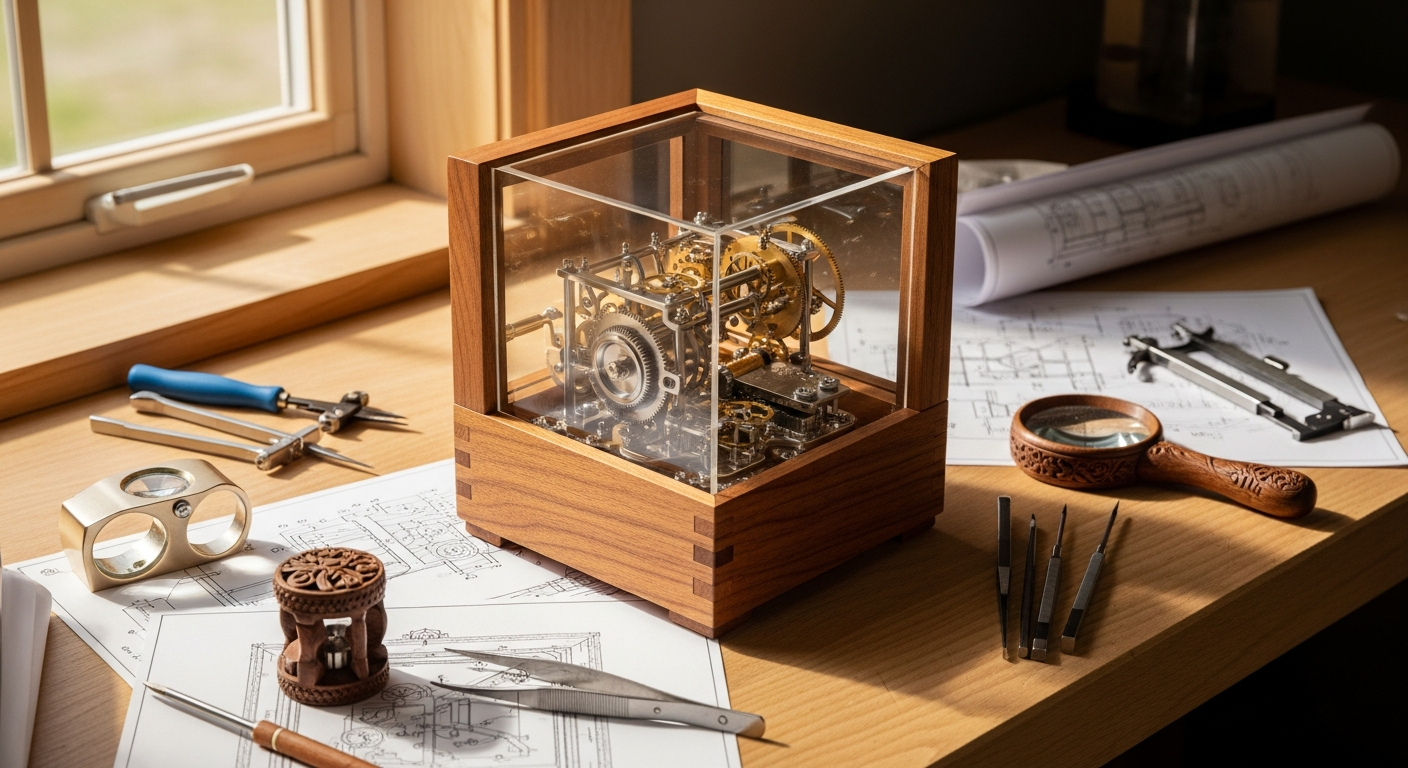
The ROKR Dream Gift Factory Wooden Music Box earned the title of #1 most popular DIY kit in 2024—and it's not because it's easy. With a difficulty rating that breaks the scale at 6 out of 5, this isn't your typical weekend project. Advanced makers spend 12 focused hours assembling this intricate mechanical masterpiece, and every single one walks away transformed by the experience.
Robotime's Dream Gift Factory represents something rare in the DIY world: a product that merges engineering precision with artistic storytelling. This 449-piece wooden puzzle doesn't sit passively on a shelf. Instead, it comes alive with moving gears, visible mechanical components, and an enchanting melody that plays once assembly is complete.
Discover the ROKR Dream Gift Factory and begin your master builder journey today.
The Engineering Marvel Behind the ROKR Dream Gift Factory
The ROKR Dream Gift Factory stands as a testament to precision manufacturing and thoughtful design. Every element of this kit has been engineered to work in harmony, creating a functional music box that captivates builders and observers alike.
Laser-cut wooden construction with 449 precisely engineered pieces
The foundation of this build rests on laser-cut wooden components that fit together with remarkable precision. Each of the 449 pieces has been manufactured to exact specifications, eliminating the frustration of poorly cut materials. The wood quality itself commands respect—these aren't flimsy cardboard cutouts. They're substantial pieces that demand careful handling and accurate placement.
Visible moving gears and mechanical components that function after assembly
Unlike static display models, the Dream Gift Factory transforms into a living, breathing mechanism. Once assembly concludes, you'll witness gears rotating in synchronized patterns, driving the music box mechanism. This visible mechanical action distinguishes it from countless other wooden puzzle kits. The gears aren't hidden behind opaque panels; they're on full display, their choreography visible to anyone admiring your finished creation.
Multi-stage gear reduction system that powers the music box mechanism
The heart of this build involves a sophisticated gear reduction system. Multiple gear stages work together to translate rotational input into the precise speed required for melodic playback. Understanding how these stages interact transforms the assembly process from mere busywork into genuine mechanical education.
Whimsical factory aesthetic combined with legitimate mechanical engineering
The genius of the Dream Gift Factory lies in balancing whimsy with engineering rigor. The factory-themed design suggests childhood wonder and imagination, yet beneath that charming exterior operates genuine mechanical engineering. Gears mesh with purpose. Structural elements support functional components. Form and function merge seamlessly.
Decoding the Difficulty: Is This Build Really 6 Out of 5?
A 6-out-of-5 difficulty rating sounds hyperbolic until you're halfway through assembly, staring at a particularly challenging gear alignment sequence. This rating reflects genuine complexity, not marketing exaggeration.
What a 6 out of 5 difficulty rating actually means in practical terms
Standard difficulty scales max out at 5. The ROKR Dream Gift Factory surpasses that ceiling because it demands more than typical puzzle proficiency. You'll encounter spatial reasoning challenges that would stump casual builders. Gear orientations matter. Component placement sequences demand forward-thinking planning. This isn't a product designed for first-time advanced builders; it's engineered for experienced makers who welcome legitimate challenges.
Complex spatial reasoning required for gear alignment and orientation
Gears must align precisely. A misaligned gear tooth creates cascading problems throughout the mechanical system. Visualizing how components fit together in three-dimensional space becomes essential. Printed instructions help, but they can't eliminate the mental effort required to understand how each piece contributes to the whole system.
Multi-step assembly sequences that demand sustained attention
The 12-hour assembly window isn't continuous. Experienced builders break the project into multiple sessions, typically spanning several days or weeks. Each session demands focused concentration. Distractions lead to misplaced components or incorrect assembly sequences that become apparent only after subsequent steps have been completed.
Why beginners consistently underestimate the time commitment
First-time advanced builders often assume their puzzle experience translates directly to this build. It doesn't. The mechanical complexity, gear systems, and three-dimensional thinking required exceed standard puzzle assembly. Many beginners encounter unexpected challenges that extend their assembly timeline significantly beyond the 12-hour estimate.
The 12-Hour Assembly Experience: What Advanced Makers Should Expect
Experienced builders approach this project with realistic expectations and structured planning. The 12-hour timeframe represents focused work spread across multiple sessions.
Breaking the build into manageable phases across multiple sessions
Smart builders segment the project strategically. Early phases involve constructing the factory's structural framework. Middle phases focus on gear systems and mechanical components. Final phases bring everything together, testing functionality and ensuring smooth operation. Breaking the project into 2-4 hour sessions prevents fatigue-related mistakes and maintains engagement throughout the build.
Recommended work environment setup for precision assembly
Workspace matters enormously for this build. A clean, well-lit table provides adequate surface area for organizing pieces and accessing components. Task lighting illuminates small details that overhead lighting misses. A magnifying glass or jeweler's loupe helps identify gear teeth orientation and verify proper alignment. Some builders use smartphone tripods to record assembly progress, creating a reference for complex sections.
Tools and workspace organization that accelerate the building process
Minimal tools are required, but the right ones prove invaluable. A small rubber mallet (never metal) helps gently seat components without forcing connections. Wooden toothpicks assist with aligning gear teeth. Organized component trays keep individual pieces sorted by assembly stage, preventing the frustration of searching through hundreds of components. A printed instruction manual—not just digital—allows note-taking and section marking as the build progresses.
The final assembly stage: bringing mechanical systems to life
The moment when separate mechanical systems integrate represents a profound turning point in the build. Previously isolated gear assemblies connect. The music cylinder seats into its housing. The winding mechanism engages with the gear reduction system. Testing the completed mechanism marks the true conclusion of the project. When that melody plays for the first time, the entire 12-hour effort crystallizes into tangible reality.
Mechanical Details That Make This Music Box Unique
The ROKR Dream Gift Factory operates on principles that have powered mechanical music boxes for centuries, reimagined through modern precision manufacturing.
The hand-crank or wind-up mechanism that powers the melody
The music box activates through manual input—either hand-cranking or winding. This engagement mechanism creates a tactile connection between operator and machine. Unlike electronic music boxes that play at the push of a button, this mechanical system demands active participation. That manual interaction deepens appreciation for the engineering within.
How gear ratios determine the music box's playback speed and tone
Gear ratios fundamentally shape musical output. Larger gear-to-smaller gear transitions increase rotational speed, affecting how quickly the music cylinder spins past the pinned mechanism. This speed directly impacts the perceived tempo and pitch of the melody. The ROKR engineers selected specific gear ratios that produce musically pleasing results, balancing mechanical efficiency with melodic quality.
The music cylinder design and its interaction with the mechanical system
At the heart of any music box sits the cylinder—a rotating drum embedded with strategically placed pins. As this cylinder rotates, pins engage with metal tines, producing individual notes. The melody emerges from the precise placement of thousands of pin positions. The ROKR design integrates this cylinder with the gear system so that rotational speed and mechanical output synchronize perfectly.
Durability of the wooden music box mechanism after assembly
Wooden construction raises legitimate questions about longevity. Robotime's precision manufacturing and material selection address these concerns thoughtfully. The wood selected for gear systems resists wear. Components are designed with adequate clearances to accommodate natural wood movement. When built correctly and used reasonably, the completed music box functions reliably for years, potentially decades.
Advanced Builder Strategies for Optimal Results
Experienced makers employ specific techniques that maximize success rates and minimize frustration during this demanding build.
Pre-assembly inspection protocols for identifying potential fit issues
Before combining components, examine each piece individually. Look for manufacturing irregularities, splinters, or dimensional inconsistencies. Test-fit critical components like gears and shafts to verify they operate smoothly. Addressing issues early prevents discovering problems deep into the assembly process when fixing them becomes complicated.
Gear alignment verification techniques before final assembly
Gears represent the project's most critical elements. Before permanently securing gear assemblies, verify alignment through trial rotations. Spin gears manually to ensure smooth, interference-free operation. Listen for grinding sounds that indicate misalignment. Only after confirming perfect alignment should final fastening occur.
Using reference photos and 3D visualization during complex sections
The instruction manual provides guidance, but supplementing it with external resources accelerates understanding. Photographing completed sections creates personal reference material. 3D visualization software or online assembly videos clarify particularly complex sequences. Some builders sketch component relationships on paper, creating custom diagrams that illuminate their thought process.
Troubleshooting misaligned gears without forcing connections
Forcing misaligned components damages wood and creates permanent problems. When gears resist fitting, stop and reassess. Disassemble back to the point where problems began. Examine each component individually. Often, a single misoriented piece throws off entire sequences. Patience and systematic troubleshooting resolve issues that force and frustration would only worsen.
Get the ROKR Dream Gift Factory now and master the art of mechanical assembly.
The Investment Perspective: Value Beyond the $69.99 Price Tag
At $69.99, the ROKR Dream Gift Factory positions itself in the premium segment of wooden puzzle kits. Understanding the value proposition clarifies whether this investment aligns with your goals and budget.
Material quality justification for the $69.99 price point
The cost reflects genuine material quality and precision manufacturing. Laser-cut wood, high-grade gears, and precision components cost substantially more than materials used in mass-produced puzzles. The instruction manual itself represents significant design and production investment. Manufacturing tolerances tight enough to ensure 449 pieces fit together reliably add manufacturing complexity and cost.
Comparison to other premium wooden music box kits in the market
Premium wooden music box alternatives often exceed $100. Some mechanical kits at lower price points sacrifice precision or complexity. The ROKR Dream Gift Factory positions between these extremes—more affordable than ultra-premium imports yet more sophisticated than budget alternatives. For the mechanical complexity and functional outcome delivered, the pricing remains competitive.
Long-term display value and collector appeal
This isn't a kit you build once and discard. The completed music box becomes a decorative and functional centerpiece worthy of prominent display. Collectors specifically seek ROKR products, particularly the best-selling Dream Gift Factory. Secondary market values demonstrate sustained demand and appeal.
Cost-per-hour engagement compared to other hobbies
Calculating cost-per-hour reveals perspective. At $69.99 for 12 hours of focused engagement, the hourly rate approaches $5.80—competitive with many entertainment and hobby options. Consider this against streaming services, dining out, or other recreational expenses. The ROKR Dream Gift Factory delivers genuine engagement and a lasting artifact, advantages most alternatives don't match.
Who Should Build This, and Who Should Wait
Self-assessment determines whether you're ready for this challenge or whether a different project better suits your current skills and availability.
Ideal profile: experienced puzzle builders with mechanical aptitude
The perfect builder for this kit has successfully completed multiple advanced puzzles. Mechanical thinking comes naturally—you understand how components interact to create systems. You possess patience to work through frustration without abandonment. You appreciate precision and craftsmanship. Engineering or architectural background accelerates success, though it's not strictly required.
Red flags for builders considering this as their first advanced project
If you haven't completed advanced puzzles before, this isn't the optimal starting point. If you struggle with sustained focus or lose interest in projects after initial excitement fades, reconsider. Time constraints matter too—if you can't dedicate multiple 2-4 hour sessions across several weeks, frustration awaits. Builders seeking quick gratification should explore different projects.
Why this kit appeals to engineers, architects, and design professionals
Professional backgrounds in these fields align naturally with the kit's mechanical and design elements. Engineers gravitate toward the gear systems and mechanical principles. Architects appreciate spatial reasoning and structural integrity. Design professionals admire the balance between aesthetic form and functional components. These professionals often find the build personally rewarding beyond the kit's inherent appeal.
Building readiness assessment: honest self-evaluation checklist
Ask yourself: Have I completed at least three advanced puzzles successfully? Do I think spatially and mechanically with comfort? Can I commit to 12+ hours across multiple weeks? Do I own or can I acquire proper workspace and tools? Am I comfortable troubleshooting problems independently? Do I appreciate mechanical engineering and aesthetic design? Affirmative answers suggest readiness for this challenge.
From Assembly to Display: Showcasing Your Completed Music Box
The build concludes, but the journey continues when you position your finished creation for optimal display and preservation.
Optimal display locations that highlight the mechanical components
Display the completed music box where viewers can observe moving gears from multiple angles. Avoid enclosed cabinets with dirty glass—transparent visibility matters. Positions slightly above eye level draw attention toward the delicate mechanical details. Open shelving, shadow boxes, or dedicated display tables work well. Avoid dusty locations or areas exposed to direct sunlight, which fades wood over time.
Lighting considerations that emphasize the whimsical factory aesthetic
Strategic lighting transforms your completed build. Soft LED accent lighting highlights the factory's intricate details. Warm light temperatures (2700K-3000K) complement wood tones beautifully. Directional spotlights can illuminate specific mechanical elements—a gear assembly or the music cylinder visible through an opening. Avoid harsh overhead lighting that creates unflattering shadows.
Protecting the wooden construction while maintaining accessibility
Glass display cases offer protection but reduce interaction potential. Open display requires accepting some dust accumulation. Regular gentle dusting with soft brushes preserves wood without damage. Avoid humidity extremes that cause wood movement. Maintain stable room temperature and moderate humidity levels. Position the music box away from heating vents and air conditioning units that create dramatic environmental shifts.
Photography tips for capturing the intricate details
Macro photography reveals details invisible to the naked eye. Close-up shots highlighting gear teeth, wood grain, and mechanical precision showcase the build's sophistication. Video recording of the music box in operation captures the mesmerizing movement that still photographs can't convey. Consistent lighting throughout photography sessions ensures accurate color representation and detail visibility.
The Master Builder's Achievement: What Completing the ROKR Dream Gift Factory Truly Means
Completing the ROKR Dream Gift Factory Wooden Music Box isn't about crossing off a checklist. It's about joining a community of makers who understand that genuine craftsmanship demands patience, precision, and a willingness to sit with complexity. Those 449 pieces, the 12-hour commitment, the 6-out-of-5 difficulty rating—they're not obstacles. They're invitations to experience something authentic in a world of mass production.
Advanced builders approach this kit with healthy respect and emerge with genuine pride. The moment those gears align perfectly, when the melody plays for the first time, when you step back and see the whimsical factory come to life—that's when the investment becomes tangible. The mechanical systems you've carefully assembled operate exactly as engineered, a direct result of your focus and dedication.
Beyond the finished product exists something less tangible but equally valuable: the transformation that occurs during those 12 hours of engagement. You've trained your spatial reasoning, sharpened your mechanical intuition, and proven your capacity to navigate genuine complexity. These skills transfer to other projects and challenges in your life. The completed music box becomes a physical reminder of what patience and precision can achieve.
If you're an experienced builder ready for a legitimate challenge, if you appreciate mechanical elegance wrapped in artistic design, the ROKR Dream Gift Factory is waiting. This kit represents 2024's most popular DIY project for compelling reasons—it delivers an authentic building experience that respects the builder's intelligence and abilities while rewarding commitment with genuine satisfaction.
Start your journey as a master builder with the ROKR Dream Gift Factory today.
Leave a Reply