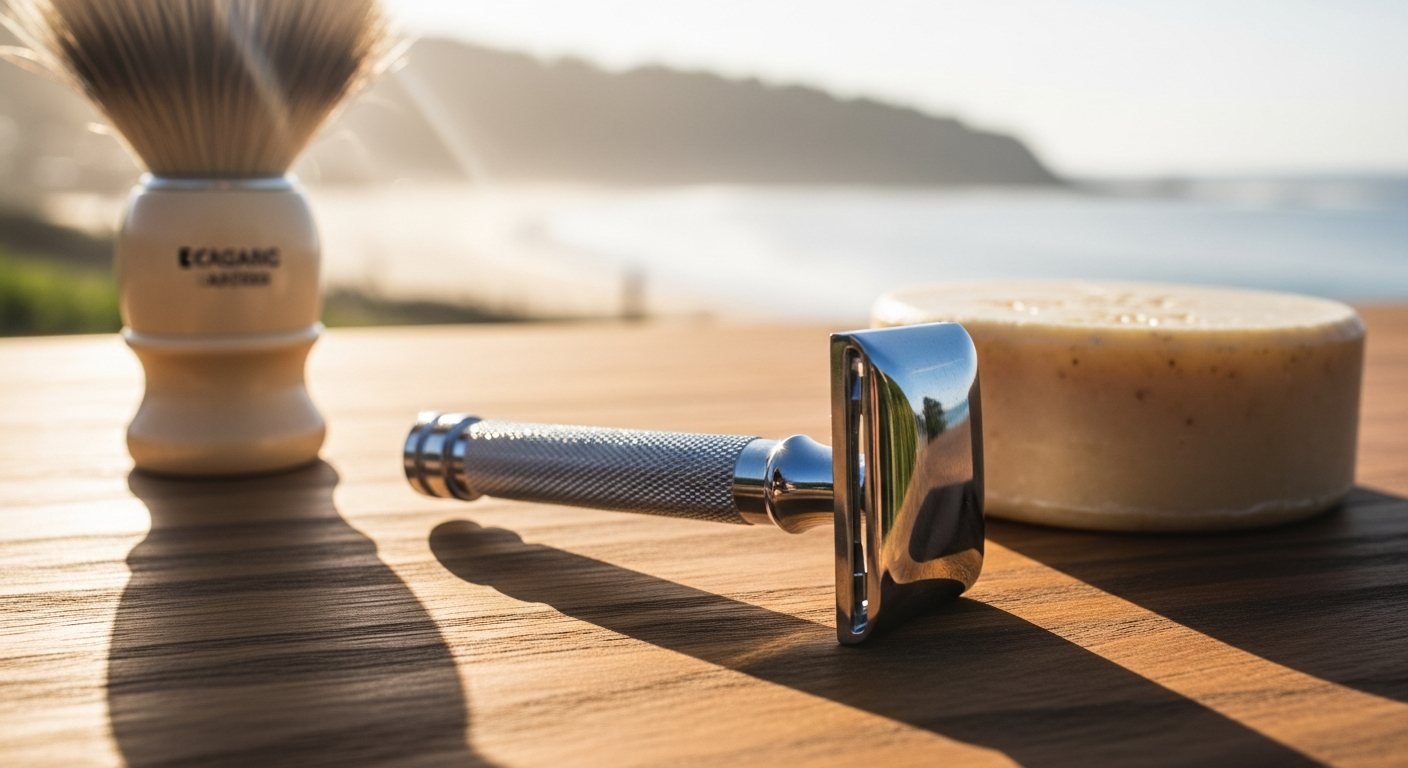
Most people who switch to a safety razor experience at least one nick during their first week. The learning curve is real, and it catches newcomers off guard—especially when they're expecting the same muscle memory from their old cartridge razors to transfer seamlessly. But here's the thing: once you nail the technique, you'll never look back.
The Shoreline Shaving Eco-Friendly Reusable Safety Razor is engineered to deliver a close, irritation-free shave while eliminating plastic waste from your grooming routine. Unlike multi-blade cartridge systems, this razor demands a slightly different approach—one that's actually gentler on your skin when done correctly. The sustainable design doesn't compromise on performance; it enhances it.
Master your shaving technique with the Shoreline Shaving Eco-Friendly Reusable Safety Razor today. In this guide, you'll discover everything needed to transform from uncertain beginner to confident user, from grip and angle to blade pressure and aftercare. You'll understand why the learning curve exists, how to avoid common mistakes, and the exact techniques that separate a mediocre shave from an exceptional one. By the end, you'll have the confidence to use this sustainable tool like a pro.
Understanding the Double-Edge Blade Difference
How double-edge blades differ from cartridge razor systems
The fundamental shift from cartridge to double-edge razors represents a departure from engineered convenience toward precision and control. Cartridge systems prioritize ease of use through multiple blades, lubricating strips, and flexible heads that adapt to your skin. Double-edge blades, by contrast, are single, exposed blades that require your technique to do the heavy lifting. This isn't a weakness—it's the source of superior shaving performance.
Why safety razors require a different technique and approach
A double-edge blade has no guard, no pivoting head, and no forgiveness for careless angles. The blade sits at a fixed position on the handle, meaning success depends on your understanding of angle, pressure, and stroke direction. Cartridge razors compensate for poor technique through multiple blades and flexible suspension. Safety razors demand respect and precision. This requirement forces better form, which ultimately produces cleaner, closer shaves with less irritation.
The role of blade exposure and handle design in shaving performance
The Shoreline razor's handle design influences how the blade sits against your face. The exposed blade creates a direct contact point, while the handle geometry determines the natural angle when held properly. Metal handles provide weight and stability, while bamboo options offer aesthetic appeal without sacrificing function. Understanding how these design elements affect your shave helps you work with the tool rather than against it.
Common misconceptions about safety razors being dangerous or difficult
Safety razors earned their reputation for being genuinely safer than the straight razors that preceded them. The "safety" name reflects the guard design that prevents accidental deep cuts. Yes, nicks happen during the learning phase, but they're minor surface cuts—not the deep lacerations people fear. The difficulty narrative persists because early adopters struggle with technique, not because the tool itself is inherently problematic.
Why the learning curve is temporary and worth the investment
Your first week feels awkward because your brain is rewiring muscle patterns built over years of cartridge razor use. But neural adaptation is fast. By week three, the technique becomes automatic. The investment period is short compared to the decades you'll use this razor. Factor in the environmental benefit, the cost savings from 70p replacement blades, and the superior shave quality, and the learning curve becomes a minor inconvenience for major long-term gains.
How blade quality affects your shaving experience and skin health
Not all double-edge blades are created equal. Some are sharper, some are more durable, and some suit certain skin types better than others. A quality blade—the kind that comes standard with Shoreline products—glides smoothly across your skin, reducing tugging and irritation. Poor blade quality makes the learning curve steeper because you're fighting dullness on top of technique uncertainty. Starting with a quality blade gives you every advantage.
The Correct Grip and Angle for a Flawless Shave
Optimal hand positioning for control and comfort
Hold the Shoreline razor handle as you would a pencil, but with a relaxed grip. Your thumb and index finger support the handle while your middle finger rests underneath for stability. This positioning centers the blade naturally against your face. Avoid gripping like you're wrestling the razor—tension in your hand translates to tension in your shave. A loose, confident grip provides better control and reduces the temptation to press hard.
The ideal angle between blade and skin
The sweet spot sits between 30 and 45 degrees. Visualize the blade at a shallow angle to your skin, not perpendicular. Too steep (close to 90 degrees) and you're scraping rather than cutting. Too shallow (below 30 degrees) and the blade misses beard hair entirely. The Shoreline razor's handle geometry naturally guides you toward the correct range when held comfortably against your face.
How to identify your personal sweet spot through experimentation
Your ideal angle depends on beard density, skin sensitivity, and facial contours. Spend your first few shaves experimenting with slight angle variations. You'll feel the difference immediately—the blade either glides smoothly or tugs and skips. When it glides, you've found your angle. Mark that position mentally. As you gain confidence, you'll adjust automatically for different facial areas without conscious thought.
Grip pressure: why light touch matters more than force
This is where most beginners fail. The instinct to press hard comes from cartridge razor muscle memory, where pressure compensates for dull blades. Double-edge razors are sharp enough that gravity and the blade's own weight do the work. Let the razor do its job. Your hand provides guidance and positioning, not force. Pressure should be light enough that you can feel the blade working, not so heavy that you're bearing down.
Adjusting your grip for different facial areas
Your cheeks allow a standard grip with consistent angle and pressure. Your chin, with its curved contour and thicker beard, requires slight angle adjustments to maintain contact. Your neck demands the lightest touch—skin there is thin and sensitive. Practice these transitions deliberately. The Shoreline handle's design supports these adjustments naturally, but awareness accelerates your learning curve.
Common grip mistakes that lead to nicks and irritation
Gripping too tightly telegraphs tension through your arm and causes you to press harder. Holding the razor perpendicular to your skin instead of at an angle guarantees tugging and irritation. Rotating your wrist mid-stroke changes the blade angle unpredictably. Keeping your hand rigid instead of allowing natural, fluid movement forces compensation elsewhere. Each mistake has an obvious consequence once you recognize it.
How the Shoreline razor's handle design affects your grip
Whether you choose the metal or bamboo option, the Shoreline handle balances weight distribution to support proper technique. The cylindrical design encourages a neutral grip position. The handle length provides leverage without excessive reach. This thoughtful design removes obstacles between you and good form. You're not fighting the tool; you're working with it.
Mastering Your Shaving Technique: Stroke Direction and Pressure
The importance of following the grain direction for your specific beard type
Beard grain varies dramatically between individuals. For some, hair grows straight down. For others, it swirls or changes direction across the face. Your first task is mapping your beard grain. Run your hand across your face in different directions—you'll feel resistance when going against the grain and smoothness when going with it. Your initial shaves should follow the grain exclusively. This approach delivers 80% of the closeness with 10% of the learning curve.
Short, controlled strokes versus long sweeping motions
Short strokes—about one inch—give you maximum control, especially during the learning phase. They allow you to feel the blade's feedback, adjust angle on the fly, and recover quickly if pressure increases. Long sweeping strokes feel more efficient but sacrifice control. As technique solidifies, longer strokes become natural. But start small and deliberate.
Why pressure should come from the razor's weight, not your hand
The blade's weight—especially with metal handles—provides cutting force. Your hand's job is positioning, not pressing. Think of it this way: you're guiding the razor across your skin, allowing gravity to assist. If you're muscling the razor, you're doing it wrong. The moment you recognize excessive pressure, ease off immediately. This single shift in mindset eliminates most beginner problems.
Technique adjustments for sensitive areas and problem zones
Areas with thin skin (neck, upper cheek) need lighter pressure and shorter strokes. Areas with thick, dense beard (chin, jaw) can handle slightly more deliberate contact. Sensitive zones prone to irritation benefit from single-pass shaving with the grain rather than multiple passes. Problem areas where you consistently get ingrown hairs might need extra care during the learning phase—sometimes one fewer pass is better than three perfect ones.
How to recognize when you're applying too much pressure
Your skin provides constant feedback. Redness, irritation, and tugging indicate excess pressure. So do the small nicks that characterize the first week. When you feel resistance rather than smooth gliding, pressure is too high. The sensation should be smooth and almost effortless, like the blade is doing the work (because it is).
The three-pass method: with the grain, across the grain, and against the grain
Once you've mastered single-pass shaving with the grain, expansion to multiple passes comes naturally. The first pass—with the grain—removes most beard hair and feels safest. The second pass—across the grain—increases closeness. The third pass—against the grain—delivers maximum smoothness. However, not everyone needs all three, and sensitive skin might benefit from stopping after two. Listen to your skin.
Why patience during the learning phase prevents costly mistakes
Rushing creates nicks and irritation, which discourages further practice. When you're learning, treat shaving as a deliberate, unhurried activity. A five-minute shave beats a two-minute one if it teaches you proper form. Patience now means confidence later. Your skin also recovers better from a controlled learning curve than from aggressive mistakes.
Preparation and Aftercare for Optimal Results
Pre-shave routines that soften beard hair and prepare skin
A hot shower or warm water splash on your face softens beard hair and opens pores. Warm water is essential—cold water makes hair stiff and resistant. If showering isn't possible, apply a warm, damp cloth to your face for a minute. This simple step transforms your shaving experience by making hair more pliable and easier to cut. It also reduces the effort required, lowering the pressure you naturally apply.
The role of quality shaving cream or soap in technique success
Quality lather lubricates your skin and provides a clear viewing window to see what you're doing. Poor lather forces you to bear down harder to feel the blade. The Shoreline Shaving ecosystem includes thoughtfully formulated products designed to work with their razors. These products reduce friction, protect skin, and provide the feedback you need to learn proper technique.
Why Shoreline's included shaving soap works for most skin types
The included soap balances slickness, protection, and protection across a wide range of skin types. It's formulated without harsh chemicals that irritate sensitive areas. For most users, the included option works beautifully. Having a reliable lather from day one accelerates your learning because you're not troubleshooting product issues on top of technique challenges.
Alternatives for sensitive skin and specific concerns
If the included soap causes irritation, fragrance-free options exist. Some users prefer liquid soaps over bars, while others find creams work better for their skin. Experiment after you've mastered technique. The goal in week one is establishing solid fundamentals with a proven product, then exploring alternatives once you've separated technique from product performance.
Post-shave moisturizing to prevent irritation and ingrown hairs
After rinsing away lather and residual soap, pat your face dry gently. Apply a post-shave balm or moisturizer while skin is still slightly damp. This step reduces irritation, prevents dryness, and supports skin recovery. Proper aftercare is especially important during the learning phase when minor nicks are more likely. Moisturizing protects the skin barrier and accelerates healing.
How proper aftercare extends blade life and improves results
A clean, well-maintained blade lasts longer and performs better. After each shave, rinse the razor thoroughly under warm water to remove soap residue and beard hair. Store it in a dry location—excess moisture accelerates oxidation. Some users prefer standing the razor on its handle to aid drying. These simple practices extend blade lifespan and ensure consistent performance throughout its life.
Blade maintenance and storage between uses
Never store a wet razor. The moisture between the blade and handle promotes rust and degradation. Pat it dry after rinsing, then position it upright or in a blade-safe storage container. Keep replacement blades in their original packaging until ready to use. Proper storage ensures your 70p replacement blades deliver maximum value by lasting their full lifespan.
Transitioning from Cartridge Razors Without Frustration
Why your old habits won't work with a safety razor
Years of cartridge razor use have embedded habits into your muscle memory. The pressure you apply, the angle you maintain, the speed of your strokes—all of it developed to work with multi-blade systems that forgive imperfection. A safety razor doesn't forgive. Your old technique produces tugging, irritation, and nicks. You're not bad at shaving; you're using the wrong technique for a different tool. Accepting this mentally makes the transition easier.
Timeline expectations: when to expect improvement and consistency
Week one: awkwardness and probably a few nicks. Week two: fewer nicks, growing confidence. Week three: technique becoming automatic, noticeable improvement in shave quality. Week four and beyond: consistency and confidence equivalent to your cartridge razor experience, but with better shave quality. These timelines vary slightly, but most people reach functional competence within two to three weeks.
How to practice on low-stakes shaving days first
If you have a presentation or important meeting tomorrow, don't debut your Shoreline razor today. Practice learning during low-stakes days when minor nicks or an imperfect shave won't impact your day. This removes pressure, allowing you to focus on technique rather than results. Once you're comfortable, integrate the razor into your regular routine.
Troubleshooting common issues
Tugging without cutting: Your angle is too steep or your blade is dull. Reduce angle slightly and check blade age. Missing patches: You're moving too quickly or not maintaining consistent angle. Slow down and concentrate on steady pressure. Too much irritation: You're pressing too hard. Reduce pressure dramatically—harder than feels natural. Nicks: Combination of angle and pressure issues. Review your technique deliberately.
When to adjust technique versus when to change blades
A blade lasts roughly 5-7 shaves depending on beard density. If you're consistently struggling after two weeks, your technique needs work, not your blade. However, a genuinely dull blade creates tugging that no technique corrects. The distinction becomes clear with experience—you'll develop a feel for when a blade has aged versus when you need to adjust form.
Building muscle memory through repetition and patience
Muscle memory develops through repeated, correct practice. The Shoreline razor forces this consistency because improper technique produces immediate, obvious feedback. Your brain adapts quickly once it recognizes the correct pattern. Keep practicing even when progress feels slow. By week three, you'll surprise yourself with how automatic proper technique has become.
Connecting with the Shoreline community for tips and encouragement
You're not alone in this learning curve. Thousands of users have transitioned from cartridge to safety razors. Online communities dedicated to the Shoreline brand and safety razors in general offer encouragement, troubleshooting, and tips from people who've already navigated the adjustment period. Their experiences validate yours and often provide exactly the perspective needed to overcome specific challenges.
Blade Selection and Replacement for Consistent Performance
How to choose the right blade type for your skin and beard
Different blade manufacturers produce subtle variations in sharpness, durability, and smoothness. Some blades feel aggressive, others gentle. Your skin sensitivity and beard density determine which blade characteristics suit you best. The Shoreline razor accommodates standard double-edge blades, giving you access to numerous options. Most users find their perfect blade through experimentation after mastering technique, but starting with quality blades (like those available through Shoreline) eliminates variables during learning.
The affordability advantage: 70p replacement blades via subscription
Cartridge replacement packs cost £15-25 for four or five refills. A single Shoreline replacement blade costs 70p via subscription. Over one year, the cost difference is staggering. A blade lasts five to seven shaves, meaning a single blade costs roughly 10-14p per shave. Compare that to £3-5 per shave with cartridge systems. After the initial razor purchase, your ongoing cost is negligible—a compelling advantage for both your wallet and the environment.
Blade lifespan and when to replace for optimal results
Most people replace blades every five to seven shaves, though this varies with beard density and water hardness. A dull blade produces tugging and increased irritation. The first sign of dullness is tugging sensation; at that point, replacement improves results immediately. Rather than pushing a blade past its prime, simply swap it out. At 70p, the cost barely registers.
Storing replacement blades safely and accessibly
Keep replacement blades in their original paper packaging until ready to use. Store them in a dry location away from moisture. Many users keep one blade in a small container near their shaving setup for quick access. Never leave loose blades lying around—they're sharp and dangerous. Safe storage takes seconds but prevents accidents.
Why blade quality impacts your learning curve and shaving experience
A quality, sharp blade glides smoothly even with imperfect technique. A dull or poorly manufactured blade creates resistance that forces you to increase pressure, compounding mistakes. Starting with quality blades removes this obstacle to learning. Once technique is solid, you can experiment with budget-friendly blade options if desired.
Experimenting with different blade brands once you've mastered technique
After four to six weeks of solid technique, you've developed the skill to separate blade characteristics from technique issues. At that point, experimentation makes sense. Try different brands to discover which ones feel best on your skin. The affordability of replacement blades makes this exploration practical—switching brands costs pennies and takes seconds.
Cost comparison: safety razor blades versus cartridge refills over time
A cartridge refill pack containing five razors costs approximately £20, providing roughly 15-20 shaves. Cost per shave: £1-1.33. A double-edge blade at 70p lasts 5-7 shaves. Cost per shave: 10-14p. Annual savings for someone who shaves every other day: approximately £150-200. Over ten years, the cost difference approaches £2,000. The Shoreline razor's initial investment recoup itself within months while delivering superior results.
Avoiding Common Mistakes That Derail Beginners
Pressing too hard (the #1 beginner mistake)
The instinct to press hard is nearly universal among cartridge razor users. The muscle memory is decades deep. Resist it. The first time you experience a smooth shave with minimal pressure, the shift clicks. Light touch isn't weakness; it's understanding that the blade does the work. Make conscious effort to reduce pressure below what feels natural. You'll nick yourself if you press hard; you'll glide smoothly if you don't.
Rushing through your shave when learning
Speed comes after competence. Rushing during week one nearly guarantees missed spots and frustration. Treat learning-phase shaves as deliberate, meditative activities. A five-minute shave that reinforces good technique beats a two-minute shave that teaches bad habits. Speed develops naturally once muscle memory solidifies.
Neglecting proper skin preparation
A cold-water shave with no lather is nearly impossible. Warm water and quality lather aren't luxuries; they're requirements. The softening and lubrication they provide transform your shaving experience. Skipping preparation doubles your learning difficulty. Never shortcut this step.
Using the wrong angle on different facial contours
Your cheeks, chin, neck, and upper lip each present different contours and beard density. One angle doesn't work everywhere. Awareness of these differences and willingness to adjust keeps you from forcing one angle across all areas. The Shoreline razor's design supports these adjustments naturally.
Expecting immediate perfection instead of gradual improvement
Your first shaves won't match your best cartridge razor results. Accept this. You're building a new skill, not applying familiar technique. Week three shaves will be noticeably better than week one. By week six, you'll consistently exceed your cartridge razor experience. Patience with the learning curve prevents discouragement that causes people to abandon the approach too early.
Ignoring your skin's feedback and adjustment needs
Your skin tells you everything you need to know. Redness and tugging mean pressure is too high. Irritation in specific areas means angle needs adjustment. Nicks mean technique needs review. Listen to these signals and adjust accordingly. Stubborn insistence on unchanged technique despite clear skin feedback prolongs the learning curve.
Not maintaining proper blade hygiene between shaves
A wet razor stored in a damp bathroom degrades quickly. Proper maintenance takes seconds and dramatically extends blade life. Rinse after each use, dry thoroughly, and store upright. These habits ensure your 70p blades deliver their full value and maintain consistent performance.
Your Path to Mastery Starts Here
The Shoreline Shaving Eco-Friendly Reusable Safety Razor isn't just an environmentally conscious choice—it's an investment in a skill you'll carry for life. Yes, there's a learning curve, but it's shorter and far less painful than most people expect. Once you've internalized these techniques and built your muscle memory, you'll achieve shaves that rival or exceed anything you got from cartridge systems.
The combination of proper angle, light pressure, controlled strokes, and quality blade selection creates a formula for success that works across different skin types and beard characteristics. Your first week might feel awkward, your second week will feel manageable, and by week three or four, you'll find yourself shaving on autopilot with confidence.
The sustainable choice becomes the superior choice—and that's worth every moment of the adjustment period. Each shave reinforces your skill while reducing plastic waste and saving money. The triple benefit—environmental impact, cost savings, and superior shave quality—makes the learning curve not just worthwhile but genuinely compelling.
Leave a Reply