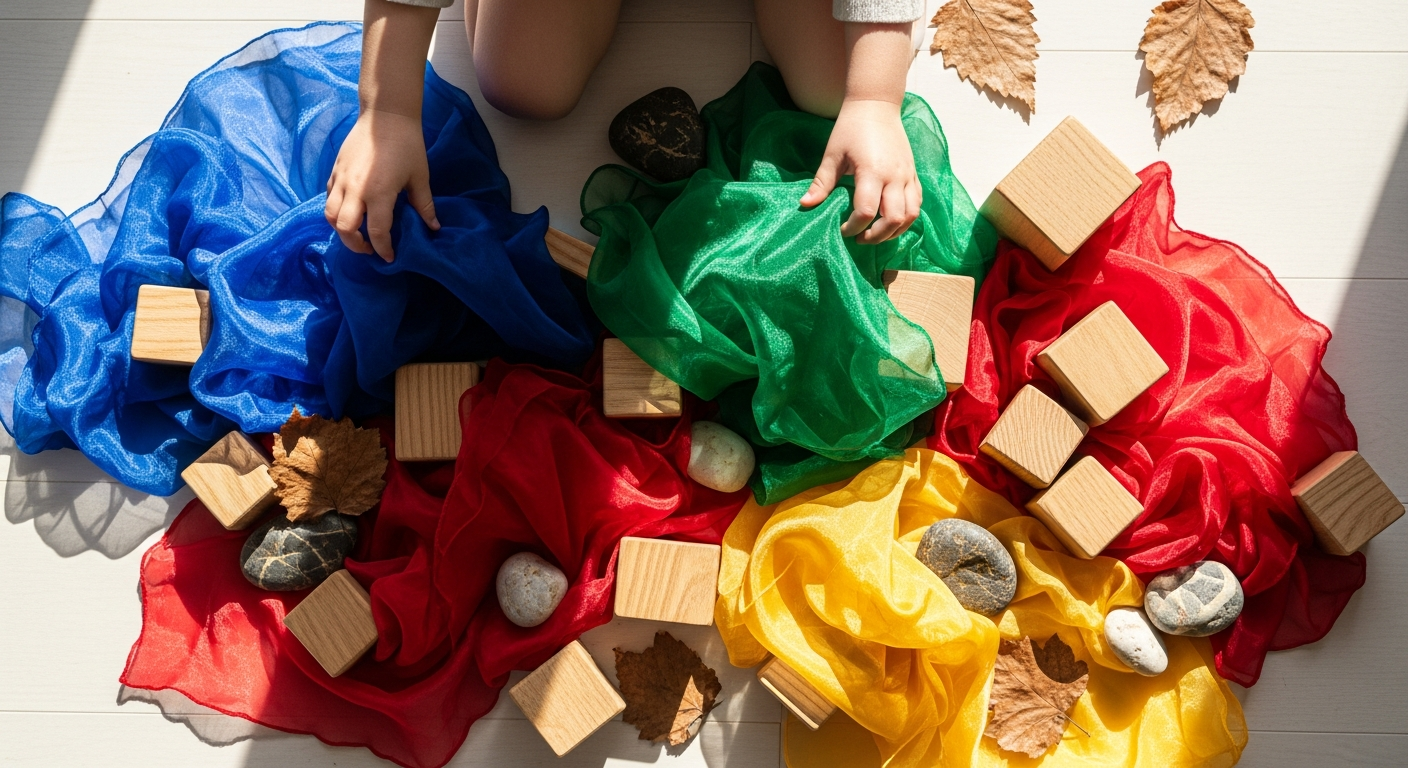
When was the last time you watched a child transform a simple piece of fabric into a superhero cape, a flowing river, or an entire castle? Research shows that unstructured, imaginative play is one of the strongest predictors of a child’s creative problem-solving abilities later in life. Yet many toys today come with predetermined rules and limited possibilities—leaving little room for a child’s unique vision.
Sarah’s Silks Classic Playsilks represent something fundamentally different. These aren’t toys with buttons to press or scripts to follow. Instead, they’re blank canvases made from 100% natural Habotai silk, designed to grow with your child and adapt to whatever their imagination conjures. In Waldorf and Montessori classrooms around the world, playsilks have become essential tools for fostering creativity and sensory exploration.
Discover how Sarah’s Silks can transform your child’s playtime today.
What Makes Habotai Silk the Gold Standard for Play
The Material That Makes All the Difference
Habotai silk isn’t just another fabric—it’s a material specifically chosen for its remarkable properties. At 100% natural composition, it offers a tactile experience that synthetic alternatives simply cannot replicate. The fabric carries an almost weightless quality, making it ideal for children to manipulate, drape, and mold into whatever their imagination requires.
This particular silk is biodegradable and sustainably sourced, which matters increasingly to families who want toys aligned with their environmental values. When compared to cotton, polyester, and blended fabrics, Habotai silk stands apart for its durability, lustrous finish, and the way it responds to a child’s touch. The fabric seems to come alive in small hands.
Safety and Sensory Appeal
The non-toxic, eco-friendly dyes used in Sarah’s Silks represent a commitment to child safety that goes beyond regulatory compliance. These colors aren’t harsh or artificial—they’re vibrant yet gentle, appealing to children’s natural attraction to beauty. The hand-hemmed edges aren’t just a finishing touch; they’re evidence of construction quality designed to withstand years of active play.
From a sensory perspective, the smooth texture provides calming input that many children seek instinctively. Whether a child is navigating a stressful moment or simply exploring textures, the silk offers genuine sensory nourishment.
The Versatility Factor: From Capes to Forts to Imaginative Storytelling
Transforming Play Possibilities
A single playsilk can become a superhero cape one moment and a princess skirt the next. Children drape them as headdresses, tie them as sashes, and layer them to create flowing costumes that support dramatic play. The silks work equally well as fort coverings, creating hideaway spaces both indoors and outdoors.
Beyond costumes and structures, playsilks serve as props for storytelling and role-playing scenarios. A child might use one as a river for toy animals to cross, another as a blanket for dolls, and a third as a magical cloak for adventure. The possibilities genuinely shift with each moment of play.
Movement and Physical Exploration
When incorporated into movement activities and dance, playsilks become tools for physical exploration. Children wave them, swirl them, and use them to develop coordination and balance. Younger children benefit from the visual feedback, while older children use them to enhance imaginative narratives.
The open-ended nature of playsilks means they truly grow with your child. A baby might explore the texture and watch colors move, while a toddler uses them for climbing and fort-building, a preschooler creates elaborate dramatic play scenarios, and a school-age child might incorporate them into complex storytelling or movement activities.
Explore the full range of Sarah’s Silks colors and options.
How Sarah’s Silks Support Child Development Across Multiple Domains
Motor Skills and Physical Development
Fine motor development happens naturally when children manipulate and drape fabric. They practice gripping, folding, and arranging, building hand strength and dexterity. Simultaneously, gross motor and balance improvements emerge through active, physical play—climbing under forts, dancing with silks, and balancing while wearing them as costumes.
Cognitive and Creative Growth
The cognitive development that playsilks encourage is profound. Without predetermined outcomes, children must problem-solve: How can I make this silk into a secure fort? What characters will play in this story? How can I use two silks together? This constant creative problem-solving builds neural pathways associated with flexible thinking and innovation.
Social-Emotional Benefits
When used in collaborative group play, playsilks become tools for negotiation, shared storytelling, and cooperation. Children learn to build on each other’s ideas and create collective narratives. The soft texture provides grounding sensory input that supports emotional regulation, while the freedom of unstructured play builds confidence and self-expression.
Alignment with Educational Philosophy
Montessori and Waldorf educators have long recognized the value of materials that respect a child’s autonomy and natural development. Playsilks embody this philosophy completely—they support child-led learning without predetermined scripts or outcomes.
The Sensory Experience: Why Texture and Color Matter
Color Psychology and Play Engagement
Vibrant, beautiful colors capture children’s attention in ways that support engagement and play. Research on color psychology suggests that different hues can influence the type of play children pursue. Warm colors like red and orange might inspire active, energetic play, while cooler blues and greens encourage calm, imaginative scenarios.
The ombré blends and color variations available in Sarah’s Silks collections provide visual interest that naturally inspires different narratives. A child might feel more inclined toward water play with an ocean-blue silk or forest adventure with a green one.
The Power of Natural Materials
The soft, smooth texture creates a sensory experience that synthetic fabrics struggle to match. This tactile richness provides grounding input that calms anxious systems and engages the senses fully. For children with sensory sensitivities, the gentle qualities of silk often feel manageable in ways that rougher fabrics don’t.
The combination of beautiful colors, natural materials, and soft texture creates a complete sensory experience that supports both emotional regulation and play engagement. Children naturally gravitate toward toys and materials that feel good in their hands and please their eyes.
Size, Durability, and Practical Specifications
The Ideal Dimensions
At approximately 35 x 35 inches (90 x 90 cm), Sarah’s Silks offer generous dimensions that work for multiple play applications. This size accommodates solo play without overwhelming a single child, yet provides enough fabric for group activities or larger fort structures. The proportions are intentional—large enough to create real play spaces, small enough for a child to manage independently.
Care and Longevity
Hand-washing and air-drying requirements might seem demanding, but these practices actually preserve the fabric’s quality and color vibrancy far better than machine washing would. Hang-dry instructions ensure that the silk maintains its lustrous finish and soft hand-feel for years.
The durability expectations are genuinely impressive. With proper care, a single playsilk can move through multiple children, remain vibrant, and continue to function beautifully. The hand-hemmed edges don’t unravel, and the silk doesn’t pill or degrade as synthetic alternatives often do.
Safety and Age Considerations
Sarah’s Silks are typically safety tested for children three years and older, though many families introduce them earlier with supervision. The non-toxic dyes mean there’s no chemical concern if a younger child mouths the fabric (though chewing isn’t recommended).
Bundle options allow families to build collections at savings, and pricing typically ranges from $18 to $30 per individual silk, depending on specific colors or designs.
Comparing Investment Value: Price Point and Long-Term Play Potential
Understanding the Cost
The $18–$30 price range for individual playsilks represents a genuine investment compared to mass-produced plastic toys priced at five to ten dollars. For families accustomed to cheaper toys, this can feel like a leap. However, a cost-per-use analysis reveals the actual value.
Calculating True Value
A playsilk used regularly for five to seven years, across potentially multiple children, translates to pennies per use when calculated honestly. Compare this to single-purpose toys that entertain for weeks before being abandoned, and the value becomes clear. One playsilk can replace numerous specialty toys: a cape toy, a building toy, a blanket set, props for dress-up costumes, and more.
The Hidden Advantages
Bundle savings and multi-pack options provide economic benefits for families or educators building collections. Additionally, the hand-me-down and resale potential is genuine. Because playsilks remain functional and beautiful after years of use, they hold value in secondhand markets. Families often sell or pass them down, recouping part of their investment.
The higher price point ultimately reflects quality, sustainability, and genuine developmental benefits that justify the commitment.
Real-World Play Scenarios: From Nurseries to Classrooms
Home and Educational Environments
In home settings, parents consistently report that playsilks become staple items, brought out daily for imaginative play. Nurseries and preschools incorporate them into learning spaces because they support multiple developmental objectives simultaneously.
Waldorf classroom settings feature playsilks prominently, integrated into curriculum across art, movement, and imaginative play periods. Montessori environments value them as materials that support child-directed learning and sensory exploration. Educators across pedagogies recognize their unique capacity to support learning without dictating outcomes.
Multigenerational and Practical Applications
Siblings of different ages engage beautifully with playsilks together, each finding age-appropriate play possibilities. An infant might explore the texture while an older sibling creates elaborate dramatic scenarios, and everyone benefits.
Outdoor applications showcase weather-resistant qualities—silks work for summer play, can be used during outdoor learning, and travel easily for families on the move. Their portability makes them ideal for travel, camping, or extended family visits where bringing traditional toys isn’t practical.
In therapeutic and educational settings, playsilks provide calming, regulating sensory input while supporting creative expression and emotional processing.
Care, Maintenance, and Sustainability Considerations
Preserving Quality
Hand-washing using gentle soap and cool water keeps the silk in optimal condition. Drying methods matter—hanging air dry preserves color vibrancy and fabric integrity far better than machine drying would.
Storage in cool, dry spaces away from direct sunlight maintains the silks’ colors and qualities. Many families store them rolled loosely in baskets or bins where they’re accessible for play yet protected from dust and fading.
Understanding What Eco-Friendly Really Means
The non-toxic dyes used represent genuine environmental responsibility. Unlike conventional fabric dyes that often contain heavy metals and harsh chemicals, eco-friendly dyes meet strict safety standards while minimizing environmental impact. For parents wondering whether “eco-friendly” is just marketing language, Sarah’s Silks’ commitment is substantive.
Biodegradability and Long-Term Impact
Natural silk is biodegradable, meaning that eventually, when a playsilk reaches the end of its useful life, it breaks down naturally rather than persisting in landfills. This characteristic, combined with the longevity benefits that reduce overall consumption, makes playsilks genuinely sustainable choices.
The practice of passing silks down through siblings and generations extends their environmental benefit. One playsilk serving five children over fifteen years has dramatically lower environmental impact than five mass-produced toys each serving one child.
Making the Decision: Is a Playsilk Right for Your Family?
Assessing Your Situation
Begin by considering your child’s age, current play style, and developmental stage. Infants and toddlers benefit from sensory exploration, while preschoolers thrive with the dramatic play opportunities. School-age children often use playsilks in increasingly sophisticated ways.
Evaluate your family’s space constraints—playsilks adapt beautifully to apartments, houses, and yards. Consider your family’s values regarding toy quality, sustainability, and open-ended play. Does investing in fewer, higher-quality items align with your philosophy?
Building Your Collection
Many families start with a single playsilk to test whether it resonates with their child. This trial approach reveals whether your particular child engages with open-ended materials. From there, many families build collections over time, adding colors and creating larger play possibilities.
Budget considerations matter realistically. If $18–$30 per silk feels prohibitive, starting with one and adding gradually might work better than purchasing a full collection at once.
Alternative Approaches
Some communities have toy libraries where playsilks can be borrowed before purchasing. This lower-risk approach lets families experience the benefits firsthand before committing financially.
The Lasting Impact: Why Parents Keep Coming Back
Parents consistently report that playsilks are among the toys their children return to repeatedly—a rare quality in today’s toy landscape. This sustained engagement reveals something important: open-ended play materials genuinely capture children’s interest in ways that predetermined toys don’t.
The long-term developmental benefits extend beyond early childhood. Children who spend time in unstructured, imaginative play develop creative thinking patterns and problem-solving capacities that serve them throughout life. Building this foundation during childhood shapes lifelong learning preferences and creative confidence.
Real-world testimonials highlight how playsilks transition seamlessly from toddler sensory exploration to school-age creative projects. Siblings of different ages find meaningful engagement, and families build toy collections centered on quality over quantity—surrounding their children with beautiful, functional materials rather than plastic clutter.
The aesthetic and emotional appeal of beautiful, natural toys matters too. Homes with playsilks simply look and feel different—more intentional, calmer, and more focused on genuine play rather than consumer accumulation.
Weaving Imagination Into Your Child’s Play Journey
Sarah’s Silks Classic Playsilks stand apart in a crowded toy market because they refuse to limit a child’s imagination. Made from 100% natural Habotai silk and dyed with non-toxic, eco-friendly colors, these 35 x 35 inch squares transform into whatever a child dreams them to be—capes, rivers, fort walls, or quiet comfort blankets. The sensory richness, durability, and developmental benefits they offer make them far more than just fabric. They’re tools for building confidence, fostering creativity, and supporting the kind of unstructured play that research shows matters deeply for childhood development.
Yes, the $18–$30 price point requires more investment than mass-produced plastic toys. But when you consider the years of use, the multiple children who can benefit, and the reduction in single-purpose toy clutter, the value becomes clear. Parents and educators consistently report that playsilks are among the toys their children return to again and again—a rare quality in today’s toy landscape.
Whether you’re building a Waldorf-inspired play space, seeking alternatives to screen time, or simply wanting to nurture your child’s imaginative potential, playsilks deserve serious consideration. The question isn’t whether your child will benefit from these materials. It’s whether you’re ready to unlock the kind of open-ended play that shapes creative thinkers and confident problem-solvers.
Start your child’s imaginative journey with Sarah’s Silks today.
Leave a Reply