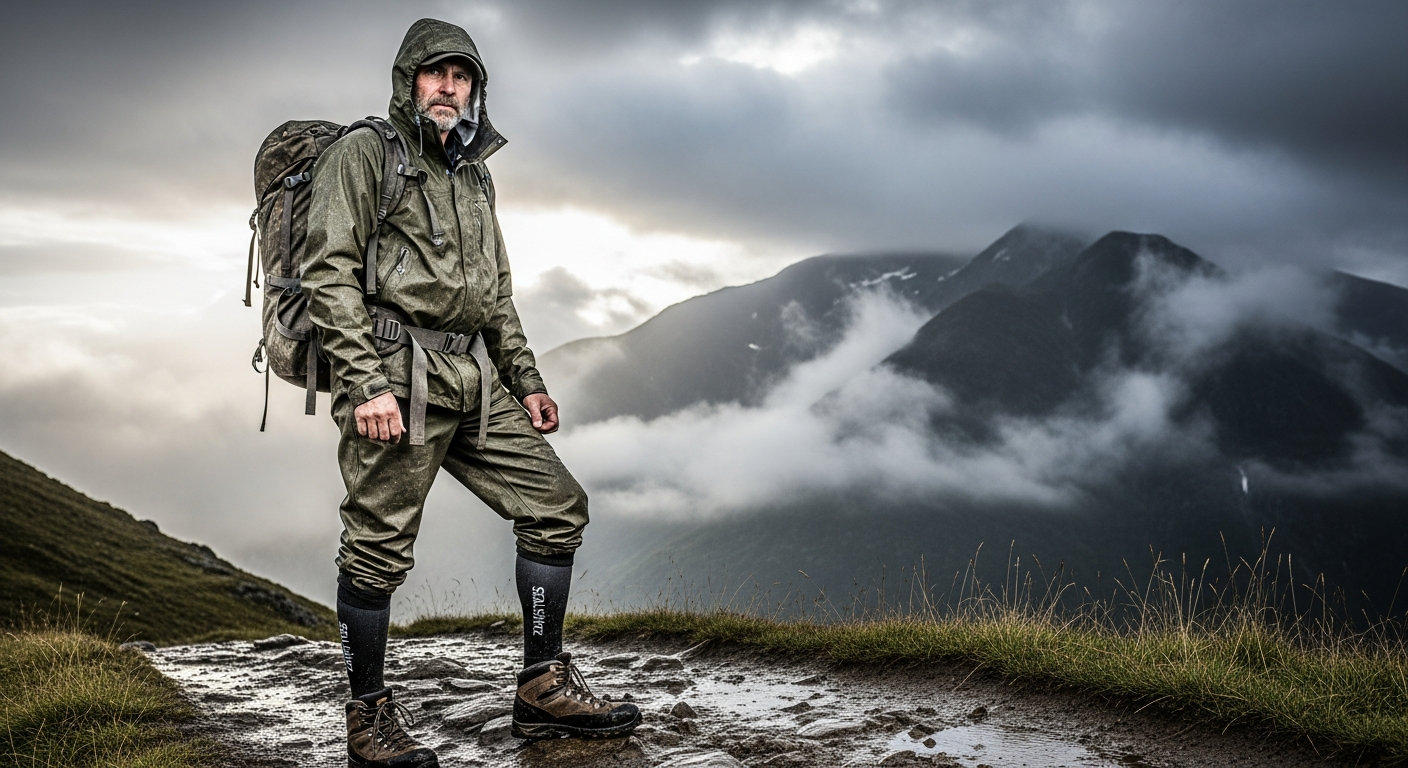
Wet feet aren't just uncomfortable—they're dangerous. Studies show that prolonged exposure to moisture in cold conditions increases the risk of trench foot and hypothermia by up to 40%, making proper footwear a genuine safety concern for outdoor workers, hikers, and adventurers. The Sealskinz Waterproof All Weather Mid-Length Sock has earned its reputation as the original, military-trusted option for precisely this reason.
With its innovative three-layer construction combining merino wool, AQUASEALZ™ hydrophilic membrane technology, and durable Polycolon exterior, this sock delivers genuine protection where cheaper alternatives fall apart. The mid-length cut extends halfway up the calf, offering additional defense against mud and wet conditions that shorter socks can't address.
The Three-Layer Engineering Behind Military-Grade Waterproofing
Merino wool interior layer
Premium natural fiber forms the innermost barrier against your skin. Merino wool wicks sweat away from feet, regulates temperature across a wide range of conditions, and resists odor without requiring synthetic chemical treatments. This layer prioritizes comfort while managing moisture.
AQUASEALZ™ hydrophilic membrane
The middle layer provides 100% waterproof protection through innovative hydrophilic membrane technology. This barrier blocks water ingress while allowing moisture vapor to escape—the key distinction that prevents the clammy foot problem plaguing cheaper waterproof socks. Water can't enter from outside, yet perspiration can exit.
Polycolon exterior shell
The outer layer features reinforced, durable material specifically engineered to withstand abrasion, mud, and rough terrain. While this layer absorbs water during wet conditions, the middle membrane ensures moisture never reaches your feet.
How the three-layer system works together
The construction creates a specialized defense strategy. The outer layer deliberately allows water contact while remaining durable enough to shed it. The middle hydrophilic membrane acts as the true waterproof barrier. The inner merino wool keeps skin dry and comfortable regardless of external conditions.
Comparison to single or dual-layer alternatives
Budget waterproof socks typically employ single or dual-layer designs. Single-layer construction relies on treating fabric to repel water—effective temporarily but degrading quickly with wear and washing. Dual-layer designs often sacrifice breathability for waterproofing, trapping sweat inside the sock. The three-layer approach outperforms both by combining waterproofing with genuine breathability.
Breathability mechanics
Moisture vapor transmission prevents sweat accumulation during moderate activity. While no sock remains completely dry during intense exertion, this design manages perspiration far better than sealed waterproof alternatives. Feet stay warmer and more comfortable during extended outdoor pursuits.
Real-World Performance Across Different Outdoor Activities
Hiking and trekking
Stream crossings and muddy trails demand reliable waterproofing. These socks excel during all-day exposure to wet conditions, keeping feet warm and protected whether crossing cold mountain streams or hiking through rain-soaked forests.
Fishing and water sports
Protection when wading, launching boats, or working near the water's edge transforms the fishing experience. Cold water exposure becomes manageable rather than hazardous when wearing socks engineered for aquatic environments.
Commuting and urban exploration
Rainy weather and puddles during daily travel no longer require separate footwear strategy. These socks handle wet pavement and unexpected downpours, extending the practicality of outdoor commuting.
Construction and outdoor labor
Workers exposed to wet job sites benefit from exceptional durability and waterproofing. Construction environments subject socks to constant abrasion and moisture—conditions where premium construction proves essential.
Cycling in wet weather
Road and mountain biking in wet conditions presents compatibility challenges. Some users report bulkiness when wearing these socks with tight-fitting cycling shoes, while others find them manageable with proper sizing. Test compatibility before committing to long rides.
Cold-weather camping and mountaineering
Insulation combined with moisture management becomes critical at altitude and in subzero environments. These socks provide warmth without the weight penalty of thicker alternatives.
Search and rescue operations
Professional teams rely on these socks for extended field work. Military and rescue communities trust this product because it performs consistently in demanding conditions where foot failure creates liability.
The Durability Factor—What the Lifetime Waterproof Guarantee Actually Means
Lifetime waterproof promise
Sealskinz backs this product with a lifetime guarantee on waterproofing functionality. Coverage includes the AQUASEALZ™ membrane itself, though normal wear on the outer Polycolon layer falls outside the guarantee. Documentation and proof of purchase matter when initiating claims.
Expected lifespan under regular use
Users typically report 2–5 years of reliable performance with regular outdoor use. Heavy use—multiple days weekly in harsh conditions—may reduce lifespan to 2–3 years, while moderate use can extend it toward 5 years.
Maintenance requirements
Machine washing at moderate temperatures preserves the waterproof membrane better than hot water or tumble drying. Use gentle detergent without fabric softeners, which can degrade the hydrophilic membrane. Air drying keeps the socks in optimal condition.
Wear patterns and failure points
Heel and toe areas experience the most stress during walking and hiking. Outer layer degradation appears first in these zones, though the waterproof membrane typically remains intact. Minor outer-layer wear doesn't compromise waterproofing.
Comparison to standard sock durability
Premium pricing correlates directly with extended product life. Standard waterproof sock alternatives degrade within 6–12 months of regular use. The three-layer construction and quality materials justify the durability advantage.
Warranty claims process
Documentation of purchase and photographic evidence of any defects support warranty claims. Contact Sealskinz directly with proof of waterproofing failure, and the company handles replacement or repair decisions based on the lifetime guarantee terms.
Cost-per-wear analysis
Calculate true value by dividing the purchase price by estimated wear days. A £45 pair worn 100 days annually for three years costs approximately 15p per wear—competitive with replacing cheap socks every few months when moisture-related issues emerge.
Comfort, Fit, and Sizing Considerations
Merino wool comfort factor
Merino wool delivers softness against skin alongside temperature regulation and natural antimicrobial properties. Unlike synthetic waterproof alternatives, merino feels comfortable during extended wear.
Mid-length cut coverage
The calf-height design prevents mud ingress and provides extra warmth compared to ankle-length socks. This coverage proves particularly valuable during trail hiking and water activities where debris enters shorter socks.
Initial fit tightness
First wear often reveals tighter-than-expected fit around the arch and calf. This tightness eases during break-in as the sock conforms to individual foot shape. Expect 2–3 wears before achieving optimal comfort.
Sizing variations
Measure feet correctly using the Sealskinz sizing chart rather than assuming standard shoe size correlates to sock size. Width options vary by retailer—some offer narrow and wide versions addressing different foot shapes.
Compatibility with footwear types
Hiking boots and work boots typically accommodate these socks comfortably. Road cycling shoes often feel too snug, though mountain biking boots usually work fine. Casual outdoor shoes with adequate interior space present no compatibility issues.
Toe box roominess
Some users report roomy toe areas while others find them snug. This variation reflects manufacturing inconsistencies or individual foot shape differences. Trying socks with your specific footwear before committing eliminates fit surprises.
Arch support considerations
The sock interacts with different boot insoles without imposing strong arch support characteristics. High-arch or low-arch insoles work equally well with these socks.
When These Socks Excel—And When They Fall Short
Ideal conditions
These socks thrive in wet, cold environments below 50°F with moderate to high-intensity outdoor work. Activities lasting 4+ hours in damp conditions justify the investment when foot health is a priority. Professional outdoor work, winter hiking, water activities, and extended field operations benefit most.
Limitations
Bulkiness with snug-fitting footwear creates practical constraints for road cyclists. The outer layer's wetness sensation, while the feet remain dry inside, requires mental adjustment. Intense cardio can still produce sweat accumulation despite breathability features. Warm-weather use creates overheating, making these socks unsuitable for summer activities. Initial fit discomfort and potential overkill for casual dry-weather activities round out the limitations.
Price Justification—Is the Investment Worth It?
Market positioning
Sealskinz occupies the premium segment of waterproof sock market. Budget alternatives cost £10–15 but fail within months. Mid-range options at £20–30 offer partial protection without true waterproofing. Premium positioning at £35–55 reflects genuine engineering advantages.
Cost range
Typical pricing ranges from £35 to £55 depending on retailer and specific model variations. Online retailers sometimes offer better pricing than specialty outdoor shops.
Cost-per-wear breakdown
A £45 investment worn 100 times annually costs 45p per wear in year one, 22.5p in year two, and 15p in year three. This calculation reveals substantial value for people regularly encountering wet conditions.
Comparison to replacing wet socks frequently
Buying cheap socks and replacing them after moisture damage occurs costs more over time than investing in premium protection upfront. Medical costs from foot problems caused by chronic moisture exposure add further financial justification.
Professional use ROI
Outdoor workers and rescue teams view these as essential equipment where replacement costs pale against liability from compromised foot protection. A construction worker avoiding work stoppage from trench foot recoups the sock investment immediately.
Seasonal buying strategies
Winter sports retailers often discount waterproof socks during off-season months. Buying in spring or fall when demand drops yields 20–30% savings compared to peak season pricing.
Bundle options and multi-pack savings
Purchasing multiple pairs simultaneously sometimes triggers volume discounts. Retailers occasionally bundle complementary items at reduced combined prices.
Check current pricing and available bundle options at Sealskinz for better value on multiple pairs.
Maintenance, Care, and Longevity Tips
Machine washing best practices
Use lukewarm water (30–40°C) with gentle detergent free of fabric softeners. Select gentle or delicate cycle settings to minimize stress on the hydrophilic membrane. Avoid bleach and harsh chemical treatments.
Drying methods
Air drying preserves membrane integrity far better than heat drying. Tumble drying or direct heat damages the AQUASEALZ™ technology and degrades performance. Flat drying or hanging indoors maintains optimal condition.
Storage considerations
Keep socks in a cool, dry location away from direct sunlight when not in use. Proper storage prevents mildew and extends the lifespan of delicate membranes.
Odor management
Merino wool's natural antimicrobial properties resist odor development without requiring special treatments. Washing socks promptly after use prevents odor accumulation even during extended outdoor seasons.
Repair options
Minor damage to the outer Polycolon layer shouldn't compromise waterproofing. Address small tears or abrasions before they progress, preventing the outer layer from deteriorating further.
Seasonal rotation
Rotating between multiple pairs during peak season extends individual sock lifespan. Using four pairs throughout winter rather than two pairs continuously reduces wear on each sock.
When to retire a pair
Recognize signs of membrane failure such as consistent wetness inside the sock despite dry external conditions, visible damage to the outer layer exposing the middle membrane, or deterioration around heel and toe areas that progresses despite care attempts.
User Testimonials and Real-World Feedback
Professional endorsements
Military, rescue, and outdoor guide communities consistently recommend this product. Professional endorsements carry weight because these communities test equipment under genuine operational stress.
Long-term user experiences
People who've worn these socks for years report satisfaction despite minor limitations. Multi-year testimonials highlight reliability and durability advantages that emerge only after extended use.
Specific use-case success stories
Hikers crossing alpine streams, fishermen spending full days in waders, and construction workers on wet job sites all report transformative experiences after switching to these socks. Success stories span diverse outdoor pursuits.
Common praise points
Users consistently highlight exceptional waterproofing performance, warmth retention in cold conditions, and durability that justifies premium pricing. The merino wool comfort factor receives repeated mention.
Honest criticisms
Where users report disappointment, bulkiness with tight cycling shoes and outer-layer wetness sensation appear most frequently. Initial fit tightness surprises some first-time buyers. A minority report difficulty with sizing accuracy.
Comparative feedback
Against competitors, Sealskinz receives praise for superior waterproofing durability and warranty support. Some users prefer competing brands for specific activities despite acknowledging Sealskinz overall quality.
Seasonal variation in reviews
Winter reviews emphasize waterproofing and warmth benefits. Summer explorers who test these socks note overheating as a primary limitation, making seasonal context important when evaluating feedback.
Alternatives and How Sealskinz Stacks Up
Budget waterproof sock options
Cheaper alternatives typically cost £10–20 and rely on water-resistant coatings rather than true waterproofing. These options protect adequately for occasional use but degrade quickly with regular washing and wear.
Premium competitors
Other high-end waterproof sock brands include Dexshell and Fox River, offering comparable pricing with varying feature emphasis. Dexshell emphasizes extreme waterproofing, while Fox River targets specific activities like hiking. Direct feature comparisons reveal different engineering priorities rather than obvious superiority.
Specialized alternatives
Socks designed specifically for cycling, mountaineering, or water sports sacrifice some waterproofing features to optimize for those activities. Choosing specialized alternatives makes sense only if you prioritize sport-specific performance over universal weather protection.
Hybrid solutions
Combining regular socks with waterproof gaiters or booties offers flexibility, allowing standard socks when weather permits and adding protection when needed. This approach requires managing multiple gear items.
When to choose alternatives
Sealskinz might be overkill for casual outdoor activities or warm-season use. Alternatives make sense for users prioritizing cost savings, activity-specific optimization, or accepting shorter equipment lifespan.
Feature-by-feature comparison
Waterproofing performance favors Sealskinz and Dexshell equally, with most alternatives offering less reliable protection. Breathability varies significantly across brands. Warmth ranking places insulated specialized socks above Sealskinz for mountaineering while rating Sealskinz superior for general use. Durability correlates strongly with price—premium options outlast budget alternatives consistently. Price comparison shows Sealskinz competitive with other premium brands while substantially outpacing budget options on value.
Hybrid approaches
Using Sealskinz specifically for wet, cold conditions while maintaining a broader sock collection for varied weather balances investment and versatility. Reserve premium socks for situations where their advantages justify the cost.
Making the Decision—Is This the Right Sock for You?
Assessment questions
Determine if your activities justify investment by asking whether you regularly spend time in wet, cold conditions. Do moisture-related foot problems currently affect your activities? Will better foot protection enhance your outdoor experience or enable new pursuits?
Activity frequency
How often do you spend time in wet, cold conditions annually? Occasional users might find one pair adequate, while frequent outdoor workers benefit from maintaining a rotation of multiple pairs.
Budget flexibility
Premium pricing demands that the investment fits within your gear budget without forcing difficult tradeoffs. If foot protection aligns with your priorities, the cost becomes more justified.
Foot health priorities
Existing foot issues—sensitivity to cold, previous moisture-related problems, or circulation concerns—strengthen the case for premium protection. Preventative investment proves cheaper than treating serious foot injuries.
Footwear compatibility
Check your boot and shoe collection for fit compatibility before purchasing. Attempting these socks with tight-fitting cycling shoes or narrow boots creates frustration.
Climate considerations
Whether your region's weather patterns align with the sock's strengths matters significantly. Cold, wet climates maximize these socks' value while warm, dry regions reduce practical benefits.
Trial approach
Start with a single pair to test compatibility with your footwear and assess whether the performance improvement justifies the expense. Expand to multiple pairs only after confirming fit and satisfaction with initial results.
The Bottom Line: Investment Protection for Your Most Overlooked Extremity
The Sealskinz Waterproof All Weather Mid-Length Sock represents a genuine shift in how serious outdoor enthusiasts approach foot protection. Its three-layer construction isn't marketing fluff—it's engineering that solves a real problem that cheaper alternatives consistently fail to address. Yes, they cost more than ordinary socks and feel slightly bulky with certain shoes, but when you're hours into a winter hike, wading through a cold stream, or standing on a wet job site for eight hours, these socks deliver the protection your feet desperately need.
The lifetime waterproof guarantee isn't a marketing gimmick—it's proof that Sealskinz stands behind its product. Whether you're an outdoor professional, a serious adventurer, or someone who spends enough time in wet conditions to justify the investment, these socks earn their place in your gear rotation. Start with one pair to test compatibility with your footwear, then expand your collection based on how frequently you encounter wet, cold conditions. Your feet—and your long-term foot health—will thank you for making the upgrade.
Leave a Reply