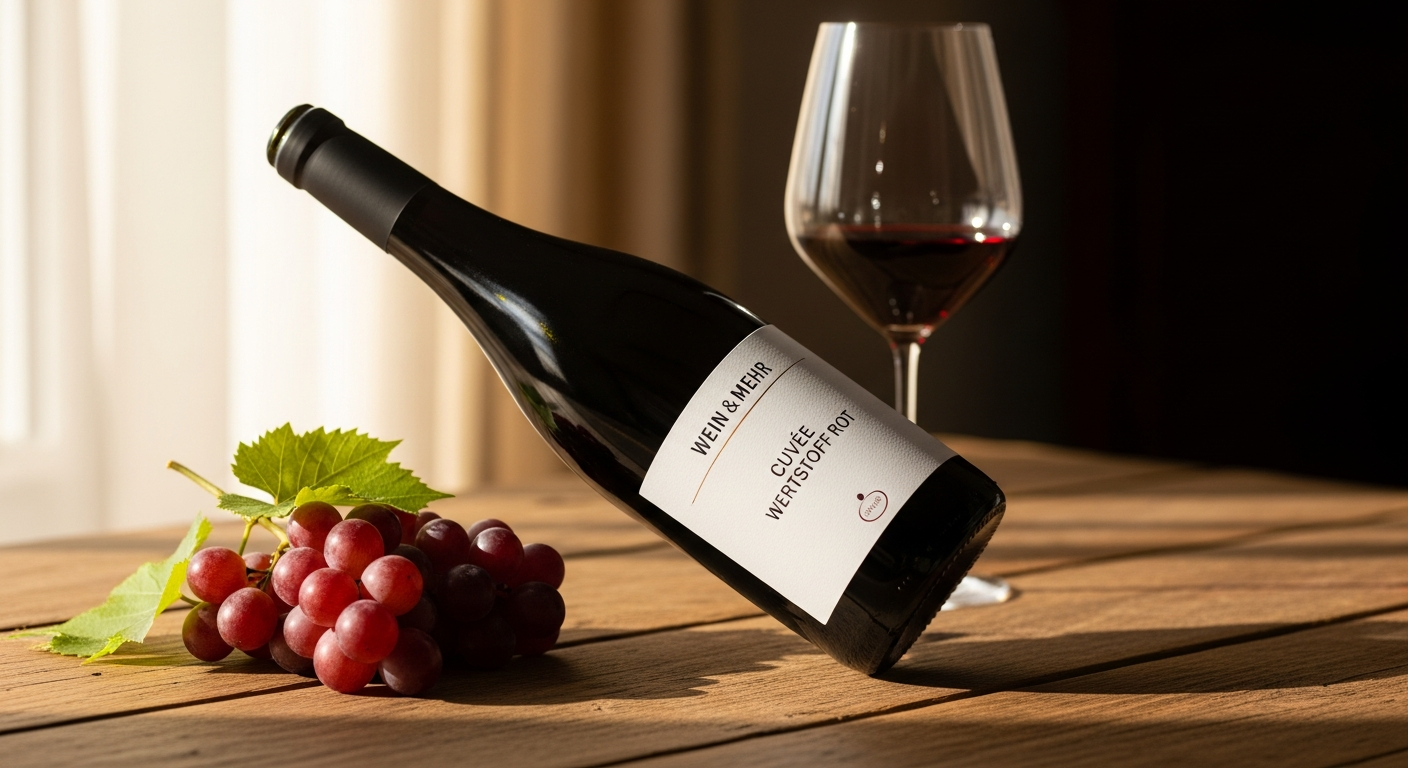
German red wines often languish in the shadows of their French and Italian counterparts, yet the Pfalz region has quietly built a reputation for producing wines of remarkable quality at prices that don’t require a second mortgage. The Wein & Mehr Cuvée Wertstoff Rot embodies this philosophy—a wine that refuses to compromise on complexity or structure simply because it’s accessibly priced. Born from three carefully selected grape varieties and refined through 18 months of oak aging, this red cuvée represents a philosophy that takes wine seriously without taking itself too seriously.
The German approach to winemaking differs fundamentally from Old World traditions elsewhere. Where tradition often demands adherence to rigid formulas, German producers blend heritage with pragmatism, creating wines designed for actual enjoyment rather than collector speculation. The Wertstoff Rot stands as a perfect example of this mindset—delivering serious sophistication at €9.90, a price point that feels almost out of step with what’s actually in the bottle.
This exploration covers everything from the technical foundations of the blend to the practical wisdom of pairing this wine with your dinner table. You’ll understand how Pfalz terroir shapes the final product, why three grape varieties work together in harmony, and whether the critical acclaim truly justifies the modest price tag.
Explore the Wein & Mehr collection and discover Wertstoff Rot for yourself.
The Pfalz Region and German Red Wine Tradition
A Climate Built for Red Wines
The Pfalz region sits in southwestern Germany, blessed with conditions that seem almost designed for growing red grapes. The area experiences warmth and sunshine that rivals many traditional wine regions further south, while maintaining the cool nights that preserve acidity and complexity. This balance—heat by day, cool by night—creates grapes with fully developed phenolic ripeness without sacrificing the freshness that distinguishes German wines globally.
The region’s location near the Haardt Mountains provides natural shelter from harsh winds, allowing grapes to ripen with consistency year after year. The soil composition varies across microclimates, but generally favors the mineral-rich environments where red varieties like Cabernet Sauvignon, Merlot, and Dornfelder develop distinctive character. Unlike many German wine regions focused exclusively on white varieties, Pfalz embraced red wine production with conviction, understanding that consumer preferences were shifting toward bolder, fuller-bodied offerings.
Historical Context and Modern Reputation
German red wines spent decades overshadowed by the country’s magnificent Rieslings, creating an interesting historical quirk. While white wine built the nation’s international reputation, red wine production developed quietly, free from the pressure of living up to towering expectations. This allowed Pfalz producers to experiment, refine, and ultimately create something distinctive—reds that borrowed from Bordeaux traditions but maintained unmistakable German character.
The 1990s and 2000s marked a turning point. As global wine culture evolved and consumers sought alternatives to expensive Bordeaux and Burgundy, German reds suddenly appeared on radar screens. Pfalz positioned itself as the answer for those seeking quality without the price premium attached to established French regions. The Wertstoff Rot fits squarely into this modern narrative—a wine that represents both respect for tradition and awareness of contemporary wine culture.
What Sets Pfalz Reds Apart
Other German regions—Mosel, Rheingau, Rheinhessen—maintained primary focus on white varieties, allowing Pfalz to own the red wine conversation within Germany itself. The region’s larger vineyard area and diversity of microclimates enabled experimentation with international grape varieties in ways that smaller, more specialized regions couldn’t accommodate. Pfalz winemakers approached red wine production with the same precision and care Germans brought to white wine, but without the centuries of established protocol dictating every decision.
The result feels modern yet rooted, ambitious yet measured. Pfalz reds achieve structure and complexity through careful varietal selection and thoughtful aging, rather than through excess alcohol or over-extraction. The philosophy emphasizes what the fruit naturally offers, with oak aging serving as enhancement rather than transformation. This approach directly shaped the Wertstoff Rot—a wine that tastes deliberate and purposeful rather than formulaic.
The Value Proposition
Pfalz built its reputation on delivering serious quality at prices that reward exploration. Where Bordeaux regions command premiums based on centuries of prestige, Pfalz operates on the principle that excellent wine speaks for itself without requiring famous names or historical pedigree. The Wertstoff Rot, priced at €9.90, exemplifies this philosophy—quality determined by what’s in the bottle, not by marketing budgets or heritage rankings.
This accessibility has paradoxically become Pfalz’s defining characteristic among informed wine drinkers. Those seeking quality without pretension, complexity without cost, find themselves returning to the region repeatedly. The wines don’t apologize for their price point; instead, they demonstrate through taste why affordability and quality aren’t mutually exclusive.
Deconstructing the Cuvée Blend: Grape Varieties Explained
Cabernet Sauvignon: The Structural Backbone
Cabernet Sauvignon provides the framework upon which the entire blend stands. This variety brings serious tannin structure—the compounds that create that slightly drying sensation on the gums, signaling a wine built for aging and food pairing. In the Wertstoff Rot, Cabernet Sauvignon doesn’t dominate; rather, it anchors. Its presence ensures the blend possesses enough backbone to stand up to serious foods, from grilled steaks to game preparations.
The variety also contributes aging potential. Cabernet Sauvignon’s robust tannins and natural acidity resist oxidation, meaning a bottle laid down carefully maintains its character across years. In the context of a €9.90 wine, this isn’t just theoretical—it means Wertstoff Rot genuinely rewards patience, developing additional complexity if you choose to hold bottles rather than drink them immediately.
Merlot: The Bridge Between Fruit and Structure
Where Cabernet Sauvignon provides architecture, Merlot delivers approachability. This variety softens the more austere elements of the blend, introducing ripe fruit characteristics that make the wine immediately pleasurable. Merlot excels at expressing plum and cherry fruit notes with a natural sweetness—the kind that doesn’t come from residual sugar but from fully ripe phenolic ripeness.
In blends, Merlot functions as a diplomat, easing the transition between Cabernet Sauvignon’s tannins and Dornfelder’s spice. The variety enables wines to taste generous and welcoming rather than austere or challenging. The Wertstoff Rot’s drinkability owes significantly to Merlot’s presence, making it accessible to wine drinkers at various experience levels without sacrificing complexity for those seeking it.
Dornfelder: The Distinctive German Character
Dornfelder represents the wine’s German identity. This relatively young variety—developed in Germany in 1955—brings intensity and distinctive character unlike anything offered by international grapes alone. Dornfelder contributes deep color, spice notes with a hint of pepper, and tannins that carry a different character than those from Cabernet Sauvignon. Where Cabernet Sauvignon tannins feel structured and angular, Dornfelder tannins carry a slightly wilder, more rustic quality.
The variety also introduces subtle herbal notes and darker fruit character—blackberry and black currant rather than the brighter plum tones Merlot emphasizes. In the Wertstoff Rot, Dornfelder prevents the blend from becoming just another international-style red. Instead, it signals origin and intentionality, telling the drinker: this wine comes from somewhere specific, made by people who understand their terroir.
The 18-Month Oak Aging Process and Its Impact
Understanding the Timeline
The 18-month journey through oak represents a critical decision point in the Wertstoff Rot’s development. This isn’t the shortest aging regimen—many commercial reds spend 6-12 months in oak—nor does it approach the 24-30 month maturation of premium Bordeaux. The 18-month window represents a calibrated choice: long enough to develop meaningful oak influence and additional complexity, short enough to preserve the vibrancy and fruit character that make the wine approachable.
During the first months, the wine extracts oak compounds rapidly. The barrel itself—typically French oak for quality cuvées—imparts vanilla, spice, and subtle smoky notes. Over time, the intensity of this influence moderates as the wine stabilizes. By month 18, the oak has become integrated rather than obvious, supporting the fruit rather than dominating it. The barrel’s porous nature allows microscopic oxygen exposure, enabling slow oxidative development that adds depth without acceleration.
Special Oak Barrels and Flavor Development
The term “special oak barrels” indicates careful consideration beyond simply throwing wine into any wooden vessel. Premium oak—typically French or Hungarian—imparts different characteristics than American oak. French oak tends toward subtlety, adding vanilla and spice in measured doses. The Wertstoff Rot’s choice of special oak barrels suggests commitment to this refined approach rather than the bolder oak influence common in some contemporary winemaking.
Oak selection affects not just flavor but also texture development. Quality oak barrels influence tannin polymerization—a chemical process that softens and integrates harsh tannins, creating smoother mouthfeel. The barrel’s previous use matters as well; first-use barrels (new oak) impart stronger flavor than neutral barrels that have aged wine multiple times. The Wertstoff Rot likely employs a blend of new and neutral barrels, achieving oak complexity without overwhelming the fruit’s natural character.
Achieving Smoothness Without Overwhelming Fruit
The risk with 18 months of oak aging is creating a wine that tastes like a barrel rather than wine aged in a barrel. The Wertstoff Rot navigates this danger by maintaining focus on the fruit’s essential character. The oak aging enhances rather than transforms, adding complexity without masking the intensive forest fruit aromas and subtle vanilla notes that define the wine’s identity.
Winemakers achieve this balance through barrel management—monitoring the wine’s development, adjusting temperature and humidity when necessary, and understanding when the wood influence has reached optimal integration. It’s a more attentive approach than simply setting bottles aside and hoping for the best. This precision reflects the philosophy underpinning German winemaking: respect for the fruit, respect for tradition, respect for the drinker’s experience.
The Vanilla and Wood Spice Story
Vanilla notes emerging during oak maturation don’t come from vanilla beans in the barrel; rather, they develop from lignin compounds in oak exposed to heat during the barrel-making process. As wine sits in these barrels, it gradually extracts these compounds, experiencing what barrel makers call “toasting.” The Wertstoff Rot’s vanilla character develops subtly, never overriding the fruit but rather enhancing it, creating a beautiful bridge between the forest fruit aromas and the wine’s finish.
Wood spice—a complex collection of clove, nutmeg, and pepper-like notes—develops similarly. These compounds emerge as the wine’s natural tannins and oak tannins interact. By month 18, the spice has softened from sharp to integrated, providing texture and intrigue without harshness. This evolution explains why the Wertstoff Rot tastes smooth despite its powerful tannin structure—the oak has done substantial work transforming raw intensity into refined complexity.
Order your bottle of Wertstoff Rot and experience German winemaking excellence.
Flavor Profile and Tasting Notes You’ll Actually Experience
Forest Fruits and the Aromatic Foundation
Opening a bottle of Wertstoff Rot immediately announces itself through forest fruit aromas—dark berries, plum, and black currant dominate the initial impression. These aren’t bright, jammy fruit notes; they’re deeper, earthier, suggesting forests rather than orchards. The specificity of “forest fruits” matters because it communicates the wine’s character better than generic fruit descriptions. This is fruit with substance, suggesting ripeness and maturity rather than simple sweetness.
The forest fruit character stems from the grape blend itself. Dornfelder naturally emphasizes darker berries, while both Cabernet Sauvignon and Merlot contribute plum notes that lean toward dark rather than light. The 18-month oak aging allows these fruit characteristics to develop additional complexity—the raw exuberance of young wine transforms into something more measured and introspective. When you smell Wertstoff Rot, you’re encountering fruit that’s been given time to develop character.
Vanilla Undertones and Their Expression
The vanilla noted in tasting descriptions doesn’t announce itself aggressively. Instead, it emerges gradually as the wine warms in the glass, becoming more prominent with each sip. This delayed vanilla expression is characteristic of quality oak aging—the vanilla remains subtle and integrated rather than obvious and artificial. The vanilla doesn’t taste like vanilla extract; instead, it suggests warmth and suggests the wine spent meaningful time in quality wood.
The interplay between vanilla and fruit creates an appealing complexity. The fruit carries the wine’s primary identity, while vanilla adds depth and sophistication. During tasting, you might experience vanilla first on the front palate, then fruit through the middle, then spice on the finish—a progression that keeps the tasting experience engaging rather than static.
Subtle Wood Notes and Fruit Integration
Wood notes in quality wine rarely mean “tastes like a wooden spoon.” Rather, they suggest smoky, spicy, and toasted undertones that add dimension without overwhelming. In the Wertstoff Rot, wood notes appear most clearly on the finish—after the initial fruit impact and vanilla sweetness fade, subtle wood spice emerges. This structure prevents the wine from becoming one-dimensional, instead creating a narrative arc across the tasting experience.
The integration of wood with fruit reflects the 18-month aging process working as intended. The oak has stopped being separate from the fruit and instead become part of the wine’s fundamental character. When you taste Wertstoff Rot, you’re tasting a unified expression rather than a collection of components competing for attention.
Tannin Structure: Powerful Yet Ripe
The Wertstoff Rot possesses powerful tannins—the mouthfeel carries weight and presence, never feeling thin or insubstantial. This power comes from the Cabernet Sauvignon and Dornfelder contributions, reinforced by oak aging. However, the tannins carry ripeness rather than harshness. “Ripe tannins” indicates the tannin molecules have undergone sufficient chemical development to feel smooth rather than coarse on the palate.
What distinguishes truly good winemaking is achieving powerful tannins that don’t overwhelm. The Wertstoff Rot accomplishes this balance through maturation and blending. The Merlot softens the tannin structure while the oak integration transforms raw tannin intensity into refined texture. The result feels substantial without being aggressive—a wine that demands respect through character rather than challenging harshness.
Mastering Food Pairings With Wertstoff Rot
Beef Fillet and Sophisticated Preparations
Beef fillet—the most tender cut—might seem an odd pairing for a wine with powerful tannins, yet the combination works beautifully when the preparation respects both elements. A simply prepared fillet, perhaps pan-seared and finished with herb butter, allows the wine’s fruit and spice to complement the beef’s natural richness without overwhelming it. The fillet’s delicate texture requires a wine with enough finesse to not overpower, which the Wertstoff Rot provides through its integrated oak aging and balanced structure.
Alternatively, more elaborate beef fillet preparations—wrapped in pastry with mushroom duxelles, served with rich sauces, or topped with truffle—invite the wine’s fuller character. The tannin structure and wood spice create necessary counterweight to these richer preparations, preventing the combination from feeling one-dimensional. The key is ensuring the beef preparation has sufficient richness and complexity to justify the wine’s intensity.
Steak Varieties and Cooking Methods
Steak represents the Wertstoff Rot’s natural habitat. Ribeye, New York strip, or porterhouse—the fattier cuts—create a textural and flavor dynamic where the wine’s tannins provide essential contrast. The fat in these cuts can dominate without proper wine accompaniment; the Wertstoff Rot’s structure and tannins cut through richness, cleansing the palate and preparing it for the next bite.
The cooking method matters as much as the cut. High-heat searing creates a flavorful crust—the Maillard reaction developing complexity in the beef that echoes the wine’s own complexity. Medium-rare temperature preserves the beef’s natural juices, creating a more delicate pairing than charred well-done preparations. The wine’s forest fruit and subtle spice align beautifully with the beef’s caramelized exterior and tender interior, creating a combination that feels greater than its components.
Game Dishes and Powerful Pairings
Game—venison, wild boar, duck—brings intensity that matches the Wertstoff Rot’s power. These proteins carry strong flavors and often richer fat content than domesticated alternatives, requiring wines with enough structure to create conversation rather than capitulation. The Wertstoff Rot’s powerful yet ripe tannins, combined with its forest fruit character and spice notes, align with game’s earthy, complex flavor profile.
Traditional game preparations—stews with red wine reductions, roasted preparations with berry sauces, braised offerings with mushrooms and herbs—find perfect partners in this cuvée. The wine doesn’t dominate the food; instead, it participates in a dialogue where the game’s intensity and the wine’s structure create something neither element alone could achieve.
Cheese Selections and Complementary Pairings
Red wine and cheese pairings can feel obvious until you consider which cheeses actually work. Firm, aged cheeses—Comté, aged Gruyère, Manchego—possess enough character to stand up to the Wertstoff Rot’s structure without being overwhelmed. The wine’s tannins interact with the cheese’s fat and protein, creating interesting textural contrasts.
Blue cheeses present another successful pairing avenue. The pungent, slightly salty character of blue cheese creates dynamic contrast with the wine’s sweetness and fruit. This isn’t a subtle combination; it’s a bold dialogue between powerful flavors and competing intensities. Softer cheeses—brie, camembert—risk being overwhelmed by the wine’s structure, though creamy, aged versions with more body can work beautifully.
Value Assessment: Is €9.90 Actually a Fair Price?
Comparative Analysis With German Red Wines
German red wines in the €9.90 price range vary considerably in quality and ambition. At this price point, many offerings represent straightforward, approachable reds designed for unchallenging consumption. The Wertstoff Rot distinguishes itself through its complexity and structural ambition—characteristics typically reserved for wines costing €15-20. The 18-month oak aging alone represents a significant commitment; many wines at this price point age for 6-12 months if at all.
Comparable German reds at similar pricing might offer simpler blends, shorter aging, or less ambitious fruit sourcing. The Wertstoff Rot’s three-grape selection, drawn specifically from Pfalz, suggests careful fruit curation rather than sourcing whatever’s available. This attention to detail typically carries a premium in wine pricing, making the €9.90 tag genuinely remarkable.
Quality-to-Price Ratio Breakdown
Breaking down value requires evaluating three primary components: flavor complexity, aging process quality, and production standards. Flavor-wise, the Wertstoff Rot offers intensive forest fruit aromas, integrated wood notes, vanilla undertones, and powerful tannin structure—complexity that typically requires paying significantly more. The flavor profile alone would justify a €15-18 price in many wine markets.
The aging process—18 months in special oak barrels—represents substantial producer investment. Oak barrels cost thousands of euros and represent warehouse space, climate control, and monitoring. Factoring in barrel costs and storage, the producer invested heavily in each bottle’s development. Quality aging doesn’t happen cheaply, making the €9.90 pricing puzzling from a cost standpoint.
Production standards reflect a commitment to excellence beyond what price alone would suggest. The careful blending of three varieties, monitoring during oak aging, and attention to detail throughout production all indicate a philosophy prioritizing quality over volume. At €9.90, corners could easily be cut; instead, the producer invested in doing things properly.
Wertstoff Rot Versus French Bordeaux Blends at Similar Pricing
French Bordeaux blends at €9.90 typically come from lesser-known producers or regions outside the prestigious appellations. While quality exists at this price, it often means compromising on complexity or structure. The French wine might offer two-dimensional fruit without the integrated oak aging and tannin development characterizing the Wertstoff Rot.
French prestige carries a premium; paying for the name, the region, the appellation becomes unavoidable at even modest price points. The Wertstoff Rot avoids this dynamic through German winemaking’s relative anonymity in global markets. Consumers seeking quality over prestige find remarkable value here—a wine delivering Bordeaux-level complexity and structure without Bordeaux-level pricing.
Critical Reception and Pricing Context
Captain Cork’s 4.5 out of 5 stars for the 2017 vintage positions the Wertstoff Rot among quality wines according to professional evaluation. This critical endorsement, combined with the €9.90 price, suggests significant underpricing relative to professional assessment. Critics evaluating wines blind typically assign higher prices to wines they rate highly; the Wertstoff Rot likely received scores suggesting a €15-20 price point, yet retails for less than €10.
This gap between critical assessment and pricing represents an anomaly worth exploiting. The wine isn’t underrated among professionals; it’s underpriced in the market. For value-conscious drinkers willing to venture beyond predictable choices, the Wertstoff Rot represents one of those rare opportunities where quality and affordability align perfectly.
Serving Suggestions and Storage Recommendations
Optimal Serving Temperature
Temperature profoundly impacts wine experience, and the Wertstoff Rot demands proper consideration. Serving too warm (room temperature can exceed 70°F in many homes) causes the wine to taste alcohol-forward and loses aromatic nuance. Serving too cold suppresses the wine’s complex character, making it taste flat and one-dimensional. The sweet spot for Wertstoff Rot sits around 60-65°F (15-18°C)—noticeably cooler than typical room temperature but warmer than refrigerator temperature.
Achieving this temperature practically means removing the bottle from storage 30-45 minutes before serving, allowing it to warm slightly. Alternatively, placing the bottle in a wine bucket with equal parts ice and water for 10-15 minutes accomplishes the temperature adjustment efficiently. At the proper temperature, the wine’s aromatic complexity opens fully, the tannins present themselves clearly without harshness, and the balanced structure becomes apparent.
Decanting Guidelines and Aeration Benefits
Decanting—transferring wine into a separate vessel before serving—serves multiple purposes. First, it separates any sediment that may have accumulated from the tannins during aging. The Wertstoff Rot, having spent 18 months in oak, may develop some sediment over storage; decanting removes this without it reaching the glass.
Second, decanting increases surface area exposed to oxygen, accelerating the wine’s opening process. A wine closed and tight when first opened can transform during 30-60 minutes of decanting, becoming more expressive and complex. For the Wertstoff Rot, 30 minutes of decanting proves sufficient to accomplish aeration without over-oxidizing. Younger bottles may benefit more dramatically from decanting than older ones; wines aged several years post-bottling have often already opened through slow oxidation.
Glassware Recommendations
The wine glass chosen affects flavor and aroma perception more than many realize. For the Wertstoff Rot, a Bordeaux-style glass—with a bowl larger than Burgundy glasses, allowing more surface area for aroma concentration—proves ideal. The shape directs aromas toward the nose while the larger bowl permits swirling without spilling, facilitating oxygen exposure and aroma release.
The glass’s thickness matters as well; thinner glasses allow better temperature control through hand warmth, while thick-walled glasses insulate better. For the Wertstoff Rot, a moderately thin Bordeaux glass (not paper-thin but not heavy) balances aesthetic appreciation with practical temperature management. The goal is enhancing the wine’s natural expression rather than allowing the glassware to become the focal point.
Storage Conditions for Long-Term Aging
If you choose to age Wertstoff Rot bottles rather than drink immediately, proper storage ensures the wine develops positively rather than deteriorates. The primary enemies are heat, light, and vibration. Ideally, store bottles lying horizontally (on their side) at consistent temperature around 50-55°F in darkness. The horizontal position keeps the cork moist, preventing it from drying and allowing oxygen infiltration.
Temperature stability matters more than achieving perfect conditions; wine withstands slight variations better than constant fluctuation. A cool basement offers better storage than a climate-controlled apartment with temperature swings. UV light damages wine’s color and flavor, so storing away from windows proves essential. For most people, a dedicated wine cooler in the 50-55°F range represents practical compromise between ideal conditions and realistic home storage.
Who Should Buy This Wine and When
Ideal Drinker Profiles
The Wertstoff Rot welcomes various wine drinker profiles. Beginners exploring beyond simple wines find an approachable entry point into complexity—the fruit remains accessible while introducing them to oak aging, blended varietals, and food pairing possibilities. The wine doesn’t intimidate through high alcohol or harsh tannins, making it suitable for developing palates seeking education.
Seasoned wine enthusiasts appreciate the wine on different levels. The €9.90 price invites experimentation and buying multiple bottles without financial overextension. The technical merit—balanced blend, appropriate aging, integrated oak—appeals to those understanding winemaking nuances. Experienced drinkers often stockpile wines like this, recognizing exceptional value when encountered.
Budget-conscious wine lovers find obvious appeal. The Wertstoff Rot delivers quality typically associated with €15-20 bottles, creating opportunity for expansion beyond daily-drinker wines without exploding the wine budget. For those seeking regular wines offering sophistication rather than simply getting drunk affordably, this cuvée becomes a staple purchase.
Situations Where Wertstoff Rot Excels
Casual weeknight dinners with substantial dishes pair beautifully with this wine. A simple steak dinner transforms into something memorable when accompanied by a wine offering genuine complexity and structure. The wine’s approachability means you needn’t stress over whether you’re “pairing correctly”—the wine works with beef-forward meals broadly.
Entertaining friends creates another ideal scenario. Serving a wine that balances quality with affordability demonstrates thoughtfulness without suggesting excessive expense. Guests often enjoy discovering wines offering genuine quality at accessible pricing; the Wertstoff Rot invariably prompts conversation when someone notices the price-to-quality ratio. It becomes both the evening’s beverage and a potential introduction to German red wines for those unfamiliar with the category.
Personal enjoyment—enjoying a glass of wine simply because it tastes good—represents perhaps the most important situation. The wine needn’t accompany anything specific; it stands alone beautifully. Reflecting on its complexity, allowing the vanilla to emerge as it warms, appreciating the tannin structure—these pleasures require no special occasion or elaborate preparation.
Budget-Conscious Wine Lovers Seeking Upgrades
Those accustomed to €5-7 wines discover what budget extension toward €10 accomplishes through Wertstoff Rot. The difference between entry-level and thoughtfully crafted wines becomes viscerally apparent. The oak aging alone accounts for obvious quality differences; the blending of three varietals introduces complexity impossible at lower price points. Budget-conscious drinkers upgrading to €9.90 often find themselves discovering a new favorite category, eventually gravitating toward exploring other German reds at similar pricing.
Gift-Giving Scenarios and Occasions
The Wertstoff Rot makes thoughtful gifts for wine drinkers at various enthusiasm levels. The reasonable price removes pressure from gift-giving; you’re clearly offering something quality without suggesting financial overcommitment. The German origin and distinctive name provoke conversation—recipients inevitably ask about the wine, receiving an opportunity to learn about Pfalz, German red wines, and the specific merits of this cuvée.
For housewarming gifts accompanying a special meal, the Wertstoff Rot communicates “I selected something I think you’ll genuinely enjoy” rather than “I grabbed whatever was fancy at checkout.” Dinner party hosts appreciate receiving bottles they might not purchase themselves, expanding their wine horizons. Corporate gifts, friend gatherings, casual dinner invitations—the Wertstoff Rot fits various occasions where thoughtful wine selection matters.
The Wertstoff Verdict: Why This German Red Deserves Your Attention
The Wein & Mehr Cuvée Wertstoff Rot refuses to conform to expectations about what wines at this price point should be. The 18-month oak aging creates genuine complexity, the three-grape blend achieves remarkable balance, and the €9.90 price tag feels almost like an oversight in the best possible way. What truly impresses is its commitment to character—it anchors itself firmly in Pfalz tradition while embracing the precision and refinement of modern winemaking.
The forest fruit aromas, vanilla undertones, and powerful yet ripe tannins work together like a carefully rehearsed ensemble, each element supporting the others rather than competing for dominance. Whether you’re pairing it with grilled steak, sharing with friends exploring German wines, or simply enjoying a glass on its own merits, this wine responds with genuine character and sophistication. The limited community ratings on broader platforms shouldn’t concern you; they’re actually an advantage. You’re discovering something before the masses catch on, likely before word spreads and availability tightens.
Grab a bottle, give it proper air if you have time, and prepare for a pleasant surprise. The Wertstoff Rot exemplifies what happens when producers prioritize quality over margins, when winemakers respect both the fruit and the drinker’s intelligence. German red wines rarely command attention in markets flooded with predictable choices, yet wines like this remind us why they deserve consideration.
Discover Wertstoff Rot and experience the value that German winemaking delivers.
Leave a Reply