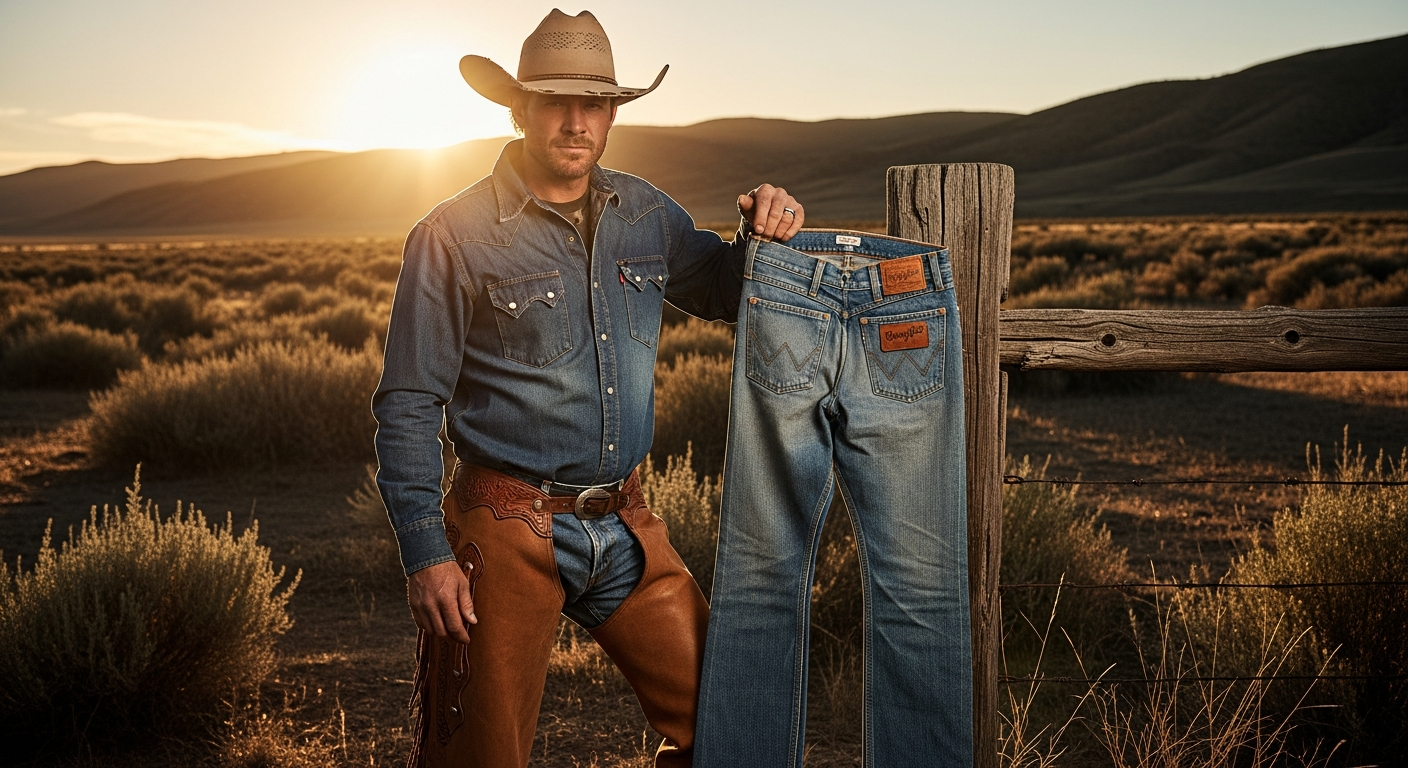
Over 70 years ago, Wrangler created a jean that would become the gold standard for anyone serious about riding, ranching, or authentic Western wear. The Wrangler 13MWZ Cowboy Cut isn't just another pair of jeans—it's the official jean of the Pro Rodeo Cowboys Association, trusted by professionals who demand gear that can handle real work and genuine adventure. That's the kind of legacy you can't fake.
I've watched countless jeans come and go, but the 13MWZ has remained virtually unchanged because it actually works. Built from 100% heavyweight cotton denim and engineered with a high 11-inch rise specifically for riders, these jeans were designed by people who understood what cowboys needed. The straight leg, generous hip opening, and boot-friendly taper make them equally at home in the saddle or at a weekend barbecue.
In this guide, I'm breaking down everything that makes the 13MWZ special—from the raw denim that softens into a personalized fit, to the exact measurements that matter for your body type. You'll learn how to size correctly, understand what to expect from the break-in period, and decide whether these iconic jeans deserve a spot in your wardrobe.
Explore the Wrangler 13MWZ Cowboy Cut on the official Wrangler website.
The 70-Year Legacy Behind Wrangler's Most Iconic Jean
Origins of the 13MWZ design and its connection to working cowboys and ranch life
The 13MWZ wasn't dreamed up in a corporate boardroom by people who'd never thrown a leg over a saddle. It emerged from genuine need. Cowboys and ranch workers required jeans that could withstand constant friction against leather saddles, sharp fence wire, and rough equipment. Wrangler listened to what these men actually needed rather than imposing preconceived notions about what jeans should be.
The design reflects this working-class origin in every detail. The high rise keeps the jeans in place during hours in the saddle. The generous hip and thigh openings allow freedom of movement without creating excess fabric that could snag or bunch. The straight leg tapering to an 8 1/4-inch opening accommodates cowboy boots perfectly. None of these features exist for aesthetic reasons alone—they're solutions to real problems faced by working riders.
Why Wrangler chose the Cowboy Cut name and what it signifies in Western wear culture
The name "Cowboy Cut" carries weight in Western wear circles. It's not marketing hyperbole or a romanticized nod to a bygone era. This designation signals that the jeans were engineered specifically for saddle work and the movement patterns it demands. Other jean cuts prioritize different things—streetwear silhouettes, casual comfort, or contemporary fashion trends. The Cowboy Cut prioritizes function in the saddle first, with versatility for other applications second.
This naming convention matters because it sets expectations. When someone purchases the 13MWZ, they're getting jeans designed by and for people who knew what cowboys actually do. The name anchors the product to its authentic purpose.
The 1997 milestone: becoming the official jean of the Pro Rodeo Cowboys Association
In 1997, the Pro Rodeo Cowboys Association officially recognized the 13MWZ as their jean of choice. This wasn't ceremonial—it was earned. Professional rodeo competitors live in their jeans during competition season. They experience thousands of impact moments in the saddle, dismounts, and ground maneuvers. The jeans must perform flawlessly because failure could mean injury or lost competition points.
When the toughest riders in the sport chose the 13MWZ, they validated what working cowboys had known for decades. This official designation transformed the jeans from popular workwear into a symbol of authenticity and proven performance.
How the 13MWZ maintained its design integrity while competitors chased trends
The fashion industry operates on cycles. Trends rise and fall. Silhouettes change constantly. Yet Wrangler resisted the urge to reinvent the 13MWZ. While competitors chased slim-fit craze, stretch-fabric innovation, and pre-distressed aesthetics, Wrangler kept producing the same jeans.
This steadfastness wasn't stubbornness—it was conviction. The company understood that certain designs solve problems so effectively that altering them for fashion's sake would actually diminish their value. The straight leg, the high rise, the heavyweight denim—these elements work together as a system. Changing one piece would compromise the whole.
The cultural significance of raw denim in traditional Western dressing
Raw denim represents continuity with Western wear tradition. It's the way jeans existed before industrial laundering and chemical treatments became standard. Cowboys never bought pre-washed, pre-faded jeans. They bought raw denim that stiffened initially, then softened through wear into a custom fit unique to their body and movements.
Choosing raw denim for the 13MWZ keeps the jeans rooted in authenticity. The break-in period isn't a flaw—it's part of the tradition. Each pair develops a personalized patina reflecting its owner's specific life and work.
Why professional riders and ranchers continue to choose this model over newer alternatives
Professional riders and ranchers don't have the luxury of fashion indulgence. They can't wear jeans that look good but fail under real conditions. They continue choosing the 13MWZ because it delivers consistently. After seventy years and countless alternatives, this jean still performs better for saddle work than anything else available.
The reasoning is practical: if newer jeans were genuinely superior for their needs, they would have switched. Instead, the fact that working professionals still prefer the 13MWZ speaks to its effectiveness.
The role of authenticity in the 13MWZ's enduring reputation
Authenticity creates trust that marketing budgets can't buy. The 13MWZ earned its reputation through genuine performance, not clever advertising. This authenticity becomes a moat that protects the jeans from trend displacement. Even when fashion moves in completely different directions, the 13MWZ remains respected because it never pretended to be anything other than what it is.
Check current availability and sizing options for the 13MWZ on Wrangler's official site.
Decoding the Fit: Measurements That Matter for Riders
High 11-inch rise: coverage and stability in the saddle
The 11-inch rise on the 13MWZ doesn't exist by accident. This measurement creates several specific advantages for riders. First, it ensures the waistband sits at the natural waist rather than below it. This positioning keeps the jeans anchored during mounting and dismounting, preventing the backward slide that happens with lower-rise alternatives.
Second, the high rise provides coverage. During active riding, shirts shift. A high rise means the jeans stay in place protecting your back and midsection. Third, this measurement creates a better leverage point for your core while seated in the saddle. The jeans work with your body's natural mechanics rather than against them.
19 1/4-inch hip opening: generous fit for movement and comfort during active use
The hip opening measures 19 1/4 inches—substantially roomier than contemporary slim-fit jeans. This generosity serves a purpose. Riders need freedom to move their legs for mounting and balance adjustments. A tight hip opening restricts this movement and creates pressure points during extended saddle time.
The measurement accommodates riders with different body types without requiring sizing up to extremes. You can maintain a proper waist size while still having adequate room at the hips.
10 3/4-inch thigh opening: roominess without excess baggage
Below the hips, the thigh opening measures 10 3/4 inches. This remains generous—considerably larger than slim-fit alternatives—but doesn't create excessive volume. The balance matters because too much fabric in the thigh creates bunching when seated, while too little restricts movement.
For riders, this measurement allows the thigh muscles to move freely against the saddle without the jeans restricting circulation or creating uncomfortable pressure points.
8 1/4-inch leg opening: designed specifically to fit over cowboy boots
The leg opening tapers to 8 1/4 inches. This is intentionally sized to fit over cowboy boots cleanly. Standard boots have shaft widths that sit comfortably in this opening. The jeans slide over the boot without excess fabric bunching at the ankle.
This detail matters more than it might seem. Excess fabric at the boot creates friction, chafing, and discomfort during long riding days. The precise taper solves this problem while remaining compatible with work boots and other footwear.
Straight leg design: versatility for both work and casual wear
The straight leg silhouette means the jeans maintain consistent width from hip to ankle. This design choice maximizes versatility. The same jeans work for saddle work, fence repair, ranch duties, and casual social settings. No extreme tapering means no style limitations.
How the fit compares to modern slim-fit and stretch denim alternatives
Modern slim-fit jeans prioritize a tapered silhouette that flatters in certain contexts but restricts movement for active work. Stretch denim adds comfort but often sacrifices durability. The 13MWZ accepts that some people prefer roomier fits for functional reasons.
Compared to contemporary alternatives, the 13MWZ provides substantially more room at the hips and thighs while maintaining a clean straight-leg silhouette. It's designed for people who need their jeans to work rather than simply frame their legs.
Sizing up considerations: what to expect if you're between sizes
Some production batches of Wrangler jeans run snug at the waist. If you find yourself between sizes on the 13MWZ, sizing up by one size is often the right choice. The extra waist room will stretch further during break-in, and the high rise prevents the oversized waist from creating fit problems.
However, sizing up affects your inseam length, so this becomes a tradeoff. If you're between sizes, measure carefully and consider whether you'd rather address waist tightness or slight inseam excess.
The importance of the high rise for ranch work and extended riding sessions
During extended riding sessions, everything is magnified. A waistband that rides too low becomes unbearable. The pressure distribution matters more. The 11-inch rise isn't luxury—it's necessity for anyone spending hours in the saddle or performing ranch work that involves frequent bending and movement.
Raw Denim Breakdown: What to Expect During the Break-In Period
What raw denim means and why Wrangler chose this approach
Raw denim means the fabric arrives unwashed and untreated beyond the initial dyeing process. It hasn't been softened through industrial washing, hasn't been faded, and hasn't been mechanically manipulated to reduce stiffness. This approach maintains the fabric's natural properties and durability.
Wrangler chose raw denim for the 13MWZ because it preserves the heavyweight cotton's full strength. The untreated fabric resists fraying, maintains its dye integrity, and develops character through wear in a way pre-washed alternatives cannot.
Initial stiffness: timeline and what causes the rigid feel
New raw denim feels stiff. This isn't manufacturing defect—it's the natural state of untreated heavyweight cotton. The rigidity comes from the close fiber weave and the indigo dye's chemical bonding to the fabric. This stiffness serves a purpose: it means the fibers haven't been compromised or loosened.
Expect significant stiffness for the first two to three weeks of regular wear. The denim will gradually soften through constant movement, flexing, and the friction of daily activity. This timeline varies based on how frequently you wear the jeans and your activity level.
The softening process: how wear and wash cycles transform the fabric
Two mechanisms soften raw denim: mechanical action and water. The repeated flexing of your body movements gradually breaks down the fiber structure slightly, allowing the weave to relax. Washing accelerates this process considerably. The water and agitation loosen the fibers further.
By six to eight weeks of regular wear and a few wash cycles, the 13MWZ will have softened dramatically. The jeans maintain their durability—they haven't been weakened—but they've shifted from rigid to comfortable.
Personalized fit benefits: how raw denim molds to your body over time
As the fabric softens, it conforms specifically to your body shape. The areas you flex most soften first. The pressure points mold around your contours. Over time, your 13MWZ become a custom fit created by your specific movements and body shape.
Pre-washed jeans can't achieve this personalization because the fabric has already reached maximum softness. Raw denim users often describe this custom molding as creating a second-skin fit that's impossible to replicate with any other jean.
First wash recommendations: when and how to wash without premature fading
Timing your first wash matters. Many raw denim purists wait four to six weeks before the first wash, allowing maximum break-in. However, if the jeans feel uncomfortable or you want to expedite softening, washing after two to three weeks is acceptable.
For the first wash, use cold water and a gentle detergent specifically formulated for denim or delicates. Avoid hot water, which opens the fibers and releases excess dye. Wash inside-out to minimize fading on the exterior. Air dry completely—never machine dry, which can set wrinkles permanently and damage the fibers.
Indigo crocking: what it is and why it's normal with raw denim
Indigo crocking is the transfer of loose dye from raw denim to other surfaces—your skin, lighter clothing, or furniture. It's most pronounced with new raw denim and gradually diminishes with each wash as loose dye particles are removed.
This is completely normal and not a quality defect. Heavier indigo crocking simply indicates more loose dye particles, which raw denim has in abundance. Crocking will cease after three to five washes.
Comparison to pre-washed and stretch denim options
Pre-washed jeans arrive soft but never develop the personalized fit of raw denim. They also tend to wear faster because the mechanical treatment that softens them also slightly compromises fiber integrity. Stretch denim adds comfort but often sacrifices durability, and the elastane fibers break down over time, reducing the jean's lifespan.
The 13MWZ raw denim requires patience through the break-in period but rewards that patience with superior custom fit, longer lifespan, and better performance characteristics.
Real-world break-in stories from riders and ranch workers
Working ranchers and riders consistently report that the 13MWZ break-in period is worth the initial discomfort. They describe the jeans going from painfully stiff to perfectly customized within six to eight weeks. Many note that the raw denim's durability during active ranch work exceeds any pre-washed alternative they've tried.
Professional rodeo competitors specifically appreciate the raw denim because it breaks in predictably and consistently. Each new pair follows the same softening timeline, allowing them to prepare for competition with confidence in how the jeans will perform.
Material Quality and Construction Excellence
100% heavyweight cotton denim: durability and longevity advantages
The 13MWZ is constructed from pure heavyweight cotton denim with no synthetic blends or stretch fibers. This material choice prioritizes durability and longevity over initial comfort. Heavyweight cotton can withstand repeated flexing, abrasion against rough equipment, and contact with wire and wood without tearing.
Cotton also ages beautifully. Unlike synthetic blends that degrade over time, pure cotton actually hardens slightly with age, increasing resistance to further wear. This means a well-maintained pair of 13MWZ can last for years, even decades, with proper care.
Weave density and how it contributes to tear and abrasion resistance
The tight weave density in Wrangler's heavyweight denim means fibers are packed closely together. This density creates multiple barriers against tear propagation. A puncture or small tear doesn't unravel easily because surrounding fibers hold the area intact.
Abrasion resistance improves dramatically with tight weave density. The closely packed fibers create a harder surface that resists fraying and deterioration from friction. This is why the 13MWZ maintains integrity in high-friction zones like the inner thigh and seat area where cheaper denim quickly wears through.
Signature Wrangler patch on back pockets: iconic branding and reinforcement
The distinctive Wrangler patch on the back pockets serves dual purposes. Iconically, it's the brand's signature element, immediately identifying the jeans as authentic Wrangler. Functionally, the patch reinforces the pocket area, preventing stress tears at corners where fabric experiences significant strain.
Stitching quality and thread strength for high-stress areas
The 13MWZ features reinforced stitching in areas that experience the most stress: seams, pocket openings, and base of the fly. The thread used is designed to match the durability of the denim itself. This means seams rarely give way before the surrounding fabric.
The stitching patterns in stress areas often feature box-stitching or bar-tacking—crossing stitches that distribute force across multiple thread points. This construction detail prevents the common failure mode where seams split under stress before the fabric tears.
Seam construction designed for working conditions
Every seam on the 13MWZ is constructed with working conditions in mind. Inseams are positioned to avoid rubbing against saddle leather. Outseams are reinforced to resist the constant flexing of active movement. The crotch seam receives special attention with additional stitching to handle the extreme stress of riding and ranch work.
How the fabric weight compares to lighter denim alternatives
Heavyweight denim typically ranges from 13 to 16 ounces per yard. The 13MWZ uses denim on the heavier end of this spectrum. Lighter alternatives at 10-12 ounces per yard feel softer initially but wear through faster, especially in high-friction areas.
The weight difference becomes obvious during extended use. Lightweight denim shows significant wear after one season of active use. The 13MWZ's heavyweight construction remains largely unchanged after a full year of regular work.
Resistance to fraying and premature wear in high-friction zones
The tight weave and heavyweight construction of the 13MWZ resist fraying even in extreme conditions. Cut edges don't unravel because the dense weave holds fibers intact. High-friction zones like the inner thigh and seat area maintain integrity far longer than comparable areas on lighter-weight jeans.
This resistance to fraying isn't just aesthetic—it extends the functional lifespan of the jeans considerably.
The relationship between material quality and the 70-year design consistency
The 13MWZ's design hasn't changed significantly in 70 years because the material quality allows it to remain competitive without modification. If Wrangler had compromised on material or construction, they would have needed to alter the design to compensate for durability problems. Instead, the consistent quality means the proven design remains optimal.
Real-World Performance: From Ranch Work to Weekend Adventures
Durability in saddle: how the 13MWZ holds up during extended riding
Extended saddle time creates specific wear patterns and stresses. The seat area experiences constant friction against leather. The inner thighs flex repeatedly against the saddle structure. Seams experience enormous stress from the leverage of mounting and dismounting.
The 13MWZ handles these demands without compromise. The heavyweight denim resists the seat abrasion that would wear through lighter jeans in a season. The reinforced inseams prevent splitting despite the constant flexing. After a full season of heavy riding, the jeans look worn but remain fully functional.
Fence work and ranch duties: withstanding rough conditions and equipment
Ranch work exposes jeans to contact with rough surfaces, sharp objects, and constant activity. Barbed wire, fence posts, and equipment create abrasion hazards. The 13MWZ's heavyweight denim and tight weave resist these hazards far better than lighter alternatives.
The straight-leg design prevents fabric from snagging on equipment or fence wire. The high rise keeps the jeans anchored during bending and climbing. Workers report that the 13MWZ routinely outlasts other jeans by multiple seasons despite identical working conditions.
Casual versatility: transitioning from work to social settings
The straight-leg silhouette and classic aesthetic of the 13MWZ allow seamless transition from work to casual social settings. The jeans look equally appropriate at a ranch working day or a weekend barbecue. The timeless style never appears dated or overly specialized.
This versatility extends the effective lifespan of the jeans. You're not maintaining separate work and casual pairs—one pair serves both functions.
Weather resistance: performance in hot, cold, and wet conditions
Pure cotton denim in the 13MWZ performs consistently across temperature ranges. In heat, the cotton breathes, preventing excessive sweating. In cold, the heavyweight fabric provides insulation. The tight weave sheds light rain without requiring water-resistant treatments that can compromise breathability.
Extended exposure to moisture will eventually penetrate the denim, but the jeans dry quickly once removed from the moisture source. The tight weave prevents water from being absorbed into the core fibers where it would cause rot or mildew.
Longevity comparison: cost-per-wear advantage over cheaper alternatives
At approximately $30 per pair, the 13MWZ offers exceptional cost-per-wear value. A pair worn regularly for work and casual use typically lasts two to three years before showing significant wear. Some pairs last substantially longer with proper care.
Budget jeans at $15-20 typically last six to nine months under similar conditions. The 13MWZ's higher initial cost is offset by triple or quadruple the functional lifespan, making it substantially cheaper on a cost-per-wear basis.
Repair potential: how well these jeans age and whether they're worth repairing
The 13MWZ age beautifully and respond well to repair. Unlike synthetic-blend jeans where patches look mismatched and obvious, patches on raw denim fade and integrate naturally. A rip in the thigh or a worn seat can be professionally repaired, and the repair will actually improve over time as the patch breaks in.
Many people repair 13MWZ rather than discarding them, further extending the cost-per-wear advantage. The jeans' quality justifies repair investment.
Testimony from professional rodeo competitors and working ranchers
Professional competitors consistently choose the 13MWZ for competition season specifically because of reliability. Ranchers working thousands of acres often maintain multiple pairs, cycling through them for different tasks, and report that 13MWZ consistently outperform expensive alternatives from premium brands.
This testimony carries weight because these professionals have no bias toward Wrangler beyond performance results. They choose based on what works under demanding conditions.
Seasonal wear considerations and year-round reliability
The 13MWZ perform consistently across seasons. During summer, the cotton breathes adequately for hot working conditions. During winter, the heavyweight fabric provides reasonable insulation, though layering is recommended for cold climates. Spring and fall transitions involve no performance degradation.
Many riders wear the 13MWZ year-round, adjusting layers rather than switching jeans with the seasons. This year-round reliability adds to the versatility and value proposition.
Sizing Guide and Fit Troubleshooting
How to measure your inseam, waist, and thigh for accurate sizing
Inseam: Have someone measure from your crotch to the top of your foot while wearing flat shoes and standing upright. Accuracy matters—even a half-inch difference affects how the jeans fit over boots.
Waist: Measure around your natural waist with a soft measuring tape, holding it snug but not tight. Your natural waist is typically a half-inch to an inch above your hip bones.
Thigh: Measure around the fullest part of your thigh, approximately 2 inches below the crotch seam. This measurement helps determine if you need to size up despite proper waist fit.
Standard Wrangler sizing chart interpretation for the 13MWZ
Wrangler provides detailed sizing charts for the 13MWZ that specify waist, inseam, and rise measurements for each size. These charts are generally accurate, though some production batches run slightly snug at the waist. Cross-reference your measurements with the chart to identify the size most likely to fit correctly.
Waist sizing concerns: addressing reports of snug fits in some production batches
Some customers report that certain production runs fit snugly at the waist. If this applies to your batch, consider sizing up one full size. Raw denim also stretches slightly during the break-in period and with washing, adding approximately half an inch to the waist over time.
Rise measurement and why it matters more for riders than casual wearers
The 11-inch rise on the 13MWZ is deliberately high. If you're accustomed to lower-rise jeans, the 13MWZ may feel initially uncomfortable or odd. However, for riders and people who spend time in the saddle, this rise is essential. Understanding that you're getting a high rise by design—not by accident or error—helps set proper expectations.
Thigh fit assessment: ensuring adequate room without excess baggage
When you try on the 13MWZ, sit down and assess how the thigh feels. You should have enough room to place your hand comfortably on your thigh without the denim creating pressure. There should be visible fabric drape, but not so much that bunching occurs when seated.
If the thigh feels constrictive, size up. If excess fabric bunches when you sit, your size is correct or you've sized up too much.
Inseam length selection for boot-wearing versus flat shoes
If you'll wear the jeans primarily with cowboy boots, choose an inseam that allows the denim to sit cleanly on top of the boot shaft with minimal excess. If you'll wear them with flat shoes, add approximately half an inch to your measured inseam to prevent excessive bunching at the ankle.
Common sizing mistakes and how to avoid them
Mistake one: sizing purely based on comfort rather than actual measurements. Raw denim feels uncomfortable initially even in correct sizes, so comfort should not be your primary guide. Use measurements.
Mistake two: not accounting for stretch. Raw denim stretches through break-in and washing. Sizing down expecting the jeans to feel loose once broken in often results in chronic tightness.
Mistake three: ignoring the high rise. The 13MWZ is designed to sit higher than contemporary jeans. This isn't a fit problem—it's the design.
Return and exchange policies for online purchases
Most retailers offering the 13MWZ provide return and exchange policies allowing size adjustments if your initial choice doesn't fit properly. Verify the return policy before purchasing, especially when buying online without trying on the jeans first. Major platforms like Amazon typically allow 30-day returns.
Price, Value, and Where to Buy
Current pricing around $30 on major platforms like Amazon
The 13MWZ typically retails for approximately $30 per pair on major platforms including Amazon and the official Wrangler website. This price point has remained remarkably stable, reflecting the jeans' position as a value leader in Western wear rather than a premium product.
Historical pricing context: why these jeans have remained affordable
The 13MWZ has maintained affordability through consistent high-volume production and minimal changes to the design. Wrangler doesn't invest in seasonal redesigns or expensive marketing campaigns. The jeans sell based on reputation and word-of-mouth recommendations. This efficiency translates to lower prices for consumers.
Cost-per-wear calculation: long-term value proposition
At $30 per pair with a three-year active lifespan under heavy use, the cost-per-wear comes to approximately 3 cents per day for daily wearing. Even if you own multiple pairs for different purposes, the daily cost per pair remains remarkably low compared to other workwear.
Compare this to $50-60 designer jeans with a one-year lifespan, which costs approximately 14-16 cents per day. The value advantage of the 13MWZ becomes obvious through this calculation.
Seasonal sales and discount opportunities
The 13MWZ occasionally appears in seasonal sales on major platforms, sometimes dropping to $20-25 per pair. Signing up for retailer email lists or checking major platforms during holiday sales can yield additional savings.
However, the jeans' already-low baseline price means sale pricing isn't essential for value. Even at full retail, the long-term value remains excellent.
Authorized retailers versus third-party sellers
The 13MWZ is available through authorized Wrangler retailers including the official Wrangler website, major online platforms like Amazon, and Western wear specialty stores. Authorized retailers guarantee authentic product with full warranty coverage.
Third-party sellers should be approached cautiously. Counterfeit Wrangler jeans do exist, typically identified by poor stitching, incorrect measurements, or incorrect patch design.
Counterfeit concerns and how to verify authentic 13MWZ jeans
Authentic 13MWZ jeans feature clean, consistent stitching with no loose threads or irregular patterns. The back pocket patch should be perfectly aligned and embroidered cleanly. The label should feature proper spelling and layout. The measurements should match Wrangler's published sizing chart.
When purchasing from third-party sellers, request detailed photos of the patch, label, and stitching before committing to purchase. If something appears off or the seller resists providing detailed photos, consider purchasing from an authorized retailer instead.
Bulk purchasing options for ranches and working operations
Wrangler offers bulk purchasing discounts for ranches and working operations buying multiple pairs. Contact Wrangler directly for information about bulk pricing. These discounts can reduce per-pair costs for operations outfitting multiple employees or maintaining substantial inventory for rotating wear.
Comparison to premium Western denim brands and price justification
Premium Western denim brands charge $80-150 per pair. These brands offer heritage storytelling, higher-quality materials in some cases, and specialized fits for specific purposes. However, they don't necessarily outperform the 13MWZ for actual working conditions.
The 13MWZ's price justification comes from proven performance: 70 years of unchanged popularity with working professionals who demand results. Premium brands often offer better aesthetics or specialized features, but the 13MWZ remains the value leader without sacrificing core performance.
The Honest Tradeoffs: Who Should and Shouldn't Buy
Ideal for active riders, ranchers, Western wear purists, and budget-conscious buyers
The 13MWZ are perfect for people who spend significant time in the saddle, perform ranch work, or prioritize authenticity and tradition in Western wear. They're also ideal for budget-conscious buyers who understand that initial cost doesn't reflect long-term value.
Ideal for anyone who appreciates timeless design and is willing to invest in break-in
If you value design that has proven itself over decades and you're willing to endure an initial break-in period for superior long-term fit, the 13MWZ deserve serious consideration. People who appreciate objects that improve with age and use tend to love these jeans.
Less suitable for those seeking immediate softness and comfort
If you need immediately soft, comfortable jeans without a break-in period, the 13MWZ aren't the right choice. Pre-washed denim from other brands will provide better immediate comfort, though at the cost of durability and custom fit.
Less suitable for individuals preferring modern stretch denim or pre-faded aesthetics
Contemporary stretch denim offers comfort that raw denim can't match initially. If you prioritize stretch and immediate comfort above durability, the 13MWZ will disappoint. Similarly, if you prefer pre-faded, distressed aesthetics, raw denim won't deliver that look without significant wear time.
Less suitable for people uncomfortable with indigo crocking or expecting snug waist fit
Raw denim crocks indigo dye, particularly in the first few washes. If this concerns you aesthetically or functionally (light-colored furniture or clothing), the 13MWZ may not be ideal. Similarly, if reports of snug waist fits on certain batches worry you, consider sizing up.
Understanding your priorities: work versus casual wear expectations
Honestly assess whether you need these jeans primarily for work or casual wear. The 13MWZ excel at work but feel overbuilt for purely casual use. If you're buying primarily for casual wear, simpler options might satisfy your needs adequately.
Assessing your commitment to the raw denim experience
The raw denim experience is real and valuable, but it requires commitment. You need to accept initial stiffness, plan for proper break-in, and embrace the fade development and patina that develops through wear. If this appeals to you, the 13MWZ are perfect. If it feels like an obstacle, other options exist.
Evaluating whether the 13MWZ aligns with your lifestyle and wardrobe needs
The final assessment comes down to lifestyle alignment. Do you regularly wear Western wear? Do you spend time in saddles or performing ranch work? Do you value durability and authenticity above contemporary fashion? If these conditions apply to you, the 13MWZ align perfectly with your needs. Otherwise, consider whether another jean might serve you better.
Care, Maintenance, and Longevity Tips
First wash protocol: temperature, detergent, and drying methods
Wash the 13MWZ inside-out in cold water using delicate or denim-specific detergent. Avoid hot water and regular detergents containing bleach or brighteners, which strip indigo dye. Wash with similar colors to prevent color transfer if crocking is significant.
Air dry completely. Never use a clothes dryer, which sets wrinkles permanently and can damage the fibers. Hang the jeans by the waistband or lay them flat to dry. Drying typically takes 12-24 hours depending on humidity and temperature.
Frequency of washing: balancing cleanliness with fabric preservation
Wash the 13MWZ only when visibly soiled or when odor indicates washing is necessary. Excessive washing accelerates wear and fading. Many denim enthusiasts wear their jeans for several weeks between washes, using spot cleaning for minor stains.
For work use where sweat and dirt accumulate, monthly washing is reasonable. For casual wear, every three to four weeks is adequate.
Leave a Reply