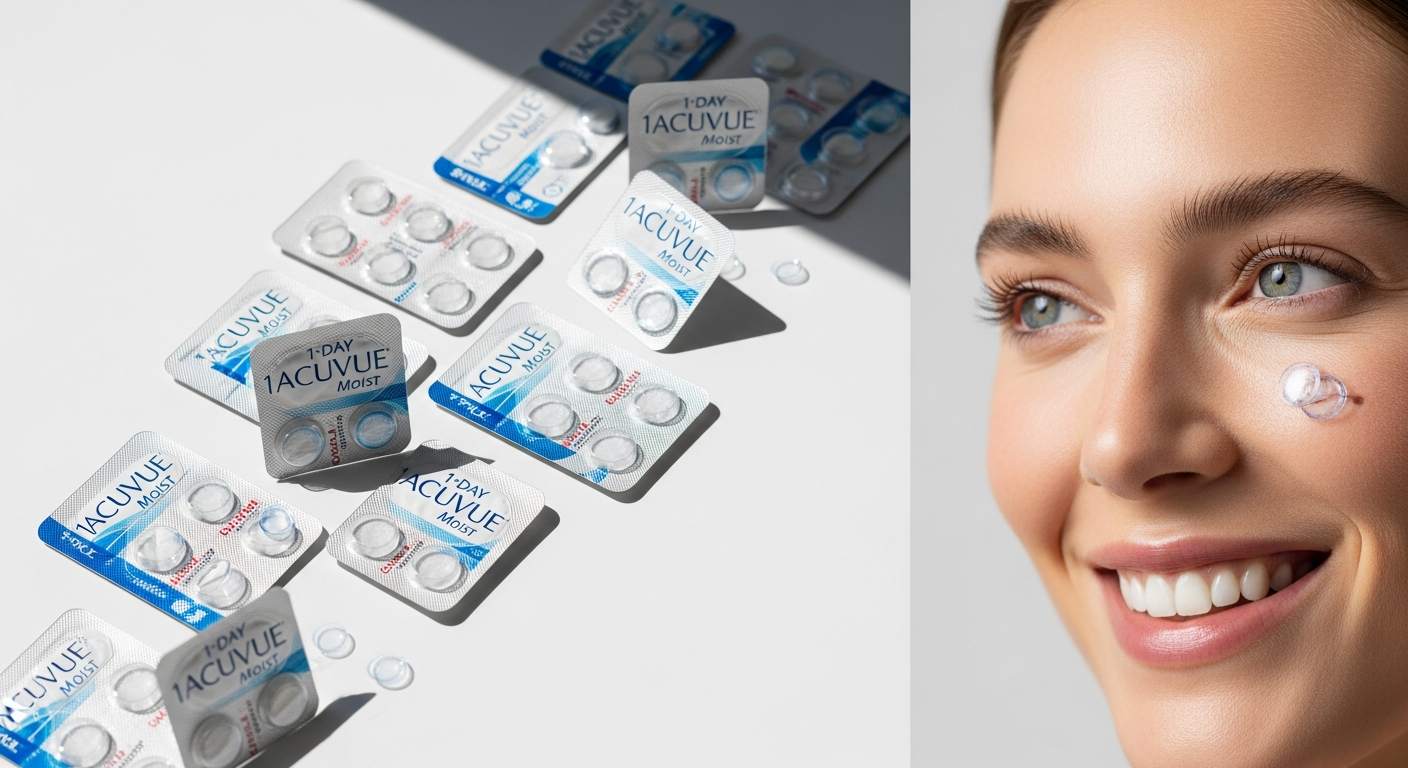
Daily disposable contact lenses aren’t for everyone, but they’re transformative for certain lifestyles. Active professionals and athletes thrive with these lenses because they deliver reliable vision without the friction of nightly cleaning routines. Allergy sufferers experience genuine relief—daily replacement means allergens and deposits never accumulate on the lens surface the way they do with reusable options.
Travelers and business commuters find their greatest advantage in simplicity. No solution bottles to pack, no cases to sanitize, no wondering whether your lens case is actually clean. People with sensitive eyes prone to protein buildup report fewer irritation issues since they’re starting fresh every single day. Those with unpredictable schedules—where consistent lens care routines feel impossible—benefit enormously from the zero-maintenance approach.
First-time contact lens wearers often find daily disposables the perfect entry point. The low barrier to entry removes anxiety about proper care and storage. Fitness enthusiasts appreciate fresh lenses for sweat-intensive activities, knowing each pair is pristine and designed for maximum comfort during demanding workouts.
LACREON® Technology: The Comfort Game-Changer Explained
The real magic behind 1-Day Acuvue Moist lies in LACREON® Technology. Johnson & Johnson engineered a moisture-rich wetting agent directly into the etafilcon A lens material itself. This isn’t a surface coating that gradually wears away—it’s embedded within the lens structure, delivering sustained hydration throughout your entire day.
The 58% water content plays a critical role in this comfort equation. That specific hydration level maintains a protective moisture cushion on the lens surface, keeping eyes feeling fresh even as you push into evening hours. The technology addresses a fundamental problem other lenses face: as the day progresses, traditional lenses dry out as moisture evaporates, leading to discomfort and blurred vision.
LACREON® stands apart from competing wetting technologies in one key way: the moisture agent is integrated, not applied. This means your eyes benefit from consistent hydration from the moment you insert the lens until you remove it. Users across different climates report noticeably fresher eyes compared to conventional daily lenses. People working screen-heavy jobs particularly appreciate how the technology reduces dry eye sensations—a critical advantage when you’re staring at a monitor for eight hours straight.
The protective moisture cushion serves another purpose: it acts as a buffer between your eye and the lens material, reducing irritation and friction. This is especially valuable for people with slightly sensitive eyes who’ve struggled with discomfort in other lens brands.
UV Protection: An Extra Shield You Shouldn’t Ignore
Class 2 UV blocking means 1-Day Acuvue Moist lenses block 95% of UVA rays and 60% of UVB rays. This level of protection is genuinely meaningful—it reduces cumulative eye damage that builds up over a lifetime of sun exposure. The distinction matters because reusable lenses, which sit in storage cases and solutions overnight, gradually degrade and lose UV-blocking effectiveness. Fresh lenses every day mean you’re never wearing compromised protection.
The UV-A versus UV-B distinction is worth understanding. UVB rays are the primary culprits behind acute sunburn and cataracts. UVA penetrates deeper into eye tissue and contributes to age-related macular degeneration. Class 2 protection addresses both, though the higher UVB blocking (60%) is where daily disposables shine compared to lower-tier alternatives.
However, Class 2 protection has important limitations. These lenses aren’t a substitute for UV-blocking sunglasses—they can’t shield your entire eye from peripheral UV exposure the way proper eyewear can. The lenses only cover your pupil and iris; the surrounding skin and sclera remain exposed.
Geographic and seasonal factors significantly influence UV protection needs. High-altitude environments receive 10% more UV exposure per thousand meters of elevation gain. Reflective surfaces like water, sand, and snow amplify UV intensity. Those living in equatorial regions or spending summers at the beach face substantially higher exposure risks than temperate-climate residents.
Daily disposables offer superior UV defense compared to reusable lenses simply because you’re never wearing degraded protection. The moment you begin wearing a monthly or bi-weekly lens, its UV-blocking properties start diminishing. Daily replacement ensures consistent, reliable UV defense every single day.
The Real Cost Breakdown: Daily Disposables vs. Other Options
The price conversation around 1-Day Acuvue Moist requires honest math. A 90-pack retails for approximately $90 to $115, depending on your retailer. That translates to roughly $1.00 to $1.28 per lens. Annual consumption for one eye runs 365 lenses—meaning you’re spending $365 to $467 per eye annually, or $730 to $934 for both eyes.
Compare that to bi-weekly lenses. A six-month supply of bi-weekly lenses typically costs $60 to $80, meaning annual expense sits around $120 to $160 per eye. Monthly lenses are even cheaper: $80 to $120 annually per eye. On the surface, daily disposables appear dramatically more expensive.
The hidden savings shift the equation. Reusable lenses demand solution purchases—multipacks of daily cleaner and storage solution cost roughly $100 to $150 annually per person. You’ll replace lens cases every few months at $15 to $25 each. Over a year, cases add $30 to $50 in expenses. Protein removal tablets and enzyme cleaners for those with sensitivities add another $50 to $100. Suddenly, reusable lens costs climb to $280 to $430 annually when you include all supporting products.
Bulk-buying strategies reduce per-lens costs for daily disposables. Online retailers like Lens.com and Vision Direct frequently offer promotional pricing on 90-pack and larger quantities. Loyalty programs can drop prices another 5-10%. A discerning shopper buying strategically might achieve $0.85 per lens instead of the standard $1.00 rate.
FSA and HSA accounts cover daily disposables, which means you’re paying with pre-tax dollars—an effective 20-37% discount depending on your tax bracket. That subsidy can narrow the cost gap substantially. Insurance coverage for contact lenses varies widely, but many plans offer annual allowances that apply equally to daily and reusable options.
The true cost-per-wear analysis reveals daily disposables aren’t as expensive as they initially appear, particularly when you factor in hidden solution costs and tax advantages. For someone juggling multiple lens purchases and solution bottles throughout the year, switching to daily disposables might cost only slightly more while eliminating the maintenance hassle entirely.
Prescription Availability and Fitting Specifications
1-Day Acuvue Moist lenses come in two base curve options: 8.5 mm and 9.0 mm. Base curve refers to the curvature of your eye’s surface. An incorrect base curve means improper fit—lenses that either sit too tight (causing discomfort and limiting oxygen flow) or too loose (sliding around and falling out). Your optometrist determines your specific base curve during a fitting exam. Most people fall into one of these two categories, though specialty fitting sometimes reveals the need for alternative options.
The standard diameter is 14.2 mm, accommodating most face shapes and eye sizes. Diameter measures the lens’s width when placed on your eye. Unlike base curve variations, the 14.2 mm diameter rarely requires customization for typical wearers.
Spherical correction—the primary focus of 1-Day Acuvue Moist—addresses myopia (nearsightedness) and hyperopia (farsightedness). The lenses are available in a comprehensive range of prescriptions from -12.00 to +8.00 diopters, covering the vast majority of the population. Astigmatism sufferers, however, need to look elsewhere within the Acuvue family. Acuvue Oasys 1-Day with Hydraclear Plus for Astigmatism serves that population instead. Similarly, presbyopia—age-related difficulty focusing on close objects—requires Acuvue Oasys 1-Day Multifocal lenses.
The fitting process matters enormously. A comprehensive eye exam confirms not just your prescription, but also your base curve, whether you have astigmatism or presbyopia, and whether daily disposables are even appropriate for your eye health. Obtaining a valid prescription from a licensed optometrist or ophthalmologist is mandatory before purchasing lenses—whether from online retailers or local offices. That prescription remains valid for one year.
Before purchasing online, you must know three specific details: your prescription (sphere power), your base curve, and your pupillary distance (PD)—the distance between your pupils, which influences lens centering. Some online retailers require this information before allowing purchase; others don’t. Having it beforehand prevents ordering errors.
Irregular corneas or specialty vision needs sometimes make 1-Day Acuvue Moist unsuitable. People with keratoconus, severe dry eye, or other ocular conditions may require specialized fitting or alternative lens types. This is precisely why the professional eye exam and consultation matter. Your optometrist can identify whether standard daily disposables will work for your specific situation or whether alternatives are necessary.
The Environmental Cost: A Honest Look at Daily Disposal
The environmental reality of daily disposables deserves acknowledgment. Each day, a wearer of 1-Day Acuvue Moist disposes of two lenses. Over a year, that’s 730 lenses in the landfill. Contact lens material—etafilcon A—degrades extremely slowly, potentially taking decades or centuries to fully decompose, depending on environmental conditions.
Compare this to monthly lens wearers who dispose of only 24 lenses annually. The waste volume difference is stark. A single daily disposable user generates roughly 30 times more contact lens waste than a monthly lens wearer. Multiply that across millions of daily disposable users globally, and the cumulative environmental impact becomes substantial.
Landfills remain the primary disposal destination for the vast majority of contact lenses. Few recycling programs accept contact lenses due to their small size and mixed material composition. Some specialized recycling initiatives have emerged—CooperVision’s recycling program accepts used lenses and their packaging, but participation rates remain low and geographic limitations apply.
The carbon footprint extends beyond disposal. Manufacturing and shipping daily disposables requires more resource investment per lens than producing monthly lenses. A single year’s supply of daily disposables requires significantly more packaging material, more manufacturing energy, and more transportation carbon compared to monthly alternatives.
The sustainability conversation grows more complex when you consider the environmental cost of reusable lens solutions. Manufacturing and transporting solution bottles, plastic cases, and cleaning chemicals carries its own carbon and chemical burden. Some environmental analyses suggest the total lifecycle impact of reusable lenses is comparable to or potentially worse than daily disposables when you factor in solution production and packaging, though this remains contested in sustainability research.
Future innovations in biodegradable lens technology might resolve this tension. Companies are researching materials that maintain the performance characteristics of current lenses while degrading within reasonable timeframes. These breakthroughs remain years away from commercial viability, but the direction toward more sustainable alternatives is clear.
For environmentally conscious wearers, the honest answer is difficult: daily disposables carry a meaningful waste burden. If environmental responsibility ranks among your top priorities, monthly or bi-weekly lenses represent the better choice despite their other limitations.
Hygiene Advantages That Matter for Eye Health
Daily replacement eliminates an entire category of health risks. Bacterial buildup on reusable lenses is virtually inevitable despite conscientious care routines. Microorganisms colonize lens surfaces, storage cases, and solution bottles, particularly in warm, moist environments. Each time you reinsert a reusable lens, you’re introducing bacteria and biofilms that have accumulated overnight.
Daily disposables sidestep this problem entirely. You’re wearing a sterile, fresh lens from a sealed package every morning. No bacterial accumulation, no biofilm development, no case contamination. The infection risk drops dramatically.
The risk of Acanthamoeba keratitis—a serious parasitic eye infection—is substantially lower with daily disposables. This organism thrives in lens cases and solutions, particularly those exposed to tap water. Daily replacement means no cases, no solutions, no opportunities for Acanthamoeba to establish a foothold. Cases of this infection are relatively rare but devastating when they occur, sometimes resulting in permanent vision loss.
Allergen and deposit accumulation prevention benefits allergy sufferers enormously. Protein, lipid, and mineral deposits gradually coat reusable lenses, particularly in the first two weeks of wear. These deposits trigger allergic responses and reduce oxygen permeability. Allergy sufferers often find that reusable lenses become progressively more uncomfortable as proteins accumulate. Daily replacement eliminates this problem—you’re starting fresh with a clean lens every day.
Eye inflammation drops measurably when switching from reusable to daily disposables. Much of the inflammation associated with contact lens wear stems not from the lenses themselves, but from accumulated deposits and bacterial biofilms. Studies comparing daily disposables to reusable alternatives consistently show lower inflammation markers in daily disposable wearers.
Healthcare professionals routinely recommend daily disposables for immune-compromised individuals. People with HIV/AIDS, undergoing chemotherapy, or taking immunosuppressant medications face elevated risks from lens-related infections. The superior hygiene profile of daily disposables makes them the preferred choice for this population.
Travel and non-sterile environments present specific hygiene challenges for reusable lens wearers. Airport bathrooms, international hotels, and camping trips rarely offer ideal conditions for lens care. Contaminated tap water can introduce dangerous organisms into your lens case. Daily disposables eliminate these concerns—you need nothing but clean hands and the lenses themselves.
Potential Drawbacks and Who Should Reconsider
Despite their advantages, 1-Day Acuvue Moist lenses aren’t universally ideal. The long-term cost implications deserve serious consideration for budget-conscious consumers. If you’re spending $800 annually on lenses versus $200 on monthly alternatives, that $600 annual difference compounds over years. For someone on a tight budget, daily disposables might represent an unaffordable luxury.
Environmental guilt weighs heavily on eco-conscious users. The waste burden of daily disposal conflicts with sustainability values. Some wearers find this tension unbearable and prefer accepting other lens limitations in exchange for reduced environmental impact.
Limited prescription options for astigmatism and presbyopia represent genuine restrictions. If you have astigmatism, you must purchase Acuvue Oasys 1-Day for Astigmatism instead of the standard Moist formula. If you’re over 40 and experiencing presbyopia, you need Acuvue Oasys 1-Day Multifocal. The Moist line simply doesn’t address these vision needs—it’s not an option if you have these conditions.
Irregular corneas or specialty vision needs sometimes make standard daily disposables unsuitable. Keratoconus, severe dry eye syndrome, or post-surgical corneal irregularities might require specialty lens fitting or alternative materials. Your optometrist can identify these situations, but they eliminate 1-Day Acuvue Moist as a viable option for affected individuals.
First-time contact lens wearers occasionally struggle with the learning curve. Inserting and removing lenses requires developing dexterity and confidence. Some people take weeks to become comfortable with the process. Handling challenges become particularly problematic for people with arthritis, Parkinson’s disease, or other conditions affecting fine motor control. In these cases, switching to daily disposables might help due to their simplicity, but the insertion/removal difficulty remains regardless.
Certain climate conditions trigger dry eye symptoms in susceptible individuals. Dry climates, high altitudes, or particularly cold weather can intensify discomfort even with LACREON® Technology’s moisture advantage. People prone to severe dry eye might find daily disposables insufficient and require additional interventions like rewetting drops or alternative lens materials.
Making the Switch: Practical Steps to Get Started
Begin with a comprehensive eye exam from a licensed optometrist or ophthalmologist. This exam confirms your prescription, determines your base curve, checks for astigmatism or presbyopia, and evaluates overall eye health. You’ll receive a written prescription valid for one year. Request a trial pair of 1-Day Acuvue Moist during this visit—many offices provide samples so you can test the lenses before committing to a full box.
Understanding your base curve and diameter requirements prevents ordering errors. Ask your eye care provider to write down your specific base curve (8.5 mm or 9.0 mm) and confirm that standard 14.2 mm diameter works for you. Jot down your complete prescription details: sphere power, base curve, diameter, and PD (pupillary distance). Keep this information handy when shopping online.
Choosing between online retailers and local optometry offices involves weighing convenience against service. Local offices provide immediate availability, professional support, and sometimes trial lenses. Online retailers like Lens.com, Vision Direct, LensDirect, and Lensonline.in offer competitive pricing and automatic reorder convenience. Many people find hybrid approaches work best—purchasing trials locally, then switching to online for routine reorders once they confirm fit and comfort.
Comparing prices across major platforms reveals significant savings opportunities. Check Lens.com, Vision Direct, and other retailers before committing. Sign up for promotional email lists to catch sale announcements. Bulk pricing often makes 90-packs far more economical than smaller quantities. Factor in shipping costs and any promotional codes before finalizing your decision.
Setting up automatic reorders prevents the frustration of running out of lenses mid-week. Most online retailers offer subscription services that deliver fresh supplies on your preferred schedule. This convenience justifies slightly higher pricing compared to one-time purchases.
Learning proper insertion and removal techniques prevents eye trauma and maximizes comfort. Your eye care provider will demonstrate these techniques during your fitting appointment. Practice inserting and removing lenses with their supervision before leaving the office. Initial awkwardness is normal; proficiency develops within days of consistent practice.
Building a backup supply for emergencies and travel situations proves invaluable. When you discover lenses work perfectly for you, immediately order a larger quantity for backup. Keep a spare box in your desk drawer, car, or travel bag. This prevents scrambling when you unexpectedly run out.
Your Eyes Deserve the Upgrade
The decision between daily disposables and traditional reusable lenses ultimately reflects your personal priorities. 1-Day Acuvue Moist delivers genuine comfort through LACREON® Technology, provides meaningful UV protection, and eliminates the daily maintenance burden that many contact lens wearers find genuinely exhausting. For active professionals, allergy sufferers, and anyone prioritizing simplicity and hygiene, they’re genuinely compelling.
That said, they’re not universally ideal. Budget-conscious individuals will notice the higher annual costs despite hidden savings from eliminated solution purchases. Environmentally committed wearers will struggle with the disposal impact and waste generation. If astigmatism or multifocal correction matters for your vision, you’ll need different Acuvue product lines.
Your next move is straightforward: schedule an eye exam with your optometrist to confirm your prescription and discuss whether daily disposables align with your specific lifestyle. Request a trial pair of 1-Day Acuvue Moist to experience the comfort and convenience firsthand. Many retailers offer competitive pricing on starter packs, making it an affordable way to test whether these lenses truly match your needs. Your eyes will thank you for making a thoughtful, informed decision.
Leave a Reply