Your 50cc scooter feels sluggish. The acceleration that once delivered a rush of adrenaline has faded into a disappointing crawl, leaving you wondering if your beloved ride has seen better days. Thousands of scooter riders face this exact frustration, watching their machines lose power without understanding why.
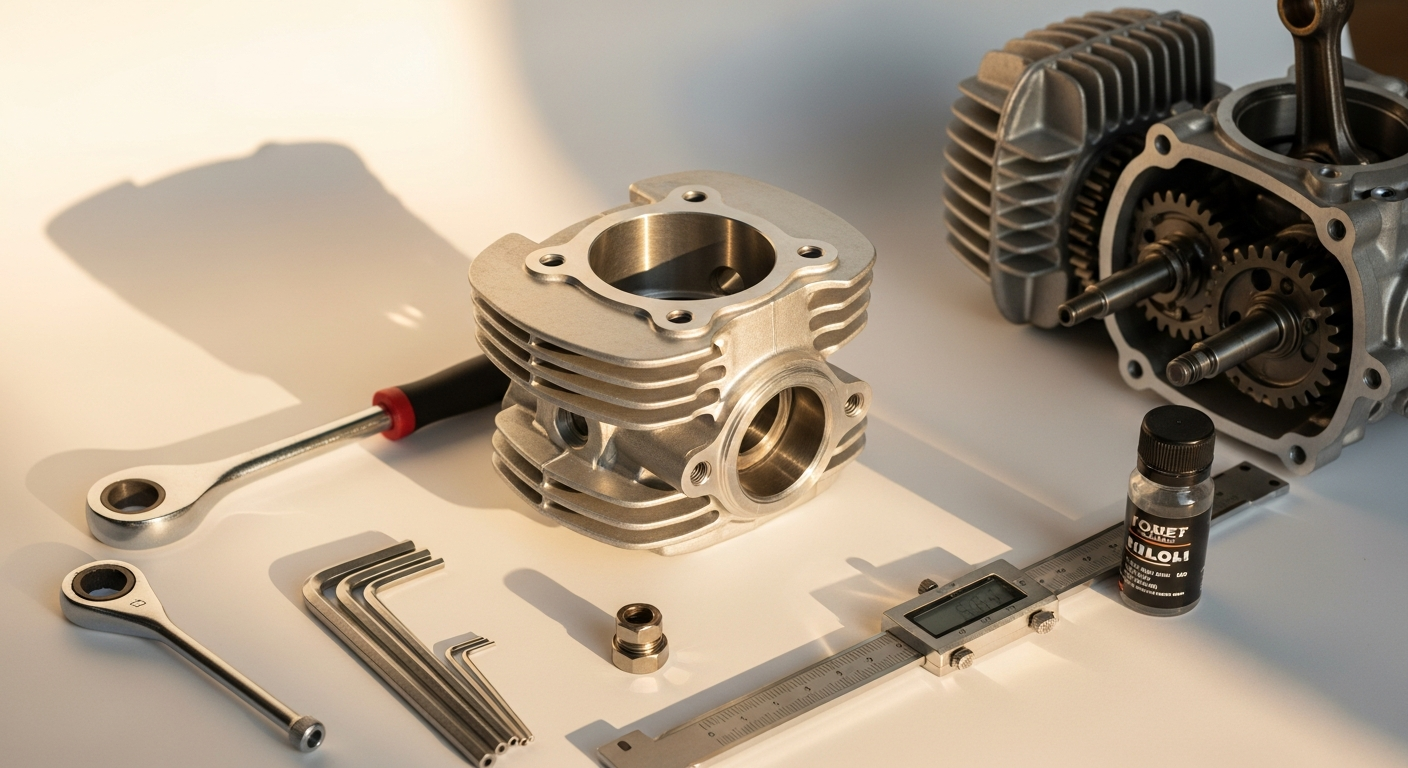
A worn-out cylinder could be the hidden culprit behind this decline in performance. The good news? A performance cylinder kit upgrade can resurrect that thrilling acceleration without requiring a complete engine overhaul or devastating your wallet. Cylinder kits form the backbone of engine restoration and enhancement for two-wheel enthusiasts everywhere, containing everything necessary: the cylinder itself, piston, rings, gaskets, and precision hardware all working in concert.
Explore performance cylinder kits at La-Bécanerie.com to transform your scooter's capabilities.
This guide walks through performance upgrades, material specifications, compatibility considerations, and real-world installation insights so you understand exactly what separates quality cylinder kits from mediocre alternatives.
What Makes a 50cc Cylinder Kit a Performance Game-Changer
How Cylinder Condition Directly Impacts Engine Efficiency and Throttle Response
Your cylinder's internal condition determines everything about how your engine breathes and responds to throttle input. A worn cylinder develops scoring and pitting along the walls, compromising the seal between piston rings and cylinder bore. This loss of compression means fuel doesn't ignite with full force, and power delivery becomes lazy and unpredictable. When you crack the throttle, instead of immediate acceleration, you feel a hesitant delay as the engine struggles to build pressure. Replacing a compromised cylinder with a fresh kit restores that tight seal, instantly sharpening throttle response and making your scooter feel alive again.
The Relationship Between Bore Size, Compression Ratio, and Horsepower Gains
Bore size—typically around 40mm for standard 50cc kits—determines the volume of the combustion chamber and directly influences how much air and fuel can be packed into each cylinder. A larger bore doesn't mean simply punching a bigger hole; it requires precision engineering to maintain proper compression ratios. Compression ratio measures how much the fuel mixture gets squeezed before ignition, and this ratio fundamentally affects horsepower output. Higher compression ratios create more violent combustion, generating greater force against the piston. Quality 50cc cylinder kits optimize this compression ratio for standard fuel while maintaining reliability. The result is measurable horsepower gains—often 15-25% improvements in raw power—without requiring premium racing fuel or exotic modifications.
Why Displacement and Porting Improvements Matter for Acceleration
While this guide focuses on 50cc kits, understanding displacement helps clarify why kit quality matters. Porting refers to the shape and size of the pathways through which fuel mixture enters the cylinder and exhaust gases escape. Factory cylinders feature conservative porting designed for longevity and emissions compliance, not performance. Enhanced porting in quality upgrade kits smooths these pathways, reducing turbulence and allowing fuel mixture to flow more freely into the combustion chamber. Exhaust gases exit faster during the power stroke, creating better cylinder scavenging. The combined effect means your engine breathes more efficiently, extracting more power from each fuel charge and delivering quicker acceleration off the line.
Real-World Performance Metrics: Typical Speed and Acceleration Improvements
Stock 50cc scooters typically achieve top speeds between 40-50 km/h with acceleration that takes several seconds to reach cruising speed. A quality cylinder kit upgrade can push top speeds to 55-65 km/h while reducing acceleration times noticeably. Zero-to-40 km/h acceleration improves by roughly 1-2 seconds, which translates to tangible differences during traffic merging and hill climbing. These aren't fictional numbers—they reflect real-world testing by riders using quality kits from reputable sources. Performance varies based on overall bike condition, carburetor tuning, and exhaust modifications, but the cylinder kit forms the foundation that makes other upgrades worthwhile.
Common Misconceptions About What a Cylinder Kit Can and Cannot Achieve
Many riders expect a cylinder kit to magically transform their scooter into a racing machine. Reality demands more nuance. A quality kit dramatically improves performance within the 50cc platform but won't turn your scooter into a 125cc bike. It won't solve carburetor tuning problems, worn bearings, or transmission issues. It won't compensate for poor maintenance or neglected chain lubrication. What it will do is maximize the potential of your existing engine platform, restoring lost power and responsiveness. Think of it as revealing your scooter's true capability, not creating capability that never existed. Riders who install a kit expecting miraculous results while ignoring other maintenance often find disappointment. Those who view it as one component of overall bike health consistently report satisfaction.
Engine Compatibility Across Popular 50cc Platforms
50cc scooter engines come from various manufacturers—Minarelli, Piaggio, and Peugeot among the most common. A cylinder kit designed for a Minarelli engine won't simply bolt onto a Piaggio without modification, and forcing incompatible parts creates reliability nightmares. Quality retailers like La-Bécanerie.com provide detailed compatibility filters and specifications for each kit, clearly indicating which engine platforms accept specific cylinder kits. This compatibility research matters tremendously because engine deck heights, bolt patterns, and cooling jacket designs vary between manufacturers. Spending time identifying your exact engine model before purchasing a kit prevents costly mistakes and ensures the parts fit precisely without modification.
Decoding Cylinder Kit Materials and Construction Quality
Cast Iron vs. Aluminum Cylinder Bodies: Durability, Heat Dissipation, and Longevity
Cast iron cylinders represented the original standard for two-wheel engines, offering excellent durability and straightforward manufacturing. They handle sustained high temperatures reliably and resist wear from piston rings effectively. The tradeoff comes in heat dissipation—cast iron doesn't shed excess heat as efficiently as aluminum, meaning engine temperatures run higher during sustained performance. Aluminum cylinder bodies conduct heat away from the combustion chamber more effectively, keeping engine temperatures lower and enabling sustained high-performance riding. Aluminum also weighs less, contributing to improved acceleration and handling. However, pure aluminum scratches and wears more easily than cast iron, requiring protective coatings to ensure longevity. This is where Nicasil coating technology enters the equation.
Nicasil Coating Technology and Why It Reduces Friction and Wear
Nicasil represents a silicon carbide composite plating applied to aluminum cylinder walls through electrodeposition. This microscopic coating combines extreme hardness with low friction characteristics, creating a surface superior to raw aluminum or even cast iron. When piston rings slide against a Nicasil-coated bore, friction drops significantly compared to uncoated surfaces, reducing heat generation and wear rates. Engine efficiency improves because less energy gets wasted overcoming friction. Over the lifespan of your cylinder kit, a Nicasil coating extends service life considerably while maintaining consistent performance. Quality cylinder kits from La-Bécanerie feature Nicasil-coated aluminum cylinders specifically because this combination delivers both durability and performance. Budget kits often skip this coating to reduce manufacturing costs, resulting in accelerated wear and performance degradation.
Piston Ring Specifications and Their Role in Compression and Seal Integrity
Piston rings perform a critical function: they seal the gap between piston and cylinder wall, preventing combustion gases from leaking into the crankcase while controlling oil consumption. A complete cylinder kit includes precision-engineered piston rings matched exactly to the bore diameter and finish. Ring material composition, cross-section thickness, and gap spacing all affect performance. Quality rings maintain tight sealing across varying engine speeds and temperatures, preserving compression throughout the kit's service life. Poor-quality rings develop excessive clearance quickly, allowing blow-by (combustion gas leakage) that bleeds power and increases oil consumption. The piston itself deserves equal attention—precision-cast aluminum with proper pin bore tolerances ensures smooth operation and longevity.
Gasket Set Composition and Why Complete Kits Prevent Mid-Ride Failures
Gaskets seal joints between components—cylinder head to cylinder body, cylinder body to crankcase. A complete cylinder kit includes gaskets for all these interfaces, ensuring comprehensive sealing. Gasket materials vary: some use paper compounds, others employ graphite-impregnated elastomers, and premium kits feature multi-layer steel gaskets. The gasket composition must match the specific pressure and temperature demands of your engine. Riders who purchase a cylinder and piston separately, then reuse old gaskets, frequently experience catastrophic failures—oil leaks, coolant seepage, or compression loss mid-ride. Complete kits eliminate this gamble by providing matched gaskets engineered specifically for the cylinder assembly. This comprehensive approach transforms a cylinder swap from a gamble into a reliable restoration.
OEM Quality Standards Versus Aftermarket Alternatives
Original Equipment Manufacturer (OEM) kits represent products engineered and manufactured by the same company that produced your scooter's engine. These kits meet exact specifications and include genuine parts with full warranty coverage. OEM quality demands strict tolerances, premium materials, and exhaustive testing before release. Aftermarket alternatives from quality manufacturers offer excellent value, often approaching OEM performance at substantially lower prices. However, the aftermarket spectrum ranges widely—budget alternatives sacrifice material quality and precision engineering to hit aggressive price points. Mid-range aftermarket kits from established brands often deliver 90-95% of OEM performance at 70-80% of the cost. Entry-level budget kits might achieve acceptable results for casual riders comfortable with shorter service intervals and potentially earlier replacement needs.
How Material Choices Affect Performance Ceiling and Reliability Over Time
The materials your cylinder kit uses fundamentally establish its performance ceiling and longevity trajectory. A Nicasil-coated aluminum cylinder with premium piston rings and quality gaskets can deliver consistent power for thousands of kilometers while maintaining tight tolerances. A budget cast-iron cylinder with basic rings might run acceptably for 500-1000 kilometers before wear becomes noticeable. Material choices directly determine how long your upgrade investment pays dividends. Higher-quality materials initially cost more but amortize across extended service life, ultimately proving more economical. Additionally, quality materials enable higher sustained performance levels—a premium kit can handle aggressive riding and repeated acceleration runs without losing power, while budget alternatives become increasingly sluggish as wear accumulates.
Elevate Your Ride: Making the Cylinder Kit Decision
A 50cc scooter cylinder kit performance upgrade isn't just a mechanical swap—it represents a commitment to reclaiming the performance and responsiveness your bike deserves. Quality matters tremendously here. Materials like Nicasil-coated aluminum, precision-engineered pistons, and complete gasket sets separate kits that deliver lasting power from those that disappoint after a few hundred miles.
La-Bécanerie's extensive catalog provides genuine choice. Entry-level replacements serve budget-conscious riders needing basic restoration. Mid-range performance options appeal to enthusiasts seeking tangible improvements without premium pricing. Premium OEM-quality kits satisfy those demanding absolute reliability and maximum performance.
Start by identifying your exact engine model—this single step prevents costly compatibility mistakes. Review La-Bécanerie's compatibility filters and compare kits within your budget range. Read customer feedback carefully, examine warranty terms, then commit to proper installation and follow break-in procedures religiously. Your next ride could feel like a completely different machine.
Visit La-Bécanerie.com today and discover the cylinder kit that matches your performance ambitions.
Leave a Reply