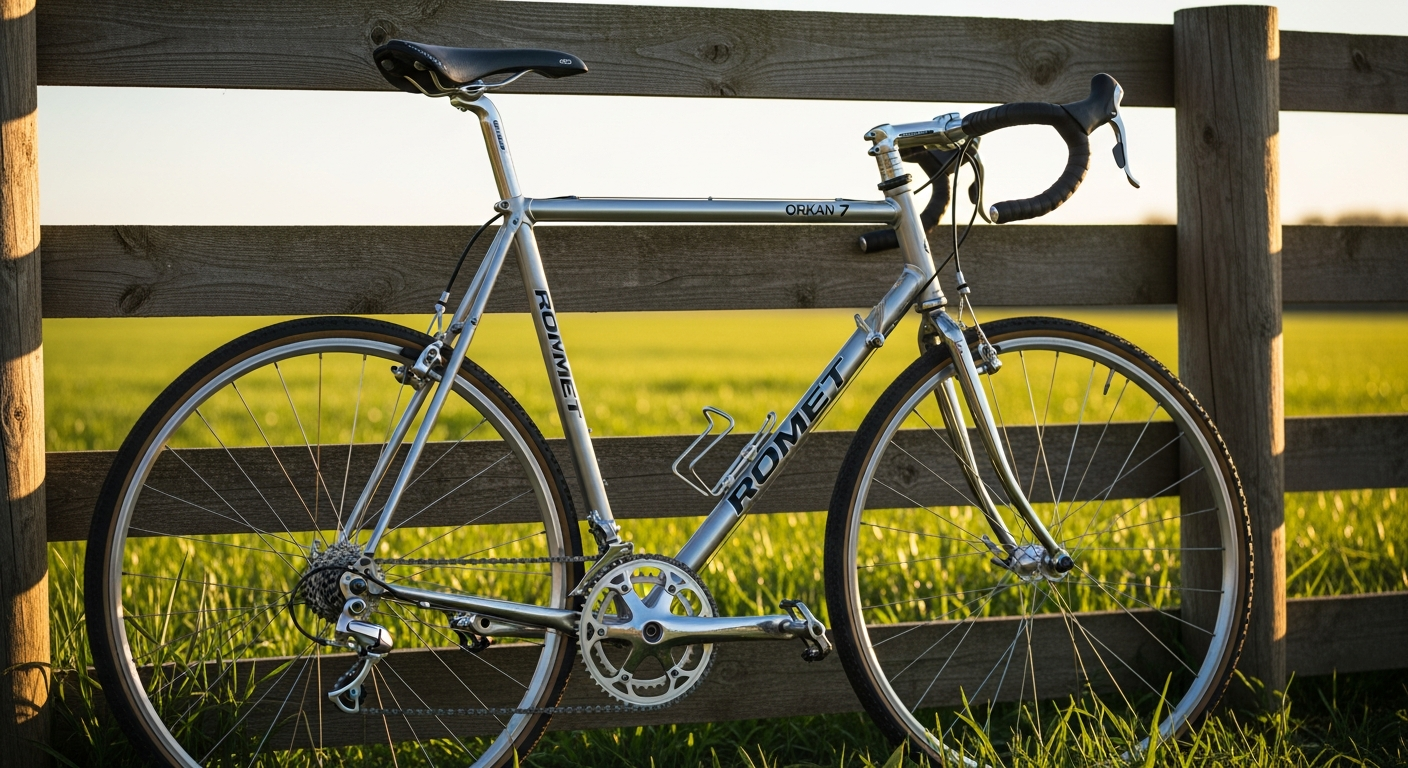
More than 60% of cyclists today are abandoning the traditional approach of owning separate bikes for different terrains. Instead, they’re investing in one versatile machine that handles it all. The reason is simple: storage space is precious, budgets are finite, and most riders don’t need specialized equipment for every situation. What they need is a bike that works across multiple environments without compromise.
The Romet Orkan 7 CS represents a Polish cycling brand’s commitment to this philosophy. Rather than forcing riders to choose between comfort, durability, and affordability, Romet engineered a cross bike that delivers all three. The integration of Shimano’s latest CUES groupset brings professional-grade components to the entry-to-mid-level market, a move that fundamentally changes what you get for your money. This guide unpacks the Orkan 7 CS from every angle—frame construction, suspension system, drivetrain reliability, and geometry—so you understand exactly why its price-to-performance ratio stands apart from the competition.
Discover the Romet Orkan 7 CS and transform how you ride.
Why Urban Cyclists Are Choosing the Romet Orkan 7 CS Over Single-Purpose Bikes
The Rise of Hybrid Commuting: Why One Bike for Multiple Purposes Saves Money and Storage Space
The economics of bike ownership have shifted dramatically. Purchasing separate bikes for city commuting, weekend gravel exploration, and occasional trail riding means multiplying costs, maintenance routines, and storage headaches. A cyclist maintaining three bikes spends three times on upkeep, repairs, and seasonal storage. The alternative—a single versatile machine—eliminates redundancy while expanding capability.
Urban cyclists specifically benefit from this consolidation. Your weekday commute might follow paved streets and bike lanes, but a few evenings per month might involve gravel parks or unpaved shortcuts. A dedicated road bike struggles on gravel; a dedicated mountain bike wastes energy on pavement. The cross bike occupies the middle ground, performing capably across both scenarios while demanding only one maintenance schedule and one storage footprint.
How the Orkan 7 CS Bridges the Gap Between Road Efficiency and Trail Capability
The Romet Orkan 7 CS achieves this balance through deliberate engineering choices. Its 6061 aluminum frame combines stiffness with a geometry that leans slightly toward trail comfort rather than pure road speed. The 28-inch wheels and 42mm tires provide rolling efficiency on pavement while offering enough volume to absorb impacts on rougher surfaces. The front suspension fork adds compliance without the weight penalty of a full-suspension mountain bike.
Gear range matters too. The 2×11 drivetrain configuration covers terrain from smooth asphalt to steep climbing, eliminating the single-speed frustration that plagues purist road bikes on varied terrain. Riders maintain cadence whether grinding uphill or cruising flats—a practical advantage that pure-road geometry sacrifices.
Real-World Scenarios Where This Cross Bike Excels
City streets present the Orkan 7 CS’s core strength. Commuters navigate traffic efficiently while the hydraulic disc brakes provide reliable stopping power regardless of weather. The geometry keeps riders upright enough for visibility and control, yet forward enough to maintain momentum. Fender and rack mounting points transform it into a practical commute platform without heavy modifications.
Gravel paths reveal a secondary advantage. Weekend riders tackle unpaved county roads, canal towpaths, and forest trails with genuine capability. The suspension soaks up washboard texture; the tires grip loose surfaces. A road bike would feel fragile; a mountain bike would feel sluggish. The Orkan 7 CS hits the efficiency sweet spot.
Light single-track riding shows the bike’s limits honestly. It handles smooth trails confidently but struggles with technical features, large rocks, or steep drop-offs. This is intentional design—the Orkan 7 CS excels at 90% of most cyclists’ actual riding, rather than claiming false mastery of extreme terrain.
Frame Architecture & Durability: The 6061 Aluminum Foundation
6061 Aluminum Alloy Specifications and Why This Material Is Ideal for Cross Bikes
6061 aluminum represents the sweet spot between cost, weight, and durability in bike manufacturing. This specific alloy contains magnesium and silicon, creating a material that resists corrosion, withstands repeated stress cycles, and responds predictably to welding. Manufacturers choose 6061 for production bikes precisely because it balances performance with manufacturing scalability.
For cross bikes specifically, aluminum offers advantages over steel and carbon fiber. It’s lighter than steel without demanding the extreme care that carbon fiber requires. Unlike carbon, aluminum doesn’t suffer catastrophic failure from cracks—it flexes and absorbs energy. The material cost remains accessible for mid-range pricing, avoiding the premium associated with lightweight carbon layups.
Lightweight Yet Rigid Frame Design That Minimizes Energy Loss During Pedaling
The Orkan 7 CS frame geometry prioritizes efficient power transfer. Romet engineers designed the frame tubes to minimize flex in the bottom bracket and rear triangle—the areas where pedaling forces concentrate. This rigidity means more of your leg power translates to forward motion rather than dissipating through frame flex.
Weight distribution matters equally. The frame sits in the 2–2.3 kg range, light enough to feel responsive during acceleration yet heavy enough to resist the cost premiums associated with ultra-light designs. Riders notice the difference between a 2.1 kg frame and a 2.8 kg frame in climbing performance; the jump from 2.1 kg to 1.8 kg delivers diminishing returns while multiplying cost.
Lifetime Warranty Coverage on Newer Models (2020+) and What This Reveals About Romet’s Confidence
Romet’s lifetime warranty on aluminum frames for 2020+ models signals genuine durability confidence. Manufacturers don’t offer lifetime warranties on components they doubt. This coverage extends to the original owner for the bike’s lifetime, covering frame defects from manufacturing or material failure—though not damage from crashes or abuse.
This warranty reflects Romet’s manufacturing standards and material selection. The company absorbs long-term risk, betting that their 6061 aluminum frames will outlast most cyclists’ ownership periods. For buyers, it removes financial uncertainty around frame failure and signals engineering integrity.
Shimano CUES Drivetrain: Next-Generation Gear Shifting Technology
What the Shimano CUES Groupset Is and How It Differs From Previous Shimano Systems
Shimano’s CUES system represents a generational shift in drivetrain design. Developed specifically for entry-to-mid-level bikes, CUES focuses on reliability, durability, and ease of maintenance rather than weight savings or exotic materials. The system uses sealed bearing cartridges, stainless steel components in critical areas, and simplified cable routing that reduces friction and wear.
Previous Shimano systems—particularly lower-tier Altus and Acera groups—cut costs by using exposed pivot points and simpler bearing designs. CUES seals these vulnerabilities, dramatically extending component life. Shift feel improves through refined cable indexing; reliability increases through environmental protection. Shimano’s engineering team essentially took 20 years of mid-range drivetrain feedback and engineered it into a single coherent system.
2×11 Drivetrain Configuration and Gear Range Coverage for Various Riding Conditions
The Orkan 7 CS D features a 2×11 setup—two chainrings up front paired with an 11-speed cassette. This configuration provides broad gear coverage without excessive weight or complexity. The front derailleur remains simple and robust; the rear cassette handles most terrain variation.
Gear ratios span from roughly 24 teeth (small chainring) to 34 teeth (large chainring) on the front, combined with an 11-32 cassette typically found on this bike. This coverage handles steep climbing grades (the small chainring with large rear cog), flat-ground cruising (large chainring with smaller rear cogs), and everything between. Recreational riders rarely exhaust the gear range available; competitive or technical riders might want a 1x drivetrain for simplicity, but that’s a specialist preference.
Three Times Longer Component Lifespan Compared to Older Shimano Systems
Shimano’s testing laboratories documented that CUES components last approximately three times longer than previous Altus/Acera generation systems when subjected to identical wear testing. This translates to real-world advantages: cassettes maintain smooth shifting longer, derailleurs require less frequent adjustment, cables resist fraying, and pivot points resist corrosion.
For the average commuter riding 2,000–3,000 kilometers annually, this longevity means 10+ years of reliable shifting before major drivetrain service becomes necessary. Casual riders might own the bike for its entire functional life without replacing the drivetrain at all—a dramatic shift from older entry-level systems that typically required cassette replacement around the 5-year mark.
Experience Shimano CUES reliability on the Romet Orkan 7 CS today.
Suspension & Comfort: The Suntour NEX E-25 Fork and Ergonomic Setup
Suntour NEX E-25 NLO Suspension Fork Specifications and 75mm Travel Capability
The Orkan 7 CS incorporates a Suntour NEX E-25 NLO front fork with 75mm of travel. This moderate suspension amount accommodates small to medium obstacles—urban curb drops, root networks, loose surfaces—without the weight and complexity of deeper-travel mountain bike forks. The “E-25” designation refers to a sealed cartridge design with elastomer springs, a proven technology that balances stiffness with progressive impact absorption.
Seventy-five millimeters falls in the ideal sweet spot for cross bikes. More travel adds weight and fork complexity; less travel reduces effectiveness on rough terrain. Riders quickly adapt to this amount—enough to notice impact reduction on rough surfaces, not so much that the bike feels wallowy on pavement.
How Front Suspension Improves Shock Absorption on Rough Terrain and Urban Obstacles
Suspension forks separate wheel movement from frame movement, allowing the wheel to absorb impacts while the frame and rider continue on a smoother trajectory. On city streets, this means potholes, manhole covers, and curbs don’t violently transfer through the frame to the rider. Wrists and shoulders experience measurably less fatigue on longer commutes.
Gravel and trail riding benefits even more significantly. Technical terrain becomes manageable rather than punishing. Wheel feedback improves because the wheel maintains ground contact through small variations; suspension prevents the frame from lifting away from obstacles. Riders instinctively trust the front wheel more, enabling faster descents and more confident cornering.
Selle Royal Vivo Saddle Design and Ergonomic Benefits for Extended Rides
The Selle Royal Vivo represents thoughtful comfort engineering rather than luxury padding. This Italian saddle company designed the Vivo for upright riding positions with moderate padding that resists compression while maintaining pressure distribution. The cutout in the center reduces pressure on sensitive areas during extended rides.
Comfort extends from geometry as much as padding. The Orkan 7 CS frame geometry places riders in a moderately upright position—neither aggressive road bike positioning nor fully upright commuter angles. This geometry suits varied riding: visibility remains excellent for traffic, yet forward lean engages core muscles for efficiency. The Vivo saddle complements this positioning, preventing the pressure points that aggressive saddles create on upright bikes.
Braking Power & Weather Performance: Hydraulic Disc Brake System
Shimano BL-MT401/BR-MT410 Hydraulic Disc Brake Specifications
The Romet Orkan 7 CS employs Shimano’s hydraulic disc brake system—specifically BL-MT401 levers paired with BR-MT410 calipers. This combination represents Shimano’s entry-to-mid-level hydraulic offering, engineered for reliable stopping power without premium pricing. Hydraulic systems use mineral oil pressurization rather than cable tension, eliminating the friction and stretch inherent in mechanical brakes.
The MT410 caliper features a two-piston design with sealed pads and pistons that resist contamination. Pad material balances stopping power with modulation—brakes should bite decisively without grabbing unpredictably. Rotor sizes typically run 160mm front and 160mm rear, adequate for a cross bike’s weight and typical speeds.
Consistent Stopping Power in Rain, Mud, and Dry Conditions
Hydraulic systems fundamentally outperform rim brakes (and mechanical disc brakes) in wet conditions. Water slides off hydraulic pads and calipers without degrading braking power; moisture actually improves modulation on hydraulic systems. Muddy commutes? Rainy trail rides? Fording through puddles? These conditions barely impact hydraulic performance.
Dry-condition stopping remains excellent. The mineral oil provides immediate power transfer from lever to caliper, delivering confident braking with minimal hand effort. Riders modulate deceleration easily, feeling the brake feedback through the lever. Contrast this to rim brakes, where wet rims require excessive lever pressure, or mechanical disc brakes, where cable stretch introduces uncertainty.
Maintenance and Modulation Advantages Over Rim Brakes
Hydraulic brakes require genuine maintenance only when seals fail—typically many years into ownership. Cable-based mechanical systems demand routine adjustments as cables stretch and pads wear. Hydraulic systems self-adjust as pads wear, maintaining consistent lever feel and braking power.
Modulation—the ability to precisely control braking force—favors hydraulic systems significantly. The direct hydraulic pressure transfer creates fine control over deceleration rate. Riders develop feel for brake modulation within weeks, intuitively controlling speed without grabbing or skidding.
Wheel & Tire Setup: 28-Inch Wheels and Schwalbe Marathon Performance Tires
28-Inch Wheel Diameter and What This Means for Speed, Comfort, and Terrain Capability
The Orkan 7 CS uses 28-inch wheels—a 700c diameter in road bike terminology. This size represents the balance point between rolling speed and terrain capability. Larger wheels maintain momentum better than smaller wheels, especially on pavement and packed surfaces. The 28-inch diameter converts to a circumference of approximately 2.1 meters, meaning fewer pedal revolutions cover greater distance.
Comfort advantages emerge from wheel diameter as well. Larger wheels ride over small obstacles with less vertical displacement. A 28-inch wheel encountering a small rock deflects differently than a 26-inch wheel, translating to subtly smoother riding feel. On rough terrain, this translates to less jarring and more natural wheel behavior.
Schwalbe Marathon Performance 700x42C Tire Specifications and Tread Design
Schwalbe Marathon tires focus on durability and efficiency rather than maximum off-road grip. The 42mm width provides volume for comfort and puncture protection without sacrificing rolling resistance. The tread pattern features a center ridge for rolling efficiency on smooth surfaces, with slight shoulder knobs for lateral grip on loose surfaces.
The Marathon brand specifically emphasizes puncture resistance. Kevlar reinforcement, thick rubber compounds, and conservative tread design extend tire life dramatically. Commuters report 5,000+ kilometer life from a single set—exceptional durability for entry-level tires. This translates to fewer flats during urban commuting and lower long-term cost of ownership.
Puncture Resistance and Durability for Commuting on Urban Streets
Urban commuting introduces hazards that trail riding avoids: glass fragments, sharp metal, thorns from landscaping, and road debris. The Marathon Performance construction explicitly addresses these risks. Kevlar belt reinforcement protects against sharp objects penetrating to the tube; thick rubber sidewalls resist pinch flats from curb impacts.
Durability extends tire life, reducing replacement frequency and cost. Over a bike’s 10-year ownership period, durable tires justify their slightly higher cost through reduced replacements and lower total expense. For commuters riding year-round, this durability advantage outweighs the minor rolling resistance penalty compared to performance-oriented gravel tires.
Pricing & Value Proposition: Why $780 USD Represents Exceptional Value
Base Price Around 3149 PLN (Approximately $780 USD) and Regional Pricing Variations
The Romet Orkan 7 CS lists around 3149 PLN in Poland—roughly $780 USD at typical exchange rates. Regional variations exist: Eastern European pricing tends lower; Western European or North American pricing climbs 15–25% due to distribution costs and market positioning. Regardless of region, the Orkan 7 CS consistently undercuts competing cross bikes from mainstream manufacturers by 20–35%.
This pricing exists because Romet manufactures regionally rather than importing globally, avoiding container shipping and international distribution markup. The company’s Polish manufacturing base translates to lower labor costs without sacrificing quality—a genuine advantage that translates directly to consumer savings.
Component-by-Component Cost Breakdown Compared to Competitors
Competitor analysis reveals the value proposition clearly. A similarly equipped Trek FX series bike—comparable geometry, aluminum frame, front suspension, hydraulic disc brakes—typically costs $950–$1,100. A Specialized Crosstrail equivalent runs $980–$1,150. A Cube Curve Allroad costs approximately $850–$920. The Orkan 7 CS undershoots all of these while matching or exceeding component specifications.
Breaking down costs: the Shimano CUES drivetrain alone typically costs $120–$150 in retail parts pricing. The Suntour NEX fork contributes $80–$100 in value. Shimano hydraulic brakes represent $70–$90. Frame and labor comprise the remaining value. The bill-of-materials cost for the Orkan 7 CS actually suggests healthy profit margins for Romet at the $780 price point—meaning the company isn’t subsidizing the price, rather achieving genuine efficiency advantages.
What You’d Pay for Equivalent Shimano CUES Components Separately
Building a comparable bike from components separately highlights the savings. A 6061 aluminum frameset runs $300–$450. Complete drivetrain (crankset, derailleurs, shifters, cassette) using CUES components costs $200–$280. Hydraulic brake system adds $120–$160. Wheels and tires contribute $180–$250. Fork, saddle, and finishing components add another $150–$200. Total build cost reaches $1,150–$1,540 before assembly labor.
The Orkan 7 CS delivers all of this for $780, representing approximately 50% savings compared to component purchasing plus assembly labor. Buyers essentially receive the frame and labor for free when comparing to separate component costs.
Real-World Performance: Where the Orkan 7 CS Excels and Its Limitations
Urban Commuting Performance: Speed, Comfort, and Practicality
The Orkan 7 CS dominates urban commuting scenarios. The geometry keeps riders visible to traffic; the 42mm tires roll efficiently on pavement while absorbing minor road surface variation. Hydraulic disc brakes provide confidence in mixed-traffic environments where sudden stops matter. The bike accelerates responsively from traffic lights and maintains reasonable speed on longer commutes without the fatigue associated with aggressive road positions.
Practical considerations favor this bike equally. The flat handlebar offers natural hand positions for varied riding situations. Mounting points accommodate fenders, racks, and lights—essential accessories for all-weather commuting. The wide gear range eliminates pushing heavy gears on climbs, preserving energy for the rest of the commute.
Light Trail and Gravel Path Capability and Handling Characteristics
Weekend trail riding reveals genuine capability. Smooth single-track trails feel manageable and fun—the Orkan 7 CS rolls through technical terrain with confidence. Gravel paths demonstrate advantages over road geometry: wider tires grip unpaved surfaces; suspension forgives washboard texture; geometry provides stability without feeling sluggish. Riders comfortably maintain higher speeds on gravel compared to similarly skilled riders on road bikes.
Handling remains responsive without being twitchy. The 75mm suspension travel soaks up small impacts while maintaining precise steering. The 42mm tires provide adequate float on soft surfaces—you won’t sink or bog down on firm gravel. For the typical recreational rider spending occasional weekends on unpaved terrain, the Orkan 7 CS delivers genuine enjoyment and capability.
Mountain Bike Comparison: What It Can and Can’t Do on Technical Terrain
Direct mountain bike comparison reveals honest limitations. The Orkan 7 CS struggles with technical features requiring suspension geometry designed for larger impacts: rocky descents, large boulder fields, steep drop-offs, or tight technical single-track. The 75mm suspension reaches its limits on aggressive terrain; the moderate geometry doesn’t provide the slack head tube angle or long chainstays that technical terrain demands.
This isn’t a flaw—it’s intentional design optimization. The Orkan 7 CS excels at 90% of most cyclists’ actual riding. Pursuing the remaining 10% requires specialized equipment. Mountain bikes sacrifice commuting practicality and pavement efficiency for technical terrain mastery. The Orkan 7 CS makes the pragmatic opposite choice, delivering excellence where riders actually spend most of their time.
Your Next Adventure Starts Here
The Romet Orkan 7 CS isn’t merely another cross bike competing for limited attention in a crowded market. It represents a genuine solution for cyclists who refuse to accept terrain limitations or budget constraints as necessary trade-offs. The robust 6061 aluminum frame delivers lifetime durability; the cutting-edge Shimano CUES drivetrain ensures reliability for years; the thoughtful suspension design handles real-world riding demands. Polish engineering philosophy emphasizes practical performance over brand prestige, translating to value that legitimately surpasses competitors.
Whether grinding through city traffic on weekdays or exploring gravel paths on weekends, the Orkan 7 CS adapts to your actual riding needs while respecting your budget. A lifetime frame warranty speaks volumes about durability confidence, while Shimano’s latest technology ensures your investment remains relevant and capable for years ahead. The adoption of CUES components means you’re not settling for entry-level quality; you’re receiving technology designed specifically for durability and reliability at its price point.
If versatility matters, if engineering integrity interests you, and if maximizing every dollar spent on a bike aligns with your values, the Romet Orkan 7 CS deserves serious consideration. Stop accepting compromises between environments or separating purchases across multiple bikes.
Leave a Reply