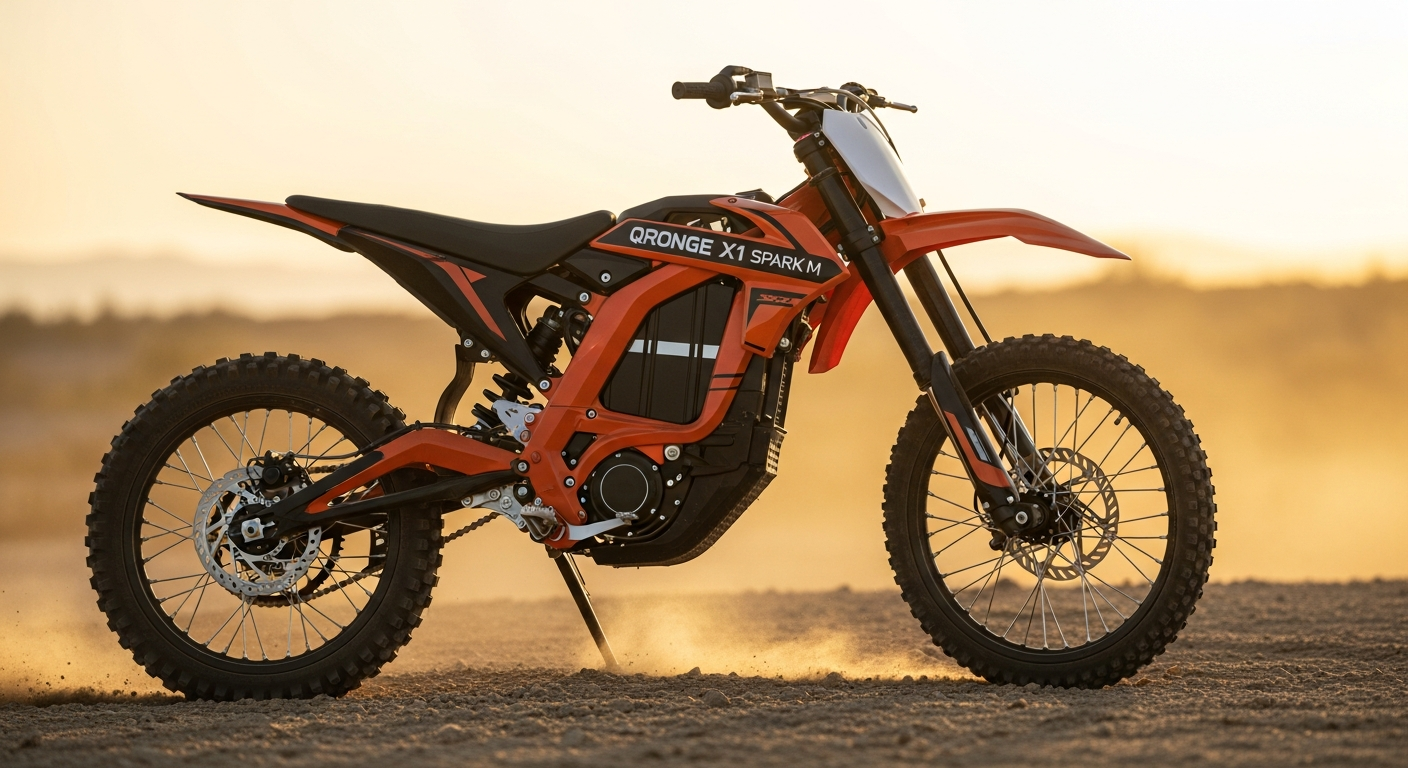
Electric dirt bikes have exploded in popularity—and for good reason. The market that once forced riders to choose between dropping $5,000+ on premium models or settling for underpowered beginner rigs has fundamentally shifted. Today, machines genuinely challenge that expensive-versus-limited paradigm, and the Qronge X1 Spark M sits right at the center of this disruption.
The Qronge X1 Spark M Electric Mini Bike has become a best-seller precisely because it refuses to play by the old rules. With a 4500W peak motor, 283 Nm of instant torque, and a claimed top speed of 50 MPH, this bike targets riders who want serious performance without the serious price tag. Whether you're exploring local trails, conquering steep terrain, or just looking for an adrenaline rush that doesn't require a second mortgage, this electric dirt bike has earned attention from both newcomers and seasoned riders alike.
Check current pricing and availability for the Qronge X1 Spark M today.
Performance Specs That Actually Deliver Real-World Results
The backbone of any quality electric dirt bike is its motor, and the X1 Spark M's 4500W peak motor output translates directly to real-world capability. This power level enables aggressive acceleration that catches riders off-guard given the bike's price point. On flat terrain, you'll feel the difference between this and entry-level competition immediately—the bike responds rather than trudges.
What truly separates this bike from budget alternatives is its 283 Nm of instant torque. This specification means the motor delivers maximum pulling power from zero RPM, which fundamentally changes how it handles steep inclines. Competitors in this price range often require building momentum to climb effectively, but the X1 Spark M launches up hillsides with assertiveness. When you're navigating mountain trails or loose terrain, that instant torque response prevents the frustrating wheel-slip that plagues lower-powered machines.
The claimed 50 MPH top speed needs context across different riding modes. In Eco mode, you're capped at 12.5 MPH—genuinely conservative for newcomers. Standard mode tops out at 22 MPH, adequate for most trail exploration without overwhelming newer riders. Sport mode unleashes the full 50 MPH capability, though real-world speeds on technical terrain often settle closer to 40-45 MPH depending on rider input and ground conditions.
Fat tires measuring 14" front and 12" rear provide exceptional traction for off-road and mountain riding conditions. The wider contact patch absorbs impacts, maintains grip on loose surfaces, and gives you confidence navigating rocky terrain. These tires excel in sandy and muddy conditions where narrower alternatives would sink or slide.
The suspension and braking systems support high-performance riding without excessive complexity. Solid brakes provide reliable stopping power even during aggressive riding, while adequate suspension travel soaks up trail impacts. Neither component represents cutting-edge technology, but both deliver competent, confidence-inspiring performance.
The 350 lbs weight capacity accommodates most riders comfortably. Heavier riders approaching this limit should expect slightly reduced acceleration and range, though the bike handles the load without structural concern. Cargo considerations matter less for dirt biking than street riding, but the specification confirms the frame's structural integrity.
Three Riding Modes Built for Every Skill Level
Eco Mode at 12.5 MPH serves absolute beginners and riders building foundational skills. The restricted speed removes intimidation, allowing riders to focus on balance, steering, and trail reading without speed-induced anxiety. Children and completely inexperienced adults benefit enormously from this intentionally conservative setting.
Standard Mode's 22 MPH sweet spot matches casual trail riding and general exploration perfectly. Most riders spend significant time in this mode because it delivers genuine speed thrills while maintaining control and safety margins. The acceleration feels punchy without being reckless, and trail obstacles present manageable challenges rather than crisis moments.
Sport Mode unleashes the full 50 MPH capability for experienced riders seeking adrenaline-fueled performance. Terrain that felt leisurely in Standard mode transforms into flowing, engaging challenges. Acceleration becomes genuinely exhilarating, and speed-focused lines through turns reward smooth technique. This mode is where you'll experience why the 283 Nm torque specification matters so viscerally.
Mode switching mechanics prove straightforward—you can shift between settings while riding, meaning you're never locked into one power level. Encountering unexpectedly technical terrain? Drop to Standard. Ready to open it up? Switch to Sport. This flexibility removes the anxiety of committing to one setting for an entire ride.
Safety considerations make adaptive modes genuinely crucial for rider progression. Beginners build confidence in Eco mode, graduating to Standard as comfort increases, eventually unlocking Sport capabilities. This progression prevents overconfidence crashes and helps riders develop skills methodically rather than jumping to speeds exceeding their ability.
Terrain-specific recommendations guide mode selection intuitively. Tight, technical singletrack favors Standard mode where control and precision matter more than speed. Open trails with minimal obstacles reward Sport mode's acceleration and top-end performance. Eco mode dominates when riding in crowded areas or teaching others.
Battery Life and Range: 60 Miles on a Single Charge
The 60V 28.8Ah battery specifications translate to practical capability that genuinely impresses for the price point. In numerical terms, 60 volts represents the system's electrical pressure while 28.8Ah indicates total charge capacity. Combined, this battery pack stores meaningful energy—enough to sustain extended riding sessions without constant recharging anxiety.
The 60-mile maximum range claim requires realistic interpretation. This figure represents best-case scenario riding: lighter rider, consistent lower speeds, flat terrain, optimal battery conditions, and smooth riding techniques. Real-world usage typically yields 40-50 miles depending on riding style. Sport mode enthusiasts exploring hilly terrain with aggressive acceleration should expect range closer to 35-40 miles. However, even conservative estimates deliver sufficient range for most recreational trail sessions.
Charging time requirements fit typical user patterns reasonably well. A full recharge from completely depleted battery takes approximately 8-10 hours on standard household outlets. This timeline means overnight charging keeps you ready for next-day riding. Fast-charging options aren't available at this price point, so plan accordingly.
Battery degradation follows predictable patterns over time. Lithium batteries gradually lose capacity—expect approximately 80% retained capacity after 2-3 years of regular use, declining toward 70% by year 5. Proper maintenance, avoiding deep discharges, and protecting batteries from extreme temperatures slow degradation noticeably.
Cold weather performance demands attention if you ride during winter. Temperature significantly affects battery efficiency—expect roughly 20-30% range reduction in freezing conditions. The battery's ability to deliver power also diminishes in cold, making acceleration feel slightly less responsive. Planning shorter rides during cold months prevents uncomfortable range anxiety.
Replacement battery costs represent your biggest long-term expense. Quality replacement packs for the X1 Spark M range from $300-500 depending on specifications and vendor. This investment, while substantial, extends the bike's functional life significantly rather than forcing retirement.
Pricing Breakdown Across Retailers and Sale Opportunities
The official Qronge website lists the X1 Spark M at a regular price of $2,449.99, though typical sale pricing hovers around $1,399.99. This dramatic discount pattern suggests Qronge maintains inflated regular pricing to create perceived deal value. Savvy shoppers can often find coupon codes or seasonal sales that push prices even lower.
Walmart's pricing advantage proves genuinely significant—the lowest recorded price sits at $1,098.99, down from an original listing of $1,999.99. This represents the most competitive mainstream retail pricing available. Walmart occasionally restocks the X1 Spark M at promotional prices, making it worth monitoring if you're flexible on timing.
Price volatility throughout the year reflects seasonal demand patterns. Spring and summer months see higher prices as riding season accelerates demand. Fall and winter discounting becomes more aggressive as retailers clear inventory. Purchasing between October and February typically yields better deals than peak season buying.
Value comparison against competitors reveals why the X1 Spark M achieved best-seller status. Comparable brands charge $1,500-2,000 for similar specifications, or alternatively offer 2000-3000W motors at comparable price points. The X1 Spark M's power-to-price ratio genuinely outperforms most direct competitors.
Hidden costs deserve serious consideration beyond the bike's sticker price. Registration varies by state but typically costs $50-200 annually. Insurance, while not universally required, costs $200-400 yearly for riders seeking coverage. Maintenance and accessories add another $100-300 annually. Tires replacement every 1-2 years depending on usage runs $300-500. Budget accordingly over the bike's ownership lifecycle.
Financing and payment options availability depends on your retailer. Walmart occasionally offers installment plans through third-party services, potentially spreading costs across 12 months interest-free. Check individual retailer sites for current financing options.
Compare the best prices for the Qronge X1 Spark M across multiple retailers.
What Riders Love (and Why This Bike Became a Best-Seller)
The affordable high-performance combination fundamentally breaks the expensive-or-limited false choice that dominated electric dirt bikes for years. Previous generations forced buyers into uncomfortable decisions: spend $4,000+ for legitimate performance, or accept severely limited capability at budget prices. The X1 Spark M proves you can have genuine power without financial devastation.
Versatility across skill levels explains much of its popularity. Beginners appreciate the forgiving Eco mode and accessible entry price. Experienced riders respect the Sport mode performance and 283 Nm torque. Intermediate riders find Standard mode perfectly calibrated. No demographic feels shortchanged.
Long-range capability delivers genuine freedom. Forty to sixty mile range removes charging anxiety from most trail sessions. You can explore extensively without constantly worrying about battery depletion stranding you mid-trail. This psychological benefit proves surprisingly valuable during actual riding.
Instant torque response creates exhilarating acceleration that punches above the bike's price class. The difference between 283 Nm instant delivery and competitors' more gradual torque curves manifests viscerally when accelerating from stops or climbing grades. Riders consistently praise this responsiveness as the feature that convinced them the X1 Spark M delivers legitimately premium performance.
Community feedback and customer enthusiasm genuinely drive sustained popularity. Online reviews consistently highlight the performance-to-price ratio as the primary selling point. Video content showcasing the X1 Spark M tackling impressive terrain circulates widely across social platforms, building aspirational appeal.
Value-for-money reputation disrupted traditional electric dirt bike market segments by proving that affordable and capable weren't mutually exclusive. This repositioning forced competitors to either lower prices or justify premium pricing more convincingly. The X1 Spark M effectively reset market expectations around what budget riders should reasonably expect.
Real Drawbacks You Should Know Before Purchasing
The uncomfortable seat design ranks as the most frequently cited complaint across user reviews. The stock seat provides minimal cushioning and ergonomic support, making extended rides genuinely uncomfortable. Most owners upgrade to aftermarket seats within weeks of purchase. Budget $100-200 for a quality replacement seat if extended riding sessions matter to you.
Lack of UL certification represents a legitimate safety concern that extends beyond mere regulatory compliance. UL certification indicates independent verification of electrical safety, fire prevention, and component integration standards. Without it, you're essentially trusting Qronge's internal quality control without third-party validation. Insurance companies sometimes deny coverage for non-certified electric bikes, creating potential liability complications.
Customer support limitations frustrate buyers encountering problems. Response times allegedly stretch to weeks, and documented cases show difficulty securing warranty repairs or replacements. For a bike at this price point, substandard support infrastructure creates vulnerability if manufacturing defects emerge.
The strict return policy requirements add friction if something goes wrong early. The 15-day return window demands original packaging retention—a specific constraint that catches unprepared buyers. Missing original boxes or having already ridden the bike beyond return eligibility means you're stuck with defective units longer than ideal.
Warranty coverage gaps leave component failures inadequately protected. While basic frame warranty exists, battery and motor coverage specifics often prove vague or limited. Understanding exact coverage before purchase prevents disappointing surprises when seeking warranty service.
Potential durability concerns emerge from user reports suggesting component longevity issues. While the frame appears robust, controller and battery connector problems have been documented in small user percentages. These aren't universal failures, but they highlight that quality control consistency may need improvement.
Who Should Buy the Qronge X1 Spark M (And Who Shouldn't)
Ideal riders are budget-conscious enthusiasts seeking genuine performance. You understand that perfect shouldn't be the enemy of excellent, and you're willing to compromise slightly on comfort and support infrastructure to access impressive capabilities at reasonable cost.
Best use cases center on trail riding, recreational exploration, and skill-building progression. Riders who want to explore local mountain trails, practice technical skills, and build confidence in varied terrain find the X1 Spark M perfectly aligned with their needs.
Beginner-friendly attributes make this bike genuinely accessible for newcomers. The Eco mode removes intimidation, the three-mode progression supports gradual skill building, and the price point eliminates the financial anxiety of learning on expensive equipment.
Experienced rider appeal stems from legitimate performance capabilities. Sport mode acceleration and 283 Nm torque satisfy riders beyond novice stages. The bike proves engaging enough that skilled riders continue enjoying it rather than immediately outgrowing it.
Not suitable for situations where comfort dominates priorities. If extended trail sessions demand premium ergonomics, the stock seat will frustrate you. Similarly, riders requiring premium manufacturing quality assurance and responsive support infrastructure should look elsewhere. Those needing UL certification for insurance purposes must pursue alternatives.
Geographic considerations matter substantially. Mountainous terrain with steep grades where the 283 Nm torque shines works excellently. Flat, featureless terrain underutilizes the bike's capabilities. Cold climates where winter range reduction matters significantly warrant consideration. Areas with challenging terrain and varied riding opportunities optimize the X1 Spark M's value proposition.
Maintenance, Upgrades, and Long-Term Ownership Costs
The routine maintenance schedule keeps performance optimal through consistent attention. Regular tire pressure checks maintain traction and handling—inspect monthly and maintain manufacturer-recommended PSI. Brake pad inspection every 50 riding hours prevents unexpected stopping power degradation. Battery terminals occasionally need cleaning to prevent corrosion. Suspension components should be checked seasonally for proper damping function.
Tire replacement and wear expectations depend heavily on riding style and terrain. Fat tires typically last 1-2 years with regular trail use. Aggressive terrain and frequent braking accelerate wear. Replacement costs run $300-500 for quality alternatives, making tire longevity a genuine budget consideration.
Brake servicing requirements surface occasionally depending on usage intensity. Hydraulic brake maintenance involves occasional fluid checks and seasonal inspections. Professional brake service typically costs $100-200 when needed, though many riders perform basic maintenance independently.
Suspension care and adjustment opportunities exist for personalizing ride feel. Compression and rebound damping adjustments fine-tune suspension responsiveness. Progressive riders discover they can significantly improve handling through patient suspension tuning, effectively upgrading performance without spending additional money.
Aftermarket upgrade availability supports meaningful customization. Quality seat replacements ($100-200) dramatically improve comfort. Extended-range batteries ($300-500) address range limitations for serious enthusiasts. Performance controller upgrades and tire alternatives let riders progressively enhance their specific machines.
Resale value expectations remain reasonable for budget electric bikes. Expect 40-50% of purchase price if selling a well-maintained unit after 2-3 years. The X1 Spark M's popularity helps resale prospects compared to obscure brands, though don't expect premium pricing for used units.
The Bottom Line for Budget-Conscious Riders
The Qronge X1 Spark M Electric Dirt Bike genuinely disrupts a market that's long been divided between wallet-draining premium machines and underpowered budget options. With a 4500W motor, 283 Nm of torque, and legitimate 50 MPH capability, you're getting serious performance—especially when you catch it on sale at retailers like Walmart. The three adaptive riding modes make it genuinely accessible whether you're brand new to electric bikes or chasing thrills on Sport mode.
But here's where honesty matters: this bike isn't perfect. The seat needs upgrading, the lack of UL certification raises legitimate safety questions, and the customer support infrastructure appears stretched thin. The strict return policy and packaging requirements add friction if something goes wrong early on. These aren't deal-breakers for everyone, yet they're absolutely worth factoring into your decision.
If you're a rider who values performance-per-dollar, enjoys exploring trails across varying terrain, and can accept that you're buying from a brand still building its support reputation, the X1 Spark M deserves serious consideration. Start by comparing current pricing across Qronge's official site and Walmart—the price swings are dramatic enough to justify shopping around. Then, honestly assess whether the drawbacks matter to your riding style.
For many riders seeking that sweet spot between capability and affordability, this electric dirt bike checks the boxes that actually matter.
Shop the Qronge X1 Spark M Electric Dirt Bike and explore your next adventure today.
Leave a Reply