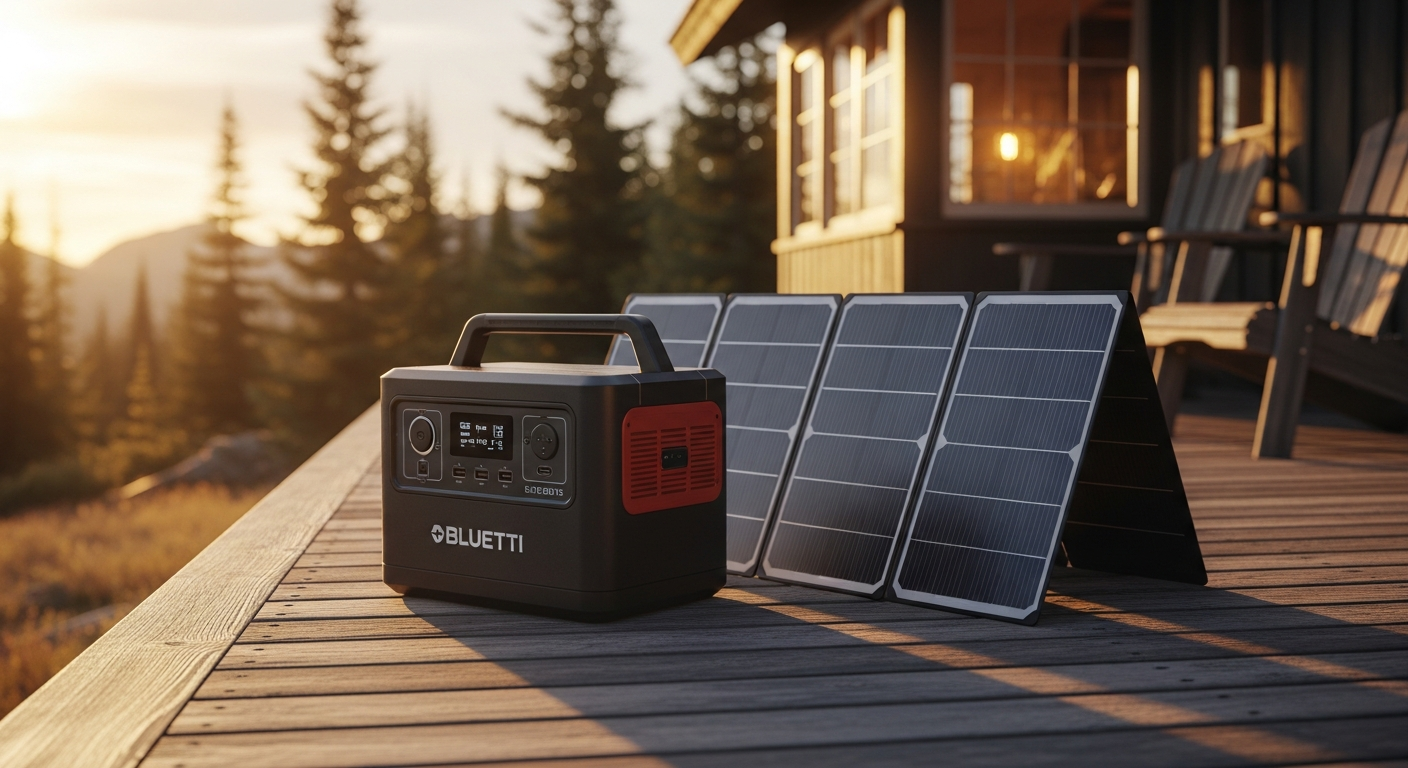
Roughly 21 million Americans live in rural areas without reliable grid access, and that number keeps climbing as remote work becomes the norm. If you're among those considering an off-grid lifestyle—or already living it—you've probably wrestled with the constant anxiety of power management. The BLUETTI Elite 200 V2 Portable Power Station changes that equation entirely.
Unlike typical portable power solutions designed for camping weekends, the Elite 200 V2 was engineered for sustained, real-world living scenarios. With its 2,073.6Wh LiFePO₄ battery and 2,600W continuous output, this power station bridges the gap between emergency backup and everyday energy independence. The unit has earned recognition as a "best overall power station" and "best-seller of 2026" by Popular Mechanics, reflecting its market leadership and user satisfaction.
Explore the BLUETTI Elite 200 V2 to see if it matches your off-grid power requirements.
Off-Grid Power Demands vs. The Elite 200 V2's Capacity
Remote cabins and homesteads typically consume between 10-30 kWh daily, depending on appliances, climate control needs, and lifestyle habits. A modest setup with LED lighting, refrigeration, and communication equipment might draw 15-20 kWh daily, while properties with water heating or air conditioning could exceed 30 kWh. Understanding this baseline is critical before investing in any power solution.
The 2,073.6Wh capacity translates directly to runtime based on your draw rate. Running a 500W load continuously, you'd achieve approximately 4 hours of operation. At 1,000W sustained draw, that shrinks to 2 hours. Most off-grid operations don't run continuously at maximum draw, however. A refrigerator cycles on and off, lighting operates primarily at night, and water pumps run intermittently. Real-world runtime typically ranges between 8-20 hours depending on your usage pattern.
The 2,600W continuous output determines how many appliances you can power simultaneously. A refrigerator (600W), well pump (1,500W), and LED lighting (200W) total 2,300W—comfortably within capacity. However, adding a clothes dryer (3,000W+) or central air conditioning unit would exceed the system's limits. This is where honest assessment of your property's simultaneous power needs becomes essential.
Seasonal variations matter significantly. Winter months bring reduced solar charging potential in northern climates while increasing heating demands. Summer presents opposite challenges: excellent solar input but potentially higher cooling requirements and water usage. Properties at 40° latitude or higher should plan for 6-8 weeks annually when solar contribution drops substantially, requiring either battery reserves or supplemental charging sources.
Calculating Real-World Runtime
Begin by listing every appliance you'll power and its wattage. Multiply average daily usage hours by wattage to determine daily consumption. Compare this against the Elite 200 V2's capacity and recharge capabilities. A property consuming 12 kWh daily would require 6 complete charge cycles from this unit—feasible with strong solar integration but challenging with AC charging alone.
Essential Appliances You Can Actually Power (And For How Long)
Refrigerators and Freezers
Standard residential refrigerators draw 150-800W depending on model, size, and operating conditions. Modern energy-efficient units typically consume 300-400W during compressor cycles. The Elite 200 V2 handles this comfortably, with runtime extending 12-15 hours on a full charge assuming the compressor cycles 30-40% of the time. Surge capacity (which exceeds continuous output) manages the startup draw when the compressor engages. Freezers operate similarly, though they draw slightly less power since they maintain lower temperatures less frequently.
Well Pumps and Water Systems
Well pumps present unique challenges. Many require 2,000-3,500W to start, exceeding the Elite 200 V2's 2,600W continuous rating. However, soft-start technology or properly sized submersible pumps rated at 1,500W or less will operate successfully. Once running, these pumps draw power only during water delivery, not continuously. A property pumping water 4-6 hours daily experiences manageable loads on the Elite 200 V2.
Internet and Communication Equipment
Routers, modems, and communication systems draw 10-50W continuously. The Elite 200 V2 can maintain internet connectivity for 40-200 hours on a single charge, depending on equipment. This represents genuine off-grid communication capability—workers maintaining remote connectivity experience minimal power anxiety from these systems.
Lighting Systems and LED Setups
LED lighting consumes 5-15W per fixture compared to 40-60W for traditional incandescent bulbs. A 20-fixture LED setup drawing 200W total runs for 10+ hours per charge cycle. The efficiency gains from switching to LED are transformative for off-grid living, extending runtime dramatically while improving light quality.
Solar Integration Strategies for True Energy Independence
Solar panel compatibility begins with understanding your property's sun exposure. South-facing roofs in temperate climates receive 4-6 peak sun hours daily on average. The Elite 200 V2 accepts solar input through its charging system, requiring panels rated between 400-1,500W depending on your recharge timeline expectations.
A 600W solar array (typically 2-3 modern panels) can fully recharge a depleted Elite 200 V2 in 3-4 hours during peak sunlight conditions. A 1,200W array accomplishes this in 1.5-2 hours, enabling multiple charge cycles per day during summer months. This flexibility makes hybrid approaches practical: solar provides primary charging when conditions permit, while AC charging serves as backup or rapid-charge option.
Seasonal planning requires honest assessment of your location's solar production patterns. Northern climates (40°+ latitude) experience 60% winter solar production compared to summer peaks. Southern locations maintain more consistent year-round production. Plan battery storage and alternative charging to cover your worst production month—typically December in northern regions.
Start planning your solar configuration with the BLUETTI Elite 200 V2 specifications in mind.
The LiFePO₄ battery chemistry includes built-in battery management systems that prevent overcharging when solar input exceeds capacity. Modern systems automatically regulate voltage and current, protecting both the battery and attached solar panels. This passive protection eliminates overcharge anxiety when panels produce excess power.
Portability & Installation for Remote Properties
The Elite 200 V2 weighs approximately 62 pounds—substantial but manageable for most adults. Moving it from vehicle to installation site requires planning for terrain, distance, and accessibility. Properties with steep terrain or distance from parking may warrant using hand trucks or assistance rather than solo carrying.
Weatherproofing depends on your property's setup. Semi-outdoor placement under covered structures works well if temperatures remain within operating ranges (typically 32-104°F for most portable power stations). Full outdoor exposure requires dedicated weatherproof enclosures, though these add complexity and cost. Most off-grid properties place units in utility buildings, cabins, or sheltered areas where elements are manageable.
Cable management becomes important for extended installations. Quality extension cords rated for outdoor use should connect the power station to appliances and solar panels. Separate circuits for essential systems (refrigerator, communication) from secondary loads (lighting, pumps) prevents single-point failures from disrupting critical equipment.
Temperature management during discharge cycles matters in extreme climates. The unit dissipates heat during sustained high-draw periods—summer operations pushing 2,000W continuously might generate measurable heat. Adequate ventilation around the unit prevents thermal throttling that could reduce output capacity.
Cost-Benefit Analysis for Off-Grid Homesteaders
The BLUETTI Elite 200 V2 with Charger 2 bundle carries a $1,299 price point, placing it competitively against alternative backup solutions. A comparable capacity diesel generator costs $800-1,200 but requires ongoing fuel purchases, maintenance, and produces noise and emissions. A traditional lead-acid battery bank of similar capacity exceeds $2,000 and requires replacement every 5-7 years.
Long-term value emerges through LiFePO₄ chemistry advantages. These batteries tolerate 3,000-5,000 complete charge cycles before capacity degrades to 80%—roughly 8-14 years of daily cycling. Standard lithium-ion alternatives manage 1,000-2,000 cycles. This longevity difference justifies the higher initial investment for remote properties where replacement access is limited.
Return on investment accelerates when replacing existing fuel-based generators. Diesel generators cost $0.15-0.25 per kWh in fuel expenses, plus maintenance. Over 10 years powering a 12 kWh daily property, diesel costs exceed $5,500 excluding maintenance. The Elite 200 V2, once supplemented with solar panels, eliminates these recurring expenses. Breakeven occurs within 4-6 years for most off-grid properties.
Real Limitations You Should Know Before Buying
The 62-pound weight becomes problematic for individuals with mobility limitations or properties lacking equipment access. Solo relocation on uneven terrain requires planning and potentially outside assistance.
AC charging speed, while adequate, takes 10-15 hours to fully recharge the Elite 200 V2 from a standard household outlet. Properties experiencing extended power grid outages or without strong solar integration might struggle with recharge timing. This limitation demands either solar supplementation or acceptance of limited recharge speed during cloudy periods.
High-demand appliances—particularly larger well pumps (3,000W+), air conditioning units, or industrial tools—exceed the unit's output capacity. These loads either require soft-start technology, separate power sources, or operational scheduling that prevents simultaneous use with other appliances.
Heat dissipation during sustained high-output discharge can impact performance in extreme summer heat. Ambient temperatures above 90°F combined with 2,000W+ continuous draws generate measurable internal heat that the system must manage, potentially reducing available capacity slightly.
User Experience & Setup for Remote Living
The control panel provides clear information about battery state, output load, and charging status. Modern portable power stations increasingly include app connectivity enabling remote monitoring, though cellular connectivity requirements affect usability in truly remote areas. The intuitive interface means new users can operate the system confidently within minutes.
Learning curve for optimal power distribution is minimal. Understanding which appliances to prioritize during low-battery conditions and recognizing when to curtail non-essential loads develops naturally with use. Most users report comfortable operation within days of installation.
Customer support accessibility matters when you're 50 miles from the nearest town. BLUETTI maintains responsive support channels and extensive online documentation. Community forums populated with off-grid users provide practical troubleshooting and optimization advice that corporate support sometimes misses. This peer network becomes invaluable for remote property owners.
Sustainability & Environmental Impact
Operating the Elite 200 V2 powered by solar eliminates fossil fuel consumption entirely. A property previously running a diesel generator 8 hours daily reduces annual carbon emissions by 8-12 tons. For environmentally conscious homesteaders, this shift represents significant ecological impact.
LiFePO₄ battery chemistry demonstrates superior environmental characteristics compared to standard lithium-ion. These batteries contain no cobalt, reducing mining impact and geopolitical complications. Recycling programs increasingly accept LiFePO₄ cells, enabling material recovery rather than landfill disposal after 10+ years of service.
The renewable energy compatibility enables seamless integration with wind turbines, micro-hydro systems, or additional solar arrays. Unlike diesel generators requiring fuel supply chains, these systems operate indefinitely with proper maintenance, creating genuinely sustainable energy independence.
Noise pollution elimination transforms quality of life for off-grid properties. The silent operation contrasts sharply with generator noise (80-95 decibels) that penetrates conversation and sleep patterns. Neighbors at distance appreciate the absence of combustion engine sounds common in remote areas.
The Path Forward for Off-Grid Living
The BLUETTI Elite 200 V2 isn't just another portable power station—it's a tangible step toward genuine energy independence for remote properties. Its 2,600W output and 2,073.6Wh capacity hit that sweet spot between raw power and practical portability, making it genuinely useful for sustained off-grid living rather than weekend camping trips. The LiFePO₄ chemistry means you're investing in a system that'll perform reliably for years, not months.
This unit demands honest self-assessment: you need to calculate your actual power consumption, understand seasonal variations, and commit to proper solar integration if you want true independence. If you're serious about off-grid living and need dependable backup power for essential systems, the Elite 200 V2 deserves your consideration.
Start by mapping your property's power demands. List every appliance, its wattage, and daily usage hours. Research solar panel configurations that complement this capacity, considering your geographic location's seasonal variations. Connect with other homesteaders using similar setups through online forums and community groups—their experiences provide invaluable practical guidance you won't find in manufacturer specifications.
Begin your off-grid energy independence journey with the BLUETTI Elite 200 V2 today.
Leave a Reply