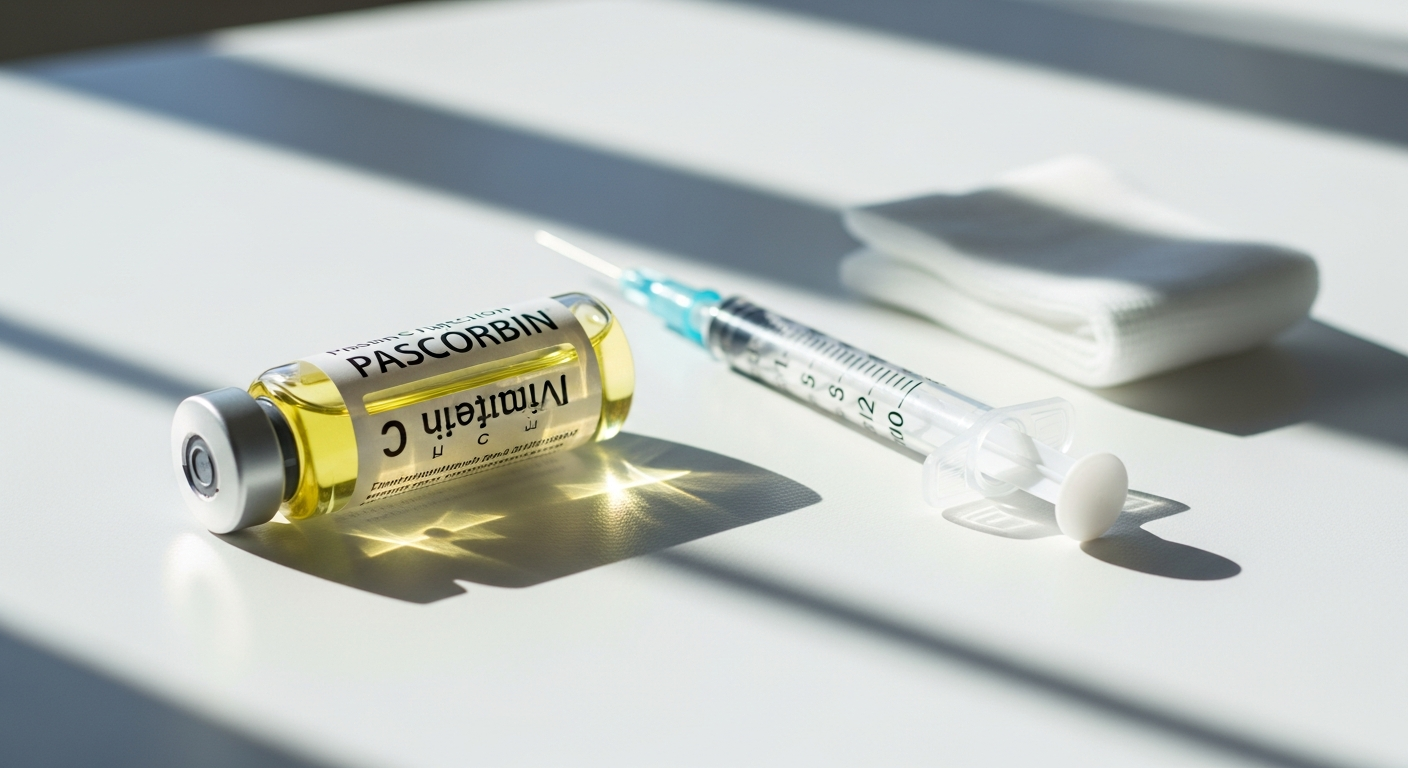
Vitamin C deficiency affects more people than many realize, silently undermining immune function, wound healing capacity, and energy metabolism in roughly one in ten adults throughout developed nations. Most individuals assume oral supplements suffice, yet severe clinical deficiencies often resist dietary intervention and standard supplementation. PASCORBIN High-Dose Vitamin C Injection Solution addresses this gap directly—as the only approved high-dose intravenous vitamin C infusion across Germany and multiple European countries, it delivers what oral treatments simply cannot achieve.
The injectable format represents a paradigm shift in vitamin C therapy. Each 50ml vial contains 7,500mg of pure ascorbic acid at a concentration of 150mg per milliliter, making it possible to achieve plasma levels and therapeutic effects that remain inaccessible through tablets or capsules. For healthcare professionals managing patients with malabsorption disorders, chronic inflammatory conditions, or documented deficiencies unresponsive to conventional approaches, understanding PASCORBIN's clinical role, administration requirements, and safety parameters becomes essential.
Discover how PASCORBIN can transform your clinical vitamin C treatment outcomes today.
When Oral Vitamin C Falls Short: Clinical Indications for Injectable Therapy
Healthcare practitioners encounter patients regularly who fail to respond adequately to oral vitamin C supplementation despite consistent dosing and compliance. These cases demand recognition of specific clinical scenarios where injectable therapy becomes appropriate and necessary.
Severe vitamin C deficiency unresponsive to dietary intervention represents the foundational indication for PASCORBIN therapy. Patients with documented scurvy, compromised wound healing, or persistent fatigue despite oral supplementation often present with absorption or utilization barriers that tablets cannot overcome. Malabsorption disorders—including Crohn's disease, celiac disease, and short bowel syndrome—create particular challenges, as damaged intestinal mucosa or reduced absorption surface area prevents adequate nutrient uptake regardless of dose size.
Chronic inflammatory conditions frequently exhaust vitamin C stores through oxidative stress, rendering standard oral doses insufficient for therapeutic benefit. Patients managing autoimmune conditions, persistent infections, or degenerative inflammatory processes often require sustained high-dose ascorbic acid that intravenous delivery alone can reliably maintain. Post-surgical recovery represents another critical window: patients with documented deficiency require rapid immune optimization and collagen formation support to minimize infection risk and accelerate tissue repair, objectives that injectable high-dose vitamin C accomplishes in days rather than weeks.
Bioavailability & Efficacy: Why Intravenous Ascorbic Acid Outperforms Oral Supplements
The scientific distinction between oral and intravenous vitamin C delivery fundamentally reshapes treatment expectations and clinical outcomes. Oral absorption of ascorbic acid maxes out at approximately 200mg per single dose—a ceiling determined by intestinal transporter saturation and active transport limitations. This constraint means patients cannot accumulate therapeutic plasma concentrations through tablets alone, regardless of frequency or total daily amount consumed.
PASCORBIN bypasses these physiological barriers entirely. Each 50ml vial delivers 7,500mg directly into the bloodstream, achieving plasma concentrations within minutes that would require weeks of oral supplementation to approach. This immediate availability proves critical for patients with acute immune compromise, severe wound healing delays, or systemic inflammatory conditions requiring rapid intervention. The intravenous route eliminates first-pass hepatic metabolism and circumvents compromised intestinal absorption, ensuring nearly complete therapeutic delivery.
Clinical evidence demonstrates that intravenous ascorbic acid produces measurable immune enhancement, accelerated collagen synthesis, and superior antioxidant effects compared to equivalent oral doses—when equivalent oral doses could theoretically be achieved, which in most cases remains impossible. The pharmacokinetic advantage of injectable therapy translates directly into clinical outcomes: faster resolution of deficiency symptoms, improved wound healing trajectories, and enhanced capacity to manage chronic inflammatory load.
Administration Protocols & Professional Requirements for PASCORBIN Therapy
Proper administration of PASCORBIN requires clinical infrastructure and trained personnel that distinguish it fundamentally from over-the-counter supplements. Medical supervision by qualified healthcare professionals remains mandatory—this represents not a bureaucratic requirement but a clinical necessity reflecting the physiological demands of high-dose intravenous ascorbic acid therapy.
Trained administrators must deliver PASCORBIN through intravenous or intramuscular injection routes within appropriate clinical settings. Each 50ml vial functions as a single-use preparation only; once opened, any unused portion must be discarded immediately. No storage capacity exists for partially used vials, requiring precise dose preparation and administration planning to minimize waste while ensuring complete therapeutic delivery.
Infusion rate considerations merit particular attention. Rapid administration of high-osmolarity solutions can trigger vascular irritation, circulatory disturbances, or osmotic stress, particularly in patients with compromised cardiovascular or renal function. Professional administrators must titrate delivery speed appropriately, monitoring patient response and adjusting protocols based on individual tolerance and clinical presentation.
Safety Screening & Contraindications: Critical Patient Selection Criteria
Before initiating PASCORBIN therapy, comprehensive safety assessment must identify patients for whom intravenous high-dose vitamin C therapy presents unacceptable risk. G6PD deficiency represents an absolute contraindication due to the risk of acute hemolytic anemia—this genetic screening must occur before treatment, particularly in populations with elevated G6PD prevalence.
Kidney disease requires particular caution, as high-dose ascorbic acid increases calcium oxalate crystal precipitation risk and potential acute renal failure, especially in patients with pre-existing renal compromise. Patients with kidney stone history, hemochromatosis or other iron storage disorders, or uncontrolled diabetes warrant careful evaluation and potentially dose modification, as ascorbic acid can impair glucose detection in blood and exacerbate iron accumulation.
Patients taking blood-thinning medications may experience potentiated anticoagulation effects, necessitating dose adjustment or enhanced monitoring protocols. Pregnancy and lactation represent practical contraindications—breastfeeding and pregnant women should not exceed 100-500mg daily vitamin C intake, making PASCORBIN's 7,500mg dosing entirely inappropriate for these populations.
Allergic hypersensitivity reactions, while relatively uncommon, demand recognition and preparedness. Respiratory or skin manifestations of ascorbic acid hypersensitivity require immediate intervention capability within the clinical setting. Circulatory complications including dizziness, nausea, or vision deterioration occasionally develop during infusion, and rarely, acute infections may produce chills or fever responses.
Moving Forward with High-Dose Vitamin C Therapy
PASCORBIN High-Dose Vitamin C Injection Solution represents a clinically validated intervention for severe deficiencies and immune optimization objectives that oral supplementation cannot achieve. The physiological reality remains straightforward: certain patients require delivery mechanisms that circumvent intestinal absorption limitations and achieve the plasma concentrations necessary for therapeutic benefit. Malabsorption disorders, chronic inflammatory conditions, post-surgical recovery requiring immune acceleration, and documented deficiencies unresponsive to oral treatment all constitute legitimate clinical scenarios where PASCORBIN demonstrates efficacy and appropriateness.
The evidence supporting intravenous ascorbic acid therapy continues strengthening through clinical practice and research validation. Practitioners managing patients with these presentations should view PASCORBIN as a legitimate therapeutic tool—but one demanding respect through proper patient selection, comprehensive safety screening, professional administration, and vigilant post-treatment monitoring. The price range of €122 to €185.50 per 20-vial pack reflects the manufacturing standards and regulatory approval status that establish PASCORBIN's clinical credibility across European healthcare systems.
For patients struggling with fatigue, recurrent infections, documented vitamin C deficiency unresponsive to conventional treatment, or those with malabsorption disorders compromising nutrient uptake, PASCORBIN offers a legitimate pathway to meaningful clinical improvement when administered within appropriate clinical frameworks by trained professionals.
Leave a Reply