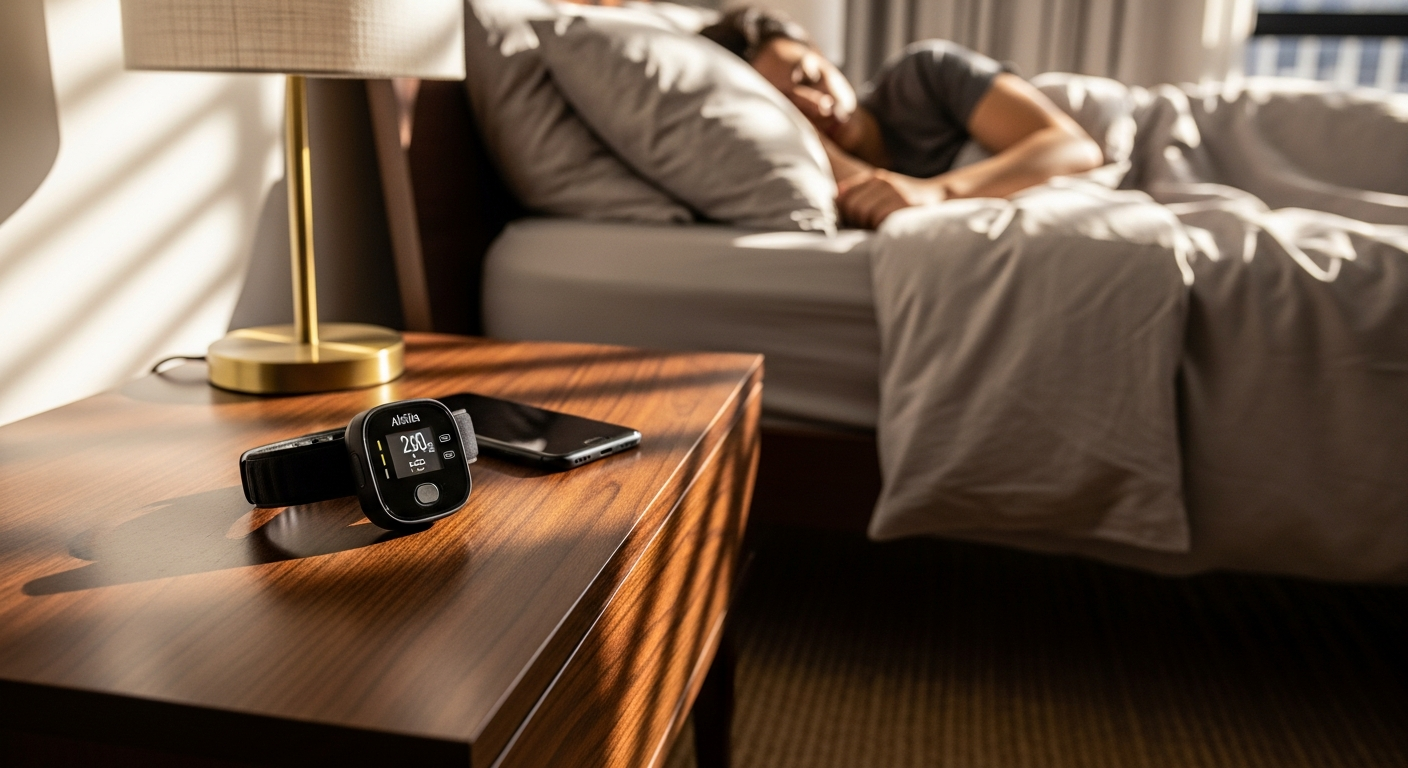
Your body operates on a 24-hour internal clock that regulates everything from hormone release to blood vessel function. When you work night shifts or rotating schedules, this circadian rhythm gets thrown into chaos. Blood pressure naturally dips during sleep and rises upon waking—a pattern called diurnal variation. Shift workers experience a fractured version of this cycle, where your body never fully adjusts to when it should be resting and when it should be alert. This constant desynchronization forces your cardiovascular system into a state of perpetual stress, disrupting the normal ebb and flow of blood pressure throughout your 24-hour day.
The dangers of undetected nocturnal hypertension in shift workers
Nocturnal hypertension—elevated blood pressure during sleep or rest periods—poses serious risks that conventional monitoring completely misses. During your night shift, your body is supposed to be in recovery mode, with blood pressure dropping to allow your cardiovascular system to rest. When this doesn’t happen, the constant pressure on your artery walls accelerates damage that leads to heart disease, stroke, and kidney problems. For shift workers, nocturnal readings are particularly critical because your “night” might occur at 2 p.m. during an overnight shift rotation. Traditional cuff monitors, typically used once daily during office hours, have zero chance of capturing these readings when you need them most.
Why traditional cuff monitors fail to capture the full picture for non-traditional schedules
Conventional blood pressure cuffs require active participation—you have to remember to take a reading, find a quiet place, sit down, and wait for the measurement. For someone working a 12-hour overnight shift in a hospital, manufacturing plant, or transportation hub, this is impractical at best and completely unrealistic at worst. Even if you manage to take one reading before or after your shift, you’re getting a single data point that represents maybe 5 minutes out of your entire 24-hour day. Your doctor sees that one number and has to make treatment decisions based on incomplete information. Meanwhile, your blood pressure might be spiking dangerously at 3 a.m., and nobody would ever know.
The connection between shift work, stress hormones, and elevated nighttime BP readings
Working against your body’s natural sleep-wake cycle triggers a cascade of stress hormones—cortisol, adrenaline, and norepinephrine—that flood your system during hours when they should be minimal. These hormones constrict blood vessels and increase heart rate, creating a state of chronic physiological stress. Your body is literally stuck in “fight or flight” mode during what should be your rest period. Over months and years, this hormonal storm causes lasting changes to your blood vessel function and increases your baseline blood pressure. The worst part? You can’t see any of this happening without continuous monitoring that captures what’s occurring throughout your entire 24-hour cycle.
How 800+ monthly readings reveal patterns that once-daily checks completely miss
The Aktiia 24/7 Continuous Blood Pressure Monitor collects approximately 27 readings per day, which totals over 800 measurements each month. This volume of data fundamentally changes how you understand your hypertension. Instead of seeing four isolated points across a month, you’re viewing a detailed map of your blood pressure landscape. You can identify exactly which days, times, or situations trigger spikes. You can see whether your medications are working consistently or if their effectiveness varies across your schedule. You can correlate blood pressure patterns with specific shifts, sleep quality, stress levels, or dietary choices. This granular visibility transforms hypertension from a mysterious problem into a manageable pattern.
Real-world impact of detecting hypertension early in shift-based professions
Healthcare workers, truck drivers, pilots, manufacturing supervisors, and emergency responders all face elevated cardiovascular risk due to their schedules. For these professions, uncontrolled hypertension isn’t just a health concern—it’s a safety issue that affects patient care, road safety, and operational reliability. Detecting and managing hypertension early in these workers can prevent serious cardiac events that might occur during critical moments on the job. Early detection also allows for preventive medication adjustments before problems develop, reducing the need for emergency interventions later. The financial and human cost of a healthcare worker or commercial driver experiencing a cardiac event on duty far exceeds the investment in continuous monitoring.
Discover how Aktiia’s continuous monitoring can protect your health during shift work
How Aktiia’s Optical Sensor Technology Works Around the Clock
Photoplethysmography (PPG) explained: measuring blood pressure from light absorption at the wrist
Photoplethysmography is an elegant optical technique that measures changes in blood volume beneath your skin. The Aktiia bracelet contains LED lights and photodiodes that emit light into your wrist and measure how much is reflected back. As your heart pumps, blood volume under your skin increases and decreases in a rhythmic pattern. The device captures these micro-variations in light reflection thousands of times per second, creating a detailed waveform of your pulse. Proprietary algorithms then analyze this waveform data alongside other physiological parameters to estimate your blood pressure. The beauty of this approach is that it requires no mechanical compression, no cuff, and no active user participation—just wearing the bracelet on your wrist.
Passive data collection: why you don’t need to do anything for readings to happen
Unlike traditional monitors where you initiate each measurement, the Aktiia operates passively. The optical sensors continuously collect data throughout your day and night, whether you’re aware of it or not. You could be charting at a nursing station, driving a delivery truck, or operating machinery—the bracelet is silently gathering data in the background. This passive approach solves the fundamental compliance problem that plagues traditional monitoring: people forget to take readings consistently, skip measurements when busy, or avoid the inconvenience of pulling out a cuff. With Aktiia, consistency is automatic. You wear the bracelet, and it does the work.
The initialization process and why monthly calibration with the traditional cuff matters
When you first receive your Aktiia bracelet, you’ll perform an initialization process using the included traditional blood pressure cuff. This calibration establishes a baseline relationship between your optical waveforms and your actual blood pressure values. Because optical measurements vary between individuals based on skin tone, wrist characteristics, and arterial stiffness, this personalization step is essential for accuracy. Subsequently, you’ll calibrate monthly using the same traditional cuff to ensure the algorithms remain accurate as your physiology potentially changes. This monthly requirement does represent an extra step compared to purely passive monitoring devices, but it’s the trade-off for maintaining accuracy in a cuffless system.
How proprietary algorithms convert optical data into accurate BP estimates
Once the bracelet collects optical data, it sends this information to Aktiia’s secure cloud servers where proprietary machine-learning algorithms process it. These algorithms account for numerous variables—your heart rate, the shape of your pulse waveform, your arterial stiffness, and dozens of other physiological markers. The algorithms compare your current optical signature against your personalized baseline established during calibration, then estimate your systolic and diastolic blood pressure. This computational approach allows the device to extract meaningful health data from optical measurements that would be meaningless on their own. The result is blood pressure estimates delivered to your app within minutes of collection.
Comparison of PPG technology versus traditional oscillometric cuff methods
Traditional oscillometric cuffs measure blood pressure by detecting oscillations in the cuff pressure as it deflates across your artery. This method is considered the gold standard for accuracy and has been used for decades. PPG technology, by contrast, is newer and less established in clinical practice, though it’s gaining credibility through FDA clearance and clinical validation studies. Oscillometric cuffs produce discrete measurements at specific moments—they give you precise snapshots. PPG technology provides continuous or frequent estimates—it gives you a continuous stream of data points. Neither approach is inherently superior; they represent different trade-offs between precision per reading and frequency of data collection. For shift workers, the frequency advantage of continuous PPG monitoring often outweighs the slightly higher per-reading accuracy of traditional cuffs.
Accuracy considerations and when readings may vary
Individual Aktiia readings may vary from simultaneous traditional cuff measurements by several millimeters of mercury. Factors affecting accuracy include your wrist position, skin color, tattoos, jewelry, or movement during measurement. The device performs better when you’re in a resting state compared to when you’re moving. Readings may also vary if your wrist isn’t making consistent contact with the sensors or if you’re experiencing certain cardiac arrhythmias. However, because the system collects so many readings, the overall trend accuracy—your average blood pressure across days or weeks—tends to be quite reliable even if individual readings show some variation. This is why the device is designed more for trend analysis than for clinical decision-making based on single readings.
FDA clearance and CE Mark certification: what these certifications mean for reliability
The Aktiia bracelet has received CE Mark clearance as a Class IIa medical device in Europe, indicating it meets safety and performance standards for European markets. More recently, it gained FDA clearance for over-the-counter use in the United States under the brand name Hilo Band. These regulatory clearances mean independent authorities have reviewed clinical evidence supporting the device’s safety and effectiveness. The FDA clearance is particularly significant because it means the device can be legally marketed and sold without requiring a prescription or doctor’s order. These certifications don’t guarantee perfection, but they do provide assurance that the device has undergone rigorous testing and meets established standards.
Design and Wearability for 24/7 Use
Ultralight 22-gram bracelet design: comfort for shift workers wearing it through their entire schedule
At just 22 grams—lighter than many smartwatches—the Aktiia bracelet is designed for true 24/7 wearability. For someone working 12-hour shifts, this lightweight design means you can wear it continuously without noticing it on your wrist. There’s no uncomfortable cuff cutting off your circulation, no bulky device catching on your uniform or equipment, and no need to remove it multiple times during your shift. The minimalist band design also makes it discreet enough to wear during professional interactions without drawing unnecessary attention to the fact that you’re monitoring your health.
Battery longevity: 10-14 days between charges and what that means for your workflow
The bracelet typically lasts 10 to 14 days on a single charge, meaning you’re charging it roughly twice per month. For shift workers, this extended battery life is crucial because it eliminates the need to plan your charging around your work schedule. You’re not scrambling to find an outlet during a 12-hour night shift or worrying that your device will die halfway through your rotation. The included charging station makes the process straightforward—just place the bracelet on the dock when you have downtime, and it charges quickly.
Water resistance improvements in newer models and practical implications
Earlier Aktiia models lacked water resistance, limiting their practicality for healthcare workers, swimmers, or anyone working in wet environments. Newer iterations have addressed this limitation, making the device suitable for shower use and light water exposure. This improvement means you no longer need to remove the bracelet for hygiene purposes, further supporting true 24/7 continuous monitoring. If you’re considering purchasing an Aktiia monitor, verify that you’re getting a newer water-resistant model rather than an older non-resistant version.
Charging convenience: the included station and cable setup
The package includes a dedicated charging station and USB cable, eliminating the need to purchase separate accessories. The charging dock is compact and portable, making it easy to charge wherever you spend your downtime. The straightforward magnetic charging mechanism works reliably and doesn’t require fumbling with connectors.
Why a lightweight design matters more than fitness tracking features for medical monitoring
The Aktiia bracelet deliberately excludes fitness tracking features like step counting or workout detection. This design choice prioritizes medical monitoring accuracy over general wellness tracking. A lighter, simpler device with fewer sensors competing for power and processing resources can focus entirely on blood pressure accuracy. For shift workers whose primary concern is managing hypertension rather than tracking fitness, this focused approach is ideal.
Discretion at work: wearing a health monitor without drawing attention
Depending on your profession, you might prefer your coworkers not know you’re managing a health condition. The Aktiia bracelet’s minimalist appearance allows you to wear it without it looking like medical equipment. It resembles a regular fitness band or smartwatch, maintaining your privacy at work without requiring you to remove the device or compromise your monitoring.
Understanding the Complete Cost Structure
Device pricing: $199 base cost with variations ranging $268-$350 depending on retailer
The Aktiia bracelet itself costs approximately $199, though prices vary by retailer from around $268 to $350. Shopping around can help you find better pricing, and some retailers occasionally offer promotional discounts.
Mandatory subscription model: $9.99/month or $119.88 annually
Beyond the device cost, Aktiia requires a subscription to access your data through their cloud platform and app. The subscription costs $9.99 per month or $119.88 per year if you pay annually. This is a mandatory cost to use the device—you cannot access your blood pressure data without maintaining an active subscription.
First-year total investment calculation and long-term cost comparison
Your total first-year investment is approximately $319 ($199 device + $120 subscription for the year). In subsequent years, assuming the device doesn’t fail, you’re investing roughly $120 annually just for the subscription. Over three years, you’re looking at approximately $459 total ($199 initial + $260 in subscriptions). Over five years, the total reaches approximately $799. By comparison, a high-quality traditional oscillometric monitor costs $50-150 upfront with no ongoing subscription, making the long-term Aktiia investment significantly higher.
Subscription costs versus traditional monitor purchases over 3-5 years
If you were to purchase new traditional monitors every three years due to wear or technological obsolescence, you might spend $150-450 total over that period. The Aktiia approach costs approximately $459 for three years. The financial argument for Aktiia is that the continuous data you receive justifies the subscription cost by enabling better hypertension management, reducing medication adjustments, and potentially preventing costly health complications. However, this requires that you actually use and benefit from the continuous monitoring data.
Hidden costs: replacement charging cables and accessories
While the device includes charging cables and a station, replacement cables cost extra if yours becomes damaged. Occasional bracelet band replacements might also be necessary depending on wear. Budget an extra $20-50 per year for potential accessories.
Insurance coverage possibilities and FSA/HSA eligibility considerations
Some health insurance plans may cover continuous blood pressure monitors, particularly if your cardiologist specifically prescribes one as medically necessary for managing hypertension. Additionally, if you have a Health Savings Account (HSA) or Flexible Spending Account (FSA), you may be able to use pre-tax healthcare dollars to purchase the device and subscription. Contact your insurance provider to determine your specific coverage options.
Whether the investment justifies the data volume for your health needs
The core question is whether 800+ monthly readings significantly improves your health outcomes compared to traditional monitoring. If you have difficult-to-control hypertension that your doctor suspects includes nocturnal spikes, the continuous data likely justifies the cost. If you have well-controlled hypertension and simply want general health monitoring, the investment may be excessive.
Explore Aktiia’s continuous monitoring solution for shift workers today
Aktiia App Features and Healthcare Provider Integration
Real-time dashboard: viewing your 27 daily readings and trends
The Aktiia app displays your blood pressure readings in an intuitive dashboard that shows your daily measurements along with weekly and monthly trend lines. Rather than overwhelming you with 27 individual readings per day, the app contextualizes this data through visualizations that highlight patterns. You can see whether your blood pressure is trending upward over time, whether you’re experiencing consistent spikes at certain hours, or whether your readings remain stable across your shifts.
Customizable alerts for abnormal readings during your specific shift times
You can configure the app to alert you when readings exceed your personal thresholds, and you can customize these alerts to match your schedule. If you work night shifts, you might set alerts only for readings taken during evening and early morning hours, avoiding notification fatigue during your daytime rest period. This customization ensures you’re notified about clinically relevant readings without constant interruptions from normal variation.
Data visualization tools designed for understanding patterns, not just individual numbers
The app uses graphs, heat maps, and statistical summaries to reveal patterns in your blood pressure that raw numbers would obscure. You might discover that your readings spike every time you work a particular shift type, or that weekends show lower readings than weekdays. These visualizations help you and your doctor identify causes of elevated readings and test interventions.
Exporting detailed reports to share with your cardiologist or primary care physician
You can generate comprehensive reports directly from the app and share them with your healthcare provider through email or patient portals. These reports include averages, trend lines, and your complete reading history, providing your doctor with vastly more information than traditional once-daily cuff measurements would offer. Physicians can use this detailed data to make informed medication decisions without requiring you to visit the office multiple times per month.
Cloud security and HIPAA compliance for protecting sensitive health data
Your blood pressure data is transmitted to Aktiia’s secure cloud servers where it’s encrypted and protected according to HIPAA standards. The company implements standard healthcare-grade security protocols to prevent unauthorized access to your personal health information. You can review Aktiia’s privacy policy to understand exactly how your data is handled, stored, and protected.
Medication tracking features to correlate BP changes with dosage adjustments
The app includes medication logging functionality where you record when you take blood pressure medications. This creates a timeline connecting your readings to your medication history, allowing you to see whether changes in dosage or timing produce measurable effects on your blood pressure patterns.
How providers use Aktiia data for remote hypertension management
Progressive healthcare providers are increasingly using patient-generated continuous monitoring data to manage hypertension remotely. Instead of scheduling office visits every three months, your doctor can review your app data monthly and make medication adjustments based on objective information about how your current regimen is performing. This remote monitoring approach is particularly valuable for shift workers who struggle to schedule office appointments around their work schedule.
Real Limitations You Should Know Before Buying
No readings during exercise: why the device pauses during physical activity
The Aktiia bracelet intentionally does not record readings during exercise because movement and increased blood flow create optical noise that compromises accuracy. If you work a job involving significant physical exertion—construction, nursing, warehouse work—the device won’t capture readings during those active periods. This is by design, but it means you’re missing data during times when you’re most physiologically stressed. The device resumes normal reading collection once you return to lower-intensity activity.
Monthly calibration requirement: the traditional cuff that comes in the box
Every month, you need to use the included traditional blood pressure cuff to calibrate your bracelet. This step ensures the optical measurements remain accurate as your physiology changes. For some users, this feels like an inconvenient extra step, especially if they were hoping to completely abandon traditional cuff monitoring. The calibration process takes just a few minutes, but it’s an additional task to remember and perform consistently.
Accuracy challenges for individual readings and what causes variability
While the overall trend accuracy is solid, individual readings can vary. Factors like wrist positioning, skin characteristics, movement, and your current physiological state all influence accuracy. You shouldn’t make treatment decisions based on a single Aktiia reading without confirming it with a traditional cuff. Think of individual readings as data points within a larger pattern rather than absolute measurements.
Not suitable for people with certain arrhythmias or irregular heartbeats
If you have atrial fibrillation, frequent premature beats, or other cardiac arrhythmias, the Aktiia may not perform reliably because the algorithms depend on consistent pulse waveforms. Your irregular heartbeat confuses the optical analysis, potentially producing inaccurate estimates. Discuss with your cardiologist whether the device is appropriate for your specific condition.
Older models lacking water resistance (check your purchase date)
If you’re buying a used Aktiia bracelet or purchasing from certain retailers, you might receive an older non-water-resistant model. These earlier versions require removal during showers or water exposure, compromising true 24/7 monitoring. Verify that any device you purchase is a newer water-resistant iteration.
The subscription commitment: what happens if you want to pause monitoring
If you need to stop using the device temporarily, you still incur subscription costs to maintain access to your historical data. There’s no convenient pause option—you’re either subscribed and paying, or you’re not. This can feel restrictive if you want to try the device for a limited time or if financial circumstances change.
User reports of occasional connectivity issues between bracelet and app
While rare, some users report occasional syncing problems where the bracelet and app don’t communicate reliably, resulting in delayed or missing readings. These issues are typically resolved through troubleshooting, but they can be frustrating when you’re relying on the device for medical monitoring.
Aktiia Versus Traditional Cuff Monitors for Shift Workers
Comfort and compliance: wearing a device 24/7 versus pulling out a cuff multiple times daily
A 22-gram wristband you forget you’re wearing beats a cuff you have to consciously strap on multiple times daily. Compliance is naturally higher with a device you wear continuously—you’re not relying on memory or motivation to take readings. Traditional monitors require deliberate action, which means readings get skipped when you’re busy, tired from a shift, or simply forget.
Data volume comparison: 800 monthly readings versus 4-8 readings from manual monitoring
The difference between 27 daily readings and 1-2 daily cuff measurements is staggering. With traditional monitoring, you’re capturing perhaps 30-60 readings per month. With Aktiia, you’re capturing 800+. This 13-fold difference in data density fundamentally changes what you can learn about your blood pressure patterns.
Nocturnal reading advantage: capturing sleep-related BP changes that cuffs miss
This is perhaps the most critical advantage for shift workers. Traditional cuff monitors rarely capture readings during your sleep period because taking a reading requires waking up and performing measurements. Aktiia silently captures readings throughout your rest period, revealing nocturnal hypertension that traditional monitoring completely misses.
Convenience during work: taking readings while you’re actively working shifts
With a traditional cuff, taking a reading at 2 a.m. during your night shift is disruptive and impractical. With Aktiia, readings happen automatically whether you’re charting, driving, or operating equipment. No stopping work, no finding a quiet space, no interruption to your duties.
Cost-benefit analysis over one year, three years, and five years
One year: Aktiia costs approximately $319; traditional monitors cost $50-150. Traditional monitoring appears cheaper. Three years: Aktiia costs approximately $459; buying new traditional monitors every few years costs $150-450. Costs are roughly equivalent, but Aktiia provides far more data. Five years: Aktiia costs approximately $799; traditional monitoring with periodic replacements costs $200-600. Aktiia’s cost premium is justified only if the continuous data meaningfully improves your health outcomes.
Accuracy trade-offs: continuous estimates versus occasional precise measurements
Aktiia trades some per-reading precision for frequency and convenience. Individual Aktiia readings may be off by a few millimeters of mercury compared to traditional cuff measurements, but you’re getting 27 readings per day instead of one. The overall trend accuracy across many readings tends to be reliable even if individual readings show variation. Traditional cuffs are more precise per reading but capture far fewer data points.
Which monitoring method works best for different hypertension stages
For mild, well-controlled hypertension, traditional monitoring is probably sufficient and more cost-effective. For moderate hypertension with suspected nocturnal components, Aktiia provides valuable insights. For severe or difficult-to-control hypertension, the continuous data from Aktiia can be essential for helping your doctor understand what’s actually happening throughout your day and make appropriate treatment adjustments. Your specific situation determines whether Aktiia’s premium is justified.
Setting Up Aktiia for Your Shift Work Schedule
Initial setup and pairing with your smartphone
When your Aktiia bracelet arrives, you’ll download the app and pair the device with your smartphone via Bluetooth. The setup process is straightforward and takes about 10 minutes. You’ll create an account, agree to terms, and prepare for the initial calibration step.
Calibration process and frequency for maintaining accuracy
During initial setup, you’ll use the included traditional blood pressure cuff to take 3-5 readings while wearing the bracelet. The system uses these readings to establish your personal calibration curve. Subsequently, you’ll perform this calibration monthly using the same traditional cuff to ensure continued accuracy. Set a recurring monthly reminder to complete this step so you don’t forget.
Customizing notification settings for your work hours
Configure app notifications to align with your schedule. If you work nights, set alerts to trigger only during evening and night hours. If you rotate between different shift types, you might create separate profiles for each schedule pattern. Customize the threshold at which alerts trigger so you’re notified about clinically relevant spikes without constant notifications from normal variation.
Best practices for wearing the bracelet during different shift types
For nursing or healthcare work, wear the bracelet on your non-dominant wrist to minimize interference with procedures and patient care. For manufacturing or warehouse work, ensure the bracelet doesn’t get caught on equipment or compressed by tight sleeves. For transportation work, verify the bracelet doesn’t interfere with vehicle controls or safety equipment. During any shift type, ensure the bracelet maintains skin contact—don’t wear it too loosely or too tightly.
Charging strategy: when to charge during your schedule without losing data
Data syncs automatically to the cloud, so charging your bracelet doesn’t cause data loss. Simply charge when convenient—perhaps during your lunch break or immediately after a shift ends. With 10-14 day battery life, you’ll only need to charge roughly twice monthly.
Syncing data with your healthcare provider’s patient portal
If your healthcare provider uses a patient portal system, confirm whether they can receive direct data feeds from Aktiia or whether you’ll need to export reports manually. Some integrated healthcare systems allow automatic data synchronization; others require you to download and upload reports yourself.
Troubleshooting common connectivity and syncing issues
If readings aren’t syncing to your phone, restart both the bracelet and app. Ensure Bluetooth is enabled and the devices are in range. If problems persist, delete and reinstall the app or contact Aktiia customer support. Most connectivity issues resolve quickly with basic troubleshooting.
Making the Decision: Is Aktiia Right for Your Situation?
Assessing whether you have uncontrolled or difficult-to-manage hypertension
If your blood pressure remains elevated despite taking prescribed medications, or if your readings vary wildly and your doctor struggles to find effective treatment, continuous monitoring becomes valuable for understanding what’s happening. Uncontrolled hypertension justifies the investment in continuous data collection.
Evaluating your commitment to long-term subscription costs
Be realistic about whether you’ll maintain the subscription long-term. If cost constraints might force you to cancel within a year, the device becomes less attractive because you’re not amortizing its cost across enough monitoring time. If you’re financially stable and can sustain the subscription for years, the long-term investment becomes more reasonable.
Determining if your healthcare provider actively uses patient-generated data
Contact your cardiologist or primary care physician and ask whether they actively incorporate continuous monitoring data into treatment decisions. If your doctor is interested in receiving detailed Aktiia reports and using that information to adjust your medications, the device becomes far more valuable. If your provider dismisses patient-generated continuous monitoring data, you’re paying for information your doctor won’t use.
Considering whether you need nocturnal readings for your specific diagnosis
Ask your doctor whether nocturnal hypertension is a specific concern for your situation. If you have risk factors for nocturnal elevation (shift work, sleep apnea, obesity), continuous nighttime monitoring becomes clinically important. If your hypertension is primarily daytime-related, nocturnal readings matter less.
Alternative monitoring options and how they compare
Other wearable blood pressure monitors exist with varying levels of accuracy and data frequency. Some smartwatches offer blood pressure estimation. Some newer home monitors provide more frequent readings than traditional cuffs but less frequently than Aktiia. Research whether alternatives might better fit your needs and budget.
Questions to ask your doctor before investing in continuous monitoring
“Do you suspect I have nocturnal hypertension?” “Would detailed continuous monitoring data help you make better medication decisions?” “Is there any medical reason I shouldn’t use a wearable optical blood pressure monitor?” “How would you use Aktiia data in my care if I purchased one?” “Is there a less expensive monitoring approach that would provide similar insights?”
Red flags that suggest you should wait for next-generation devices
If you have significant cardiac arrhythmias, the current Aktiia technology may not work reliably—waiting for future devices designed specifically for arrhythmic patients makes sense. If water resistance is critical for your work and older models lack this feature, waiting for guaranteed water-resistant inventory is wise. If you’re uncertain whether continuous monitoring will benefit you, renting or borrowing a device before purchasing is a smart interim step.
The Shift Worker’s Edge in Blood Pressure Management
Continuous monitoring through the Aktiia 24/7 bracelet represents a genuine breakthrough for shift workers and anyone with an irregular schedule. You’re no longer relying on snapshots of your blood pressure taken during office hours—you’re getting the complete, unfiltered picture of what’s happening during your night shifts, early mornings, and rotating schedules. The technology is proven, the FDA has cleared it, and thousands of people are using it to finally understand their hypertension patterns.
That said, this isn’t a purchase to make lightly. The combination of the $199 device cost plus the ongoing $120 annual subscription means you’re committing to a financial relationship with Aktiia. You’ll need to calibrate monthly, accept that readings pause during exercise, and potentially deal with occasional accuracy variations. But if you’re someone whose work schedule makes traditional monitoring impractical—or impossible—this device fills a critical void.
My recommendation? Have a conversation with your cardiologist or primary care physician about whether continuous monitoring aligns with your hypertension management plan. If you’re already struggling to get consistent readings with a traditional cuff, or if your doctor suspects nocturnal hypertension that’s affecting your health, the Aktiia monitor becomes less of a luxury and more of a practical tool. Start with a three-month commitment to see if the data insights justify the cost, then decide whether to continue. Your irregular schedule shouldn’t mean irregular health monitoring—and now, it doesn’t have to.
Learn more about Aktiia’s continuous blood pressure monitoring for shift workers
Leave a Reply