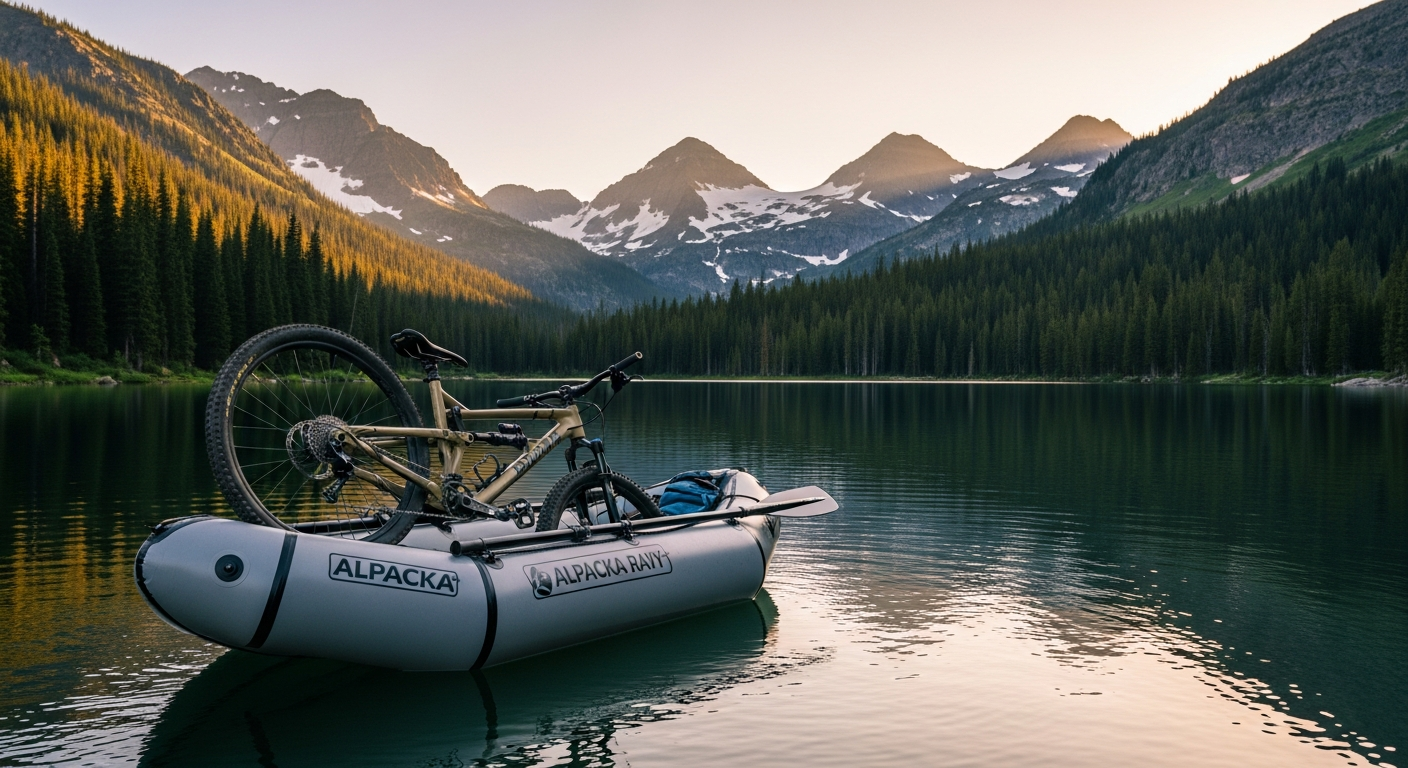
Imagine carrying your entire paddling vessel—complete raft, valves, and floor—in a stuff sack lighter than your sleeping bag. At just 4 lbs 12 oz, the Alpacka Raft Caribou achieves what seemed impossible: a full-sized packraft engineered specifically for explorers who refuse to choose between pedaling and paddling.
Bikerafting sits at the intersection of two worlds. It’s where mountain biking meets whitewater adventure, where remote wilderness access demands both wheel and paddle. The Caribou was purpose-built for this unconventional niche, solving a genuine problem faced by backcountry explorers pushing into terrain where traditional trails evaporate and rivers become highways. When weight becomes everything on extended expeditions, the Caribou’s featherweight design fundamentally changes what’s possible.
Discover why the Caribou is transforming ultralight bikerafting expeditions today.
The Ultralight Revolution: Why Weight Matters in Backcountry Paddling
How Carrying 4 lbs 12 oz Changes Everything
Every ounce compounds over multi-day expeditions. A packraft that weighs under five pounds means the difference between accessible and impossible for foot mobility. When you’re hiking approach trails, scrambling through rocky terrain, or bushwhacking to remote put-ins, raft weight directly impacts your energy expenditure and timeline. The Caribou’s ultralight construction permits ambitious itineraries that heavier alternatives simply can’t support.
The Psychological Shift of Minimal Gear Weight
Experienced expeditionaries recognize something that statistics can’t capture: the mental transformation when total pack weight drops significantly. The Caribou enables explorers to move faster, hike longer, and maintain energy reserves that make the difference between an enjoyable journey and an exhausting slog. Multi-day trips feel fundamentally different when your packraft isn’t dragging you down.
Where the Caribou Ranks Among Competitors
Full-sized packrafts typically weigh between 8 and 12 pounds. The Caribou’s 4 lbs 12 oz positions it at the absolute ultralight end of the spectrum. Some specialty minimalist options exist, but they sacrifice cargo capacity or durability. The Caribou achieves that rare balance—genuine lightweight design without becoming a fragile specialty tool.
Real Impact on Week-Long Adventures
Consider a seven-day bikerafting expedition. A standard packraft might add 10 pounds to your total system weight. The Caribou shaves nearly 5 pounds from that equation. Across seven days of travel, that translates to roughly 35 pounds less cumulative effort—equivalent to eliminating an entire days’ food ration from your pack. Over mountainous terrain, that difference fundamentally shapes your expedition feasibility.
Why Minimalist Adventurers Choose the Caribou
Ultralight enthusiasts recognize that heavier full-sized alternatives contradict their philosophy. The Caribou doesn’t force that compromise. You get genuine cargo capacity, proper biking accommodation, and legitimate durability without the weight penalty that comes with conventional packrafts. It’s purpose-built for adventurers who’ve already optimized every other piece of their system.
Bikerafting-Specific Engineering: The Late Rise Bow Advantage
Accommodating Bicycles Without Compromising Stability
The distinctive Late Rise Bow represents genuine innovation for bikerafting. Traditional packraft bows sit relatively flat, which works fine for conventional paddling. But when you’re securing a bicycle on the front, a higher bow profile manages that weight distribution more effectively. The Caribou’s design keeps the bike elevated enough to clear water while maintaining raft stability in flatwater and gentle rapids.
Lash Point Positioning for Secure Bike Attachment
Strategically placed attachment points let you secure your bicycle without interference to paddling efficiency. You’re not fighting against awkwardly positioned gear or struggling with improvised rigging solutions. The lash points work with the bike’s geometry rather than against it, creating a system that feels integrated rather than bolted-on.
The Backcountry Front End Loader Concept
Alpacka calls the Caribou the “backcountry front end loader,” and that description captures something essential: you’re not just carrying a bike, you’re carrying it intelligently. The design transforms your bike from a liability during the paddling segments into an asset that’s secure, stable, and ready for immediate use once you land. This eliminates complex shuttle logistics and enables seamless transitions between cycling and paddling.
Load Distribution During Flatwater and Light Rapids
With a bike mounted on the bow, weight distribution remains balanced across the raft’s length. In Class I and gentle Class II conditions, the Caribou handles that configuration comfortably. The bike sits high enough that it doesn’t interfere with water flow around the hull, and the raft’s low center of gravity with the Cargo Fly keeps everything feeling stable and controlled.
Why This Eliminates the Need for Separate Transport Solutions
Before bikerafting-specific packrafts existed, explorers faced an impossible choice: leave the bike behind or figure out how to transport it separately. The Caribou removes that dilemma entirely. Your bike becomes integral to the system, not a complication requiring creative problem-solving.
Durability Meets Minimalism: Material Construction and Longevity
Lightweight Tube Construction Without Fragility
The Caribou’s ultralight tubes aren’t fragile. Alpacka engineered them to maintain puncture resistance despite their minimal weight. The material selection represents genuine engineering sophistication—choosing the thinnest viable thickness while preserving durability. You’re not getting a paper-thin vessel that requires babying through rough terrain.
840d Ballistic Nylon Floor Protection
The floor represents the abuse point on any packraft. Sharp rocks, roots, and abrasive terrain constantly threaten integrity. The Caribou’s 840d Ballistic Nylon floor provides legitimate protection without excessive weight addition. This robust material handles rough terrain that would shred lighter alternatives, making the Caribou suitable for genuine backcountry expeditions rather than just flatwater paddling.
Maintaining Structural Integrity Across Seasons
Multiple seasons of use test durability claims. The Caribou consistently maintains its integrity through repeated expeditions, exposure to sun and UV, temperature fluctuations, and rough handling. Users report confidence taking the boat into remote areas where repair isn’t an option, trusting that proper care will keep it functional season after season.
Repair-Friendliness for Remote Self-Sufficiency
Ultralight adventurers often travel without support. The Caribou’s construction makes field repairs practical. Patch kits work effectively, and the design doesn’t incorporate complex systems that fail catastrophically. You can address damage yourself using standard packraft repair supplies, which matters when you’re days away from civilization.
Durability Comparison: Standard Versus Cargo Fly
Learn how the Cargo Fly option enhances durability and functionality for serious expeditions.
The standard Caribou handles years of use reliably. Adding the Cargo Fly system doesn’t compromise durability—it actually enhances longevity by protecting the tubes from UV exposure and providing an additional protective layer against impacts. The zipper mechanism is robust and field-repairable, adding functionality without introducing fragile components.
The Cargo Fly System: Dry Storage and Stability Innovation
Creating Internal Tube Storage
The optional Cargo Fly zipper system represents clever design. Instead of lashing gear externally, you store items inside the raft’s tubes. This keeps your camping equipment, food, and personal gear completely protected from water and weather. More importantly, it transforms how you organize your entire expedition, treating the raft as integral storage rather than just a floating platform.
Weight Distribution Benefits
Cargo stored low and centered within the raft dramatically improves stability. Rather than packing weight on top of the tubes where it raises your center of gravity, the Cargo Fly lets you distribute it throughout the raft’s volume. This lower center of gravity reduces how much the boat rocks in wind and current, making the Caribou feel more planted and responsive.
Waterproofing Advantages for Multi-Day Trips
When you’re crossing rivers and navigating whitewater, protecting your gear becomes critical. The Cargo Fly’s waterproof storage ensures that your sleeping bag, clothing, and emergency supplies stay dry even during splashes or wave wash. This eliminates the need for expensive dry bags for every single item, streamlining your packing system.
Improved Handling and Wind Resistance
With cargo secured internally, the Caribou’s wind footprint shrinks. You’re not creating a sail with lashed gear stacked on the tubes. The boat sits lower, rides more intuitively, and feels less affected by crosswinds that would otherwise push it around. This stability matters during long paddling segments when fatigue affects your paddling precision.
Cost-Benefit Analysis of Adding Cargo Fly
The Cargo Fly option adds weight and cost, but it delivers genuine functional improvements. For single-day paddling, it may be unnecessary. For multi-day expeditions where gear organization and waterproofing matter, the Cargo Fly transforms the Caribou into a more capable system. The weight addition is modest—roughly 4 ounces—making it a worthwhile investment for serious bikerafting trips.
Flatwater and Lightwater Mastery: Where the Caribou Excels
Ideal Conditions: Alpine Lakes, Gentle Streams, and Calm Canyons
The Caribou shines on flatwater. Alpine lakes tucked into remote basins represent the perfect Caribou environment—no current, no significant obstacles, just endless paddling across pristine water. Gentle streams that require basic maneuvering work beautifully. Canyon systems with calm water let you experience dramatic geology without technical paddling demands.
Performance in Class I and Class II Conditions
The Caribou handles Class I water confidently. Easy rapids with minimal current and no obstacles pose no problem. Class II conditions—moderate rapids with straightforward navigation—are well within the boat’s capability. You’ll navigate through competently, though you’re not exploiting the Caribou’s full potential since it’s not optimized for rapids.
Comfort During Extended Paddling
Ultralight packrafts sometimes feel cramped on multi-hour paddles. The Caribou surprises users with how comfortable it feels across entire days of paddling. The seating position works well, the tubes provide adequate support, and the modest weight translates to responsive handling that doesn’t feel sluggish.
Stability When Loaded with Expedition Gear
A Caribou laden with camping equipment, food, and bike gear sits noticeably lower in the water than an empty boat. That deeper immersion actually improves handling. The Caribou tracks straighter when loaded, and the additional waterline provides stability that makes paddling feel controlled and predictable.
Real Expedition Examples
Bikerafters use the Caribou for canyon runs through desert terrain, accessing geological wonders unreachable by vehicle or traditional hiking. High-altitude lake crossings connect mountain basins, turning cycling trips into multi-dimensional journeys. Remote river access through flatwater sections reaches fishing access or backcountry camps impossible to approach otherwise. These applications define what the Caribou was built for.
The Honest Limitations: When the Caribou Isn’t the Right Choice
Whitewater Beyond Class II Demands Different Boats
The Caribou isn’t a whitewater raft. While it can manage Class III rapids occasionally, pushing into aggressive whitewater contradicts the boat’s design philosophy. If your expedition includes significant Class III or Class IV sections, choose a more specialized whitewater raft. The Caribou prioritizes ultralight weight and biking functionality over whitewater agility.
Handling Without Active Paddling
In moving water without active paddling, the Caribou drifts and spins easily. Strong currents push the boat around, and wind deflects it dramatically. This matters less on organized expeditions with consistent paddling, but if you plan extended drift sections, you’ll notice the Caribou responds differently than heavier, more traditional packrafts.
Speed and Maneuverability Compared to Sportier Models
The Caribou trades sporty performance for ultralight capability. If you’re chasing fast, nimble handling or want to paddle aggressively in rapids, heavier packraft models feel more responsive. The Caribou prioritizes expedition comfort and cargo capacity, accepting slower speed as the tradeoff.
Situations Requiring Aggressive Whitewater Paddling
Technical canyon runs with numerous obstacles, river sections with pushy Class III rapids, or expeditions emphasizing paddling over biking demand different equipment. The Caribou serves those applications poorly, and honest assessment of your actual route prevents costly mistakes.
Assessing Route Suitability
Before committing to the Caribou, objectively evaluate your intended waterways. Confirm that Class II or lower conditions dominate your paddling sections. Verify that windswept alpine lakes won’t create hazardous conditions. Consider whether calm canyons and gentle streams actually match your expedition goals. Honest assessment prevents buying the wrong boat.
Bikerafting Trip Planning: Maximizing Your Caribou Experience
Route Selection Strategies
Leverage the Caribou’s ultralight design by selecting routes inaccessible with heavier boats. Look for high-altitude alpine lakes that demand hiking approach trails. Identify canyon systems where water travel complements cycling segments. Target remote basins where combining bike and paddle access opens possibilities that either mode alone couldn’t achieve. The Caribou enables ambitious expedition planning.
Gear Organization Systems
Organize your system around the Caribou’s integrated design. Pack bike tools and spare parts in locations accessible without unloading the entire raft. Store camping gear in the Cargo Fly for easy access at camp. Arrange paddle and bike separated logically so transitions between modes happen smoothly. Treat gear organization as expedition planning rather than afterthought.
Multi-Day Itinerary Planning
Plan cycling and paddling segments strategically. Perhaps day one involves biking to a remote put-in, day two is pure paddling across a lake system, and day three combines both modes through a canyon section. Understanding logistics—where you’ll leave the bike, how you’ll manage shuttle challenges, when you’ll have time to manage repairs—shapes realistic itineraries.
Weight Distribution Techniques
With a bike mounted on the bow, balance remaining cargo carefully. Don’t overload the stern, which would make the boat’s front ride too high. Distribute camping gear throughout the Cargo Fly system rather than concentrating it in one location. Test your loaded configuration on a short paddling segment before committing to extended expeditions.
Shuttle Logistics and Access Points
Bikerafting eliminates some traditional shuttle challenges because your bike is your transportation. However, you still need to think about how you’ll access put-ins and manage takeouts. Identify access roads that permit parking. Consider whether shuttle services operate in the area. Plan for vehicles to meet you at takeout, or arrange cycling back to your starting point if roads permit.
Investment and Availability: Understanding Caribou Pricing and Options
Base Model Pricing and Ready to Ship Configurations
The Caribou starts around $995 for base models. Ready to Ship configurations—pre-assembled boats ready to paddle—run approximately $1,200. The pricing reflects Alpacka’s hand-assembly approach and specialized engineering. While not inexpensive, the cost is competitive with other quality ultralight packrafts, and the specialized bikerafting features justify the investment for those who’ll actually use them.
What’s Included in Different Package Tiers
Base models include the raft and standard valve configuration. Add-ons like the Cargo Fly increase the price and weight slightly. Paddle bundles, seat upgrades, and custom valve options change the final configuration. Understanding what each option adds helps you right-size your purchase to actual expedition needs.
Resale Value and Long-Term Investment
Quality packrafts hold value reasonably well. A well-maintained Caribou maintains perhaps 60-70% of initial investment value on the used market. This retention reflects genuine demand from bikepackers seeking proven equipment. If you’re uncertain about commitment, the resale perspective provides some financial comfort.
Comparing Caribou Costs Against Alternatives
Heavier traditional packrafts cost roughly similarly but lack bikerafting specialization. Alternative ultralight options exist but rarely combine bike accommodation with comparable durability or comfort. Bike transport solutions—trailers, separate carriers, specialized mountain bikes—add complexity and weight. The Caribou consolidates multiple solutions into a single investment.
Finding Ready to Ship Models and Lead Times
Alpacka maintains Ready to Ship inventory for popular configurations, significantly reducing wait times. Lead times vary seasonally, with spring and summer typically requiring longer waits. Checking availability before committing to expedition dates prevents scheduling conflicts. The brand’s transparency about lead times helps planning.
The Bikerafting Community: Who’s Choosing the Caribou and Why
Demographics of Ultralight Adventurers
Caribou owners tend to be experienced backpackers and cyclists who’ve already optimized other gear. They understand weight-to-benefit tradeoffs and aren’t casual recreationalists testing bikerafting tentatively. These are individuals planning genuine multi-day expeditions where ultralight design meaningfully shapes feasibility.
User Testimonials from Transformative Expeditions
Bikepackers report that the Caribou fundamentally changed what expeditions they could undertake. Routes previously requiring detailed shuttle logistics became achievable. Remote basins became accessible. Expedition planning shifted from “how do we transport the bike” to “where can we go with integrated bike-and-paddle capability.” The testimonials consistently emphasize liberation—the freedom that comes from owning equipment truly designed for their style of adventure.
Social Proof from Expedition Documentation
Adventure media increasingly features Caribou-based trips. Instagram accounts showcase canyon runs, alpine lake crossings, and multiday bikerafting journeys featuring the distinctive Alpacka design. This visual documentation demonstrates real applications and builds confidence in the boat’s capabilities.
Niche Communities Built Around Bikerafting
A genuine bikerafting community has grown around packrafts like the Caribou. Online forums, local paddling groups, and expedition clubs discuss routes, techniques, and gear strategies specific to combining bikes and boats. This community serves as knowledge resource and inspiration—your fellow Caribou owners becoming expedition partners and planning collaborators.
Broader Trends in Backcountry Recreation
The Caribou’s popularity reflects a larger shift toward multimodal backcountry travel. Adventurers increasingly embrace combining traditional modes—hiking, biking, paddling—rather than specializing in single disciplines. The Caribou enables this philosophy by making bike-and-paddle combinations genuinely practical for ultralight expeditions.
Beyond the Specifications: Making Your Bikerafting Dreams Real
The Alpacka Raft Caribou isn’t merely another packraft—it’s a gateway to expeditions that previously seemed impossible. By eliminating weight without sacrificing durability, you unlock access to remote landscapes that demand both pedal power and paddle strokes. Alpine lakes, canyon systems, and backcountry basins become genuinely achievable on multi-day journeys.
The Caribou shines brightest when your adventures follow its design intent: ultralight expeditions combining cycling and paddling in flatwater and gentle rapids. When you’re chasing alpine lakes, threading through calm canyons, and weaving between biking and paddling, the Caribou’s specialized capability becomes obvious. Traditional packrafts compromise these applications; the Caribou embraces them.
If your expeditions demand ultralight packability, genuine bikerafting specialization, and the capacity to haul substantial loads without destroying your body, the Caribou merits serious consideration. Begin by mapping intended routes and honestly assessing the water conditions you’ll encounter. Determine whether the weight savings justify investment for your specific adventures. Start with day trips and short expeditions to develop confidence before committing to extended backcountry journeys.
Leave a Reply