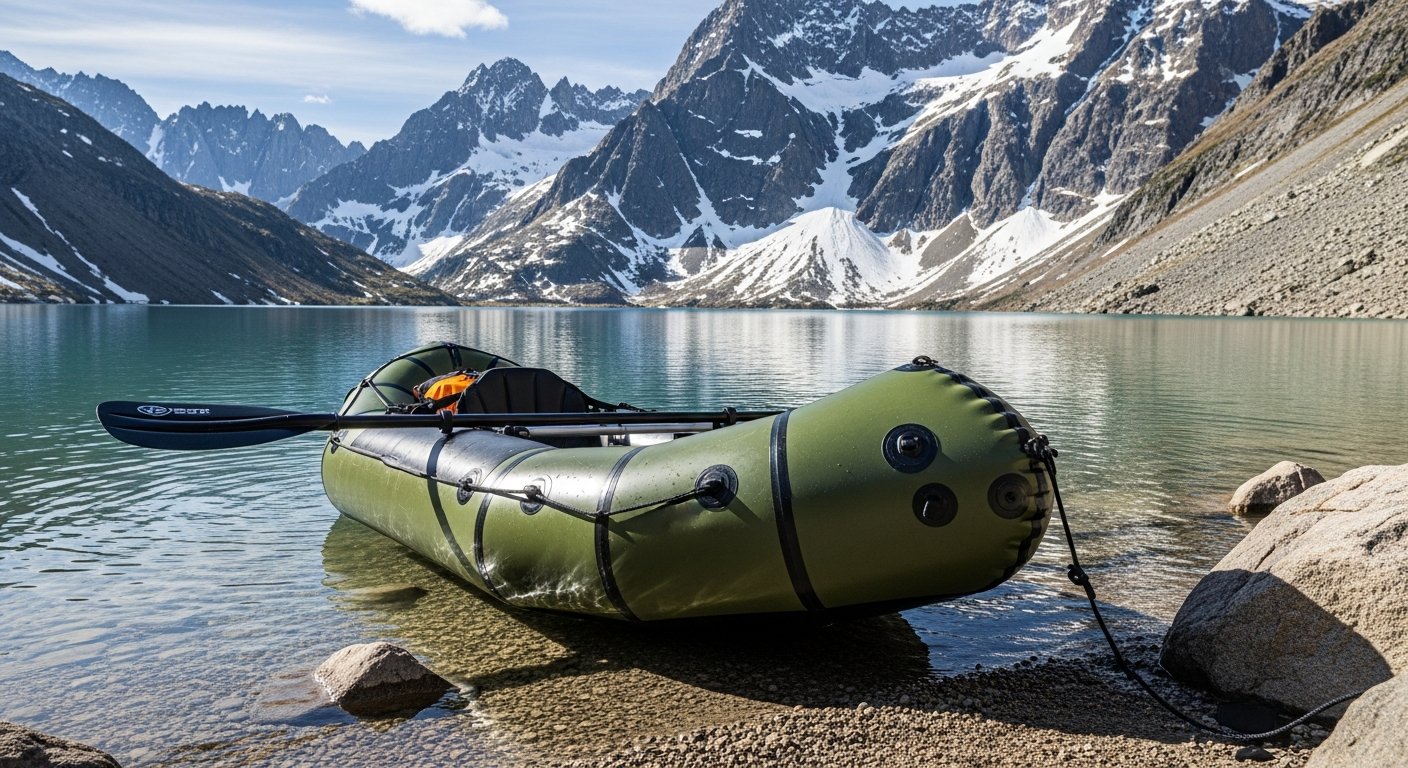
When you're staring at a packraft collecting dust in your garage, you're probably wondering if you made the right choice. Most paddlers face the same dilemma: they buy a boat optimized for one thing—flatwater cruising, technical whitewater, or backcountry portability—and it leaves them frustrated when conditions change. The Alpacka Expedition obliterates that problem entirely. Over 20 years of continuous refinement separates this 2026 model from the rest of the packraft market, transforming what started as a niche product into the go-to choice for serious expedition paddlers.
The conventional wisdom says you need multiple boats. One for calm lakes, another for whitewater, a third for remote traverses where weight matters. The Expedition disagrees. This is a purpose-built expedition vessel engineered to bridge the impossible gap between portability and performance. At 8.4 pounds, it packs small enough for backcountry access. Yet it handles Class 4 whitewater with the confidence of a dedicated river craft. Flatwater, lightwater, technical sections—the Expedition transitions seamlessly across all of it, turning the multi-boat fantasy into a single, intelligent reality.
Discover the Alpacka Expedition and transform your expedition capabilities today.
The Evolution of Expedition Packrafting: What Makes the 2026 Model Stand Out
How two decades of design refinement shaped the modern Expedition
Alpacka didn't stumble into excellence. The brand spent 20+ years methodically improving every aspect of packraft design, learning from thousands of expedition paddlers who pushed these boats to their limits. Each iteration incorporated feedback from remote river traverses, technical descents, and multi-week expeditions in some of the world's harshest environments. The 2026 Expedition represents the culmination of that patient, rigorous development process.
Mage-derived hull technology and its impact on speed and whitewater handling
The hull geometry of the 2026 model borrows heavily from Alpacka's Mage design—a proven performer in technical whitewater and fast-moving rivers. This inheritance means the Expedition cuts through water with noticeably improved speed compared to earlier generations. The refined shape gives paddlers better responsiveness in technical sections, translating clumsy strokes into precise boat control. In Class 3-4 whitewater, that responsiveness becomes the difference between a thrilling run and a harrowing one.
Flat floor design and improved tracking capabilities
A flat floor might sound like a minor detail, but it fundamentally changes how a packraft behaves on the water. Where rounded bottoms sacrifice tracking for pivot ability, the flat floor keeps the Expedition pointed where you want it to go. On extended flatwater sections—common during backcountry traverses between whitewater zones—this design choice prevents the constant micro-corrections that exhaust paddlers. The boat stays on line, preserving energy for the miles ahead.
Why the 2026 iteration represents a significant leap for serious paddlers
Taken individually, each improvement to the 2026 model sounds incremental. The Mage hull is slightly better. The flat floor tracks a bit straighter. The refined outfitting offers marginally more control. But cumulatively, these refinements compound into something genuinely transformative. Experienced paddlers who've spent time in earlier Expedition versions report that the 2026 model feels like a different boat—faster, more responsive, more confident in technical water. That leap matters when you're dozens of miles from civilization.
Comparison to earlier Alpacka models and what changed
The original Expedition established the packraft formula: lightweight, versatile, capable. But it had limitations. It was slower on flatwater. The outfitting was functional rather than inspiring. Bow capacity limitations made certain expedition configurations awkward. The 2026 model preserves what worked while systematically addressing what didn't. Paddlers upgrading from earlier generations consistently report that the refinements justify the investment, particularly on multi-week expeditions where accumulated improvements compound into meaningful advantages.
Ultralight Portability Meets Robust Construction: The 8.4-Pound Paradox
Weighing just 8.4 pounds without sacrificing durability
Conventional boat design suggests a fundamental trade-off: light boats are fragile, durable boats are heavy. The Expedition violates that assumption. At 8.4 pounds, it's light enough to pack into backcountry for 30-mile treks where every ounce matters. Yet Alpacka achieved this without cutting corners on materials or construction. The boat uses premium drop-stitch fabric and high-quality urethane, the same compounds found in expedition-grade packrafts costing far more money.
Premium materials and construction quality that withstand extended expeditions
Durability matters when you're paddling remote rivers where rescue options don't exist. The Expedition's tube construction uses proven materials designed to survive rocky landings, abrasive riverbanks, and the general abuse that comes with expedition paddling. Users report these boats lasting decade after decade with minimal maintenance—a remarkable track record for any inflatable craft. The quality of seams, valve integration, and overall construction quality is immediately apparent when you hold the boat in your hands.
Packability advantages for remote access and long-distance carries
Remote access often requires hiking, sometimes for days, to reach the water. The Expedition's compact packed size transforms logistics. Unlike traditional kayaks that demand vehicle transport or elaborate shuttle arrangements, the Expedition fits inside a backpack. This packability opens entire regions to exploration—high mountain lakes, obscure river headwaters, remote traverses that few paddlers attempt because the access logistics seem impossible. The 8.4-pound weight means those carries don't destroy your legs before you even reach the water.
How lightweight design impacts expedition logistics and route planning
Carrying your boat changes the calculus of expedition planning. On a traditional river trip, you're chained to your shuttle arrangement. Bikeraft expeditions demand specific put-in and take-out locations with convenient road access. But with the Expedition's ultralight portability, you can portage between river systems. You can access alpine lakes at elevation. You can plan routes based on geography and adventure rather than logistics. That freedom is worth the premium price tag for expedition paddlers who've tasted it.
Durability testing and real-world longevity from experienced users
Packrafts live hard lives. They hit rocks. They drag across gravel bars. They're exposed to sun, weather, and the general punishment of backcountry travel. The Expedition handles all of it. Experienced users report their boats functioning flawlessly after a decade of regular expeditions. That longevity justifies the investment through cost-per-use math. A $1,700 boat that performs reliably for 20 years of expeditions costs less per paddling day than a $600 boat that needs replacing every five years.
Learn more about the Alpacka Expedition's construction quality and durability guarantees.
Engineered Control Systems: Thigh Hooks, Backbend, and Whitewater Mastery
Performance backbend design and paddler positioning for optimal control
The backbend isn't just padding—it's a precisely engineered seat that positions your body for maximum control. Your hips sit low in the boat, your torso angles slightly forward, your weight concentrates where it matters for boat control. This positioning transforms how a packraft responds to paddle input. Compared to less intentional seating arrangements, the backbend makes every stroke count. In technical whitewater, that responsiveness becomes the margin between running a line cleanly and swimming.
Thigh hook functionality in technical whitewater scenarios
Thigh hooks give you leverage to brace the boat when it tries to flip. In Class 3-4 whitewater, you're constantly making micro-adjustments to stay upright and on line. The hooks provide the mechanical connection between your body and the boat that makes those adjustments possible. Without them, you're wrestling the boat with pure paddle power. With them, you're dancing with it. Paddlers who've spent time in boats with quality thigh hooks report a dramatic increase in confidence in demanding water.
Inflatable footrest system and how it enhances boat control
Your feet are further from your center of gravity than your hips, making them powerful leverage points for boat control. The Expedition's inflatable footrest lets you position your feet precisely where they generate maximum effect. You can brace against it during braces. You can drive your legs forward to pivot the boat around rocks. You can maintain foot pressure for precise steering adjustments. This underrated feature fundamentally enhances control in technical water.
Whitewater deck and spray skirt integration for water management
A whitewater deck prevents water from sloshing into the cockpit from wave splash and surface turbulence. The spray skirt creates a seal around your torso, further managing water intrusion. Together, they keep your boat light and responsive rather than progressively heavier as it fills with water. In sustained whitewater sections or heavy rain conditions, this feature transforms paddling experience. Your boat stays nimble. Visibility remains clear. You maintain the stability and control that technical paddling demands.
Confidence-building features that allow paddlers to push boundaries safely
The collective effect of quality backbend, thigh hooks, footrest, and whitewater deck is confidence. These aren't luxury features—they're safety equipment that lets you paddle responsibly in genuinely challenging conditions. They give you the mechanical feedback and control necessary to recover from mistakes. They let you read water better because you're not spending all your attention just staying upright. That confidence expansion is particularly valuable for paddlers testing their limits in remote whitewater where rescue options are limited.
The TiZip Stern Revolution: Redefining Dry Storage for Multi-Day Adventures
Internal tube storage system and how it keeps gear dry and balanced
Most packrafts force you to stuff gear into external dry bags, which adds volume, creates awkward weight distribution, and consumes deck space. The Expedition's internal tube storage eliminates that friction. A waterproof compartment integrated into the stern tubes lets you stow critical expedition gear—first aid kit, repair supplies, fire-starting equipment, extra layers—directly inside the boat. Your gear stays impossibly dry because it's literally sealed inside the boat's flotation chambers.
TiZip closure technology and its reliability on extended trips
The TiZip is a marine-grade waterproof closure system, the same technology used in high-end dive bags and professional water gear. It reliably seals out water on multi-week expeditions. Paddlers report these closures functioning flawlessly after years of heavy use. They're robust enough to handle the repeated opening and closing of a long expedition where you access that storage compartment multiple times daily. The reliability removes anxiety from extended trips—you know your critical gear will stay protected.
Load distribution advantages for multi-day expeditions
Where weight sits in a boat fundamentally affects how it handles. The Expedition's internal storage concentrates critical weight in the stern tubes rather than distributed across external dry bags. This positioning preserves the boat's designed handling characteristics. Your boat stays balanced, responsive, and predictable even when fully loaded for a week in the backcountry. That balance matters when you're paddling technical water with a heavy pack. It means the boat behaves like itself rather than like a raft transformed by awkward load distribution.
Gear organization strategies specific to the Expedition's storage capabilities
The internal storage compartment offers limited space—probably 15-20 liters—forcing intentional packing decisions. Experienced Expedition users develop systematic approaches: first aid kit and repair supplies get priority, along with a lightweight emergency shelter and extra insulation. Toiletries, medications, and other essentials fill remaining space. Sleeping bag, tent, and main food stores go in traditional dry bags secured to the boat. This two-tier system keeps your most critical items protected and accessible while using external bags efficiently for bulk cargo.
Comparison to external dry bags and why internal storage changes the game
External dry bags force compromises. They create deck clutter, making paddling awkward. They add volume to your pack profile. They shift weight unpredictably based on how you load them. The internal storage system eliminates these problems. Your boat remains streamlined. Weight distribution stays consistent. You reduce total gear volume because internal storage is supremely efficient. On multi-week expeditions where every ounce and every inch matter, this distinction compounds into genuine advantage.
Versatility Across Water Conditions: From Flatwater to Class 4 Whitewater
Seamless performance transitions between different paddling environments
Most expedition paddlers encounter diverse conditions. A typical multi-day traverse might start with lake paddling to reach a river, include 10 miles of technical whitewater, transition to slower sections, and finish with another lake crossing. The Expedition handles all of it without specialization trade-offs. You're not constantly wishing you'd brought a different boat. You're not resorting to workarounds or technique adjustments. The boat simply adapts to whatever water appears next.
Flatwater efficiency and speed considerations
On flatwater, the Expedition is competent rather than exceptional. The short, wide, flat-hulled design prioritizes versatility over flatwater speed. Compared to a racing kayak or touring canoe, the Expedition is noticeably slower. Over a full day of paddling open water, those lost knots accumulate into meaningful time differences. But for expedition contexts—where you're covering 10-15 miles daily through mixed conditions rather than racing 50 miles of pure flatwater—the difference becomes manageable. You trade some speed for the ability to paddle whitewater later that same day without changing boats.
Lightwater and Class 1-2 handling characteristics
The Expedition absolutely dominates light current and small wave trains. It pivots quickly, catches eddies predictably, and surfs waves with surprising liveliness. Paddlers report that light technical water—the kind without true danger but requiring some boat control—becomes genuinely fun. The boat feels playful rather than sluggish. This character makes those easier sections of multi-day expeditions enjoyable rather than just transition time between more exciting rapids.
Class 3-4 whitewater performance and stability in technical sections
Here's where the Expedition stops making excuses. In Class 3-4 water, it performs like a purpose-built whitewater boat. The hull holds lines through technical passages. The outfitting gives you the control to thread needles between rocks. The whitewater deck and spray skirt keep you dry and responsive. Experienced whitewater paddlers don't downgrade to the Expedition—they choose it because it delivers genuine performance. That capability comes from two decades of whitewater-specific development compressed into a versatile package.
Real-world expedition scenarios where the Expedition excels
Imagine a week-long river traverse. Day one involves hiking to a high alpine lake, paddling across it, and portaging to a river. The Expedition's packability and light weight make this possible. Days two through four follow a technical river with Class 2-3 rapids and occasional flatwater sections. The Expedition handles everything flawlessly. Days five and six involve slower sections, requiring flatwater travel that's competent if not thrilling. Day seven is a lake paddle out. The Expedition completes the entire expedition without compromising on any section. That's versatility in practice.
Investment Considerations: Premium Pricing and Long-Term Value
Price range ($1,500–$1,825 USD) and market positioning
The Expedition costs more than most packrafts. You could buy three basic packrafts for that money. Or one really nice kayak. That price tag feels steep until you consider what you're actually purchasing: a vessel engineered over two decades for expedition-scale demands, built from premium materials, backed by a company with a reputation for standing behind their products. The Expedition positions itself at the summit of the packraft market, competing on capability rather than affordability.
Cost-per-use analysis for serious expedition paddlers
Cost-per-use math transforms how you should evaluate this investment. If you take your boat on 20 expeditions across five years, that's $75-90 per expedition. Add in the fact that the boat typically lasts 15-20 years with reasonable care, and the annual cost drops to $100-150 for serious paddlers who use their gear regularly. Compare that to owning multiple specialized boats, each with their own cost and storage requirements. The Expedition consolidates that multi-boat approach into a single efficient platform.
Resale value and durability justifying premium investment
Used Expedition packrafts hold value better than almost any recreational boat. A five-year-old model in good condition typically resells for 60-70% of original price. That's exceptional for any recreational gear. It reflects the boat's durable construction, enduring demand, and the reality that Alpacka boats age gracefully—they don't become obsolete as quickly as other products. If you ever decide packrafting isn't your thing, your exit cost is substantially lower than purchasing new suggests.
Financing options and payment plans for budget-conscious buyers
Alpacka offers various purchase options to address the upfront investment. Some retailers provide financing through payment plans that spread the cost across several months. Many serious paddlers justify the purchase by committing to multiple expeditions annually—effectively forcing themselves to get maximum value from their investment. Others view it as a one-time purchase, similar to buying quality mountaineering equipment, that they'll own for their entire paddling career.
ROI comparison to purchasing multiple specialized boats
A comprehensive packraft quiver might include a specialized flat-water craft, a technical whitewater boat, and a multi-purpose touring raft. That's $3,000-5,000 in total gear. The Expedition accomplishes roughly 70-80% of what those three boats do in one $1,700 platform. For most expedition paddlers, that 70-80% covers 95% of their actual paddling. The money saved compared to owning multiple boats easily justifies the premium.
Honest Trade-Offs: Understanding the Expedition's Limitations
Flatwater performance versus traditional kayaks and canoes
This is the honest conversation. The Expedition is slower on pure flatwater than a comparable kayak or canoe. If your primary interest is crossing large lakes or paddling long distance on calm water, a traditional boat will serve you better. The Expedition makes this trade deliberately—it sacrifices top-end flatwater performance for whitewater capability and portability. That's the correct optimization for expedition paddlers but a genuine limitation for flatwater specialists.
Tracking efficiency on extended flatwater sections
Tracking—the ability to maintain a straight line without constant steering—isn't the Expedition's strongest virtue. The boat requires more corrective strokes on extended flatwater compared to higher-volume, more streamlined designs. This becomes noticeable after several hours of paddling open water. It's not a deal-breaker for expeditions that mix water types, but paddlers planning multi-day flatwater traverses should seriously consider whether the Expedition serves their actual needs.
Reduced bow weight capacity in the 2026 model and bikerafting implications
The 2026 Expedition has less capacity for forward loading compared to earlier versions. This matters if you practice bikerafting—bringing packrafts to mountain lakes via bicycle. The reduced bow capacity means you can't load your gear as far forward, affecting weight distribution and balance. Paddlers committed to bikerafting might need to reconsider whether the 2026 model fits their approach or look at alternative Alpacka models with greater bow capacity.
When a different packraft or boat might be a better choice
If your primary interest is Class 4-5 whitewater, serious packraft whitewater specialists might offer better performance. If you're planning a month-long flatwater expedition, a kayak or canoe is the smarter tool. If you primarily recreate on a single river system, a river-specific boat might outperform the Expedition's jack-of-all-trades approach. The Expedition's genius is versatility, which means it's optimal for people doing diverse paddling rather than specializing deeply in one discipline.
Honest assessment of the short, wide, flat-hulled design trade-offs
The short, wide, flat-hulled design is deliberate. It enables the versatility, packability, and whitewater capability that define the Expedition. But this geometry comes with unavoidable consequences: compromised flatwater efficiency, reduced speed, and tracking characteristics that don't match sleeker hull forms. Accepting these trade-offs is part of choosing the Expedition. Paddlers need to honestly assess whether the versatility they gain is worth the specialization they sacrifice.
Who Should Buy the Alpacka Expedition: Ideal Use Cases and Paddler Profiles
Backcountry expedition paddlers and remote river traverses
If you live for multi-day journeys into regions where roads don't penetrate, the Expedition is your boat. Its packability transforms logistics. Its versatility means you're not constrained by water conditions. Its durability means you can rely on it in places where rescue isn't an option. This is the core market, and the Expedition dominates it.
Multi-day trip enthusiasts seeking lightweight portability
Weekend warriors who've tasted the freedom of packraft travel understand the appeal. The Expedition lets you access wilderness without elaborate logistics. You can execute river trips that traditional kayaks simply can't reach. If you regularly plan multi-day adventures and want one boat that handles everything, the Expedition becomes essential equipment.
Whitewater adventurers wanting versatile Class 2-4 capability
Whitewater paddlers who've outgrown playboats or freestyle kayaks often discover packrafts. The Expedition serves the paddler who wants genuine whitewater capability but isn't willing to surrender versatility. You get the technical performance for serious rapids plus the ability to handle the flatwater sections that connect them.
Weekend warriors balancing performance with packability
Not every buyer is a professional guide or ultra-serious expeditioner. Some are simply outdoor enthusiasts who want capable equipment that doesn't demand perfect conditions or elaborate organization. The Expedition serves them too—it's the one boat they can load into a backpack and head into wilderness, confident it will handle whatever conditions appear.
Expedition athletes and professional guides
Guides running commercial expeditions often choose the Expedition because it lets them standardize their fleet. One boat handles diverse river systems and water conditions. That versatility reduces costs, simplifies logistics, and ensures consistent client experience. Serious expedition athletes choose it for the same reason: it's the optimized tool for their lifestyle.
Paddlers transitioning from traditional kayaks to packraft systems
Kayak paddlers often dismiss packrafts as crude compromises. Then they take one expedition and understand the appeal. The Expedition serves these paddlers because it performs like a real boat rather than like a toy. It bridges the gap between what they're accustomed to and what packraft travel offers. It gives them confidence while they learn a different approach to paddling.
Real-World Performance: What Expedition Users Actually Report
User testimonials from serious backcountry paddlers
The backcountry paddling community consistently praises the Expedition. Paddlers report that boats handle everything from alpine lakes to Class 4 descents. The versatility is genuine—they're not exaggerating or making excuses. Users also note that the boat ages well, performing reliably after years of heavy use. The internal storage system receives special appreciation for how it simplifies expedition logistics.
Expedition reports from multi-day remote river trips
Paddlers documenting their expeditions online—from Alaska to Patagonia to Central Asia—frequently choose the Expedition. Their expedition reports detail how the boat transitions smoothly between diverse conditions. Users consistently note that they didn't need to compromise on any section of their route. The boat handles lake paddling, technical sections, and everything between without specialization trade-offs.
Whitewater performance feedback from technical paddlers
Whitewater paddlers report that the 2026 model represents a genuine step forward. The improved hull geometry and refined outfitting enhance control in technical water. Users run Class 3-4 sections with confidence. The whitewater deck and spray skirt prevent water intrusion effectively. Paddlers who've tried multiple packraft models consistently place the Expedition at the top of their performance rankings.
Durability reports from years of extended use
Expedition owners report remarkable durability. Boats that have spent dozens of weeks in remote wilderness, bounced off rocks, dragged across gravel, and endured extreme UV exposure continue functioning flawlessly. Repairs are minimal. Degradation is slow. Users frequently report using the same boat across multiple decades. That longevity is rare in recreational boating and speaks to Alpacka's manufacturing quality.
Common modifications and customizations by experienced users
Experienced Expedition paddlers customize their boats for specific expedition needs. Some add additional attachment points for gear. Others modify outfitting for personal comfort preferences. Some reinforce specific areas based on their paddling style. The fact that users feel confident modifying their boats suggests robust construction—these boats can handle experimentation and customization without falling apart.
Community reputation and standing among packraft enthusiasts
Within the packrafting community, the Expedition holds elite status. It's the boat people recommend when someone asks what they should buy. It's the standard against which other packrafts are measured. This reputation reflects genuine performance rather than marketing—the community values capability above brand loyalty. That the Expedition has maintained its standing through multiple design iterations speaks to Alpacka's commitment to continuous improvement.
The Path Forward: Choosing Your Expedition Setup
Essential accessories and outfitting for expedition paddling
The Expedition arrives with core outfitting, but expedition paddling demands additional components. A quality spray deck is essential for water management. Additional thigh straps might be necessary if the standard setup doesn't match your proportions. Secure attachment systems—carabiners, straps, tie-off points—matter for securing gear during portages. Your expedition won't run smoothly without attention to these details.
Paddle selection and weight considerations
Your paddle becomes an extension of your body during expeditions. Lighter paddles reduce fatigue on multi-day journeys, but they sacrifice durability for remote use. Many expedition paddlers accept slightly heavier paddles that can withstand gravel bars and occasional misuse. Split-shaft paddles are worth serious consideration for packability on multi-day trips. The paddle you choose impacts your entire expedition experience, so invest thoughtfully.
Personal flotation device pairing for backcountry safety
Expedition paddling in remote areas demands serious PFD selection. You need a vest that provides flotation but doesn't interfere with paddling motion or gear access. Minimalist designs work in calm sections but lack confidence in whitewater. Premium expedition PFDs balance flotation, freedom of movement, and gear integration. Your safety equipment matters more on expeditions where rescue is days away.
Repair kits and maintenance protocols for remote expeditions
Packrafts fail eventually—valve issues, small punctures, seam separation. Being 50 miles from civilization when your boat fails transforms from inconvenience to genuine survival situation. Comprehensive repair kits should include patching materials, replacement valves, seam sealant, and valve tools. Understanding how to execute repairs before you leave civilization is equally essential. That knowledge and equipment insurance justifies its weight.
Complementary gear that maximizes the Expedition's capabilities
Your boat operates within an ecosystem of supporting gear. A quality dry bag system extends storage options beyond the internal compartment. Carabiners and tie-off systems secure loose gear. A packrafting backpack lets you efficiently carry the boat and gear to the water. Portage yokes make land travel easier. Complement the Expedition with thoughtfully selected gear and you maximize its potential.
Building your complete expedition system around the Alpacka
Successful expedition paddling emerges from cohesive system thinking rather than individual component decisions. Start with the Expedition as your foundation, then deliberately select complementary gear. Your complete system should balance weight, capability, cost, and durability. It should reflect your actual expedition style rather than hypothetical conditions. As you gain experience, your system will evolve. Start with the Expedition and build outward from there.
The Bottom Line: Why the Alpacka Expedition Remains the Gold Standard
The 2026 Alpacka Expedition Packraft isn't perfect for every paddler—and that's precisely why it's so good for the ones it serves. The premium price tag stings. The flatwater performance won't match a traditional kayak. The reduced bow capacity changes how you approach bikerafting. But here's what matters: this craft delivers unmatched versatility for serious backcountry adventurers.
The internal TiZip storage system alone transforms multi-day expedition logistics. You stop fighting external dry bags and start benefiting from integrated storage that keeps gear protected and weight distributed intelligently. The refined hull geometry and whitewater deck give you genuine confidence in Class 3-4 water, which matters when you're paddling remote sections where rescue options don't exist. At 8.4 pounds, the boat doesn't punish you for choosing adventure over convenience.
After two decades of continuous refinement, Alpacka has engineered a packraft that handles nearly everything thrown at it—and does most things exceptionally well. Whether you're planning a remote river traverse, tackling technical whitewater, or simply want one versatile craft to replace a quiver of specialized boats, the Expedition deserves serious consideration. The investment pays dividends on every expedition.
Ready to explore packraft expeditions? Start by evaluating your primary paddling goals, then assess whether the Expedition's specific strengths align with your adventure vision. Your next great expedition might be waiting on the water. Begin your Alpacka Expedition adventure and unlock the freedom of versatile backcountry paddling.
Leave a Reply