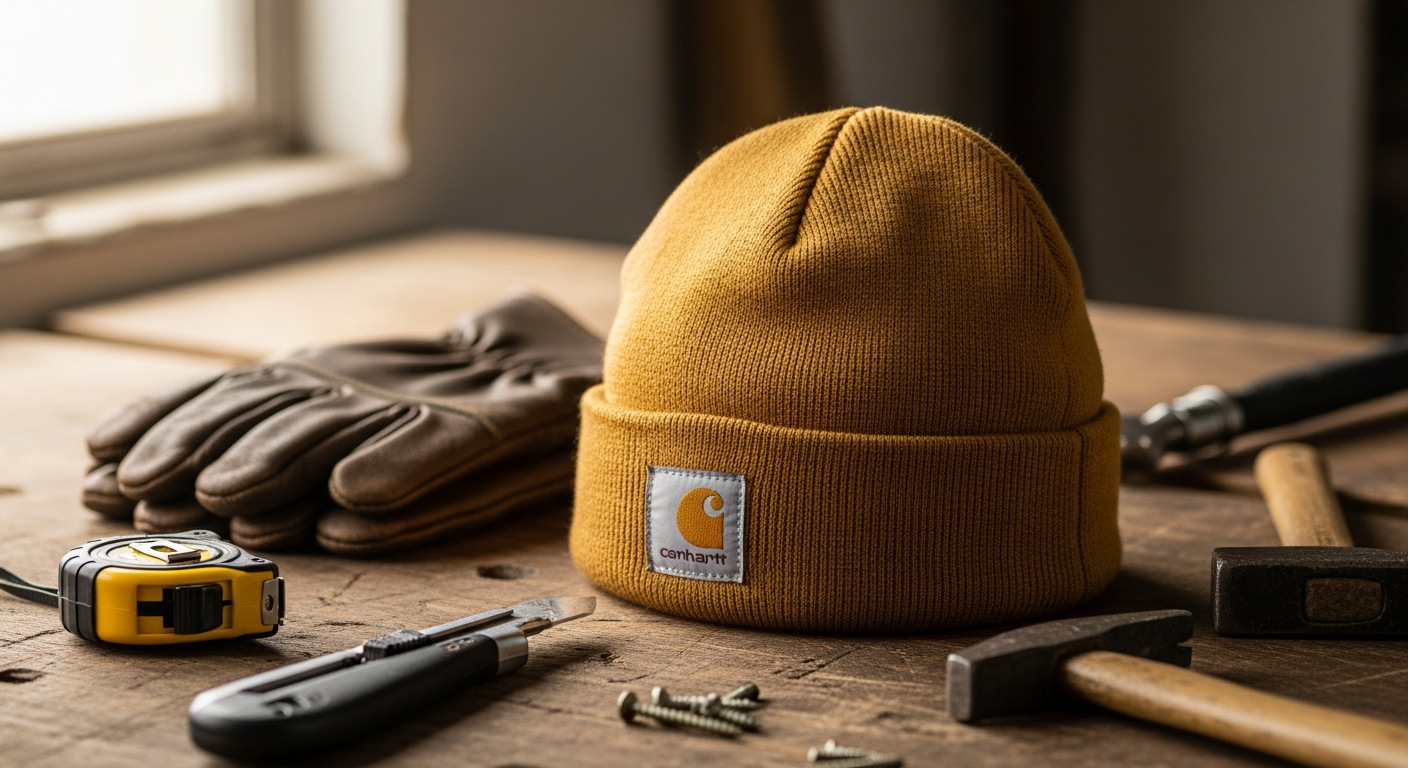
Construction workers, skateboarders, and fashion influencers all agree on one thing: the Carhartt A18 Watch Hat Beanie is the real deal. Since 1987, this acrylic knit beanie has remained a top seller across retailers worldwide, proving that some accessories truly stand the test of time. What started as pure workwear functionality has somehow captured the hearts of everyone from job site crews to runway models.
The Carhartt A18 isn't just another winter hat—it represents something bigger. Born during the brand's golden era, this beanie embodies the philosophy that quality construction and honest design never go out of style. Whether you're battling freezing temperatures on a construction site or making a statement on city streets, this beanie delivers warmth, durability, and undeniable authenticity that mass-produced alternatives simply can't match.
In this guide, you'll learn about its construction materials, why it's earned cult-status appeal, how to style it across different settings, and whether it's the right investment for your wardrobe. Discover the Carhartt A18 Watch Hat Beanie and see why it's a timeless essential. By the end, you'll understand exactly why this humble beanie has transcended its workwear origins to become a genuine cultural phenomenon.
The Origin Story: How a 1987 Workwear Essential Became a Fashion Phenomenon
Carhartt's Founding Philosophy and Commitment to Durability
Carhartt built its reputation on a simple but powerful premise: create work apparel that actually works. The company's founding ethos centered on understanding the real needs of workers and delivering products that could withstand punishment. This philosophy didn't mean cutting corners or using cheap materials. Instead, it meant selecting the best possible construction methods and materials, then testing them in actual working conditions before bringing them to market.
When the A18 Watch Hat launched in 1987, it arrived during a period when Carhartt had already established itself as the brand workers trusted. The beanie wasn't designed by fashion consultants or trend forecasters. It was developed by people who understood cold weather work and what you actually need to stay warm and comfortable during long hours outdoors.
The A18 Model's Original Purpose in Construction and Industrial Work
The A18 entered the market as a no-frills solution to a genuine problem: construction workers and outdoor laborers needed reliable head protection from harsh weather. The fold-up cuff provided critical ear coverage, the acrylic material offered reliable insulation, and the design kept things simple so workers could focus on their jobs rather than adjusting their gear.
On job sites, the A18 quickly proved its worth. Unlike fashion-forward beanies that fell apart after a season or two, this beanie could handle repeated wear, washing, and exposure to job site conditions. Contractors began stocking them for their crews, and word spread through networks of tradespeople that the Carhartt A18 was the real deal.
Timeline of How the A18 Transitioned from Purely Functional to Culturally Significant
The 1990s marked the beginning of a subtle shift. Carhartt workwear started appearing in contexts beyond construction sites. Skateboarders embraced it. Hip-hop artists incorporated it into their aesthetic. These weren't deliberate marketing moves by Carhartt—they were organic adoptions by communities that valued authenticity and durability just as much as construction workers did.
By the 2000s, the A18 had firmly established itself in streetwear culture. Fashion designers began referencing workwear aesthetics, and the Carhartt beanie became a bridge between genuine utility and urban style. The beanie wasn't being worn ironically—it was being worn because it actually worked, and it looked good while doing it.
Key Moments When the A18 Gained Mainstream Recognition Beyond Workwear Circles
Celebrity sightings played a significant role in broadening the A18's appeal beyond its original audience. Rappers and musicians wearing the beanie generated media coverage. Social media amplified visibility, with influencers and style-conscious individuals pairing the A18 with outfits that ranged from luxury fashion to casual streetwear.
Fashion publications that typically ignored workwear suddenly featured the Carhartt A18 in their pages. This wasn't because the beanie had changed—it was the same design from 1987. Rather, the cultural conversation had evolved to recognize that authentic, functional design has inherent style value.
The Role of Hip-Hop Culture and Celebrity Endorsements in Broadening Its Appeal
Hip-hop culture's embrace of workwear aesthetics gave the A18 significant cultural capital. Artists who valued authenticity and resisted manufactured fashion trends were drawn to genuine workwear pieces. The Carhartt beanie represented something real—not a designer's interpretation of utility, but actual utility clothing worn by actual workers.
This organic endorsement proved more powerful than any traditional advertising campaign. When celebrities wore the A18, they weren't endorsing a trend. They were signaling alignment with values like durability, authenticity, and substance over style for style's sake.
How Media Appearances Elevated the Beanie from Utility Item to Style Statement
Film and television appearances amplified the A18's visibility. The beanie appeared in movies and TV shows where characters worked real jobs or moved through gritty, authentic settings. Each appearance reinforced the message that this was a beanie for people who valued function alongside form.
Media coverage of the workwear-to-streetwear fashion movement frequently highlighted the Carhartt A18 as a prime example of how genuine utility pieces transcend their original purpose. Fashion journalists recognized that the beanie's appeal rested on something more durable than seasonal trends.
Material Breakdown: Understanding the 100% Acrylic Rib Knit Construction
Why Acrylic Was Chosen Over Traditional Wool or Cotton Blends
Carhartt's selection of 100% acrylic for the A18 represents a deliberate engineering choice, not a cost-cutting measure. Acrylic offers several distinct advantages for a work beanie. It provides reliable warmth retention without the moisture absorption problems that plague natural fibers. When you're working in wet conditions, a wool beanie can absorb moisture and lose its insulating properties. Acrylic resists water absorption, maintaining its warmth even when exposed to precipitation or moisture-heavy environments.
The material is also remarkably durable. It resists the kind of wear and tear that would destroy delicate natural fibers. Construction sites are hard on clothing—snagging on rough materials, repeated washing, exposure to chemicals—and acrylic stands up to this punishment far better than wool alternatives.
The Benefits of Rib Knit Fabric for Stretch and Comfort
The rib knit construction creates vertical ridges in the fabric that allow for significant stretch without losing structural integrity. This design choice directly addresses one of the major frustrations with many beanies: the one-size-fits-most approach often means the beanie either falls over your eyes or sits too tight.
The rib knit's elasticity means the A18 conforms to different head shapes and sizes. Someone with a smaller head won't experience excessive bagginess, and someone with a larger head won't feel squeezed. This stretchability also means the beanie remains comfortable throughout the day, adjusting slightly as you move and ensuring consistent coverage without pressure points.
Thickness and Density Specifications That Provide Superior Insulation
The A18 uses a thick acrylic knit that delivers serious insulation value. The density of the knit isn't so heavy that the beanie becomes bulky or uncomfortable, but it's substantial enough to provide meaningful warmth protection. You're not wearing gossamer-thin material that looks impressive but fails to deliver thermal protection—you're wearing a beanie engineered to handle genuinely cold conditions.
This thickness also contributes to the beanie's durability. The dense knit resists pilling better than lighter constructions, and it maintains its shape after repeated washing and wearing.
How the Material Performs in Harsh Weather Conditions
Field testing confirms that the A18 performs reliably in harsh weather. The acrylic construction sheds water rather than absorbing it, making the beanie functional in wet snow and sleet. In bone-chilling temperatures, the thick knit provides reliable insulation that keeps your head and ears warm.
Wind is another harsh weather factor that the A18 handles well. The fabric is dense enough to block wind penetration while the fold-up cuff provides excellent ear protection. Workers report that the beanie maintains its functionality and doesn't become stiff or uncomfortable even in extended cold exposure.
Breathability Considerations and Potential Limitations of Acrylic
Acrylic's one trade-off compared to natural fibers like merino wool involves breathability. Pure acrylic doesn't wick moisture as effectively as premium wool blends, which means if you're engaged in high-intensity activity that generates significant perspiration, moisture can accumulate inside the beanie. This limitation matters less for construction work or casual wear, where activity levels typically don't generate extreme sweat.
For athletes or anyone engaged in high-intensity activity in moderate temperatures, this breathability limitation might be relevant. In those scenarios, a wool or wool-blend beanie might serve you better. For the beanie's intended use—protection from cold weather during normal activity—this limitation is minor.
Durability Testing and Longevity Expectations for Daily Wear
Carhartt's reputation rests partly on rigorous durability standards, and the A18 reflects this commitment. The beanie withstands hundreds of washings without significant degradation. The color remains vibrant, the knit maintains its structure, and the iconic patch remains securely sewn.
Users report that A18 beanies worn daily for entire seasons maintain their original appearance and functionality. This durability translates directly to value—a beanie that lasts multiple seasons represents a far better investment than cheaper alternatives that lose shape or develop holes within months. Check out the proven durability of the Carhartt A18 Watch Hat for yourself.
Design Features That Define the A18 Watch Hat Experience
The Signature Fold-Up Cuff and Its Dual Functionality for Warmth and Style
The fold-up cuff is perhaps the most recognizable design element of the A18. This feature serves dual purposes that explain its endurance. Functionally, it provides critical ear coverage that's essential for outdoor work in cold weather. Pulled down over the ears, the cuff creates a seal that prevents heat loss and shields sensitive skin from wind.
Stylistically, the fold-up cuff creates visual interest and allows for personalization. You can fold it up for maximum coverage or wear it lower for a different aesthetic. This simple design choice transforms the beanie from a purely utilitarian object into something with visual dimension.
The Iconic Carhartt Patch: Branding That Signals Authenticity and Heritage
The prominent Carhartt patch sewn on the front of the A18 functions as more than branding. It signals authenticity and heritage to anyone familiar with the brand's reputation for quality. This patch represents decades of Carhartt's commitment to durability and functionality.
For workers and enthusiasts who value genuineness, this patch matters. It's not a label stitched on to add value—it's the brand's signature marking that has appeared on trusted workwear for generations. The patch has become so recognizable that it's instantly identifiable, contributing significantly to the beanie's cultural presence.
One-Size-Fits-Most Stretch Design and How It Accommodates Various Head Sizes
The universal sizing approach represents a practical design decision that works because of the rib knit's stretchability. Rather than offering multiple sizes with different fit profiles, the A18 uses fabric engineering to create a single option that genuinely works for most people.
This approach eliminates inventory complexity while ensuring that most customers find a comfortable fit without needing to test multiple sizes. The stretch fabric adapts to individual head shapes rather than forcing heads to conform to rigid sizing categories.
Color Variety and Customization Options Available
While the A18's design itself remains constant, Carhartt offers an impressive range of color options. Classic colors like black, gray, and brown remain perennial bestsellers, but the brand regularly releases seasonal colors and limited editions. This variety allows for personal expression without compromising the beanie's core design.
Color selection becomes a subtle form of personalization. You're choosing the same beanie design that millions of others wear, but in a color that reflects your preferences or complements your wardrobe.
Comparison of the A18 Design Against Modern Beanie Alternatives
Modern beanies often feature design flourishes—decorative patterns, complicated cuff systems, or minimalist minimalist aesthetics. The A18 stands apart through deliberate simplicity. There are no unnecessary elements, no design choices that prioritize appearance over function.
When compared to designer beanies that cost three or four times more, the A18 often outperforms on durability and practicality while maintaining comparable or superior style appeal. This performance-to-cost ratio consistently favors the Carhartt option.
Why Simplicity in Design Contributes to Its Timeless Appeal
The A18's endurance stems partly from its rejection of trendy design elements that age quickly. The beanie looks nearly identical to beanies from 1987 because nothing about its core design has become dated. A fold-up cuff works as well today as it did decades ago. The rib knit pattern doesn't reference specific eras or trends.
This timelessness means a Carhartt A18 purchased today will look appropriate a decade from now. You're not buying a beanie that will feel dated when fashion cycles shift. You're buying a design that transcends temporal trends.
Sizing, Fit, and Comfort: Finding Your Perfect A18 Beanie
Universal Sizing Approach and Stretch Fabric Benefits
The universal sizing model means you're not choosing between multiple size options when purchasing an A18. Instead, you're relying on the stretch fabric to create a comfortable fit regardless of exact head measurements. This approach simplifies purchasing while delivering surprisingly reliable results.
The stretch factor typically accommodates head sizes from approximately 20 to 24 inches in circumference, covering the vast majority of adult head sizes. The rib knit naturally conforms to different head shapes without excessive bagginess or uncomfortable tightness.
How the A18 Adapts to Different Head Shapes and Sizes
Individual head shapes vary considerably—some people have rounder heads, others more oval. The A18's elastic construction adapts to these variations. The fabric stretches in directions that conform to individual head geometry, creating a customized fit without requiring different sizes.
This adaptability is one of the beanie's hidden strengths. Rather than forcing a one-size approach that works poorly for edge cases, the stretchy material actually delivers genuinely personalized fit within a single size category.
Cuff Positioning Options for Personalized Comfort and Style
The fold-up cuff's flexibility extends to positioning. You can wear it pulled fully down for maximum ear coverage and warmth. You can push it up for a different aesthetic that shows more of your forehead. You can position it partially between these extremes.
This positioning flexibility means you can adjust the beanie throughout the day based on changing conditions or aesthetic preferences. Early morning cold might demand the cuff fully down. Afternoon warmth might prompt pushing it up. This adaptability makes the beanie functional across varying conditions without requiring removal or replacement.
Breaking-In Period and Fabric Softening Over Time
New acrylic knit can feel slightly stiffer than aged fabric. Many users report that after several wearings and washings, the A18 becomes noticeably softer while maintaining structural integrity. This softening makes the beanie more comfortable while preserving its form and durability.
The breaking-in period typically spans a few wearings. Rather than starting perfect, the beanie improves subtly as the fabric relaxes. This gradual improvement means your comfort investment pays dividends over time.
Fit Comparisons for Different Face Shapes and Personal Preferences
The A18's simplicity means it works well across different face shapes without requiring specific styling adjustments. Those with wider faces find the beanie provides adequate coverage. Those with narrower faces don't experience excessive bagginess.
Aesthetic preferences vary, and the A18 accommodates various style inclinations. Some people prefer the beanie pulled down low for maximum coverage and a particular visual aesthetic. Others prefer wearing it higher on the head. The design accommodates both approaches without feeling forced.
Tips for Layering the A18 with Other Winter Accessories
The A18 pairs well with most cold weather gear. Worn with a scarf or neck gaiter, it creates comprehensive head and neck protection without feeling bulky. Layering it under a hood provides additional wind protection in extreme conditions. The beanie's relatively slim profile means it works well under hats or with other accessories.
When pairing with jackets or outerwear, the A18's versatile styling means it complements various styles without creating visual clashes. Whether you're wearing utilitarian work gear or fashion-forward outerwear, the beanie integrates seamlessly.
Workwear Authenticity: The A18 on Construction Sites and Beyond
Why Construction Professionals Trust the Carhartt A18 for Job Site Conditions
Construction workers form the core audience that validates the A18's practical performance. These professionals aren't motivated by fashion considerations or brand loyalty—they're motivated by protecting themselves from harsh conditions while maintaining comfort during long workdays. Their continued preference for the A18 represents genuine performance validation.
Contractors who manage crews standardize on Carhartt beanies for practical reasons. The beanies hold up under repeated washing, maintain their protective qualities through entire seasons, and don't require replacement mid-winter due to deterioration.
Performance in Extreme Cold, Wind, and Precipitation
Field experience confirms that the A18 performs reliably in genuinely harsh conditions. Workers report adequate warmth protection in temperatures well below freezing. The dense acrylic knit blocks wind effectively, and the fold-up cuff shields ears and upper face from cold wind exposure.
In wet snow and sleet, the acrylic's water-resistant properties shine. Unlike wool beanies that can absorb moisture and lose effectiveness, the A18 sheds water while maintaining insulation. This performance in mixed wet and cold conditions gives construction workers confidence that the beanie will perform when conditions are at their worst.
Durability Under Daily Wear and Harsh Working Environments
Construction sites present harsh conditions that destroy most consumer products relatively quickly. Heavy machinery, rough surfaces, chemicals, and repeated exposure to extreme weather test equipment severely. The A18 withstands these conditions in ways that cheaper beanies simply cannot.
Workers report that their A18 beanies last entire seasons or even multiple years of daily use. The Carhartt patch remains securely attached, the knit maintains its structure, and the color doesn't fade significantly even under sustained sun exposure on job sites.
Ear Coverage and Face Protection for Outdoor Workers
For outdoor workers, ear protection isn't a luxury—it's essential. Exposed ears in sub-zero temperatures with wind exposure can develop frostbite within minutes. The A18's generous fold-up cuff provides meaningful ear coverage that protects this vulnerable area.
The cuff design also shields the forehead and upper face from wind. This comprehensive coverage of the face's uppermost regions provides protection that many winter beanies fail to deliver.
Visibility and Safety Considerations in Industrial Settings
The iconic Carhartt patch and consistent coloring help with visibility on busy job sites. The beanie's recognizable appearance means crew members can quickly identify each other. The muted color range—blacks, grays, browns, and safety-relevant colors like orange and yellow—integrates well with safety protocols and doesn't create visual conflicts with high-visibility apparel.
Real-World Testimonials from Tradespeople and Outdoor Workers
Genuine user testimonials reveal consistent appreciation for the A18's practical performance. Electricians, plumbers, carpenters, and laborers across trades report the beanie as their standard choice. Their recommendations stem from experience with actual alternatives and direct comparison of performance in real conditions.
These testimonials carry credibility that advertising can't manufacture. Workers aren't recommending the A18 because they're paid to do so or because of brand loyalty. They're recommending it because it performs better than alternatives while remaining affordable.
Street Style to Runway: Styling the Carhartt A18 in Modern Fashion
Pairing the A18 with Casual Streetwear and Athleisure Looks
The A18 functions as a perfect anchor for casual streetwear outfits. Worn with oversized hoodies, vintage jeans, and clean sneakers, it creates an effortlessly cool aesthetic that reads as authentic rather than trying too hard. The beanie's workwear heritage grounds the outfit in genuine utility while the styling elevates it into fashion territory.
Athleisure pairings work equally well. The A18 complements track pants, athletic jackets, and performance-oriented outerwear without clashing. The beanie's subtle branding doesn't compete with other logos or design elements, allowing you to mix pieces freely.
How Fashion Designers and Influencers Incorporate the Beanie into High-Fashion Outfits
Contemporary fashion designers have embraced workwear elements, and the A18 appears regularly in high-end collections. The beanie gets paired with luxury outerwear, designer denim, and premium accessories in ways that might seem contradictory but actually create compelling contrasts.
This high-fashion adoption validates the beanie's underlying design principles. When luxury brands incorporate utilitarian pieces, they're signaling that genuine functionality and quality construction transcend traditional fashion categories. The A18's presence in high-fashion contexts reinforces that workwear doesn't require a fashion label to qualify as stylish.
Color Selection Strategies for Different Seasonal Wardrobes
Classic black and gray options work year-round, integrating seamlessly with most wardrobes regardless of season. Autumn and winter months call for earth tones—browns, maroons, and darker colors that coordinate with fall fashion palettes. Spring and summer transitions might favor lighter grays or seasonal colors like stone or cream.
Strategic color selection allows the A18 to feel intentional within your overall aesthetic rather than appearing as an afterthought or purely functional item.
Layering Techniques with Jackets, Hoodies, and Outerwear
The A18's slim profile makes it ideal for layering under various outerwear options. Worn under a puffer jacket or down coat, it provides essential head warmth without creating bulk around the face. Combined with a hoodie, it creates a winter-ready look that maintains style while delivering serious thermal protection.
The beanie's neutral aesthetic means it coordinates with virtually any outerwear color or style. You're not limited to specific jacket types or requiring color matching—the A18 simply works as a foundational layer that doesn't compete visually with outer garments.
Gender-Neutral Appeal and Styling Across Different Personal Aesthetics
The A18's design speaks to no specific gender or aesthetic category. Streetwear enthusiasts wear it. Minimalist style adherents wear it. Maximalist fashion risk-takers wear it. This universal appeal stems from the beanie's fundamental authenticity—it doesn't require a specific fashion identity to justify wearing it.
This gender-neutral quality expanded the beanie's appeal beyond traditional male-dominated workwear categories. Its adoption across diverse style communities reflects recognition that genuine utility and quality design transcend traditional fashion marketing categories.
Mixing Workwear with Luxury Pieces for Elevated Casual Looks
Pairing the A18 with premium denim, luxury sneakers, and high-end outerwear creates sophisticated casual aesthetics. The beanie's humble workwear credentials provide grounding for luxury pieces, preventing outfits from feeling overly precious or costume-like.
This mixing of workwear and luxury reflects broader fashion evolution toward authenticity and mixing of value categories. You're not required to commit entirely to budget fashion or luxury items—you're free to select the best option in each category without creating visual conflicts.
Price Point and Value: Is the A18 Worth Your Investment?
Typical Retail Price Range ($14.99–$27.99) and What You're Paying For
The Carhartt A18 retails between approximately $14.99 and $27.99, positioning it in the accessible range compared to designer beanies that often exceed $100. This price point reflects the beanie's core value proposition: genuine quality at genuine affordability.
You're not paying for marketing hype or designer branding. You're paying for materials engineering, proven durability, and heritage that extends back decades. You're paying for a product that's been tested in actual harsh conditions by actual workers who depend on it functioning correctly.
Cost-Per-Wear Analysis Over Multiple Seasons
When you divide the beanie's cost by the number of times you'll wear it over its lifespan, the value becomes compelling. A $20 beanie worn 200 times across two winters costs $0.10 per wear. Most users report their A18 beanies lasting multiple seasons, driving this per-wear cost even lower.
Compare this to cheaper beanies that lose shape after a season or develop holes after 30-40 wearings. The lower initial cost disappears when you factor in replacement costs. The A18's durability translates to genuine long-term savings.
Comparison with Premium Designer Beanies and Budget Alternatives
Luxury designer beanies typically cost $75-$200+, offering premium materials and prestige branding but often less durability than Carhartt's proven construction. Budget beanies under $10 cost less initially but deteriorate rapidly, requiring replacement within months.
The A18 positions itself in the sweet spot: superior durability to budget options, better value than designer alternatives, and authentic functionality that genuinely works rather than fashion positioning.
Where to Find the Best Deals and Authentic Retailers
Carhartt-authorized retailers like Getz's and similar workwear specialists offer authentic A18 beanies at competitive pricing. Online retailers, outdoor equipment stores, and major department stores carry the beanie. Authenticity matters—purchasing from authorized retailers ensures you're receiving genuine Carhartt products with proper warranty support.
Seasonal sales and bulk purchasing options can reduce costs, particularly if you're acquiring multiple colors or stocking for a team or organization.
Warranty and Durability Guarantees from Carhartt
Carhartt stands behind its products with reputation and warranty support. The brand's commitment to quality means defective beanies are genuinely rare. Should issues arise, Carhartt's warranty covers manufacturing defects, providing peace of mind that your investment is protected.
This warranty support and brand reputation for standing behind products represent value that budget alternatives can't match. You're not purchasing from an anonymous manufacturer that vanishes if problems arise.
Long-Term Value Proposition for Your Wardrobe Investment
Over three to five years of regular wear, a single A18 beanie can provide exceptional value. Its timeless design means it never feels outdated. Its durability means it maintains function and appearance across seasons. Its versatility across workwear and fashion contexts means it integrates seamlessly into your overall wardrobe rather than remaining a specialized item.
This value proposition extends beyond pure economics into lifestyle considerations. You're purchasing a reliable tool that performs when conditions are harsh and serves as a style anchor for casual outfits. This dual functionality—genuine utility combined with style credibility—explains the A18's enduring appeal.
Pros That Make the A18 a Standout Choice
Superior Warmth Retention in Cold Weather Conditions
The A18's thick acrylic knit delivers serious insulation value. Testing and user experience confirm reliable warmth protection in temperatures well below freezing. The dense fabric traps heat effectively without becoming oppressively heavy or uncomfortable.
This warmth retention doesn't require any special technology or complex construction. It simply reflects quality material engineering and density that creates reliable thermal protection.
Exceptional Durability and Resistance to Wear and Tear
The beanie withstands hundreds of washings, repeated wearing, and harsh environmental exposure while maintaining structural integrity and appearance. The knit doesn't develop holes or tears from normal use. The color resists fading. The iconic patch remains securely attached.
This durability translates to real-world reliability. You can count on this beanie to perform consistently across multiple seasons without deterioration.
Versatility Across Workwear, Casual, and Fashion-Forward Settings
Few garments transition seamlessly from construction sites to fashion runways. The A18 accomplishes this rare feat because its design reflects genuine functionality rather than attempting to manufacture style. Whether you're protecting yourself from harsh job site conditions or making a style statement, the beanie functions authentically in both contexts.
Authentic Branding That Resonates with Quality-Conscious Consumers
The Carhartt patch signals more than marketing. It communicates heritage, proven durability, and commitment to functional design. For consumers who value authenticity over trend chasing, this branding carries significant weight.
Stretchable Fabric Ensures Comfortable Fit for Most Head Sizes
The universal sizing approach backed by actual stretchable fabric means you're not forced into uncomfortable compromises. The beanie adapts to your head rather than requiring your head to adapt to the beanie.
Timeless Design That Won't Feel Dated in Your Closet
Designs incorporating trendy elements become dated as fashion cycles shift. The A18's timeless design means a beanie purchased today will look appropriate a decade from now. You're not making a temporary fashion purchase that will require replacement when trends change.
Affordable Price Point for the Quality You're Receiving
The $14.99-$27.99 price range represents exceptional value for genuine Carhartt quality and durability. You're accessing proven performance and heritage at a price point that remains accessible compared to designer alternatives.
Honest Considerations: When the A18 Might Not Be Your Best Fit
Acrylic Material's Lower Breathability Compared to Wool or Merino Blends
If you engage in high-intensity activity that generates significant perspiration, acrylic's lower breathability becomes relevant. Moisture can accumulate inside the beanie rather than wicking away as naturally as with premium wool blends.
For casual wear and job site work where activity levels remain moderate, this limitation rarely manifests as a practical problem. For athletes or anyone in high-intensity activity, breathability considerations might favor alternatives.
Potential Static or Pilling with Extended Wear
Acrylic synthetic material can develop static electricity, and the knit may eventually pill with extended wear. Regular care minimizes these issues, but they remain potential long-term considerations. This isn't unique to the A18—most acrylic beanies share these characteristics.
Fixed Fold-Up Cuff Design May Not Suit All Style Preferences
The signature fold-up cuff represents the A18's most distinctive design element. Some consumers prefer beanie designs with different cuff systems or minimal cuff designs. This fixed design means you're adapting your preferences to the beanie rather than the beanie adapting to specific design preferences.
Limited Ventilation for High-Activity or Moderate-Temperature Situations
The thick knit's insulation benefits become liabilities in moderate temperatures or high-activity conditions. The beanie doesn't breathe well, meaning you might overheat if conditions shift from cold to moderate or if you engage in sustained physical activity.
For dedicated beanie use across temperature ranges, a more versatile option might serve you better. This isn't a failure of the A18—it's simply specialization toward cold weather protection rather than multi-condition versatility.
Aesthetic Preferences for Minimalist Designs Without Prominent Logos
The iconic Carhartt patch constitutes the beanie's primary visual element. Consumers preferring minimalist designs without visible branding might find this patch too prominent. The patch can't be removed without compromising authenticity, so this is a permanent design aspect.
Alternatives to Explore if Specific Features Don't Align with Your Needs
If breathability or multi-temperature versatility matters most, merino wool beanies offer superior moisture management. If minimalist aesthetics without visible branding appeal to you, countless alternatives exist. If you prioritize high-tech thermal performance, technical beanies with advanced insulation materials might align better.
The A18 succeeds through specialization toward cold weather durability and utility. It's not the optimal choice for every scenario—it's the optimal choice for cold weather work and casual wear where durability matters.
Care, Maintenance, and Longevity: Keeping Your A18 Like New
Proper Washing Instructions for Acrylic Knit Materials
Hand washing in cool water with gentle detergent extends beanie lifespan significantly compared to machine washing. Cool water prevents potential color fading, and gentle handling protects knit structure. Allow the beanie to air dry fully before wearing.
Machine washing on delicate cycles with cold water is acceptable if hand washing isn't practical. Avoid hot water, which can affect the fabric, and prevent prolonged heat exposure during drying.
Drying Techniques to Prevent Shrinkage or Shape Distortion
Air drying flat on a clean towel preserves shape better than hanging, which can stretch the beanie. Ensure the beanie dries fully before storage to prevent mildew or odor development. Avoid direct heat sources like radiators or direct sun exposure, which can affect colors.
Storage Tips for Off-Season Preservation
Store your A18 in a cool, dry location. Protect it from pests by using sealed storage containers or cedar blocks. Avoid excessive compression, which can cause permanent shape distortion over extended periods.
Fold the beanie loosely rather than rolling it tightly to minimize permanent creasing. Periodically air it out during extended storage to maintain freshness.
Addressing Pilling and Maintaining the Beanie's Appearance
Minor pilling is normal with acrylic materials. A fabric comb or depilling tool gently removes pills without damaging the underlying knit. Regular use prevents pill accumulation and maintains appearance.
Brushing the beanie gently with a soft brush maintains appearance and removes dust or debris that accumulates during normal wear.
When to Replace Versus Repair Your A18
The A18's durability means replacement becomes necessary only after years of regular use. If the iconic patch detaches, simple resewing restores the beanie. Minor pilling responds to depilling tools. Genuine holes represent rare occurrences that warrant replacement.
The beanie's affordable price point means replacement costs remain reasonable even if the original beanie eventually reaches end-of-life after multiple
Leave a Reply