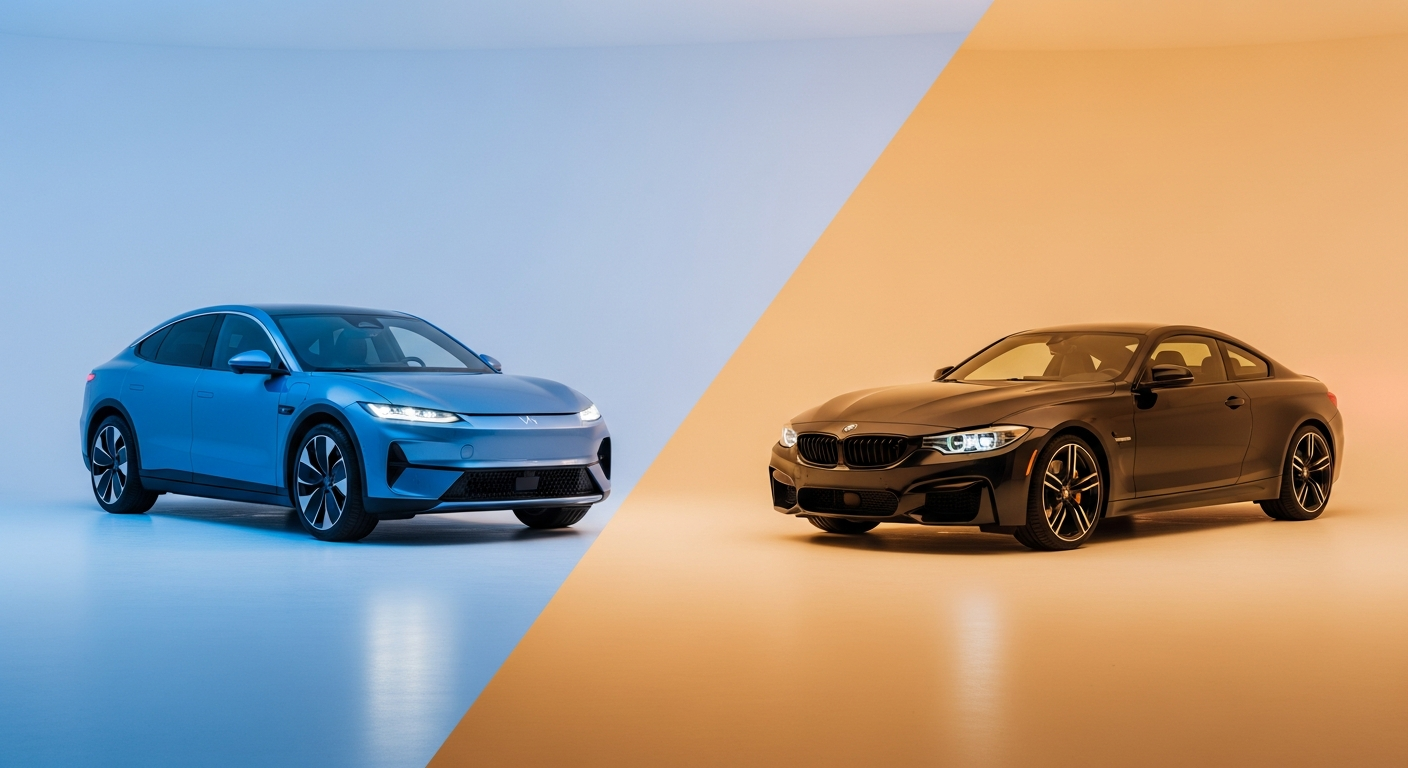
Vienna's Free2move Car-Sharing Decision: Electric or Gasoline?
Over 14,000 Vienna residents have rated the Free2move app 4.8 out of 5 stars—yet many still hesitate when faced with a crucial decision at the moment of booking: electric Opel Mokka or traditional Opel Corsa? The choice between electric and gasoline vehicles in car-sharing services transcends personal preference. It's fundamentally about understanding what fits your daily routine, your spending capacity, and the realities of navigating Vienna's streets.
Free2move's Vienna fleet encompasses roughly 800 vehicles, ranging from budget-conscious petrol options to sophisticated electric models. This abundance of choice creates an opportunity—and a potential paralysis point. The real decision happens before confirming your booking. Which vehicle type should you select? Your choice directly impacts your expenses, wait times for charging or fuel, and whether you're genuinely reducing your carbon footprint or simply paying more for the feeling of environmental responsibility.
Discover how to choose between electric and gasoline vehicles on Free2move Vienna today.
Electric vs. Gasoline: Understanding Free2move's Fleet Composition
Overview of Free2move Vienna's Vehicle Selection
Free2move maintains approximately 800 cars across Vienna, creating a deliberate balance between electric and gasoline options. This isn't random inventory management—it reflects genuine demand patterns and Vienna's push toward sustainable urban mobility. The fleet composition directly shapes your experience before you ever turn the ignition.
Electric Models: Opel Mokka Electric
The Opel Mokka Electric represents Free2move's commitment to zero-emission city driving. This vehicle starts at €0.32 per minute, €11.99 per hour, or €33.93 daily. The Mokka Electric delivers approximately 255 kilometers of range under ideal conditions, though Vienna's urban environment and weather patterns typically reduce this to 200-220 kilometers realistically. Its 100kWh battery provides decent capacity for extended urban exploration without constant charging anxiety.
Gasoline Models: Opel Corsa, Alfa Romeo Tonale, and DS 4
The Opel Corsa anchors Free2move's gasoline lineup at €0.29 per minute, €9.99 hourly, or €28.27 daily. It's the most accessible entry point and benefits from Vienna's extensive fuel infrastructure. The Alfa Romeo Tonale and DS 4 offer premium alternatives at €0.35 per minute, €13.99 hourly, and €39.58 daily, providing additional comfort and performance for longer journeys.
Market Demand and Fleet Dynamics
Demand patterns in Vienna show distinct seasonal and temporal variations. Winter months see higher electric vehicle demand among environmentally conscious users, though battery range anxiety increases during cold seasons. Gasoline vehicles maintain consistent availability because their predictability appeals to commuters and business travelers who value simplicity over environmental considerations. Fleet composition adapts to these patterns, which directly influences your wait times when booking.
How Fleet Composition Influences Availability
Vienna's geographic size and population distribution mean vehicle availability varies significantly by district. District 1 and the inner districts show balanced availability between electric and gasoline options. Outer districts like the 20th or 21st frequently show better gasoline vehicle availability because fewer charging stations exist there. Understanding this geography matters when you're planning urgent trips outside central Vienna.
Pricing Breakdown: When Electric Makes Financial Sense
Minute-Based Pricing Comparison
At first glance, the €0.03 per-minute difference between Corsa (€0.29) and Mokka Electric (€0.32) seems negligible. A 30-minute trip costs €8.70 versus €9.60—a difference of 90 cents. Across a month of regular short trips, this compounds to roughly €18-20 in additional cost. That matters on tight budgets, but context determines whether it's meaningful.
Hourly Rate Analysis
Hour-long rentals reveal clearer differentiation. The Corsa's €9.99 hourly rate versus the Mokka Electric's €11.99 creates a €2 gap per hour. For daily commuting (5 hours weekly), you're examining €10 weekly or €40 monthly in price difference. Against this, consider Vienna's public transport monthly pass costs €54. Free2move starts looking genuinely competitive regardless of vehicle choice.
Daily Rental Costs
Daily rates show the most pronounced gap: €28.27 for the Corsa versus €33.93 for the Mokka Electric—a €5.66 daily difference. For weekend exploration trips, this accumulates quickly. Two weekend days monthly means €11.32 in added cost choosing electric. Over a year, that's €135 purely for selecting the environmental option.
All-Inclusive Pricing Model: The Hidden Financial Reality
Free2move's greatest pricing advantage lies in its all-inclusive structure. Fuel or charging, basic insurance, and public street parking within Vienna's Home Area are bundled into quoted rates. No surprise fees for parking validation, no anxious calculations about fuel consumption, no insurance gaps. This transparency fundamentally changes cost comparisons versus traditional car rentals or taxi services. A €28.27 daily Corsa rental genuinely costs €28.27. A taxi covering similar distance would cost €45-60.
Cost-Effectiveness for Short Trips
Trips under 30 minutes favor gasoline vehicles financially. The Corsa's lower per-minute rate means a 20-minute errand costs €5.80 versus €6.40 for the Mokka Electric. Multiply this across frequent short trips—grocery runs, pharmacy visits, bank errands—and the Corsa's efficiency advantage becomes tangible. The Mokka Electric's charging overhead and battery management aren't fully utilized during brief journeys.
Start comparing electric and gasoline pricing on Free2move Vienna now.
Range, Charging, and Refueling Logistics in Vienna
Opel Mokka Electric Range and Charging Infrastructure
The Mokka Electric's 255-kilometer theoretical range diminishes in Vienna's winter months and urban driving patterns. Real-world range typically measures 200-220 kilometers in favorable conditions, dropping to 150-180 kilometers during cold months. Vienna's public charging network includes over 1,200 charging stations across the city, concentrated heavily in districts 1-9 and scattered in outer districts. This uneven distribution creates genuine accessibility challenges if you live or work in the 20th, 21st, or 22nd districts.
Public Charging Station Accessibility Within the Home Area
Free2move's Home Area encompasses Vienna's inner 23 districts, but charging station density decreases progressively outward. The Innere Altstadt and surrounding districts offer nearly universal charging access. Move beyond the Gürtel, and station frequency drops significantly. This geographic reality means your charging confidence directly correlates with your location within Vienna. Someone in the 3rd district experiences fundamentally different charging logistics than someone in the 20th.
Charging Time Expectations and Impact on Trip Duration
AC charging stations provide 11-22 kWh power delivery, requiring approximately 6-8 hours for a full battery charge from empty. DC fast-charging stations (fewer in quantity) deliver charge in 30-45 minutes to 80% capacity. For most Free2move users, trip planning around charging logistics becomes burdensome. A 2-hour trip extending to 3 hours because you needed to charge represents genuine inconvenience, particularly during peak usage windows.
Gasoline Vehicle Refueling Stops and Station Accessibility
Gasoline refueling presents virtually no accessibility challenges in Vienna. Over 300 fuel stations exist across all 23 districts, with at least 8-12 stations in every district. Refueling requires 3-5 minutes maximum. This operational simplicity appeals to time-pressed commuters and business travelers. You don't think about fuel logistics—you simply fuel and drive.
Free2move's Fuel Coverage Policy and Practical Application
Free2move covers all fuel costs for trips within the Home Area. For gasoline vehicles, this means unlimited refueling within Vienna boundaries without personal expense. The policy extends to trips outside the Home Area, with Free2move covering fuel costs for the exterior journey portion. This generous coverage removes a major logistical friction point. You never calculate fuel efficiency or worry about returning vehicles on empty.
Environmental Impact: Beyond the Marketing Claims
Carbon Footprint Comparison Between Vehicle Types
Electric vehicles produce zero direct emissions during operation. The Opel Mokka Electric releases nothing into Vienna's air while driving. Gasoline vehicles generate approximately 180 grams of CO₂ per kilometer during urban operation. Across a typical 5,000-kilometer annual usage, this represents roughly 900 kilograms of CO₂ annually per Corsa. The environmental advantage of electric vehicles is mathematically indisputable at the operational level.
Vienna's Electricity Grid Composition and EV Emissions Reality
Vienna's electricity generation mix includes approximately 50% hydroelectric power, 30% natural gas, 10% wind, and smaller renewable percentages. This composition means every Mokka Electric charge embeds approximately 150-200 grams of CO₂ per kilowatt-hour, rather than zero. Over 15,000 kilometers annually (30,000 km driven in a shared vehicle over typical two-year service life), an electric vehicle's indirect emissions through charging reach approximately 900-1,200 kilograms of CO₂—comparable to or exceeding some efficient gasoline vehicles. This reality contradicts pure electric vehicle mythology, though electric vehicles still maintain environmental advantages when considering broader metrics.
Particulate Matter Reduction from Electric Vehicles
Where electric vehicles deliver genuine environmental advantage is particulate matter reduction. Gasoline vehicles produce brake dust, tire wear particles, and tailpipe emissions. Electric vehicles eliminate tailpipe emissions and reduce brake wear through regenerative braking. Vienna residents in districts with heavy Free2move usage report measurably lower particulate concentrations. This localized air quality improvement, particularly beneficial for children and elderly populations, represents a genuine health dividend independent of carbon calculations.
Lifecycle Emissions: Manufacturing, Operation, and Disposal
Manufacturing an electric vehicle's battery generates 3-4 tons of carbon dioxide equivalent. The Mokka Electric's battery production embeds approximately 3.5 tons of CO₂. Across its lifecycle, achieving carbon parity with a comparable gasoline vehicle requires approximately 25,000 kilometers of driving. For Free2move vehicles operating within a 2-3 year service window and rotating through multiple users, lifecycle emissions analysis often reveals unexpected complexity. Vehicles retired after high-mileage usage may not achieve sufficient operational savings to justify manufacturing emissions.
How Car-Sharing Reduces Overall Environmental Impact
The most significant environmental advantage of Free2move—whether electric or gasoline—is displacement of private vehicle ownership. One shared car replacing 8-12 privately owned vehicles eliminates manufacturing emissions for 7-11 vehicles. Shared vehicles operate at higher utilization rates, spreading manufacturing impact across more kilometers and users. This multiplier effect typically outweighs the electric versus gasoline operational comparison. Choosing Free2move's Corsa instead of owning a private Corsa generates greater environmental benefit than choosing Free2move's Mokka Electric while driving a private vehicle independently.
Performance, Comfort, and Driving Experience Comparison
Acceleration and Handling: Opel Mokka Electric vs. Opel Corsa
The Mokka Electric delivers instant torque, producing 0-60 km/h acceleration in approximately 3.6 seconds—genuinely impressive for an electric compact SUV. The Opel Corsa accelerates 0-60 km/h in roughly 9 seconds. Vienna's urban environment rarely demands this acceleration performance, making the Corsa's efficiency adequate and the Mokka Electric's capability unnecessary for city commuting. Where the Mokka Electric genuinely excels is responsive traffic navigation, where immediate power delivery eliminates acceleration gaps at traffic lights and provides confidence during highway merges.
Interior Space and Comfort for Different Trip Types
The Mokka Electric's SUV configuration provides approximately 450 liters of cargo space and elevated seating position. This geometry suits travelers with mobility limitations and passengers carrying luggage or equipment. The Opel Corsa's compact sedan design offers 265 liters of cargo space and lower seating position, providing sportier driving dynamics and better fuel economy emphasis. For grocery shopping or pharmacy visits, cargo space differences matter minimally. For airport transfers or weekend explorations, the Mokka Electric's superior space becomes genuinely beneficial.
Infotainment Systems and Technology Features
Both vehicles feature modern infotainment systems integrated with Android Auto and Apple CarPlay, enabling smartphone navigation through Vienna's streets. The Mokka Electric includes digital speed limit recognition and regenerative braking displays. The Corsa provides similar connectivity without electric-specific features. For most drivers, these differences remain functionally invisible. Neither vehicle impresses with cutting-edge technology compared to premium manufacturers, yet both deliver competent basic functionality.
Driving Dynamics in Vienna's Urban Environment
Vienna's streets demand responsive steering, predictable braking, and comfortable ride quality through cobblestone districts and frequent speed bumps. The Mokka Electric's heavier curb weight (approximately 1,600 kg) produces slightly softer, more cushioned handling characteristics. The Corsa's lighter weight (approximately 1,100 kg) enables more communicative steering feedback and sharper directional changes. For genuine Vienna navigation including the historic districts' challenging surfaces, the Corsa's agility provides practical advantages beyond pure performance metrics.
Noise Levels and Cabin Comfort During City Commutes
Electric vehicles' silent operation becomes either tremendous advantage or genuine disadvantage depending on perspective. The Mokka Electric's acoustic quietness creates serene commuting experiences and enables conversation without raised voices. This serenity particularly suits sensitive individuals and provides stress reduction during peak-traffic navigation. The Corsa's modest engine noise remains well-controlled in modern designs, never becoming objectionable. Some drivers actually appreciate mechanical sound feedback confirming engine responsiveness. Neither vehicle produces remarkable noise quality; the difference is mainly silence versus subtle mechanical presence.
Use Cases: Matching Vehicle Type to Your Trip Purpose
Quick Errands (Under 30 Minutes): Which Vehicle Type Wins
Gasoline vehicles dominate short-duration trips economically and logistically. A 20-minute pharmacy visit costs €5.80 in a Corsa versus €6.40 in a Mokka Electric. More importantly, you eliminate mental overhead—no charging infrastructure assessment, no range calculations, no concern about battery depletion. The Corsa's simplicity and lower cost make it the obvious choice for Vienna's countless daily micro-trips. Any environmental motivation evaporates when trip duration barely justifies vehicle selection friction.
Commuting (Daily 1-2 Hour Trips): Optimal Choice and Cost Analysis
Daily commuting spanning 1-2 hours monthly costs approximately €60-80 using the Corsa versus €72-96 using the Mokka Electric. This €12-16 monthly difference represents genuine budget impact across a year (€144-192). Operationally, commuters value consistency and availability. The Corsa's ubiquity and refueling infrastructure simplicity support daily reliability. The Mokka Electric works for commuting but introduces unnecessary variables—charging station availability, weather-dependent range, battery management awareness—for minimal environmental benefit given Vienna's electricity grid composition and commuters' likely limited driving distances.
Airport Transfers: Electric vs. Gasoline With Surcharge
Airport transfers include an additional €12.99 surcharge regardless of vehicle type. A trip to Vienna International Airport requiring 25 minutes costs approximately €20.24 (Corsa) or €21.84 (Mokka Electric) plus the €12.99 surcharge, totaling €33.23 or €34.83. The Corsa's advantage persists but narrows proportionally. Gasoline vehicles maintain range confidence for airport trips—no charging anxiety if traffic delays occur or return journey complications emerge. For business travelers particularly, this peace of mind justifies the negligible cost difference and makes the Corsa the practical choice.
Weekend Exploration (4-8 Hours): Range and Comfort Considerations
Weekend explorations extending beyond Vienna's central districts benefit from gasoline vehicles' range certainty. A 180-kilometer round trip to the Danube Valley guarantees Corsa completion without refueling complexity. The Mokka Electric's 200-220 kilometer real-world range provides adequate capacity but creates mental bandwidth consumption regarding charging station locations and battery reserve management. If genuine destination exploration matters—stopping unexpectedly at vineyards, extending routes based on weather inspiration, or pursuing scenic detours—the Corsa's zero-complexity refueling removes decision friction and enables spontaneity the Mokka Electric's charging logistics constrain.
Multi-Day Rentals (2-7 Days): Cost Implications and Vehicle Reliability
Multi-day rentals reveal gasoline vehicles' financial advantage comprehensively. A 3-day weekend trip costs €84.81 (Corsa) versus €101.79 (Mokka Electric)—€16.98 additional expense choosing electric. Over a 7-day rental, this gap reaches €39.62. Across a year of regular weekend explorations, choosing electric consistently means €400-500 additional annual costs. Vehicle reliability becomes similarly important during extended rentals. Free2move's entire fleet maintains excellent condition, yet gasoline vehicles' simpler mechanical systems provide marginally lower failure risk. Charging port malfunctions or battery management complications, while rare, create genuine inconvenience during multi-day rentals more severely than fuel system issues.
Ready to Choose Your Perfect Free2move Vienna Vehicle?
The electric versus gasoline debate in car-sharing isn't about one option being universally superior—it's about alignment with your actual life. An Opel Mokka Electric makes genuine sense if you're managing short urban hops, value environmental impact genuinely, and have predictable charging access within your regular geography. The Opel Corsa shines when you need flexibility, range assurance, and maximum availability without overthinking logistics.
Your actual usage patterns matter far more than marketing narratives. Track your typical trip duration, distance, and frequency over the next week and run those numbers through the pricing breakdown I've outlined. Consider whether charging infrastructure accessibility genuinely works for your routine or whether you'd spend more time hunting for a charger than driving. The best vehicle isn't the greenest or cheapest—it's the one that eliminates friction from your life while respecting your budget and values.
Start with a single trip using your preferred option, then experiment with the alternative. Free2move's 800-vehicle fleet exists because different people need different solutions. Your job is simply figuring out which one solves your problem most elegantly.
Book your first Free2move Vienna trip and experience your ideal vehicle choice firsthand.
Leave a Reply