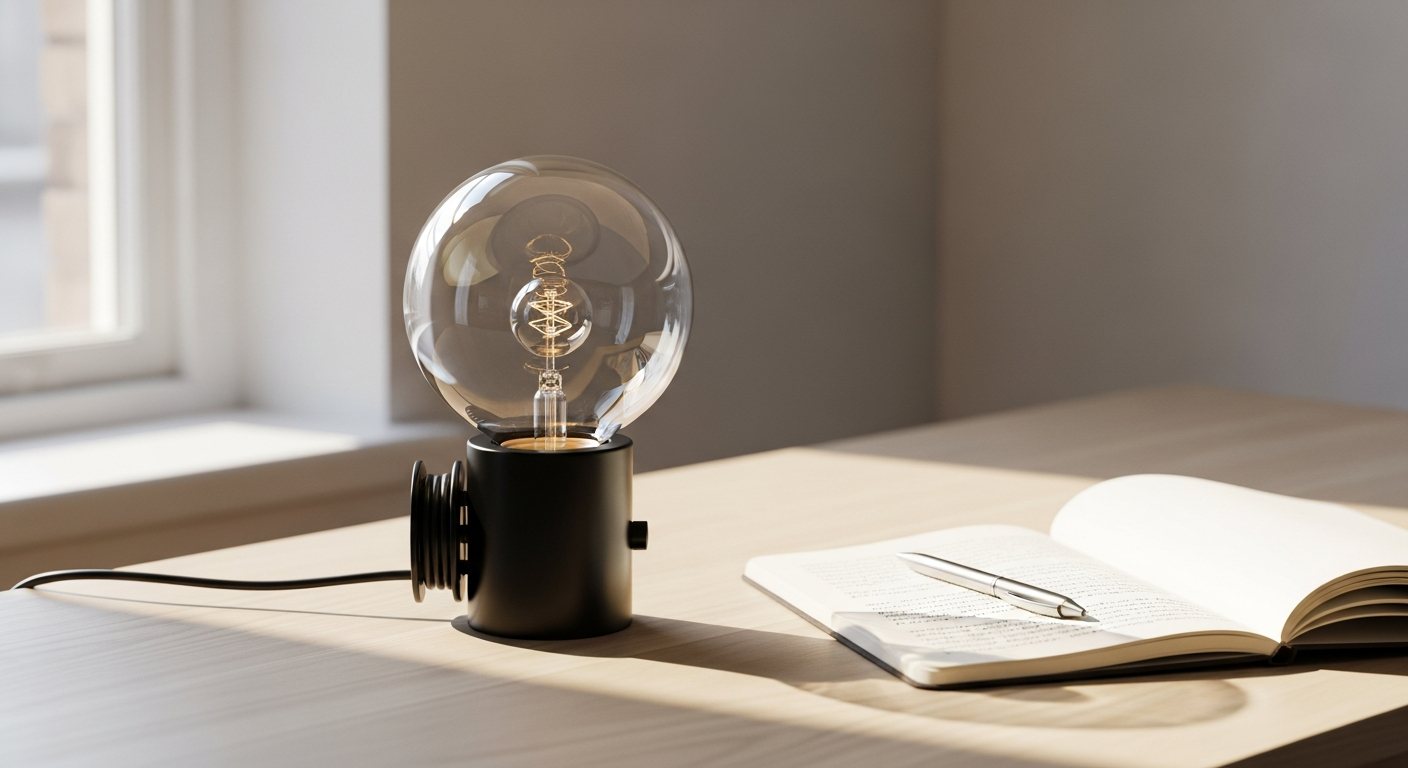
The Design Philosophy Behind Castiglioni's 1972 Masterpiece
Every year, thousands of design enthusiasts spend over $240 on a single table lamp—not for brightness, but for brilliance. The Flos Lampadina iconic table lamp has become the gold standard for collectors who understand that great design transcends trends. Created by legendary Italian designer Achille Castiglioni in 1972, the Lampadina represents something extraordinary: a designer's ability to see poetry in simplicity. The name itself—meaning 'light bulb' in Italian—reveals Castiglioni's philosophy of transforming everyday objects into functional art.
This isn't just another table lamp; it's a piece that earned its place in the MoMA Collection and continues to dominate best-seller lists on platforms like Archiproducts, proving that true design never goes out of style. Castiglioni approached his work with a distinctive methodology: rather than obscuring or embellishing ordinary objects, he celebrated their essential forms. The Lampadina emerged from his conviction that simplicity could be more powerful than ornamentation, and that everyday items held untapped design potential waiting to be revealed.
Discover the Flos Lampadina on Archiproducts and explore its color options today.
Achille Castiglioni's Approach to Transforming Ordinary Objects into Extraordinary Design
Castiglioni's genius lay in his refusal to complicate what was already perfect in its essence. He studied the humble light bulb—a utilitarian object found in every home—and recognized its inherent beauty. Rather than hiding it behind elaborate fixtures, he elevated it. The Lampadina became a celebration of transparency, both literally and philosophically. The partially sandblasted globe reveals the bulb while softening its harsh light, embodying Castiglioni's belief that good design should improve upon reality without pretending to reinvent it.
How the Lampadina Redefines Minimalism Through Playful Functionality
The lamp's character stems from its refusal to take itself too seriously. Minimalism often feels austere, but the Lampadina balances restraint with personality. Its aluminum base doesn't merely support the globe—it winds the power cord like a reel, solving a problem that most designers ignore entirely. This playful engineering transforms a practical necessity into an integral design feature. The oscillating on/off switch, crafted from Bakelite, sits naturally within the holder, inviting interaction. Every element serves a purpose, yet nothing feels purely utilitarian; the design breathes with intention and thoughtfulness.
The Significance of Naming the Lamp 'Light Bulb'—Embracing Simplicity Rather Than Disguising It
Naming the lamp "Lampadina" was a decisive creative choice. Rather than obscuring the object's true nature with an abstract or poetic title, Castiglioni named it exactly what it was. This honesty extended to the design philosophy itself. He rejected the notion that designer objects needed to distance themselves from their function or origins. The lamp's transparency—both in its clear globe and in its straightforward naming—created an intimacy with users. You weren't buying something that aspired to be something else; you were buying something that perfectly understood and celebrated itself.
Why This Design Philosophy Resonated with the Design World and Earned MoMA Recognition
The design establishment recognized immediately that Castiglioni had achieved something rare: a piece that worked equally well as functional object and artistic statement. Museums like MoMA don't celebrate work simply because it looks interesting; they recognize pieces that fundamentally shift how designers think about their discipline. The Lampadina proved that constraint breeds creativity, that familiarity could be reinvented, and that respect for an object's origins produced deeper solutions than dismissing them. Its acquisition by MoMA wasn't a marketing achievement—it was institutional validation that Castiglioni had created something genuinely significant.
The Contrast Between Industrial Aesthetics and Approachable, User-Friendly Design
The Lampadina occupies a fascinating middle ground. Its anodized aluminum base and sandblasted globe possess an industrial character, yet the lamp feels entirely accessible. There's no intimidating technology, no complex assembly, no learning curve. You turn it on with a simple oscillating switch and wind the cord around the base. This accessibility makes the industrial aesthetic feel less alienating and more human. The lamp doesn't demand respect through complexity; it earns it through honest, straightforward engineering.
How Castiglioni's Vision Continues to Influence Contemporary Lighting Design in 2026
Five decades later, designers still grapple with the questions Castiglioni answered with the Lampadina. How much can you simplify before losing function? How do you honor an object's purpose while elevating its presence? Contemporary lighting design frequently returns to Castiglioni's principles: minimizing visual noise, integrating practical concerns into the design itself, and respecting the user's intelligence. The Lampadina serves as a reference point, a reminder that true innovation often means removing rather than adding.
Innovative Engineering: The Features That Justify Premium Pricing
Partially Sandblasted Clear Globe Bulb Technology and Its Role in Preventing Glare
The Lampadina's globe isn't merely transparent—it's precisely engineered. The partial sandblasting creates a diffusion effect that softens the LED bulb's light output without obscuring it. This design decision prevents the harsh glare that makes direct-view bulbs uncomfortable, while maintaining visibility of the light source itself. The diffused illumination spreads evenly across a room, creating ambient light that feels natural rather than institutional. This feature alone justifies the premium pricing; it represents genuine engineering, not aesthetic posturing.
The Dual-Purpose Anodized Aluminum Base: Structural Support Meets Cable Management Solution
The aluminum base performs two functions simultaneously. First, it provides structural support for the globe, positioning it at a height ideal for accent or task lighting. Second, and more cleverly, it functions as a cable reel. The base's cylindrical design allows excess power cord to wrap around it, eliminating the cord clutter that mars most table lamps. This integration of function into form is signature Castiglioni—solving a genuine problem while maintaining visual coherence. The anodized finish ensures durability while adding subtle visual depth through its matte surface.
How the Integrated Reel System Eliminates Cord Clutter and Enhances Minimalist Aesthetics
Anyone who has lived with table lamps understands the frustration of excess cord. Most solutions involve hiding wires behind furniture or rolling them into an unsightly coil. The Lampadina's integrated reel addresses this with elegance. You wind the cord around the base in concentric circles, storing exactly what you need while maintaining the lamp's compact footprint. This system rewards intentional placement—positioning the lamp where you actually need it rather than compromising for cord length. In minimalist interiors, where every visible object carries weight, the Lampadina's cord management becomes a defining feature.
Bakelite Lamp-Holder Construction and Oscillating On/Off Switch Mechanics
The lamp-holder material—Bakelite—represents a deliberate choice with historical significance. Castiglioni selected this early plastic material for its durability and warm aesthetic qualities. The oscillating switch integrates directly into the holder, creating a tactile experience. When you switch the lamp on or off, you feel the satisfying click of mechanical precision. This isn't electronic; it's purely mechanical, which means reliability and longevity. The switch has survived fifty years in countless homes because there's nothing to fail electronically.
Energy-Efficient 2W E26 LED Bulb Specifications (2700K Warm Light Output)
The Lampadina ships with a 2W LED bulb rated at 2700K, producing warm light comparable to incandescent bulbs. This wattage might seem low, but the diffused globe and efficient LED technology produce surprising brightness for accent and task lighting. The 2700K color temperature mimics traditional incandescent warmth, creating the cozy ambiance that makes spaces feel lived-in rather than clinical. For bedside tables, reading nooks, and desk spaces, this output performs admirably. The energy efficiency means your electricity costs remain negligible regardless of usage patterns.
Italian Manufacturing Standards and IP20 Indoor Rating Considerations
Flos manufactures the Lampadina in Italy, adhering to exacting European standards. The IP20 rating indicates suitability for dry indoor environments—living rooms, bedrooms, offices, and similar spaces. The rating explicitly excludes outdoor use or areas with moisture exposure, so bathroom placement requires careful consideration. This specification isn't a limitation; it's a reflection of the lamp's design as an indoor accent rather than an all-weather fixture. Italian manufacturing ensures consistent quality and attention to detail that mass-produced alternatives cannot match.
Lightweight Design (0.3 kg) and Compact Dimensions (24 cm Height, 12.5 cm Diameter)
The Lampadina weighs approximately 0.3 kilograms and measures 24 centimeters in height with a 12.5-centimeter diameter. This compact footprint allows placement on crowded surfaces—bedside tables, narrow shelves, compact desks—without dominating the space. The lightweight construction means you can reposition the lamp easily, experimenting with placement until you find the ideal location. This mobility encourages intentional styling rather than permanent fixture thinking. The proportions feel substantial enough to seem grounded, yet small enough to integrate into almost any environment.
Explore the Flos Lampadina's engineering specifications and order yours from Archiproducts now.
Personalization Through Color: Finding Your Perfect Match
Available Bakelite Socket Colors: Black, Orange, White, Purple, Green, and Turquoise
The Lampadina's color palette transforms it from a singular design statement into a versatile tool for personal expression. Available socket colors include black, orange, white, purple, green, and turquoise—each offering distinct design possibilities. Black provides understated elegance and contemporary minimalism. Orange channels retro warmth and playful energy. White offers neutral integration into light-filled spaces. Purple, green, and turquoise introduce bolder personalities, suggesting eclectic or contemporary design sensibilities. Each color maintains the lamp's essential character while allowing you to introduce personality.
How Color Selection Impacts Interior Design Integration Across Different Room Styles
Color choice determines how prominently the Lampadina features in your interior design narrative. A black or white socket recedes, allowing the globe and its warm light to remain the primary visual element. Orange and turquoise versions demand attention, becoming focal points that draw the eye. The color you select should dialogue with your existing palette—not necessarily matching existing colors but creating intentional contrast or harmony. In monochromatic spaces, a colored socket provides visual interest. In already-colorful rooms, neutral sockets prevent visual cacophony.
Matching the Lampadina to Existing Décor: Minimalist, Mid-Century Modern, Contemporary, and Eclectic Spaces
Minimalist interiors typically favor black or white sockets, allowing the lamp's form and function to dominate. Mid-century modern spaces embrace the orange or turquoise options, connecting the Lampadina to the era's color vocabulary. Contemporary design benefits from any color choice, depending on the specific palette and mood. Eclectic interiors celebrate the bolder options—purple, green, turquoise—mixing colors with confidence. The Lampadina's versatility means it works across aesthetic boundaries. The trick lies in considering how the socket color relates to other design elements in the space.
The Psychology of Color in Designer Lighting and Mood Creation
Color influences mood and perception in measurable ways. The warm 2700K light output pairs beautifully with any socket color, but the socket itself contributes to the overall emotional experience. Black sockets feel sophisticated and grounding. Orange suggests warmth and approachability. Turquoise and green evoke calm and nature. Purple introduces creativity and individuality. When selecting your Lampadina, consider the mood you want to cultivate in the space. A bedside Lampadina with a purple socket creates a different psychological environment than an office version with a black socket, despite identical light output.
Combining Multiple Lampadinas in Different Colors for Curated Lighting Arrangements
Design enthusiasts frequently purchase multiple Lampadinas in different colors, creating layered lighting arrangements. A bedroom might feature a white socket on one bedside table and a purple socket on the other, suggesting personality asymmetry while maintaining coherence. An office could incorporate black and turquoise versions in different zones. Grouped together on a shelf, various colored sockets create visual interest and suggest a curated collection rather than random assortment. This approach transforms the Lampadina from a single accent light into a design system.
Color Durability and Maintenance Considerations for Long-Term Aesthetic Appeal
The Bakelite sockets are durable and resist fading when used indoors away from direct sunlight. The colored finishes age gracefully, developing subtle patina over years rather than deteriorating noticeably. Cleaning the socket with a soft cloth maintains its appearance indefinitely. Unlike painted surfaces that chip or fade, Bakelite maintains color integrity. This longevity ensures your chosen color remains relevant for decades, making the initial color selection feel like a meaningful investment rather than a temporary choice.
Real-World Performance: Lighting Quality and Practical Use
Soft, Diffused Light Characteristics and Their Impact on Room Ambiance
The sandblasted globe creates diffused light that distributes evenly without harsh shadows or bright spots. This quality transforms a small, efficient light source into something that feels warm and enveloping. The diffusion eliminates the spotlight effect—that uncomfortable feeling of being directly illuminated. Instead, the light spreads throughout the space, suggesting ambient illumination rather than task lighting. This characteristic makes the Lampadina exceptional for creating mood and atmosphere. A dimly lit room with a single Lampadina feels calm and intentional rather than dark and gloomy.
Warm 2700K Color Temperature Benefits for Residential Spaces (Living Rooms, Bedrooms, Offices)
The 2700K color temperature mimics incandescent warmth, creating light that feels natural and inviting in residential settings. This warmth encourages relaxation and conversation, making it ideal for living rooms and bedrooms. In home offices, the 2700K output reduces eye strain compared to cooler light sources while maintaining adequate visibility for detailed work. The warmth also enhances the visual appeal of furniture, artwork, and décor by rendering colors faithfully. This color temperature preference explains why incandescent bulbs dominated residential spaces for over a century—humans simply prefer this light quality.
Actual Brightness Output and Suitable Room Sizes for the Lampadina's Illumination
The 2W LED bulb produces approximately 180-200 lumens, comparable to a 20-25W incandescent bulb. For accent lighting—bedside tables, shelving, desk corners—this output performs excellently. For primary room illumination in larger spaces, the Lampadina functions as one component of a broader lighting scheme rather than the sole source. A bedroom or small office with minimal ambient light will feel adequately illuminated by a single Lampadina for evening reading and focused work. Larger living rooms require supplementary lighting. Understanding this limitation allows proper placement; the Lampadina excels as a focal light source rather than comprehensive room illumination.
Comparing the Lampadina to Conventional Table Lamps: Comfort Versus Functionality
Most conventional table lamps prioritize raw brightness, delivering 400+ lumens from bulbs rated 40-60 watts. The Lampadina sacrifices brightness for comfort and design. This represents a philosophical difference: the Lampadina asks you to reconsider what you actually need from lighting, while conventional lamps simply maximize output. For accent lighting and creating ambiance, the Lampadina outperforms conventional lamps despite lower brightness. For primary task lighting in spaces where brightness is essential, conventional lamps remain more practical. The choice depends on your actual needs versus your aesthetic priorities.
Non-Dimmable Specifications and Workarounds for Adjustable Lighting Preferences
Some Lampadina configurations come non-dimmable, though dimming-compatible versions exist. If you prefer adjustable light levels, verify the specific model's compatibility with dimmer switches before purchasing. A workaround involves pairing the Lampadina with supplementary ambient lighting that you can control, allowing overall room brightness adjustment without modifying the lamp itself. Alternatively, positioning the lamp where its light reflects off lighter surfaces creates effective brightness variation. These solutions acknowledge the non-dimming limitation while maintaining the lamp's design integrity.
Cable Management Practicality in Everyday Use Scenarios
The integrated reel system works beautifully when properly utilized. Measure your actual cable length from outlet to placement location, then wind excess cord around the base. Avoid forcing excessive cord into tight spirals; the system accommodates reasonable excess without strain. The advantage emerges when repositioning becomes necessary—rather than managing loose cable, you simply unwind, move the lamp, and rewind. For permanent placements, the reel system becomes invisible, allowing the lamp's form to dominate. This practicality rewards thoughtful placement and maintenance.
Noise and Operational Reliability of the Oscillating Switch Mechanism
The mechanical oscillating switch produces a satisfying click—audible but not disruptive. This mechanical simplicity contributes to legendary reliability; there's nothing electronic to fail. The switch operates smoothly after fifty years in many homes, suggesting durability far exceeding contemporary electronic switches. The tactile feedback of the switch enhances user experience, creating a sensory connection to the lamp's operation. This mechanical reliability justifies the premium price in ways that electronic components cannot.
Investment Value: Is the $235-$253 Price Tag Worth It?
Premium Pricing Analysis: Designer Piece Versus Functional Lighting
The Lampadina's price reflects its status as designer furniture rather than commodity lighting. A functional table lamp costs $20-50; the Lampadina costs 5-10 times more. This premium stems from several factors: the designer's reputation, the manufacturing standards, the materials quality, and the piece's cultural significance. You're not paying extra for brightness; you're paying for design, heritage, and the confidence that comes with owning an iconic piece. Whether this premium represents value depends on your priorities. For collectors and design enthusiasts, the price aligns perfectly with the value delivered. For those seeking pure function at minimal cost, the premium seems excessive.
Cost-Per-Year Breakdown When Amortized Over the Lamp's Lifespan
Consider the Lampadina over a twenty-year ownership period—a conservative estimate given its durability. At $245 average price, that's approximately $12.25 per year. For a piece that functions daily while providing aesthetic pleasure and design credibility, this cost becomes reasonable. Compare this to replacing generic table lamps every 3-5 years, and the Lampadina's longevity becomes economically sensible. The extended lifespan combined with mechanical reliability means you avoid replacement costs that offset the initial premium. This calculation reveals that the Lampadina's high upfront cost masks reasonable long-term economics.
Resale Value and Collectibility of Authentic Flos Lampadina Pieces
Designer pieces by recognized masters retain value in ways generic furniture cannot. Authentic Flos Lampadinas regularly appear in secondary markets, often maintaining 60-80% of original purchase price. Rare color variants command premiums. This resale potential means your investment doesn't evaporate if your design preferences evolve. Collectors actively seek Lampadinas for curation and appreciation, creating stable demand. While not an investment asset like fine art, the Lampadina outperforms most furniture in value retention.
Comparison to Mass-Produced Alternatives and Why Quality Justifies Expense
Mass-produced table lamps cost $25-75 and typically last 3-5 years before switches fail, cords fray, or bases destabilize. The Lampadina costs more upfront but functions reliably for decades. The anodized aluminum resists corrosion. The mechanical switch outlasts electronic components. The Bakelite socket remains stable. The construction quality exceeds mass-produced alternatives so dramatically that the price differential becomes reasonable when viewed across product lifetime. You're comparing a disposable commodity to a durable good—different categories entirely.
Museum-Quality Status and Its Impact on Home Value Perception
The Lampadina's presence in MoMA carries psychological weight beyond mere prestige. It signals that your home contains thoughtfully curated design, elevating the perceived sophistication of your space. This perception influences how visitors interpret your entire interior. A room containing a Lampadina feels intentional and considered. While the lamp itself contributes minimal value to home sale prices, the design credibility it establishes influences the overall impression. For design-conscious homeowners, this intangible value matters significantly.
Long-Term Durability Expectations and Warranty Considerations
Flos typically backs the Lampadina with multi-year warranties covering manufacturing defects. The lamp's mechanical simplicity minimizes warranty claims; there's little to fail. The aluminum base won't corrode. The Bakelite won't deteriorate. The bulb operates indefinitely given the LED's rated lifespan. Long-term durability expectations exceed thirty years for well-maintained pieces, with many original Lampadinas from the 1970s still functioning beautifully. This longevity translates to genuine value—you're buying a piece that will outlast trends and remain functional across multiple decades.
ROI for Design-Conscious Homeowners and Collectors
Return on investment for the Lampadina isn't measured in financial profit; it's measured in design satisfaction, aesthetic pleasure, and functional reliability. Design-conscious homeowners report that owning the lamp changes how they perceive lighting and design fundamentals. It becomes a reference point for quality standards. Collectors view the Lampadina as foundational to any serious lighting collection. For these audiences, the ROI exceeds monetary calculation—it's about owning something genuinely significant that delivers daily pleasure and continues appreciating in meaning.
Where the Lampadina Shines: Ideal Applications and Limitations
Best Use Cases: Accent Lighting, Bedside Tables, Desk Spaces, and Gallery Walls
The Lampadina excels in specific applications. Bedside tables benefit from its soft light and compact footprint—perfect for reading without disturbing partners. Desk spaces appreciate its focused illumination for detailed work combined with warm color temperature reducing eye strain. Gallery walls featuring artwork or curated objects leverage the Lampadina's aesthetic presence and directional light. Shelving displays use it to highlight specific items. These applications capitalize on the lamp's strengths: beautiful diffused light, design credibility, and spatial efficiency.
Room Types That Maximize the Lampadina's Aesthetic and Functional Potential
Bedrooms provide ideal environments where the Lampadina becomes the primary evening light source. Home offices benefit from its balance of functionality and design sophistication. Living rooms can use multiple Lampadinas for layered lighting that creates ambiance while supporting reading and conversation. Libraries and studies showcase the lamp's intellectual credentials alongside its practical function. Master bathrooms (avoiding wet areas) leverage the lamp's aesthetic contribution to spa-like routines. These spaces share common characteristics: they reward thoughtful design, benefit from warm ambient light, and typically include dedicated surfaces for small accent lighting.
Size Considerations: When Compact Dimensions Work Perfectly and When They Fall Short
The Lampadina's small footprint becomes an advantage on crowded surfaces and in compact spaces. Apartments, small bedrooms, and narrow shelving present challenges where full-size table lamps become problematic. The Lampadina slides into these spaces elegantly. Conversely, expansive desks with generous surface area can accommodate the Lampadina but don't require its space efficiency. The lamp's light output also suits compact spaces better; attempting to illuminate a large living room primarily with a Lampadina will disappoint. Size limitations matter most when trying to achieve primary room illumination rather than accent lighting.
Indoor-Only Restrictions (IP20 Rating) and Placement Planning
The IP20 rating restricts placement to dry indoor environments. Covered patios, sunrooms, and transitional spaces with moisture exposure fall outside acceptable use. This specification clearly defines the Lampadina as an interior accent rather than outdoor fixture. Acknowledging this limitation allows intelligent placement—bedside tables, office desks, interior shelving—rather than attempting unsuitable applications. The restriction reflects the lamp's design philosophy: a sophisticated indoor accent, not an all-weather solution.
Layering the Lampadina Within Broader Lighting Schemes
The Lampadina functions best as one component within broader lighting design. A bedroom might layer the Lampadina with soft ambient ceiling light and additional task lighting. A living room could combine Lampadinas on side tables with overhead dimming lights and task lighting for reading areas. This layered approach allows you to customize overall brightness while benefiting from the Lampadina's specific qualities. Rather than asking the lamp to solve all lighting needs, integrate it into a comprehensive scheme where it performs its specialized function optimally.
Spaces Where the Lampadina Might Underperform or Disappoint
Large living rooms relying solely on the Lampadina will feel insufficiently lit. Home offices demanding high brightness for detail work may find the 2W output limiting. Spaces without adequate furniture surfaces for placement become problematic. Kitchens and bathrooms with moisture exposure fall outside its capabilities. Outdoor applications, despite aesthetic appeal, violate the IP20 specification. Acknowledging these limitations prevents buyer's remorse. The Lampadina thrives in specific applications; it doesn't universally solve lighting challenges.
Creative Solutions for Extending Functionality Beyond Typical Applications
Enterprising users find creative solutions to expand the Lampadina's functionality. Combining multiple units in different colors creates layered accent lighting. Positioning it to reflect light off mirrors or light-colored surfaces multiplies its effective brightness. Using it alongside dimmable supplementary lighting allows overall brightness control while maintaining the Lampadina's aesthetic presence. Pairing it with smart home systems enables scheduling that aligns with daily rhythms. These creative approaches acknowledge the lamp's limitations while maximizing its potential within those constraints.
Styling the Lampadina: Integration Into Modern Interior Design
Pairing the Lampadina With Contemporary Furniture and Décor Styles
The Lampadina's minimalist form pairs beautifully with contemporary furniture. Clean-lined sofas, geometric shelving, and modern artwork all benefit from the lamp's presence. The industrial aesthetic of the aluminum base complements exposed concrete, metal accents, and raw materials common in contemporary design. The warmth of the 2700K light softens contemporary spaces' potential coldness. Paring the lamp with mid-century modern pieces creates dialogue between design eras—the Lampadina, designed in 1972, bridges vintage and contemporary sensibilities seamlessly.
Creating Focal Points With Strategic Lamp Placement and Color Selection
Strategic placement transforms the Lampadina from background element to focal point. Positioning on a distinctive shelf, accent table, or gallery wall draws attention. Selecting a bold socket color—orange, purple, turquoise—makes the lamp visually prominent. Layering multiple Lampadinas in different colors creates intentional focal points. Backlighting artwork with a nearby Lampadina creates dramatic effect. These tactical choices transform the lamp from functional necessity into design statement.
The Lampadina as a Conversation Starter in Curated Home Collections
Design-educated visitors recognize the Lampadina immediately, often initiating conversations about design philosophy and personal taste. The lamp serves as shorthand for design literacy—owning it suggests intentionality and appreciation for design history. In homes curated with attention to quality and aesthetics, the Lampadina becomes part of a narrative about values and taste. It connects to other pieces, creating coherence that feels sophisticated rather than curated. For collectors and design enthusiasts, this conversational potential matters significantly.
Balancing Form and Function in Minimalist Interior Design Schemes
Minimalism demands objects that serve multiple purposes simultaneously. The Lampadina exemplifies this philosophy: it provides light (function), creates ambiance (emotional function), and contributes design credibility (aesthetic function). Its minimalist form respects the principle of visual restraint while its engineering demonstrates commitment to functional excellence. In minimalist spaces, the Lampadina doesn't feel like a luxury indulgence; it feels essential. The lamp embodies minimalist principles so thoroughly that it enhances rather than complicates minimalist schemes.
Complementing Other Designer Pieces Without Visual Overcrowding
Curated interiors typically feature multiple designer pieces, requiring careful balance to avoid visual cacophony. The Lampadina's restrained form plays well with other designs. Its compact footprint prevents physical overcrowding. Its neutral palette accommodates diverse aesthetic partners. Unlike bold contemporary lighting that demands visual dominance, the Lampadina integrates gracefully into eclectic collections. Its design confidence means it doesn't compete with other pieces; it collaborates, suggesting a cohesive narrative about taste and values.
Photography and Social Media Appeal of the Lampadina in Styled Spaces
The Lampadina photographs beautifully, particularly in styled compositions. The globe catches light dramatically, creating visual interest in flat photography. The colored sockets add design personality. The overall form reads distinctly in photographs, making styled spaces featuring the Lampadina stand out on social media. Design influencers frequently feature it for this reason—it's photogenic, recognizable, and signals design credibility to followers. For those sharing their interiors publicly, the Lampadina contributes significantly to visual appeal and algorithmic performance.
Seasonal Styling and Refreshing the Lampadina's Role Throughout the Year
The Lampadina's versatility extends to seasonal styling. Summer spaces might emphasize lighter socket colors like white or turquoise. Winter environments could embrace warmer orange or neutral black. The lamp's color options allow refreshing your space's personality seasonally without purchasing new pieces. Its warm light output feels particularly appropriate during darker months, making the Lampadina's seasonal role natural and intuitive. This adaptability extends the lamp's relevance and prevents design fatigue.
The Collector's Perspective: Why MoMA Recognition Matters
Understanding Design Canon and Institutional Validation in the Collector's Market
Design canon—the body of work recognized as historically significant and foundational—carries substantial weight in collector circles. MoMA's acquisition of the Lampadina represents institutional validation that the piece transcends commercial success to achieve artistic significance. This validation influences collector behavior, driving demand and establishing the lamp as essential for any serious design collection. Institutional recognition separates genuine design importance from passing trends. Museums function as cultural arbiters, their acquisitions effectively declaring what design history will remember.
How Museum Collections Influence Designer Lamp Desirability and Longevity
Museum acquisitions create permanence narratives around design pieces. When an institution like MoMA commits resources to conserving and displaying a work, it signals that the piece will remain relevant. Collectors internalize this message, viewing museum-validated pieces as safer investments. The Lampadina's presence in MoMA influences secondary market prices, collector enthusiasm, and designer credibility. Castiglioni's work gained additional prestige from MoMA recognition, enhancing the Lampadina's cultural standing. This institutional validation creates a feedback loop where recognition drives demand, which drives further recognition.
Authenticity Verification and Avoiding Counterfeit Flos Lampadina Pieces
The Lampadina's popularity attracts counterfeit production, particularly in regions with weak intellectual property enforcement. Authentic pieces bear Flos branding, proper Bakelite construction, and correct aluminum specifications. Counterfeits often feature inferior materials, crude construction, and printing inconsistencies. Purchasing from authorized retailers eliminates counterfeit risk. Examining the globe's sandblasting quality, the base's anodization consistency, and the socket's Bakelite feel all reveal authenticity. For significant investments, requesting certificates of authenticity provides documentation. Collectors prioritize authenticity because counterfeit ownership undermines the investment's meaning and value.
Building a Cohesive Designer Lighting Collection Around Iconic Pieces
Serious collectors organize acquisitions thematically, building collections that explore design movements or specific designers. The Lampadina serves as an anchor piece—a recognized masterwork around which other acquisitions cluster. Building around the Lampadina might involve acquiring other Castiglioni works, exploring 1970s design contemporaries, or examining how minimalist lighting evolved post-Lampadina. This organizational approach transforms accumulated pieces into coherent narrative collections. The Lampadina's institutional recognition makes it an ideal collection foundation.
Networking Within Design Communities and Collector Circles
Owning the Lampadina connects you to design communities and collector networks. Design-focused events, exhibitions, and online forums frequently reference it. Collectors recognize each other through shared acquisitions and appreciation. The Lampadina becomes a calling card within these communities, signaling design literacy and serious commitment. For those interested in design dialogue and community, the lamp opens social pathways. These networking benefits extend beyond the physical object, enriching your engagement with design culture and fellow enthusiasts.
Documentation and Provenance Importance for Investment-Grade Design
Provenance—documented ownership history—matters enormously for investment-grade design. Keeping receipts, maintaining documentation, and preserving records of care all contribute to future value. Photographing your Lampadina in situ creates a documented collection record. For collectors contemplating eventual sale, provenance adds credibility and premium value. Museums value provenance when acquiring pieces, making careful documentation worthwhile even for personal collections. This practice treats the lamp as cultural artifact rather than mere commodity.
Future Collectibility Predictions for the Lampadina in the Design Market
Predicting collectibility requires assessing whether a piece's relevance will endure. The Lampadina's foundational role in design history, museum validation, and consistent popularity suggest strong future collectibility. As design history becomes increasingly valued by new wealth and younger collectors, iconic pieces like the Lampadina should maintain and potentially appreciate in value. The lamp's versatility and enduring aesthetic mean it won't date in ways more trend-dependent pieces inevitably will. For collectors thinking long-term, the Lampadina represents a relatively safe investment that delivers daily pleasure alongside speculative appreciation potential.
Maintenance, Care, and Long-Term Ownership
Cleaning the Sandblasted Globe Without Affecting Its Diffusion Properties
The sandblasted globe requires gentle cleaning to preserve its diffusion characteristics. Use soft, lint-free cloths with mild soap and lukewarm water. Avoid abrasive cleaners or rough materials that could damage the sandblasted surface. Don't apply excessive pressure; let gravity assist the cleaning process. Pat dry gently rather than rubbing. For stubborn dust, compressed air works well. The goal is maintaining the globe's appearance while preserving its light-diffusing properties. Regular gentle cleaning prevents dust accumulation that could impair its function.
Leave a Reply