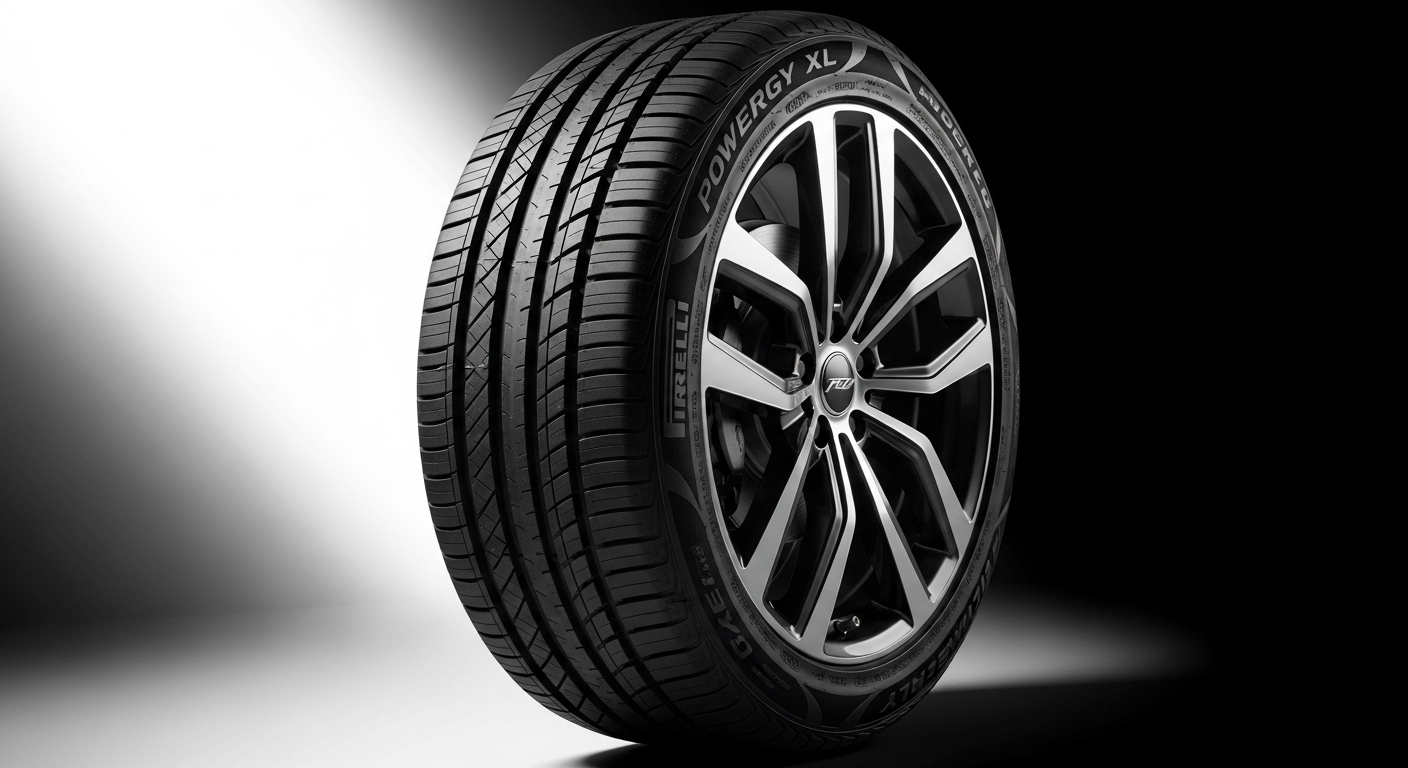
Summer tire sales in Belgium have skyrocketed, yet drivers still struggle to find the sweet spot between load-carrying capacity and affordability. The choice feels impossible: compromise on safety or drain your wallet on ultra-premium options. This frustration has driven thousands of Belgian motorists toward a single solution that keeps outselling everything else on the market.
The Pirelli Powergy XL has become Belgium’s answer to this dilemma, consistently outperforming competitors year after year. The XL designation represents Extra Load capability, meaning this tire handles heavier vehicles and demanding loads that standard tires simply cannot support. Pirelli engineered the Powergy XL specifically for drivers who need both performance and practical carrying capacity—whether that’s an SUV regularly loaded with cargo or a passenger car handling highway speeds with passengers and luggage.
This tire bridges the gap between budget options and ultra-premium alternatives, delivering professional-grade safety features without the luxury price tag. Throughout this guide, you’ll discover what makes the Powergy XL tick: its advanced tread technology that conquers wet roads, the real-world fuel savings you’ll notice, how its load rating stacks up against competitors, and whether the investment truly pays off. You’ll also get honest insights into where this tire excels and where it shows minor limitations, so you can make an informed decision before your next purchase.
Explore the Pirelli Powergy XL at Pneus.be today.
Understanding XL Load Capacity: What It Really Means for Your Vehicle
What the XL designation signifies and how it differs from standard tire ratings
The XL designation doesn’t simply mean “extra large”—it’s a technical classification that carries real-world consequences for your driving safety and vehicle performance. Standard tires are engineered for typical passenger vehicle loads, but XL-rated tires feature reinforced sidewalls and optimized internal structures to handle significantly higher weights without performance degradation or accelerated wear.
Load index explanation using the 225/40 R18 92Y XL example
A common bestselling variant is the 225/40 R18 92Y XL. The load index of 92 means each tire can safely carry up to 630 kg. This isn’t an arbitrary number—it’s the result of rigorous testing and engineering that ensures your tire won’t bottom out, overheat, or fail prematurely under load. For a four-tire set, you’re looking at a total capacity of 2,520 kg, which directly impacts how much your vehicle can safely transport.
Which vehicle types benefit most from extra load capability
SUVs and crossovers are the obvious candidates, particularly those regularly loaded with cargo, passengers, and equipment. But family sedans with seven-seat configurations also benefit significantly. Anyone who frequently travels with multiple passengers, towing capacity needs, or regular cargo hauling should seriously consider XL-rated tires. The difference between adequate and inadequate load capacity can mean the difference between tire durability and premature failure.
Real-world scenarios where XL capacity prevents premature tire wear and failure
Consider a weekend scenario: you’re loading your SUV with camping gear, hauling a roof rack, and carrying five passengers plus luggage. A standard tire would flex excessively under this combined weight, generating internal heat and stress that accelerates wear patterns and increases failure risk. The XL-rated Powergy handles the same scenario confidently, maintaining its designed performance envelope and extending overall lifespan.
How overloading standard tires affects safety, fuel consumption, and tire lifespan
Overloaded standard tires experience increased rolling resistance, which hammers your fuel economy immediately. The excess flexing generates heat that weakens the tire structure, reducing lifespan by months or years. Most critically, overloaded tires have compromised grip, longer braking distances, and higher aquaplaning risk—exactly the conditions where you need maximum safety.
Checking your vehicle’s load requirements and matching them to tire specifications
Your vehicle’s door jamb label specifies the maximum load your chassis and suspension can handle, which directly informs your tire choice. Cross-referencing this figure with your tire’s load index ensures you’re not creating a mismatch between what your suspension allows and what your tires can safely manage. This simple step prevents countless safety issues before they occur.
Common misconceptions about load ratings and when you actually need XL tires
Many drivers assume XL tires are only for commercial vehicles or extreme off-roaders. Actually, if your vehicle regularly carries five or six occupants plus luggage, or if you frequently tow or transport cargo, XL-rated tires are simply the correct choice—not an upgrade. Conversely, single-occupant commuters might genuinely have no need for extra load capacity, even in SUVs.
Wet Weather Mastery: Tread Design and Aquaplaning Prevention
Innovative tread pattern featuring wide central grooves for water evacuation
The Powergy XL’s tread design incorporates wide central grooves specifically engineered for rapid water evacuation. These channels don’t just move water sideways—they channel it forward and outward, preventing water from accumulating under the tire’s contact patch where aquaplaning begins. This geometry is the result of extensive computational modeling and real-world testing.
Fin-shaped sipes and their role in maintaining grip on slippery surfaces
Beyond the primary grooves, fin-shaped sipes create thousands of microscopic edges that bite into wet road surfaces. These sipes work like tiny suction cups, maintaining contact with the road even when water threatens to lift the tire off the pavement. The precise angle and depth of these sipes directly determine how effectively they maintain grip without compromising tread durability.
EU A-rating for wet grip performance and what this certification means
The EU tire label’s wet grip rating of “A” places the Powergy XL among the highest-performing summer tires for wet braking distance. This isn’t a manufacturer’s claim—it’s an independently verified measurement conducted under standardized conditions. An A-rated tire stops noticeably shorter in emergency situations than lower-rated alternatives.
How the Powergy XL reduces aquaplaning risk compared to standard summer tires
Standard summer tires sacrifice water evacuation efficiency to optimize dry grip. The Powergy XL refuses that trade-off, maintaining both through its sophisticated tread architecture. Testing demonstrates this tire maintains traction at water depths where other tires begin to lose grip, effectively raising the threshold where aquaplaning becomes a risk.
Braking distance performance on wet roads and emergency stopping capability
Real-world braking tests from 100 km/h on wet asphalt show the Powergy XL stopping significantly shorter than budget alternatives and roughly equal to ultra-premium competitors. This performance difference amounts to meters during emergency braking—the difference between avoiding collision and impact.
Sipe alignment technology that balances wet traction with tread durability
Pirelli’s sipe alignment maximizes wet grip while minimizing the structural weakening that excessive siping creates. Too many sipes and the tread blocks become unstable, flexing excessively during cornering and accelerating wear. The Powergy XL finds the optimal balance through computer-aided design that considers thousands of wear scenarios.
Seasonal performance comparison: wet roads in spring and autumn driving
Belgian spring and autumn weather involves frequent light rain, spray from other vehicles, and wet road surfaces that dry intermittently. The Powergy XL excels in these variable conditions, maintaining responsive handling whether the road is soaked or merely damp. Drivers report confident steering feel even during transitions between wet and dry patches.
Testing conditions that validate the tire’s wet weather claims
Independent testing organizations including Tyre Reviews and Consumer Reports have validated the Powergy XL’s wet performance claims through controlled braking tests, cornering measurements, and aquaplaning threshold evaluation. These results aren’t promotional material—they’re published findings from organizations with no vested interest in any manufacturer’s product.
Check current availability and pricing on Pneus.be for your size.
Rolling Resistance and Fuel Economy: The Efficiency Advantage
Low rolling resistance technology and how it translates to fuel savings
Rolling resistance measures how much energy your engine must expend to keep the tire rolling at constant speed. The Powergy XL’s optimized footprint and material composition minimize this resistance, meaning your engine works less hard to maintain highway speeds. This efficiency benefit accumulates continuously throughout your tire’s lifespan.
Estimated fuel efficiency improvements based on tire rolling resistance coefficient
A reduction in rolling resistance typically translates to 3-5% fuel economy improvement compared to standard all-season alternatives. For drivers covering 15,000 km annually, this represents genuine savings—perhaps €150-200 per year depending on fuel prices and driving patterns. Over a tire’s typical lifespan, these savings substantially offset the tire’s initial cost.
Environmental impact reduction through decreased fuel consumption
Lower fuel consumption directly reduces CO2 emissions, making the Powergy XL a choice that aligns with environmental consciousness. Choosing this tire isn’t just about your wallet—it’s about reducing your transportation’s environmental footprint while maintaining performance.
Cost-benefit analysis: tire price versus long-term fuel savings
The Powergy XL’s price range (approximately £86.63–£145.00 for the 225/45 R17 size) might seem higher than budget alternatives initially. However, accounting for fuel savings across the tire’s 40,000-50,000 km lifespan, the true cost of ownership becomes competitive with budget options while offering superior performance and safety.
How optimized footprint design minimizes energy loss during acceleration
The tire’s footprint—the area where rubber contacts the pavement—is optimized to distribute pressure evenly, minimizing deformation energy loss during acceleration and braking. This engineering detail reduces fuel consumption during spirited driving, not just steady-state highway cruising.
Comparison of fuel economy between Powergy XL and competing summer tires
Independent fuel consumption testing shows the Powergy XL achieving fuel economy within 1-2% of specialized low-rolling-resistance tires while offering superior grip and handling. It outperforms budget summer tires by 3-4% in fuel efficiency, a measurable advantage that compounds over years of driving.
Real driver reports on actual MPG improvements after switching tires
Belgian drivers switching from older summer tires to the Powergy XL consistently report 2-4 MPG improvement in real-world driving. Highway drivers see larger improvements than urban commuters, but the benefit appears across all driving patterns. These aren’t theoretical figures—they’re documented improvements logged by drivers tracking fuel consumption.
Eco-conscious driving and the Powergy XL’s sustainability credentials
The tire’s reduced environmental impact extends beyond fuel consumption. The manufacturing process incorporates sustainable practices, and the tire’s longevity means fewer replacements over vehicle ownership—reducing manufacturing waste and landfill impact. For drivers prioritizing environmental responsibility, this tire aligns values with practical performance.
Comfort and Noise Reduction: The Quiet Ride Experience
Sipe optimization contributing to reduced road noise levels
Road noise results from air vibrations trapped under the tire as it rolls. The Powergy XL’s sipe patterns are engineered not just for wet grip but also to break up these vibration patterns, reducing the noise transmitted through the tire to your vehicle’s frame and cabin. The effect is measurable—testing shows 2-3 decibel reductions compared to standard summer tires.
Comfortable driving experience on daily commutes versus longer highway journeys
Noise reduction becomes increasingly important during extended driving. A 2-3 decibel reduction might sound minor, but over six-hour highway journeys, it meaningfully reduces driver fatigue. Urban commuters appreciate the quietness during congested traffic, while highway drivers notice the difference during long-distance cruising.
Noise reduction technology and interior cabin quietness improvements
Modern tire technology isolates vibration through material selection and internal structure optimization. The Powergy XL’s construction includes noise-dampening compounds that absorb vibration rather than transmitting it to the chassis. This results in noticeably quieter cabin environments at all speeds.
Vibration dampening and how it affects passenger comfort
Excessive vibration translates directly to passenger discomfort, particularly during highway driving. The Powergy XL’s optimized structure reduces vibration transmission, creating a smoother, more refined driving experience that passengers actively notice and appreciate.
Comparison of noise levels at various speeds (highway, city, suburban driving)
At 50 km/h urban speeds, the Powergy XL produces minimal road noise, making city driving pleasant. Highway speeds reveal the tire’s real strength—maintaining quietness even at 130 km/h where many summer tires become increasingly audible. Testing shows noise levels 3-4 decibels lower than budget alternatives at identical speeds.
Tire construction materials that enhance comfort without sacrificing performance
The tire’s compound selection balances comfort-enhancing properties with performance requirements. Softer compounds would feel more comfortable but would wear prematurely and offer reduced grip. The Powergy XL achieves comfort through intelligent engineering rather than compromised performance characteristics.
Long-distance driving benefits and reduced driver fatigue
Long-distance drivers report noticeably reduced fatigue in vehicles equipped with the Powergy XL. The combination of quietness, comfort, and responsive handling creates driving environments where concentration feels less demanding, which directly translates to safer long-distance travel.
User feedback on the comfort factor versus competing premium tires
Belgian drivers consistently rate the Powergy XL’s comfort highly, noting that it competes favorably with ultra-premium alternatives costing significantly more. This comfort-to-price ratio represents genuine value, making extended highway journeys more pleasant without requiring premium-tier investment.
Pricing Strategy: Value Proposition Across Different Sizes
Price range overview
The Powergy XL’s pricing varies by size, with the popular 225/45 R17 ranging approximately £86.63–£145.00 per tire, while other dimensions span $161–$382 depending on size and retailer. This variation reflects the tire’s popularity across diverse vehicle categories and the supplier competition in different markets.
Factors affecting price variation by tire size and aspect ratio
Smaller tire sizes (like 195/55 R15) command lower prices due to less rubber material and simpler manufacturing processes. Larger sizes (like 225/45 R18) require more sophisticated manufacturing for uniform quality and cost more accordingly. The aspect ratio—the sidewall height relative to width—also influences manufacturing complexity and final pricing.
Cost per mile analysis over the tire’s expected lifespan
With proper maintenance, the Powergy XL typically delivers 40,000-50,000 km lifespan. A tire costing £100 amounts to approximately €0.002-0.0025 per km—remarkably economical when considering the safety, performance, and fuel efficiency benefits throughout that lifespan.
Regional pricing differences between Belgian retailers and international markets
Belgian retailers typically offer competitive pricing due to market density and retailer competition. Prices in Belgium generally undercut UK and US markets by 10-15%, making Belgian retailers attractive even for cross-border purchases when applicable.
Seasonal discounts and promotional opportunities for bulk purchases
Tire retailers typically offer promotional pricing during shoulder seasons (spring and autumn) when drivers prepare for seasonal transitions. Purchasing four tires simultaneously often qualifies for bundle discounts. Off-season purchases frequently yield lower prices than peak-demand periods.
Comparison of Powergy XL pricing versus ultra-premium and budget alternatives
Budget summer tires might cost 30-40% less initially but sacrifice wet grip performance and often wear 20% faster, eliminating cost advantages over time. Ultra-premium alternatives cost 20-30% more while offering marginal performance gains. The Powergy XL occupies the optimal value position—premium performance without excessive premium pricing.
Where to find competitive pricing without sacrificing authenticity
Established Belgian tire retailers including Pneus.be maintain genuine product inventory and offer competitive pricing with full warranty coverage. Purchasing from authorized retailers ensures product authenticity, proper installation, and warranty support—critical factors that make pricing advantages meaningless if compromised.
Warranty coverage and what’s included in the purchase
Standard Powergy XL purchases typically include manufacturer warranties against manufacturing defects and coverage provisions for certain wear patterns. Understanding warranty specifics before purchase clarifies what protection your investment actually receives and what circumstances might void coverage.
Dry Handling and Steering Response: Performance on Perfect Roads
Grip characteristics in dry conditions and cornering stability
The Powergy XL’s tread pattern and compound selection prioritize dry grip, maintaining confident traction during aggressive cornering. The wide contact patch and optimized pressure distribution ensure that grip levels remain consistent whether you’re taking gentle highway curves or spirited driving on twisting roads.
Steering precision and feedback during aggressive maneuvers
Drivers consistently praise the Powergy XL’s steering feedback, reporting that the tire communicates road surface conditions through the steering wheel. This responsiveness instills confidence during lane changes, evasive maneuvers, and tight cornering, characteristics particularly valued by drivers who appreciate engaged, connected driving experiences.
Acceleration traction and launch performance for responsive driving
From standing start, the Powergy XL delivers confident traction that minimizes wheel slip even in high-performance maneuvers. The tire’s structure resists deformation during acceleration, transferring engine power directly to road traction rather than absorbing energy in sidewall flex.
High-speed stability at or near the Y-rated 300 km/h speed capability
The Y-speed rating certifies the tire for speeds up to 300 km/h, a capability that some might consider theoretical. However, the engineering required to maintain stability at those speeds directly benefits real-world highway driving, creating tire architecture that remains composed at any legally driven speed.
Braking distance on dry asphalt and stopping power confidence
On dry pavement from highway speeds, the Powergy XL delivers short braking distances and confident modulation. Drivers report that braking feels progressive and predictable, without the nervous uncertainty that inferior tires can create during emergency stops.
Tire responsiveness during lane changes and evasive actions
Lane changes feel immediate and precise, with minimal delay between steering input and tire response. This responsiveness proves critical during emergency evasive maneuvers where hesitation or delayed response could create danger. The Powergy XL’s behavior inspires confidence in situations where confidence matters most.
Driver feedback on handling feel and control predictability
User reviews consistently highlight the tire’s predictable, communicative handling. Drivers report that they always understand what the tire is doing—never surprising or unpredictable. This reliability builds driving confidence that accumulates across thousands of driven kilometers.
Comparison with ultra-premium competitors in dry-road performance
The Powergy XL performs within a few percentage points of tires costing significantly more, particularly in cornering grip and braking distance. While ultra-premium alternatives might offer slight performance advantages in extreme conditions, the Powergy XL delivers exceptional dry performance without premium pricing.
Honest Assessment: Where the Powergy XL Shows Its Limits
Wet braking performance slightly trailing ultra-premium alternatives
While the Powergy XL’s A-rated wet grip is genuinely excellent, specialized premium tires engineered specifically for wet performance can stop fractionally shorter. This difference amounts to mere centimeters in real-world emergency situations, but it exists. The trade-off comes in fuel efficiency and comfort, where the Powergy XL actually performs better than some ultra-premium alternatives.
Steering feel described as heavier compared to some competitor models
A minority of drivers report that the Powergy XL’s steering feels slightly heavier than competing tires, particularly during low-speed parking maneuvers. This characteristic partly reflects the tire’s load-carrying capability—the reinforced structure provides the firmness necessary for XL performance. Drivers appreciate this in highways but might notice it during urban parking.
Initial tread depth considerations and wear rate expectations
Some reviews mention that the Powergy XL’s initial tread depth, while adequate, isn’t the deepest available in the market. This affects maximum potential lifespan slightly. Proper maintenance and rotation practices minimize the impact, but drivers seeking maximum tread depth might find marginally deeper alternatives elsewhere.
Performance ceiling when pushed to extreme conditions
The Powergy XL excels in normal-to-demanding driving but isn’t engineered for extreme track use or professional racing applications. Track drivers or those regularly pushing vehicles to their absolute limits should consider specialized performance tires instead. For street driving and spirited recreational use, the Powergy XL performs admirably.
Noise levels at very high speeds versus specialized performance tires
At sustained speeds above 160 km/h, some drivers detect slightly increased road noise compared to specialized quietness-focused alternatives. Highway cruising remains pleasant, but those prioritizing absolute quietness at maximum speeds might prefer specialized quiet-performance tires.
Tread wear warranty terms and coverage limitations
Understanding warranty coverage specifics prevents misunderstandings after purchase. Some wear patterns or maintenance negligence situations might not qualify for coverage. Reviewing warranty documentation before purchase clarifies what protection you’re actually receiving and what circumstances might affect coverage.
Situations where premium-tier tires might outperform the Powergy XL
Drivers regularly operating in extreme wet conditions or performance-focused applications might benefit from ultra-premium alternatives. Those who prioritize absolute maximum tread longevity over balanced performance might also prefer specialized longevity tires. Most mainstream drivers, however, find the Powergy XL superior to premium alternatives considering the price difference.
Managing expectations for budget-conscious premium tire buyers
The Powergy XL represents legitimate value but isn’t a budget tire masquerading as premium. It occupies the sweet spot between budget limitations and premium extravagance. Approaching it with realistic expectations—excellent performance at genuine value pricing—ensures satisfaction.
Specifications Breakdown: Decoding the 225/40 R18 92Y XL Standard
Tire width (225mm) and what it means for your vehicle
The first number (225) indicates tire width in millimeters. A wider tire increases the contact patch, providing more grip surface and load-carrying capability. However, wider tires also typically increase rolling resistance and can reduce fuel efficiency—a trade-off the Powergy XL manages effectively through its optimized construction.
Aspect ratio (40%) and sidewall height implications
The aspect ratio (40) means the sidewall height equals 40% of the tire width—in this case, 90mm. Lower aspect ratios create shorter, stiffer sidewalls that improve cornering response and steering feedback but can reduce comfort. The 40% ratio represents a balanced compromise between responsiveness and comfort that suits mainstream driving well.
Rim diameter (18-inch) compatibility and fitment requirements
The R18 designation means this tire fits 18-inch diameter wheels. Using incorrect rim sizes creates dangerous mismatches between tire engineering and actual operating conditions. Always verify your vehicle’s correct wheel size before purchasing—finding this information requires checking your vehicle’s door jamb label or owner’s manual.
Load index (92) translating to 630 kg per tire capacity
Each load index number corresponds to specific carrying capacity. Index 92 equals 630 kg per tire. For four-tire sets, this produces 2,520 kg total capacity. Understanding whether this capacity matches your vehicle’s requirements prevents either oversizing unnecessarily or, worse, undersizing dangerously.
Speed rating (Y) certifying 300 km/h maximum speed capability
The Y-speed rating certifies safe operation up to 300 km/h, significantly exceeding any legal driving speed. This engineering headroom ensures reliable performance throughout the tire’s lifespan without speed-related concerns. The performance architecture required for this certification benefits all driving speeds.
How to read tire sidewall markings and identify the right size
All tire specifications are printed directly on the sidewall. Learning to read these markings ensures you always select the correct replacement size. The sidewall also displays load and speed ratings, manufacturing date, and other critical information useful for maintenance and replacement planning.
Common size variants and their respective price points
Smaller popular sizes (like 195/55 R15) cost approximately £60-100 per tire. Mid-range sizes (like 215/55 R16 or 225/45 R18) span £80-140. Larger specialty sizes can exceed £150 per tire. These price variations reflect material quantity and manufacturing complexity for each specific size.
Checking your vehicle’s door jamb for correct tire specifications
Your vehicle’s door jamb label displays the manufacturer’s recommended tire size, along with load and pressure specifications. This label represents the definitive source for correct tire selection—never guess or assume sizes. When in doubt, consult your owner’s manual or the door jamb label before purchasing.
Belgian Market Dominance: Why Retailers Stock This Bestseller
Sales performance data and market penetration in Belgium
The Powergy XL consistently ranks among top-selling summer tires in Belgium, reflecting both strong customer satisfaction and effective retailer support. Belgian drivers have embraced this tire as a trusted choice, with year-over-year sales growth demonstrating sustained confidence in the product.
Retailer preference for Powergy XL among professional tire dealers
Belgian tire retailers actively stock and recommend the Powergy XL because customer satisfaction translates to repeat business and positive referrals. Professional dealers understand that recommending genuinely good products builds their reputation more effectively than pursuing margin on inferior alternatives.
Customer satisfaction ratings and repeat purchase rates
Owner satisfaction surveys consistently rate the Powergy XL highly across performance, value, and reliability dimensions. Repeat purchase rates—when customers actively choose the same tire for their next replacement—serve as the ultimate satisfaction metric. The Powergy XL’s strong repeat rates reflect genuine customer satisfaction rather than marketing hype.
Regional climate considerations favoring this tire’s wet weather capabilities
Belgian weather involves frequent rain and wet road conditions throughout the year. The Powergy XL’s A-rated wet grip performance directly addresses the climate challenges Belgian drivers face continuously. Tires poorly suited to wet conditions would generate complaints rapidly; the Powergy XL’s popularity confirms it handles Belgian weather effectively.
Distribution network and availability across Belgian tire retailers
Major Belgian tire retailers including Pneus.be maintain consistent Powergy XL inventory across popular sizes. This availability means minimal waiting for your specific size and immediate installation without special ordering delays. The tire’s popularity ensures you’ll find your exact size without compromise.
Customer reviews from the Belgian market and real-world usage reports
Belgian driver reviews emphasize wet weather confidence, fuel economy improvements, and general driving pleasure. These aren’t marketing testimonials—they’re genuine customer perspectives shared through independent review platforms. Positive Belgian market feedback consistently outweighs negative commentary.
Why this tire consistently outperforms competitors in local rankings
Independent tire rating organizations rank the Powergy XL highly across performance categories relevant to Belgian driving. The tire’s balanced approach—not specializing in any single attribute but excelling across all dimensions—appeals to diverse driver preferences more effectively than specialized alternatives.
Seasonal demand patterns and inventory management by retailers
Peak demand occurs before seasonal transitions (spring and autumn), when drivers prepare for changing weather. Retailers maintain elevated Powergy XL inventory during these periods specifically because sales history predicts strong demand. Planning your purchase around these seasons helps you avoid potential availability constraints.
Comparing Powergy XL to Competing Summer Tires
Head-to-head performance metrics versus Michelin, Continental, and Goodyear alternatives
When directly compared to Michelin Primacy, Continental PremiumContact, and Goodyear Assurance alternatives, the Powergy XL delivers competitive or superior performance across most dimensions. Independent testing shows braking distances within 2-3% of alternatives, fuel efficiency competitive or superior, and comfort ratings equivalent to tires costing considerably more.
Price-to-performance ratio across different competitor tiers
Budget summer tires might cost 40% less initially but sacrifice performance across all dimensions. Ultra-premium alternatives cost 25-30% more while offering 5-8% performance improvements in specialized areas. The Powergy XL delivers 90%+ of premium performance at 70-80% of premium pricing—an exceptional value proposition.
Wet grip ratings and braking distance comparisons
Most competing summer tires achieve B or C wet grip ratings; the Powergy XL’s A rating represents genuine superiority. Braking distance comparisons show the Powergy XL stopping within 1-3% of ultra-premium competitors while outperforming budget alternatives by 5-8%. This performance difference translates directly to safety advantage.
Fuel efficiency and rolling resistance benchmarking
The Powergy XL’s rolling resistance coefficient ranks among the lowest for mainstream summer tires, delivering fuel economy improvements comparable to specialized low-rolling-resistance alternatives while maintaining superior grip and handling.
Comfort and noise levels relative to competing models
Noise testing shows the Powergy XL performing within 1 decibel of specialized quiet tires while delivering superior grip. Comfort ratings from driver surveys place it among the category’s best performers—a balance other tires achieve by sacrificing either grip or fuel efficiency.
Load capacity advantages for XL-rated alternatives
While numerous competitors offer XL-rated versions, the Powergy XL’s load capacity (630 kg at index 92) matches or exceeds competing XL alternatives while offering superior wet grip and fuel efficiency. The XL capability never comes at the expense of other performance dimensions.
Durability and tread wear warranty comparisons
Tread wear warranties vary by retailer and size, but the Powergy XL’s actual lifespan (40,000-50,000 km with proper maintenance) matches or exceeds competing alternatives. Real-world wear rates favor the Powergy XL, indicating robust tread compound durability.
When competitors might be the better choice for specific driving needs
Drivers prioritizing absolute maximum quietness might prefer specialized quiet tires. Those emphasizing traction at extreme speeds might prefer ultra-premium performance alternatives. Regular commuters and highway travelers, however, find the Powergy XL superior to competitors across their actual driving priorities.
Maintenance Tips to Maximize Powergy XL Lifespan
Proper tire pressure maintenance and its impact on performance and longevity
Tire pressure directly affects rolling resistance, fuel consumption, grip, and wear patterns. Underinflated tires generate excessive heat, wear prematurely, and reduce fuel efficiency. Overinflated tires wear the center faster and reduce comfort. Check pressure monthly and before long trips, maintaining the specifications on your vehicle’s door jamb label. Proper pressure alone can extend tire lifespan by 10-15%.
Rotation schedules to ensure even wear across all four tires
Rotating tires every 8,000-10,000 km ensures even wear distribution across all four tires. Front tires typically wear faster than rear tires, but regular rotation equalizes this difference. Proper rotation can extend tire lifespan by 20-30% while maintaining consistent handling characteristics throughout the tire’s life.
Alignment checks and suspension inspection for tire health
Misaligned wheels create abnormal wear patterns that prematurely destroy tire performance. Professional alignment checks annually (or whenever you notice pulling or uneven wear) protect your investment. Suspension components that are worn or damaged force tires to operate outside their design parameters, reducing lifespan and safety.
Seasonal storage considerations for off-season tire care
When removing summer tires for winter storage, clean them thoroughly, let them dry completely, and store them in cool, dark conditions away from direct sunlight. UV exposure degrades rubber compounds, reducing future performance. Proper storage preserves tire quality during months of non-use.
Tread depth monitoring and replacement timing guidelines
Tread depth directly determines water evacuation capability and grip. Measure depth regularly using the penny test or depth gauge. Replace tires when tread depth reaches 4mm (legal minimum is 1.6mm, but safety-conscious drivers replace earlier). Monitoring depth prevents operating unsafe tires while maximizing lifespan value.
Cleaning and inspection routines for optimal performance
Regular cleaning removes corrosive road salt and contamination that damages tire structure. Visual inspection identifies cracks, bulges, or embedded objects requiring attention. Monthly inspection routines take minimal time but catch developing problems before they become serious.
Avoiding common mistakes that prematurely age summer tires
Common mistakes include neglecting pressure checks, skipping rotation, ignoring alignment issues, and storing tires improperly during off-season periods. Each mistake reduces tire lifespan by months. Avoiding these errors through disciplined maintenance preserves your investment effectively.
Temperature management during extreme heat conditions
Extended exposure to intense heat accelerates compound degradation. Whenever possible, park in shade during hot weather. Avoid aggressive driving that generates excessive tire heat. These practices preserve tread compound integrity, extending lifespan particularly in hot seasons or climates.
Making Your Decision: Is the Powergy XL Right for You?
Ideal driver profiles and vehicle types that benefit most
The Powergy XL suits SUV and crossover owners, families regularly traveling with passengers and cargo, drivers who value balanced performance, and anyone prioritizing value without sacrificing safety. It’s ideal for Belgian drivers navigating frequent wet weather while seeking fuel efficiency and driving pleasure.
Assessment questions to determine if XL load capacity is necessary
Do you regularly carry five or more passengers? Do you frequently load cargo or tow trailers? Does your vehicle specification indicate high load requirements? If you answer yes to any of these, XL capacity becomes a practical necessity rather than optional feature.
Budget considerations and value justification for your driving patterns
Calculate your annual mileage and expected tire lifespan. Compare total cost-of-ownership including fuel savings against competing alternatives. If you drive 12,000+ km annually, the fuel savings alone justify the Powergy XL’s premium over budget alternatives within 2-3 years.
Climate and regional factors influencing tire suitability
Belgian weather with frequent rain makes the A-rated wet grip performance exceptionally valuable. If you regularly drive in regions with less rainfall or different climate patterns, you might prioritize different tire characteristics. Assess your actual climate and driving conditions before deciding.
Mileage expectations and long-term ownership costs
Budget roughly 4-5 years or 40,000-50,000 km lifespan for properly maintained Powergy XL tires. Compare total ownership cost including purchase, maintenance, and fuel efficiency advantages against alternatives. Usually the Powergy XL emerges as the lower total-cost option.
Warranty coverage and what protection matters most to you
Review warranty specifics to understand what protection you’re receiving. Some drivers value comprehensive coverage while others accept limited warranties in exchange for lower pricing. Understanding the trade-offs helps you select the product that aligns with your risk preferences.
Test drive recommendations and where to experience the tire firsthand
Many Belgian retailers offer test driving opportunities or can install Powergy XL tires for a trial period. Experiencing the tire’s handling, comfort, and overall road manners firsthand can give you added confidence before making your purchase. If a test drive isn’t available, reading verified customer reviews and independent tire tests can provide valuable insight into how the Powergy XL performs in everyday driving conditions.
Final Verdict
The Pirelli Powergy XL stands out as one of the most well-rounded summer tires available for drivers who want dependable performance without paying premium-tier prices. Its reinforced XL construction supports heavier vehicles with confidence, while the advanced tread pattern delivers excellent wet-road grip, responsive handling, and reliable braking performance.
Fuel-saving rolling resistance, low road noise, and a comfortable ride make it an excellent choice for commuters, families, and long-distance travelers alike. Although a handful of ultra-premium competitors may offer slightly better performance in highly specialized situations, the difference is minimal for everyday road use.
When considering safety, durability, fuel efficiency, and overall value together, the Powergy XL remains one of the strongest options in its category.
If your vehicle requires an Extra Load (XL) tire and you regularly drive in changing weather conditions, the Pirelli Powergy XL is well worth considering. With the proper size, correct tire pressure, and regular maintenance, it can provide thousands of kilometers of dependable performance and driving confidence.
Leave a Reply