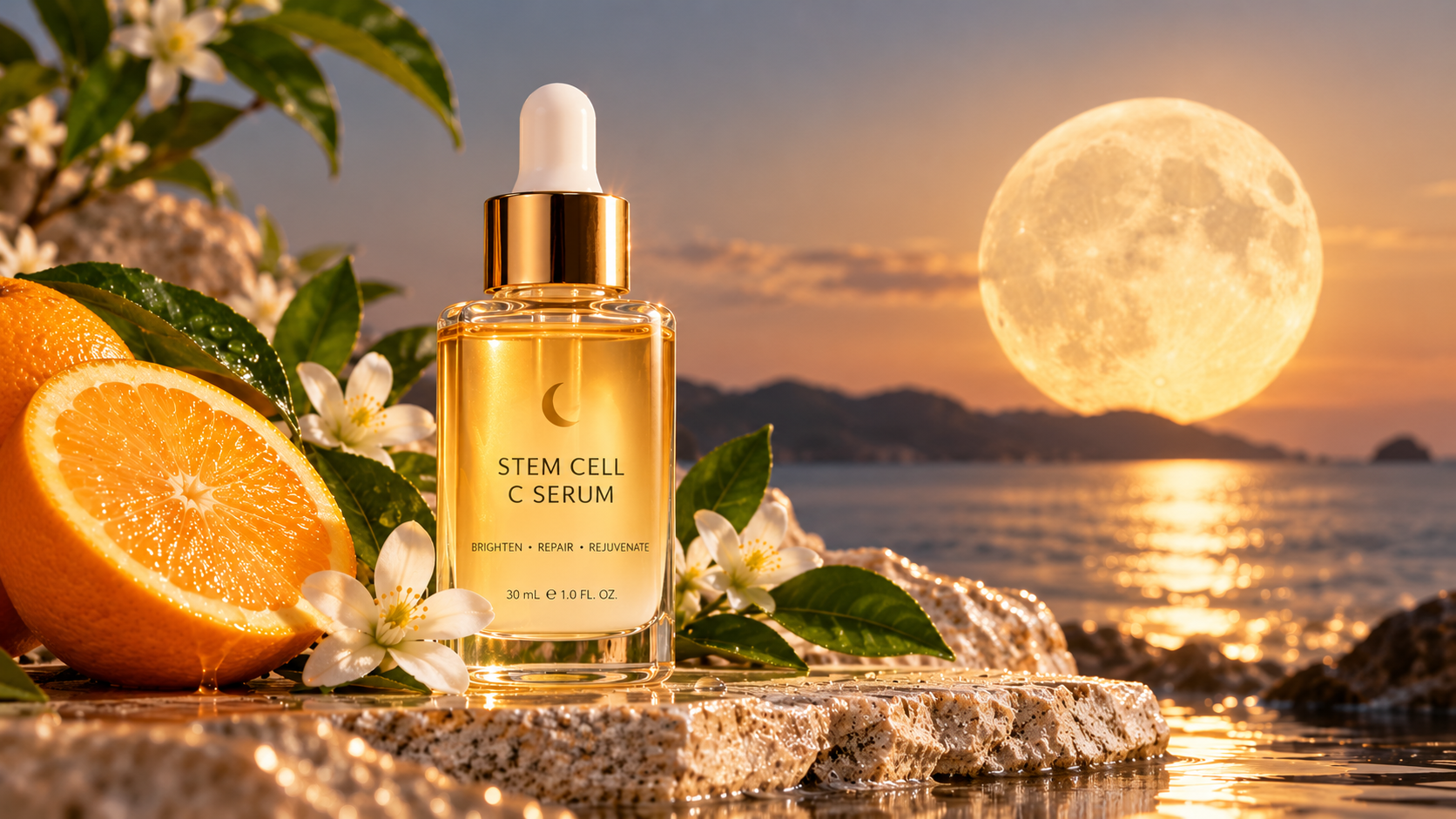
Moon And Skin Stem Cell C Serum takes a vitamin C-focused approach, combining a stable vitamin C derivative with hydrating and botanical ingredients.
According to Moon and Skin, the formula is intended to support brighter-looking, hydrated skin while providing antioxidant support. The ingredient list gives you several useful points to assess before deciding if this product belongs in your routine.
What Is Moon And Skin Stem Cell C Serum?
Moon and Skin describes the product as a vitamin C serum formulated with plant-cell technology and a stable form of vitamin C.
Its published ingredient list includes vitamin C, witch hazel extract, glycerin, aloe, jojoba seed oil, sodium hyaluronate, vitamin E, ferulic acid, and several additional formulation ingredients.
The product is positioned by the manufacturer for people interested in addressing dull-looking skin, hydration, environmental stressors, and general skin renewal.
Those statements should be viewed as manufacturer-described benefits rather than guaranteed outcomes, since individual responses to skincare products can differ.
The Form of Vitamin C Deserves Attention
One of the first ingredients worth checking is sodium ascorbyl phosphate, the vitamin C derivative identified on the official ingredient list.
That distinction matters because products marketed around vitamin C can use different derivatives rather than pure ascorbic acid. Your skin type, existing routine, product formulation, and tolerance can influence which option suits you.
Moon and Skin describes its chosen vitamin C form as stable and suitable for sensitive or acne-prone skin. That suitability statement comes from the manufacturer, so anyone with highly reactive skin should still assess personal tolerance carefully.
Key Ingredients to Review
Rather than judging a serum by one headline ingredient, checking the complete formula can tell you much more about what you are buying.
Sodium Ascorbyl Phosphate
This vitamin C derivative gives the formula its main vitamin C component. It makes the product relevant if you are shopping for a brightening face serum and prefer a formula that does not rely solely on pure ascorbic acid.
Sodium Hyaluronate
Sodium hyaluronate, identified by the company as hyaluronic acid, appears in the published formula. This humectant component makes the formula worth comparing with a conventional hyaluronic acid serum when hydration is one of your priorities.
Ferulic Acid and Vitamin E
The formula contains ferulic acid and tocopheryl acetate, a form of vitamin E. Their presence adds to the product’s positioning as an antioxidant face serum, alongside its vitamin C component.
Aloe, Glycerin, and Jojoba Oil
The current ingredient list also includes aloe leaf powder, vegetable glycerin, and jojoba seed oil. These supporting ingredients are particularly relevant when comparing formulas based on hydration and overall feel rather than concentrating on vitamin C alone.
Witch Hazel
Witch hazel extract appears high on the published ingredient list. If you already know that your skin reacts poorly to witch hazel-containing cosmetics, its presence deserves attention before purchase.
Is It Suitable for Sensitive Skin?
Moon and Skin markets the formula as suitable for sensitive and acne-prone skin. That positioning can make it interesting to shoppers searching for a serum for sensitive skin, especially those who have found some vitamin C formulas uncomfortable.
Still, a brand’s skin-type recommendation cannot predict how every person’s skin will react.
The current ingredient list includes witch hazel and alcohol, for example. Their presence does not automatically make a cosmetic unsuitable, but people with reactive skin may want to patch test first and stop use if persistent irritation occurs.
How Do You Use It?
The company’s current directions are straightforward. Apply the serum to freshly cleansed skin, using two pumps.
Moon and Skin instructs users to distribute the product with their hands and gently pat it across the face, neck, and décolleté while avoiding the eye area. Allow it to absorb before applying moisturizer.
That sequence means the serum can fit between cleansing and moisturizing in a standard skincare routine.
If you use several active products, introducing them carefully can make it easier to identify which formula causes irritation if a reaction develops.
How Does It Compare With Other Vitamin C Formulas?
The most useful comparison starts with formulation rather than marketing language.
| Buying Factor | Moon And Skin Stem Cell C Serum | What to Check in Alternatives |
|---|---|---|
| Vitamin C type | Sodium ascorbyl phosphate | Type of vitamin C used |
| Hydrating component | Sodium hyaluronate and glycerin | Humectants and moisturizers |
| Antioxidant-related ingredients | Vitamin C, vitamin E, ferulic acid | Antioxidant ingredient combination |
| Botanical ingredients | Aloe, jojoba and witch hazel among listed ingredients | Personal tolerance for botanical extracts |
| Application | After cleansing, before moisturizer | Directions can differ by formula |
| Sensitive-skin positioning | Marketed by the brand for sensitive and acne-prone skin | Check complete ingredient list and personal tolerance |
Product formulation can matter as much as the headline active. Two vitamin C products may serve similar skincare goals while having substantially different ingredient lists.
What Should You Check Before Buying?
Start with your reason for adding another serum. If your main goal is hydration, compare this formula with simpler hydrating products. If vitamin C is your priority, look at the specific derivative rather than assuming every vitamin C product uses the same ingredient.
You should also check your existing routine. Buying several products with similar purposes can add cost and make your routine harder to evaluate.
People with reactive skin may want to examine the complete ingredient list carefully. Even when a product is marketed toward sensitive skin, personal reactions remain possible.
Packaging and storage instructions also matter for antioxidant skincare products. Follow the manufacturer’s directions and pay attention to changes in appearance, smell, or texture that seem unusual.
Finally, check the current product details directly from the seller before ordering because formulations, purchasing terms, and other product information can change.
What type of vitamin C does the serum contain?
The current Moon and Skin ingredient list identifies sodium ascorbyl phosphate as its vitamin C ingredient.
Does it contain hyaluronic acid?
Yes. The current formula lists sodium hyaluronate, identified by the company as hyaluronic acid.
Does it contain ferulic acid?
Yes. Ferulic acid appears on the current published ingredient list alongside vitamin C and vitamin E.
Can you use it before moisturizer?
Yes. Moon and Skin specifically directs users to let the serum absorb before applying moisturizer.
Is it intended for acne-prone skin?
Moon and Skin describes the formula as suitable for acne-prone skin. This is a manufacturer statement rather than a guarantee that every acne-prone user will tolerate or benefit from the product.
Is Moon And Skin Stem Cell C Serum Right for Your Routine?
Moon And Skin Stem Cell C Serum may make sense if you want a vitamin C-focused product that combines sodium ascorbyl phosphate with sodium hyaluronate, ferulic acid, vitamin E, aloe, glycerin, jojoba oil, and other supporting ingredients.
Before purchasing, read the latest ingredient list and directions, compare the formula with products you already use, and assess whether its ingredient profile matches your skin’s needs and tolerance.
That approach gives you a stronger basis for choosing a serum than relying on marketing claims alone.
Leave a Reply