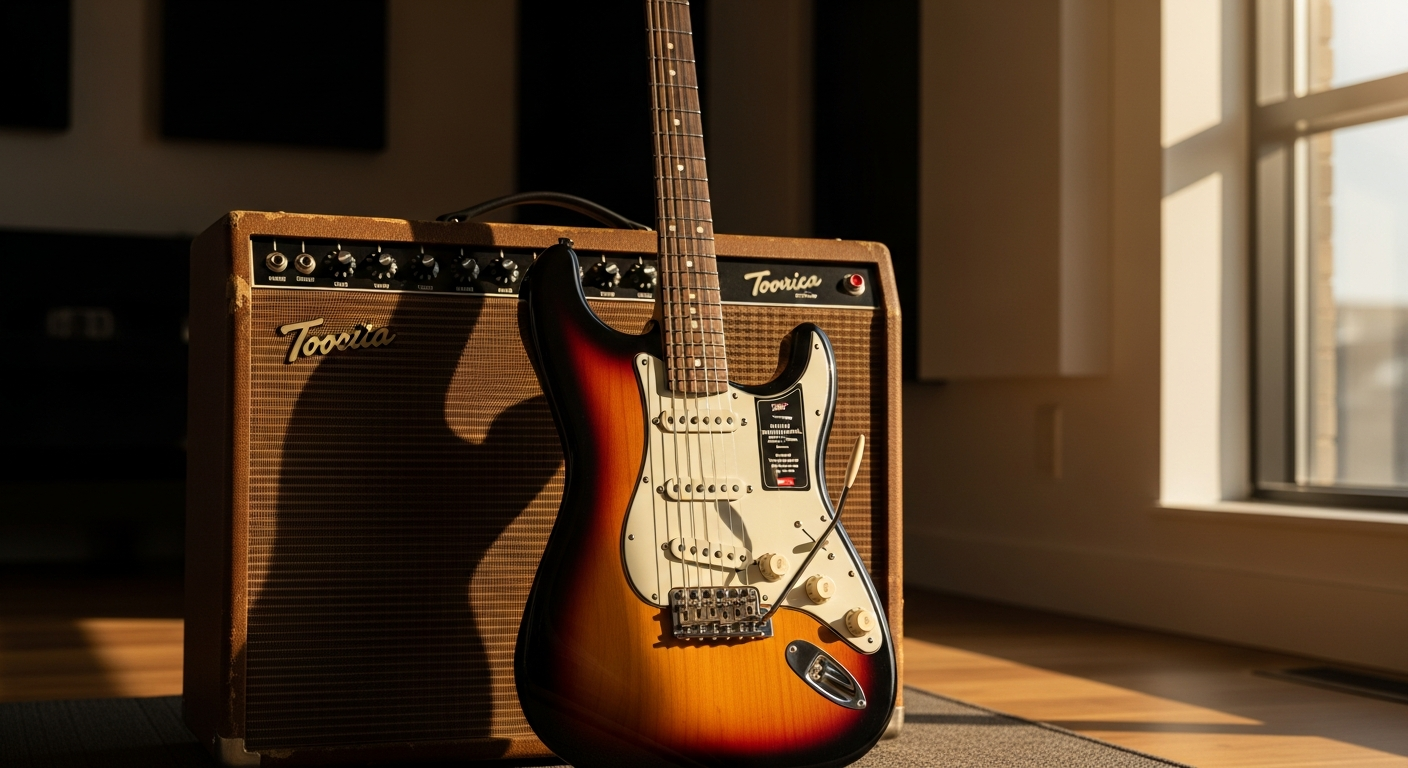
When a guitar transforms your sound, it stops being just another instrument—it becomes essential. The Fender American Professional II Stratocaster has climbed to the #1 best-selling electric guitar position on Reverb in 2025, and this ascent reflects something deeper than marketing momentum. What matters most is how it solves real problems that working musicians face daily: the need for an instrument that doesn't fight you, that delivers consistent results across studio sessions and live performances, and that balances heritage with genuine innovation.
You need a tool that keeps pace with your creativity rather than constraining it. Whether you're tracking vocals in a home studio, laying down rhythm parts in a professional facility, or switching between clean tones and overdriven textures mid-set, your guitar needs to respond intuitively and reliably. The American Professional II accomplishes this without compromising on build quality or tone character—two things that shouldn't require sacrifice at this price point.
Explore the Fender American Professional II Stratocaster on Reverb today.
Why Studio Musicians Are Switching to the American Professional II
The rise of the American Professional II to the top sales position on Reverb represents a meaningful shift in how professional musicians approach gear selection. Rather than defaulting to brand nostalgia alone, working players now prioritize playability and tonal flexibility—the features that directly impact their output quality and workflow efficiency.
Modern studio environments demand versatility. A guitarist might need to handle clean jazz voicings in the morning, then switch to layered alternative rock tones in the afternoon. The instrument that can navigate these shifts without requiring gear swaps or hours of EQ work becomes invaluable. Consistency matters too. When you're tracking multiple takes for a vocal-focused arrangement, your guitar needs to deliver the same articulation and presence across dozens of iterations. Instrument reliability directly reduces studio downtime and the frustration of problematic retakes that stem from gear instability rather than performance issues.
Professional musicians recognize that the American Professional II delivers results across these scenarios. It's not the flashiest choice or the most boutique option—it's the dependable workhorse that leaves headroom for your creativity rather than demanding technical workarounds.
The V-Mod II Pickup System—Clarity Without Compromise
Balancing Vintage Character with Modern Clarity
The V-Mod II single-coil pickups represent a thoughtful refinement of the classic Stratocaster formula. These pickups maintain the bell-like chime quality that defines Strat tone while introducing improved clarity and warmth that cuts through dense mixes without sounding harsh or thin. This balance matters enormously in modern recording contexts where guitars often compete with dense drum tracks, bass layers, and vocal harmonies.
Traditional single-coils can sound either too bright and glassy or too muddy depending on how they're voiced. The V-Mod II achieves articulation without aggression. In clean applications, you get definition—the kind of tone where individual pick strokes register clearly and chord voicings maintain their character even when layered. Push the same pickup into an overdriven amp, and it responds with warmth and sustain rather than becoming shrill or fatiguing over extended sessions.
Effectiveness Across Genres and Applications
These pickups excel in contexts ranging from blues and country to rock and alternative. A blues player appreciates the smooth sustain and singing quality for bends and lead work. A country session guitarist values the articulation and brightness for rhythm work. Rock and alternative players find that the pickups respond predictably to drive and distortion, maintaining note clarity even when stacked with effects.
Single-coil hum remains a consideration in professional recording environments. Proper shielding, isolation techniques, and strategic use of noise gates can minimize this artifact without compromising the core tone. Many studio professionals view this trade-off as acceptable given the tonal character they gain in return.
The Push-Push Tone Control—Rethinking Traditional Strat Wiring
Expanded Tonal Combinations Explained
Standard Stratocaster wiring offers five positions via the pickup selector switch: bridge alone, bridge and middle blended, middle alone, middle and neck blended, and neck alone. The push-push tone control feature on the American Professional II adds a sixth option by allowing the neck pickup to engage alongside the bridge or middle pickups when engaged—combinations that traditional Strats cannot achieve.
This might sound like a minor feature, but in practice, it streamlines workflow during recording sessions. Musicians who need quick tonal shifts without repositioning their hand benefit from having these unique blends immediately accessible. Bridge and neck combinations, for instance, create thicker voicings ideal for certain chord arrangements or lead textures that neither pickup alone could produce.
Workflow Benefits and Time Savings
During long studio days, efficiency compounds. Eliminating the need to switch positions between takes or to reach down and adjust patch cables during recording sessions means fewer distractions and fewer breaks in creative momentum. For session musicians who bill by the hour, this kind of operational streamlining translates to more takes recorded in less time and reduced post-production editing needs where tone switching might otherwise require separate recording passes.
Discover how the American Professional II can streamline your studio workflow on Reverb.
Playability Features That Reduce Fatigue During Long Sessions
Neck Design for Extended Performance
The Deep C maple neck profile combined with the satin urethane finish on the back creates an ergonomic foundation for hours of playing without hand fatigue. The satin finish matters more than many players realize—it provides friction for consistent hand positioning and speed without the stickiness that gloss finishes sometimes create, especially under the temperature variations that occur during long sessions.
Rolled fingerboard edges and a sculpted neck heel represent thoughtful ergonomic refinements. These features directly address the common complaint of hand fatigue and discomfort when accessing upper frets during extended sessions. The sculpted heel reduces the pressure point that many players experience when their palm contacts the body, enabling easier fret access during solos or lead passages that require high-register work.
Fretboard Specifications and Precision
The 9.5-inch radius fretboard balances comfort with action flexibility. This radius works well for most playing styles—comfortable for chord work without requiring excessive height, yet accommodating enough for bends without fretting out. The 22 narrow-tall frets contribute to precision and durability across the fingerboard's lifespan, handling the repeated string vibration and pressure from years of session work and touring.
Neck comfort directly impacts recording quality in subtle but significant ways. When your hand position feels natural and uninhibited, your playing becomes more relaxed and musical. Tension manifests in recordings—in slightly rushed phrasing, in inconsistent dynamics, in approaches that sound technically correct but emotionally stiff. The American Professional II's playability removes these technical barriers, leaving room for the performances that matter.
Tremolo and Sustain—The Upgraded 2-Point Synchronized System
Technical Improvements and Their Sonic Impact
The upgraded 2-point synchronized tremolo system employs a cold-rolled steel block that enhances sustain and clarity compared to vintage Strat systems. The relationship between tremolo design and tone quality might seem obscure, but it's tangible: a heavier, more rigid block transfers string vibration more efficiently to the body, resulting in improved high-end sparkle and reduced damping that can occur with lighter bridge systems.
Tuning stability becomes critical when tracking multiple takes in succession. The 2-point system maintains pitch stability more effectively than vintage designs, reducing the need to retune between passes. For musicians working on tight deadlines—whether in professional studios where studio time costs real money or in home setups where momentum determines how much you accomplish—this stability translates to fewer interruptions and more usable takes in shorter time frames.
Vibrato Technique and Performance
The upgraded tremolo system responds intuitively to both subtle and aggressive vibrato techniques. Gentle dives and swells sit right where you want them, while aggressive whammy bar effects maintain pitch integrity even under extreme movements. This responsiveness matters for players who incorporate tremolo as a primary tonal tool rather than an occasional effect. Lead players working on rock or alternative tracks often develop signature vibrato techniques, and an instrument that responds predictably to their approach becomes almost transparent—you're not fighting the instrument, you're collaborating with it.
Build Quality and Hardware—What You're Actually Paying For
Materials and Construction Standards
The alder body construction provides a balanced tonal foundation with warm midrange characteristics and natural resonance. Select models also offer roasted pine, which offers slightly different tonal properties with improved dimensional stability. The bone nut isn't a luxury feature—it's a functional upgrade that improves sustain and tuning stability compared to synthetic alternatives. Bones' density and material properties transmit string vibration more cleanly to the headstock.
The treble bleed circuit maintains high-frequency response when rolling back the volume, addressing a common limitation of passive tone controls where reducing volume simultaneously dulls the tone. For players who use volume control as a tonal tool—backing off to clean up overdriven tones or to achieve sustain variations—this circuit preserves the character you've dialed in.
Finishing and Long-Term Durability
Reviewers consistently praise the craftsmanship, noting smooth fret ends and overall robust construction. This attention to detail matters for touring musicians and those running frequent studio sessions. Sharp fret edges become increasingly irritating during marathon playing days, and sloppy construction creates intonation problems that compound over time. The American Professional II's quality control means your instrument stays playable and sounds consistent across years of use.
The included Deluxe molded hardshell case provides protection appropriate to the instrument's professional positioning. Unlike padded gig bags that offer basic protection for local transport, a hardshell case protects against temperature fluctuations, impacts, and the kind of rough handling that inevitably occurs when gear travels regularly.
The Real Cost of Ownership—Investment vs. Resale Value
Pricing Structure and Market Positioning
New Fender American Professional II Stratocasters generally range from $1,599 to $1,899.99 depending on specific model variations, finish options, and retailer markups. This price point positions the instrument at the professional-grade threshold—accessible to serious hobbyists and working musicians, yet removed from entry-level pricing that typically carries compromises in hardware quality and playability refinement.
The used market on Reverb regularly features examples priced between $1,050 and $1,400, reflecting depreciation patterns that favor the American Professional II compared to many competitors. This secondary market pricing suggests that players who purchase new instruments find them valuable enough to retain, rather than quickly reselling at steep discounts.
Cost Analysis for Professional Use
For a working musician playing 50+ gigs annually and tracking regularly in studios, the American Professional II's cost per year of ownership justifies itself through reduced repair frequency, consistent performance reliability, and high resale value when eventually upgraded. A $1,700 investment that retains 65-70% of its value after three years of heavy use amounts to roughly $100-150 per year in depreciation—negligible compared to the income generated through reliable performance.
Navigating the Limitations—Single-Coil Hum and Tonal Quirks
Single-Coil Noise Management
Single-coil pickups inherently interact with electromagnetic interference, resulting in hum that becomes apparent in quiet studio environments or when playing clean tones through loud amplification. This represents a genuine trade-off: the tonal character that makes Stratocasters desirable comes bundled with susceptibility to noise.
Practical solutions exist for professional recording contexts. Proper shielding of instrument cavities and wiring reduces external noise pickup. Isolation techniques—positioning the guitar away from computer monitors, power supplies, and other electromagnetic sources—minimize hum during tracking. Noise gates provide a last-resort solution for aggressive applications, though they can occasionally color tone if set too aggressively. Many session professionals accept single-coil hum as an expected characteristic of the tone they've chosen, managing it through technique rather than viewing it as a critical flaw.
Fretboard Radius and Combination Tone Considerations
The 9.5-inch radius fretboard works excellently for most players but represents a fixed choice. Some musicians prefer compound radius fretboards that transition from gentler radius near the nut (for easier bending) to tighter radius in the upper register (for lower action). The American Professional II's consistent radius won't suit every preference, though most players find it perfectly adequate.
Certain pickup combinations—particularly bridge and neck blended tones—can lean muddy in dense chord voicings depending on amp settings and EQ. These tonal quirks have straightforward workarounds: careful EQ, strategic mic placement if recording, or simply avoiding those specific positions in arrangements where they don't serve the music.
Matching the American Professional II to Your Playing Style
Genre and Application Suitability
Clean tone specialists—jazz players, funk musicians, and country session guitarists—find the American Professional II exceptionally capable. The articulation and brightness suit these applications, where note clarity and chord definition carry paramount importance.
Vintage-style distortion players appreciate how the V-Mod II pickups respond to overdriven amplifiers, producing responsive sustain and warm breakup rather than harsh digital-sounding distortion. Hybrid players who blend multiple genres benefit most from the push-push tone control and versatile pickup configuration.
Studio session musicians depend on instruments that offer reliability across diverse musical contexts within single tracking days. The American Professional II's tonal flexibility and playability make it ideal for professionals who can't afford gear limitations slowing their workflow.
Touring musicians value durability, playability consistency across extended performances, and reliability under demanding conditions. The American Professional II's robust construction and refined ergonomics support extended touring schedules. Home recordists discover that this guitar performs exceptionally well in bedroom and project studio environments where tonal versatility and playability confidence matter more than studio outboard gear that many home setups lack.
Comparing the American Professional II to Competing Stratocasters
American Professional II vs. Standard Stratocaster
The Standard Stratocaster costs approximately $500 less but employs different pickups, lacks the push-push tone control, features a standard gloss finish neck, and uses a simpler tremolo system. The American Professional II's upgrades directly address playability and tonal flexibility—areas where the Standard falls short for professional applications.
American Professional II vs. Custom Shop Models
Custom Shop Stratocasters command prices in the $3,000–$5,000+ range, offering hand-selected tonewoods, custom finish options, and boutique pickup alternatives. The performance differences become increasingly subtle at this price level, with much of the cost reflecting luxury positioning rather than proportional sonic improvements.
American Professional II vs. Mexican-Made Alternatives
Mexican-made Fender Stratocasters offer solid value at lower price points but employ different hardware, less refined pickups, and simpler construction tolerances. The American Professional II's made-in-USA manufacturing ensures tighter quality control and superior component consistency.
American Professional II vs. Non-Fender Alternatives
Numerous companies manufacture Stratocaster-style instruments at comparable or lower prices. Many offer exceptional value, but the American Professional II retains significant advantages in resale value, component availability, and the intangible factor that the original Fender design simply outperforms convincing copies in real-world professional contexts.
What the #1 Best-Seller Status Actually Tells Us
Market Data and Genuine Player Satisfaction
Reverb's ranking data reflects the actual purchasing behavior of musicians worldwide—not marketing budgets or editorial coverage, but real money spent on real instruments. The American Professional II's sustained position atop sales charts across 2025 indicates widespread player satisfaction that transcends casual purchasing.
The difference between marketing hype and genuine player satisfaction becomes apparent through resale patterns and community feedback. Hyped instruments often spike in initial sales, then plummet in secondary markets as early purchasers discover the marketing exceeded the reality. The American Professional II maintains strong resale demand and minimal depreciation—evidence that initial purchasers remain satisfied and recommend the instrument to peers.
Consistency and Predictive Value
The American Professional II achieves and maintains top-seller status through consistent quality control and sustained player satisfaction. This consistency carries predictive value: best-seller status correlates meaningfully with long-term instrument satisfaction. Musicians who invest in this guitar report continued satisfaction across years of use, suggesting that current players will similarly experience positive long-term experiences.
Setting Up Your American Professional II for Maximum Performance
Initial Setup and Optimization
New instruments benefit from professional setup: checking action, intonation, and neck relief to align the specifications with your preferences and playing style. Pickup height adjustment directly influences output and tone clarity—higher positioning yields more output but can introduce unwanted emphasis on certain frequencies, while lower positioning preserves clarity but reduces overall volume.
Tremolo system setup deserves careful attention, particularly the spring tension that controls how quickly the system returns to pitch after vibrato movements. String gauge selection influences tuning stability and the feel of bends—lighter gauges facilitate bending but reduce sustain, while heavier gauges improve sustain and tuning stability at the expense of playability.
Amplifier Pairing and Maintenance
The V-Mod II pickups pair well with amplifiers that provide clean headroom and transparent distortion characteristics. Tube amps in the 20–50-watt range offer excellent tonal responsiveness, while solid-state amps should feature quality tone shaping to avoid harsh digital distortion.
Regular maintenance protects your investment: periodic fretboard conditioning, string replacement on appropriate schedules, and tremolo system lubrication ensure long-term reliability and consistent performance. Professional setup checks annually or before touring minimize the risk of unexpected issues.
The Bottom Line: Is This Your Next Studio Workhorse?
The Fender American Professional II Stratocaster has earned its position as the top-selling electric guitar for a reason—it delivers on the promise of being a modern instrument that respects its heritage. The V-Mod II pickups cut through mixes with genuine clarity and warmth, the push-push tone control expands your sonic options in practical ways, and the playability features make eight-hour studio sessions feel effortless rather than exhausting.
Yes, you'll contend with single-coil hum in certain recording environments, and some pickup combinations lean muddy in dense chord voicings. These aren't dealbreakers; they're trade-offs inherent to the Stratocaster design, and they're manageable with proper technique and studio strategy.
The $1,599–$1,899 investment sits at the professional-grade threshold—not entry-level, but not boutique pricing either. For working musicians, studio professionals, and serious hobbyists, that's the sweet spot where quality meets accessibility. If you're tracking guitars for multiple projects, gigging regularly, or building a reliable studio setup, this instrument deserves serious consideration.
Play one in person if possible, then decide whether the American Professional II aligns with your tonal vision and workflow. The fact that it consistently outsells alternatives isn't coincidence—it's evidence that musicians who know what they need are choosing this guitar.
Check out the Fender American Professional II Stratocaster on Reverb and find your next instrument.
Leave a Reply