Nearly 60% of home cooks now actively avoid traditional nonstick cookware due to health concerns. The shift reflects a growing awareness about what happens when harmful chemicals enter our kitchens—and our bodies. For years, consumers have faced an uncomfortable choice: sacrifice safety for convenience, or embrace cooking methods that feel outdated and burdensome.
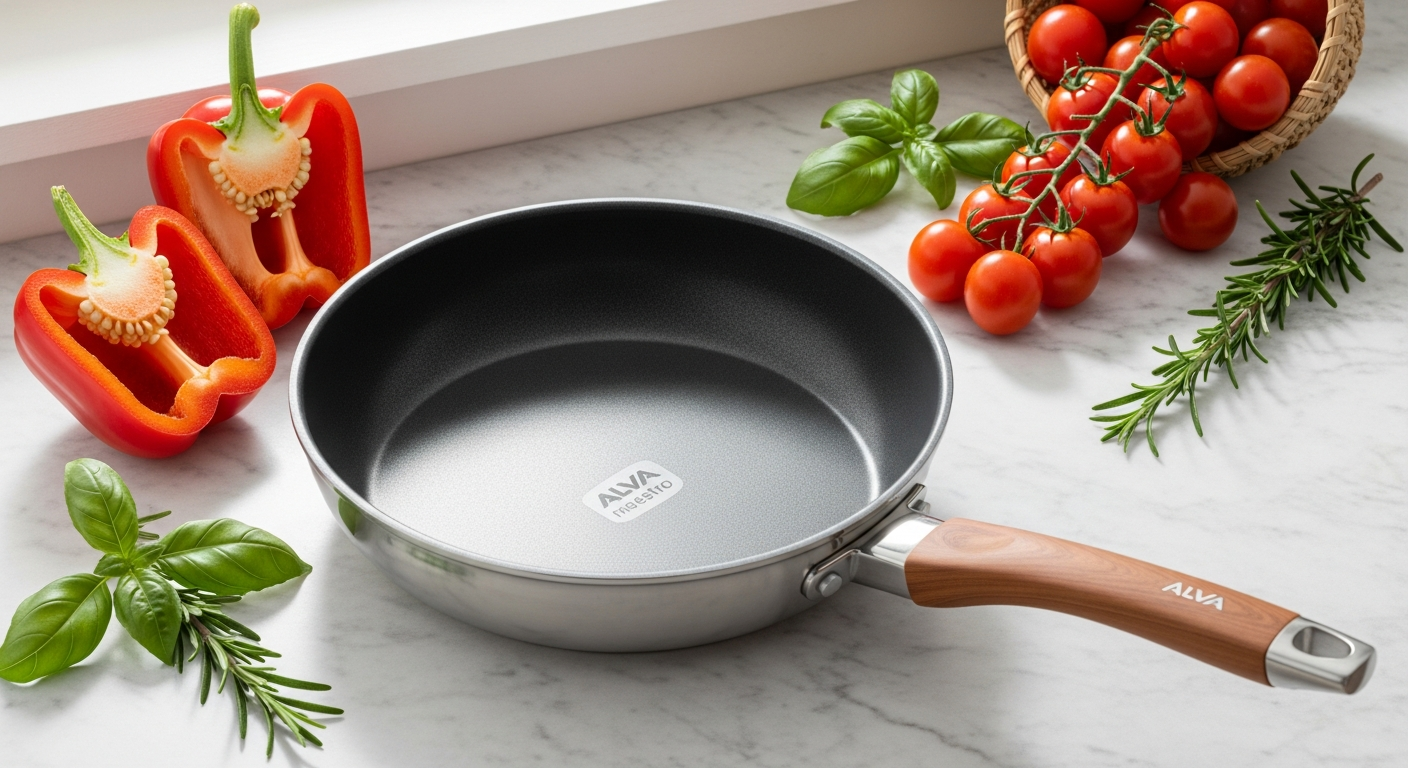
The Alva Maestro Ceramic Nonstick Frying Pan changes that equation entirely. Since 1949, Alva Cookware has built a reputation for Belgian-designed, high-quality kitchen essentials that prioritize both performance and health. The Maestro line represents the culmination of decades of refinement—a product engineered specifically for cooks who refuse to compromise.
Beyond PFOA—Understanding the Maestro's Chemical-Free Ceramic Coating
PFAS, PFOA, and PTFE-Free Composition and What These Chemicals Actually Do to Your Health
Traditional nonstick cookware relies on a synthetic coating called PTFE (polytetrafluoroethylene), commonly known as Teflon. This coating works by creating an ultra-slippery surface that prevents food from sticking. The problem emerges over time: when heated to high temperatures or when the coating scratches, PTFE breaks down and releases perfluorooctanoic acid (PFOA) into your food.
PFOA belongs to a class of chemicals called PFAS—"forever chemicals" because they don't break down naturally in the environment or in your body. Decades of research have linked PFOA exposure to serious health issues, including thyroid disease, liver damage, kidney disease, and even cancer. The EPA has issued warnings about PFOA, yet millions of traditional nonstick pans remain in circulation.
The Maestro eliminates this concern entirely. Its ceramic nonstick coating contains no PFAS, PFOA, or PTFE. This means you're cooking with a surface that has been independently verified as safe, with no hidden health risks lurking beneath the convenience of nonstick cooking.
How Ceramic Nonstick Differs from Traditional PTFE-Based Coatings in Terms of Safety and Durability
Ceramic nonstick coatings work through a fundamentally different mechanism than their synthetic counterparts. Rather than relying on chemical compounds, ceramic coatings create a naturally slippery surface through their crystalline structure. This distinction matters profoundly for both safety and longevity.
When you use a ceramic-coated pan like the Maestro, you're using a coating derived from inorganic materials that remain stable across all normal cooking temperatures. Even if microscopic damage occurs to the surface, there are no toxic compounds to leach into your food. The coating degrades predictably and safely, making ceramic an inherently more transparent choice for health-conscious cooks.
Durability comparisons often favor ceramic when proper care is maintained. While some ceramic coatings historically wore faster than PTFE, Alva's engineering addresses this weakness through robust construction and thoughtful material selection. The Maestro's ceramic coating is designed to withstand years of regular use without requiring replacement.
The Science Behind Ceramic's Natural Nonstick Properties and Heat Resistance
Ceramic's nonstick properties stem from its low surface energy—the same principle that makes water bead up on a freshly waxed car. This low surface energy naturally repels food particles without chemical intervention. As a result, foods release easily from the cooking surface, and cleanup requires minimal effort.
Heat resistance represents another ceramic advantage. While PTFE-based coatings begin degrading around 500°F, ceramic coatings remain stable at much higher temperatures. The Maestro handles the heat demands of real cooking—searing meats, finishing dishes in the oven, rapid temperature changes—without breaking down or off-gassing.
Precision Heat Distribution for Consistent, Restaurant-Quality Results
How the Maestro's Engineering Prevents Hotspots and Uneven Cooking
Hotspots are the silent saboteur in many kitchens. They occur when a pan's base doesn't conduct heat uniformly, creating zones of intense heat alongside cooler areas. The result: some portions of your food cook perfectly while others remain undercooked or burn. The Maestro eliminates this frustration through deliberate engineering of its base and sidewalls.
The pan's construction ensures that heat spreads evenly from the moment it contacts the cooking surface. This uniform distribution means that whether you're cooking eggs across the entire surface or searing a single steak, the heat response remains consistent. No more rotating pans halfway through cooking. No more adjusting flame to compensate for dead zones.
The Role of Pan Construction in Achieving Uniform Temperature Across the Cooking Surface
Achieving true even heat distribution requires attention to materials and thickness throughout the pan. The Maestro uses a construction approach that balances thermal conductivity with heat retention. The base is engineered to absorb heat quickly while distributing it laterally across the entire cooking surface. The sidewalls contribute to overall thermal mass, preventing temperature fluctuations when you add cooler ingredients to the pan.
This construction approach becomes especially apparent when cooking delicate foods. Eggs cooked in the Maestro brown gently and uniformly. Fish fillets cook through without the edges overcooking while centers remain translucent. Pancakes achieve consistent golden-brown color across their entire surface.
Ideal Cooking Scenarios Where Even Heat Distribution Makes the Biggest Difference
Even heat distribution transforms specific cooking tasks. Pan-frying—one of the most common cooking techniques—benefits dramatically. Whether you're cooking breakfast scrambles, sautéed vegetables, or finishing proteins with a golden crust, the Maestro's consistent heat eliminates variables.
Shallow frying scenarios particularly showcase the difference. When heat distributes evenly, foods develop consistent browning without burning. Stir-frying becomes more forgiving; you can step away briefly without worrying that one area of the pan will overcook your ingredients. Finishing dishes in the oven works seamlessly because the pan's thermal properties remain stable as it transitions from stovetop to oven heat.
Versatility Across Every Kitchen Setup—Induction to Oven
Full Cooktop Compatibility: Gas, Electric, Ceramic, and Induction-Ready Design
Modern kitchens feature diverse heating methods, and the Maestro accommodates all of them. Gas stoves benefit from the pan's responsiveness to flame adjustments. Electric coil stovetops work efficiently with the pan's flat, heat-conductive base. Ceramic cooktops appreciate the smooth bottom surface that won't scratch the delicate glass surface.
Induction cooking represents the latest frontier in stovetop technology, and the Maestro is fully compatible. Its base contains ferromagnetic material that interacts with induction burners' electromagnetic fields, creating rapid, efficient heating. If you've ever wondered whether a pan would work with your induction cooktop, the Maestro removes that question entirely.
This versatility means the pan works whether you're cooking in a traditional kitchen, a modern apartment with induction, or anywhere in between. If you travel or move between homes, the Maestro adapts to whatever cooking equipment you encounter.
Oven-Safe Specifications and Maximum Temperature Ratings for Various Cooking Methods
The Maestro's oven-safe design opens cooking possibilities that stovetop-only pans cannot match. The pan transitions seamlessly from stovetop to oven, enabling cooking techniques that were previously impossible or required multiple pieces of equipment.
Maximum temperature ratings typically allow use up to 400°F in the oven, accommodating most cooking scenarios from finishing proteins with a final sear to baking gratins or casseroles. This temperature tolerance reflects the thoughtful engineering throughout the pan, including heat-resistant handles and secure coating that won't degrade under these conditions.
Transitioning Seamlessly from Stovetop to Oven for One-Pan Meals and Finishing Techniques
One-pan meals represent the future of practical home cooking—less cleanup, fewer dishes, and often better flavor as ingredients cook together in shared juices and browning. The Maestro's versatility makes one-pan cooking genuinely feasible.
Sear chicken thighs on the stovetop until golden, then transfer the pan directly to the oven to finish cooking through. Build a vegetable medley with aromatics, add stock and protein, and braise everything together. These techniques—traditionally requiring both a stovetop and oven-safe cookware—become natural with the Maestro. The pan's even heat distribution works whether you're using direct flame or surrounding oven heat, ensuring consistent results regardless of cooking method.
The Maestro Difference: Healthier Cooking Meets Everyday Practicality
The Alva Maestro Ceramic Nonstick Frying Pan represents more than just a kitchen tool—it's a statement about what modern home cooks value. This pan consistently delivers on its promises: chemical-free safety, reliable heat distribution, and genuine ease of use.
What truly sets this pan apart is its refusal to compromise. You're not choosing between health and performance; you're getting both. The ceramic nonstick coating frees you from anxiety about hidden chemicals entering your family's food. The precision heat distribution frees you from rotating pans and adjusting flames. The versatile cooktop compatibility frees you from worrying whether the pan will work in your kitchen.
At $109, the 11-inch model occupies that sweet spot—premium enough to last for years of regular use, affordable enough to feel like a smart investment rather than a luxury splurge. Alva's legacy since 1949 backs up that investment with proven durability and thoughtful design.
If you've been hesitant about upgrading your cookware or concerned about the safety of traditional nonstick options, the Maestro deserves serious consideration. Whether you're refreshing a single pan or reimagining your entire cookware collection, starting with the Maestro connects you to healthier, more reliable cooking.
Leave a Reply