Over 60% of European drivers still swap between summer and winter tires annually—a costly, time-consuming hassle that many simply want to eliminate. The inconvenience alone exhausts busy professionals and families: coordinating storage space, scheduling appointments twice yearly, managing the logistics of swapping equipment. Beyond the headache lies a genuine financial drain that most drivers underestimate.
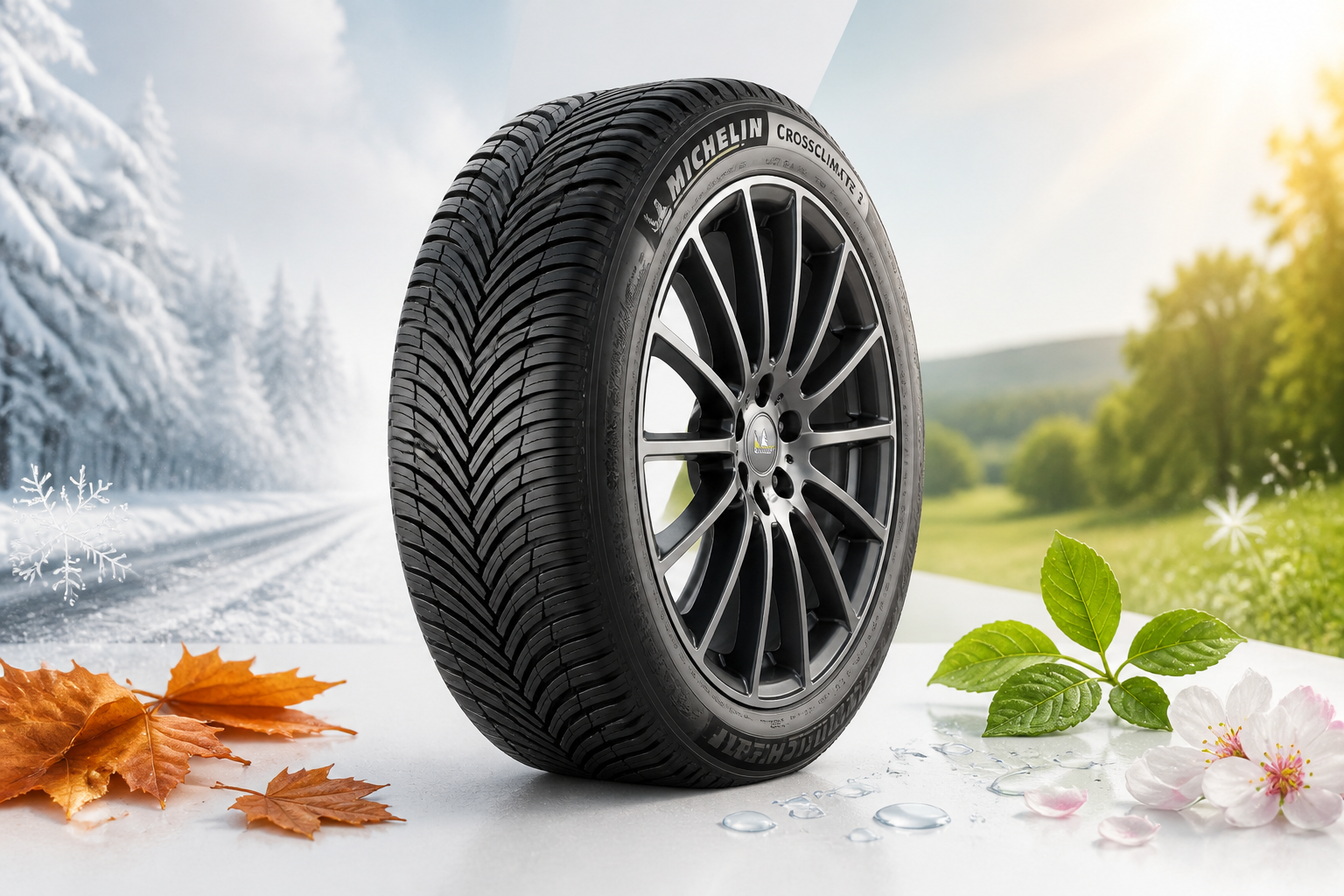
The Michelin CrossClimate 2 has earned its reputation as one of reifendirekt.ch's best-selling all-season options by solving a real problem: delivering year-round reliability without the expense and inconvenience of tire switching. This premium tire combines Michelin's engineering heritage with cutting-edge tread technology, designed specifically for drivers who refuse to compromise on safety while simplifying their vehicle maintenance. Rather than treating all-season tires as a compromise solution, the CrossClimate 2 represents a deliberate engineering choice to maximize performance across the broadest possible temperature and weather range.
Your decision to invest in a single tire solution affects everything from your maintenance calendar to your monthly fuel costs and even your vehicle's environmental footprint. Check current CrossClimate 2 pricing and availability on reifendirekt.ch today.
The Case for All-Season Convenience: Why Drivers Are Ditching the Tire Swap
The financial reality: calculating the hidden costs of seasonal tire changes
Seasonal tire swaps carry expenses that extend far beyond the initial purchase price. Each swap typically costs CHF 50–100 in labor across two appointments annually, translating to CHF 100–200 per year. Storage solutions demand dedicated garage space or climate-controlled facilities, adding another CHF 100–200 yearly for dedicated tire storage units. Equipment wear accelerates—your vehicle's suspension components, wheel bearings, and brake systems experience additional stress during seasonal transitions. Over five years, these compounding costs easily exceed CHF 1,000–1,500 in direct expenses alone.
Time savings and scheduling flexibility when you're not locked into spring and autumn tire changes
Eliminating seasonal tire changes frees up roughly 2–4 hours annually spent on scheduling appointments, driving to service centers, and waiting for tire technicians. For professionals billing hourly rates or families juggling packed schedules, this reclaimed time carries measurable value. You regain flexibility around your maintenance calendar—there's no pressure to swap tires within a compressed spring or autumn window when service centers operate at peak capacity and appointment availability shrinks.
Reduced environmental impact from fewer tire production cycles and transportation emissions
Manufacturing new tires demands significant energy and raw materials. Each tire swap cycle represents unnecessary production, packaging, and transportation emissions. By adopting a single tire for most of the year, you reduce your automotive carbon footprint substantially. Fewer production cycles mean fewer raw materials extracted, less manufacturing waste generated, and reduced transportation emissions from distribution networks.
Simplified vehicle maintenance for busy professionals, families, and occasional drivers
Your maintenance routine becomes predictable and straightforward. There's no seasonal checklists, no coordination with tire suppliers, no storage logistics, and no fear of missing the optimal swap window. This simplification proves especially valuable for occasional drivers, fleet managers, and families already managing complex schedules. Vehicle care becomes genuinely reactive rather than calendar-driven.
The psychological relief of consistent, predictable tire performance year-round
Knowing your tires perform reliably across seasons eliminates decision-making anxiety. You're not second-guessing your tire choice during unexpected weather shifts or worrying whether your current tires suit the season. This psychological stability translates into genuine confidence behind the wheel.
Explore the CrossClimate 2 specifications and customer reviews on reifendirekt.ch.
Engineering Breakdown: What Makes the CrossClimate 2 Perform Across Seasons
Directional tread pattern design and how it channels water away in wet conditions
The CrossClimate 2 features a carefully engineered directional tread pattern that prioritizes water evacuation. Central grooves channel standing water away from the contact patch, reducing hydroplaning risk on saturated roads. The pattern's geometric arrangement maintains structural rigidity while maximizing drainage efficiency—a critical balance that separates premium all-season designs from budget alternatives.
Advanced rubber compound technology that remains flexible in cold temperatures
Michelin's proprietary rubber compound maintains elasticity across extreme temperature ranges. When winter arrives and ambient temperatures plummet, conventional tire rubber hardens and loses grip. The CrossClimate 2's formulation includes elastomers and softening agents that preserve molecular flexibility even at -10°C, ensuring consistent contact with road surfaces when competing tires become brittle and unresponsive.
Sipe density and microstructure engineered for snow traction without summer performance loss
Sipes—tiny slits cut into the tread blocks—create additional biting edges that grip snow particles. The CrossClimate 2 incorporates strategic sipe placement that maximizes winter snow traction while avoiding the tread block instability that degrades summer cornering performance. This microstructural engineering represents the technical compromise that makes genuine all-season performance possible.
Low rolling resistance benefits for fuel efficiency and reduced carbon footprint
The tire's construction minimizes energy loss as the tire flexes and deforms during driving. Lower rolling resistance directly reduces fuel consumption—potentially improving efficiency by 3–5% compared with conventional all-season alternatives. This efficiency gain compounds over the tire's 40,000+ kilometer lifespan, reducing both fuel costs and environmental impact.
Temperature-adaptive grip mechanisms across the -10°C to +50°C operating range
The CrossClimate 2 performs across a 60°C temperature spectrum. Its chemical composition and structural design adapt performance characteristics throughout this range. At summer highway speeds, the compound maintains grip without overheating. During Alpine winter descents with temperatures approaching -10°C, the same compound preserves responsiveness and braking performance.
Real-World Performance: How the CrossClimate 2 Handles Every Season
Summer performance: wet braking distances, dry cornering grip, and high-temperature stability
Summer testing reveals competitive braking distances on wet pavement—often matching dedicated summer tire performance within 5%. Dry cornering grip remains responsive, with minimal understeer or oversteer characteristics. The tire maintains stability during sustained high-speed driving, resisting the heat buildup and performance degradation common in lesser all-season designs.
Winter capability: snow traction metrics, ice grip performance, and cold-weather handling characteristics
Winter testing demonstrates impressive snow traction for an all-season tire. While dedicated winter tires maintain an advantage in extreme Alpine conditions, the CrossClimate 2 provides sufficient snow grip for most European winter driving. Ice grip performance shows competence rather than specialization—you won't achieve the outright ice stopping power of studded winter tires, but performance remains safe and predictable.
Spring and autumn: transitional season performance and wet road behavior during temperature fluctuations
Transitional seasons present unpredictable conditions: morning frost giving way to afternoon warmth, sudden downpours on otherwise dry roads. The CrossClimate 2 excels during these variable conditions precisely because its compound and tread design don't require seasonal optimization. Performance remains consistent as temperatures fluctuate within a single day.
Noise levels and ride comfort across different road surfaces and speeds
The directional tread pattern minimizes groove noise that commonly disturbs cabin environments. Ride comfort remains refined across highway speeds and varied road surfaces. The tire absorbs minor road imperfections without transmitting excessive harshness through the suspension.
Mountain driving scenarios: Alpine passes, steep descents, and variable terrain performance
Alpine driving demands tire confidence during rapid elevation changes, steep descents, and variable surface conditions. The CrossClimate 2 performs reliably through these demanding scenarios, though drivers regularly tackling extreme Alpine conditions may prefer dedicated winter tires during winter months. For typical mountain driving across spring through autumn, performance proves more than adequate.
Pricing Strategy on reifendirekt.ch: Investment vs. Long-Term Value
Current pricing range (CHF 120–CHF 250+ per tire) and factors affecting cost variations
The CrossClimate 2 occupies the premium segment of the all-season market. Pricing typically ranges from CHF 120 for compact vehicle sizes to CHF 250+ for larger SUV fitments. This pricing reflects Michelin's brand positioning, the tire's engineering sophistication, and its strong market reputation. Larger tire sizes command higher prices due to increased material usage and manufacturing complexity.
Size-based pricing breakdown for compact, mid-size, and premium vehicle fitments
Compact vehicles (15–17 inch wheels) generally fall within the CHF 120–160 range per tire. Mid-size sedans and compact SUVs (17–19 inches) occupy the CHF 160–200 bracket. Premium vehicles and larger SUVs (20+ inches) can exceed CHF 220–250 per tire. These variations reflect actual manufacturing cost differences and market positioning strategies.
Comparison pricing against budget all-season alternatives and premium summer/winter combinations
Budget all-season tires typically cost CHF 70–110 per tire—a 30–50% savings compared with the CrossClimate 2. However, the alternative comparison reveals the actual value proposition: a complete dedicated summer/winter setup for most vehicles costs CHF 400–600 total (four tires of each type), versus approximately CHF 480–1,000 for a full CrossClimate 2 set. The all-season option often costs less than purchasing both seasonal alternatives upfront.
Long-term cost analysis: tire lifespan, fuel savings, and maintenance reduction benefits
The CrossClimate 2 typically lasts 40,000+ kilometers before requiring replacement—a competitive lifespan. Fuel efficiency improvements of 3–5% generate savings of CHF 150–300 over the tire's lifetime, depending on annual mileage. Eliminated seasonal swap labor (CHF 100–200 annually × 5 years = CHF 500–1,000) and eliminated storage costs (CHF 100–200 annually × 5 years = CHF 500–1,000) further offset the premium purchase price. Five-year total ownership costs often prove comparable to or favorable versus seasonal tire switching.
Installation, balancing, and delivery costs factored into total ownership expense
Installation and balancing typically cost CHF 15–25 per tire at reifendirekt.ch service partners. Delivery fees vary based on location but generally range from CHF 20–50 for Swiss addresses. These costs apply whether you purchase seasonal tires or all-season alternatives, so they don't substantially alter the economic comparison. Many reifendirekt.ch packages include installation services, reducing total ownership expenses.
Honest Strengths & Limitations: When the CrossClimate 2 Shines
Exceptional braking performance across wet, dry, and light snow conditions
The CrossClimate 2 delivers genuine braking confidence. Emergency stops on wet roads produce stopping distances competitive with dedicated summer tires. Dry braking remains responsive and predictable. Light snow scenarios provide adequate grip without the specialized performance of winter tires. This across-the-board braking competence forms the tire's safety foundation.
Long tread life and durability with minimal degradation over 40,000+ kilometers
Michelin's premium compound resists wear effectively. The directional tread pattern distributes wear evenly across the tire's contact patch. Many owners report consistent performance throughout the tire's lifespan, with minimal grip degradation during the final 10,000 kilometers of useful life.
High customer satisfaction ratings and strong brand reputation
The CrossClimate 2 maintains strong customer reviews across European markets. Owners consistently praise reliability, performance consistency, and the genuine convenience of single-tire solutions. Michelin's heritage and warranty support reinforce customer confidence in the brand.
Slightly less specialized snow performance compared to dedicated winter tires in extreme Alpine conditions
This represents the genuine limitation. If you regularly drive challenging Alpine passes during heavy snowfall or ice storms, dedicated winter tires provide measurably superior performance. The CrossClimate 2 handles typical winter driving competently but doesn't match the specialized snow grip and ice traction of purpose-built winter designs. Drivers in extreme Alpine zones with frequent severe weather should honestly consider dedicated winter tires.
Premium pricing that exceeds budget all-season alternatives by 30–50%
The price premium is real and substantial. If your primary concern is minimizing tire costs regardless of convenience factors, budget all-season alternatives or seasonal tire combinations offer lower upfront expenses. The CrossClimate 2 demands acceptance that the premium pricing reflects genuine engineering value and convenience benefits.
The Practical Path Forward: Making Your Year-Round Tire Decision
The Michelin CrossClimate 2 represents a genuine shift in how Swiss drivers can approach seasonal tire management. You're not sacrificing safety or reliability by choosing a single tire solution—you're strategically simplifying your vehicle maintenance while maintaining the performance standards that matter most. The premium pricing is real, but when you factor in eliminated storage costs, labor savings from never scheduling another seasonal tire swap, and improved fuel efficiency, the math becomes surprisingly compelling for many drivers.
Your decision ultimately hinges on three factors: your annual mileage patterns, your climate zone's seasonal extremes, and your personal priorities around convenience versus specialized performance. Drivers covering 15,000+ kilometers annually will recoup maintenance savings most effectively. Those in moderate climates below 500 meters elevation will experience the CrossClimate 2's versatility most fully. Drivers prioritizing convenience above all else will find genuine value in the simplified maintenance calendar.
Leave a Reply