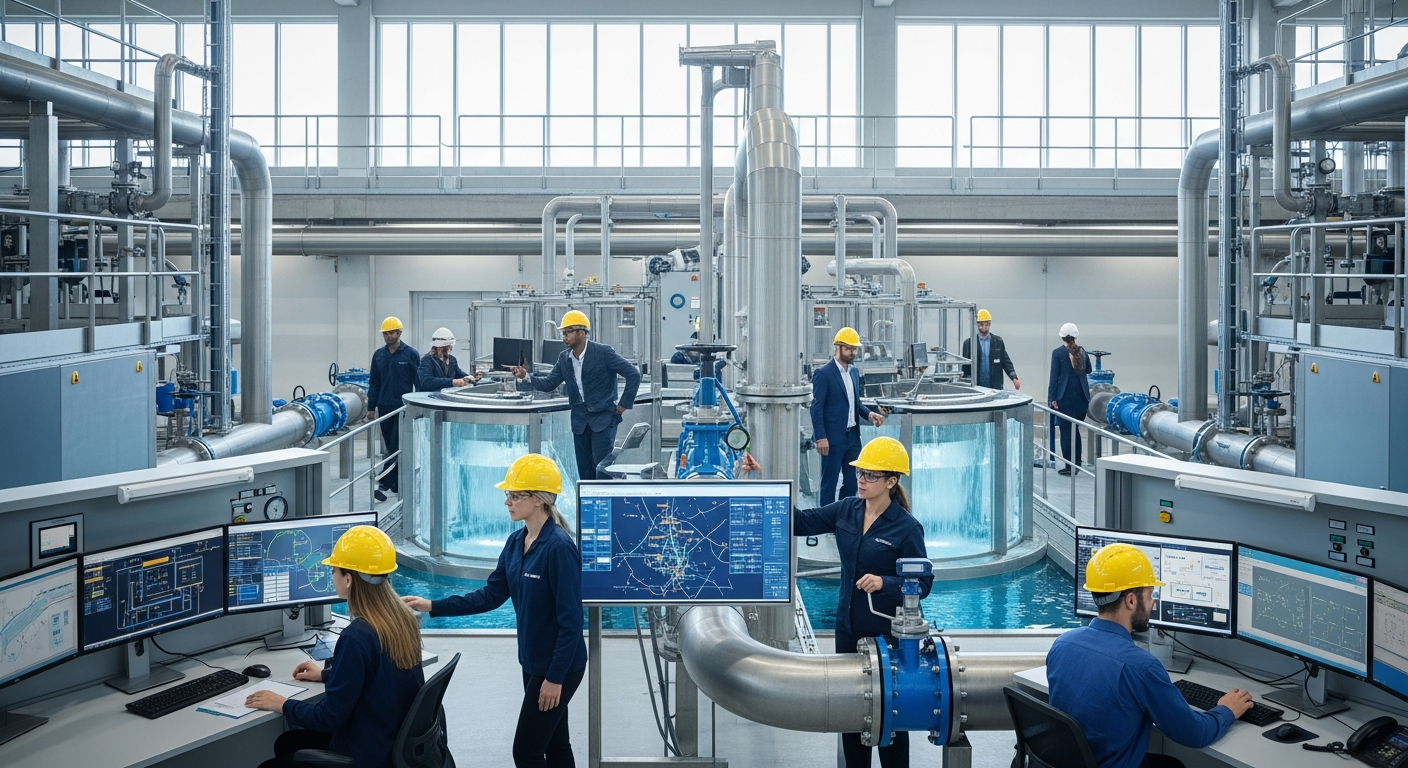
Acea water treatment facility with pipes and monitoring systems serving Italian cities

How Acea Integrated Water Service Italy Protects 10 Million Citizens Through Complete Water Cycle Management

Every single day, 10 million Italians turn on their taps without thinking twice—they expect clean water to flow. Yet behind that simple act sits one of Europe’s most complex infrastructure operations. Acea manages the entire water journey: from extraction to treatment, distribution, collection, and purification. That’s not just a service; it’s a lifeline.

As a multi-utility powerhouse, Acea doesn’t just deliver water—it orchestrates an integrated water cycle that touches nearly every aspect of public health and environmental stewardship. Their presence spans Rome, Frosinone, Lazio, Tuscany, Umbria, Molise, and Campania, making them the backbone of water security across Central and Southern Italy. The scale of their operation is staggering: managing water resources for millions of people while maintaining infrastructure that keeps pace with modern demands.

Learn more about Acea’s Integrated Water Service and how it sustains Italian communities.

The Complete Water Cycle: How Acea Manages Italy’s Most Critical Resource

Acea’s integrated water service operates as a seamless system where each component depends on the others. Water sourcing begins with extraction from natural reservoirs and groundwater systems across their service territories. These sources feed into advanced treatment facilities where water undergoes rigorous processing to meet both Italian national standards and European Union water quality regulations.

Once treated, the water enters an extensive distribution network architecture designed to serve 10 million inhabitants across multiple regions. This network represents decades of infrastructure development, with pipes reaching from major urban centers like Rome to smaller municipalities throughout Central and Southern Italy. The distribution system operates under constant pressure, monitored through real-time systems that track water quality and safety standards at every point.

Advanced Treatment Processes and Quality Assurance

Treatment facilities employ sophisticated technologies to remove contaminants and ensure water meets stringent quality requirements. Every liter distributed through Acea’s network undergoes testing for biological pathogens, chemical residues, and mineral content. This commitment to quality reflects both regulatory obligations and the fundamental responsibility to public health.

Wastewater Collection and Purification Infrastructure

The water cycle doesn’t end when water leaves households and businesses. Acea operates extensive wastewater collection infrastructure in urban and suburban areas, gathering used water through sewer systems. This wastewater then travels to treatment plants where advanced purification processes occur before discharge back into the environment. The sewage treatment and purification systems ensure that water returning to natural ecosystems meets environmental protection standards.

Real-Time Monitoring and Smart Technology Integration

Modern water management demands constant vigilance. Acea employs real-time monitoring systems throughout their network to maintain water safety and quality standards. Smart metering technology tracks consumption patterns while simultaneously detecting leaks within distribution networks. This technological integration allows operators to respond quickly to problems and optimize resource allocation.

Geographic Coverage and Regional Operations: From Rome to Southern Italy

Acea’s operational footprint represents Italy’s most concentrated water management infrastructure. Rome and its province form the epicenter of operations, where Acea Ato 2 serves nearly 3.8 million residents. This region alone represents an enormous undertaking: maintaining pipes beneath historic streets, managing demand from commercial districts, and coordinating with municipal authorities.

Beyond Rome, Acea operates across Lazio, Tuscany, Umbria, Molise, and Campania. Service area expansion includes Frosinone and surrounding municipalities, extending their reach into rural and semi-rural territories. Each region presents distinct challenges and opportunities shaped by local geography, population density, and water availability.

Regional Variations in Water Sourcing and Distribution

Different regions rely on different water sources and face unique distribution challenges. Areas in Tuscany may draw from different aquifers than those in Molise. Urban regions demand more sophisticated distribution systems to manage high-density consumption, while rural areas require different infrastructure investment strategies. Regional variations in water sourcing mean Acea must tailor extraction and treatment approaches accordingly.

Population Density and Infrastructure Investment Priorities

Population density dramatically influences infrastructure decisions. High-density urban areas like Rome require robust, redundant systems capable of handling concentrated demand. Rural regions demand cost-effective solutions that still maintain service quality despite lower population density. Balancing investment across these different territorial types remains an ongoing strategic challenge.

Coordination with Local Regulatory Bodies

Acea operates within a complex regulatory environment involving national authorities, regional governments, and local administrative bodies. Coordination between these entities shapes operational decisions, investment priorities, and service standards. Strategic positioning as Italy’s primary water sector operator means Acea must navigate relationships with multiple stakeholders while maintaining operational efficiency.

Infrastructure Modernization and Aging Network Challenges

Discover how Acea addresses infrastructure challenges to maintain water security across Italy.

Aging pipeline systems represent one of Acea’s most pressing operational realities. Some water distribution networks were installed decades ago, approaching or exceeding their designed lifespans. Continuous maintenance and replacement programs consume significant capital, yet represent essential investments in service reliability. Balancing service continuity with necessary infrastructure repairs requires careful planning and coordination to minimize disruption to customers.

Investment Strategies for Network Upgrades

Acea prioritizes pipeline replacement based on failure risk assessment, water loss analysis, and regional demand forecasts. Investment strategies must account for competing needs across multiple regions while maintaining financial sustainability. Upgrade projects often require years of planning and execution, particularly in dense urban areas where construction impacts traffic and business operations.

Digital Transformation and Operational Efficiency

Digital transformation initiatives improve operational efficiency across all aspects of water management. Automated systems monitor network performance, optimize pumping schedules, and alert operators to potential problems before failures occur. This technological evolution reduces operational costs while improving service reliability.

Leak Detection and Water Loss Reduction

Non-revenue water loss through leaks represents both an operational inefficiency and a waste of a precious resource. Acea implements sophisticated leak detection programs using acoustic monitoring and pressure management systems. Reducing water loss improves sustainability and allows the company to serve more customers with existing infrastructure capacity.

Climate Adaptation and Future Resilience

Climate pressures threaten traditional water availability patterns across Italy. Drought scenarios become more frequent, requiring adaptation measures for water scarcity conditions. Acea invests in water storage infrastructure, treatment processes that handle variable water quality, and demand management programs that encourage conservation during dry periods. Capital expenditure priorities must balance high-density urban needs against rural areas facing increasing water stress.

Environmental Sustainability and Public Health Impact

Acea’s commitment to environmental protection extends throughout their operations. Water source protection ensures that extraction doesn’t deplete natural ecosystems or damage groundwater systems. Wastewater treatment standards often exceed regulatory requirements, reflecting a philosophy that environmental responsibility transcends legal compliance.

Advanced Purification and Environmental Protection

Advanced purification technologies reduce environmental contaminants before water returns to rivers and aquifers. This commitment means treated wastewater meets standards that protect aquatic ecosystems and maintain natural system resilience. Reduction of environmental contaminants through advanced purification represents both environmental stewardship and long-term sustainability.

Public Health Outcomes and Quality of Life

Safe water supply and sanitation directly influence public health outcomes. Access to clean water reduces waterborne disease incidence, improves nutrition outcomes, and enhances overall quality of life. The connection between Acea’s operations and population health represents the human dimension underlying infrastructure management.

Circular Economy Principles in Water Management

Acea increasingly applies circular economy principles to water resource management. Treated wastewater suitable for non-drinking purposes supports irrigation and industrial applications, reducing demand on potable water supplies. Biosolids from treatment processes find productive uses in agriculture or energy generation. These circular approaches maximize resource efficiency while minimizing waste.

Environmental Partnerships and EU Compliance

Collaboration with environmental agencies and conservation initiatives extends Acea’s impact beyond water supply. The company contributes actively to Italy’s EU Water Framework Directive compliance, ensuring operations align with continental environmental standards. Partnership with conservation organizations strengthens commitment to protecting natural systems that sustain the water cycle.

The Water Security Foundation Italy Depends On

Acea’s Integrated Water Service represents far more than pipes and pumps—it’s the essential infrastructure that sustains millions of Italian lives daily. From the moment water is extracted from natural sources to its treatment, distribution, and eventual purification, every step reflects a commitment to both public health and environmental responsibility. The company’s management of 10 million inhabitants across Italy’s most densely populated regions demonstrates the scale and complexity of modern water utilities.

Yet challenges persist: aging infrastructure demands continuous investment, regulatory standards keep evolving, and climate pressures threaten traditional water availability. These realities shape Acea’s strategic priorities and operational decisions year after year. Understanding how Acea navigates these pressures gives you insight into why water security remains non-negotiable in contemporary Italy.

Whether you’re a resident relying on their service, a business partner, or simply curious about how essential utilities function at scale, Acea’s operations offer valuable lessons in infrastructure management, environmental stewardship, and public service delivery. As Italy moves toward 2026 and beyond, Acea’s continued evolution will remain central to the nation’s water security story.

Explore Acea’s comprehensive water solutions and commitment to Italy’s sustainable future.


Comments

Leave a Reply

Your email address will not be published. Required fields are marked *