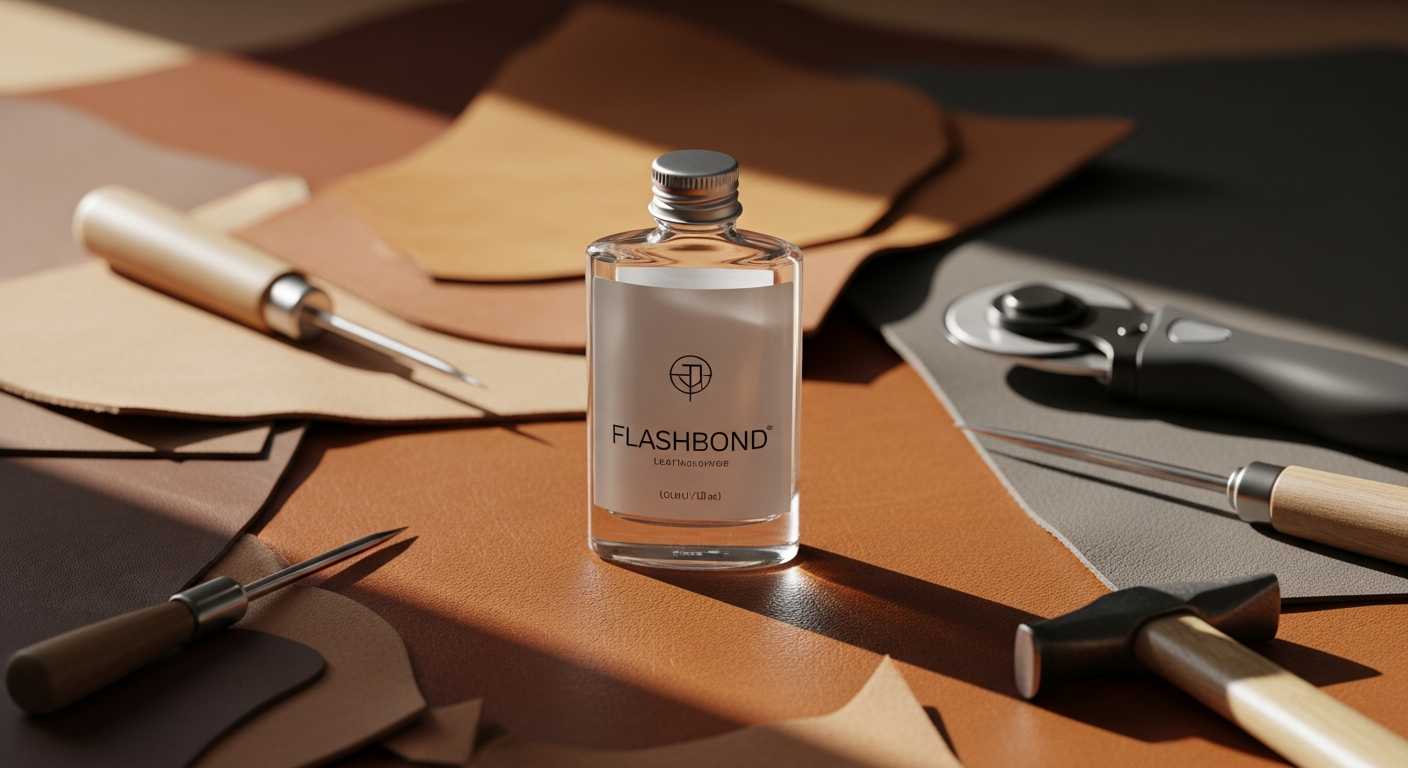
Precision Bonding for Leather Work: Where Flashbond Excels
Professional leather workers understand that a single failed adhesive bond can compromise weeks of meticulous craftsmanship. The consequences extend beyond material waste—they damage client relationships and erode the reputation built through years of quality work. Flashbond transforms leather bonding by delivering invisible adhesion that preserves the aesthetic integrity of premium materials.
How transparent drying prevents visible adhesive lines on premium leather
Leather demands discretion. Unlike wood or metal, leather surfaces reveal every imperfection in adhesive application. The transparent formula of Adesivo Rapido Trasparente Flashbond dries completely clear, eliminating the cloudy residue that competitors leave behind. This clarity proves invaluable when bonding decorative leather elements to furniture pieces where visibility is inevitable.
Rapid setting times that eliminate clamp-dependent workflows
Traditional adhesives force craftspeople into extended waiting periods, locking materials in position for hours. Flashbond's solvent-based formulation accelerates evaporation, enabling instant adhesion that frees up clamps and workspace within minutes. This speed advantage compounds across multiple projects, reclaiming hours each week that can be directed toward additional commissions or refinement work.
Compatibility with both natural and treated leather surfaces
Leather surfaces present variables that challenge many adhesives. Natural leather, vegetable-tanned hides, and synthetic leather alternatives all require different bonding approaches. The universal acetovinylic composition of Flashbond adapts seamlessly across these material variations, ensuring consistent results regardless of leather type or treatment.
Application techniques for leather profiles and decorative leather elements
Leather profiles and trim pieces demand precision application. The included nozzle allows controlled dispensing in thin, consistent beads along seams and edges. Apply the adhesive to one surface, press components into alignment, and allow the rapid-setting formula to establish initial bond strength within seconds. For decorative elements, light pressure during the critical bonding window prevents shifting while the adhesive cures.
Why leather craftspeople specifically choose Flashbond over general-purpose adhesives
General-purpose adhesives sacrifice performance across multiple dimensions. They either set slowly, leaving visible residue, or dry cloudy, obscuring leather grain and color. Flashbond specializes in the exact combination leather work demands: speed, transparency, and strength. Professional leather artisans have voted with their wallets, making this product the industry standard because it solves the specific problems generic alternatives ignore.
Real-world scenarios: leather-to-wood, leather-to-fabric, and leather-to-metal bonding
Leather-to-wood bonding defines much of professional upholstery work. Attaching leather facings to wooden furniture frames requires an adhesive that grabs instantly without softening wood finishes. Flashbond's solvent-based formula achieves this balance perfectly. Leather-to-fabric applications—such as reinforcing fabric seams with leather backing—benefit from the transparent finish that prevents shadowing through delicate textiles. Leather-to-metal bonding for decorative trim and hardware accents demands strength without residue visibility, another area where Flashbond excels.
Fabric & Textile Applications: Achieving Invisible Bonds
Upholsterers and textile craftspeople face unique adhesive challenges. Fabrics absorb moisture differently than solid materials, requiring adhesives formulated for porous surfaces. The solvent-based chemistry of Flashbond penetrates fabric fibers, creating mechanical bonds that hold under tension and movement.
Superior adhesion for fabric-to-wood bonding in upholstery projects
Upholstery represents the intersection of fabric and structure. Flashbond's rapid setting enables efficient workflow when attaching fabric to wooden frames, whether for seating, panels, or decorative applications. The strong, durable adhesion prevents fabric drift during the critical moments when pressure is applied, ensuring finished pieces meet professional standards.
How the transparent finish preserves aesthetic integrity on visible seams
Visible seams in upholstery demand adhesives that disappear completely. Any cloudiness or discoloration compromises the visual refinement that distinguishes professional work. Flashbond's transparent chemistry ensures seams remain invisible, maintaining the seamless appearance clients expect from premium upholstery.
Odorless formula benefits for professionals working in confined spaces
Upholstery shops, leather studios, and fabric workrooms are often compact environments where workers spend extended hours. The mention of Flashbond's odorless nature—a significant advantage over solvent-heavy alternatives—allows craftspeople to work comfortably without ventilation-dependent limitations. This proves particularly valuable during intense production periods when workspace ventilation becomes challenging.
Fabric reinforcement and repair applications
Beyond new construction, Flashbond excels in repair work. Reinforcing worn seams, reattaching fabric elements, and strengthening stress points all benefit from rapid-setting adhesion that doesn't require heat or moisture activation. The transparent finish means repairs remain invisible, extending the life of valuable textiles without compromising appearance.
Decorative fabric applications (appliqué, trim attachment, embellishment bonding)
Creative fabric work—appliqué, decorative trim attachment, and embellishment bonding—demands precision and speed. Flashbond's nozzle enables controlled application that prevents fabric shifting during bonding. The transparent finish proves essential when working with light-colored or patterned fabrics where adhesive residue would create permanent defects.
Durability testing: how Flashbond holds under tension and movement
Upholstered furniture experiences constant tension and movement. Unlike temporary fabric applications, upholstery bonds must withstand years of use without failure. Flashbond's acetovinylic formulation creates flexible bonds that move with fabric, resisting the brittleness that causes traditional adhesives to fail under stress.
Discover how Flashbond's transparent finish transforms your fabric and leather projects today.
Technical Specifications That Drive Professional Results
Understanding Flashbond's chemistry reveals why it outperforms alternatives. The technical foundation supports the performance benefits that professionals experience in real-world applications.
Solvent-based formulation and its impact on evaporation speed
Solvent-based adhesives evaporate rapidly, creating almost instantaneous adhesion. Water-based alternatives require moisture to evaporate completely, resulting in extended drying times. Flashbond's solvent chemistry exploits this principle, positioning adhesive molecules for bonding within seconds of application. This speed advantage accumulates dramatically across multiple applications and projects.
Acetovinylic composition: what it means for material compatibility
Acetovinylic adhesives bond effectively to polar and non-polar surfaces alike. This chemistry addresses the material diversity that craftspeople encounter—leather, wood, fabric, glass, and ceramics all present different surface properties. The acetovinylic formulation bridges these differences, creating reliable bonds where other adhesives fail or require surface primers.
Available bottle sizes (125 ml, 250 ml, 500 ml) and project-matching guidance
Bottle selection impacts both cost-effectiveness and product efficiency. The 125 ml size serves small projects, precise detail work, and craftspeople testing the product. The 250 ml bottle balances capacity against shelf-life concerns. The 500 ml size delivers maximum cost efficiency for established workshops processing high project volumes. Matching bottle size to project demands prevents waste while optimizing workspace efficiency.
Precision nozzle design for controlled application on delicate surfaces
The included applicator nozzle distinguishes Flashbond from bulk adhesive dispensers. This precision tool enables controlled bead application on delicate surfaces where over-application damages materials. The nozzle design prevents excessive product flow, ensuring consistent application thickness across projects.
Drying time benchmarks compared to standard adhesives
Flashbond achieves initial set within seconds, enabling repositioning within minutes. Standard adhesives typically require 15-30 minutes for handling strength. This time differential compounds across production schedules. A craftsperson processing five projects daily recovers hours each week—equivalent to one full workday annually—through Flashbond's rapid-setting advantage.
Temperature and humidity considerations for optimal bonding
Solvent-based adhesives perform optimally in environments with moderate humidity and temperature stability. Excessive heat accelerates evaporation, potentially creating weak bonds if surfaces separate during the critical bonding window. Cold temperatures slow evaporation, extending set times. Workshop conditions between 15-25°C with moderate humidity (40-60%) produce optimal results.
Cost-Effectiveness for Professional Workshops
Professional adhesive selection demands cost analysis that extends beyond unit price. True cost-effectiveness incorporates application efficiency, waste reduction, and productivity gains.
Price-per-application analysis across different bottle sizes
The 125 ml bottle at approximately €3.70 costs €29.60 per liter. The 500 ml bottle ranging from €5.90 to €17.49 represents €11.80 to €34.98 per liter depending on retailer and purchasing patterns. Bulk purchasing from the 500 ml size reduces per-unit costs, making it economical for workshops processing consistent project volumes.
€3.70 (125 ml) vs. €5.90-€17.49 (500 ml): calculating true project costs
A small leather binding project consuming 2 ml of adhesive costs approximately €0.10 from bulk 500 ml bottles versus €0.30 from small sizes. Across 100 projects annually, this differential accumulates to €20 in material costs. More significantly, the larger bottle's precision nozzle reduces over-application waste by an estimated 15-20%, further lowering per-project expenses.
Waste reduction through precise nozzle application
Precise nozzle application prevents the over-dispensing common with bulk applicators. Professional craftspeople applying thin beads report 20% less product consumption compared to standard adhesive bottles. This waste reduction alone justifies premium adhesive investments.
Long-term savings from eliminating failed adhesive attempts
A single failed bond on a €200 leather jacket or €500 upholstered piece represents significant financial loss. Flashbond's reliable performance across materials eliminates the re-work costs and material waste that inferior adhesives generate. The elimination of even one failed project annually justifies annual Flashbond investment.
Bulk purchasing strategies for established workshops
Workshops processing consistent project volumes benefit from bulk purchasing strategies. Establishing relationships with suppliers enables volume discounts on 500 ml bottles, reducing per-unit costs below retail pricing. Proper storage prevents shelf-life issues, making bulk purchasing financially prudent for high-volume operations.
ROI calculation: time saved through rapid setting versus adhesive cost
A craftsperson saving 30 minutes daily through Flashbond's rapid-setting advantage recovers 130 hours annually—equivalent to 16-17 full workdays. At professional rates of €50-100 hourly, this time advantage generates €6,500-13,000 in annual productivity recovery. Against annual adhesive costs of €200-500, the ROI exceeds 1,000%.
Application Mastery: Techniques for Flawless Results
Technical specifications matter less than execution. Professional application techniques maximize Flashbond's performance while minimizing risks associated with solvent-based adhesives.
Surface preparation protocols for leather and fabric
Clean, dry surfaces enable optimal adhesion. Remove dust, oils, and residue from previous projects using soft brushes or lint-free cloths. For leather, gentle cleaning with leather-appropriate cleaners removes surface contaminants. For fabric, ensure complete dryness before application. Pre-testing on inconspicuous areas confirms compatibility, preventing damage to finished goods.
Optimal application thickness for different material combinations
Thin, consistent beads achieve superior bonds compared to thick applications. For leather-to-wood bonding, apply a thin bead to wooden surfaces and press leather firmly into position. For fabric applications, lighter application prevents over-saturation that causes discoloration. Apply adhesive to one surface only, reserving the second surface dry to prevent double-adhesive situations that interfere with bonding.
Clamping strategies during the rapid-setting window
Initial adhesive set occurs within seconds, but full strength develops over extended periods. Apply firm pressure during the first 30-60 seconds, then reduce clamping force once initial set achieves. For heavy materials, maintain light pressure for an additional 2-3 minutes, allowing the adhesive to develop handling strength. Avoid over-clamping, which can distort delicate materials.
Troubleshooting common bonding challenges with delicate materials
Leather sometimes resists adhesion due to surface oils. Light sanding with fine grit creates micro-texture that improves bonding. Fabric over-saturation occurs when excessive adhesive penetrates fibers, creating visible wet spots. Apply thinner beads to prevent this. Premature separation indicates insufficient clamping pressure during the critical bonding window—increase pressure and hold longer.
Safety practices with solvent-based formulations
Solvent-based adhesives demand basic safety precautions. Work in well-ventilated areas to avoid solvent vapor accumulation. Avoid skin contact by using disposable gloves during application. Keep products away from ignition sources, as solvents are flammable. Store in cool environments and keep containers properly sealed. Follow local regulations regarding solvent-based product handling and disposal.
Post-application finishing and cleanup procedures
Clean applicator nozzles immediately after use by wiping with paper towels or cotton cloths. Accumulated dried adhesive clogs nozzles, preventing future application. Store bottles upright with caps tightly sealed to prevent solvent evaporation and nozzle clogging. Wash hands and tools with soap and water following application, removing adhesive residue before curing.
Material Compatibility Matrix: Beyond Leather & Fabric
Flashbond's universal applicability extends across diverse materials, making it invaluable for mixed-material assemblies and specialized applications.
Bonding polished wood without surface damage or cloudiness
Fine furniture craftsmanship demands adhesives that don't compromise polished finishes. Flashbond's transparent formula integrates seamlessly with wood surfaces, leaving no cloudy residue or finish damage. This proves essential when bonding veneers, inlays, and decorative wood elements to finished surfaces where adhesive visibility would constitute permanent defects.
Glass and ceramic applications for decorative finishing work
Glass and ceramic present non-porous surfaces that challenge traditional adhesives. Flashbond's acetovinylic chemistry bonds effectively to these materials, enabling decorative applications where glass elements, ceramic trim, or decorative tiles integrate with primary materials. The transparent finish ensures complete invisibility on clear glass surfaces.
Paper and cardstock for precision craft projects
Fine paper and cardstock applications—scrapbooking, bookbinding, archival work—benefit from Flashbond's precision application and transparent finish. The rapid setting prevents paper shifting during bonding, while the transparent adhesive preserves visual integrity of decorated paper surfaces.
Mixed-material assemblies (leather + wood + glass combinations
Contemporary craftsmanship often combines materials within single pieces—leather facings on wooden furniture, glass accents on leather panels, ceramic details on wood frames. Flashbond's universal compatibility enables these sophisticated assemblies, bonding different materials reliably within single projects.
Materials to avoid and why
Certain plastic types, particularly polyethylene and polypropylene, resist solvent-based adhesives. Porous synthetic foams can over-absorb solvent, preventing proper adhesive film formation. Heavily treated or sealed surfaces may require light sanding to enable adhesive penetration. Test compatibility on inconspicuous areas before committing to full-scale applications.
Testing adhesive compatibility before committing to full projects
Professional practice demands pre-testing on representative materials. Apply small quantities to test joints, allow complete curing, and evaluate bond strength before proceeding with production work. This discipline prevents expensive failures and confirms that project-specific material combinations perform as expected.
The Competitive Advantage in Professional Settings
Professional craftspeople compete not just on technical skill but on efficiency, quality consistency, and aesthetic perfection. Flashbond delivers advantages across all three dimensions.
How Flashbond's transparent finish eliminates rework on visible applications
Competitors' cloudy adhesives require sanding, finishing, or concealment strategies that add labor hours. Flashbond's transparent finish eliminates these rework steps entirely. Visible applications remain pristine, justifying premium project pricing and reducing labor costs per piece.
Speed advantage: completing projects faster without sacrificing quality
Rapid setting enables workflow optimization impossible with traditional adhesives. Complex assemblies proceeding through multiple bonding stages complete faster when each stage requires minutes instead of hours for adhesive curing. This speed advantage translates to higher project throughput and improved cash flow.
Professional reputation impact of flawless, invisible bonds
Client expectations for premium craftsmanship include invisibility of bonding. Cloudy adhesive residue, visible seams, and failed bonds damage professional reputation. Flashbond's transparent, reliable bonding preserves the aesthetic perfection that distinguishes premium work, directly supporting higher pricing and client loyalty.
Client expectations and how Flashbond delivers on premium finishes
Luxury goods purchasers expect flawless construction where bonding is completely invisible. Flashbond meets these expectations consistently, enabling craftspeople to deliver the perfection that justifies luxury pricing. Client satisfaction improves when visible adhesive defects never appear.
Comparison with cloudy alternatives and their aesthetic drawbacks
Cloudy adhesives leave permanent discoloration on light-colored materials, visible seam shadows on fabric, and obvious bonding lines on leather—all characteristic defects of inferior products. Flashbond's transparent formula eliminates these visual problems, delivering the aesthetic distinction that separates professional work from amateur alternatives.
Why luxury goods manufacturers specify Flashbond
High-end leather goods manufacturers, luxury upholstery producers, and fine furniture makers specify Flashbond because it delivers the aesthetic perfection their brands demand. The transparent finish preserves material character while ensuring invisible construction, meeting the exacting standards that define luxury products.
Sustainability & Safety Considerations for Workshop Environments
Professional responsibility extends beyond technical performance to environmental stewardship and worker safety.
Ventilation requirements for solvent-based adhesive use
Solvent-based adhesives release volatile organic compounds (VOCs) that require adequate ventilation. Local exhaust ventilation near application areas, cross-ventilation across workshops, or respiratory protection equipment manage solvent exposure. Workshop design incorporating ventilation principles protects worker health while enabling safe Flashbond use.
Odorless formula reducing workplace discomfort during extended sessions
While all solvent-based adhesives present VOC exposure, Flashbond's noted odorless nature means craftspeople avoid the headaches, nausea, and discomfort common with heavily odorous alternatives. This benefit extends to worker comfort during intensive production periods.
Proper storage protocols for acetovinylic adhesives
Store Flashbond in cool (below 25°C), well-ventilated areas away from heat sources and direct sunlight. Maintain containers upright to prevent seal degradation. Keep away from incompatible materials and oxidizing agents. Storage in flammable storage cabinets complies with safety regulations while preventing accidental ignition.
Disposal guidelines and environmental responsibility
Solvent-based adhesive disposal requires compliance with local regulations. Uncured product constitutes hazardous waste requiring specialized disposal services. Empty containers may be recyclable but should be allowed to dry completely before recycling. Manufacturers increasingly provide take-back programs for responsible product stewardship.
Worker health and safety best practices
Beyond ventilation, glove use prevents skin contact with solvents. Eye protection guards against accidental splashing. Regular breaks during intensive bonding work reduce vapor exposure. Health monitoring of workers regularly exposed to solvents ensures early detection of accumulating exposure effects. Education on proper use, hazards, and emergency procedures protects workshop safety.
Certification and compliance standards for professional use
Professional adhesive use increasingly requires compliance with REACH (Registration, Evaluation, Authorization and Restriction of Chemicals), VOC emission standards, and workplace safety regulations. Manufacturers provide safety data sheets (SDS) detailing hazards, exposure controls, and emergency procedures. Obtaining and reviewing SDS before product use ensures compliance with applicable regulations.
Getting Maximum Value From Your Flashbond Investment
Maximizing value extends product performance while preventing waste and ensuring consistent availability.
Storage tips to prevent nozzle clogging and product waste
Store bottles upright with caps tightly sealed to prevent solvent evaporation that causes nozzle clogging. After use, wipe nozzles immediately to prevent dried adhesive accumulation. For extended storage between projects, remove nozzles and store separately, allowing any residual adhesive to dry rather than accumulating in threads. Replace nozzles showing damage or persistent clogs rather than attempting repairs.
Shelf-life expectations and rotation strategies
Flashbond maintains usability for extended periods when properly stored, though solvent evaporation gradually reduces performance over time. Implement inventory rotation using first-in, first-out (FIFO) principles. Maintain stock records noting purchase dates, rotating older supplies into active use before newer inventory. Periodic testing of older stock confirms viability before committing to important projects.
Maximizing precision with the included applicator nozzle
The precision nozzle distinguishes Flashbond from bulk dispensers. Control application by varying pressure on the bottle—light pressure produces thin beads, firm pressure increases flow. Practice consistent bead width on test materials before proceeding to production work. The nozzle's precision enables reduced product consumption compared to larger applicators, directly improving cost-per-project metrics.
Scaling application quantities for different project sizes
Small leather details require micro-bead application—use the nozzle barely open, applying minimal product. Larger bonding areas support fuller beads without wasteful over-application. Estimate adhesive requirements before projects begin, helping optimize nozzle settings and application technique. Experience with varied project scales builds intuitive understanding of appropriate application quantities.
Building a workshop adhesive strategy around Flashbond's strengths
Flashbond excels in applications requiring transparent bonding, rapid setting, and material diversity. Organize adhesive selection strategies recognizing these strengths. Reserve Flashbond for visible applications, delicate materials, and rapid-turnaround work. Maintain secondary adhesive options for specialized applications where Flashbond's particular characteristics prove unnecessary.
Integrating Flashbond into your standard operating procedures
Codify Flashbond use within standard operating procedures, establishing consistent application techniques across the workshop. Train all staff on proper use, storage, and safety protocols. Document adhesive requirements for different material combinations, enabling new employees to achieve experienced-level results. Integrate product into quality control processes, confirming consistent performance across all projects.
Transform Your Leather & Fabric Craftsmanship With Flashbond
The Adesivo Rapido Trasparente Flashbond isn't simply another adhesive sitting on your workshop shelf—it's a catalyst for elevating your professional output. From the moment you apply its precision nozzle to delicate leather profiles through the satisfying instant-set that eliminates waiting periods, this acetovinylic powerhouse delivers on every promise. The transparent finish ensures your meticulous craftsmanship remains visible and unblemished, while the rapid-setting formula compresses your project timelines without compromising bond strength or durability.
Whether you're a leather artisan seeking invisibility in your seams, an upholsterer demanding speed without sacrifice, or a fine furniture craftsperson refusing to compromise on aesthetics, Flashbond bridges the gap between professional expectations and real-world performance. Stop settling for adhesives that force you to choose between speed and quality, between invisibility and strength.
Leave a Reply