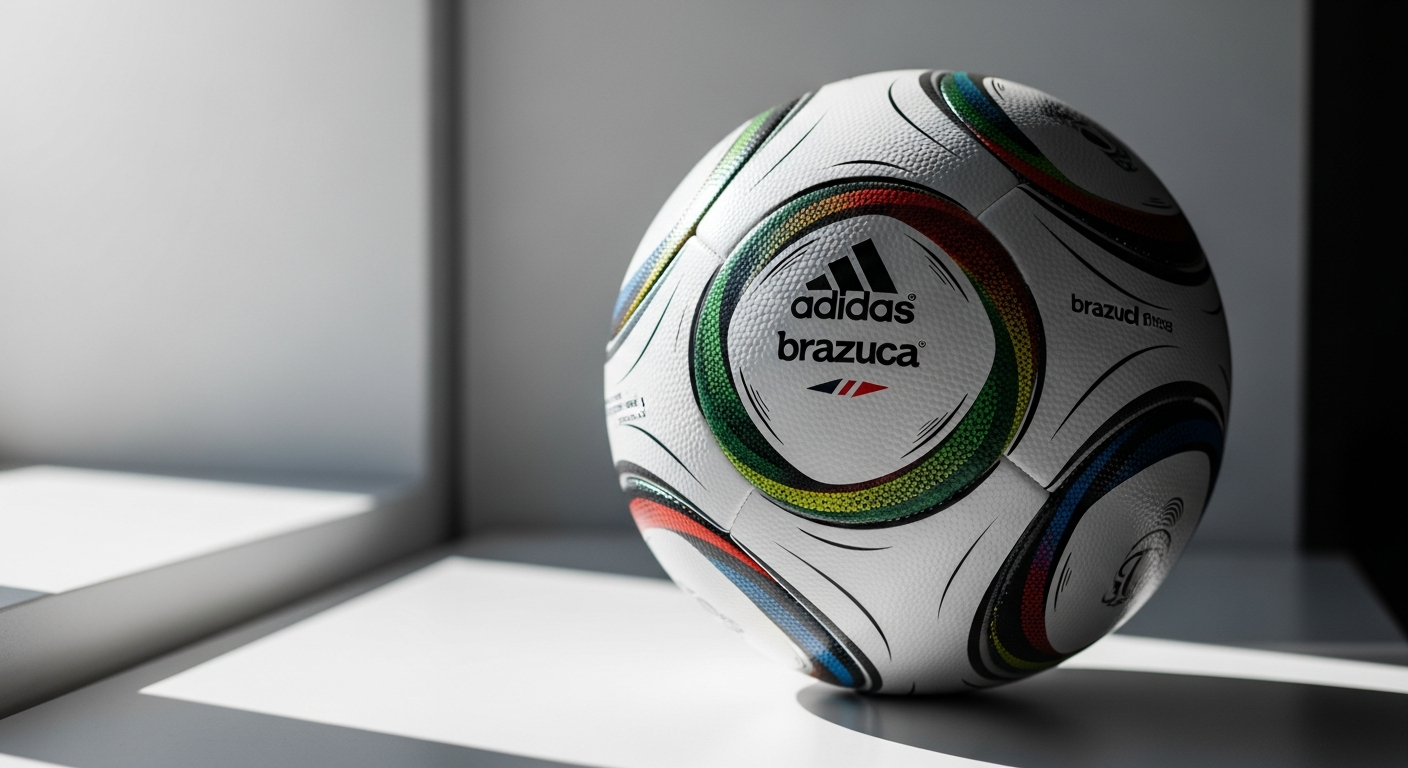
The 2014 FIFA World Cup in Brazil introduced something revolutionary to professional football—a ball so technologically advanced that it fundamentally changed how the game is played. The Adidas Brazuca Official World Cup Ball wasn't just another match ball; it represented a massive leap forward in football engineering, solving years of criticism about unpredictable flight patterns that had plagued previous World Cup tournaments.
For decades, football manufacturers had relied on traditional stitched construction methods, but the Brazuca shattered that convention with groundbreaking thermal bonding technology and a propeller-shaped panel design that delivered unmatched consistency. This wasn't incremental improvement—it was a complete reimagining of how professional footballs should perform at the highest levels of competition.
The Engineering Breakthrough Behind Thermal-Bonded Panel Design
Six-Panel Thermal Bonding System
The most striking departure from conventional football manufacturing was the Brazuca's thermal bonding technology. Rather than relying on stitching—a method used for generations—Adidas fused six polyurethane panels together using heat and pressure. This approach eliminated the weak points that stitched seams created, producing a more consistent and durable ball. Players immediately noticed the difference: the thermal bonds created uniform surface tension across the entire ball, meaning the trajectory was predictable whether you struck it from the seam line or the panel center.
Propeller-Shaped Configuration
The panel arrangement itself was revolutionary. Instead of traditional pentagon-hexagon designs, the Brazuca featured a propeller-shaped configuration that optimized aerodynamic performance. This geometric innovation reduced drag and turbulence during flight, allowing the ball to maintain a stable trajectory through the air. Goalkeepers particularly benefited from this design—they could track the ball's movement with far greater confidence than with previous World Cup balls.
Latex Bladder Technology
Beneath the polyurethane exterior sat a latex bladder engineered to provide responsive, controllable rebound characteristics. This bladder worked in concert with the thermal bonding to ensure that every touch, pass, and shot behaved consistently. When a player struck the ball, they knew exactly how it would respond based on contact angle and force applied.
Addressing the Jabulani Legacy
The 2010 World Cup had been marred by widespread complaints about the Jabulani ball's erratic flight behavior. Players struggled to predict its movement, particularly during long-range shots and crosses. The Brazuca directly confronted these criticisms. During the two-year development and testing process, Adidas collaborated extensively with professional teams and players, refining every aspect based on real-world feedback. This methodical approach produced a ball that players universally praised.
Meeting FIFA Standards
Throughout development, the ball adhered strictly to FIFA specifications. The Brazuca weighed approximately 437 grams and maintained a circumference of about 69 centimeters—precise parameters that ensured fair play and consistency across all matches. Every prototype was validated against these rigid standards before moving forward.
Surface Innovation: The Pimple Texture and Grip Enhancement
Thousands of Micro-Bumps Design
The Brazuca's surface featured thousands of small raised bumps—"pimples"—that served a crucial function beyond aesthetics. These micro-textures were engineered to maximize grip between the player's boot and the ball. Rather than offering a smooth, slippery surface, the textured design created friction points that improved control during striking and passing.
Enhanced Ball Control and Striker Performance
Players reported measurable improvements in striking accuracy and passing precision. Forwards could execute technical skills with greater confidence, knowing the ball would respond to their touch as intended. The textured surface became particularly valuable during free kicks and long-range attempts where even slight variations in contact could determine success or failure.
Speed and Responsiveness
The pimple texture didn't just improve control—it enhanced the ball's speed characteristics. The micro-bumps created a boundary layer of air that actually improved aerodynamic efficiency at certain velocities. The result was a ball that moved faster through the air while remaining stable and predictable.
Weather Performance Consistency
One of the Brazuca's most impressive technical achievements was its minimal water retention. The ball retained only about 0.2% additional weight when wet, compared to higher retention rates in previous designs. This meant consistent performance whether conditions were dry, rainy, or humid. Players in Brazil's tropical climate particularly benefited from this reliability.
Goalkeeper Security and Confidence
The pimple texture transformed goalkeeper performance. The enhanced grip made catching and handling the ball significantly more secure, even during difficult high-pressure situations. Keepers could react with greater confidence, knowing the ball wouldn't slip from their hands due to moisture or smooth surface design.
Official vs. Affordable Alternatives: Understanding the Price Spectrum
Premium Match Ball Pricing
The official Adidas Brazuca match ball commanded a premium price of approximately $160. This reflected the cost of elite materials, rigorous quality control, and the technology embedded in every panel. Only the highest-grade polyurethane and latex were used in the official version, ensuring performance standards suitable for world-class competition.
Mid-Range and Budget Options
Adidas recognized that the iconic Brazuca design deserved wider accessibility. The Brazuca Top Repique offered a middle ground at around $40, using modified materials and construction techniques that maintained visual appeal and acceptable performance while reducing costs. The Brazuca Glider provided an even more affordable entry point at approximately $20, making the World Cup ball design accessible to recreational players and training programs.
Material Quality Differences
The price differences reflected genuine variations in construction quality. Official match balls featured superior polyurethane panels and high-grade latex bladders. Mid-range alternatives used cost-effective substitutes that performed adequately but lacked the precision of official versions. Budget options made further concessions in material quality but remained recognizable as Brazuca designs.
Performance Variance Across Price Points
The official match ball guaranteed consistent performance across every aspect—flight stability, surface grip, rebound characteristics, and durability. Mid-range versions offered acceptable quality for training and recreational use but couldn't match the official ball's precision. Budget alternatives served their purpose in introducing players to the Brazuca design without the investment required for professional-grade equipment.
Shape Guarantee and Warranty Coverage
Official Brazuca balls came backed by a 2-year shape guarantee, providing assurance that the ball would maintain its form under normal use. This warranty reflected manufacturer confidence in the product. Coverage varied significantly for lower-priced alternatives, with some offering limited or no warranty protection.
Why Professional Players Embraced the Brazuca Over Previous Designs
Predictable Flight Trajectory
The most immediate advantage players noticed was flight predictability. Long-range passing and shooting situations had historically involved educated guessing about how the ball would move through the air. The Brazuca eliminated this uncertainty. Players could calculate trajectories with scientific precision, knowing the ball would behave exactly as physics predicted.
Goalkeeper Confidence and Ball Judgment
Goalkeepers experienced a particular transformation. With the Jabulani's erratic behavior still fresh in memory, the Brazuca's stable flight patterns allowed keepers to judge ball movement with remarkable accuracy. Shot-stopping became less about reaction and more about calculation—keepers could position themselves based on predictable flight paths rather than hoping to react in time.
Testing Phase Professional Feedback
During the two-year development process, professional athletes had consistently praised the Brazuca's handling characteristics. This wasn't marketing speak—it was genuine feedback from players who had tested hundreds of prototypes. Midfielders loved its passing accuracy. Strikers appreciated the control for technical finishing. Defenders valued its predictability when clearing the ball.
Superior Touch and Control
Strikers reported enhanced ability to execute precise technical skills. The combination of textured surface and thermally bonded construction meant the ball responded exactly as intended. First-touch control improved noticeably, and shooting accuracy increased as players gained confidence in the ball's behavior.
Consistency Across Environmental Conditions
A major selling point for professional teams was performance reliability regardless of playing conditions. Whether matches occurred in heat, humidity, altitude variations, or unexpected rain, the Brazuca performed consistently. This environmental consistency reduced variables that could otherwise impact match outcomes.
The Brazuca's Enduring Place in Football History
The Adidas Brazuca Official World Cup Ball transcended its role as a tournament fixture—it fundamentally reshaped how professional football equipment is engineered and manufactured. The thermal-bonded panel design, the innovative pimpled surface, and the meticulous attention to consistency didn't just solve the problems plaguing previous World Cup balls; they established new benchmarks for what modern football equipment could achieve.
What makes the Brazuca truly remarkable is how it bridged the gap between elite professional competition and recreational players worldwide through tiered pricing that made World Cup history accessible to everyone. A goalkeeper in a developing nation could practice with the same design used in championship matches. A young striker could train with the ball that professional forwards used during the tournament. This democratization of excellence represented a fundamental shift in how sports equipment manufacturers approached their craft.
The innovations it introduced continue influencing equipment design today. Modern football ball development remains rooted in the principles the Brazuca established—thermal bonding, surface texture optimization, and aerodynamic panel configuration. Whether designing balls for club competitions, international tournaments, or training environments, manufacturers reference standards the Brazuca set.
Leave a Reply