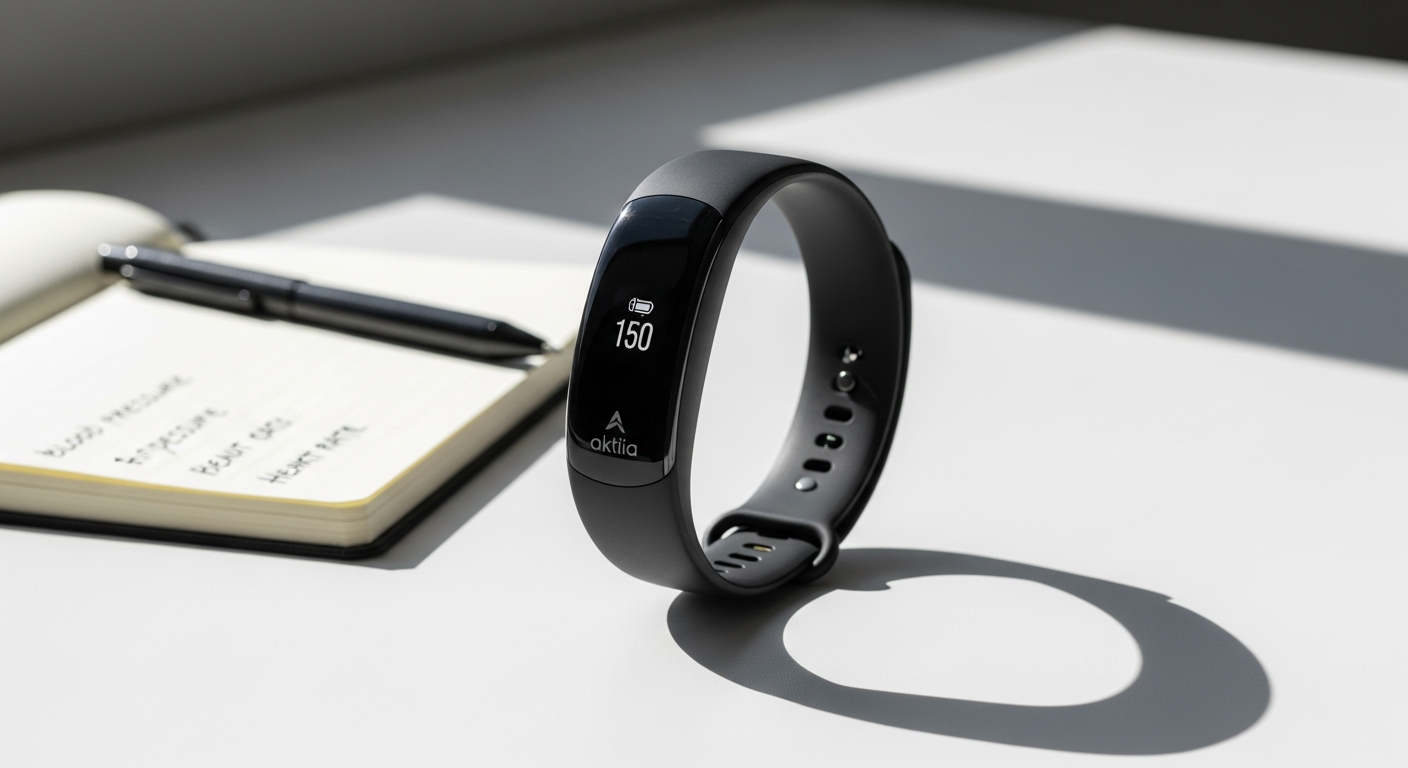
Over 1.2 billion people worldwide struggle with hypertension, yet most still rely on outdated cuff-based monitors that capture just a handful of readings each month. The Aktiia Hilo Band changes everything by delivering 800+ measurements monthly—giving you and your doctor an unprecedented window into your blood pressure patterns around the clock.
For decades, blood pressure monitoring meant uncomfortable arm cuffs, sporadic measurements, and incomplete health data. The Hilo Band shatters this limitation with advanced optical sensor technology that works silently from your wrist, requiring no inflation or discomfort. With FDA 510(k) clearance achieved in July 2025 and a US launch coming in 2026, this isn't just another health gadget—it's the first cuffless monitor cleared for over-the-counter use in America, backed by rigorous clinical validation.
This article walks you through everything that makes the Aktiia Hilo Band a genuine game-changer: how its cutting-edge PPG technology actually works, what real-world performance looks like, the financial investment required, and whether this wearable truly delivers on its promise to transform how we manage hypertension. Discover the Aktiia Hilo Band and transform your blood pressure monitoring today.
The Science Behind Cuffless Blood Pressure Monitoring: Understanding PPG Technology
How photoplethysmography sensors detect blood pressure from optical light measurements
Photoplethysmography (PPG) technology represents a fundamental shift in how blood pressure can be measured. Rather than inflating a cuff around your arm, PPG sensors use light—typically infrared and red wavelengths—to detect changes in blood volume at the wrist. When your heart beats, blood rushes through your arteries, and the optical sensors measure these minute variations in light absorption. Advanced algorithms then convert these optical signals into blood pressure readings.
This optical approach works because blood absorbs light differently depending on its oxygenation level and volume. The Aktiia Hilo Band's sensors detect these micro-fluctuations thousands of times per minute, creating a detailed picture of your cardiovascular activity. This continuous data stream becomes the raw material that machine learning algorithms transform into actionable blood pressure measurements.
Advanced optical sensor capabilities that distinguish the Aktiia Hilo Band
The Aktiia Hilo Band uses proprietary optical sensor technology specifically engineered for blood pressure measurement, which sets it apart from standard fitness trackers that merely estimate heart rate variability. While many wearables include PPG sensors, those devices aren't calibrated or validated for blood pressure accuracy. The Hilo Band's sensors work in concert with sophisticated hardware that accounts for individual variations in skin tone, wrist anatomy, and movement patterns.
The device captures data continuously during your daily life, whether you're walking, working, or sleeping. This uninterrupted stream of optical measurements provides a statistical foundation that traditional cuff monitors simply cannot match. Each month, you accumulate over 800 individual pressure readings, each one derived from thousands of optical sensor measurements.
Clinical validation studies proving accuracy comparable to traditional cuff-based monitors
Clinical rigor separates the Aktiia Hilo Band from wellness gadgets with unfounded marketing claims. Independent studies have compared the device's readings directly against oscillometric cuff measurements—the gold standard in clinical settings. These validation studies demonstrated that the Hilo Band's readings fall within acceptable margins of error, meeting stringent regulatory requirements for medical accuracy.
This clinical validation wasn't optional or marketing theater. It formed the foundation of the device's FDA 510(k) clearance application, meaning regulatory reviewers examined the raw study data themselves. The evidence proved the device works as intended across diverse populations and use cases.
The role of machine learning algorithms in converting optical data into reliable BP readings
Raw optical sensor data requires sophisticated interpretation. Machine learning algorithms trained on thousands of individual calibration points learn to recognize the unique relationship between optical signals and actual blood pressure for each specific wearer. When you first calibrate the Hilo Band using a traditional cuff, you're essentially teaching the algorithm your personal baseline—the mathematical relationship between what your optical sensors detect and what your true blood pressure actually is.
These algorithms account for individual variations that would make a universal formula inaccurate. Someone with darker skin, a different wrist size, or unique vascular characteristics needs personalized calibration. The machine learning approach enables the device to adapt to these individual differences rather than forcing everyone into a one-size-fits-all measurement formula.
Why continuous monitoring provides superior insights versus intermittent cuff measurements
Traditional home BP monitoring typically generates 2–4 readings per week at most. These snapshots miss the complete picture of your cardiovascular behavior. Blood pressure naturally fluctuates throughout the day based on activity, stress, food intake, sleep quality, and dozens of other factors. Most people's peak blood pressure occurs in the morning, yet many cuff users never measure at that critical time.
The Hilo Band's 800+ monthly measurements reveal patterns that sporadic cuff checks simply cannot detect. You see how your medication works across different times of day. You observe whether stress actually affects your numbers. You notice how sleep quality correlates with nighttime pressure elevation. Doctors make better treatment decisions when they have comprehensive trend data instead of isolated points in time.
The importance of calibration using traditional cuffs to establish personal baseline measurements
Accuracy requires calibration. The Hilo Band includes a traditional blood pressure cuff specifically for this purpose. You perform an initial calibration session before regular use, which involves taking simultaneous measurements with both the cuff and the optical sensors. This establishes the mathematical relationship between your personal optical signals and your actual blood pressure.
The calibration process typically needs repeating approximately monthly to maintain accuracy. Drift can occur over time as your wrist physiology changes slightly or sensor performance varies. This maintenance requirement means the Hilo Band demands more user responsibility than a passive fitness tracker, but the payoff is reliable, clinically valid data you can trust and share with your doctor.
FDA Clearance and Medical Credibility: What 510(k) Approval Really Means
What FDA 510(k) clearance signifies for consumer trust and regulatory compliance
FDA 510(k) clearance represents a specific regulatory pathway for devices that function similarly to existing approved medical devices. The 510(k) process requires manufacturers to demonstrate substantial equivalence to predicate devices—in this case, traditional blood pressure monitors already on the market. This doesn't mean the FDA verified every clinical claim; rather, it means the agency confirmed the device is safe and performs as intended, with adequate supporting clinical evidence.
For consumers, this clearance transforms the Hilo Band from an interesting wellness gadget into a legitimate medical device. Insurance companies recognize it differently. Healthcare providers view it as credible. Regulatory approval creates accountability—if the device fails to perform as claimed, the manufacturer faces real consequences.
Timeline: July 2025 clearance milestone and expected 2026 US market launch
The Aktiia Hilo Band achieved its FDA 510(k) clearance in July 2025, marking a watershed moment for wearable blood pressure technology. This milestone followed years of clinical validation studies and regulatory submissions. The clearance specifically enables over-the-counter (OTC) sale in the United States, meaning you won't need a prescription to purchase the device—a significant distinction from some medical wearables that require physician authorization.
The US market launch is anticipated for 2026. For American consumers accustomed to waiting for European innovations to eventually reach the American market, this timeline represents relatively rapid deployment. Early adopters in Europe and Canada have been using the device for several years, providing a large real-world user base that validates the technology's practical performance.
How the Hilo Band became the first cuffless monitor to achieve OTC clearance in the United States
Several cuffless blood pressure monitors existed before the Aktiia Hilo Band, but none had achieved FDA clearance for over-the-counter consumer use in the United States. Some devices operated under different regulatory pathways, while others remained limited to specific countries. The Hilo Band's achievement represents the culmination of rigorous clinical testing, regulatory strategy, and technological refinement.
This distinction matters. OTC clearance means any consumer can purchase and use the device without medical supervision, based purely on their own health decision-making. It also means the device meets the highest standards of accuracy and safety required by American regulators, not a lower threshold for consumer wellness products.
CE Mark approval in Europe and global regulatory recognition
Long before achieving FDA clearance, the Aktiia Hilo Band received CE Mark approval in Europe, enabling commercial availability across European Union nations and other countries recognizing European standards. This regulatory pathway created a proving ground for the technology—millions of real-world users provided evidence that the device worked reliably outside clinical trial conditions.
The global regulatory recognition matters because it proves the device meets international standards for medical accuracy. A device approved in Europe, Canada, and now the United States has demonstrated it can function reliably across diverse populations, healthcare systems, and usage patterns.
Clinical evidence supporting safety and accuracy claims
Clinical validation studies didn't simply test whether the device worked under ideal laboratory conditions. Researchers evaluated its performance across different age groups, body types, skin tones, and health conditions. Safety monitoring examined whether continuous optical light exposure at the wrist created any dermatological issues or other adverse effects. The compiled evidence supported the safety and efficacy claims underlying the FDA submission.
These studies established accuracy within clinically acceptable margins. Blood pressure measurement devices don't need to match cuff readings exactly—regulatory standards allow for defined ranges of variation. The Hilo Band consistently performed within these acceptable ranges, with no systematic bias that would suggest it systematically overestimated or underestimated pressure.
Implications for insurance coverage and medical professional recommendations
FDA clearance opens doors to insurance reimbursement that wellness gadgets never access. Some insurance plans may eventually cover the Hilo Band for patients with specific diagnoses or clinical situations. Healthcare providers can now recommend the device with confidence that it meets regulatory standards, rather than suggesting it as an experimental tool.
Medical professionals increasingly recognize continuous monitoring's value for hypertension management. Doctors frustrated with white coat syndrome (falsely elevated readings in clinical settings) appreciate that patients can provide comprehensive home data. Physicians adjusting medications benefit from seeing how BP changes in real-world conditions rather than relying on sporadic clinic measurements.
Comparison to other wearable BP monitors still awaiting FDA approval
Several competing wearable blood pressure monitors exist globally, yet most haven't achieved FDA OTC clearance in the United States. Some remain available only in specific international markets. Others operate under different regulatory pathways that limit their accessibility or clinical credibility in American healthcare. The Hilo Band's distinction as the first cuffless OTC-cleared monitor gives it a significant competitive advantage as the 2026 US launch approaches.
Detecting Nocturnal Hypertension: Why 24/7 Monitoring Matters for Sleep-Related BP Issues
The prevalence of dippers versus non-dippers and nighttime blood pressure patterns
Blood pressure naturally drops during sleep in most healthy individuals—a pattern called "dipping." Normal dippers experience a 10–20% reduction in systolic pressure during sleep compared to daytime levels. However, some people are "non-dippers"—their blood pressure fails to drop sufficiently at night. An even more concerning group, "reverse dippers," actually experiences higher nighttime pressure than daytime readings.
Non-dipping and reverse-dipping patterns predict cardiovascular risk more powerfully than daytime readings alone. Someone with apparently normal daytime blood pressure but problematic nocturnal patterns faces elevated risks for heart attack, stroke, and kidney disease. Yet traditional home blood pressure monitoring, which relies on users manually taking readings, almost never captures nighttime patterns. People don't wake themselves up to measure pressure; instead, they miss the crucial nocturnal window entirely.
How continuous monitoring reveals dangerous BP spikes during sleep
The Hilo Band's passive 24/7 monitoring captures your entire sleep cycle's blood pressure profile. While you sleep undisturbed, the device records your pressure repeatedly throughout the night. This reveals dangerous patterns that daytime-only monitoring completely misses. You might discover that your pressure spikes between 3 and 5 a.m., correlating with sleep disruptions or sleep apnea events.
These nocturnal measurements prove invaluable for diagnosis. If a patient reports normal daytime readings but experiences nighttime hypertension, their doctor gains critical information for treatment decisions. Some medications work better at night; others need adjustment based on nocturnal data. The ability to see your complete 24-hour pressure profile, including sleep patterns, fundamentally changes hypertension management.
The connection between nocturnal hypertension and cardiovascular risk
Sustained elevated blood pressure during sleep poses particular cardiovascular stress because your heart typically relaxes during sleep, when demands should be lowest. When blood pressure remains elevated throughout the night, your cardiovascular system never gets adequate rest. The endothelial cells lining your arteries face continuous stress, inflammation increases, and plaque formation accelerates.
Research demonstrates that nocturnal hypertension predicts future cardiovascular events more accurately than daytime readings alone. Someone with controlled daytime pressure but uncontrolled nighttime hypertension faces significant hidden risk. Monitor your nighttime blood pressure patterns with the Aktiia Hilo Band's continuous 24/7 tracking.
Real-world scenarios where nighttime BP data changes medication decisions
Consider a patient whose doctor thought their hypertension was well-controlled based on occasional daytime measurements. The Hilo Band reveals that nocturnal pressure consistently exceeds 150/90 mmHg despite adequate daytime control. The doctor adjusts medications specifically to target nighttime elevation—perhaps adding an evening-dose antihypertensive or switching to a longer-acting medication. The patient's cardiovascular risk profile improves measurably.
Another example: a patient on three blood pressure medications experiences fatigue and dizziness from daytime readings that are too low. Traditional thinking might suggest reducing medication. But the Hilo Band's data shows that pressure dips dangerously during certain nighttime hours while spiking at others. Rather than reducing overall medication, the doctor adjusts the timing of doses to smooth out these dangerous fluctuations. The patient feels better while actually achieving superior 24-hour control.
Advantages of passive monitoring during sleep versus traditional home BP checks
Waking yourself to measure blood pressure disrupts the measurement you're trying to capture. The act of waking elevates pressure temporarily, contaminating the data. Additionally, most patients won't wake themselves repeatedly throughout the night for measurements—the compliance burden is unrealistic.
The Hilo Band eliminates this contradiction. It captures authentic sleeping blood pressure because you remain asleep. The device measures your physiology in its true resting state, without the alert stimulus that manual measurement creates. This passive approach provides far more accurate nocturnal data than any manual measurement strategy could achieve.
How the Hilo Band's unobtrusive design enables accurate nighttime readings
Wearing a bulky traditional blood pressure cuff to bed is impractical. The Hilo Band's lightweight design (16–22 grams) feels natural on your wrist during sleep. The hypoallergenic silicone band doesn't cause skin irritation during extended contact, and the overall form factor resembles a normal wristwatch rather than medical equipment.
Comfort during sleep translates to compliance. Users actually wear the device consistently, night after night, building comprehensive data sets. This consistent long-term monitoring reveals patterns that sporadic measurements could never detect.
Medical applications for sleep apnea screening and hypertension management
Sleep apnea frequently occurs alongside hypertension, and nocturnal blood pressure patterns can serve as screening indicators. Patients with untreated sleep apnea often display characteristic nocturnal pressure elevation and fragmented patterns reflecting repeated oxygen desaturation events. The Hilo Band's detailed nighttime data can alert both patients and physicians to potential sleep apnea requiring further investigation.
Moreover, once sleep apnea treatment begins, the Hilo Band tracks therapeutic response. As the patient's sleep quality improves and oxygen saturation normalizes, nocturnal blood pressure patterns typically improve as well. The device provides objective feedback on treatment effectiveness that traditional measurement methods cannot match.
Hardware Specifications and Wearability: What You're Actually Wearing
Lightweight design (16–22g) and comfortable daily wear experience
The Hilo Band weighs between 16 and 22 grams—comparable to a typical smartwatch or fitness tracker. This lightness proves crucial for all-day and all-night wearability. Heavy devices cause user fatigue; people gradually wear them less frequently or abandon them entirely. The Hilo Band's featherweight design doesn't create pressure on the wrist or remind you it's there, making compliance effortless.
Weight distribution across the band ensures even comfort. You won't experience the localized pressure points that uncomfortable wearables create. The device feels less like medical equipment and more like an accessory you simply wear, forget about, and let continue collecting data.
Hypoallergenic silicone band construction for sensitive skin compatibility
The band uses hypoallergenic silicone, avoiding the nickel and other materials that trigger allergic reactions in sensitive individuals. Extended contact with the skin—particularly during sleep and exercise—demands materials that won't cause dermatitis. The silicone band maintains comfort even during extended wear in warm or humid conditions when skin sensitivity typically increases.
For users with fragile skin or dermatological conditions, this material choice matters significantly. The band won't leave irritation marks or cause the redness that some wearables create with prolonged contact.
IP67 waterproof rating for showering, swimming, and water sports
The Hilo Band carries an IP67 waterproof rating, meaning it can withstand immersion in water up to 1 meter depth for up to 30 minutes. You can shower, swim, and participate in water sports without removing the device. This durability eliminates a major inconvenience—you don't need to remove it before getting wet, then remember to put it back on afterward.
The waterproof design also means you can wash your hands vigorously, splash water during exercise, or work in humid environments without concern. Many wearables market water resistance but actually recommend removal during showering; the Hilo Band's genuine waterproof rating removes this limitation.
Battery life of 9–10 days per charge and charging station convenience
The Hilo Band's battery lasts approximately 9–10 days between charges. This duration exceeds most competing wearables while providing charging frequency that doesn't become burdensome. You charge roughly every week and a half, meaning charging becomes routine rather than a frequent interruption.
The included charging station simplifies the charging process. Rather than hunting for specific cables, you simply place the band on the station. Charging takes a couple of hours, easily accomplished overnight or during a work session.
Bluetooth connectivity with iOS and Android mobile app compatibility
The device connects via Bluetooth to mobile apps available on both iOS and Android platforms, ensuring compatibility regardless of your smartphone preference. The Bluetooth connection is reliable and power-efficient, contributing to the extended battery life.
The app provides the interface through which you actually interact with your data. Bluetooth connectivity enables real-time syncing, so measurements appear in the app immediately after the device captures them.
Aesthetic design that functions as everyday jewelry, not medical equipment
Unlike traditional blood pressure cuffs that announce themselves as medical devices, the Hilo Band resembles a modern smartwatch or fitness tracker. The aesthetic design means you can wear it to professional meetings, formal events, or casual outings without it appearing medical or attention-drawing.
This normalcy supports compliance. Devices that look medical often develop social or psychological baggage—people feel self-conscious wearing them in public, or they associate the device with illness rather than health management. The Hilo Band's neutral aesthetic sidesteps this dynamic entirely.
Comparison to bulkier traditional BP monitors and fitness tracker alternatives
A traditional home blood pressure monitor requires unpacking a device, positioning your arm correctly, activating the cuff inflation cycle, and waiting for results—typically 30 seconds to a minute per measurement. The process is cumbersome enough that most people avoid measuring more than once or twice weekly. Fitness trackers with heart rate monitoring can't provide medically accurate blood pressure data; their pressure estimates are useful for trends but not clinically reliable.
The Hilo Band occupies a unique middle ground: the medical accuracy of traditional monitors combined with the convenience and wearability of fitness trackers. You gain precision without the usability burden that makes traditional monitors impractical for frequent monitoring.
Data Insights and App Experience: From Raw Measurements to Actionable Health Intelligence
Over 800 monthly measurements translated into meaningful health metrics
Eight hundred measurements per month sounds impressive numerically, but the real value emerges when you view the processed insights. The app translates raw measurements into meaningful metrics: your average daytime systolic pressure, your nighttime diastolic pressure, your time-in-range (the percentage of measurements within your target pressure zone), and patterns across days and weeks.
These aggregated metrics matter clinically. Your doctor cares less about individual readings and much more about whether your overall pressure profile is controlled. The Hilo Band automatically calculates the metrics physicians actually use in clinical decision-making.
Day/night BP averages and time-in-range calculations for personalized insights
The app displays distinct daytime and nighttime averages, revealing whether your dipping pattern is healthy. Time-in-range shows you what percentage of your measurements fell within your target zone. If your doctor recommends a systolic pressure below 130 mmHg, the app calculates what fraction of your day you achieve this target. This metric proves particularly valuable for medication adjustments—if time-in-range is 60%, the doctor knows pressure control is incomplete and can intensify treatment.
These personalized calculations account for your specific health situation and treatment goals. Someone with diabetes might have different target ranges than someone with only hypertension.
Tracking medication effectiveness and lifestyle factor impact on blood pressure
The app allows you to log medications, food intake, exercise, and stress events. By correlating these events with blood pressure data, you can observe cause-and-effect relationships. You might discover that your evening medication genuinely reduces nighttime pressure, or that sodium-heavy meals consistently elevate your readings within 2–3 hours.
This cause-and-effect visibility empowers behavioral change. Instead of relying on general health advice, you see your personal data proving how specific choices affect your physiology. If you observe that adequate sleep correlates with lower blood pressure, that insight motivates sleep prioritization more effectively than generic wellness recommendations.
Mobile app interface for viewing trends, patterns, and historical data
The app presents data through multiple views: daily snapshots, weekly trends, monthly comparisons, and custom date ranges. You can zoom out to view patterns over months or zoom in to examine specific days or times. Historical data storage means you can reference measurements from years ago, tracking long-term progression or medication effectiveness.
The interface emphasizes trends rather than individual readings. A single high reading might indicate measurement error or a temporary spike; trends reveal your true baseline. The app's emphasis on pattern recognition aligns with how physicians actually interpret blood pressure data.
Sharing capabilities with healthcare providers for remote monitoring
The app includes secure sharing features allowing you to provide your physician with direct access to your data. Rather than attempting to describe your blood pressure patterns or manually transcribing readings, your doctor views your actual data in the app. This enables remote monitoring—your physician can review your recent trends without requiring an in-person visit.
Remote sharing becomes particularly valuable between clinic visits. Your doctor can monitor how your pressure responds to a new medication without scheduling a follow-up appointment. If you're adjusting lifestyle factors or dietary changes, your doctor observes the physiological response in real time.
Integration with electronic health records (EHR) systems
Healthcare systems increasingly implement electronic health record systems. The Hilo Band's data can integrate with certified EHR systems in clinical practices, creating a seamless information flow. Rather than your doctor manually entering your blood pressure readings into their EHR, the data transfers automatically from your app to their system.
This integration improves clinical efficiency and reduces transcription errors. Your entire medical history exists in one centralized location, available to any authorized provider within your healthcare network.
Personalized alerts for abnormal readings and actionable recommendations
The app can alert you when readings exceed your personal thresholds or display unusual patterns. If your nighttime pressure suddenly spikes, you receive a notification. These alerts prompt timely action—contacting your doctor, adjusting your routine, or investigating potential causes.
Rather than generic alerts that trigger constantly, the personalization means alerts actually indicate genuine abnormalities within your personal context. Someone whose baseline pressure runs high might not receive alerts that would concern someone with naturally lower pressure.
How comprehensive data supports informed conversations with doctors
Walking into your doctor's appointment with eight weeks of comprehensive blood pressure data fundamentally changes the conversation. Rather than discussing whether you "feel" your pressure is controlled or relying on clinic readings that might not represent your typical physiology, you present objective trend data.
This abundance of information empowers better collaborative decision-making. Your doctor understands your pressure patterns across sleep, activity, and various times of day. Together, you can discuss whether your current medication regimen addresses your specific pressure profile or whether adjustments would improve control.
Cost Analysis: Device Investment Versus Long-Term Subscription Model
Initial device cost of $199 USD with Canadian pricing at $335 CAD
The Hilo Band's upfront hardware cost is $199 USD. This pricing positions it above basic home monitors (which might cost $50–100) but below comprehensive medical-grade devices. The $335 Canadian pricing reflects regional market variations and currency differences.
For context, a high-quality traditional automatic blood pressure monitor costs $80–150, and a smart-enabled version might reach $200–250. The Hilo Band's device-only price aligns reasonably with premium connected monitors, though the comparison becomes more complex when you factor in the subscription model.
Mandatory monthly subscription at $9.99/month ($119.88 annually)
The Hilo Band requires a subscription for full functionality, costing $9.99 monthly or $119.88 annually. This subscription model distinguishes the device from one-time-purchase monitors. The subscription covers cloud data storage, app maintenance, algorithm updates, and integration features.
Not all wearables include subscriptions. Some fitness trackers offer free apps indefinitely. The mandatory subscription means you commit to ongoing costs for as long as you own the device.
Total first-year investment approximately $319 USD
Adding the $199 device cost to $119.88 annual subscription brings your first-year total to approximately $319 USD. Subsequent years cost $119.88 annually as long as you maintain the device. This cost structure matters for budget planning—you're not making a one-time $199 purchase; you're committing to approximately $120 per year indefinitely.
Over five years of ownership, you'd invest roughly $719 in the device and subscriptions combined. Over ten years, nearly $1,300. These long-term costs exceed purchasing several traditional monitors throughout the same period.
Long-term cost comparison against one-time purchase traditional monitors
A basic digital blood pressure monitor costs $60–100 and requires no subscription. Over five years, you might purchase 2–3 devices due to battery issues or wear, totaling perhaps $200–250. A premium traditional monitor might cost $150–200 but last many years, totaling $150–200 over a decade.
The Hilo Band's $120 annual subscription cost compounds over time, making the device more expensive than traditional options when viewed purely through cost-per-year calculations. However, the continuous data and medical insights might justify the premium if you value comprehensive monitoring.
Subscription value proposition: cloud storage, app updates, and data analytics
Your subscription funds cloud storage for thousands of measurements, enabling historical data access from any device. The subscription also covers regular app updates with new features and improved functionality. Data analytics improvements—refined algorithms or new insights metrics—are included in your subscription.
For users with minimal technical demands, this subscription value might not justify the cost. If you simply need basic blood pressure readings, a traditional monitor works fine without ongoing fees. But for patients seeking comprehensive data analytics and continuous algorithm improvements, the subscription offers genuine value.
Budget considerations for patients managing chronic hypertension
Someone managing chronic hypertension on a limited budget faces real constraints. The Hilo Band's $120 annual subscription, while reasonable in isolation, represents significant cost for economically vulnerable patients. Many insurance plans don't cover these devices, meaning the full cost comes from personal funds.
In contrast, traditional monitors cost less upfront and require no ongoing payments, making them more accessible for budget-conscious individuals. The question isn't just whether the Hilo Band provides better data, but whether superior data justifies the higher cost for your particular situation.
Promotional pricing opportunities and potential insurance reimbursement scenarios
Promotional pricing occasionally makes the device more affordable. The Canadian pricing example mentioned a promotional price of $301.50, representing a discount from the standard $335. Similar promotions might become available in the US market.
Insurance reimbursement remains uncertain. Some health plans might eventually cover the device for patients with specific diagnoses or medical situations. However, as of now, most insurance plans don't cover the Hilo Band, making it an out-of-pocket expense.
ROI calculation for frequent home BP monitoring versus clinic-only measurements
Return on investment extends beyond pure monetary calculations. If the device prevents even one hypertensive crisis or enables early detection of dangerous pressure elevation, the medical value far exceeds the $319 first-year cost. Preventing a single stroke or cardiac event saves hundreds of thousands in medical expenses and immense personal suffering.
For someone measuring blood pressure only at clinic visits (perhaps quarterly), the Hilo Band offers transformative value by enabling continuous monitoring. For someone already measuring daily with a traditional monitor, the incremental benefit might not justify the additional cost.
Calibration Requirements and Maintenance: Keeping Your Data Accurate
Initial calibration process using included traditional cuff
Calibration establishes the relationship between your optical signals and your actual blood pressure. The device includes a traditional blood pressure cuff specifically for this purpose. You perform your initial calibration before regular use by taking simultaneous readings with both the cuff and the optical sensors.
The process takes approximately 5–10 minutes. You follow the app's prompts, which guide you through taking cuff measurements while the optical sensors simultaneously collect data. The device stores this calibration data, which the algorithms use to convert all future optical measurements into blood pressure readings.
Periodic recalibration frequency (approximately monthly) for optimal accuracy
The Hilo Band typically requires recalibration approximately monthly. This maintenance ensures the algorithm remains calibrated to your current physiology. Over time, subtle changes in skin condition, wrist size variations, or sensor drift can cause gradual inaccuracy.
Monthly recalibration might feel burdensome compared to traditional monitors that require no maintenance. However, it's genuinely necessary for sustained accuracy. Skipping recalibrations gradually degrades measurement reliability.
Step-by-step calibration procedure and time investment required
Calibration involves these steps: ensure both the Hilo Band and your smartphone are charged; open the app and initiate the calibration routine; locate your included blood pressure cuff; position the cuff correctly on your upper arm according to instructions; activate the simultaneous measurement sequence, which triggers both cuff inflation and optical sensor activation; record the results in the app; repeat this process for the number of measurements the app requests (typically 1–3 measurements).
The entire process requires 10–15 minutes. It's not complex, but it requires deliberate action rather than passive background monitoring. Unlike the device itself, which works without any user effort, calibration demands active participation.
How calibration drift affects reading reliability over time
Without periodic recalibration, optical-based algorithms gradually lose accuracy. The mathematical relationship between optical signals and actual blood pressure remains valid only if the calibration factors remain accurate. Changes in your physiology, skin condition, or seasonal variations in wrist characteristics can shift this relationship.
After two months without recalibration, readings might drift several millimeters of mercury off true values. After three months, drift becomes clinically meaningful. If your doctor is making medication decisions based on data that's drifted 10 mmHg from true values, treatment decisions might be inappropriate.
Troubleshooting common calibration issues and reset procedures
If calibration fails—perhaps because the cuff provided an inconsistent reading or the simultaneous measurements somehow didn't synchronize—you simply retry. The app typically guides you through troubleshooting. Common issues include improper cuff positioning (the most frequent cause of inconsistent readings) or movement during the measurement that creates artifacts.
If recalibration repeatedly fails, you can reset the device and restart from initial calibration. Factory reset procedures exist in the app settings. These resets erase all data, so you'd only perform one if you were transitioning the device to a new user or experiencing persistent calibration problems.
Included accessories: charging station and calibration cuff
The Hilo Band package includes two key accessories: a charging station for battery replenishment and a blood pressure cuff for calibration. The charging station connects via USB and magnetically positions the band for charging. The included cuff is a manual unit that requires you to inflate it (either by hand pump or motorized inflation, depending on the specific model included).
These accessories should last the device's entire lifespan. The charging station is essentially a passive charging dock with minimal wear. The calibration cuff should tolerate monthly use indefinitely.
Best practices for maintaining consistent, accurate measurements
Consistent measurement technique supports calibration accuracy. Measure in the same arm each time (preferably your non-dominant arm). Sit quietly for two minutes before measurement to allow your pressure to stabilize from any recent activity. Ensure your feet are flat on the floor and your arm is at heart level. These standardized techniques reduce measurement variation caused by technique differences rather than actual pressure changes.
For calibration specifically, follow the cuff positioning instructions precisely. A poorly positioned cuff produces readings that won't match your optical sensors, degrading calibration quality. When taking cuff measurements for calibration, ensure you're calm and have rested for several minutes beforehand.
When to recalibrate after significant weight changes or health events
Beyond monthly recalibration, specific events warrant additional calibration. Significant weight changes—more than 10–15 pounds—can alter wrist physiology in ways that affect optical sensor readings. After losing or gaining substantial weight, recalibrate to ensure the algorithm accounts for these changes.
Similarly, if you experience a major health event—hospitalization, significant medication changes, or diagnosis of new cardiovascular conditions—recalibration ensures your device remains calibrated to your current physiology rather than relying on calibration from when you were healthier.
Real-World Performance: What the Hilo Band Does—and Doesn't—Do
Passive monitoring during daily activities, work, and exercise recovery
The Hilo Band excels at passive background monitoring. Throughout your workday, during household chores, while reading or working at a desk, the device continuously collects blood pressure data without requiring any conscious action. You literally forget you're wearing it while it accum
Leave a Reply