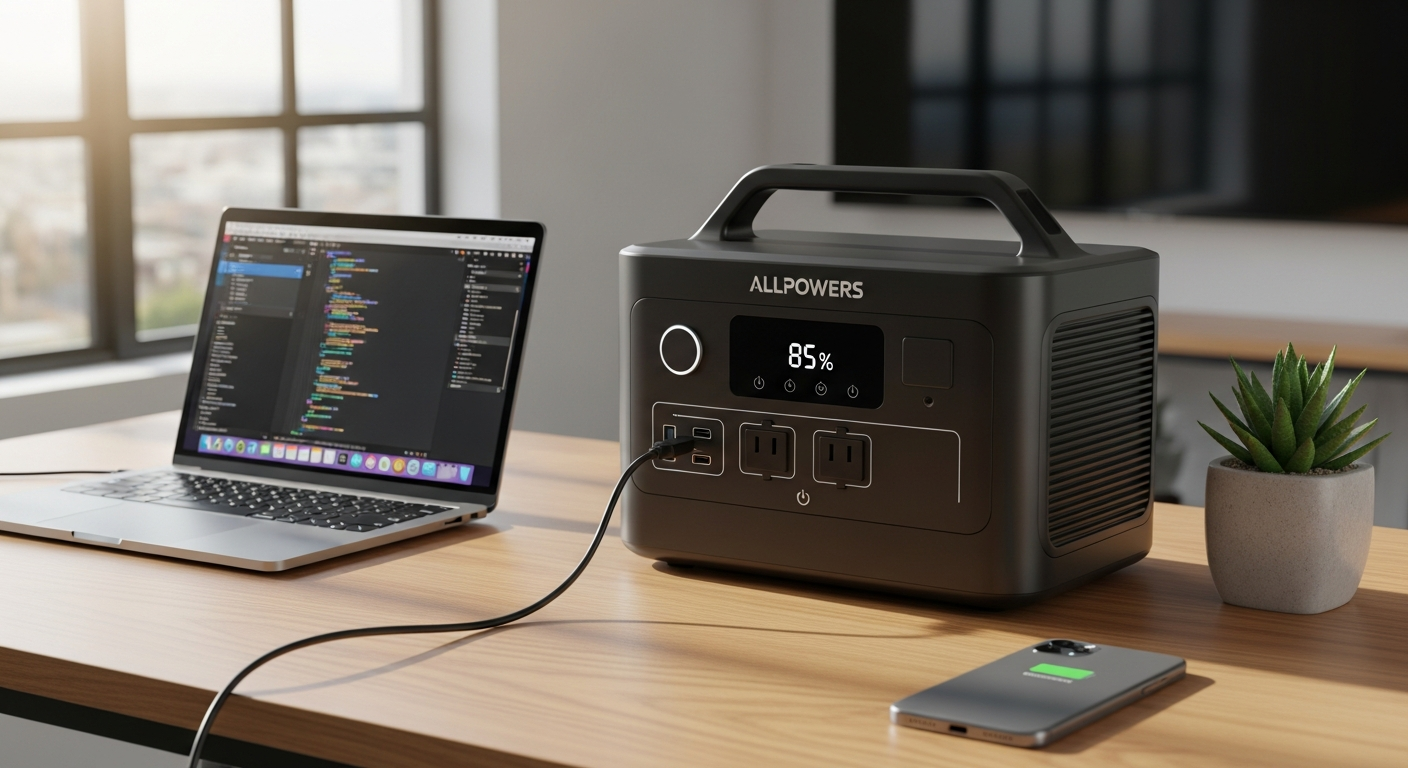
Over 60% of homeowners lack a reliable backup power solution for emergencies, yet most assume quality portable power stations require premium pricing. The ALLPOWERS R600 shatters that myth entirely, delivering enterprise-grade features at a fraction of what competitors charge.
Emergency preparedness isn't just about peace of mind—it's about protecting your family, your work, and your essential devices when the grid fails. Portable power stations have evolved dramatically over the past few years, shifting from niche camping gear to legitimate home backup solutions. The R600 represents this evolution perfectly, combining LiFeP04 battery technology with practical affordability that makes emergency readiness accessible to everyday households.
Discover how the ALLPOWERS R600 can protect your home without draining your emergency budget.
How the ALLPOWERS R600 Stacks Up Against Premium Emergency Power Solutions
Comparison of 600W output versus higher-wattage competitors and real-world limitations
The R600's 600W output capacity sits comfortably in the mid-range for portable power stations. Competitors charging two to three times the price often boast 1000W, 2000W, or higher capacities, but that raw power difference doesn't automatically translate to better emergency preparedness. A 600W output handles the devices that matter most during outages: refrigerators (typically 150-800W depending on compressor cycles), medical equipment (CPAP machines, oxygen concentrators), essential lighting, and communication devices. The gap becomes relevant only when you're attempting simultaneous operation of multiple high-wattage appliances—a scenario less common in genuine emergency situations than marketing suggests.
LiFeP04 battery advantages over lithium-ion alternatives for emergency backup scenarios
The R600 uses LiFeP04 (lithium iron phosphate) battery chemistry rather than standard lithium-ion. This distinction matters significantly for emergency backup. LiFeP04 batteries deliver 3,000-5,000 charge cycles compared to 500-1,000 cycles for conventional lithium-ion, meaning your backup power station remains viable for genuine emergencies across a decade or more. LiFeP04 exhibits superior thermal stability, reducing fire risk during extended use or extreme temperatures—a critical safety consideration when functioning as household backup power. The chemistry also handles deeper discharge cycles without degradation, a practical advantage during genuine multi-day power outages when you're drawing heavily from reserves.
Pure sine wave output ensures safe operation of sensitive medical devices and electronics
The R600 generates pure sine wave AC output, matching standard household electricity quality. This matters because sensitive electronics—medical equipment, computer power supplies, modern refrigerator compressors—operate optimally on pure sine waves. Cheaper power stations sometimes use modified sine waves that can damage or reduce lifespan of precision equipment. During an emergency, you need your backup power supporting survival-critical devices reliably, not creating additional problems.
Cost-per-watt analysis showing the R600's exceptional value proposition
Premium competitors frequently charge $0.50 to $1.00 per watt-hour of capacity. The R600, typically discounted from $293 to approximately $102, delivers roughly $0.34 per watt-hour—a 50-65% value advantage over mainstream alternatives. You're acquiring LiFeP04 reliability, pure sine wave protection, and multi-source charging at pricing previously associated with entry-level lithium-ion models lacking these critical features.
Warranty and longevity considerations for long-term emergency preparedness
ALLPOWERS' warranty coverage on the R600 reflects confidence in LiFeP04 durability. When budgeting for emergency preparedness, calculate the cost per year of service rather than upfront price alone. A $102 power station with 10-year viable lifespan costs $10.20 annually—far more economical than replacing cheaper units every 2-3 years, particularly when those replacements might fail precisely when you need them most.
Why smaller capacity doesn't mean compromised reliability for critical backup needs
The 299Wh capacity feels modest compared to 1000Wh+ competitors, but capacity and reliability operate independently. A 299Wh LiFeP04 battery with proper charge management remains dependable across thousands of cycles. Emergency scenarios typically involve powering essential devices for hours or days until grid restoration, not sustaining full household loads indefinitely. The R600's capacity perfectly matches realistic emergency timelines when paired with appropriate device prioritization.
Real-World Emergency Scenarios: What the R600 Can Actually Power
Powering essential home devices during outages (refrigerator, medical equipment, lighting)
A modern refrigerator draws 150-800W depending on whether the compressor is actively running. The R600 easily handles this intermittent load. A standard LED lighting setup requires 10-50W total. Medical equipment varies—CPAP machines typically consume 30-60W, oxygen concentrators 300-500W depending on output setting. These are the devices that genuinely matter during outages. The R600 powers them reliably without compromise.
Runtime calculations for common household appliances and emergency needs
Simple math shows runtime: divide 299Wh by device wattage, multiply by 60 for minutes. A 60W CPAP machine runs approximately 300 minutes (5 hours) on full charge. A 40W lighting system operates roughly 450 minutes (7.5 hours). LED refrigeration lighting runs nearly indefinitely at 5W. These calculations assume 80% usable capacity accounting for battery management system reserve. During an actual outage, you're prioritizing these devices, not running everything simultaneously.
Backup power for work-from-home setups during grid failures
Your laptop (50-100W) and WiFi router (10-15W) run together for 15+ hours on a full R600 charge. In today's economy, grid failures during work hours mean lost income. The R600 maintains your income stream through outages lasting most of a business day. Combined with car charging capability, you can fully recharge during lunch via vehicle power, enabling continuous working capability even across extended outages.
Supporting home security systems, WiFi routers, and communication devices
Security system base stations typically consume 30-50W. WiFi routers draw 10-15W. Mobile phones charge to 100% capacity repeatedly on 299Wh. These communication and security devices represent true emergency priorities—outages often impact cell towers, making WiFi-enabled communication critical. The R600 maintains this connectivity backbone reliably.
Charging multiple devices simultaneously during extended outages
The R600 typically features multiple USB ports, USB-C fast charging, and wireless charging capability alongside AC outlets. You can charge phones, tablets, and portable chargers simultaneously while powering refrigeration or medical equipment through separate outlets. This versatility addresses realistic household dynamics where family members need simultaneous device access.
Limitations when running high-wattage appliances and practical workarounds
Space heaters (1500W), electric ovens (5000W), and water heaters exceed the R600's 600W capacity and 299Wh would provide minutes of runtime anyway. These appliances remain impractical with any portable power station under $5,000. Workaround strategies include: prioritizing refrigeration and medical equipment, using solar charging for sustainable top-up during extended outages, and combining the R600 with a whole-home generator for comprehensive backup across longer events.
Explore how strategic device prioritization maximizes the R600's emergency power capabilities.
The LiFeP04 Advantage: Why Battery Chemistry Matters for Emergency Backup
Superior cycle life and degradation rates compared to standard lithium-ion batteries
LiFeP04 batteries sustain 3,000-5,000 complete charge cycles before dropping to 80% capacity. Standard lithium-ion cells degrade to 80% capacity within 500-1,000 cycles. If you charge monthly for emergency preparedness, an LiFeP04 R600 remains viable for 10+ years while a lithium-ion alternative needs replacement within 2-3 years. Over a decade, the LiFeP04 approach eliminates replacement costs and ensures your backup power remains dependable precisely when emergencies occur.
Enhanced safety features and thermal stability during extended use
LiFeP04 chemistry exhibits exceptional thermal stability. The battery doesn't overheat during rapid discharge cycles or extended use, eliminating thermal runaway risks that plague standard lithium-ion cells under stress. During genuine emergencies when you're drawing power heavily for hours, this thermal consistency prevents safety hazards and maintains performance.
Temperature tolerance for year-round emergency preparedness
LiFeP04 batteries operate reliably across -20°C to 60°C temperature ranges. Whether stored in an unheated garage during winter or a hot attic during summer, the chemistry maintains capacity and safety. Standard lithium-ion capacity drops precipitously in cold storage. If your emergency power station sits idle for months, LiFeP04 ensures it's ready when needed regardless of seasonal temperature swings.
Reduced maintenance requirements and shelf-life advantages
LiFeP04 cells retain 90%+ charge over 3-6 months in storage—meaning your R600 sits ready without constant top-up charging. Standard lithium-ion requires monthly maintenance charging to prevent degradation during storage. Emergency preparedness means "charge it and forget it until you need it," and LiFeP04 enables exactly this practical approach.
Environmental benefits and recyclability for conscious consumers
LiFeP04 manufacturing generates fewer environmental toxins than standard lithium-ion production. The chemistry recycles more cleanly and contains less cobalt, reducing dependence on ethically questionable mining practices. When your R600's battery eventually reaches end-of-life after 10+ years, recycling facilities process it more responsibly than conventional lithium-ion waste streams.
Long-term cost savings through extended lifespan and reliability
Calculate total cost of ownership across a decade. The R600's initial $102 investment plus zero replacement costs totals $102. A cheaper lithium-ion alternative at $50 requires replacement every 2-3 years—$175-250 across a decade. LiFeP04 reliability means lower total cost and guaranteed functionality when emergencies actually occur.
Charging Flexibility: Preparing Your Power Station for the Next Crisis
Multi-source charging capability (wall outlets, solar panels, car chargers)
The R600 charges from standard household outlets (fastest method), 12V car chargers (valuable during commutes or road emergencies), and solar panels (critical during extended grid outages). This flexibility ensures your backup power station remains charged regardless of your current situation. Car charging during your commute maintains preparedness without dedicated home charging discipline.
Solar panel compatibility and optimal setup for off-grid emergency scenarios
Pairing the R600 with a compact 100-200W solar panel creates sustainable emergency power capable of indefinite operation during outages. Solar panels recharge the R600 in 6-8 hours under clear conditions—slower than wall outlets but viable during extended grid failure. For climate-conscious emergency preparedness, solar charging eliminates generator dependency and fuel concerns.
Recharge times from different power sources and practical planning
Wall outlet recharging completes in approximately 3-5 hours depending on outlet amperage. Car chargers require 8-12 hours. Solar panels need 6-8 hours under optimal conditions. When planning emergency preparedness, understanding these timelines enables strategic charging—fully charge from outlets before predicted severe weather, maintain car charging during weather-vulnerable seasons, or deploy solar backup for extended outages.
Car charging advantages for mobile emergency preparedness
Modern vehicles contain 12V charging ports. The R600's car charging capability means your backup power station tops up during daily driving. This passive charging method maintains full preparedness without deliberate home outlet charging discipline. During road emergencies or evacuation scenarios, the R600 remains powered while protecting your vehicle's battery.
Maintaining charge during extended power outages with solar backup
A 100W solar panel generates approximately 400-500Wh daily under average conditions. The R600's 299Wh capacity charges fully within 6-8 hours. During multi-day outages, solar backup creates indefinite runtime if your essential device consumption (refrigeration, lighting, medical equipment) remains below 50W average draw. This energy balance enables week-long outage management without returning to the grid.
Preparation strategies for seasonal weather and emergency readiness
Storm season demands different preparations than winter ice events. Spring tornado season suggests rapid charging from outlets before weather deterioration. Winter ice storms with grid failures lasting days demand solar panel backup. Plan seasonal device storage near the R600, maintain full charge status during high-risk seasons, and position solar panels accessibly for immediate deployment.
Portability Meets Preparedness: Why Size Matters for Emergency Response
Lightweight design enabling quick evacuation scenarios and mobility
The R600's compact, lightweight construction enables rapid grab-and-go capability during emergency evacuations. Unlike larger 50+ lb power stations requiring two people or mechanical assistance, the R600 loads into vehicles single-handedly. If wildfire, flooding, or other scenarios demand rapid departure, you're not leaving critical backup power behind due to weight concerns.
Compact footprint for apartment dwellers and space-limited homes
Urban residents and apartment dwellers face storage constraints that eliminate bulky backup power solutions. The R600's compact design fits shelving, closets, or under beds—enabling emergency preparedness in housing situations where full-size generators remain impossible. Your emergency kit occupies shelf space rather than demanding garage reorganization.
Ease of transport during emergency situations and power outages
Real evacuations involve chaos, darkness, and rapid decision-making. Portable backup power matters only if you can actually transport it. The R600's weight and handles enable one-handed carrying while managing family members or other emergency equipment. During grid failures requiring temporary relocation, the R600 moves with you.
Durability and build quality for repeated emergency deployments
Portable power stations endure repeated cycles—charging, discharging, transport, storage, and emergency deployment. The R600's rugged construction withstands this wear pattern. Unlike budget alternatives showing degradation after 2-3 emergency uses, the R600 maintains structural and electrical integrity across decades of deployments.
Accessibility for elderly users and those with mobility considerations
Emergency preparedness must accommodate all household members. The R600's manageable weight and size enable operation by elderly family members, users with mobility limitations, or anyone struggling with heavy equipment. Emergency backup power serving only those physically capable of managing it fails fundamental preparedness objectives.
Storage solutions for year-round emergency kit readiness
Position the R600 accessibly for rapid deployment—bedroom closet for quick nighttime outages, kitchen shelf for refrigeration backup, car trunk for mobile readiness. Compact size enables strategic placement throughout your home based on likely emergency scenarios and family behavior patterns during crises.
The Price Reality: Why Affordable Doesn't Mean Compromised Quality
Original pricing versus typical discount availability ($293 to $102)
ALLPOWERS frequently discounts the R600 from $293 to approximately $102—a 65% reduction representing exceptional value for LiFeP04 reliability and pure sine wave output. This pricing pattern appears consistent across their popular product listings, suggesting genuine discount availability rather than artificial "was/now" marketing. You're acquiring cutting-edge battery chemistry at entry-level pricing.
Value comparison with entry-level and premium power station alternatives
Entry-level competitors at similar $100 price points typically feature standard lithium-ion chemistry, lower cycle life, and inferior safety features. Premium competitors charging $300-500 offer higher wattage (often unnecessarily) and larger capacity—features addressing manufacturer desires rather than realistic emergency needs. The R600 occupies the optimal value position: enterprise-grade chemistry at accessible pricing.
Cost justification based on LiFeP04 technology and build quality
LiFeP04 battery chemistry costs 20-30% more to manufacture than standard lithium-ion. The R600's price reflects this technological superiority rather than excessive markup. You're not subsidizing marketing budgets or premium brand positioning—you're acquiring genuine engineering advantages at rational pricing.
Long-term investment perspective for emergency preparedness
Emergency preparedness requires sustained commitment, not impulse purchases. Calculate ownership cost annually: $102 ÷ 10 years = $10.20 annually. Compare to consumer behavior patterns where cheap emergency equipment gets replaced every 2-3 years. The R600's front-loaded investment delivers lower total cost and superior reliability across your preparedness timeline.
When premium models make sense versus R600 sufficiency
Premium models (1000W+, 1000Wh+) justify costs only if you're powering simultaneous high-wattage appliances or sustaining extended multi-day outages. Home backup generators handle these scenarios more efficiently. The R600's appropriate sizing for actual emergency device priorities eliminates wasteful premium spending while maintaining full practical functionality.
Budget allocation strategies for comprehensive emergency preparedness systems
Your emergency budget extends beyond power stations. The R600's $102 cost enables complementary investments: $50-100 solar panel, $20 USB charging cables, $30 backup medical supplies. Budget-conscious preparedness means strategic allocation across multiple resilience layers rather than maximum spending on single components.
Practical Limitations and Honest Assessment for Emergency Planning
299Wh capacity constraints for extended multi-day outages
The R600 powers essential devices (refrigeration, lighting, medical equipment averaging 50W combined) for approximately 6 hours continuously before discharge. During multi-day outages, this requires strategic rationing—refrigerator operation during meal times, lighting during evening hours, medical equipment prioritization—or solar recharging. The honest truth: 299Wh represents a day of emergency power with device prioritization, not indefinite backup.
Power output limitations for simultaneous high-wattage appliance operation
Running a space heater (1500W) and microwave (1000W) simultaneously exceeds 600W capacity. The R600 protects itself via shutdown rather than attempting impossible power delivery. Your emergency preparedness should avoid scenarios depending on simultaneous high-wattage operation—those require whole-home generators. The R600 handles realistic emergency priorities, not comprehensive household power replacement.
Realistic expectations for emergency duration and backup scenarios
Genuine emergencies typically last hours to 2-3 days. Historical grid failure data shows 90% of outages resolve within 24 hours. The R600's capacity perfectly matches this timeline with device prioritization. Marketing promises of week-long runtime encourage expensive oversizing for scenarios statistically unlikely. Plan for realistic timelines, then supplement with solar for extended outages.
Supplementary power solutions to complement the R600
Strategic layering increases resilience: R600 for immediate backup, solar panel for sustainable multi-day operation, portable generator (for higher wattage needs), and fuel reserves. No single solution addresses every scenario. The R600 forms your foundation, complemented by other tools addressing specific gaps.
Scenarios where larger capacity models become necessary
If your household includes power-intensive medical equipment (higher-output oxygen concentrator, hospital bed with active mattress), larger capacity models become justified. If your region experiences frequent multi-day outages (wildfire-prone areas, harsh winter zones), investment in 1000Wh+ capacity proves rational. Assess your specific circumstances rather than adopting one-size-fits-all recommendations.
Honest evaluation of trade-offs between portability and power capacity
Larger capacity inevitably means reduced portability. The R600 prioritizes emergency accessibility and evacuability over capacity maximization. If your emergency scenario involves stationary home backup and you never evacuate, a heavier stationary system might serve better. If rapid evacuation remains possible, the R600's portability-to-power ratio optimizes realistic emergency preparedness.
Building Your Emergency Power Strategy: Beyond the R600
Layered approach to home backup power using multiple devices
Emergency resilience increases through strategic diversification: R600 for portable immediate backup, car chargers for vehicle-based power, wall-mounted surge-protected outlets for stationary devices, and backup battery banks for dedicated device charging. No single product creates complete preparedness. The R600 anchors a broader strategy.
Combining R600 with solar panels for sustainable emergency readiness
A 100-200W solar panel transforms the R600 from limited-duration backup into sustainable indefinite emergency power. During outages lasting beyond R600's natural discharge, solar recharging maintains capacity. This combination eliminates fuel dependency, generates zero noise, and requires minimal expertise. Solar-enhanced R600 creates practical multi-day resilience.
Integrating with other emergency preparedness equipment and supplies
Backup power means nothing without water, food, first aid supplies, communication devices, and fuel (if applicable). The R600 forms one component of comprehensive preparedness. Your emergency budget should distribute across multiple resilience categories rather than concentrating resources on power alone.
Scalability options as your emergency preparedness needs evolve
Your initial R600 investment remains viable as your preparedness grows. Adding solar panels, combining multiple R600 units, or eventually upgrading to larger capacity doesn't require replacing your foundation investment. Build emergency resilience incrementally rather than attempting complete solutions immediately.
Backup power for specific priorities (medical, communication, refrigeration)
Identify your actual emergency priorities: Does someone depend on powered medical equipment? Do you require continuous communication capability? Must refrigeration remain available? The R600 handles these specific priorities efficiently. Avoid oversizing for theoretical scenarios unrelated to your household's genuine needs.
Creating redundancy in your emergency power infrastructure
Your single point of failure shouldn't be a solitary power station. Consider: backup portable batteries for device charging if the R600 fails, multiple solar panels for redundant charging, and alternative power sources (vehicles, generators) for complete backup. Redundancy ensures emergencies don't cascade into total power unavailability.
Your Emergency Readiness Starts Here
The ALLPOWERS R600 Portable Power Station 600W 299Wh LiFeP04 fundamentally changes what emergency preparedness looks like for budget-conscious households. You're acquiring LiFeP04 reliability, pure sine wave protection, and multi-source charging flexibility—all for less than a single premium competitor's entry-level model. The 299Wh capacity and 600W output genuinely handle the devices that matter most during outages: refrigeration, medical equipment, communication devices, and essential lighting.
This power station shines brightest when you understand its boundaries and plan accordingly. Pair it with a solar panel for sustainable recharging, layer it into a broader emergency kit, and you've built a resilient backup power strategy without breaking the bank. Don't let premium pricing intimidate you away from emergency preparedness. The R600 proves that affordable and reliable aren't mutually exclusive—they're the foundation of smart emergency planning.
Start building your emergency power resilience with the ALLPOWERS R600 today.
Leave a Reply