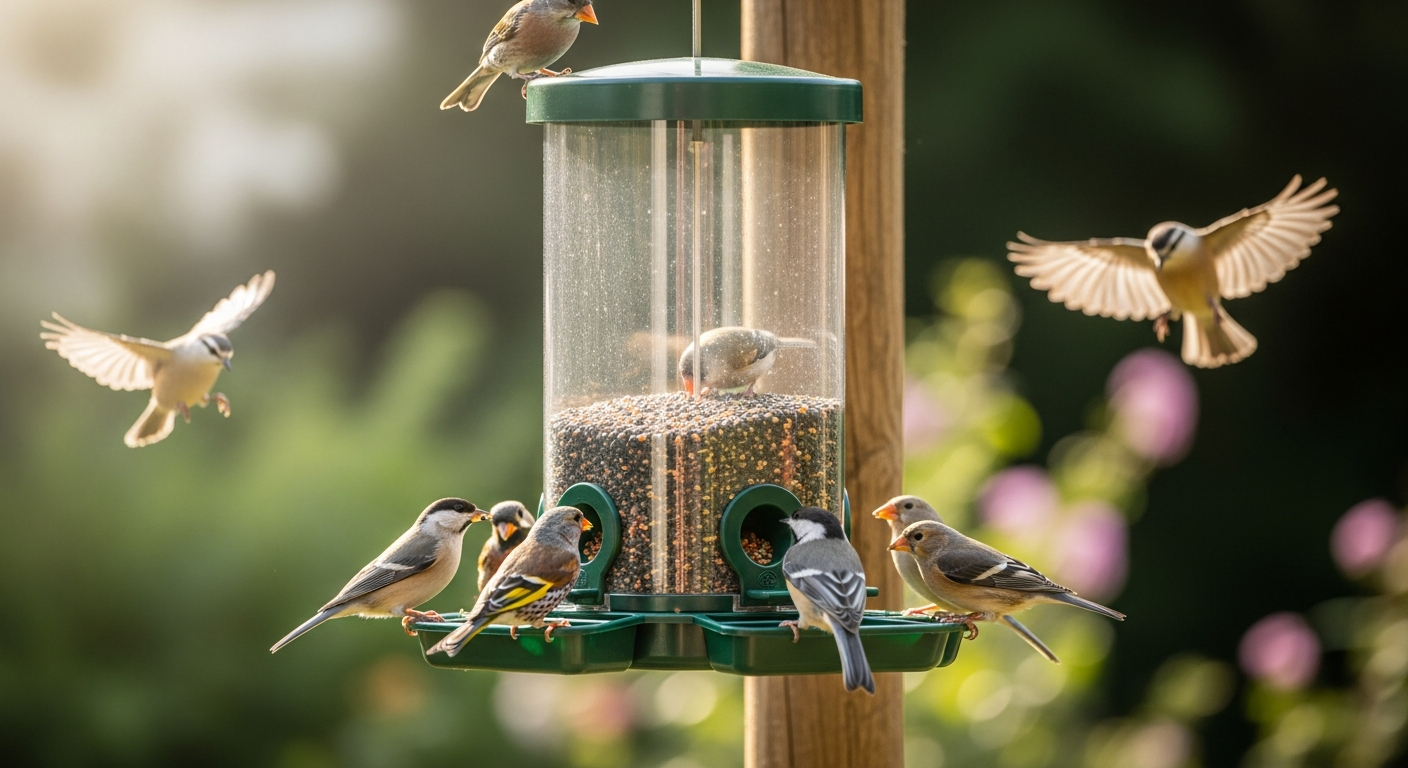
Bird disease outbreaks in garden feeding stations happen more frequently than most people realize—yet they're almost entirely preventable with the right equipment. Many gardeners unknowingly create breeding grounds for dangerous pathogens simply by using feeders designed without hygiene in mind. The problem compounds when maintenance becomes tedious, causing regular users to skip cleaning cycles and allowing contamination to spread rapidly through local bird populations.
The Vivara DK Apollo 5-Port Seed Feeder represents a fundamental shift in how we approach garden bird care, combining hygiene-first engineering with genuine bird welfare. Rather than treating disease prevention as an afterthought, this feeder embeds protection into every component—from its tool-free cleaning system to its moisture-controlling ventilation. The result is equipment that makes maintaining bird health genuinely effortless rather than a chore you'll avoid.
How the Klik & Go System Transforms Feeder Maintenance Into Minutes Instead of Hours
The Klik & Go system eliminates the primary barrier preventing regular feeder cleaning: frustration with disassembly. Traditional feeders require tools, patience, and multiple connection points that seem designed to resist separation. The Apollo's tool-free design reverses this completely.
Tool-Free Disassembly Creates a Cleaning Culture
Base, lid, and feeding ports separate instantly without wrenches, screwdrivers, or pliers. Users who might clean their feeders once monthly with difficult designs suddenly find themselves cleaning weekly because the process takes minutes rather than frustrating hours. This behavioral shift matters enormously for bird health—consistent cleaning breaks disease transmission cycles before they establish.
Modular Design Prevents Component-to-Component Contamination
Separating the base from the lid from the feeding ports means you're not transferring bacteria from a moldy base into a clean lid. Each component gets genuine attention during cleaning rather than a rushed overall rinse. This isolation approach proves especially valuable during disease outbreaks, where preventing cross-contamination can determine whether your garden becomes a vector for spreading pathogens or a safe feeding zone.
Quick-Release Means You'll Actually Maintain Your Feeder
The psychology of maintenance cannot be overlooked. When your feeder can be disassembled in seconds, you're far more likely to clean it daily during wet weather or weekly during normal conditions. When disassembly takes ten minutes of wrestling with connections, cleaning happens sporadically—and sporadic maintenance is exactly when mold, bacteria, and fungal growth establish themselves.
Intuitive Assembly Reduces Learning Friction
New users require no instruction manual or YouTubing how to reassemble their feeder. The system's logic is immediate and intuitive, meaning friends and family members helping with garden maintenance won't accidentally misalign ports or create gaps where seeds escape and moisture enters. This accessibility encourages household members to participate in cleaning and maintenance without feeling intimidated by complexity.
Replace Individual Components Rather Than Entire Feeders
Wear happens to any feeder with regular use and weather exposure. The modular design means a worn feeding port can be swapped without discarding the entire unit. This approach extends the feeder's lifespan significantly compared to traditional designs, ultimately reducing both waste and long-term feeding costs.
Ventilation Engineering That Stops Moisture and Keeps Seeds Fresh Longer
Moisture is the enemy of bird health in ways most gardeners don't fully appreciate. Damp seeds don't simply taste worse—they develop mold and fungal spores that cause serious respiratory diseases in birds. The Apollo's ventilation system attacks moisture from multiple angles simultaneously.
Specialized Lid Ventilation Eliminates the Condensation Trap
Rain falls, birds access seeds, warm breath mixes with cooler air, and condensation forms inside traditional feeders. This moisture creates ideal conditions for mold growth within hours. The Apollo's lid design incorporates strategic ventilation that allows air circulation without exposing seeds to direct rain or snow. The result is a dry interior even after storms or extended wet weather.
Airflow Design Prevents Seed Spoilage and Digestive Disease
Contaminated seeds cause trichomonosis, aspergillosis, and bacterial infections that devastate garden bird populations. Fresh, dry seeds eliminate this transmission route entirely. The ventilation system maintains seed integrity and nutritional value far longer than sealed feeders where moisture accumulation degrades food quality. Premium seed blends and specialty feeds remain viable for weeks rather than developing the musty decomposition smell that signals mold colonization.
Weather Protection Without Moisture Trapping
Ventilation creates a tradeoff in most feeder designs—improve airflow and weather protection suffers. The Apollo solves this by positioning ventilation strategically so airflow occurs while rain and snow protection remains intact. Seeds stay dry and fresh while birds enjoy genuine shelter during harsh winter months when they need nutritious food most.
Disease Prevention Through Hygiene—Why This Matters More Than You Think
Garden bird populations exist in a delicate equilibrium. Disease outbreaks don't simply sicken individual birds—they cascade through local ecosystems, reducing breeding success, suppressing natural pest control, and destabilizing the ecological balance your garden depends on.
Trichomonosis, Aspergillosis, and Salmonella Spread Through Contaminated Feeders
These diseases establish themselves in damp feeders within days. Once present, they're nearly impossible to eliminate—birds return repeatedly to the same feeding station, reinfecting themselves and spreading pathogens to healthy birds in the area. A single poorly maintained feeder can sicken dozens of birds across multiple species and properties.
Regular Cleaning Breaks Disease Transmission Before It Starts
The Klik & Go system's ease of maintenance means you can actually implement the hygiene schedules that prevent disease establishment. Weekly cleaning during normal seasons and twice-weekly during wet weather becomes feasible rather than overwhelming. This consistent intervention stops pathogens before they establish populations dense enough to cause visible illness.
Preventative Maintenance Costs Far Less Than Disease Management
Dealing with sick birds in your garden—removing contaminated feeders, attempting rescue of affected birds, managing the ecological aftermath—costs far more in time and emotional energy than simply maintaining clean feeders. The Apollo's design philosophy shifts you from crisis management to genuine prevention.
Contaminated Feeders Affect Entire Local Bird Communities
Your garden doesn't exist in isolation. Birds travel between yards, sharing exposure to whatever pathogens your feeder harbors. Maintaining genuinely clean feeding stations protects not just your local birds but contributes to the health of bird populations across your neighborhood and beyond. This responsibility carries real weight during winter months when birds depend most heavily on supplemental feeding.
Hygiene-First Engineering Means Prevention Is Built In
Unlike feeders that simply tolerate cleaning, the Apollo assumes maintenance will happen regularly and makes that process genuinely easy. Every design choice—from ventilation to modular components to tool-free disassembly—assumes you'll clean it properly. This philosophy reverses the typical feeders where hygiene is an optional extra.
Clean Feeding Stations Support Vulnerable Species During Harsh Winters
Coal tits, crested tits, long-tailed tits, and other smaller species become especially vulnerable during severe winter weather. These birds depend on consistent access to high-quality nutrition during cold snaps when natural food becomes scarce. A contaminated feeder doesn't just reduce available food—it introduces disease precisely when birds are least able to survive infection. Clean feeders sustain vulnerable populations through their most critical periods.
Your Garden's Health Depends on Smarter Feeding Choices
The Apollo 5-Port Seed Feeder isn't just another garden accessory—it's a genuine investment in bird welfare and disease prevention. The combination of the Klik & Go system, intelligent ventilation, and thoughtful spacing transforms feeding from a source of stress into a genuine health intervention for your local bird population. Every design choice serves a purpose: tool-free maintenance means you'll actually clean it regularly, ventilation keeps seeds fresh and mold-free, and spacing reduces aggression and stress among feeding birds.
The Apollo accommodates the full spectrum of common garden visitors—great tits, blue tits, robins, chaffinches, greenfinches, starlings, tree sparrows, coal tits, crested tits, siskins, long-tailed tits, and nuthatches all benefit from its thoughtful engineering. Whether your goal involves attracting diverse species, supporting local wildlife through winter months, or simply creating a healthier garden ecosystem, this feeder delivers measurable results. The initial investment of approximately 329,90 DKK quickly justifies itself through extended component lifespan, reduced disease costs, and the genuine pleasure of observing healthy birds thriving at your feeding station.
Your garden birds—and your conscience—will thank you for making the switch to equipment designed around their wellbeing rather than your convenience.
Leave a Reply