Your water heater, dishwasher, and washing machine are silently suffering. Chlorine, sediment, and mineral deposits corrode pipes and degrade appliances faster than you'd expect—costing homeowners thousands in premature replacements. The problem compounds year after year, accumulating in ways most people don't notice until a catastrophic failure forces an expensive emergency repair.
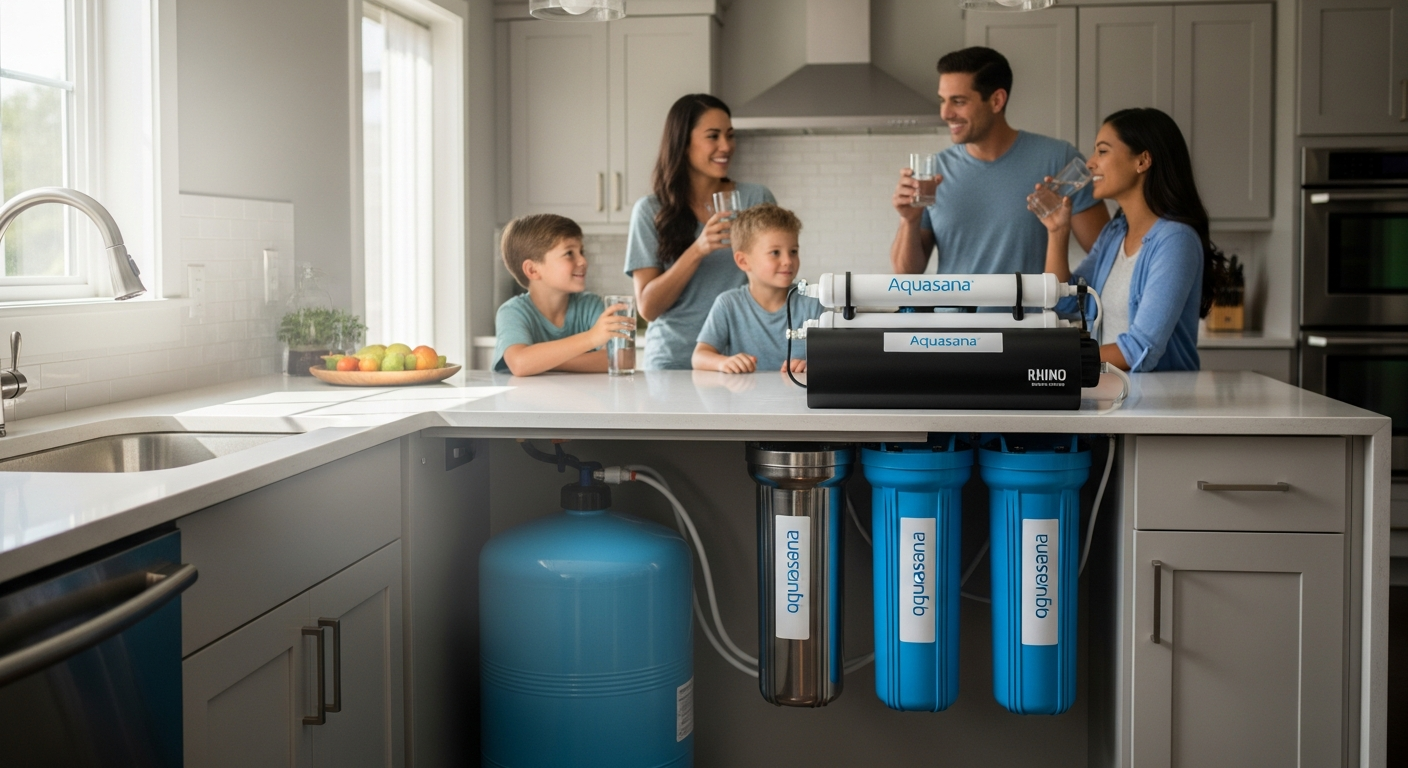
The Aquasana Rhino Whole House Water Filter System tackles this problem at the source by intercepting contaminants at your main water line, protecting every faucet, shower, and appliance simultaneously. Rather than patching individual problems with point-of-use filters, the Rhino provides comprehensive protection for your entire home's water supply from the moment it enters your property.
Discover how the Aquasana Rhino can protect your home's infrastructure today.
Why Unfiltered Water Damages Your Home's Infrastructure
Unfiltered tap water contains substances that silently attack your home's plumbing and appliances. Chlorine, the primary culprit, oxidizes metal components in pipes, joints, and fittings. This corrosive process accelerates over months and years, weakening structural integrity and creating potential leak points throughout your system.
Sediment presents another major threat. Sand, rust particles, and mineral debris accumulate in aerators and strainers, reducing water pressure and forcing appliances to work harder. Your dishwasher's spray arms become clogged, your washing machine's fill valves deteriorate, and water heaters develop sediment layers that insulate heating elements—forcing them to consume more energy while providing less hot water.
Heavy metals and mineral deposits create a compounding problem. These substances settle on internal components of water heaters and dishwashers, accelerating corrosion and reducing efficiency. Scale buildup in pipes acts as an insulator, increasing the energy required to heat water and reducing the overall flow rate throughout your home. The result is higher utility bills, reduced appliance performance, and a ticking clock until replacements become necessary.
The Aquasana Rhino's Multi-Stage Filtration Technology Explained
The Aquasana Rhino employs a sophisticated three-stage filtration process designed to capture contaminants before they damage your home's infrastructure.
Pre-Filter Stage: Initial Particle Capture
The first stage handles the heavy lifting, removing sediment and larger particles before they reach the main filter. This sediment removal protects downstream components and extends the life of the primary filtration media.
Main Filter Design: Activated Carbon and KDF Media
The core of the Rhino's effectiveness lies in its dual-media main filter, which combines activated carbon with KDF (Kinetic Degradation Fluxion) technology. Activated carbon excels at removing chlorine, volatile organic compounds (VOCs), herbicides, and pesticides. KDF media targets heavy metals, microorganisms, and additional chlorine residue. Working together, these materials remove up to 97% of chlorine and effectively reduce heavy metals, VOCs, herbicides, pesticides, microplastics, and pharmaceuticals.
NSF International Certification
The Aquasana Rhino holds NSF International certification under standards 42, 61, and 372. Standard 42 confirms aesthetic improvements in water quality. Standard 61 verifies that the system doesn't introduce harmful substances into your drinking water. Standard 372 addresses lead leaching from components. These certifications provide independent verification of the system's performance and structural integrity.
Impact of 97% Chlorine Removal
Removing 97% of chlorine represents a significant protection mechanism for your home. Lower chlorine levels mean reduced corrosion of metal pipes and fittings, extended appliance lifespans, and less strain on your water heater and other equipment that relies on consistent, clean water flow.
The 10-Year Filter Lifespan: A Game-Changer for Maintenance and Cost
The Aquasana Rhino's main filter capacity of 1,000,000 gallons or 10 years fundamentally changes the economics of whole-house filtration. Most households consume between 80,000 and 100,000 gallons annually, meaning the main filter provides reliable performance for a full decade without replacement.
This extended lifespan translates directly to lower annual maintenance expenses. Rather than replacing filters every 6 to 12 months as with point-of-use systems, homeowners enjoy years of consistent performance before the first major replacement. The reduced frequency of filter changes also means less downtime and inconvenience—no emergency filter runs to the hardware store, no sudden drops in water pressure during critical times.
The environmental perspective matters too. A single Rhino main filter lasting 10 years means nine fewer filters in landfills compared to systems requiring annual replacements. Over the system's lifetime, this sustainability advantage compounds significantly.
Start protecting your appliances with the Aquasana Rhino's proven 10-year filter technology.
Real-World Impact on Appliance Performance and Lifespan
Clean, filtered water directly extends the operational lifespan of every water-using appliance in your home. Water heaters benefit from reduced sediment accumulation on heating elements, maintaining consistent hot water production and reducing energy consumption. Dishwashers operate more efficiently when supply lines remain free of mineral deposits, and cleaning performance improves noticeably without scale buildup on spray arms.
Washing machines experience fewer failures when water quality improves. Fill valves deteriorate more slowly, inlet screens remain clear, and the drum and tub resist corrosion that chlorinated water would otherwise accelerate. Coffee makers, ice makers, and humidifiers all perform better and require less frequent descaling or maintenance.
Beyond individual appliances, the broader impact on your home's plumbing infrastructure cannot be overstated. Reducing chlorine and sediment exposure means fewer corrosion events, fewer pinhole leaks in copper pipes, and fewer emergency calls to plumbers at premium rates. Homeowners who've installed the Rhino consistently report that their biggest benefit isn't better-tasting water—it's the absence of unexpected appliance failures and expensive emergency repairs.
Weighing the Investment: Upfront Costs Versus Long-Term Savings
The Aquasana Rhino base models range from approximately $900 to $1,200, with optional upgrades like salt-free water conditioners or UV filters increasing the investment. Professional installation often adds $500 to $1,000 to the total project cost, depending on your home's water line configuration and local labor rates.
However, the financial calculation extends well beyond the purchase price. A new dishwasher typically costs $600 to $1,200. Replacing a water heater runs $1,500 to $3,000. A washing machine replacement adds another $800 to $2,000. When you consider that the Rhino protects all three appliances simultaneously by reducing chlorine and sediment exposure, the ROI calculation becomes favorable. Many homeowners avoid at least one major appliance replacement over the system's 10-year lifespan—a benefit that typically exceeds the system's cost.
Energy savings compound the financial case. More efficient water heaters and appliances running on clean water consume less electricity and gas. Over a decade, these efficiency gains can total $500 to $1,500 in reduced utility bills, depending on your region's energy costs and household water consumption.
The true financial strength of the Rhino emerges when you combine avoided appliance replacements, energy savings, and reduced emergency repair calls. Most homeowners find that the system pays for itself within five to seven years through appliance protection alone.
Making the Aquasana Rhino Investment: A Smart Choice for Home Protection
The Aquasana Rhino Whole House Water Filter System isn't just another water filter—it's an investment in your home's longevity. By eliminating chlorine, sediment, and contaminants at the point of entry, you're protecting your plumbing, extending appliance lifespans, and reducing emergency repair costs that catch most homeowners off guard. Yes, the upfront cost ranges from $900 to $1,200, but when you factor in the decade-long filter lifespan, the avoided appliance replacements, and the peace of mind knowing every drop flowing through your home is filtered, the math becomes compelling.
The compounding benefits over 10 years—from reduced water heater strain to eliminated scale buildup in pipes—create a financial advantage that extends well beyond water quality improvements. Your appliances will run more efficiently, last longer, and require fewer emergency repairs. Your plumbing infrastructure gains protection from corrosive chlorine and damaging sediment. Your family benefits from cleaner water throughout the entire home.
If you're serious about safeguarding your home's systems and tired of replacing filters constantly, the Aquasana Rhino deserves your consideration. Start by testing your local water quality to understand your specific contamination challenges, assess your household's flow rate needs to determine whether a standard 7 GPM system or a Max Flow model suits your home, and determine which model aligns with your home's infrastructure and budget.
Invest in whole-house water filtration with the Aquasana Rhino system today.
Leave a Reply