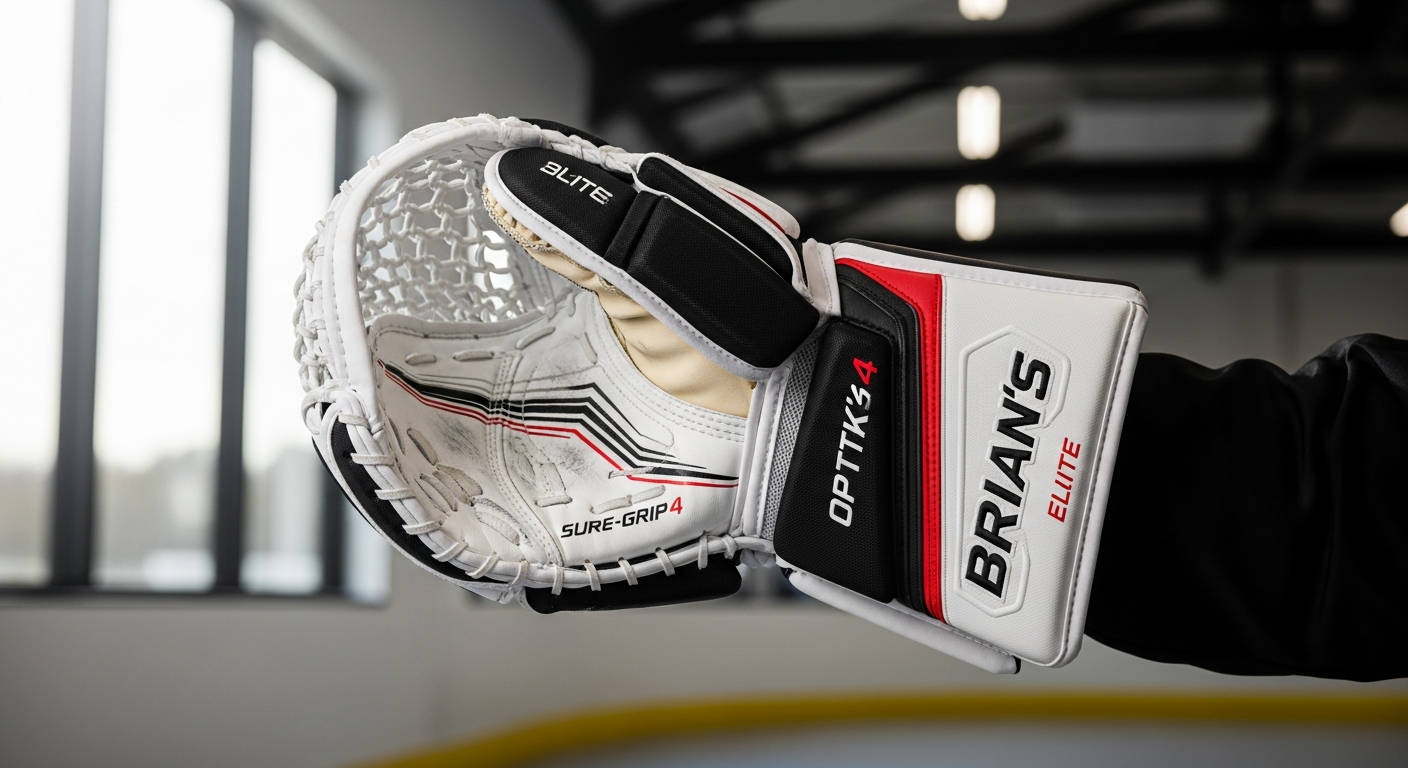
Butterfly goalies who struggle with seal consistency and rebound control are missing out on what could transform their game. The difference between a loose seal and a locked-in one often comes down to equipment engineering, and goalies using the right gear see measurable improvements in their ability to control rebounds and maintain positioning throughout a full game.
The Brian's Optik 4 Goalie Set has become the go-to choice for elite-level goalies across North America, combining three critical components—leg pads, catch glove, and blocker—specifically designed to work together as an integrated unit. This equipment maximizes butterfly efficiency and puck control in ways that mismatched gear simply cannot achieve.
Explore the Brian's Optik 4 Goalie Set on GoalieMonkey today.
Why Butterfly Positioning Demands Specialized Equipment Design
The biomechanics of butterfly saves and how pad design directly impacts seal quality
Butterfly saves rely on precise geometric positioning. When a goalie drops into the butterfly, the pad's inner edges must create an airtight seal with the ice while the boot maintains flexibility for quick transitions. Equipment engineered specifically for this movement pattern determines whether your seal is tight or compromised. Traditional pad construction often creates micro-gaps along the pad edges during the butterfly motion, allowing pucks to slip through. The relationship between pad stiffness and boot flexibility directly influences how effectively you can hold that seal position throughout an entire game.
Common positioning issues that better equipment can resolve
Many goalies experience inconsistent depth during their butterfly drop—sometimes sealing tight, other times sitting higher than intended. This variance typically stems from equipment that doesn't support the exact biomechanics of your movement. Poor pad construction can cause the thigh rise to collapse slightly during the butterfly, reducing seal integrity. Additionally, boots that are too rigid limit ankle mobility, forcing goalies to compensate with hip movement that destabilizes their position. Equipment specifically designed for butterfly mechanics addresses these issues at the root.
The Optik 4 Leg Pads: Engineering for Locked-In Butterfly Seals
The MAX core technology: how stiffness in the thigh rise creates an unbreakable seal
The Optik 4 leg pads feature a stiff MAX core in the thigh rise that provides the rigid structure necessary for a solid butterfly seal. This engineering choice is deliberate—the stiffness prevents collapse during the butterfly drop, maintaining consistent seal depth regardless of how many shots you face in a game. The MAX core doesn't just feel rigid; it actively resists the compression forces that occur when your body weight shifts during butterfly positioning.
Flexible boot construction and its role in smooth butterfly transitions
While the thigh rise demands stiffness, the boot requires the opposite. Optik 4 boots feature softer, flexible construction that enables smooth transitions from butterfly to post to butterfly again. This flexibility reduces strain on your ankles and allows for quicker weight transfers without sacrificing stability. The boot design works in concert with the stiff thigh rise to create a balanced system where seal quality never compromises your mobility.
Bindingless Primo Slide inner edges: balancing slide speed without sacrificing traction
The Primo Slide inner edges on the Optik 4 pads offer a refined approach to ice contact. These edges provide optimal slide speed for lateral movement while maintaining enough traction to lock you into position when needed. Traditional bindings can create drag or inconsistent contact points, but the bindingless design delivers predictable glide and secure positioning without the complications.
BRI-CORE Tri-axle Carbon-fiber reinforcement and durability benefits
Carbon-fiber reinforcement in the thigh rise strengthens the structure that creates your butterfly seal. The tri-axle construction distributes impact forces across multiple directions, preventing localized wear and extending the equipment's lifespan. This reinforcement also keeps the pads lightweight, so you're not carrying unnecessary weight into each save.
Smart Cord bungee toe ties and lower body strain reduction
Smart Cord bungee toe ties allow greater range of motion in your feet without requiring tighter, more restrictive bindings. This design reduces the cumulative strain on your lower body during extended play. Instead of fighting against rigid straps, your feet can move naturally within the pad structure, decreasing fatigue and injury risk over a full season.
Thin profile design and recessed outer roll for improved visibility and connected feel
The Optik 4 pads feature a thin profile that enhances your sight lines without compromising seal quality. The recessed outer roll keeps you connected to the ice surface while reducing the visual obstruction that bulkier pads create. This design choice matters when tracking pucks through traffic or reading passing lanes—you can see more of the ice without repositioning your head.
Catch Glove Mechanics: The Missing Link in Rebound Control
Single T pocket design and its advantage for consistent puck handling
The Optik 4 catch glove uses a single T pocket that creates a defined catching surface. This design provides consistency in how pucks enter the pocket and how your hand naturally closes around them. The T-pocket geometry guides the puck into a secure position without requiring conscious adjustment, making your catching motion intuitive and game-ready.
40° break angle closure: why the 590-style feel matters for game-ready performance
The 40° break angle mimics a 590-style closure, providing a natural feel that elite goalies prefer. This angle allows your hand to close naturally around the puck while maintaining full coverage and security. The closure style matters because it directly affects how quickly you can secure a puck and transition it out of play without fumbling or creating rebound opportunities.
Hex Air floating cuff technology and its impact on comfort during extended catches
The Hex Air floating cuff reduces pressure points on your wrist and forearm during extended play. Rather than creating a rigid contact zone, the floating design allows micro-movement that distributes pressure evenly across a larger surface area. During games where you're making catch after catch, this technology noticeably reduces fatigue and discomfort.
Smart Dial/AOP system for achieving a personalized, snug fit
The Smart Dial system allows you to customize the fit of your glove without over-tightening. Unlike traditional strap systems that force a one-size-fits-all approach, this technology lets you dial in exactly the compression you need. A properly fitted glove improves your ability to control and secure the puck while maintaining hand mobility for stick saves and directional positioning.
Game-ready palm construction and break-in timeline
The Optik 4's smooth, game-ready palm is designed to minimize break-in time. Many elite gloves require weeks of use before they feel natural, but this design accelerates that process. Goalies report that the glove feels comfortable and responsive from early sessions, reducing the adjustment period between purchasing and confident game use.
The importance of glove-to-pad coordination for seamless rebound transitions
Your catch glove doesn't work in isolation—it operates as part of the three-piece system. When your glove's closure and pocket design complement your pad's seal and transition speed, your entire rebound control improves. A puck caught in a glove that integrates well with your pads creates smoother transitions back to butterfly positioning.
Check out the complete Optik 4 system with integrated glove and blocker components.
Blocker Optimization: Precision Stick Saves and Rebound Direction
Lightweight Optik Core construction and its role in quick directional adjustments
The Optik Core blocker maintains a lightweight profile that allows for rapid directional changes. Heavier blockers create lag in your responses, forcing you to anticipate plays earlier. The Optik 4 blocker's construction keeps weight to a minimum while maintaining structural integrity, so your stick saves feel quick and precise.
Flared board design and how it channels rebounds to safe areas of the rink
The flared board geometry actively directs rebounds away from high-danger areas. Rather than deflecting pucks randomly, the flared design channels shots toward the corners or behind the net where your defensemen can retrieve them. This engineering principle transforms your blocker from a passive deflection tool into an active rebound management weapon.
Open backhand design for unrestricted wrist movement and pinpoint accuracy
An open backhand allows your wrist to move freely without restriction from the blocker structure. This freedom enables precise stick positioning for pinpoint accuracy on backhand saves. You can angle your stick exactly where you need it without the blocker's design limiting your range of motion.
Flexible cuff technology and its contribution to smooth stick-save execution
The flexible cuff on the Optik 4 blocker moves with your wrist rather than against it. This flexibility means your hand stays connected to the stick throughout the save motion, improving control and accuracy. A rigid cuff can create disconnection between your hand movements and where the stick ultimately positions.
Smart Strap system for secure fastening without restricting mobility
The Smart Strap keeps your blocker securely attached while avoiding the circulation issues that overly tight straps create. Your hand needs to move freely to execute precise saves, and this strap design delivers security without sacrifice.
How blocker positioning integrates with leg pad sealing for complete crease coverage
Your blocker works in direct coordination with your leg pads. When properly positioned, the blocker covers the high slot and short-side lane while your pads seal the lower ice. This integrated coverage eliminates gaps that opposing forwards can exploit. Equipment engineered as a system creates complete crease control that individual pieces simply cannot achieve.
Investment Breakdown: Pricing and Component Options
Senior Custom Optik 4 combo pricing and what's included
The Brian's Optik 4 Senior Custom Goalie Equipment Combo carries an approximate price of $3,309.99 on GoalieMonkey. This complete system includes custom-fitted leg pads, a catch glove, and a blocker, all engineered to work together as an integrated unit. The custom option allows for personalized specifications that match your exact measurements and preferences.
Individual component pricing for goalies building custom setups
Goalies who already own some equipment but need to upgrade can purchase individual pieces. Senior Custom Leg Pads are priced around $2,099.99, the Custom Goalie Glove at $679.99, and the Custom Goalie Blocker at $529.99. This modularity allows you to invest in specific upgrades that address your most pressing equipment needs.
Intermediate Optik X4 option for younger or developing goalies
The Brian's Optik X4 Intermediate Goalie Equipment Combo is available for approximately $1,499.97, making the Optik system accessible to younger goalies or those testing the equipment at a lower price point. This option delivers core Optik technology without the premium customization costs of the senior set.
Cost-per-component analysis and value comparison
Breaking down the investment per component shows strong value. The leg pads represent the largest investment but deliver the most direct impact on butterfly positioning and seal quality. The glove and blocker complete the system at a reasonable incremental cost. Compared to other elite-level systems, the Optik 4 pricing is competitive while offering superior butterfly-specific engineering.
Where to purchase and warranty/return considerations
GoalieMonkey serves as the primary retailer for the Optik 4 system, offering customization support and knowledgeable staff who understand the equipment. Purchase through GoalieMonkey ensures proper fit consultation and access to warranty coverage. Return policies typically allow for adjustments within a reasonable timeframe if your initial sizing requires modification.
Budget-friendly alternatives and when upgrading individual pieces makes sense
Not every goalie needs the complete Senior Custom system. If you're upgrading from older equipment, investing first in the Optik 4 leg pads delivers the highest impact on your butterfly positioning. Once you've adapted to the pads, adding the Optik 4 glove and blocker completes the system. Alternatively, starting with the Intermediate X4 option provides an entry point to the Optik technology at a lower initial investment.
Real Goalie Feedback: Performance Insights and Honest Critiques
Why the Optik 4 consistently ranks as a best-seller on GoalieMonkey
The Optik 4 achieves best-seller status consistently because it delivers measurable performance improvements. Goalies who invest in this system report noticeably better seal quality, quicker transitions, and improved rebound control. This isn't aspirational marketing—it's practical feedback from goalies who depend on their equipment to perform at high levels.
Praise from professional and amateur goalies using the set
Professional and amateur goalies using the Optik 4 system consistently highlight the same benefits: solid seal, great rebound control, and exceptional movement. The equipment feels natural and responsive rather than clunky or restrictive. Goalies report that they can focus on positioning and decision-making rather than fighting with their gear.
Wickedly comfortable design and what that means for game-day performance
"Wickedly comfortable" isn't just casual praise—it describes equipment that doesn't distract you during games. Comfort matters because discomfort forces you to make micro-adjustments that pull your focus from the action. The Optik 4's design minimizes pressure points and friction, letting you stay mentally engaged throughout an entire game.
Common break-in experiences and timeline expectations
Most goalies report that the Optik 4 system feels responsive from early training sessions. The catch glove requires minimal break-in time due to its game-ready palm construction. The pads settle naturally within a few sessions as your body molds slightly to the padding. Full integration of the three-piece system typically occurs within 5-10 games as your muscle memory adapts to the equipment's specific response characteristics.
Minor criticisms: knee stack material preferences and initial glove closure feel
Some goalies prefer different knee stack materials over the nylon used in the Optik 4, viewing this as a personal preference rather than a design flaw. A few goalies note that the off-the-rack glove closure initially feels slightly different than their previous equipment, though this typically resolves quickly as the glove breaks in. These critiques are minor and often reflect individual preference rather than equipment shortcoming.
Long-term durability reports and maintenance requirements
Goalies using Optik 4 equipment report excellent durability over multiple seasons. The carbon-fiber reinforcement resists the wear and tear that breaks down other pads. Regular maintenance—cleaning, occasional padding adjustments, and proper storage—keeps the equipment performing optimally. Many goalies report that their Optik 4 pads maintain seal integrity and responsiveness well beyond two full seasons of regular use.
Setting Up Your Optik 4 System: Fit, Customization, and Integration
Proper pad sizing and how custom options impact performance
Pad sizing directly influences seal quality and comfort. The Optik 4 offers custom options that match your specific measurements rather than forcing you into standard sizes. Proper sizing ensures that your butterfly depth remains consistent and that the pad edges seal effectively with the ice. Custom options also accommodate variations in leg length and width that standard sizing misses.
Breaking in new equipment without compromising game performance
Transition new equipment during practice sessions and lower-pressure games rather than jumping immediately into crucial matchups. This approach allows your body to adapt to the equipment's response characteristics without risking performance during important contests. Most goalies report that the Optik 4 system requires minimal adjustment time, so a few practices often suffice before confident game use.
Integrating the three-piece system for maximum seal and rebound control
The three components work together as a coordinated unit. Your pads establish the foundation with a solid butterfly seal, your glove catches and controls pucks with precision, and your blocker directs rebounds to safe areas. Understanding how each component contributes to the overall system helps you maximize the equipment's potential. During early use, focus on feeling how the pad transitions lead naturally into glove positioning, and how blocker placement integrates with pad sealing.
Customization options available through GoalieMonkey
GoalieMonkey offers customization for pad colors, glove closure styles, and blocker board configurations. These options let you personalize the system while maintaining the core engineering benefits. Customization extends beyond aesthetics—you can adjust padding thickness in specific areas or request modifications based on your body type and playing style.
Padding and liner adjustments for personalized comfort
The Optik 4 system includes removable padding that can be adjusted or replaced as your comfort preferences change. If certain areas create pressure points during extended play, padding adjustments address these issues without compromising seal quality. Some goalies add additional padding in the knee stack area, while others reduce padding in the thigh rise for a slimmer feel.
Transition tips for goalies upgrading from previous equipment generations
If you're upgrading from older equipment, expect a noticeable difference in how responsive the Optik 4 feels. The pads will likely transition faster and seal tighter than your previous set. The glove closure may feel slightly different. These differences aren't problems—they're improvements that require brief adaptation. Spend a few sessions focusing on feeling the equipment's response rather than forcing your old techniques onto new gear. Your body will naturally adapt as it recognizes the equipment's superior capabilities.
Comparing the Optik 4 to Alternative Elite-Level Goalie Sets
How the Optik 4 stacks up against other Canadian-engineered options
The Optik 4 represents one tier in a broader ecosystem of elite goalie equipment. Other Canadian-engineered options offer legitimate alternatives, but the Optik 4 stands out for its specific focus on butterfly positioning and seal quality. Each competing system emphasizes different priorities—some favor aggressive rebound control, others prioritize lightweight mobility. The Optik 4 excels at balancing seal integrity with transition speed.
Performance differences in butterfly positioning across comparable price points
At comparable price points, the Optik 4 delivers superior butterfly-specific engineering. Competing systems in the same price range may offer comparable overall quality, but the Optik 4's design directly addresses the biomechanics of butterfly saves. This specialization creates measurable differences in seal consistency and butterfly depth maintenance.
Rebound control capabilities and seal consistency benchmarks
The MAX core technology in the Optik 4 pads provides specific seal quality benchmarks that competing equipment must match. Testing rebound control through extended butterfly sequences shows the Optik 4's ability to maintain consistent seal depth across dozens of consecutive saves. This consistency is the real measure of butterfly-focused design.
Durability and longevity comparisons
The BRI-CORE Tri-axle Carbon-fiber reinforcement ensures the Optik 4 resists the wear patterns that break down other pads. Competing equipment may use similar materials, but the specific configuration in the Optik 4 creates a durability advantage. Goalies using this system consistently report longer service life than they experienced with previous equipment generations.
Goalie preference patterns and why the Optik 4 wins in competitive environments
In competitive environments where seal quality and rebound control determine outcomes, goalies consistently choose the Optik 4 system. Professional and junior-level teams stock this equipment because it delivers measurable performance advantages. This preference pattern reflects real-world performance benefits rather than marketing hype.
When alternative equipment might be the better choice for specific playing styles
Some goalies thrive with equipment that prioritizes aggressive rebound control over seal consistency, or emphasizes extreme lightweight mobility over structural stiffness. If your playing style emphasizes movement over positioning, alternative equipment might align better with your preferences. However, for butterfly-focused goalies prioritizing seal quality and consistent positioning, the Optik 4 is the superior choice.
The Optik 4 Advantage: Why Elite Goalies Keep Coming Back
The Brian's Optik 4 Goalie Set represents a significant leap forward in butterfly-focused equipment engineering. From the stiff MAX core that locks in your seal to the flexible boot that keeps your transitions smooth, every component works together to elevate your crease control and rebound management. The catch glove's game-ready palm and blocker's precision design remove friction from your game, letting you focus on positioning and decision-making rather than equipment limitations.
If you're serious about butterfly positioning and you've got the budget for elite-level gear, the Optik 4 delivers. The Intermediate X4 option opens the door for younger goalies or those testing the system at a lower price point, making this equipment accessible across skill levels. Real-world feedback from professional and amateur goalies confirms that this system performs exactly as engineered—it seals tight, transitions smoothly, and controls rebounds with precision.
Leave a Reply