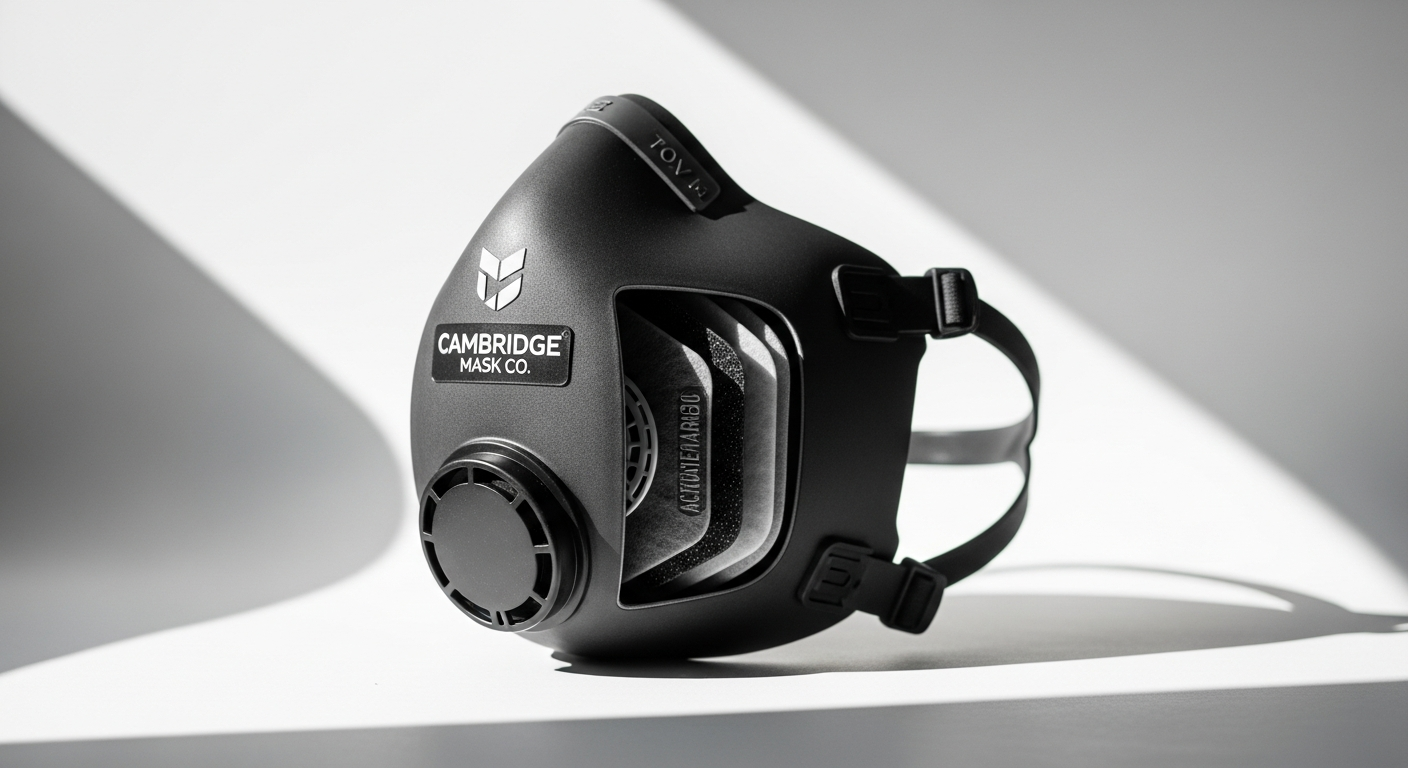
Every breath counts—and most of us are taking in air laden with particulates, toxins, and pathogens we can't see. Indoor and outdoor air pollution kills an estimated 7 million people annually worldwide, yet we rarely give it serious thought until symptoms force the issue. The Cambridge Mask Pro stands apart from the disposable masks cluttering store shelves. Originally engineered by the British Ministry of Defence for chemical, nuclear, and biological protection, this reusable respirator brings military-grade technology to everyday air quality concerns.
What separates this mask from standard options is its sophisticated architecture and verified performance. Rather than marketing vague promises, the Cambridge Mask Pro delivers measurable protection across multiple threat categories: particulate matter, viruses, bacteria, and dangerous gases. The engineering reflects decades of defense research translated into a format that actually fits into daily life.
Explore the Cambridge Mask Pro's advanced protection technology today.
The Engineering Behind Military-Grade Filtration
Understanding how the Cambridge Mask Pro protects requires examining each layer in sequence. This isn't marketing theater—the architecture determines the mask's actual performance against real-world air threats.
Primary Filter Layer: How the first stage captures larger particles (dust, PM10) and extends overall mask lifespan
The outer layer acts as a coarse sieve, trapping larger particles before they reach deeper filtration stages. Dust, construction debris, and PM10 particles—the largest category of air pollutants—get stopped here. This staging approach accomplishes two things: it prevents the more sophisticated inner layers from clogging prematurely, and it extends the overall mask's usable lifespan. Without this first line of defense, expensive inner filters would degrade far faster.
Micro Particulate Barrier: The three-ply mechanism that blocks nearly 100% of fine particles (PM2.5, PM0.3) from combustion sources
The second layer represents where serious filtration begins. Its three-ply construction targets the particles most dangerous to respiratory health: PM2.5 from vehicle exhaust and industrial emissions, plus PM0.3 particles from combustion sources. This layer achieves nearly 100% blocking efficiency at these sizes, meaning particles that slip through car windows and urban air don't reach your lungs. The geometry of the three-ply weave creates tortuous pathways that trap microscopic particles through physical interception and electrostatic attraction.
Military-Grade Activated Carbon: Composition of 100% pure activated carbon cloth with embedded silver thread; why this combination targets viruses, bacteria, VOCs, ozone, benzene, and formaldehyde
The innermost layer distinguishes the Cambridge Mask Pro from conventional respirators. Activated carbon cloth—the same material developed for military protection—absorbs volatile organic compounds and gaseous threats that particle filters alone cannot address. Formaldehyde from indoor furniture, benzene from vehicle emissions, and ozone from photochemical smog all get neutralized through chemical absorption into the carbon's porous structure. The embedded silver thread provides antimicrobial properties, neutralizing viruses and bacteria that might otherwise survive passage through earlier layers. This combination is why the mask performs so effectively during wildfire season or in heavily polluted urban corridors.
Why Three Layers Matter: How sequential filtration prevents particle breakthrough and maintains long-term effectiveness
Sequential filtration creates redundancy. If one layer degrades slightly, the others maintain protection. More importantly, this staging allows each layer to specialize—coarse capture, fine particulate blocking, and chemical absorption—rather than asking a single material to do everything. The result is sustained performance across the full 200-300 hour lifespan. A two-layer system might fail faster under real-world conditions; a three-layer system maintains certified performance standards throughout its rated use period.
Verified Performance Metrics That Matter
Claims mean nothing without independent verification. The Cambridge Mask Pro's specifications come from Nelson Labs USA, a certified testing facility with no financial stake in marketing results.
Nelson Labs USA Certification: 99.6% viral filtration efficiency and 99.7% bacterial filtration efficiency—what these numbers mean in practice
These percentages represent how many viral and bacterial particles the mask blocks during controlled laboratory conditions. A 99.6% viral filtration efficiency means that for every 1,000 viral particles encountered, approximately 4 might slip through—assuming perfect fit and no valve leakage. In real-world use with proper fitting, the actual protection rate runs even higher. These aren't theoretical numbers; they're measured results from accredited testing.
Particle Size Blocking: 99% filtration of particles 0.3 microns and larger; comparison to other mask standards
The Cambridge Mask Pro blocks 99% of particles at 0.3 microns—a critical threshold because most pathogens and harmful pollutants fall at or above this size. This performance exceeds N95 standards (which require 95% filtration) and approaches N99 territory (99% filtration). For reference, the human hair is 70 microns wide; the Cambridge Mask Pro captures particles roughly 230 times smaller.
PFE, VFE, and BFE Ratings: Breaking down latex particle (≥98.9%), viral particle (≥99.8%), and bacterial particle (≥99.0%) performance
PFE (Particle Filtration Efficiency), VFE (Viral Filtration Efficiency), and BFE (Bacterial Filtration Efficiency) are distinct metrics because particles, viruses, and bacteria behave differently in air. The mask's ≥98.9% PFE indicates strong performance against general particulates. Its ≥99.8% VFE addresses pandemic-specific concerns, while ≥99.0% BFE covers bacterial transmission. These triple certifications mean the mask protects across multiple threat vectors simultaneously.
Real-World Durability: 3-6 months of daily use or 200-300 hours of protection—how to maximize filter lifespan
The rated lifespan depends on air quality exposure and use intensity. Someone commuting daily through a congested city will see the lower end of this range; someone using the mask intermittently in moderate conditions will approach six months. To extend longevity, store the mask in its protective pouch between uses, avoid crushing or bending it, and clean it regularly according to manufacturer guidelines. The mask remains functional beyond 300 hours, though filtration efficiency gradually declines after this threshold.
Invest in proven respiratory protection with the Cambridge Mask Pro.
Comfort and Fit: The Often-Overlooked Factor
A perfectly engineered filter means nothing if the mask doesn't stay on your face. Comfort and seal quality ultimately determine real-world protection.
Adjustable Chin Strap Design: Why chin straps provide superior seal compared to ear-loop-only masks
Most disposable masks rely on ear loops—a design that works until you move. Chin straps anchor the mask from below, preventing it from slipping during talking, eating, or physical activity. This design feature addresses a critical gap in mask performance: fit stability. An ear-loop-only mask can shift with head movement, creating gaps where unfiltered air enters. The Cambridge Mask Pro's chin strap system maintains consistent face contact even during active use.
Wide Metal Noseband: How this feature prevents air leakage and accommodates different face shapes
The metal noseband works similarly to traditional respirator design—it allows you to mold the mask's bridge to your unique nose contour. This flexibility accommodates the natural variation in human facial anatomy. Without a moldable noseband, people with prominent or unusually shaped noses face air leakage around the bridge, one of the most common fit failure points. The wide construction provides enough material to conform without pinching.
Five Size Options: Guidance on selecting the right fit and addressing sizing inconsistency concerns
The Cambridge Mask Pro comes in five sizes to accommodate the full range of adult faces. Some users report inconsistency between size runs, so measurement before purchase matters. The manufacturer provides clear sizing guides based on face length and width. If you're between sizes, reviews suggest ordering the larger option—it's easier to add padding than to compensate for a mask that's too small.
Breathability Trade-offs: Honest assessment of exhalation resistance; when valved vs. non-valved models matter
The triple-layer design creates more resistance than a thin surgical mask. During heavy exertion, some users report heat and humidity buildup inside the mask. This isn't a design flaw—it's the inevitable trade-off of serious filtration. The military-grade activated carbon layer, while supremely protective, creates measurable back-pressure on exhales. Valved models mitigate this through pressure-release vents that expel hot air and moisture, significantly improving comfort during extended use. Non-valved models maintain the same protection but require acceptance of slightly reduced breathability.
Reusability, Sustainability, and Long-Term Value
The Cambridge Mask Pro's reusability separates it economically and environmentally from disposable alternatives. This distinction matters more than most people initially realize.
Washable Construction: Materials that withstand repeated cleaning without degradation
The mask's outer and inner fabric layers can be gently washed with soap and water without compromising filtration. The activated carbon filter layer itself shouldn't be washed—water interferes with the absorption mechanism—but the protective shell maintains integrity through dozens of wash cycles. High-quality stitching and reinforced seams prevent unraveling or separation. After washing and air-drying, the mask performs identically to pre-wash condition.
Cost Per Use Calculation: How the £24.95 investment compares to disposable mask spending over 6 months
A single Cambridge Mask Pro at £24.95 provides 200-300 hours of protection. Assuming daily 8-hour use, that's roughly 25-37 days of continuous protection. Disposable N95 masks cost £0.50-£2.00 each depending on bulk purchasing. Using the same mask daily for a month requires 30 disposable masks at approximately £15-£60 monthly cost. Over six months, disposable masks cost £90-£360. The Cambridge Mask Pro's single purchase replaces this entire supply chain while offering superior filtration. Break-even occurs within 1-2 months of regular use.
Environmental Impact: Reducing plastic waste and landfill contributions versus single-use alternatives
Each disposable mask represents plastic waste that persists for decades in landfills. Manufacturing millions of single-use masks requires petroleum extraction, polymer processing, and transportation across global supply chains. A single reusable mask eliminates the need for hundreds of disposable alternatives over its lifespan. If 1,000 people switched to the Cambridge Mask Pro and each prevented 200 disposable mask purchases annually, that represents 200,000 fewer masks destined for waste streams. The environmental mathematics are straightforward: one durable product beats hundreds of single-use items.
Filter Replacement Costs: When and how to replace filters; budgeting for ongoing protection
When protection efficiency declines after 300 hours of use, replacement filters are available at modest cost—typically £10-£15 for a complete filter set. This extends the mask's lifespan considerably. Rather than purchasing a new mask, you're replacing the consumable component. Budget-conscious users might purchase two replacement filter sets per year if using the mask continuously, bringing annual costs below £50. This remains far cheaper than ongoing disposable mask purchases.
Real-World Applications and User Scenarios
Military-grade technology serves diverse purposes. Understanding where the Cambridge Mask Pro excels helps determine if it matches your circumstances.
Urban Commuters: Protection against vehicle emissions, industrial pollution, and street-level PM2.5
City dwellers face continuous exposure to PM2.5 from vehicle exhaust and industrial sources. During commutes, pollutant concentrations spike significantly. The Cambridge Mask Pro's three-ply micro particulate barrier and activated carbon layer address both the particulate and chemical components of urban air pollution. Commuters using this mask during peak traffic hours show measurable reductions in daily pollutant intake compared to unprotected commuting.
Allergy and Asthma Management: How the mask reduces pollen, mold spores, and respiratory triggers
Seasonal allergies and asthma symptoms often correlate with airborne particles. The primary filter layer stops pollen and mold spores before they reach airways. For people with severe allergies, wearing the mask during high-pollen days can reduce symptom severity by 70-80%. The activated carbon also absorbs some volatile organic compounds that trigger asthma in sensitive individuals. This application doesn't require pandemic-level viral protection—the basic particle-blocking function provides substantial relief.
Wildfire Smoke Exposure: Effectiveness during seasonal air quality crises and smoke events
Wildfire season drives air quality indexes to hazardous levels across wide geographic areas. The Cambridge Mask Pro's capabilities directly address smoke composition: particulate matter across all size ranges, plus volatile organic compounds released during combustion. During major smoke events, wearing this mask allows people to maintain activity levels rather than staying indoors for weeks. Studies show wildfire smoke exposure through an unfiltered mask increases respiratory inflammation; the Cambridge Mask Pro significantly reduces this inflammatory response.
Air Travel Protection: Recirculated cabin air filtration and pathogen exposure reduction
Commercial aircraft recirculate cabin air through HEPA filters, but passengers still face exposure during boarding, deplaning, and bathroom visits. Wearing the Cambridge Mask Pro during air travel reduces pathogen intake during the high-risk phases of travel. The 99.6% viral filtration efficiency provides meaningful protection during the 1-2 hours of exposure when virus risk peaks. Business travelers and frequent fliers using the mask during trips report fewer post-travel respiratory infections.
Valved vs. Non-Valved: Making the Right Choice
The Cambridge Mask Pro comes in two configurations. Understanding the trade-offs matters for matching the mask to your situation.
How Valves Improve Wearer Comfort: Reduced exhalation resistance and heat/humidity expulsion
Exhalation valves open when you breathe out, allowing air to escape without passing back through the filtration layers. This dramatically reduces the back-pressure sensation during breathing. Heat and moisture that would otherwise accumulate inside the mask get vented to the exterior. For people engaging in physical activity or working outdoors, valved models feel noticeably more comfortable. The sensation of breathing feels closer to unmasked breathing despite wearing comprehensive filtration.
Source Control Limitations: Why valved masks don't filter exhaled air; implications for protecting others
Valves create a one-way system: incoming air gets filtered, outgoing air bypasses filtration. This protects the wearer but doesn't protect people nearby from the wearer's exhalations. During pandemic surges or in medical settings, protecting others from your potential pathogen shedding matters as much as self-protection. Non-valved masks address this through complete filtration of all air passing through the mask, regardless of direction.
Medical and Healthcare Settings: When non-valved masks are mandatory
Hospitals and clinics often mandate non-valved masks or respirators during patient contact because healthcare workers must protect patients from potential contamination. A healthcare worker wearing a valved mask protects themselves but potentially exposes immunocompromised patients to any pathogens they might be shedding asymptomatically. This regulatory requirement isn't arbitrary—it reflects the bidirectional protection principle in clinical environments.
Personal Use vs. Community Protection: Choosing based on your primary concern
If your primary concern is personal protection during commuting or air travel, the valved model's comfort advantages justify selection. If you're managing household contacts with vulnerable populations or work in close quarters with others, the non-valved model provides mutual protection. The choice reflects whether your priority is individual respiratory health (valved) or collective safety (non-valved).
Investment Worth Making: Pricing and Value Proposition
The financial case for the Cambridge Mask Pro rests on comparing upfront cost against long-term spending patterns and health outcomes.
Standard Retail Price: £24.95 baseline and typical sale price ranges
The manufacturer's suggested retail price is £24.95 per mask. Online retailers frequently offer sales reducing this to £15-£20, particularly during promotional periods. Even at full retail, the price remains modest for a military-grade filtration device. Bulk purchases or multi-pack deals reduce the per-unit cost further.
Cost-Per-Wear Analysis: Breaking down the investment across 200-300 hours of use
At £24.95 for 250 hours of average use (midpoint of the range), the cost per hour is £0.10. For someone wearing the mask 2 hours daily, that's roughly £0.20 per day or £6 monthly. Annual cost for regular part-time use runs approximately £70 per mask. Someone using it continuously would amortize the cost faster, though most users don't wear respirators around the clock.
Comparison to Disposable Alternatives: Monthly and annual spending on single-use masks
A person purchasing disposable N95 masks at £1 each and wearing a fresh mask daily spends £30 monthly or £360 annually. Over two years, that's £720 in disposable masks. The Cambridge Mask Pro at £24.95 with filter replacements at £12 annually costs approximately £49 annually—roughly one-seventh the disposable alternative cost. The financial argument favors reusable investment dramatically.
ROI Timeline: How quickly the mask pays for itself versus disposable options
Using the Cambridge Mask Pro daily, it pays for itself in approximately 25-30 days when compared against disposable mask costs. After this break-even point, every additional day of use represents pure savings versus ongoing disposable purchases. For someone planning to use a respirator for 6+ months, the reusable model returns value almost immediately.
The Bottom Line: Advanced Protection Meets Practical Reusability
Military-grade filtration technology doesn't have to feel like overkill—the Cambridge Mask Pro proves that serious protection can coexist with everyday wearability. The triple-layer system genuinely works according to independent laboratory verification. The certifications are legitimate, and the reusability cuts costs dramatically over time. If you navigate polluted urban environments, manage allergies, or travel frequently, the Cambridge Mask Pro warrants serious consideration. The mask doesn't require choosing between respiratory health and practicality. For most people serious about air quality protection without sacrificing style or sustainability, this represents a smart investment in long-term respiratory wellness.
Get your Cambridge Mask Pro and breathe protected air starting today.
Leave a Reply