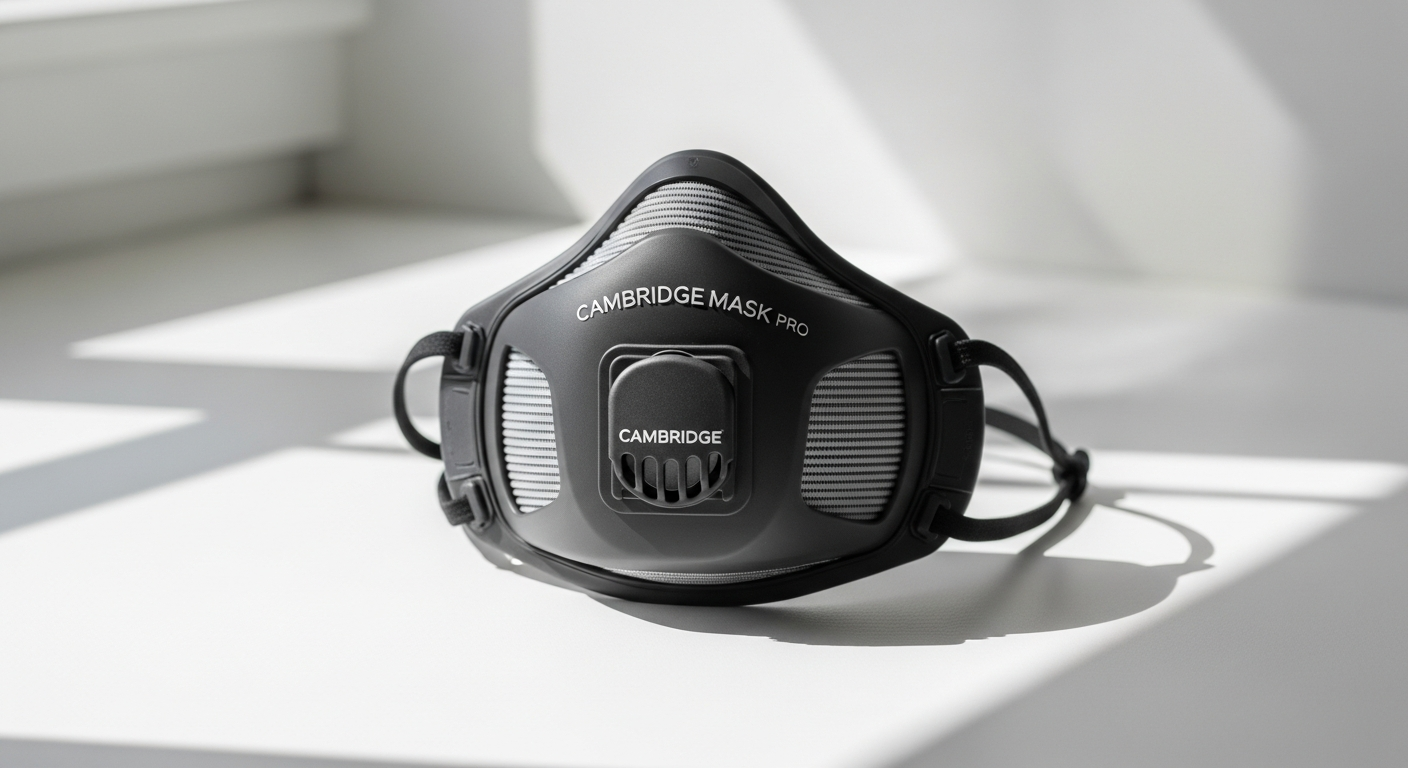
Professionals who spend hours in polluted environments face a stark reality: disposable masks generate mountains of waste while offering temporary solutions. The Cambridge Mask Pro Series reusable respirator addresses this exact tension by combining military-grade filtration technology with sustainable design. Unlike single-use masks that end up in landfills, these respirators deliver comprehensive airborne protection for 3-6 months of continuous use.
Built with triple-layer filtration and independently verified lab results showing 99.6% virus filtration and 99.7% bacterial protection, the Pro Series has become the go-to choice for professionals, commuters, and environmentally conscious consumers who refuse to compromise on either protection or sustainability. These masks stand apart because they eliminate the constant cycle of purchasing and discarding—a meaningful shift for anyone who values both personal safety and planetary responsibility.
Military-Grade Filtration Technology Explained
The Cambridge Mask Pro Series operates on a principle that distinguishes it from standard disposable masks: layered defense against multiple threat categories. Understanding how this architecture works reveals why independent lab testing has confirmed such impressive performance metrics.
Triple-Layer Architecture Breakdown
The first layer captures larger pollution particles classified as PM10—the visible dust, pollen, and debris that make air visibly hazy. This initial barrier prevents larger contaminants from reaching deeper filter layers, extending their useful life while immediately addressing visible air quality problems.
The second layer represents the core of the filtration system: a Three-Ply Micro Particulate Filter engineered to block nearly 100% of smaller particulate matter, including PM2.5 and PM0.3 particles. These microscopic particles penetrate deeper into the respiratory system, making this layer critical for comprehensive protection. Most disposable N95 masks focus primarily on this size range, but the Pro Series builds upon it rather than stopping there.
The third layer applies military-grade activated carbon filtration, a technology developed for tactical environments where protection against chemical and biological agents matters. This layer adsorbs gases, volatile organic compounds (VOCs), and odors—threats that particulate filtration alone cannot address. The difference becomes apparent when comparing protection against smoke, industrial fumes, or chemical pollutants alongside standard dust and allergens.
Nelson Labs USA Verification
Independent testing by Nelson Labs USA—a recognized authority in filtration assessment—confirmed that the Cambridge Mask Pro Series achieves:
- 99.6% virus filtration efficiency
- 99.7% bacterial protection
- 99% blockage of particles sized 0.3 microns and up
These numbers exceed typical N95 performance in most categories, with the military-grade carbon layer providing capabilities that standard disposable masks simply don't attempt to deliver. The testing provides objective evidence rather than manufacturer claims, establishing credibility for professionals making purchasing decisions.
FFP2 RD and NIOSH N99 Compliance
The Pro Series carries FFP2 RD certification, a European standard indicating higher filtration performance than FFP1 masks. While the mask adheres to NIOSH N99 filtration requirements, it isn't officially NIOSH N99 rated—an important distinction that reflects the mask's unique positioning between consumer-grade and military-specification equipment.
Understanding certification standards matters because they define the regulatory environment where the mask can be used. Some occupational settings require specifically certified equipment, while others accept equivalently performing alternatives. The Pro Series typically qualifies as an acceptable alternative in most scenarios, though specific workplace policies should always be verified.
One-Way Valve Mechanics
The one-way valve represents a deliberate engineering choice that improves breathability but introduces regulatory considerations. During inhalation, the valve remains sealed, forcing air through all three filtration layers. During exhalation, the valve opens, allowing CO2-rich air to escape directly without passing through filters.
This design prevents CO2 buildup during extended wear—a significant advantage for professionals working 8+ hour shifts who might otherwise experience headaches or fatigue from breathing their own exhaled air. The valve also expels heat and humidity, reducing the internal temperature that can accumulate inside sealed masks during physical exertion.
However, valved masks prevent wearer protection from being transferred to others around them, since exhaled breath bypasses filters. Healthcare settings and some public health directives restrict valved masks for source control purposes, though the Valve Deactivator accessory solves this limitation by temporarily blocking the valve when needed.
Activated Carbon Layer Benefits
Military-grade activated carbon operates through adsorption—a process where molecules bond to the carbon surface rather than simply being blocked mechanically. This distinction matters because gases and volatile compounds pass through standard particulate filters, whereas carbon actively captures them.
The practical benefit extends protection to environments with chemical odors, smoke particulates, volatile organic compounds from manufacturing or cleaning products, and industrial fumes. Professionals in these settings cannot achieve adequate protection with particulate filtration alone; the carbon layer becomes essential.
Comparison to Disposable N95 Standards
Standard disposable N95 masks focus exclusively on particulate filtration, typically achieving 95% efficiency at 0.3 microns. The Cambridge Mask Pro Series surpasses this through dual mechanisms: higher particulate efficiency (99% versus 95%) and added chemical/gas protection that N95 masks never address.
The military-grade component isn't marketing language; it reflects technology originally developed for defense applications where protection against both biological and chemical threats became essential. Consumers purchasing reusable masks gain access to this performance category, which previously remained confined to specialized occupational equipment.
Durability and Longevity: Breaking Down the 3-6 Month Lifespan
The financial argument for reusable masks hinges entirely on durability. A mask that degrades after weeks provides no advantage over disposables; one that maintains performance for months fundamentally changes the economics of personal protection.
Reusable Design Specifications
The Pro Series construction uses polypropylene, a plastic material selected for its ability to withstand repeated washing while maintaining structural integrity. The specification promises 200-300 hours of daily use—a range that accounts for individual variation in how aggressively masks are used and environmental factors affecting degradation.
For context, 200 hours represents approximately six weeks of intensive daily use (8 hours per day, five days weekly), while 300 hours extends toward the six-month mark. Most professionals fall somewhere in this range depending on whether they wear the mask continuously or remove it during certain activities.
Washable Filter System
Reusability requires cleanable filter layers without performance degradation. The Cambridge Mask Pro Series achieves this through a design that allows washing without destroying the filtration media. Proper maintenance protocols involve gentle hand washing with mild soap and cool water—aggressive machine washing or hot water can damage the filter structure.
The three-layer system maintains integrity through multiple wash cycles specifically because polypropylene resists moisture-related degradation better than many alternative materials. Each wash removes accumulated dust and biological material without compromising the filter's structural foundation.
Cost-Per-Wear Analysis
At approximately $32 per mask, the financial calculation becomes immediately compelling:
- Cost per day (200-hour usage): $0.16 per day
- Cost per day (300-hour usage): $0.11 per day
- Cost per month (conservative estimate): $2.67
By comparison, disposable masks typically cost $0.50 to $2.00 per mask, and professionals requiring daily protection purchase multiple masks weekly. Over twelve months, disposable spending easily reaches $100-$300, whereas the Pro Series requires a single $32 investment.
Degradation Timeline
Filter efficiency doesn't drop suddenly at the 200-300 hour mark; instead, it gradually declines as particulate accumulates and activated carbon becomes saturated. Users typically notice:
- Weeks 1-8: Optimal performance, minimal breathing resistance
- Weeks 8-16: Slight increase in breathing difficulty as filter media loads with particles
- Weeks 16-24: Noticeable performance degradation, reduced odor/gas adsorption
- Beyond 24 weeks: Approaching replacement threshold
This gradual decline pattern differs from disposable masks, which maintain consistent performance until they're physically damaged or saturated with moisture.
Filter Replacement Options
Cambridge Mask offers replacement cartridge options, extending mask lifespan beyond the initial filter set. Purchasing replacement filters costs significantly less than buying new masks, providing additional cost savings for long-term users. The availability of replacement components distinguishes the Pro Series from masks designed as permanent disposables.
Comparison to Disposable Mask Expenses
Annual spending comparison for a professional requiring daily mask protection:
Disposable Strategy:
- 250 masks annually at $1.00 average = $250
- Storage space requirements
- Landfill waste accumulation
Cambridge Mask Pro Series:
- Single mask at $32 with optional replacement filters
- Wash and maintain existing mask
- Total annual investment: $32-$50
The break-even point occurs after approximately three weeks of use, after which every additional month of wearing the Pro Series generates pure financial savings.
Environmental Impact Calculation
A single reusable mask displaces approximately 200-300 disposable masks over its lifespan. At an average disposable mask weight of 3 grams, this represents 600-900 grams of plastic waste prevention annually per mask. For an individual wearing one mask daily, switching to reusable masks prevents roughly 1.5-2 pounds of plastic waste annually.
Organizations deploying reusable masks across employee populations generate exponentially larger environmental benefits. A company with 100 employees purchasing reusable masks instead of disposables prevents 150-200 pounds of annual plastic waste while simultaneously reducing supply expenses.
Comfort and Fit Considerations for Extended Wear
Exceptional filtration means nothing if the mask cannot be worn comfortably for the duration required. Professionals wearing masks during 8-12 hour shifts cannot tolerate significant discomfort, making the comfort-performance balance critical.
Adjustable Head Strap Design
The chin strap system distributes pressure across multiple points rather than concentrating force on ear loops, a design element that prevents the ear pain many experience with traditional disposable masks. The adjustable head strap accommodates various head sizes and shapes, though the adjustment mechanism varies between specific Pro Series models.
This design philosophy prioritizes extended-wear comfort, recognizing that eight consecutive hours of ear-loop pressure creates significant discomfort for many users. The head strap approach distributes the mask's weight more naturally, reducing fatigue during full-shift usage.
Anti-Fog Nose Strip Technology
The integrated anti-fog nose strip prevents glasses lenses from fogging—a seemingly minor feature that dramatically improves usability for eyeglass wearers. Fogging forces mask removal or glasses adjustment, both compromising protection and creating workflow interruptions.
The anti-fog mechanism works through material selection and nose bridge design that minimizes warm exhaled air from reaching glasses surfaces. For professionals requiring vision correction, this feature frequently determines whether a mask becomes part of their daily routine or an occasional inconvenience.
Sizing Consistency Challenges
User feedback reveals that sizing consistency remains a weak point for the Cambridge Mask Pro Series. Some users receive masks that fit comfortably while others encounter inconsistency between units, requiring exchanges or accepting suboptimal fit.
This inconsistency likely stems from manufacturing tolerance variations or labeling errors rather than systematic design flaws. However, it introduces purchasing uncertainty that doesn't exist with standard disposable masks. Prospective buyers should verify sizing guidelines carefully and understand the return/exchange policy before committing.
Ear Strap Thickness Concerns
While the head strap distributes weight effectively, the ear straps themselves present thickness that some users find uncomfortable during extended wear. The straps lack sufficient adjustability for certain individuals, creating pressure points that become problematic during 8+ hour shifts.
This limitation appears in user reports frequently enough to warrant acknowledgment, though tolerance varies significantly between individuals. Those with sensitive ears or smaller head structures face higher probability of experiencing discomfort than those with standard ear anatomy.
Breathability Performance
Inhalation resistance represents the technical measure of how much effort breathing requires. Higher resistance means harder breathing; lower resistance means easier airflow. Reports from users indicate that some individuals experience significantly higher inhalation resistance than others when wearing the Pro Series.
The one-way valve substantially improves breathability by eliminating CO2 rebreathing and allowing unrestricted exhalation. For most users, the valve makes extended wear tolerable; without it, inhalation resistance becomes problematic during physically demanding work.
Heat and Humidity Management
In warm climates or during physical exertion, masks create sealed environments where internal temperature and humidity accumulate. The one-way valve helps by expelling humid air, but interior heat buildup remains inevitable in warm conditions.
Users in temperate or cold climates experience minimal heat-related challenges, while those in hot, humid environments report significant discomfort during summer months. This geographic limitation doesn't disqualify the Pro Series but should influence purchasing decisions based on local climate patterns.
Fashion-Forward Pattern Options
The Pro Series arrives in various patterns and colors—practical decisions that drive real-world adoption. Masks that look appealing encourage consistent daily usage, whereas neutral-only options create psychological resistance to wearing masks when not strictly necessary.
The aesthetic flexibility appeals particularly to professionals seeking sustainable protection solutions without the medical appearance associated with standard white disposable masks. Fashion-forward design transforms mask-wearing from a compliance burden into a personal choice.
Professional Applications and Use Cases
Understanding where the Pro Series excels identifies whether it matches specific professional or personal needs.
Occupational Settings with High Pollutant Exposure
Construction sites generate continuous dust and particulate pollution that disposable masks cannot adequately address across full workdays. The Pro Series' combination of high particulate efficiency and extended lifespan makes it ideal for construction professionals who would otherwise require multiple disposable masks daily.
Manufacturing facilities with chemical exposures benefit particularly from the activated carbon layer, which addresses VOCs and industrial odors that standard particulate filtration ignores. The military-grade carbon component becomes essential rather than optional in these environments.
Urban Commuters and Public Transportation Users
Commuters navigating peak-traffic periods and crowded transit systems face high pollution exposure during vulnerable moments—stationary time in traffic or enclosed vehicles with dozens of other passengers. The Pro Series provides comprehensive protection without requiring constant mask replacement.
Daily commuters often find that reusable masks reduce overall hassle compared to disposables; carrying one durable mask becomes easier than managing multiple single-use options. The cost savings accumulate meaningfully for those commuting five days weekly.
Healthcare and Essential Worker Scenarios
Valved masks present complications in healthcare settings where source control matters—protecting patients and colleagues rather than just the wearer. However, the Valve Deactivator accessory addresses this limitation by temporarily blocking the valve for source control requirements while allowing normal operation in other contexts.
Essential workers with inconsistent job requirements appreciate masks that adapt to different regulatory contexts through the Valve Deactivator option rather than requiring separate masks for different scenarios.
Outdoor Air Quality Response
Wildfire smoke events create acute air quality crises lasting days or weeks. The Pro Series provides comprehensive protection through multiple pollutant categories—the carbon layer addresses smoke-specific compounds while particulate layers handle ash and particulates.
Communities experiencing seasonal air quality emergencies benefit from having protection available before smoke events occur, rather than scrambling to purchase masks once air quality deteriorates. The reusable model encourages advance preparation.
Allergy Management
Seasonal allergy sufferers recognize that consistent mask-wearing during high-pollen periods substantially reduces symptoms. The Pro Series' washable design enables daily use without the cost accumulation associated with disposable options.
Allergy management often requires extended seasonal use—weeks or months during peak pollen periods—where reusable masks deliver substantial economic advantage while maintaining consistent protection.
Chemical Sensitivity Environments
Individuals with chemical sensitivity or chronic respiratory conditions benefit from the activated carbon protection layer. Manufacturing workers exposed to VOCs, cleaning product chemicals, or industrial fumes experience relief from the Pro Series' dual-layer chemical and particulate protection.
These professionals often find disposable masks insufficient because standard designs lack chemical adsorption capabilities. The Pro Series addresses this gap directly.
Long-Term Wear Scenarios
Professions requiring 8-12 hour daily mask usage—whether continuous or cumulative throughout shifts—depend on comfort and performance consistency. The Pro Series' extended lifespan and comfort features (anti-fog, head strap distribution) make it viable for scenarios where disposable masks become impractical.
Weighing the Advantages Against Real Limitations
Balanced assessment requires acknowledging both the genuine strengths and honest limitations of the Cambridge Mask Pro Series.
Exceptional Filtration Performance
The military-grade filtration system delivers measurable protection against viruses, bacteria, pollution, and particulates. The 99.6% virus filtration and 99.7% bacterial protection rates represent genuine performance advantages verified by independent testing.
The three-layer architecture addresses multiple threat categories simultaneously—something standard disposable masks cannot match. For professionals facing diverse environmental challenges, this comprehensive approach provides confidence that various exposures receive adequate protection.
High-Quality Durability
Polypropylene construction proves robust across repeated wash cycles while maintaining structural integrity. The 200-300 hour lifespan specification reflects genuine design capacity rather than optimistic marketing claims. Real-world reports from long-term users consistently confirm this durability standard.
The materials and construction quality exceed what disposable masks attempt, which makes sense given the reusable mission requires surviving numerous wash and wear cycles.
Environmental Sustainability
Preventing 200-300 disposable masks from reaching landfills annually represents genuine environmental benefit. For professionals and organizations committed to reducing plastic waste, the Pro Series delivers measurable progress toward sustainability goals.
The environmental argument strengthens the longer someone wears the mask; a six-month usage period generates substantially more waste prevention than a three-month period.
Long-Term Value Proposition
The cost-per-day calculation becomes unassailable over extended usage periods. A $32 investment yielding nine cents daily in protection cost provides financial advantage that accumulates throughout the mask's lifespan.
Organizations implementing Pro Series masks across employee bases realize substantial budget savings while simultaneously improving worker protection and supporting sustainability objectives.
Fit Inconsistencies
Some users encounter sizing mismatches between stated dimensions and actual fit characteristics. The inconsistency requires understanding sizing guidelines thoroughly and accepting possible exchanges if initial selection proves incorrect.
This limitation introduces purchasing friction absent with standard disposable masks, which generally fit adequately for most users regardless of head size.
Inhalation Resistance Concerns
Certain users report difficulty breathing during the physical exertion or extended wear, particularly without the one-way valve. While the valve addresses this substantially, some individuals still find the overall inhalation resistance challenging.
For those with respiratory conditions or those performing intensive physical labor, inhalation resistance may present a genuine limitation requiring assessment before purchase.
Silicone Seal Limitations
The Pro Series doesn't incorporate advanced silicone face seals like some premium respirators; instead, it relies on adjustable straps for securing fit. This approach works adequately for general protection but doesn't achieve the airtight seal that true N100 respirators provide.
For scenarios requiring maximum air-tightness—specifically intensive hazmat situations—the Pro Series represents suitable protection rather than maximum-grade equipment.
Regulatory Restrictions
Valved masks face restrictions in healthcare settings and some jurisdictions where source control matters. Organizations in these contexts must either use the Valve Deactivator accessory or acquire non-valved alternatives.
Understanding regulatory environment becomes essential before purchasing, as restrictions vary significantly between organizations and geographic locations.
Climate-Specific Challenges
Interior heat and humidity accumulation presents genuine challenges in warm climates, particularly during physically demanding work. Users in hot regions consistently report higher discomfort during summer months compared to those in temperate climates.
Geographic location should factor into the comfort assessment, particularly for those requiring full-day mask wear in warm conditions.
Sizing, Maintenance, and Accessories
Successful Pro Series ownership requires understanding proper sizing, care protocols, and available accessories that enhance functionality.
Size Selection Guide
Cambridge Mask provides sizing guidance based on head width and length measurements. Taking accurate measurements before ordering prevents the inconsistency issues some users encounter. Comparing personal measurements against published size charts rather than relying on estimated sizes reduces the probability of fit problems.
Most users identify sizing correctly through careful measurement; sizing errors typically stem from guessing rather than using provided guidelines.
Washing and Care Protocols
Hand washing with mild soap and cool water preserves filter integrity across multiple wash cycles. Machine washing, hot water, or harsh chemicals damage the polypropylene structure and degrade filtration performance.
Proper maintenance dramatically extends mask lifespan; neglectful care contributes to premature degradation that users sometimes attribute to design limitations rather than care failures.
Valve Deactivator Accessory
The Valve Deactivator plugs the one-way valve, converting the mask to complete exhalation filtering for source control scenarios. This accessory enables single-mask flexibility across different regulatory contexts rather than requiring separate masks for different situations.
For healthcare workers, compliance officers, or others facing variable regulatory requirements, the Valve Deactivator provides practical solution enabling mask versatility.
Head Strap Adjustment Techniques
Proper head strap positioning distributes weight effectively and prevents pressure points. The strap should sit across the crown of the head rather than pressing directly on specific points. Experiment with adjustment positions to locate optimal comfort; different head shapes require slightly different strap positions.
Taking time to achieve proper strap positioning frequently resolves comfort complaints that users initially attribute to mask design rather than setup variations.
Replacement Filter Availability
Cambridge Mask offers replacement filter cartridges, allowing extended mask lifespan beyond the initial filter set. Purchasing replacement filters costs substantially less than complete mask replacement, providing economical path to extended usage.
Planning for filter replacement as part of long-term ownership strategy optimizes the financial advantage of reusable mask selection.
Storage Recommendations
Proper storage between uses preserves filter effectiveness. Storing masks in dry environments away from direct sunlight prevents moisture accumulation and UV degradation. Placing washed masks in breathable storage (not sealed plastic bags) allows complete drying before subsequent use.
Many storage challenges stem from storing damp masks or using sealed containers that trap moisture; allowing complete air-drying between uses prevents these degradation pathways.
Lifespan Tracking
Tracking approximate usage hours helps users recognize when replacement becomes necessary. A simple log noting approximate daily wear hours allows estimating when approaching the 200-300 hour threshold.
Most users recognize performance degradation naturally through increased breathing difficulty and reduced odor/gas adsorption, but formal tracking prevents unintentional reliance on degraded protection.
Sustainability and Economic Impact
The reusable mask strategy generates benefits extending beyond individual protection, influencing organizational and environmental impact.
Waste Reduction Metrics
A single user wearing one Pro Series mask daily for six months displaces approximately 180 disposable masks (assuming five-day workweeks). At three grams per mask, this represents 540 grams—approximately 1.2 pounds—of plastic waste prevention annually.
Organizational deployment across employee populations generates exponentially larger waste reduction; a 50-person organization implementing Pro Series masks prevents 60+ pounds of annual plastic waste while reducing supply expenses.
Polypropylene Construction
Polypropylene, the primary mask material, presents mixed environmental implications. While durable and reusable, the plastic base remains non-biodegradable. However, the reusable model extends effective life so dramatically that the production carbon footprint distributes across 200+ usage occasions rather than single-use scenarios.
End-of-life considerations should inform purchasing decisions; some manufacturers establish recycling programs for degraded masks, though most users simply dispose of masks through standard waste streams.
Cost Comparison Over 12 Months
Annual expenditure comparison for a professional using masks daily:
Disposable Strategy: 250 masks at $1.00 average = $250 annually
Cambridge Mask Pro Series: Single mask at $32 = $32 initially (plus optional replacement filters $15-20)
The $200+ annual savings accumulate across multiple years, making reusable masks substantially more economical for anyone requiring daily protection.
Break-Even Analysis
The Pro Series reaches break-even cost (compared to disposable spending) after approximately three weeks of daily use. Beyond that threshold, continued mask usage generates pure financial savings.
This rapid break-even point makes reusable masks financially rational even for individuals uncertain about long-term mask-wearing plans; the risk-reward analysis favors reusable adoption almost immediately.
Corporate Sustainability Initiatives
Organizations implementing Pro Series masks across employee bases advance sustainability objectives while simultaneously reducing supply budgets. The dual benefit—improved environmental performance and reduced expenses—makes the initiative attractive from both CSR and fiscal perspectives.
Documentation of waste prevention (number of disposables avoided, pounds of plastic diverted) provides quantifiable data for sustainability reporting and ESG communications.
Long-Term Financial Planning
Multi-year financial planning for organizational mask strategies reveals that reusable programs generate substantial cumulative savings. An organization spending $250 annually per employee on disposable masks realizes $5,000+ annual savings across 20 employees simply through switching to Pro Series masks with periodic filter replacement.
Scaling across larger organizations, the financial advantage becomes substantial enough to justify initial purchase, training on proper maintenance, and infrastructure for mask storage and washing.
Eco-Conscious Consumer Appeal
Growing consumer awareness of plastic waste and environmental impact drives purchasing decisions toward sustainable alternatives. The Pro Series appeals to this demographic by offering genuine environmental benefit without requiring compromise on protection quality.
Marketing efforts emphasizing waste prevention and durability resonate particularly strongly with environmentally motivated consumers making active choices to reduce personal environmental footprint.
Real-World Performance in Demanding Environments
Understanding how the Pro Series performs across varied real-world scenarios provides perspective beyond specification sheets.
Construction Site Testing
Construction professionals consistently report that the Pro Series maintains adequate protection throughout full workdays even in high-dust environments. The triple-layer filtration addresses the diverse particulate mixture (wood dust, concrete dust, silica particles) without requiring mid-shift replacements like disposable masks might.
Extended lifespan proves particularly valuable on construction sites where dust accumulation forces frequent mask replacement with disposables. A single Pro Series mask eliminates the workflow interruption associated with changing masks multiple times daily.
Urban Pollution Exposure
Commuters navigating peak traffic pollution report noticeable difference in respiratory comfort when wearing the Pro Series compared to disposable alternatives or going unmasked. The combination of high particulate efficiency and carbon odor adsorption provides subjective improvement in air quality perception during commutes.
Regular commuters note that returning to unmasked commuting creates noticeable discomfort, suggesting genuine protection benefit rather than psychological placebo effect.
Wildfire Smoke Scenarios
Individuals in fire-prone regions consistently maintain Pro Series masks in their preparedness kits for smoke events. When air quality deteriorates from wildfires, having immediately available masks prevents last-minute shopping and price-gouging associated with mask shortages during emergencies.
The ability to wear one mask throughout multi-day smoke events without replacement demonstrates practical value that becomes apparent only during actual air quality crises.
Indoor Workplace Environments
Office workers and factory employees report improved comfort during full-shift wearing, particularly those who appreciate the anti-fog feature for eyeglass wearers and those benefiting from improved air circulation through the one-way valve. The head strap distribution proves more comfortable than ear-loop masks for eight-hour continuous wear.
Indoor environments with stable temperature and humidity conditions typically present ideal usage scenarios with minimal heat/humidity-related complications.
Mixed-Use Situations
Workers transitioning between outdoor and indoor settings throughout the day appreciate masks that perform adequately across variable environments. The Pro Series maintains consistent protection without requiring removal and replacement between outdoor and indoor exposure periods.
This flexibility enables protection during the most vulnerable transition moments—moving from protected indoor environments to outdoor pollution exposure without interrupting work.
Glasses Wearer Experiences
The anti-fog nose strip substantially improves usability for eyeglass wearers, enabling continuous mask wear without fogging-induced removal. This feature frequently determines whether professionals perceive masks as tolerable or impractical for their work.
Negative user reports on fogging typically come from models without adequate anti-fog technology; the Pro Series' design addresses this concern effectively for most users.
User Feedback Patterns
Aggregate user reports reveal consistent themes: strong satisfaction with protection and durability, appreciation for cost savings and environmental benefit, but occasional concerns about fit consistency and inhalation resistance during intense physical exertion.
Most dissatisfaction stems from sizing mismatches or expectations of zero breathing resistance rather than fundamental design flaws. Users who select correct sizing and accept realistic breathing resistance levels report high satisfaction.
Making Your Decision: Is the Cambridge Mask Pro Series Right for You?
The final consideration requires honest self-assessment of whether the Pro Series aligns with specific needs, lifestyle, and values.
Ideal User Profiles
The Pro Series fits best with professionals requiring daily mask protection, environmentally conscious consumers valuing sustainability, budget-conscious buyers seeking cost-effective long-term protection, and workers in environments with diverse pollution types benefiting from comprehensive filtration.
Individuals working in construction, manufacturing, healthcare, or high-traffic urban environments find particular value in the Pro Series' design.
Compatibility with Your Lifestyle
Daily mask-wearing sustainability depends on comfort tolerance during extended wear. Those willing to invest time in proper sizing, maintenance, and adjustment typically achieve satisfactory comfort; those expecting immediate perfect comfort may experience frustration.
Regular commuters and full-shift workers derive greater value than those requiring masks for occasional use, where disposables' convenience advantage becomes more relevant.
Comparison with Competing Reusable Masks
The Cambridge Mask Pro Series occupies the mid-to-premium range of reusable options. Some competitors offer simpler designs at lower prices; others offer advanced silicone seals at higher costs. The Pro Series balances protection capability, comfort design, and price point effectively for most users.
Comparing specific competing models against the Pro Series across protection certification, filter replacement costs, and comfort features provides context for pricing evaluation.
Budget Considerations
The $32 price point represents moderate investment with rapid cost recovery through disposable replacement elimination. For budget-conscious buyers, the financial calculation strongly favors the Pro Series; the monthly cost approaches zero after break-even.
Organizations budgeting for employee protection appreciate the cost reduction compared to disposable purchasing; the financial case for reusable adoption strengthens at organizational scale.
Environmental Values Alignment
If sustainability and waste reduction influence purchasing decisions, the Pro Series delivers quantifiable environmental benefit. The shift away from single-use disposables aligns purchasing behavior with environmental values.
Values-driven consumers often maintain masks longer and perform better maintenance when sustainability motivation reinforces the practical benefits.
Comfort Tolerance Assessment
Honest assessment of breathing resistance tolerance and mask-wearing duration requirements prevents purchasing decisions that don't match actual usage patterns. Those with respiratory sensitivity or those unable to tolerate any noticeable breathing resistance may find alternative options more suitable.
Most users adapt to reusable mask breathing resistance within days; limited tolerance typically reflects either extreme respiratory sensitivity or unrealistic expectations rather than design flaws.
Regulatory Compliance Check
Verification that valved masks operate acceptably in relevant occupational or public health contexts prevents purchasing surprises. Understanding whether Valve Deactivator accessory capability resolves restrictions or whether valved masks require alternative models clarifies whether the Pro Series fits regulatory requirements.
Specific workplace policies and jurisdictional requirements must inform purchasing decisions; the Pro Series offers flexibility through the Valve Deactivator but doesn't guarantee universal acceptability in all contexts.
Your Path to Long-Term, Sustainable Airborne Protection
The Cambridge Mask Pro Series reusable respirator represents a genuine shift in how professionals approach daily protection. Military-grade filtration, verified lab results, and a 3-6 month lifespan create a compelling alternative to the endless cycle of disposable masks—both for your wallet and the planet.
Yes, sizing inconsistencies and inhalation resistance affect some users, and valved masks carry regulatory limitations in certain settings. But for professionals seeking comprehensive, sustainable protection without the guilt of generating daily waste, the Pro Series delivers. The real value emerges over time. That $32 investment becomes $2.67 per month, or roughly nine cents per day—a fraction of what you'd spend on disposables while simultaneously eliminating hundreds of masks from landfills annually.
Whether you're navigating urban pollution, managing workplace air quality, or simply seeking an environmentally responsible protection solution, the Cambridge Mask Pro Series warrants serious consideration. Start with the correct size, invest in proper maintenance, and you'll experience protection that lasts.
Take the next step toward sustainable protection and order your Cambridge Mask Pro Series today.
Leave a Reply