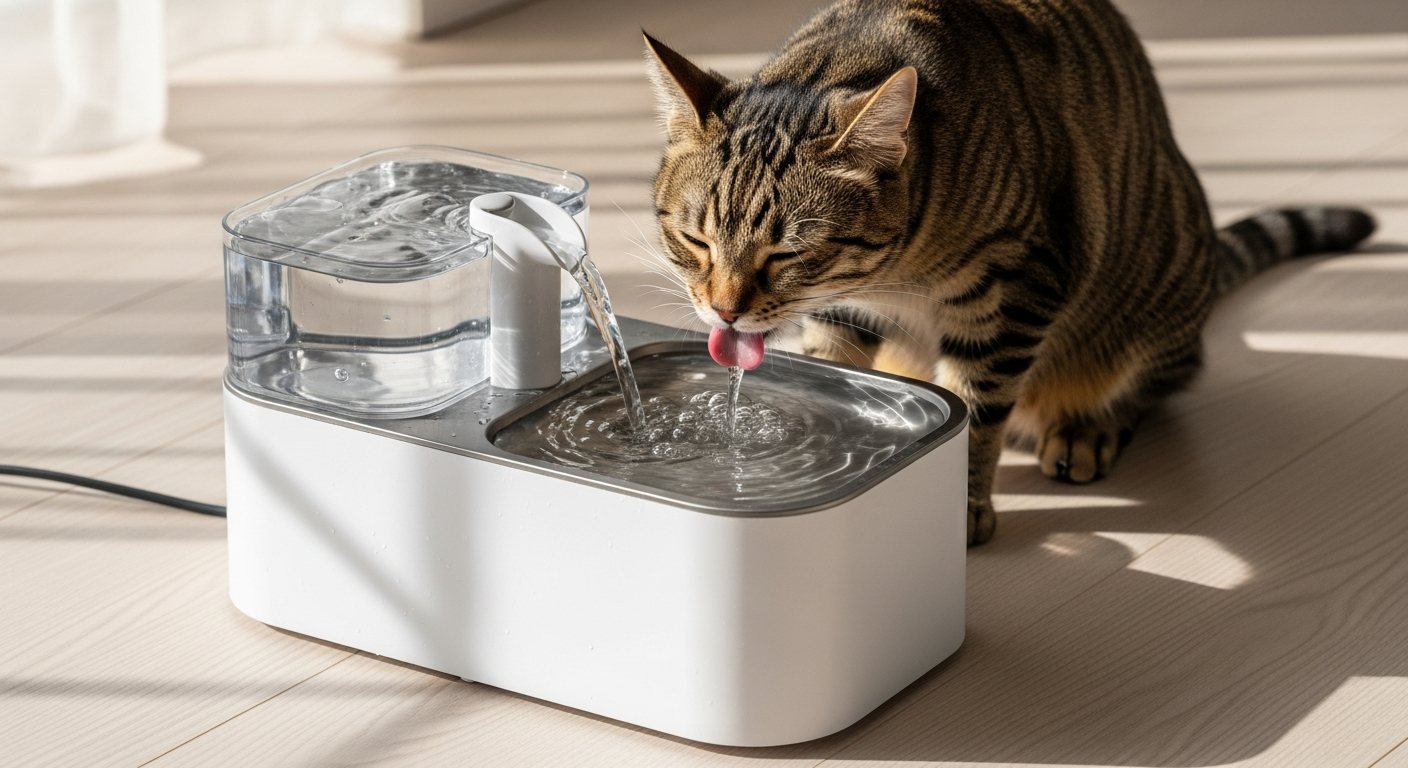
Cats are notoriously stubborn drinkers—and it's costing them their health. Studies show that approximately 10-20% of cats will develop urinary tract issues in their lifetime, with dehydration being a primary culprit. Your cat's water intake directly impacts their long-term wellness, yet most pet owners rely on static bowls that fail to engage their feline's natural instincts.
The Catit Stainless Steel Flower Fountain addresses this critical gap by tapping into cats' natural instinct to drink from moving water sources. Rather than settling for a static water bowl, this fountain creates an engaging, flowing water experience that mimics natural water movement—the kind of water source your cat would seek out in nature.
Discover how the Catit fountain can transform your cat's daily hydration habits today.
In this guide, you'll evaluate the fountain's specific mechanisms for encouraging water intake, assess whether its maintenance requirements fit your lifestyle, and learn how to maximize its effectiveness for your household. By the end, you'll have a clear picture of whether this investment truly delivers on its promise to keep your cat healthier.
Why Cats Avoid Still Water (And Why It Matters for Their Health)
How feline instincts drive preference for moving water sources
Cats evolved as hunters who relied on running water sources—streams, rivers, and flowing water that signaled freshness and safety. Still water in a bowl triggers an ancient warning system in your cat's brain: stagnant water may harbor bacteria or parasites. This isn't stubbornness; it's survival instinct. Cats that lived in the wild and drank from moving water survived. Those that relied on stagnant sources often didn't. Your house cat carries this genetic memory, and it influences every drinking decision they make.
The connection between dehydration and urinary tract infections (UTIs) in cats
When cats drink insufficient water, their urine becomes concentrated—more acidic and mineral-laden. This concentrated urine creates the perfect environment for bacterial growth and crystal formation, leading to urinary tract infections, bladder stones, and more serious kidney complications. Veterinary research consistently demonstrates that increased water intake directly reduces UTI incidence. Cats that drink adequate water maintain diluted urine, which naturally flushes their urinary system and prevents infection development.
Common signs of dehydration and urinary health problems in felines
Watch for these warning signs: excessive thirst combined with little urination, straining during bathroom trips, blood in urine, inappropriate elimination outside the litter box, lethargy, or loss of appetite. Some cats show no obvious symptoms until the problem becomes severe. By that point, you're facing emergency veterinary care, hospitalization, and potentially catheterization or medication protocols that cost hundreds or thousands of dollars.
Why traditional water bowls fail to meet cats' hydration needs
A stationary bowl sits stagnant, accumulating dust, cat hair, and bacteria. It violates every instinct that tells your cat the water is safe. Even the most diligent pet owner can't refresh a bowl as frequently as moving water naturally does. Cats often avoid these bowls entirely, choosing to drink from less sanitary sources like toilet bowls or sink drains instead—behavior that seems bizarre until you understand their water preference hardwiring.
Customizable Water Flow Settings for Every Cat Personality
Overview of the three distinct water flow modes available
The Catit fountain doesn't operate with a one-size-fits-all approach. Instead, it offers three distinct settings that cater to individual cat preferences: a gentle flow for cautious drinkers, a bubbling top for cats that crave dynamic movement, and a calm faucet-like stream that mimics natural water sources. This customization means your cat isn't forced to adapt to the fountain—the fountain adapts to your cat.
Gentle flow setting: ideal for cautious or sensitive cats
Some cats approach new objects with hesitation. The gentle flow setting provides a subtle, non-threatening water movement that reassures nervous or sensitive cats. This soft stream encourages drinking without the auditory or visual stimulation that might startle timid felines. Senior cats or those recovering from illness often respond well to this setting.
Bubbling top feature: engaging cats who prefer dynamic water movement
Cats that seem hypnotized by running water often gravitate toward the bubbling top setting. The active water movement at the fountain's crown mimics a splashing stream, creating visual and auditory engagement that keeps cats returning frequently. Many pet owners report their cats will sit and watch the bubbling water for minutes, then drink multiple times throughout the session.
Faucet-like stream option: mimicking natural drinking experiences
The stream setting replicates the experience of drinking from a faucet or natural running water. This option appeals to cats with strong instinctual preferences for authentic water behavior. The flowing stream catches light, moves dynamically, and provides the most natural-feeling drinking experience available in a home setting.
The Triple Action Filter System Explained
How the integrated filtration technology works to purify water
The Catit fountain's Triple Action Flower Fountain Filter operates on multiple levels to ensure your cat drinks genuinely clean water, not just water that appears clean. The filtration system removes visible debris, odors, and microscopic contaminants that traditional bowls cannot address.
Removal of magnesium and calcium minerals that affect water quality
Hard water contains dissolved minerals that affect taste, smell, and urinary health. Excessive magnesium and calcium in your cat's water can contribute to crystal formation and UTI development. The filter removes these minerals, softening the water and making it more palatable to your cat while reducing health risks.
Elimination of odors and debris that deter cats from drinking
Stale water smells, and cats detect these odors instantly. The filtration system actively removes odor-causing compounds and physical debris like dust or food particles. Your cat encounters fresh, clean-smelling water that triggers positive drinking responses instead of avoidance.
Lifespan and replacement schedule for filter cartridges
Most users need to replace filter cartridges every 2-4 weeks, depending on water quality and usage frequency. This ongoing maintenance cost should factor into your decision-making process, though many pet owners consider it reasonable insurance against urinary health problems.
Get the Catit Stainless Steel Flower Fountain and invest in your cat's long-term wellness now.
Stainless Steel vs. Plastic: Why Material Matters
Benefits of premium stainless steel construction for hygiene
The stainless steel top isn't simply aesthetic—it's functional. Steel doesn't absorb odors or harbor bacteria the way plastic does. After months of use, plastic components often retain lingering smells that compromise water quality. Steel remains neutral, maintaining the fountain's ability to deliver truly fresh water.
Durability advantages of steel over plastic alternatives
Steel resists scratching, cracking, and degradation from repeated cleaning cycles. Plastic alternatives become brittle over time, develop hairline fractures, and eventually fail. The stainless steel construction on the Catit fountain means it will function reliably for years, not months.
Dishwasher-safe cleaning convenience and sanitization benefits
The stainless steel top goes directly into your dishwasher, eliminating hand-washing tedium and ensuring thorough sanitization at high temperatures. This convenience dramatically increases the likelihood that you'll maintain proper cleaning schedules, which directly impacts your cat's water quality and health.
Resistance to bacterial growth and odor absorption
Steel's non-porous surface prevents bacterial colonization and odor absorption. After your cat stops drinking, the steel doesn't retain scent molecules that might deter them from returning. This material characteristic compounds over time—after a year, the difference in cleanliness and water freshness between steel and plastic becomes dramatic.
Maintenance Reality Check: What You Actually Need to Do
Weekly cleaning schedule to prevent mold and bacterial growth
Plan for a thorough cleaning at least once weekly. This involves draining the reservoir, disassembling the fountain, and washing each component. Neglecting this schedule allows mold to colonize internal surfaces and bacterial biofilm to develop on the pump mechanism. Your cat ends up drinking from what's essentially a miniature swamp.
Step-by-step disassembly process for thorough cleaning
Remove the stainless steel top (usually dishwasher-safe), unscrew the flower attachment, and lift out the motor assembly. Rinse each piece under running water, scrubbing gently to remove mineral deposits and residue. The base requires special attention—water sits here longer and allows buildup to accumulate. Allow components to fully dry before reassembly to prevent mold development during storage.
Pump maintenance challenges and best practices
The pump is the fountain's most complex component and the hardest to clean thoroughly. Mineral deposits and debris accumulate inside the pump housing, reducing water flow and increasing noise. Soak the pump in distilled white vinegar weekly to dissolve mineral buildup, then run clean water through it until the water runs clear. This step requires patience but prevents pump failure and extends the fountain's lifespan significantly.
Filter replacement frequency and cost implications
Budget for filter cartridge replacement every 2-4 weeks. At $5-10 per filter, this adds $30-120 annually to your pet care expenses. Hard water areas require more frequent replacement. Some pet owners resist this cost, but consider it preventive medicine against the $500-2000 veterinary bills that UTI treatment can incur.
Weighing the Investment: Cost vs. Long-Term Health Benefits
Price range ($22-$60 USD) and value assessment
The Catit fountain typically costs $40-60 at major pet retailers, positioning it as a mid-range product. Compare this initial investment against the genuine health benefits you'll receive, and the math becomes compelling.
Comparison with veterinary costs for UTI treatment
A single UTI diagnosis involves examination ($100-200), urinalysis ($100-150), antibiotics ($50-100), and follow-up visits ($100-200). Complex cases requiring imaging or hospitalization exceed $2000. A fountain that reduces UTI incidence by even 30% pays for itself in a single prevented infection.
Ongoing expenses: filters, electricity, and water
Annual filter costs range from $30-120. Electricity consumption is minimal—the pump uses less power than a standard nightlight. Water costs remain unchanged since you're using the same water supply. Total ongoing expense realistically amounts to $30-150 annually.
Cost-benefit analysis for multi-cat households
Households with multiple cats benefit even more dramatically. One fountain can serve 2-3 cats, yet the filter and electricity costs don't triple. When divided among multiple animals, per-cat expense drops significantly while health benefits apply to each individual cat.
Beyond the Bowl: Taking Control of Your Cat's Hydration Future
The Catit Stainless Steel Flower Fountain represents more than just a water delivery system—it's a proactive health investment that addresses one of the most overlooked aspects of feline wellness. Yes, it requires consistent maintenance, and yes, replacement filters add to your annual pet care budget. But when you weigh those realities against the genuine risk of urinary tract infections, kidney complications, and expensive veterinary interventions, the value proposition becomes clear.
What makes this fountain stand out is the straightforward engineering that respects how cats actually drink in nature. The customizable flow settings, robust filtration, and hygienic stainless steel construction work together to solve a real problem that affects millions of cats. Your cat's health trajectory depends on decisions you make today. If your feline companion shows signs of reluctance toward traditional water bowls or struggles with recurring UTIs, the Catit fountain deserves serious consideration.
The investment you make now could save you thousands in veterinary bills and spare your cat from unnecessary suffering.
Order your Catit Stainless Steel Flower Fountain and prioritize your cat's health today.
Leave a Reply