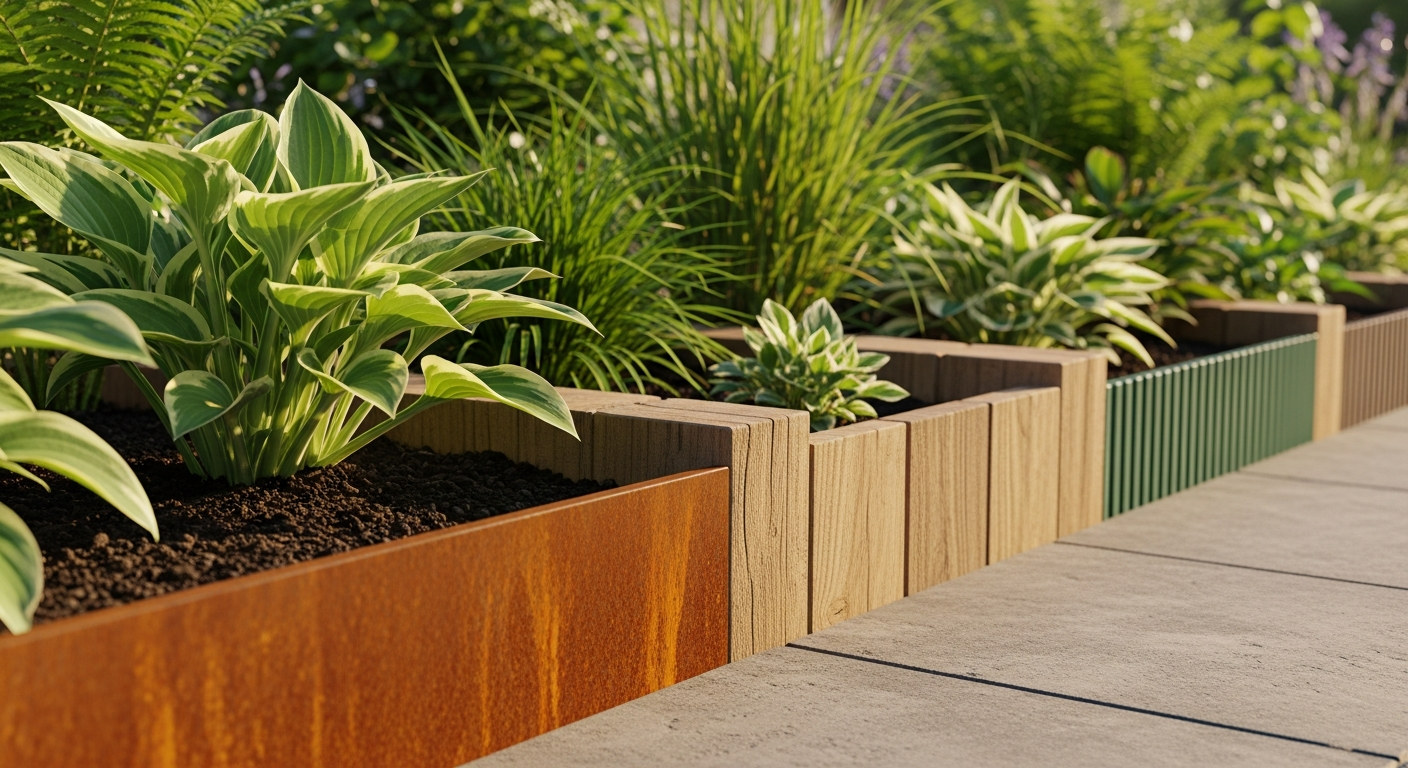
Over 60% of homeowners regret their garden edging choices within three years—fading, cracking, and constant maintenance drain both time and money. The frustration of watching carefully planned landscapes deteriorate speaks to a fundamental problem: most edging materials simply weren't engineered for the long haul. Corten steel garden edging represents a genuine shift in how we approach landscape design, offering a solution that strengthens rather than weakens over time.
Unlike plastic alternatives that fade and crack under UV exposure, or traditional steel that rusts away into nothing, Corten develops a self-protecting patina that acts as armor against further corrosion. This distinctive material transforms from a sleek grey metallic finish into a warm, rusty aesthetic that deepens with each season. The transformation isn't degradation—it's the material protecting itself while becoming more beautiful.
This guide covers everything you need to understand Corten steel garden edging: the science behind its remarkable durability, real-world applications that showcase its design potential, the installation process, and why this premium material consistently delivers exceptional long-term value. Your garden deserves edging that won't demand replacement cycles or constant maintenance—edging built to last decades.
Explore Corten steel garden edging options at Plusjop NL today.
The Science Behind Corten Steel's Self-Protecting Patina
Understanding why Corten outperforms standard materials requires understanding its composition. This specialized alloy combines iron with copper, phosphorus, silicon, nickel, and chromium—each element playing a specific role in the material's performance. Together, they create something that conventional steel cannot achieve: a self-healing protective layer.
Unique Alloy Composition: Engineering Durability into Every Layer
The copper and phosphorus content fundamentally changes how the material responds to weathering. When exposed to moisture and oxygen, these elements accelerate formation of a dense oxide layer on the steel's surface. This isn't random rust—it's a carefully orchestrated chemical process that creates a barrier stronger than the base metal itself.
The Oxidation Process: Building Protection That Stops Corrosion
When you first install Corten steel edging, oxidation begins immediately. The grey metallic surface starts developing a rust-colored layer as iron, copper, and other elements oxidize. This process intensifies during the first 18 to 24 months, creating a protective patina that adheres tightly to the underlying steel. Once fully formed, this oxide layer prevents oxygen and moisture from reaching deeper layers—effectively halting the corrosion process that would devastate standard steel.
From Grey Metallic to Warm Rusty Patina: Timeline and Expectations
The visual transformation follows a predictable pattern. Initial installation reveals a uniform grey metallic finish. Within weeks, rust-colored streaking appears as the oxidation process accelerates. By three to six months, the patina becomes more consistent, displaying rich rust-brown tones. The color continues deepening and stabilizing through the first two years, eventually settling into a warm, chocolate-brown aesthetic that remains relatively stable thereafter. This evolution is part of Corten's appeal—your edging matures visually while becoming more resilient.
Why Genuine Corten Steel Resists Through-Rusting
Standard steel rusts from the inside out, with corrosion penetrating deeper into the material over time. Genuine Corten's alloyed composition creates a fundamentally different mechanism. The protective patina is so dense and adherent that water cannot penetrate to cause internal corrosion. Even if the surface is scratched, the surrounding patina continues protecting the exposed area. This self-healing quality makes through-rusting exceptionally rare with genuine Corten—a characteristic absent in cheaper steel alternatives.
Design Versatility: From Minimalist Borders to Complex Garden Structures
Corten steel's aesthetic appeal extends beyond durability. The warm, earthy tones integrate beautifully with virtually any garden style, from contemporary minimalism to naturalistic planting schemes. Its design flexibility allows everything from simple functional borders to sophisticated landscape architecture.
Creating Clean Separation Lines Between Garden Elements
The sharp, defined lines Corten creates distinguish it from softer edging materials. A simple border between lawn and flower bed gains architectural weight—the garden suddenly appears more intentional, more designed. These clean separations work equally well defining pathways or isolating specialized planting areas. The visual clarity Corten provides makes even modest gardens feel more polished and purposeful.
Raised Beds and Vegetable Garden Frameworks
Home gardeners and market growers both favor Corten for raised bed construction. The material's strength supports substantial soil loads without deformation, while its aesthetic qualities elevate vegetable gardens from purely functional spaces into design features. A kitchen garden bordered in Corten steel looks intentional and premium rather than utilitarian.
Terracing Solutions for Sloped Landscapes
On slopes and hillsides, Corten's structural integrity becomes critical. Multiple tiers create retention strength while establishing visual rhythm across elevation changes. The material's durability ensures terraces remain functional and beautiful for decades—solving both engineering and design challenges simultaneously.
Aesthetic Integration Across Garden Styles
Whether your garden leans toward contemporary geometry, rustic charm, or naturalistic planting, Corten adapts. Its industrial aesthetic complements modern design. Its earthy patina works beautifully with cottage-style planting. Its durability appeals to professional landscapers working across every aesthetic direction.
Installation Essentials: Getting Corten Edging Right the First Time
Proper installation determines whether your Corten edging performs as engineered. The material's strength requires careful site preparation and thoughtful installation techniques.
Site Preparation: Ground Leveling and Soil Compaction
Before positioning any edging, the installation area needs solid preparation. Uneven ground leads to gaps that compromise both function and appearance. Mark your edging line clearly, then excavate to depth, ensuring consistent soil firmness. Compacted soil prevents settling that might later misalign your edging. This foundational work separates successful installations from problems that emerge over subsequent seasons.
Step-by-Step Installation for Straight Runs and Corners
For straight sections, position the edging material and check level frequently as you work. Corten pieces typically feature a folded edge design that simplifies positioning and provides anchoring points. Corner transitions require careful planning—whether mitering edges or overlapping them depends on your specific design. Consistent approach to corners ensures visual coherence throughout your installation.
Securing Methods: Anchoring That Prevents Shifting
Soil movement and frost heave can shift improperly anchored edging. Use anchoring spikes or stakes driven through the material into compacted soil, spacing them appropriately to prevent movement during temperature fluctuations. This simple step prevents the gradual misalignment that frustrates homeowners after their first winter.
Common Installation Mistakes and How to Avoid Them
The most frequent error is inadequate site preparation—rushing through leveling and compaction to reach installation. This leads to settling and misalignment. Another common issue is under-securing the edging, allowing frost heave or soil movement to shift pieces. Finally, some installers position edging without checking drainage patterns, creating conditions where water accumulates. Thoughtful site assessment before installation prevents these problems entirely.
Get professional-grade Corten steel edging from Plusjop NL for your next project.
The Investment Question: Pricing, Durability, and Long-Term Value
The conversation around Corten steel edging often begins with price—and for good reason. The upfront cost exceeds plastic and composite alternatives. Understanding the value proposition requires looking beyond the initial receipt.
Cost Comparison: Corten Versus Plastic, Aluminum, and Composite Options
Standard plastic edging costs considerably less at purchase. Aluminum edging falls somewhere between plastic and Corten. Composite options vary widely but typically cost less initially than genuine Corten steel. However, these comparisons ignore longevity entirely. When examined over actual lifespan, the economics shift dramatically.
Initial Investment Versus 20-Year Lifespan Calculations
Corten steel costs more upfront but delivers reliable performance across two decades. Plastic edging requires replacement after 5 to 8 years—meaning three replacement cycles over the same 20-year period. Each replacement involves removal labor, disposal costs, and new material expenses. Aluminum edging typically lasts 10 to 15 years before replacement becomes necessary. Over two decades, total cost of ownership for Corten—despite higher initial investment—often proves considerably lower than cheaper alternatives requiring multiple replacements.
Maintenance Cost Savings: No Painting, Sealing, or Replacement Cycles
Unlike wood edging requiring regular sealing and staining, or painted steel needing touch-ups, Corten demands virtually no maintenance. The protective patina handles weather exposure without intervention. No seasonal maintenance routines. No budget annually allocated for upkeep. This freedom from maintenance cycles represents genuine savings—both financial and in terms of time and labor.
Why Premium Upfront Investment Delivers Superior Value
The economics become clear when examining total cost of ownership. A homeowner investing in Corten steel avoids the replacement cycles, maintenance demands, and diminishing aesthetics that plague cheaper alternatives. The material improves visually while becoming more durable—the opposite trajectory of plastic or painted options that fade and deteriorate.
Durability and Low-Maintenance Reality: What You Actually Need to Know
Marketing claims about durability can obscure actual performance. Corten steel's reputation rests on decades of documented real-world use rather than promotional promises.
Expected Lifespan: Decades of Reliable Performance
Genuine Corten steel edging delivers reliable performance across 20, 30, or more years with minimal intervention. Historical installations demonstrate that properly installed Corten remains functional and aesthetically sound across generations. This lifespan extends far beyond any plastic or composite alternative.
The Protective Rust Layer as Self-Healing Mechanism
The patina doesn't just protect—it actively heals minor damage. If the surface scratches or gets nicked, the surrounding protective layer gradually extends across the exposed area, preventing corrosion from establishing itself. This self-healing quality is unique among edging materials and explains Corten's exceptional durability.
Actual Maintenance Requirements: Truth Versus Marketing Hype
Honest assessment: Corten requires virtually no maintenance beyond occasional visual inspection. Some sources claim you must rinse early-stage rust runoff to prevent staining on adjacent surfaces—which some homeowners do during the initial weathering period, though this remains optional. Beyond the first year or two, no action is necessary. Corten simply ages, developing deeper character while remaining fully functional.
Comparing Maintenance Demands to Plastic, Wood, and Composite Alternatives
Wood edging requires annual sealing and periodic staining. Plastic benefits from occasional cleaning but eventually fades and becomes brittle. Composite materials demand routine sealing. Painted steel needs touch-ups as the finish deteriorates. Corten, by contrast, becomes more beautiful and more durable with age—the only material in its category that genuinely improves over time.
Your Garden's Future Starts with the Right Edging Choice
The journey from generic garden borders to truly distinctive landscaping begins with materials that refuse to compromise. Corten steel garden edging delivers on every front—it ages gracefully, requires minimal maintenance, and creates the clean lines that separate amateur gardens from genuinely impressive outdoor spaces. Yes, the initial investment is higher compared to plastic alternatives, but when you're standing in your garden five, ten, or twenty years from now, watching your Corten edging develop deeper character while plastic neighbors fade and crack, you'll understand exactly why professionals choose this material.
The decision is about committing to a garden that improves with time rather than deteriorates. Whether you're a meticulous home gardener refining your landscape or a professional landscaper building your reputation on quality, Corten steel offers the durability, aesthetics, and low-maintenance performance that justify the premium price. Your garden's longevity and beauty depend on foundational choices—and edging represents one of the most consequential decisions you'll make.
Discover premium Corten steel garden edging solutions from Plusjop NL.
Leave a Reply