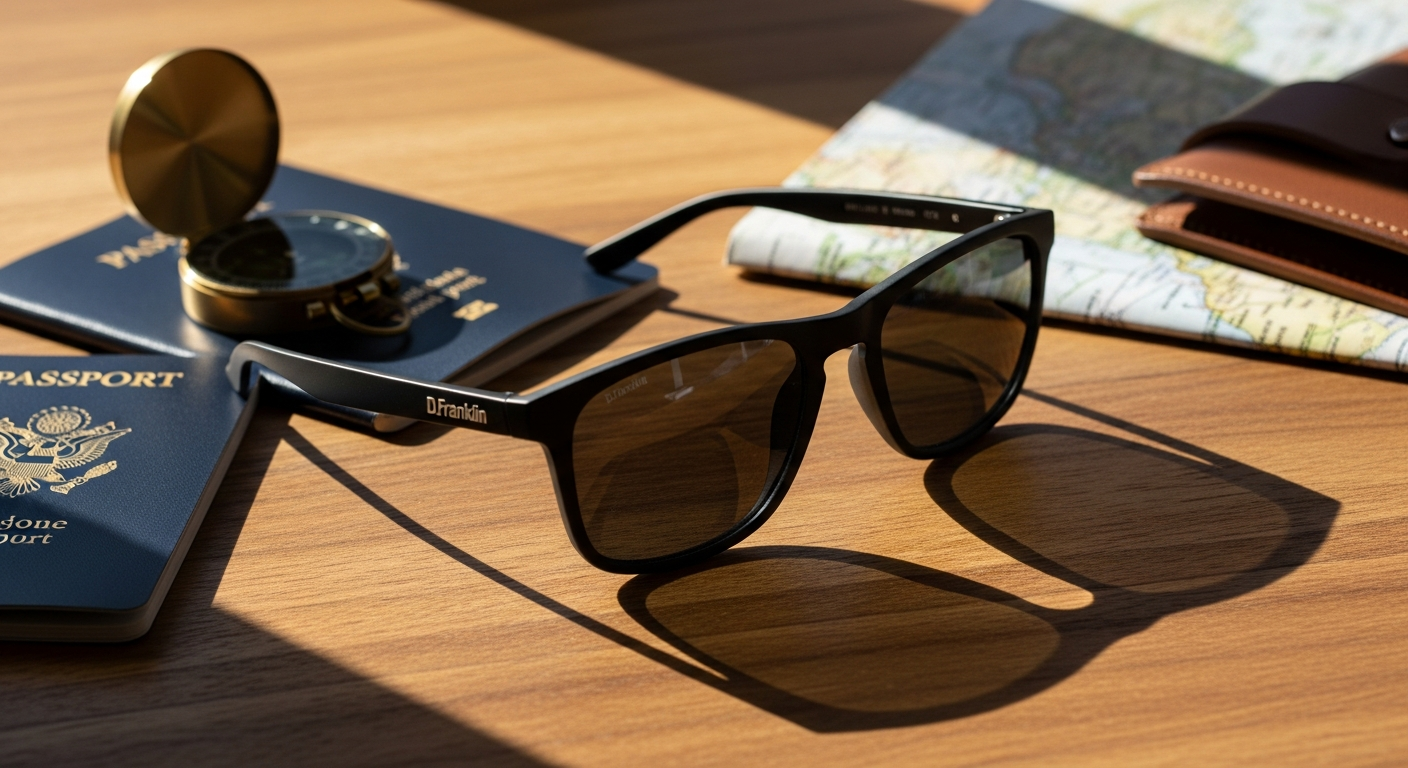
You’ve probably seen D.Franklin sunglasses pop up everywhere—Instagram feeds, TikTok hauls, sponsored posts. The brand moves inventory faster than most companies move entire seasonal collections, powered by relentless 2 for 1 promotions that seem to never end. Fashion-forward shoppers flock to D.Franklin for trendy silhouettes and affordable UV400 protection that doesn’t require maxing out a credit card.
Yet the customer reviews tell a strikingly different story depending on who’s writing them. Some call D.Franklin their best budget find; others describe the experience as their worst eyewear purchase. The brand has undeniably captured attention as a go-to for style-conscious consumers hunting for accessible polarized sunglasses, but accessibility doesn’t automatically mean value.
This guide breaks down whether D.Franklin’s stylish polarized sunglasses genuinely deliver or if the low price tag masks quality compromises beneath the surface. We’ll examine design variety, lens technology, the reality of durability, sizing inconsistencies, and the often-overlooked customer service experience.
Discover D.Franklin’s current collection and ongoing promotions
Why D.Franklin Polarized Sunglasses Became a Fashion Staple
Trend-Forward Design Meeting Accessible Pricing
D.Franklin succeeded where many budget eyewear brands stumble: they made affordable sunglasses actually look good. The frame variety spans aviators, cat-eye, round, square, and sport styles—giving customers genuine options rather than a one-size-fits-all approach. Younger demographics and style-conscious consumers found exactly what Instagram told them to want, available at prices that didn’t require choosing between sunglasses and groceries.
The Promotional Machinery
Those 2 for 1 deals aren’t accidental marketing—they’re the engine that drives D.Franklin’s expansion. Constant promotional cycles create urgency and repeat purchases. Someone buying one pair becomes someone buying two. The psychology works remarkably well, turning browsers into customers and casual buyers into repeat visitors. Each deal cycle resets the marketing clock, keeping the brand perpetually visible across social platforms and email inboxes.
Polarized Lenses as a Gateway Feature
For consumers unfamiliar with eyewear technology, “polarized” sounds premium. D.Franklin made polarization accessible at budget prices, positioning themselves between basic sunglasses and luxury brands charging $200+ for similar features. This positioning attracted customers who wanted the benefits of polarized lenses without the luxury brand markup.
Understanding the Lens Technology and UV Protection
What Polarization Actually Does
Polarized lenses filter light waves that reflect off flat surfaces like water, asphalt, and snow. For boaters, drivers, and beach-goers, this reduces glare significantly, improving visual clarity and reducing eye strain. D.Franklin’s marketing emphasizes this benefit, and the technical claim is legitimate—polarization genuinely improves visibility in high-glare environments.
UV400 Protection: The Standard That Matters
UV400 protection blocks 99-100% of ultraviolet rays up to 400 nanometers. This is the gold standard for eye safety and legitimate UVA/UVB protection. D.Franklin’s sunglasses meet this standard, meaning you’re not sacrificing eye safety for affordability. This is one area where budget pricing doesn’t compromise—UV protection is UV protection.
Polycarbonate Lenses: Durability and Clarity Trade-offs
Polycarbonate is a plastic material that’s impact-resistant and lightweight. It’s not glass, which means clarity occasionally suffers slightly compared to premium lens materials. However, the real issue customers report isn’t optical quality—it’s degradation. Lenses fogging up, coating peeling, and material breaking down after weeks or months suggests manufacturing or material quality issues rather than inherent polycarbonate problems.
How Polarization Technology Enhances Performance
The polarization layer sits within the lens structure, filtering scattered light waves. This creates darker, clearer vision in bright conditions. For outdoor activities—driving, fishing, hiking—this benefit is tangible. However, polarization can sometimes create issues with digital screens or LCD displays, a trade-off D.Franklin doesn’t extensively discuss in marketing materials.
The Quality Reality Check: What You’re Actually Getting
Material Composition Breakdown
D.Franklin uses polycarbonate lenses paired with acetate temple frames. On paper, this is a sensible combination—plastic lenses for impact resistance, acetate for frame durability and comfort. In practice, customer reports reveal a significant gap between material specifications and actual construction quality.
Durability Expectations vs. Real-World Experience
Budget sunglasses aren’t supposed to last five years. Reasonable expectations for €28.50 eyewear might be one season, maybe two with careful handling. However, D.Franklin’s reported issues go beyond normal wear-and-tear. Customers describe material peeling within weeks, hinges loosening after minimal use, and lens degradation that happens faster than the promotional cycle that brought them into the rotation.
Reported Problem Areas
The most consistent complaints center on three issues: peeling or flaking lens coatings, fogging that doesn’t resolve with standard treatments, and frame material feeling cheap or fragile immediately upon opening. Some customers compared the quality to “gas station sunglasses,” a telling descriptor suggesting the actual material quality doesn’t match the styling or marketing narrative.
Longevity Testing in Real Conditions
A sunglasses pair purchased in June wearing through August without significant degradation would exceed many customer expectations for this price point. Yet numerous reviews indicate problems emerging within 2-4 weeks of regular use. The disconnect between promotional pricing and actual durability suggests D.Franklin’s quality control or material sourcing may not match production volume.
The Promotional Game: Are 2-for-1 Deals Worth It?
How Pricing Psychology Works
A single pair at €28.50 seems inexpensive until you realize that’s barely cheaper than actual mass-market sunglasses. Buy two pairs simultaneously through a 2 for 1 deal, and suddenly the per-pair cost drops to roughly €14-15. This pricing structure creates the illusion of exceptional value when the promotional deal is active, but the base price tells a different story about actual production costs.
Individual Pricing vs. Promotional Pricing
D.Franklin’s pricing strategy relies heavily on promotions to seem competitive. Full-price purchases reveal less attractive value proposition compared to competitors offering similar quality at similar prices without requiring a “double purchase” to seem worthwhile. The constant promotional cycle suggests individual pair sales don’t move at rates the brand prefers.
The Marketing Psychology Behind Deal Cycles
Running perpetual 2 for 1 promotions normalizes the idea that D.Franklin sunglasses have higher inherent value during deals. Customers psychologically anchor to the promotional price, making full-price purchases feel like overpayment. This creates deal-dependent purchasing behavior that benefits D.Franklin’s inventory management more than customers’ wallets.
ROI Calculation for Budget Shoppers
If you’re buying two pairs and wearing both throughout a season before degradation occurs, the cost-per-wear improves significantly. For customers treating sunglasses as seasonal accessories or rotation pieces, 2 for 1 deals make economic sense. For anyone expecting single-pair durability beyond one season, the math becomes less favorable.
Check D.Franklin’s latest offers and frame selections
Customer Service and Returns: The Hidden Problem
Return Policy Friction Points
D.Franklin’s return policy creates obstacles rather than solutions. High return shipping costs to Spain (the brand’s home country) mean customers absorb significant expenses to send items back. Combined with €28.50 base pricing, return shipping can equal or exceed the original purchase price, making returns economically irrational for most customers.
Customer Service Response Delays
Reports consistently mention slow response times from D.Franklin’s support team. When issues arise—defective lenses, damaged frames, sizing problems—customers wait days or weeks for responses. This delay combined with return shipping costs creates a situation where customers either keep problematic products or absorb significant loss to return them.
Refund Refusal and Warranty Limitations
Multiple customer accounts describe refund denials after purchasing defective products. The basis for these denials often remains unclear, but the outcome is consistent: customers feel abandoned after their purchase. Warranty coverage, where it exists, appears limited and difficult to claim.
International Shipping Complications
D.Franklin ships globally, but international customers report extended delivery times, particularly to the US. Combining slow delivery with poor return support creates a frustrating experience for customers far from Spain. By the time defects appear, return windows may have closed or shipping costs may exceed remaining resolution options.
Who Should Buy D.Franklin Polarized Sunglasses (And Who Shouldn’t)
Ideal Customers: Fashion-First Shoppers
D.Franklin sunglasses work brilliantly for customers prioritizing current styling over multi-year durability. If you rotate eyewear seasonally, buy multiple pairs for different outfits, or view sunglasses as fashion accessories that get replaced regularly anyway, D.Franklin delivers. The variety of frame shapes means you can find styles matching multiple aesthetic preferences without significant investment.
Best Use Cases: Temporary and Rotational Wear
Buying through 2 for 1 promotions for seasonal rotation is the most practical use case. Summer pair, backup pair, and another for travel—all purchased together during a deal cycle. Used this way, assuming they last a season or two, the value proposition holds. Backup pairs for beach bags, cars, or travel situations work too, since durability expectations reset for temporary-use items.
Unsuitable Purchases: Durability-Dependent Scenarios
Anyone needing reliable sunglasses for frequent outdoor activities should look elsewhere. Hikers, cyclists, boaters, and outdoor professionals require eyewear lasting seasons or years without degradation. D.Franklin’s reported material issues make them unsuitable for these purposes. Spending slightly more on established eyewear brands with proven durability records saves frustration and money over time.
Decision Framework for Potential Buyers
Before purchasing, ask yourself three questions: First, will you wear these for style rotation or daily outdoor use? Second, can you afford to replace them within one season if quality issues emerge? Third, would you be frustrated if customer service proved unhelpful? Answering “rotation,” “yes,” and “no” suggests D.Franklin could work. Answering differently indicates exploring other brands makes sense.
The Bottom Line: Are D.Franklin Polarized Sunglasses Right for You?
D.Franklin delivers on one promise consistently: affordable, stylish eyewear that photographs well and turns heads without requiring significant financial commitment. The frame variety is genuine, the pricing during promotions is attractive, and the brand has successfully positioned itself as accessible polarized eyewear for fashion-conscious consumers.
However, the quality concerns documented across customer reviews are equally real and consistent. Peeling materials, fogging lenses, loose hinges, and sizing inconsistencies suggest that aggressive pricing comes paired with durability compromises. The customer service challenges and return policy friction compound these issues, leaving customers with limited recourse when problems emerge.
D.Franklin sunglasses work exceptionally well if you’re buying multiple pairs for different seasonal looks, rotating styles regularly, or treating eyewear as temporary fashion accessories rather than long-term investments. They’re considerably less suitable if durability matters, if you need reliable eyewear for frequent outdoor use, or if you prefer customer service you can trust.
The critical question before purchase isn’t whether D.Franklin sunglasses are “good”—it’s whether your expectations align with what the brand actually delivers. If style and affordability take priority over longevity, and you’re comfortable with the possibility that customer service might disappoint, D.Franklin could be exactly what you’re hunting for. If reliability, durability, or responsive support matter more, investing slightly more in established eyewear brands makes financial sense over time.
Explore D.Franklin polarized sunglasses and find your style today
Leave a Reply