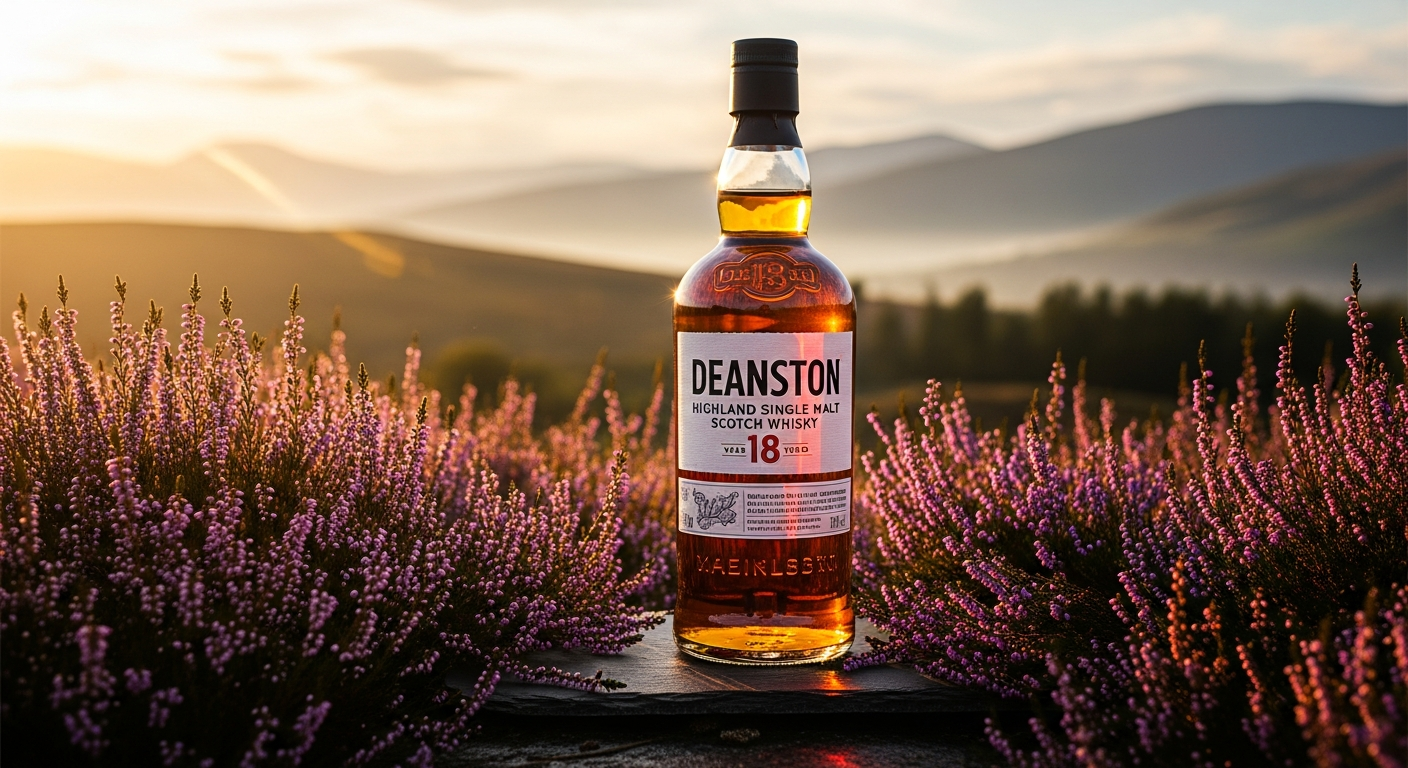
Award-winning single malts under $160 are becoming increasingly rare—yet here’s one that’s flying off shelves and commanding serious respect among whisky connoisseurs. The Deanston 18 Year Old Highland Single Malt isn’t just another premium Scotch; it’s a whisky that earned The Whisky Exchange’s prestigious Whisky of the Year award in 2022 and hasn’t stopped impressing since.
This Highland single malt represents something genuinely compelling in today’s whisky landscape: a spirit that combines critical acclaim with accessible pricing. When a distillery achieves this balance, it becomes a reference point for what premium Scotch should deliver. The maturation process, production philosophy, and flavor complexity all work in concert to create an expression that stands apart from its peers.
Discover what makes Deanston 18 Year Old a whisky worth seeking out.
The Whisky Exchange Whisky of the Year 2022 Designation and Its Impact on the Whisky Market
The Whisky Exchange Whisky of the Year award carries genuine weight in the industry. This recognition didn’t arrive through marketing campaigns or industry connections—it came from critical evaluation against hundreds of competing expressions. When Deanston 18 received this accolade, it fundamentally shifted how collectors and enthusiasts perceived the distillery’s flagship offering.
This award has had measurable consequences on availability and demand. Retailers that previously carried moderate stock levels now struggle to maintain consistent supply. Secondary market prices have climbed accordingly, though the official recommended retail price has remained stable. The award essentially validated what discerning drinkers already understood: this is a whisky that delivers excellence at a price point that doesn’t require choosing between quality and financial prudence.
How Industry Recognition Has Influenced Collector Demand and Retail Availability
Since 2022, Deanston has experienced unprecedented visibility among serious collectors. Online whisky communities regularly feature this expression in “value picks” and “essential collections” discussions. This increased demand has created a situation where certain retailers maintain waiting lists, particularly in premium markets where competition for allocation is fierce.
The recognition also attracted drinkers who might have overlooked Deanston previously. Highland single malts from larger, more established distilleries dominated collector attention for years. Deanston’s award changed the conversation, positioning the distillery as a producer capable of competing with brands commanding significantly higher prices.
Comparison of Critical Reception Versus Other 18-Year Highland Single Malts in the Same Price Bracket
Comparing Deanston 18 to competing 18-year Highland expressions reveals why this whisky earned its accolades. Many Highland single malts at similar price points offer pleasant approachability but lack the complexity evident in this expression. Others deliver complexity but demand higher prices or suffer from availability constraints.
What distinguishes Deanston is consistency across reviews. Critics and casual drinkers alike describe similar tasting notes and experience similar satisfaction levels. This alignment between professional assessment and consumer experience is uncommon at this price tier. The non-chill filtration and natural color contribute to a richness that stands out during side-by-side tastings with competitors using industrial production methods.
Bourbon Barrel Maturation and Its Flavor Consequences
First-Fill American White Oak Ex-Bourbon Cask Selection and Sourcing Practices
The maturation strategy behind Deanston 18 Year Old begins with deliberate cask selection. First-fill American white oak ex-bourbon barrels impart different characteristics than refill casks or casks previously used for other spirits. These barrels contain residual bourbon compounds that interact with the spirit over eighteen years, creating a flavor signature impossible to achieve through other means.
American white oak itself presents distinct properties compared to European oak commonly used in whisky production. The grain structure differs, affecting how vanilla compounds and wood sugars leach into the spirit. The bourbon aging process within these casks, before they’re repurposed for Scotch whisky, leaves behind caramelized sugars and specific congener profiles that shape the final product’s character.
How Bourbon Barrel Influence Differs from Sherry, Wine, or Other Cask Types
Bourbon barrels impart sweetness and vanilla character that creates an inviting, approachable profile. Sherry casks, by contrast, introduce oxidative complexity and dried fruit characteristics. Wine casks offer yet another trajectory, emphasizing certain floral and acidic qualities. Understanding these distinctions helps explain why bourbon-matured Scotch appeals to different palates than sherry-finished expressions.
The Deanston 18 benefits from bourbon barrel influence that remains balanced rather than dominant. The vanilla and honey notes complement rather than overpower the underlying spirit character. This restraint distinguishes it from some bourbon-barrel expressions that verge toward sweetness that certain drinkers find cloying. The eighteen-year timeframe allows the spirit and wood to achieve genuine integration rather than maintaining separate identities.
Vanilla, Honey, and Oak Development Across the 18-Year Maturation Timeline
Over eighteen years, vanilla compounds extracted from the wood establish themselves as a primary flavor note without becoming the only story the whisky tells. Early maturation years extract the most aggressive oak influence. Middle years allow the spirit to absorb and integrate these compounds. Final years see the emergence of more subtle secondary flavors as the spirit reaches equilibrium with the wood.
Honey notes develop as a consequence of sugar extraction and oxidative processes occurring within the barrel. The spirit’s exposure to oxygen through the barrel’s wood grain—even minimal exposure—catalyzes reactions that produce honey-like sweetness. Eighteen years provides sufficient time for these reactions to mature without the wood character becoming austere or overly tannic, which can occur with extended aging in certain environments.
Decoding the Sensory Profile: Nose, Palate, and Finish
Aromatic Bouquet: Vanilla, Honey, Floral Notes, Tobacco, and Nutmeg on the Nose
Opening a bottle of Deanston 18 releases an aromatic profile that immediately justifies its reputation. The nose presents balanced American oak notes alongside floral and grassy undertones. Vanilla and honey create sweetness without excessive sugar character. Subtle tobacco and nutmeg notes add complexity, suggesting spice and earth beneath the sweeter elements.
The aromatic experience benefits from the non-chill filtration process. Fats and oils that some producers remove remain intact, contributing fuller aromatics that evolve as the whisky sits in the glass. Initial impressions might focus on vanilla and honey, while lingering notes reveal that leafy, slightly herbaceous character some reviewers describe as “green” or grassy. This layering creates a more engaging nosing experience than flatter, more one-dimensional expressions.
Palate Exploration: Barley Sugar Sweetness, Green Apple Crispness, and Gingerbread Spice
The palate introduces textures as important as flavors. Deanston 18 presents itself as rich and buttery, the consequence of those waxy esters preserved through non-chill filtration. Sweet barley sugar flavors establish themselves immediately, balanced by crisp green apple notes that prevent the whisky from becoming overly dessert-like. Floral elements from the nose persist, creating continuity across the sensory journey.
Gingerbread spice, citrus warmth, Manuka honey, and white pepper emerge as the whisky develops on the palate. These secondary flavors reward patience—taking time to experience the whisky rather than rushing through tasting reveals additional complexity. Some drinkers detect candy-like sweetness alongside integrated oak, suggesting that wood influence has become part of the spirit’s fundamental character rather than an obvious addition. Subtle salinity and waxy texture combine to create a mouthfeel that many describe as luxurious and genuinely engaging.
The Finish: Long, Warming, Malty Conclusion with Gingery Honey and Nutty Dryness
The finish extends impressively, maintaining presence without becoming harsh or overly astringent. Malty notes from the barley backbone emerge as the initial sweetness fades. A gingery honeyed tail provides warmth and satisfaction, while a nutty, slightly grippy dryness in the conclusion grounds the experience. This finish structure—sweetness, spice, and dry conclusion—creates balance that keeps you reaching for another sip rather than feeling overwhelmed.
The warming quality indicates proper alcohol integration. The 46.3% ABV provides enough alcohol content to create genuine warmth without the burn that can accompany higher-proof expressions. The finish lingers long enough to remain present through conversation or contemplation but fades cleanly enough that you’re ready for another sample within reasonable timeframe.
Non-Chill Filtration and Natural Color Explained
Experience the difference that traditional production methods make in Highland single malt.
What Non-Chill Filtration Preserves in Highland Single Malt Spirits
Non-chill filtration represents a commitment to traditional whisky-making practices. The process involves cooling whisky to extremely low temperatures and filtering it to remove fatty acids and esters that become cloudy under cold conditions. Most commercial distilleries perform this step because it ensures crystal clarity in the bottle, even when whisky is chilled or mixed with cold water.
Deanston chooses not to perform this filtration, preserving those fatty acids and esters that contribute to mouthfeel, aroma, and flavor complexity. The consequence is a whisky that may develop a slight haze when significantly chilled, but offers richer sensory experience in return. These preserved compounds create the buttery, waxy texture that characterizes Deanston 18—a textural element impossible to replicate in chill-filtered spirits.
The Difference Between Natural Color and Caramel Adjustment in Premium Scotch
Natural color indicates that no caramel has been added to standardize appearance. During maturation, whisky develops its own hue based on barrel type, maturation length, and environmental conditions. Some distilleries add caramel coloring to ensure consistency across batches or to deepen color for visual marketing purposes.
Deanston maintains natural color, meaning every bottle’s appearance reflects genuine maturation rather than industrial coloring. For consumers, this distinction seems cosmetic but carries significance for serious enthusiasts. Natural color suggests transparency—that the distillery stands behind the actual product rather than manipulating appearance. Some drinkers report that naturally colored expressions feel more authentic, though this remains subjective terrain.
Why Serious Collectors Prioritize Non-Chill Filtered Expressions
Collectors understand that non-chill filtration and natural color represent philosophical commitments to quality and tradition. Distilleries pursuing these practices incur higher production costs and accept the potential for slight cloudiness. These choices wouldn’t make economic sense unless driven by genuine commitment to product integrity.
Among serious whisky drinkers, non-chill filtered expressions command premium positioning because they deliver sensory complexity unavailable in industrial alternatives. When comparing similar-aged expressions, collectors consistently prefer non-chill filtered versions during blind tastings. The Deanston 18’s popularity among sophisticated drinkers correlates directly with these production practices—they’re not marketing flourishes but genuine quality differentiators.
Value Proposition in the Premium Single Malt Market
Price Range Analysis: $108–$157.86 Depending on Retailer and Region
Deanston 18 Year Old retails between approximately $108 and $157.86, a range reflecting different markets, tax structures, and retailer margins. In competitive markets with robust whisky retail infrastructure, prices cluster toward the lower end. In limited-access regions or through premium retail channels, prices approach the upper bound.
Relative to other 18-year Highland single malts, this pricing remains notably competitive. Many competing expressions command $20–$40 premiums despite offering comparable quality. Deanston’s accessibility—both in terms of occasional availability and price point—explains its popularity among collectors building comprehensive collections without unlimited budgets.
Cost-Per-Year-of-Age Calculation and Competitive Positioning
A simple calculation reveals Deanston’s value positioning: dividing the price by eighteen years yields per-year-of-age costs between $6 and $8.77. Compare this to 18-year expressions from some Highland neighbors, where per-year-of-age costs often exceed $10. The distillery’s commitment to value doesn’t sacrifice quality—it instead positions Deanston as a producer willing to maintain reasonable margins rather than exploiting scarcity premiums.
This competitive positioning matters significantly to collectors seeking verifiable quality without aspirational pricing. You’re not paying for legendary brand heritage or exceptionally limited production runs. You’re paying for genuine quality, critical recognition, and efficient production that allows the distillery to offer excellence at prices that remain grounded in reality.
Why Collectors Consider This Expression Excellent Value Despite Premium Positioning
Excellent value in premium whisky rarely means inexpensive. Rather, it means receiving quality that justifies the price—receiving more than you pay for. Deanston 18 delivers this equation consistently. The Whisky Exchange Whisky of the Year award provides external validation that quality matches price. The non-chill filtration and bourbon barrel maturation create genuine complexity uncommon at this tier. The 46.3% ABV offers proper alcohol integration and sensory presence without requiring dilution.
For collectors, value also reflects consistency and availability. Deanston 18 remains obtainable through multiple retailers without requiring secondary market hunting or substantially inflated prices. This accessibility combined with quality creates genuine value—you can actually acquire this whisky without luck or payment premium, then enjoy it without feeling you’ve chosen a consolation prize over something objectively superior.
The Highland Single Malt That Justifies Its Reputation
The Deanston 18 Year Old Highland Single Malt has earned its place among Scotland’s most celebrated expressions—and it’s not simply riding the coattails of a single award. This whisky delivers on every promise: the bourbon barrel maturation creates that compelling vanilla-and-honey sweetness, the non-chill filtration preserves a luxurious waxy texture that lingers beautifully, and the 46.3% ABV ensures complexity without overwhelming your palate.
Whether you’re a collector seeking verified quality, a Highland enthusiast exploring unpeated expressions, or someone simply wanting an exceptional dram that won’t drain your budget, this whisky answers the call. The sensory profile—from the aromatic bouquet through the long, warming finish—demonstrates mastery of maturation and production technique. The critical recognition validates what your own palate will confirm: this is genuinely excellent whisky.
I’d encourage you to seek out a bottle if you haven’t experienced it yet. Taste it neat first, allowing the complexity to unfold across your palate. Then add a few drops of water to unlock additional layers that emerge as alcohol content decreases. Notice how the texture transforms, how previously subtle notes suddenly become apparent, how the finish shifts and develops.
Your collection—and your palate—will thank you for the investment.
Start your Deanston 18 Year Old Highland Single Malt experience today.
Leave a Reply