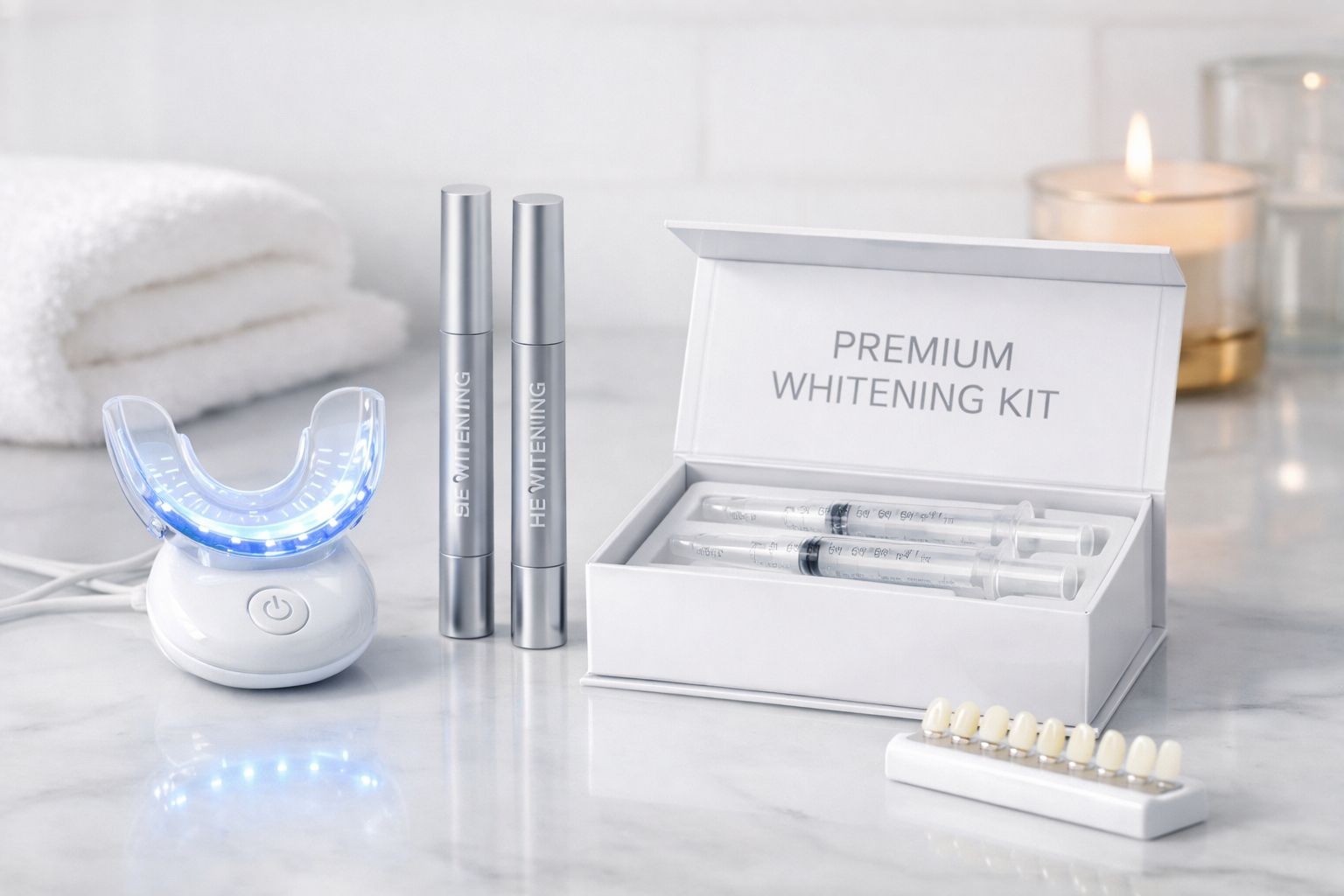
Over 100,000 people have purchased the Diamond Smile Premium Whitening Kit, yet scattered across review platforms are complaints about non-delivery and refund issues that contradict the brand’s glowing testimonials. Something doesn’t add up. The gap between marketing promises and actual customer experiences has grown too wide to ignore.
The Diamond Smile Premium Whitening Kit positions itself as an affordable, dentist-approved alternative to expensive in-office treatments with a price tag around €59.99 and claims of LED-accelerated whitening. The brand promises professional results from your bathroom in as little as 10 minutes per application, backed by over 100,000 satisfied customers and a money-back guarantee.
Recent scrutiny reveals troubling inconsistencies between marketing promises and actual customer experiences. This guide cuts through the noise to examine the kit’s actual technology, expose the customer service concerns that keep surfacing, evaluate whether the results justify the cost, and help you determine if this product is genuinely worth buying. You’ll get the unfiltered truth so you can make an informed decision before spending your money.
What’s Actually Inside the Diamond Smile Premium Whitening Kit?
Complete Breakdown of Included Components
The Diamond Smile Premium Whitening Kit ships with an LED whitening device, whitening gel syringes, a mouth tray, and a USB charging cable. The device itself relies on LED light technology to supposedly accelerate the whitening process, though the specific wavelength specifications are rarely disclosed in marketing materials.
LED Light Technology Specifications and Claims
The LED light acceleration forms the core of Diamond Smile’s whitening promise. However, the brand provides minimal technical details about the light’s wavelength, intensity, or actual efficacy compared to professional-grade systems. Independent analysis suggests the LED technology does have some accelerating effect, but whether it justifies the premium positioning remains questionable.
Whitening Gel Composition and Active Ingredients
Diamond Smile markets the gel as containing “natural active ingredients,” yet hydrogen peroxide appears to be the primary whitening agent. The concentration level isn’t always clearly stated, which raises concerns about transparency. Users report varying experiences with the gel’s effectiveness and taste, with some describing an unpleasant bitter flavor that makes the 10-minute application feel considerably longer.
Quality of Accessories and Build Durability
The mouth tray included in the kit receives mixed feedback regarding fit and comfort. Some users report the generic tray causes gum irritation, while others manage without significant issues. The LED device itself appears functional for most users, though longevity reports are limited in available customer testimonials. The USB charging cable is a practical addition but standard for this product category.
Comparison to Competitor Whitening Systems
At €59.99, the Diamond Smile kit prices competitively against similar at-home systems. However, established brands like Crest Whitestrips and professional dentist-recommended trays offer comparable or better technology with more transparent customer service records. The main advantage Diamond Smile offers is the LED acceleration feature, which competitors often lack at this price point.
What You Don’t Get
Notably absent from the kit are professional-grade applicators, custom-fitted trays, or any professional guidance on proper application. You’re receiving a one-size-fits-all experience, which explains why results vary dramatically between users.
The Speed vs. Reality Problem—10-Minute Claims Under the Microscope
How Diamond Smile Markets the Promise
The brand’s headline claim states you’ll see whiter teeth in “as little as 10 minutes per application.” This language uses clever phrasing—”as little as” is marketing speak that doesn’t guarantee results in that timeframe, merely suggests it’s possible under ideal circumstances.
Realistic Timeframes Users Actually Report
Independent user feedback indicates visible whitening typically requires consistent application over 3-7 days, not single sessions. Some users report 2-3 weeks of regular use before noticeable changes emerge, particularly if starting with significant discoloration.
Factors Affecting Whitening Speed
Existing tooth shade, stain type, and consistency all dramatically impact results. Someone with light yellowing from coffee will see faster results than someone with deep intrinsic staining. Missing even two or three applications in a week substantially extends the timeline to visible results.
Hydrogen Peroxide Concentration and Timeline Impact
The hydrogen peroxide concentration directly determines whitening speed, yet Diamond Smile rarely specifies this crucial detail. Lower concentrations work slower; higher concentrations carry increased sensitivity risks. Without this information, users can’t accurately predict their personal timeline.
Comparison with Professional Whitening Speed
Professional in-office whitening delivers noticeably whiter teeth in 30-60 minutes because dentists use higher peroxide concentrations and professional-grade accelerating lights. The Diamond Smile kit simply cannot compete on speed, though it costs a fraction of professional treatments.
Why Different Stains Respond Differently
Coffee, tea, and wine stains (extrinsic) respond much faster to whitening than natural yellowing or intrinsic stains. The brand’s marketing heavily features the former while downplaying that results vary significantly based on stain type—a critical detail omitted from promotional materials.
Addressing the Sensitivity and Safety Concerns
Brand Claims vs. Reported Tooth Sensitivity
Diamond Smile claims the kit causes no pain or sensitivity for most users. However, customer reports contradict this assertion regularly. Numerous users describe significant tooth and gum sensitivity following application, directly undermining the brand’s central safety promise.
Hydrogen Peroxide Exposure Risks
At-home LED kits with hydrogen peroxide present real risks when instructions aren’t followed precisely. Prolonged exposure, improper concentration, or extended treatment duration can damage enamel and cause lasting sensitivity. The kit’s minimal instruction guidance doesn’t adequately address these risks.
Gum Irritation and Enamel Damage Potential
The generic mouth tray fit frequently causes gum exposure to the whitening gel. Users with receding gums or irregular gum lines face particular risk. Enamel damage from repeated applications is largely irreversible and a serious long-term concern with any at-home system.
User Reports of Bad Taste and Discomfort
Beyond sensitivity, users consistently mention an unpleasant taste and general discomfort during the 10-minute application window. This contradicts marketing language suggesting an easy, comfortable experience.
Safety Protocols Missing from Instructions
The kit lacks comprehensive safety guidance on maximum application frequency, warning signs of sensitivity, or when to discontinue use. Professional whitening includes pre-treatment consultations that identify contraindications; this kit provides none.
When to Stop Using the Kit and Consult a Dentist
If you experience sharp pain, significant sensitivity, or gum bleeding during use, stop immediately and consult a dentist. The kit’s lack of guidance on this critical threshold is a substantial safety oversight.
Sensitivity Rates: At-Home vs. Professional
Professional whitening carries lower sensitivity rates because dentists apply protective barriers and monitor exposure carefully. At-home kits, especially with poor tray fit, consistently show higher sensitivity incidence rates.
The Customer Service and Delivery Red Flags
Non-Delivery and Order Tracking Issues
Multiple verified customer complaints document orders that never arrived without adequate tracking information. Some customers report ordering and receiving nothing but silence when requesting updates.
Refund Difficulties and Return Shipping Costs
Despite the advertised money-back guarantee, obtaining refunds has proven difficult. Customers report high return shipping costs that offset the refund, effectively nullifying the guarantee’s value. Some customers claim they never received refund processing confirmations.
Unresponsive Customer Service
Email inquiries go unanswered for weeks, according to consistent user reports. Customer support appears minimally staffed or intentionally unresponsive, making problem resolution nearly impossible.
Trustpilot Review Removal and Guideline Violations
Trustpilot removed Diamond Smile reviews for violating community guidelines, indicating the presence of inauthentic feedback. This action is significant—review platforms only remove content when manipulation is evident and substantial.
Extended Delivery Times
Even within the Benelux region where the brand operates, delivery times stretch beyond standard expectations. Some customers report waiting 4-6 weeks for arrival.
Money-Back Guarantee Claims vs. Reality
The advertised guarantee exists in theory but proves difficult to activate in practice. This discrepancy between policy and actual customer experience is a major red flag.
How to Protect Yourself Before Ordering
Use a credit card with purchase protection rather than direct payment methods. Order from retailers with return guarantees, not directly from the brand. Document everything—screenshots, emails, tracking numbers—before ordering.
Evaluating the 100,000 Satisfied Customers Claim
Trustpilot’s Actions and Why Reviews Were Removed
Trustpilot doesn’t lightly remove reviews. The platform’s action against Diamond Smile indicates systematic review manipulation, suggesting the 100,000 customer claim should be viewed with significant skepticism.
Signs of Fake or Incentivized Reviews
Generic language, vague positive comments without specifics, and reviews posted in clusters are hallmarks of fake reviews. Many Diamond Smile testimonials exhibit these characteristics—they praise the product without describing actual results or addressing specific concerns.
Authentic vs. Marketing-Generated Content
Genuine reviews mention specific details: application times, actual shade improvements, sensitivity experiences, or customer service interactions. Marketing-generated content uses broad language like “amazing results” without particulars.
Realistic Success Rate Based on Independent Analysis
Looking beyond brand-controlled platforms, realistic success rates appear substantially lower than 100,000 satisfied customers would suggest. Perhaps 30-50% of users report meaningful whitening; the remainder either see minimal results or experience problems.
Finding Genuine Feedback Beyond Brand Platforms
Check Reddit communities, independent YouTube reviews from non-affiliate channels, and older Trustpilot reviews that survived the removal. These sources provide less filtered perspectives.
Spotting Manipulated Before-and-After Photos
Professional lighting, angle differences, and strategic color grading can make minimal changes appear dramatic. The brand’s promotional photos often lack consistent methodology across before-and-after images.
Cost-Benefit Analysis—Is €59.99 Actually a Good Deal?
Price Comparison with Professional Whitening
Professional in-office whitening costs €300-€800 but delivers results in one session that last 6-12 months. The Diamond Smile kit costs €59.99 but requires 2-3 weeks of consistent use and produces less dramatic results. Calculating cost per result rather than upfront price tells a different story.
Cost Per Application and Value Calculation
If the kit includes enough gel for 20 applications and costs €59.99, that’s roughly €3 per use. Professional whitening at €500 for 5 sessions equals €100 per visit but with superior results. The math becomes less favorable once results quality is factored in.
Hidden Costs
Replacement gel syringes cost €20-€30, and you may need additional trays if the included one causes irritation. Over a year, total spending could reach €150-€200 for maintenance.
Discount Legitimacy
The original €119.99 price with a current €59.99 discount creates urgency, but this pricing strategy appears permanent. The “original” price may never have reflected actual market value.
ROI Calculation
If results last 3-4 months, you’ll spend €180-€240 annually for subtle improvements. Professional whitening, while more expensive initially, provides better results lasting longer, making the annual ROI potentially superior.
Budget Alternatives
Whitening toothpaste ($10-$20) and whitening strips ($20-$40) offer lower-cost entry points with more transparent performance expectations. These traditional methods may suit budget-conscious consumers better.
When Professional Whitening Becomes Smarter
For significant discoloration, sensitive teeth, or existing dental work, professional whitening’s custom approach and dentist oversight provide better value despite higher upfront cost.
Who Should Actually Buy This Kit (And Who Shouldn’t)
Ideal Candidates for At-Home Whitening
People with mild extrinsic staining (surface-level yellowing), realistic expectations about incremental improvements, and no existing tooth sensitivity are the best candidates. Budget-conscious consumers willing to commit to consistent 2-3 week treatment schedules might see acceptable results.
Tooth Types That Respond Poorly
Intrinsic staining (internal discoloration), heavily stained teeth, and natural dark tooth shade respond poorly to LED whitening kits. If your discoloration runs deep, at-home systems simply won’t deliver satisfying results.
Situations Where Professional Whitening Is Essential
Significant discoloration, existing tooth sensitivity, gum disease, and severe staining warrant professional treatment. The dentist can identify contraindications and provide protective measures at-home kits lack.
Existing Dental Work Compatibility Issues
Crowns, veneers, and bondings don’t whiten. If these comprise your visible teeth, whitening kits won’t help. The kit only affects natural tooth structure.
Age and Enamel Condition
Younger people with thick enamel tolerate at-home whitening better than older adults with thinner enamel and receding gums. If you’re over 60 or have naturally thin enamel, professional consultation is wise before attempting at-home treatment.
Lifestyle Factors Determining Success
Smokers and regular consumers of coffee, tea, or red wine will see results fade rapidly. If you consume staining substances daily, the maintenance burden becomes substantial.
Medical Contraindications
Pregnancy, gum disease, recent dental work, or certain medications contraindicate at-home whitening. These situations require professional evaluation before treatment.
Safer Alternatives and Legitimate Competitors
Professional In-Office Whitening
In-office treatments use higher peroxide concentrations with professional oversight, delivering noticeably whiter teeth in one 60-minute session. Results typically last 6-12 months. Cost ranges €300-€800 depending on location and dentist.
Dentist-Recommended At-Home Trays
Custom-fitted trays from your dentist provide better gum protection and more consistent gel distribution than generic trays. Dentist-supplied gel is often more concentrated and effective. Cost typically runs €200-€400 for the custom tray plus gel.
Whitening Strips from Established Brands
Crest Whitestrips and similar products from major manufacturers offer transparent efficacy data and reliable customer service. Results are modest but consistent. Cost runs €20-€50 for a full treatment course.
Whitening Toothpastes and Their Limitations
Whitening toothpastes work slowly through abrasive action and mild bleaching agents. Realistic improvements are subtle, visible only after months of consistent use. However, they’re affordable (€10-€20) and safe for regular use.
Natural Whitening Methods and Evidence
Baking soda, oil pulling, and other natural methods lack scientific support for meaningful whitening. While potentially safer, they’re also substantially less effective than any commercial whitening system.
Price-to-Results Comparison
Professional whitening delivers the best results but highest cost. Dentist-recommended at-home trays offer strong value with custom fitting. Commercial strips and kits provide budget options with moderate results. Natural methods are inexpensive but nearly ineffective.
Brands with Transparent Service and Authentic Reviews
Established brands like Crest, Smile Direct, and dentist-recommended systems have verifiable customer service records and authentic review ecosystems. These alternatives merit serious consideration over Diamond Smile.
The Bottom Line: Should You Buy the Diamond Smile Premium Whitening Kit?
The Diamond Smile Premium Whitening Kit offers genuine convenience and an attractive price point for budget-conscious consumers seeking whiter teeth at home. The LED technology does provide some acceleration, and the kit’s basic functionality is real—it’s not a complete scam.
However, the gap between marketing claims and actual delivery is significant enough to warrant serious caution. You’re evaluating a product with real technology (LED light acceleration works), but also real problems (customer service issues consistently reported, questionable reviews that Trustpilot removed, and sensitivity concerns that directly contradict brand promises of pain-free whitening).
The 100,000 satisfied customers claim deserves skepticism given the review manipulation evidence. The 10-minute whitening promise misleads through careful language. The money-back guarantee exists on paper but rarely functions in practice. These aren’t minor inconsistencies—they represent a pattern of overpromising and underdelivering.
If you have mild surface stains, realistic expectations about incremental improvements, and can afford to lose €59.99 without financial stress, the kit might work as a trial—especially if you purchase through a platform with buyer protection rather than directly from the brand. The worst-case scenario is losing €60 and confirming at-home whitening isn’t for you.
However, if you have sensitive teeth, significant discoloration, existing dental work, or gum concerns, skip this product entirely. The risks outweigh benefits for these situations. Invest in professional whitening or dentist-recommended alternatives instead.
Before ordering, research current independent reviews on platforms beyond the brand’s website. Check recent Trustpilot feedback despite the removals. Read the comments sections on YouTube reviews from non-affiliate creators. Most importantly, seriously consider whether the convenience of at-home whitening is worth the customer service risks this brand has repeatedly demonstrated. Your smile deserves better than marketing hype.
Leave a Reply