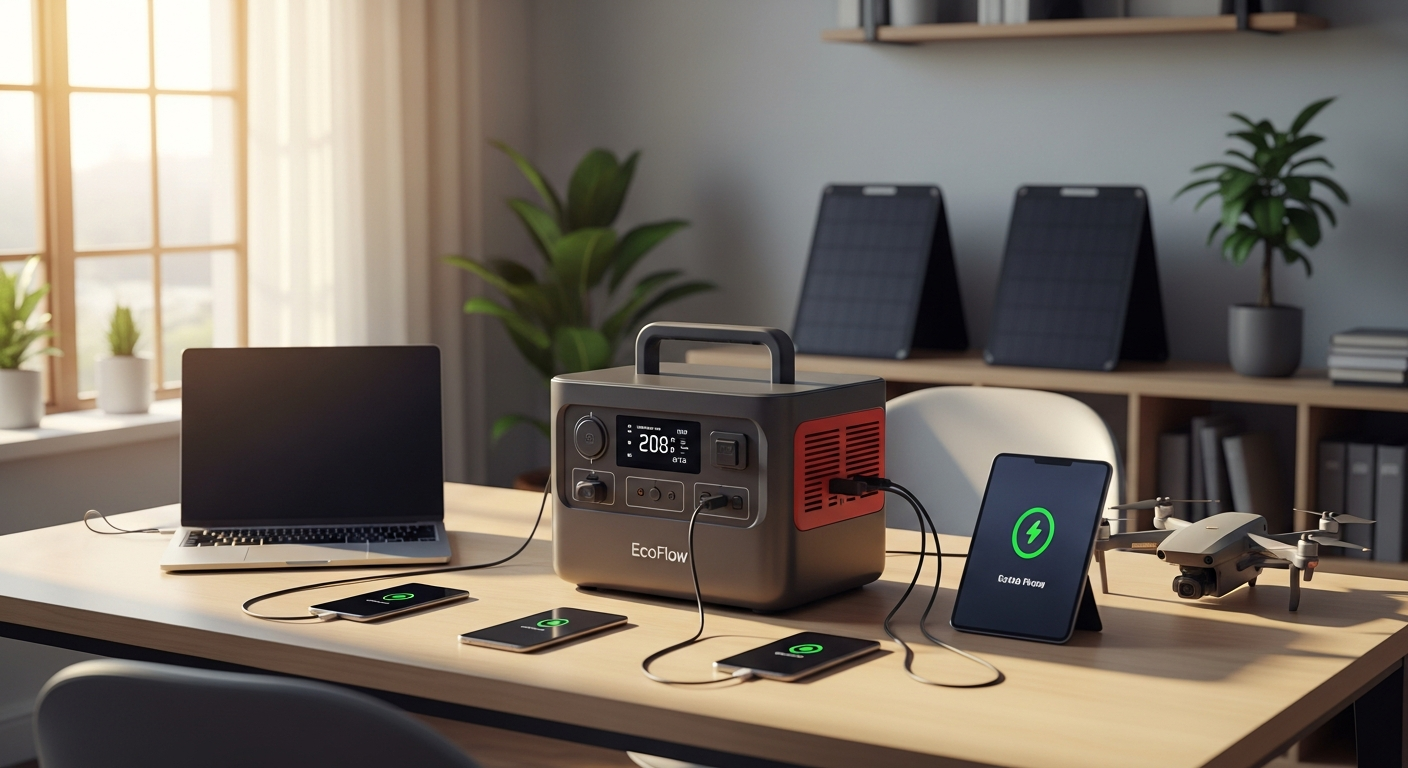
Picture this: a severe storm knocks out power to your neighborhood, and while your neighbors scramble for flashlights and candles, your home remains fully operational. This scenario is becoming increasingly achievable thanks to portable power stations like the EcoFlow DELTA Pro 3, which has captured the attention of thousands of homeowners seeking genuine energy independence and peace of mind.
The EcoFlow DELTA Pro 3 stands apart in the crowded portable power market because it bridges the gap between genuine portability and serious household power delivery. Unlike compact units designed for camping trips or road trips, this powerhouse combines a massive 4096Wh battery capacity with expandable architecture—scaling up to 48kWh when you need it. The LiFePO4 battery chemistry means you’re investing in a system built to last over a decade, not just a few seasons.
Why Homeowners Are Choosing the DELTA Pro 3 Over Traditional Backup Solutions
The shift from gas generators to battery-powered systems has accelerated dramatically. Homeowners are rejecting the noise, maintenance headaches, and environmental impact of traditional generators in favor of silent, clean backup power. The DELTA Pro 3’s 4000W continuous output handles real household loads—refrigerators staying cold, HVAC systems maintaining comfort, water heaters operating normally—rather than forcing difficult decisions about which appliances to power.
The reliability advantage of LiFePO4 chemistry becomes apparent when you compare it to older lithium-ion batteries. This newer technology delivers superior safety, longer cycle life, and predictable performance across temperature variations. Growing demand for smart home integration means homeowners now expect remote power monitoring and control, features the DELTA Pro 3 delivers through its Wi-Fi connectivity and companion app.
Cost-effectiveness compounds over time. While a traditional generator might cost $3,000-$5,000 and require replacement every 5-7 years, the DELTA Pro 3’s 10+ year lifespan fundamentally changes the economics. Insurance benefits matter too—silent, emission-free backup power reduces fire risk and may even lower your homeowner’s insurance premiums.
Scalability That Grows With Your Needs: From 4kWh to 48kWh
The modular battery expansion system works elegantly in practice. Rather than replacing your entire unit when power demands increase, you simply add extra batteries. This approach proves far more cost-effective than buying multiple standalone systems, and the stackable architecture maintains intelligent battery management across all connected units.
Real-world scenarios clarify how expansion works. Many users start with the base unit for emergency backup—covering 1-2 days of average home use with 4kWh capacity. As circumstances evolve, expanding to 8kWh, 12kWh, or beyond enables week-long off-grid capability without replacing the core unit. This flexibility future-proofs your energy investment as your power needs evolve, whether you’re adding electric vehicle charging, running a home office that demands continuous power, or transitioning toward full off-grid living.
Powering Your Entire Home: Understanding the 4000W/8000W Output Capability
Continuous 4000W output versus surge 8000W capacity represents the difference between sustained power delivery and handling peak demands. When your air conditioning unit starts, refrigerator compressor kicks on, and you’re charging a laptop simultaneously, the surge capacity prevents voltage sag that would cripple inferior systems.
The dual 120V/240V output expands compatibility with both standard household circuits and heavy-duty applications. Running high-draw devices—air conditioning units, electric water heaters, power tools, commercial kitchen appliances—becomes genuinely possible rather than theoretical. The inverter technology prevents voltage instability when multiple devices activate simultaneously, protecting sensitive electronics and ensuring consistent performance.
Smaller portable stations (1000-2000W output) force you into rationing power and making compromises about what stays online. The DELTA Pro 3 eliminates this limitation. Through smart app-based load management, you optimize power distribution across your home’s circuits, ensuring critical systems receive priority during extended outages.
Multiple Charging Pathways: Never Get Stuck Without Options
Solar charging capability with up to 2600W input represents the fastest solar recharge rate in the portable power market. For off-grid users, this translates to realistic daily charging even in moderate sunlight conditions. AC wall charging enables rapid top-ups during normal grid operation, restoring full capacity in hours rather than days.
EV charging integration opens bidirectional power benefits for electric vehicle owners—your car can charge the DELTA Pro 3, and conversely, the power station can power your home while your vehicle’s battery provides backup. Generator compatibility allows hybrid systems combining renewable and backup charging for maximum flexibility.
Smart charging algorithms prioritize the most efficient method based on available resources. If solar input is strong, the system prioritizes solar charging. As clouds roll in, it seamlessly transitions to AC power. This intelligence extends battery lifespan while ensuring you always maintain adequate reserves for emergencies.
Check out EcoFlow’s complete DELTA Pro 3 system and start building your backup power solution today.
The LiFePO4 Advantage: Battery Chemistry That Actually Lasts
LiFePO4 outperforms traditional lithium-ion in nearly every meaningful metric. Cycle life extends to 4000 cycles at 80% capacity—translating to 10+ years of daily use without degradation concerns. This longevity fundamentally changes how you evaluate the investment, turning what appears as a high upfront cost into reasonable long-term economics.
Enhanced thermal stability reduces fire risk compared to other battery chemistries, addressing legitimate safety concerns with older technology. Environmental benefits matter for conscious consumers—a system designed for longevity over disposability avoids the waste cycle of cheaper alternatives that end up in landfills after 3-5 years.
Temperature tolerance allows operation in varied climates without performance loss. Whether you’re in Arizona’s heat or Minnesota’s cold, the LiFePO4 battery maintains consistent output. The 5-year comprehensive warranty reflects manufacturer confidence in the chemistry and construction—they’re willing to stake their reputation on long-term reliability.
Smart Features That Transform a Power Station Into an Energy Management System
Wi-Fi and app connectivity enable real-time monitoring from anywhere. Check your battery status, current draw, and charging rate while away from home. AI-powered battery management optimizes charging patterns automatically, extending lifespan without requiring user intervention.
Remote control capabilities mean you can start charging, adjust loads, or check status from your phone. This convenience matters more than it initially appears—during extended outages, managing power distribution from inside your home beats manually adjusting settings at the power station itself.
Integration with smart home ecosystems enables seamless automation. Your system can prioritize charging during off-peak hours when electricity rates drop, or divert excess solar generation to battery storage rather than backfeeding to the grid. Historical data tracking shows energy consumption patterns and identifies optimization opportunities—which appliances are draining your reserves fastest, and whether upgrades make economic sense.
Firmware updates continuously improve performance without hardware changes. EcoFlow regularly releases software enhancements that add features and refine existing capabilities, ensuring your investment remains current long after purchase.
Real-World Use Cases: Who Benefits Most From the DELTA Pro 3
Homeowners in areas with frequent outages seeking reliable emergency backup find genuine value in whole-home power coverage. Off-grid property owners building energy independence appreciate the expandable architecture that grows with their ambitions.
Remote workers who can’t afford internet downtime during power disruptions maintain connectivity and productivity. Small business owners running workshops, studios, or offices need uninterrupted operations—the DELTA Pro 3 delivers this without the noise and maintenance burdens of generators.
RV and tiny home enthusiasts benefit from genuine whole-system power rather than just device charging. Solar system owners use it as an intelligent battery bank for self-consumption, storing excess generation instead of sending it back to the grid.
Investment Considerations: Is the Premium Price Worth It?
Understanding cost-per-watt-hour reveals the DELTA Pro 3’s value proposition. Yes, it costs more than smaller alternatives upfront, but total cost of ownership over 10 years favors quality equipment that doesn’t require replacement every few years.
Financing options and bundled packages—solar panels, transfer switches, expansion batteries—improve overall value compared to purchasing components separately. Resale value remains surprisingly strong; the used DELTA Pro 3 market demonstrates sustained demand from buyers unable to secure new units.
Avoiding false economy means recognizing that cheaper power stations often cost dramatically more in the long run. You’ll replace them multiple times while your DELTA Pro 3 continues delivering reliable power. Insurance and energy independence savings offset initial purchase price, particularly for homeowners in regions with unreliable grid service.
Installation, Setup, and Getting Started With Confidence
Unboxing and initial setup reveals a well-engineered product. At 113.5 lbs, the unit requires planning for placement, but the process itself remains straightforward. Placement considerations focus on optimal solar input and ventilation—avoid enclosed spaces that restrict airflow.
Connecting expansion batteries requires ensuring proper firmware synchronization across all connected units. The system handles this automatically, but checking the app confirms proper integration. First-time app setup and pairing with your home Wi-Fi network takes minutes rather than hours.
Safety checks before powering critical home systems verify proper connections and settings. Best practices for initial charging cycles maximize battery longevity—avoid repeatedly draining to zero percent, and maintain the system between 20-80% capacity for daily use when possible.
The Weight Reality: Understanding Portability vs. Power
At 113.5 lbs, the DELTA Pro 3 trades true portability for serious power delivery. This isn’t a system you carry on camping trips; it’s a stationary backup power solution that stays in place. Comparing to smaller units that weigh 20-30 lbs clarifies the trade-off—they’re genuinely portable, but they can’t power your whole home.
Wheeled cart and mounting solutions make placement easier despite the weight, though initial setup does require planning. When would you actually move it? Seasonal use patterns, property changes, or system upgrades might trigger relocation, but day-to-day operation keeps it stationary.
The trade-off analysis depends on your specific situation. If you need genuine portability combined with household power, no solution satisfies both requirements equally. The DELTA Pro 3 optimizes for power delivery, accepting weight as the necessary cost of that capability. For stationary backup power, weight simply doesn’t matter—you’re not carrying it anywhere once installed.
Comparing the DELTA Pro 3 to Other Premium Power Stations
How does it stack against Titan Solar Generator, Goal Zero Yeti, and other high-capacity competitors? The DELTA Pro 3’s unique advantages include expandability that truly scales, dual voltage capability, and solar input speed that competitors can’t match.
Where other systems excel varies by model. Some offer superior portability at the cost of power output. Others deliver comparable wattage but lack the expansion architecture. Price-to-performance analysis across the premium portable power station market consistently positions the DELTA Pro 3 favorably for homeowners prioritizing scalability and long-term reliability.
Customer satisfaction and reliability data from verified user reviews reinforce its market leadership. Future-proofing matters—which system’s ecosystem is most likely to evolve with your needs? EcoFlow’s track record suggests strong commitment to software improvements and expanded integration options that keep the system relevant for years.
Maximizing Your DELTA Pro 3: Pro Tips From Real Users
Optimal charging strategies balance speed with battery longevity. Avoid repeatedly full-charging and full-discharging; instead, maintain the system between 20-80% for daily use and only push to full capacity before extended trips.
Seasonal maintenance routines keep the system performing at peak capacity. Clean vents regularly, check cable connections before winter storms, and review app data for firmware updates. Load prioritization during extended outages stretches battery life—critical systems (refrigerator, heating) come first; less essential loads (entertainment systems) second.
Combining with solar panels enables true energy independence. Calculate your daily consumption needs, determine available roof or ground space, and size solar arrays accordingly. Using the app’s historical data identifies high-consumption appliances worth upgrading—efficiency improvements pay dividends.
Community resources and forums where DELTA Pro 3 owners share real-world experiences provide invaluable practical wisdom. Learning from others’ setup choices, expansion decisions, and optimization strategies accelerates your own optimization journey.
Your Path to Reliable Home Power Starts Here
The EcoFlow DELTA Pro 3 represents a fundamental shift in how homeowners approach backup power. It’s not a compromise between portability and capability—it’s a genuine solution that delivers real household power while remaining flexible enough to expand as your needs change. The LiFePO4 battery chemistry, smart app integration, and multiple charging options create a system that adapts to your life rather than forcing you to adapt to its limitations.
Whether you’re protecting your family during emergencies, building an off-grid homestead, or simply refusing to accept power outages as inevitable, the DELTA Pro 3 offers the scalability and reliability that make the investment worthwhile. The weight is real, the price is substantial, but the peace of mind and energy independence you gain are genuinely transformative.
Ready to determine whether the DELTA Pro 3 fits your specific power needs? Start by calculating your home’s average daily consumption and identifying which appliances absolutely must stay online during outages. From there, you can determine whether the base 4kWh capacity works for you or if expansion batteries should be part of your initial investment. The right time to secure reliable backup power is now—before the next storm arrives.
Leave a Reply